USDT is invading Ethereum, is it good for ETH?

Once upon a time, in Jan. 2019, the market capitalization of all stablecoins on Ethereum was just $835 million. Tether had only issued $60 million worth of USDT on Ethereum, making it the smallest stablecoin on the platform, while USDC and TUSD were the two largest, accounting for a combined market capitalization of $470 million. USDC, PAX, and GUSD were all under four months old.
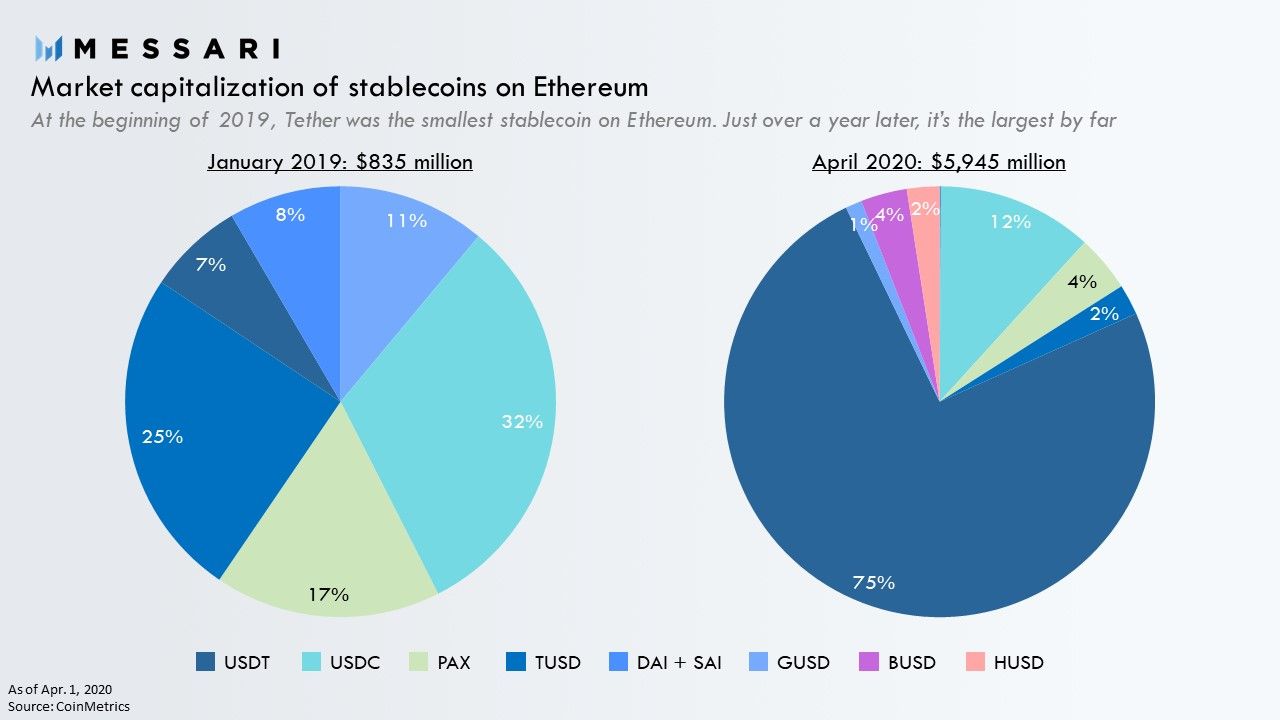
The stablecoin market on Ethereum soon changed when Tether began migrating USDT over to Ethereum. Within just a few months, USDT was the largest stablecoin on Ethereum and overtook Ether (ETH) in daily transaction value. The trend would continue on, changing the nature of the Ethereum platform and ETH in the process.
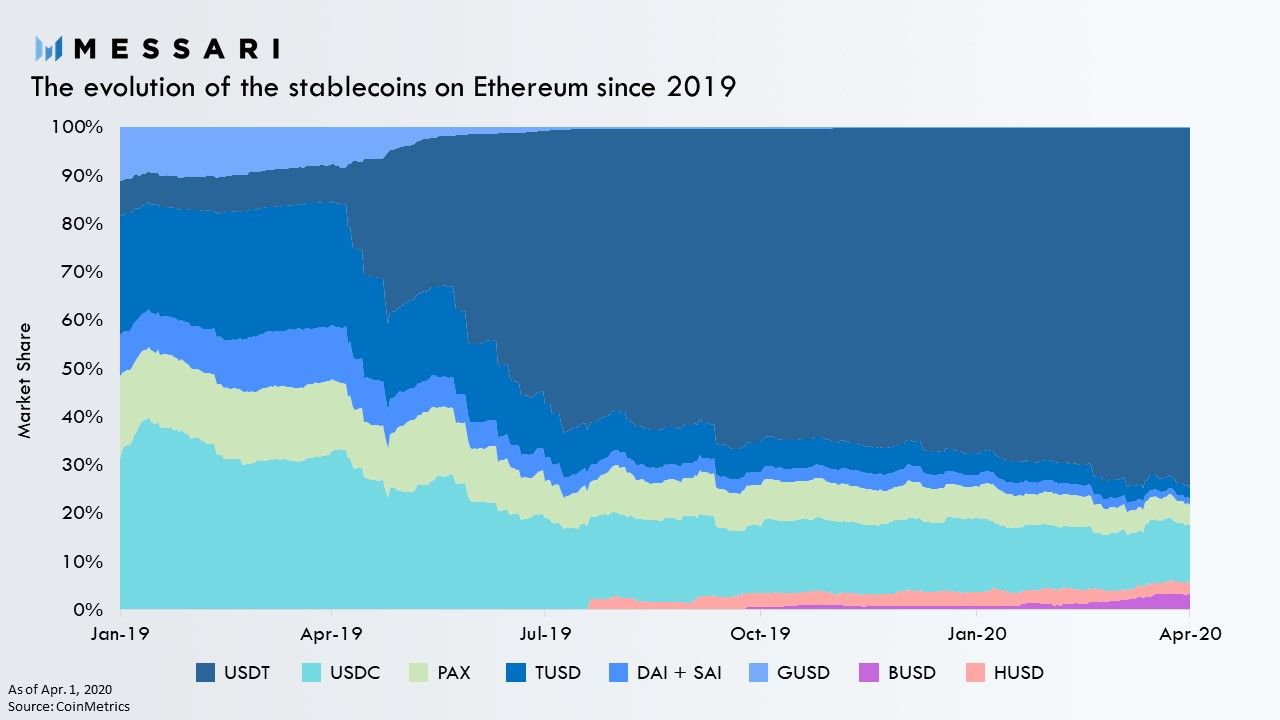
Ethereum is many things - that’s the beauty of programmability, but perhaps the most relevant thing it is now is a globally-accessible, 24/7 digital eurodollar infrastructure. USDT has invaded the Ethereum blockchain, without anyone’s permission. This is the explicit purpose of public blockchain’s permissionlessness.
The question now becomes: does USDT come in peace?
As we’ve covered previously, the entrance of USDT into Ethereum’s ecosystem is not neutral to ETH’s value proposition. With USDT, users and programs can now send, receive, and store value in a stable currency, solving a significant pain point in using public blockchains for many applications. This is a major benefit for the foreseeable future, as it democratizes off-shore banking for Ethereum users and makes many Ethereum applications more usable. To the extent USDT brings new users onto Ethereum, it should be positive for ETH. It’s hard to ignore the promise of decentralized programmable money if you’re spending time in the Ethereum economy. This will provide a bid for ETH.

Ryan Watkins was a Senior Research Analyst at Messari. Previously, he worked at Moelis & Company as an Investment Banking Analyst where he worked on deals in the technology, telecom, and fintech sectors. Ryan graduated Magna Cum Laude from the Gabelli School of Business at Fordham University.