VeChain launched its Galactica Mainnet, andimplemented upgrades such as dynamic fee burns, typed transactions, and Shanghai EVM compatibility to improve fee predictability and tooling support.
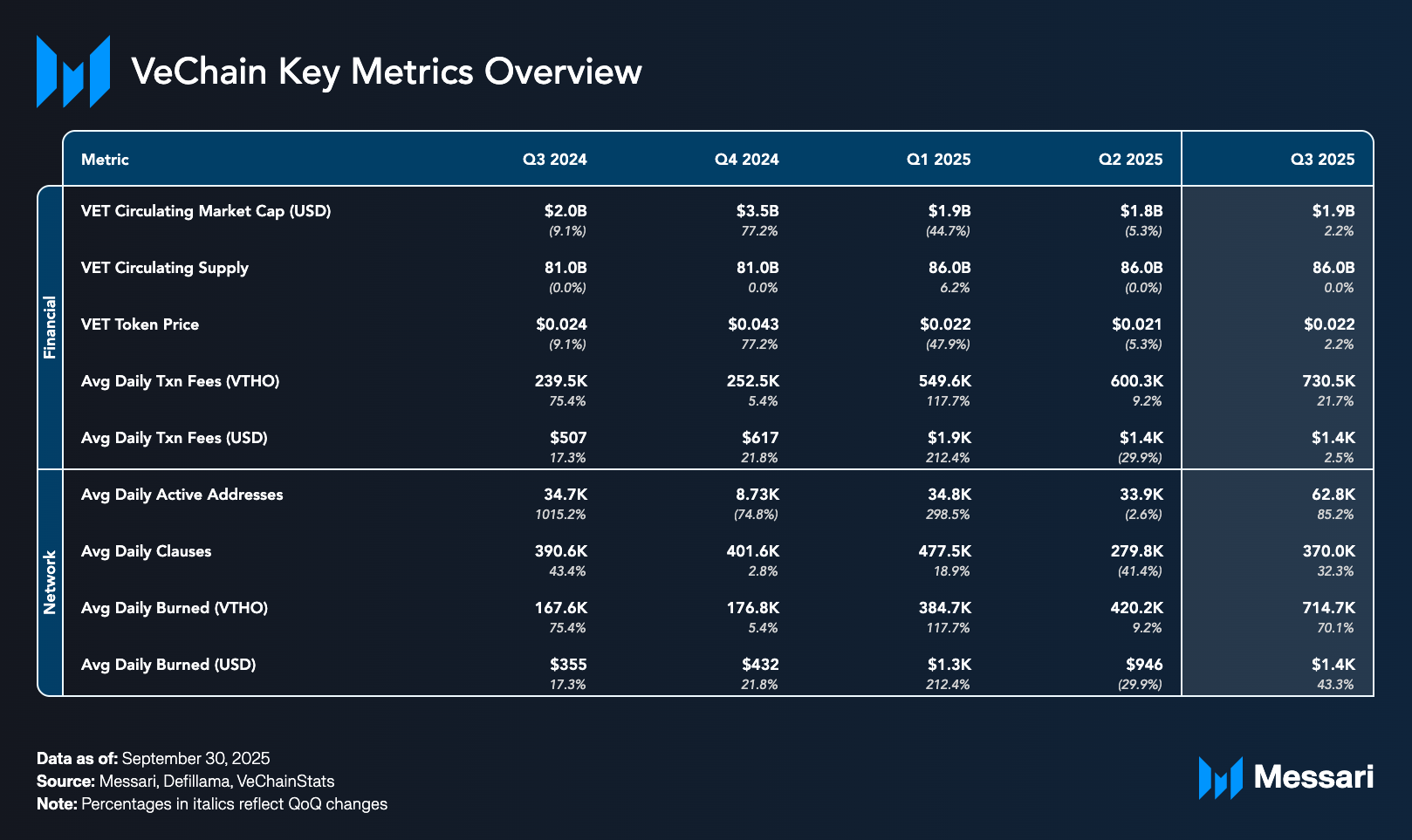
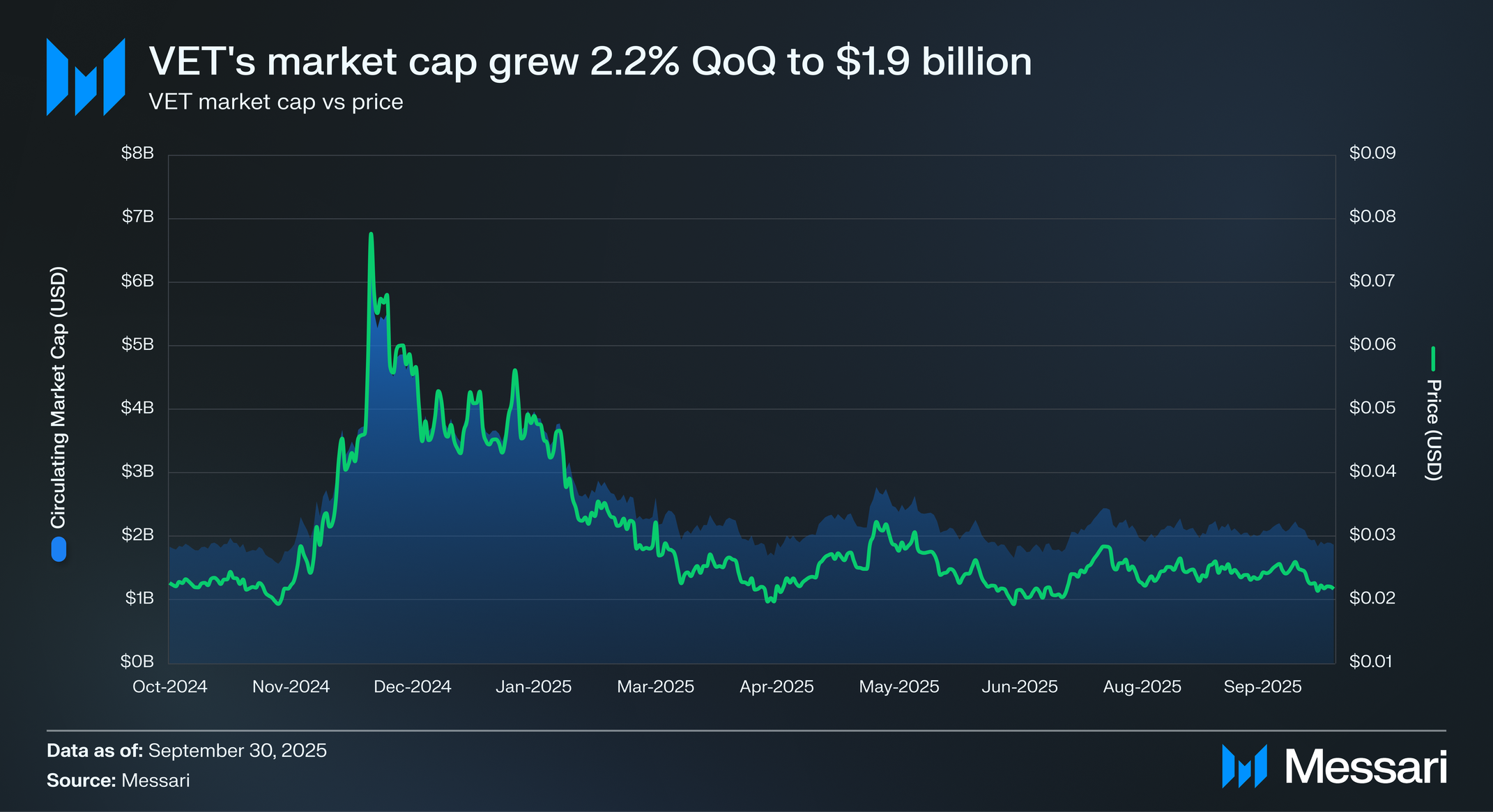
VET’s market cap increased 2.2% QoQ to $1.9 billion. The rise was driven in part by VeChain’s expanding ecosystem and partnerships, as well as the launch of the StarGate staking platform.
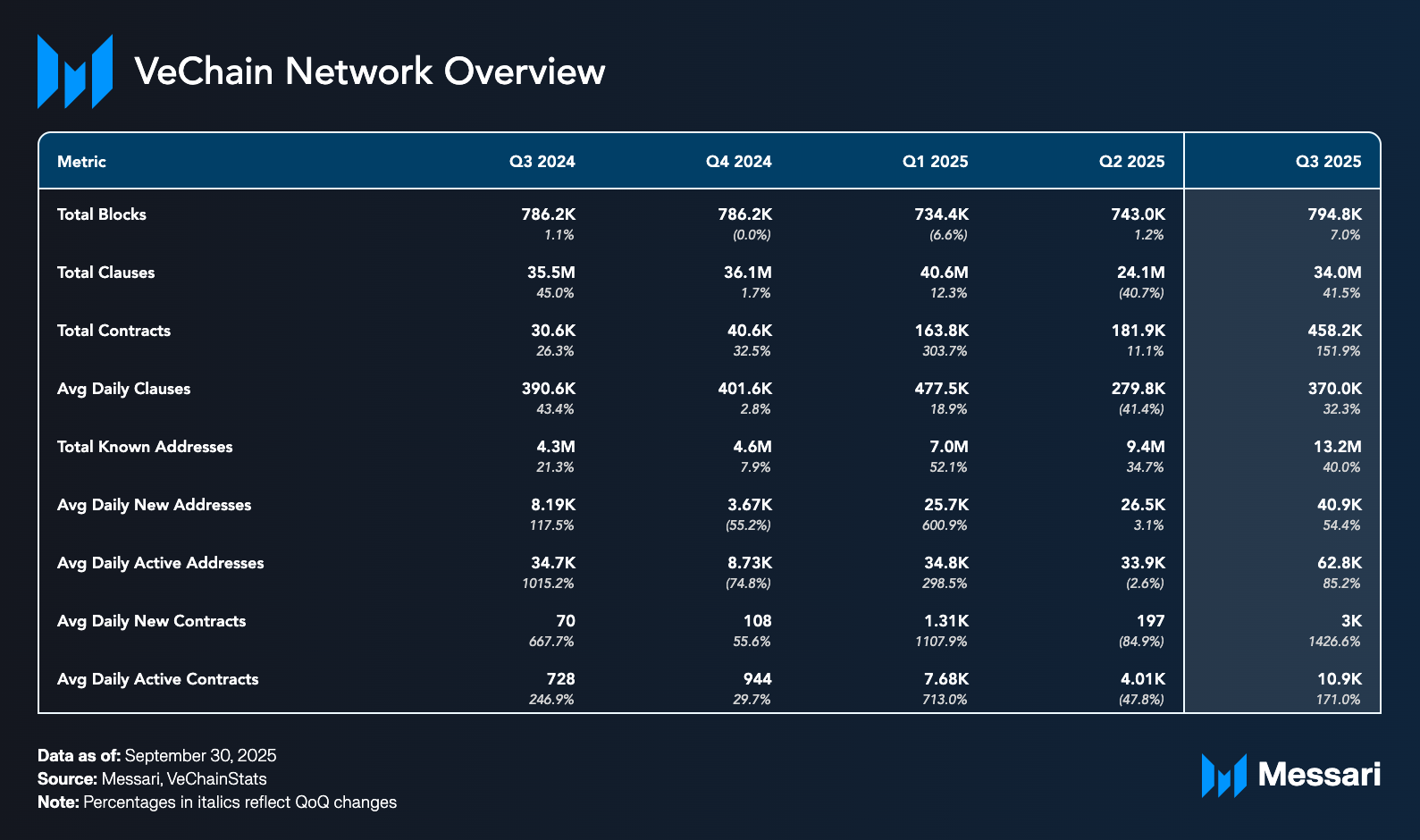
Average daily active addresses increased 85.2% QoQ to 62,800, while transaction clauses rose 32.3% QoQ to 370,000, reversing a two-quarter decline in network activity.
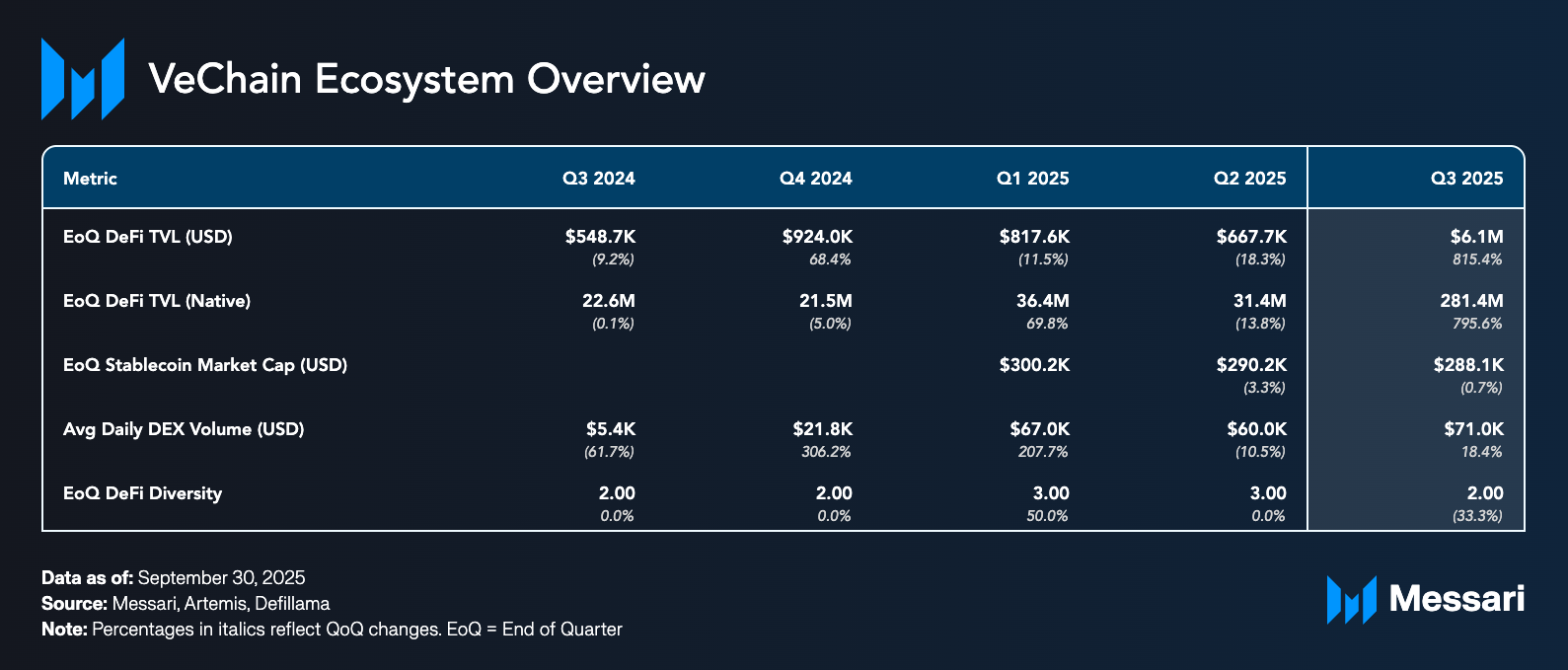
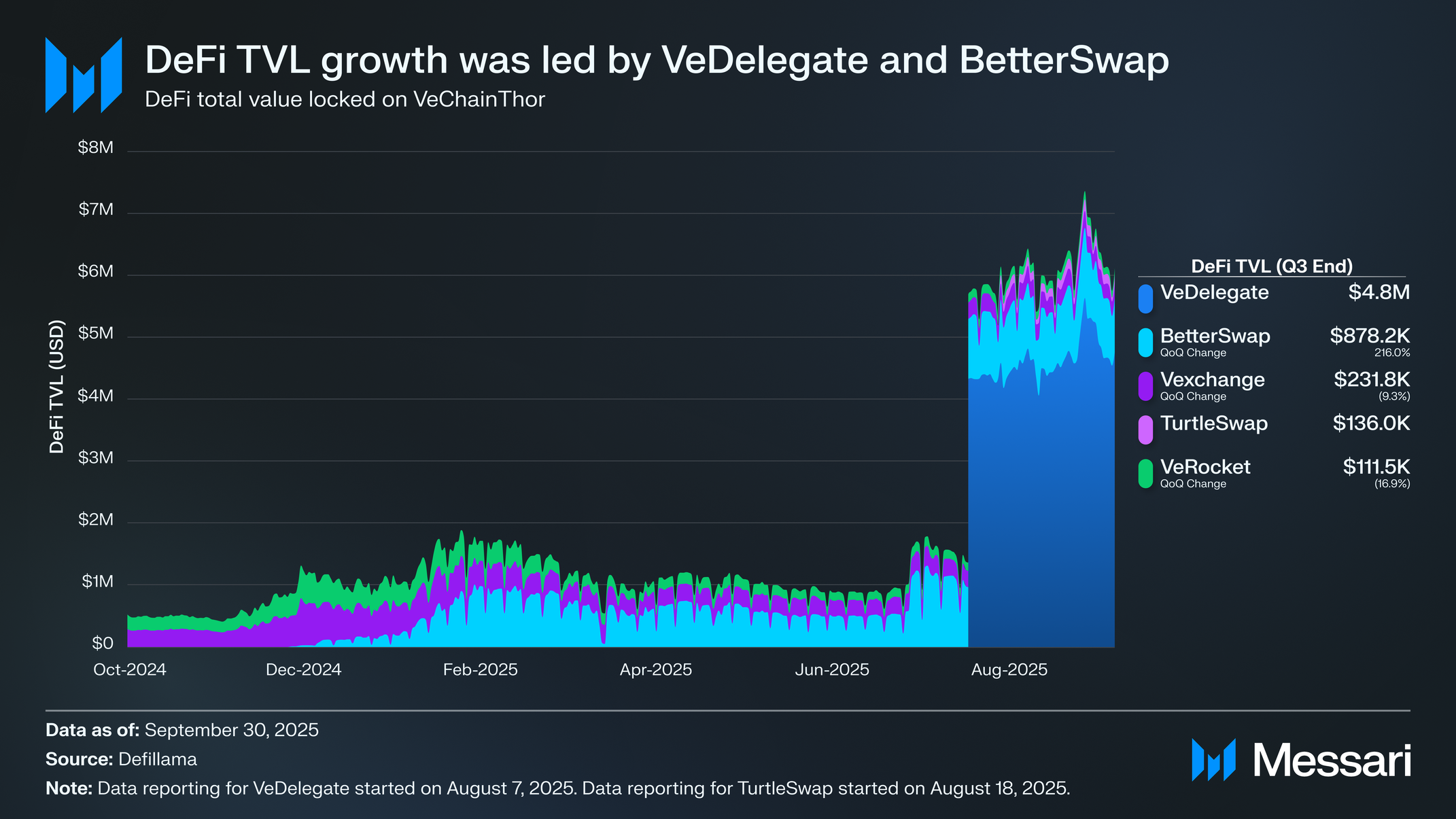
DeFi TVL rose 815.4% QoQ to $6.1 million, while VeDelegate accounted for $4.8 million in TVL and 77.8% of the network's total. The surge was driven by VeDelegate's fixed-term staking launch and BetterSwap's 216% growth to $878,200.
Two new GM NFT tiers, Uranus and Neptune, were added to VeBetter, expanding governance depth and reward multipliers.
Primer
VeChain, founded in 2015, uses blockchain technology to incentivize sustainability efforts and tackle real-world problems. At the heart of VeChain is VeChainThor, a Layer-1 public smart contract platform, which launched in 2017, and is designed for predictable fees and real-world application support.
The network uses a dual-token model with VET as the primary token, used for staking and governance, and VTHO as the gas token used to pay for transactions and smart contract execution. This separation is intended to stabilize fees for users and developers while allowing VET to capture network value.
VeChainThor currently uses Proof of Authority (PoA) as the consensus mechanism, but is migrating to a Delegated Proof of Stake (DPoS) system in December 2025. The process relies on a fixed set of KYC’d validators, referred to as authority master nodes, who produce blocks under a governance framework maintained by the VeChain Foundation. PoA is presented as a pragmatic tradeoff that targets high throughput and deterministic finality with low energy use, consistent with the chain’s focus on environmental sustainability. In DPoS, the network will achieve greater decentralization and economic security by opening the Validator pool to non-KYC participants and having users stake VET tokens to earn rewards in exchange for enhanced network security.
For a full primer on VeChain, refer to our Initiation of Coverage report.
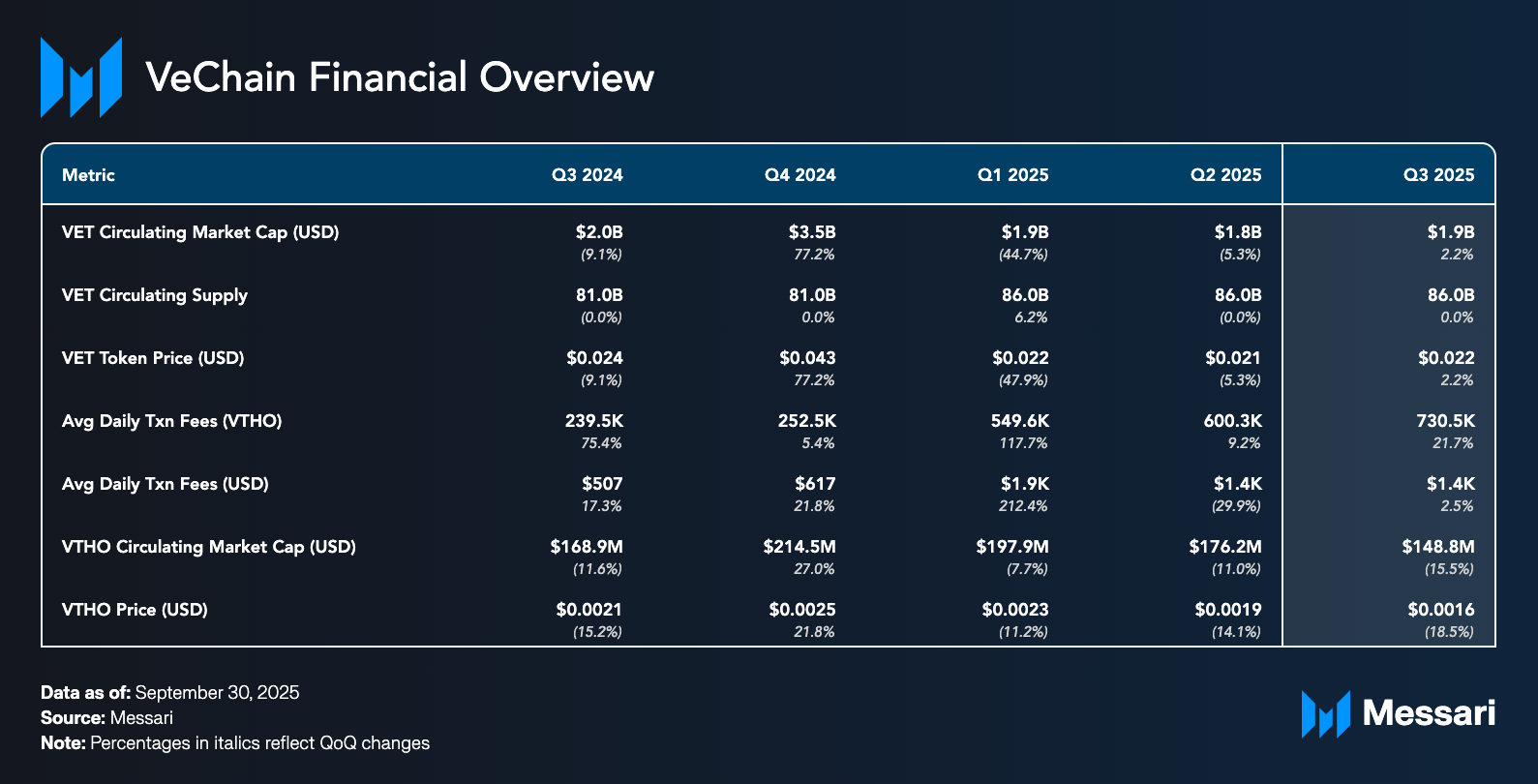
In Q3 2025, VET’s total market cap grew 2.2% QoQ to $1.9 billion. Similarly, VET’s price ended the quarter at $0.022, a 2.2% QoQ increase from $0.021 in Q2. VET finished the quarter as the 57th largest asset in terms of market cap compared to all other cryptocurrencies.
VTHO Market Cap
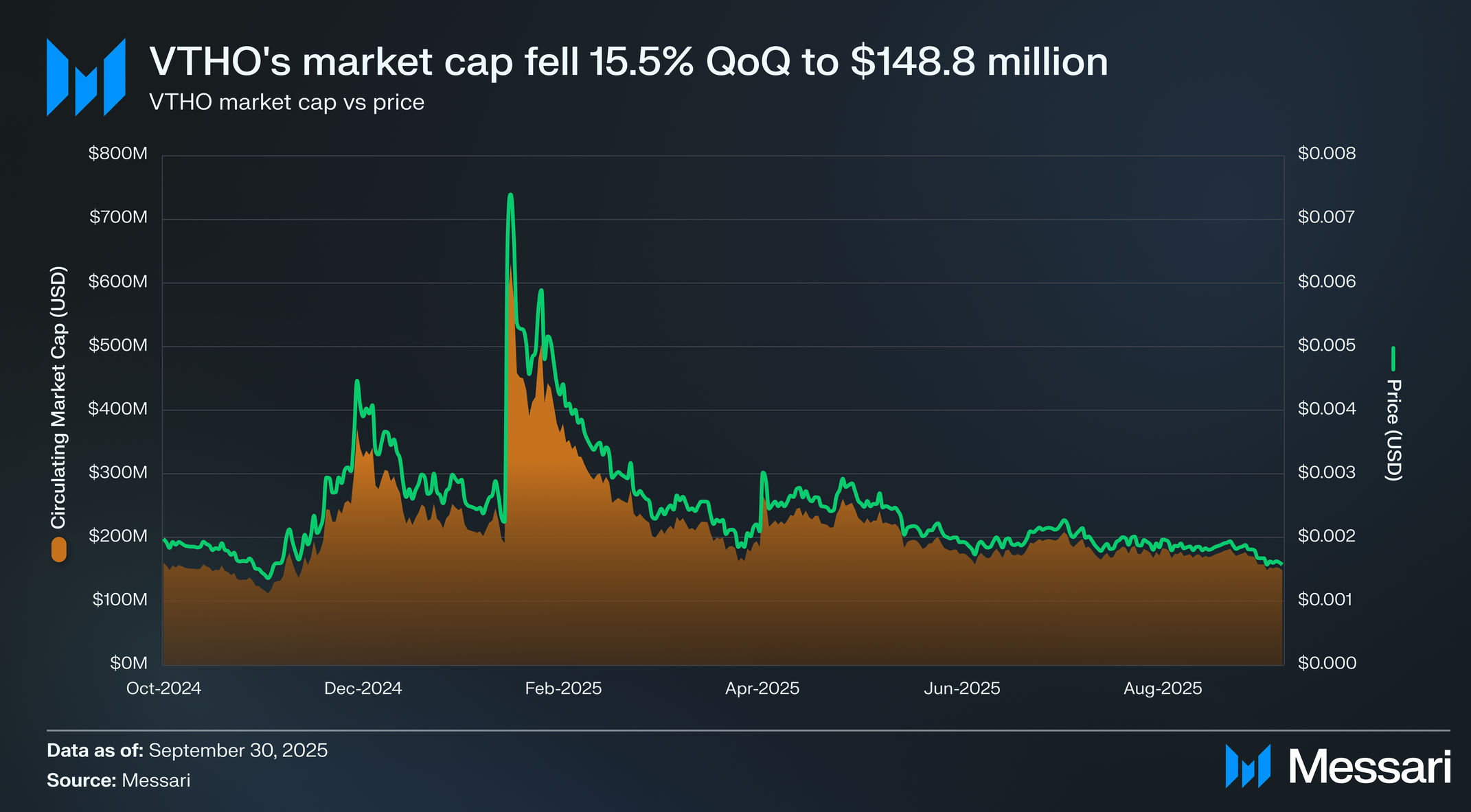
VTHO, VeChainThor’s gas token, which is earned through staking rewards, finished Q3 2025 with a total market cap of $148.8 million, down 15.5% QoQ from $176.2 million in Q2. Similarly, the price of VTHO fell 18.5% QoQ to $0.0016, down from $0.0019 in Q2. The discrepancy between the QoQ change in market cap and price for VTHO comes from an increase in the total supply of VTHO, which rose 3.7% over the quarter.
In Q3, VeChainThor’s onchain fee generation increased modestly in VTHO terms while remaining flat in USD terms. Average daily transaction fees totaled roughly 730,500 VTHO, up 21.7% QoQ, but held steady at approximately $1,400 USD per day, reflecting only a 2.5% QoQ rise. This divergence was primarily due to the decline in VTHO’s price, which offset the growth in network activity.
Network Overview
Onchain Activity
VeChainThor transactions are composed of clauses, which are discrete components that allow multiple actions, such as transfers or smart contract calls, to be bundled together in a single transaction. This design enables users and dApps to execute complex operations efficiently while minimizing gas costs.
VeChainThor’s onchain activity expanded in Q3 2025. Average daily active addresses rose 85.2% QoQ to 62,800, while average daily new addresses increased 54.4% QoQ to 40,900. Transaction clauses also recovered, climbing 32.3% QoQ to 370,000 after two consecutive quarters of decline.
Protocol Developments
Renaissance Upgrade
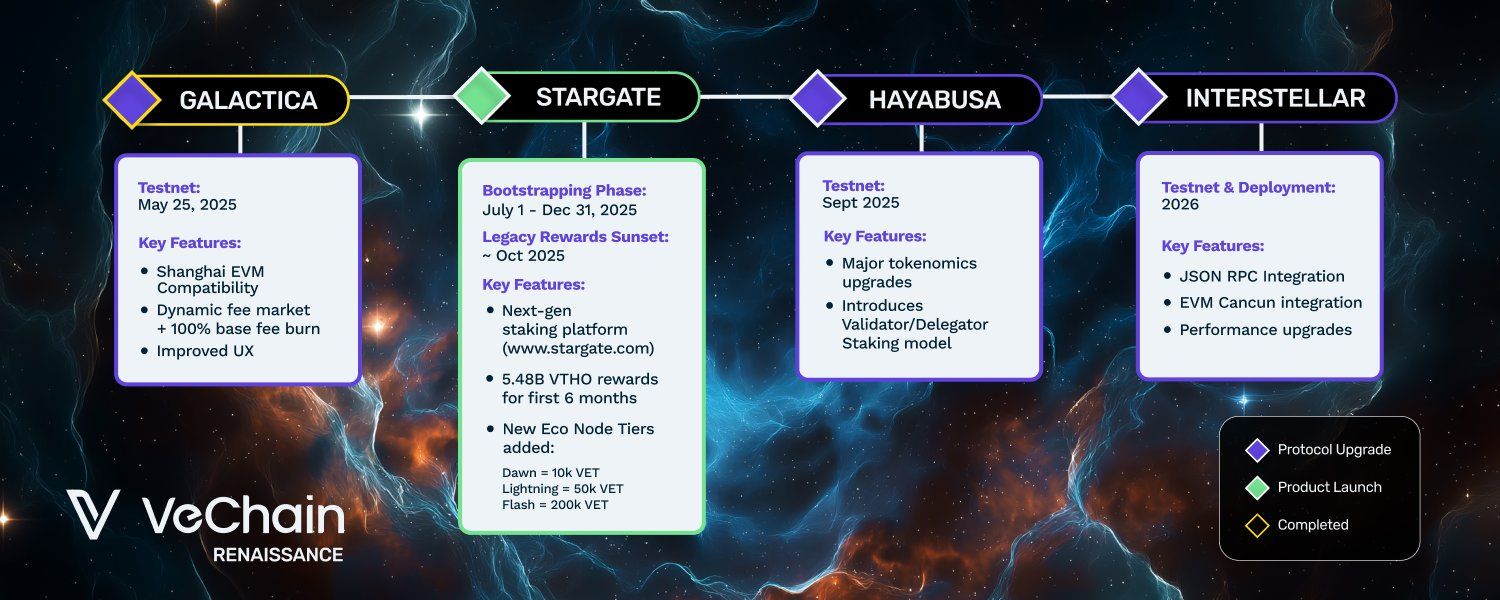
VeChain’s Renaissance Upgrade continued to advance in Q3 2025, representing an important phase in the network’s multi-stage modernization plan. The upgrade is designed to refine VeChain’s tokenomics, validator incentives, and technical architecture to improve long-term economic sustainability and enterprise usability. The quarter focused on staking integration, mainnet-level EVM enhancements, and preparation for the network’s transition to its next-generation consensus under Hayabusa.
Galactica Mainnet Launch
The Galactica Mainnet launch on July 1, 2025, marked the next major milestone of the Renaissance Upgrade. The update introduced:
Shanghai EVM Upgrade (VIP-242): Ensures compatibility with the latest Ethereum tooling and developer standards.
Typed Transactions (VIP-252): Streamlines transaction formatting for improved flexibility.
Extension Contract Improvements (VIP-250): Enhances contract functionality and reduces development overhead.
StarGate Launch
Also on July 1, VeChain launched the StarGate staking platform, a key milestone in the Hayabusa phase of the Renaissance roadmap. The platform, still in its bootstrapping phase, introduced several features aimed at expanding staking participation and improving economic alignment:
Delegator NFTs: Each staking position is represented by a non-transferable NFT, which records the amount of VET staked, staking duration, and validator association. These NFTs serve as both staking instruments and proof of participation within the network.
Delegation Pools: Users can delegate VET to validator-operated pools without running their own nodes, allowing broader participation in network security.
VTHO Reward Model: Stakers earn VTHO in proportion to the amount of VET staked and the validator’s performance, replacing passive VTHO generation with an active rewards mechanism.
Bonus Pool: A 5.48 billion VTHO incentive pool was allocated to early participants, offering an estimated yield of up to 9% APY during the initial distribution period.
The StarGate platform was introduced alongside new Economic Node tiers (Dawn, Lightning, and Flash), each with distinct staking requirements and reward weights. These tiers were designed to lower barriers to entry and promote decentralization among individual and institutional participants.
On December 2, 2025, StarGate 2.0 will launch on mainnet alongside the Hayabusa mainnet, introducing new tokenomics and staking flows. The new rewards model benefits from greater rewards and more active user contributions to network security.
Hayabusa Devnet Launch
VeChain released the Hayabusa Devnet on September 2, 2025, initiating public testing of the network’s upcoming Delegated Proof-of-Stake (DPoS) consensus and redesigned VTHO tokenomics. The devnet focuses on:
Testing staking-only VTHO generation, removing passive issuance from inactive wallets.
Introducing staking-based block rewards and reduced VTHO inflation rates.
Evaluating validator and delegator reward distribution under the new model.
The Hayabusa Devnet represents a transition toward a more efficient and security-oriented economic framework. By rewarding only active stakers, it reinforces participation-based incentives while reducing inflationary pressure within the ecosystem.
Following Q3’s progress, the Renaissance roadmap will continue into late 2025 with the Hayabusa mainnet rollout, completing the migration to active staking and finalized DPoS mechanics. This will be followed by Interstellar, the final phase of the roadmap, which introduces full JSON-RPC integration and complete EVM parity, aligning VeChainThor with the broader Ethereum ecosystem.
Wanchain Bridge
On June 24, 2025, VeChain announced a partnership with Wanchain to integrate its cross-chain bridge infrastructure into the VeBetter ecosystem. The integration, which went live on July 10, 2025, connects VeChain to more than 40 blockchain networks and over 130 digital assets, enabling direct and decentralized transfers between VeChainThor and other major blockchain platforms.
Wanchain’s bridge network operates through a decentralized validator model that uses multiparty computation (MPC) and threshold signature schemes (TSS) to secure cross-chain transactions without reliance on centralized intermediaries. The network has been in operation for over seven years and has processed approximately $1.5 billion in cross-chain volume without major security incidents.
Improve developer access to cross-chain users and assets.
This integration extends VeChain’s reach into broader DeFi and cross-chain markets while reinforcing the network’s updated tokenomics.
Sustainability & Green Metrics
Due to the increased onchain activity, VeChainThor’s CO₂ emissions also rose in Q3 2025. The network emitted an estimated 4.1 tonnes of CO₂ during the quarter, a 57.7% increase from Q2, roughly equivalent to the annual carbon absorption of 0.024 acres of forest.
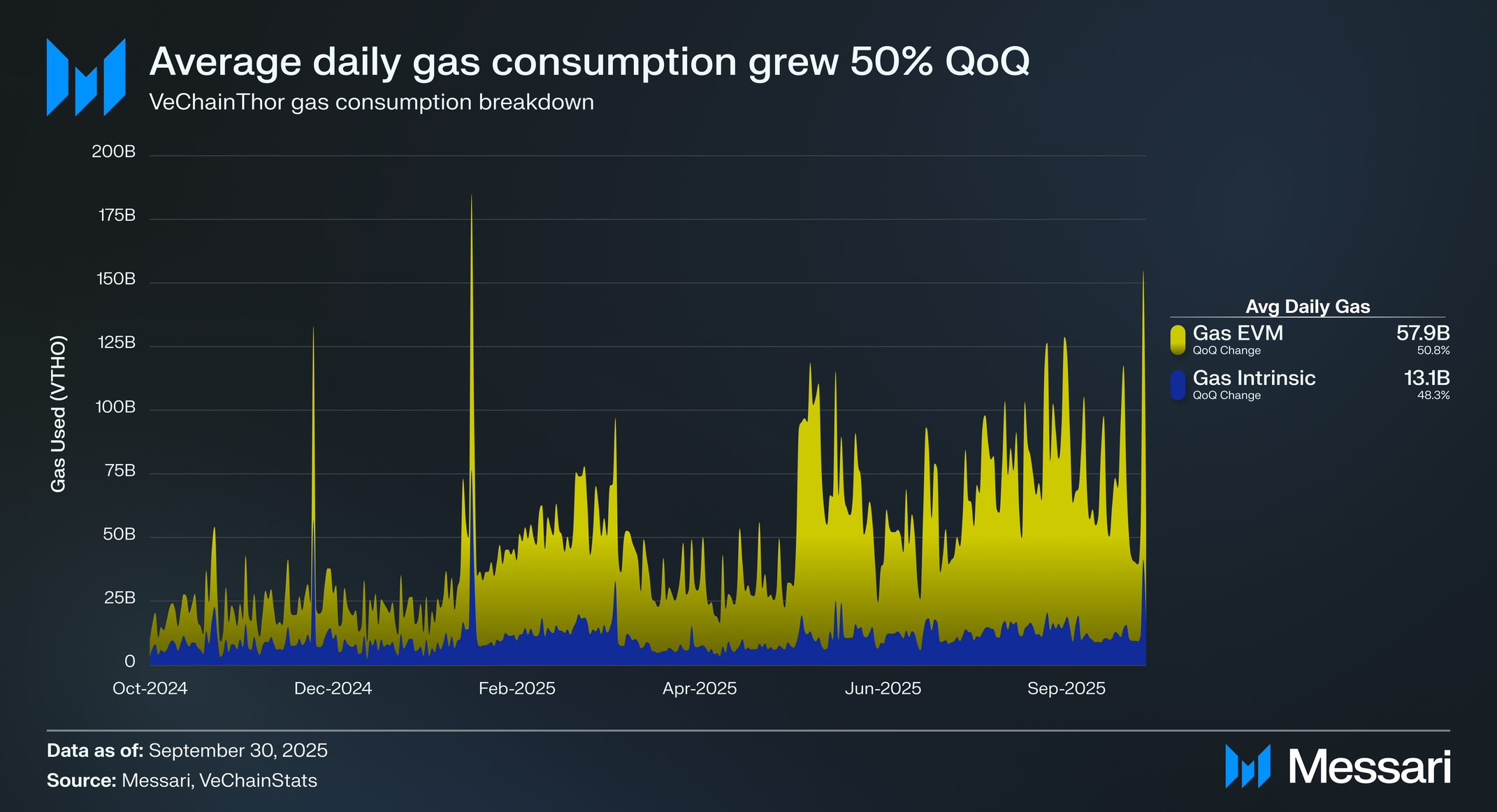
Gas usage continued to be dominated by EVM-based transactions, which accounted for 81.5% of total gas consumed, averaging 57.9 billion gas units per day. This represented a 50.8% increase QoQ in EVM-based gas consumption. Intrinsic gas usage, linked to simpler transaction types, also grew in Q3, rising 48.3% to an average of 13.1 billion daily gas units, representing 18.5% of overall network activity.
Ecosystem Overview
DeFi
VeChainThor’s DeFi ecosystem expanded in Q3 2025, with total value locked (TVL) rising 815.4% QoQ to $6.1 million. The growth was primarily driven by VeDelegate, a staking and delegation platform for VeBetter, which introduced fixed-term staking on July 1 2025. The platform, which went live on June 25, 2024, and started reporting TVL data on August 7, 2025, allows users to stake and earn rewards on B3TR tokens, which are then used to vote on VeBetter governance proposals according to the user’s pre-set voting preferences. By the end of Q3, VeDelegate held $4.8 million in TVL, making it the largest protocol on VeChainThor with 77.8% of the total market share.
BetterSwap was the second largest protocol by TVL with $878,200 in TVL, up 216% QoQ, and a 14.4% market share. Meanwhile, Vexchange and VeRocket both saw declines in their TVL falling 9.3% QoQ to $231,800 and 16.9% QoQ to $111,500 respectively.
Lastly, TurtleSwap, a decentralized exchange created by Turtle Labs, which started reporting data on August 18, 2025, recorded $136,000 in TVL, representing 2.2% of the total market.
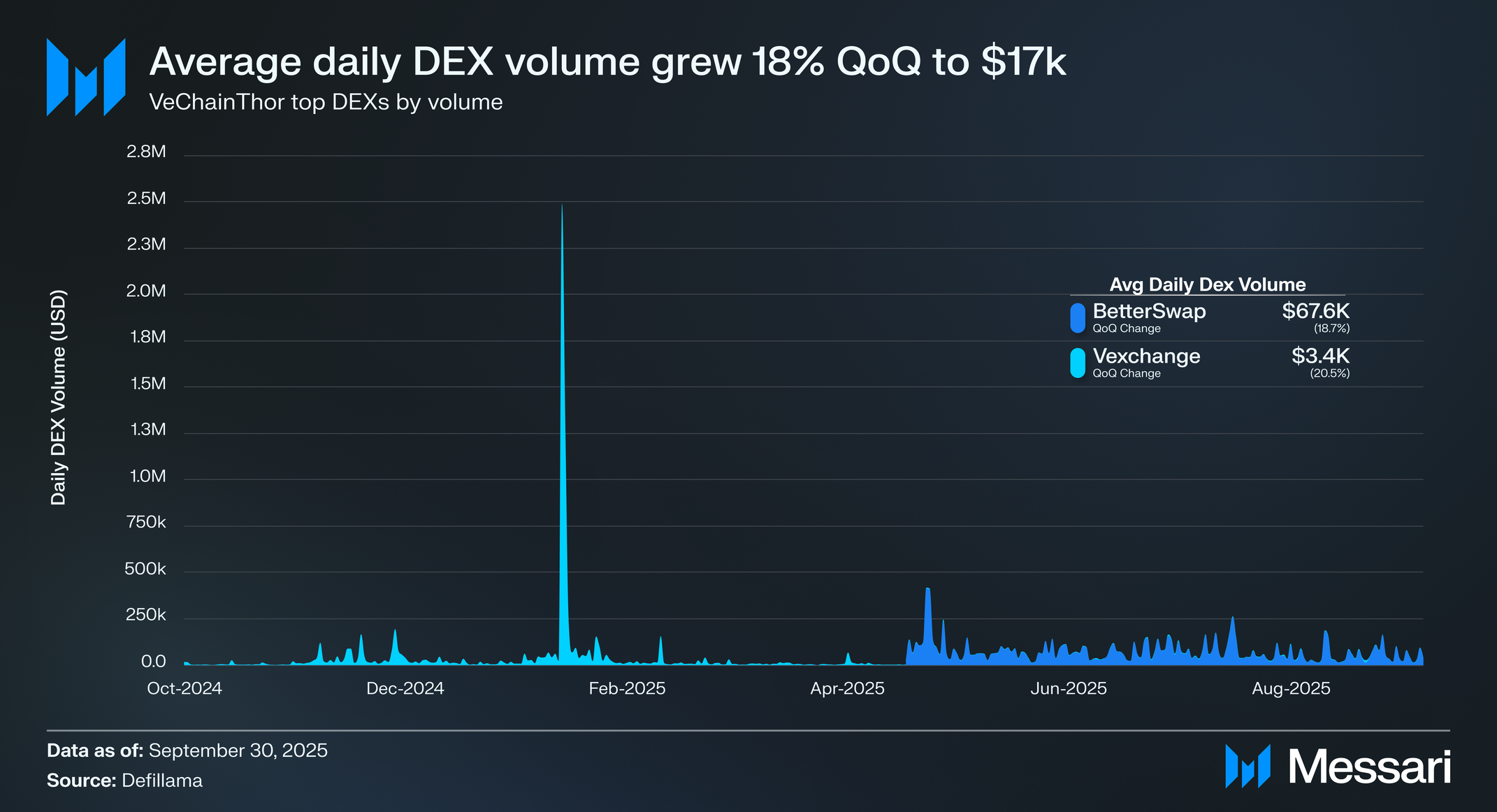
Average daily DEX volume rose to $71,000 in Q3 2025, up 18.4% QoQ from $60,000 in Q2. The market remained highly concentrated, with BetterSwap facilitating $67,600 in daily volume and accounting for 95.3% of total DEX activity, while Vexchange contributed $3,400 (4.7% share). Despite the overall increase in aggregate volume, both exchanges saw declines individually, with BetterSwap down 18.7% QoQ and Vexchange down 20.5% QoQ.
VeBetter
One of the leading platforms in VeChain’s ecosystem is VeBetter, an onchain app store and incentive layer. VeBetter focuses on the development of sustainability-focused applications and rewarding users for participating in sustainability efforts.
The platform has shifted VeChain's focus from B2B to a B2C adoption vector, leading to an increase in general usage metrics and development on the blockchain. To date, 44.9 million tokenized events have taken place across the platform's 50+ applications. The platform has 5.25 million users across 112 countries using its decentralized applications. These users commit around 1 million tokenized actions per week, representing real-world sustainability impacts recorded onchain.
B3TR: the primary incentive and participation token, awarded to users for participation in the VeBetter ecosystem.
VOT3: the primary governance token for VeBetter, implemented via a suite of smart contracts deployed on VeChainThor.
Together, these components enable voting, treasury management, and rewards aligned to user activity across partner dApps.
VeBetter Governance
Two additional GM NFT tiers, Uranus and Neptune, were launched in Q3 2025 as the eighth and ninth tiers in VeBetter’s governance structure. GM NFTs serve as both voting instruments and reward multipliers, giving holders greater influence over VeBetter proposals and increasing their share of ecosystem incentives. The system is designed to gamify governance while encouraging sustained participation, with each new tier providing enhanced benefits and reinforcing long-term engagement.
Uranus Tier: Launched on August 21, 2025, Uranus expanded governance weight and B3TR reward multipliers for participants, while introducing adjustments to reward distribution intended to improve balance between different engagement levels.
Neptune Tier: Launched on September 24, 2025, Neptune increased voting power and B3TR earning potential compared to previous tiers, representing the highest level of governance influence currently available within the DAO.
On August 18, 2025, VeBetter introduced an update to its proposal submission and voting process. The update was intended to improve procedural transparency, raise the quality of submitted proposals, and support more consistent community participation. The new framework introduced a clearer lifecycle for proposals, outlining defined stages for submission, review, and voting. Additional quality control measures were established to reduce duplicate or low-effort proposals before they reached the voting stage. The system also implemented adjustments to voting weights and reward calculations to better align outcomes with participant engagement levels.
Stablecoins
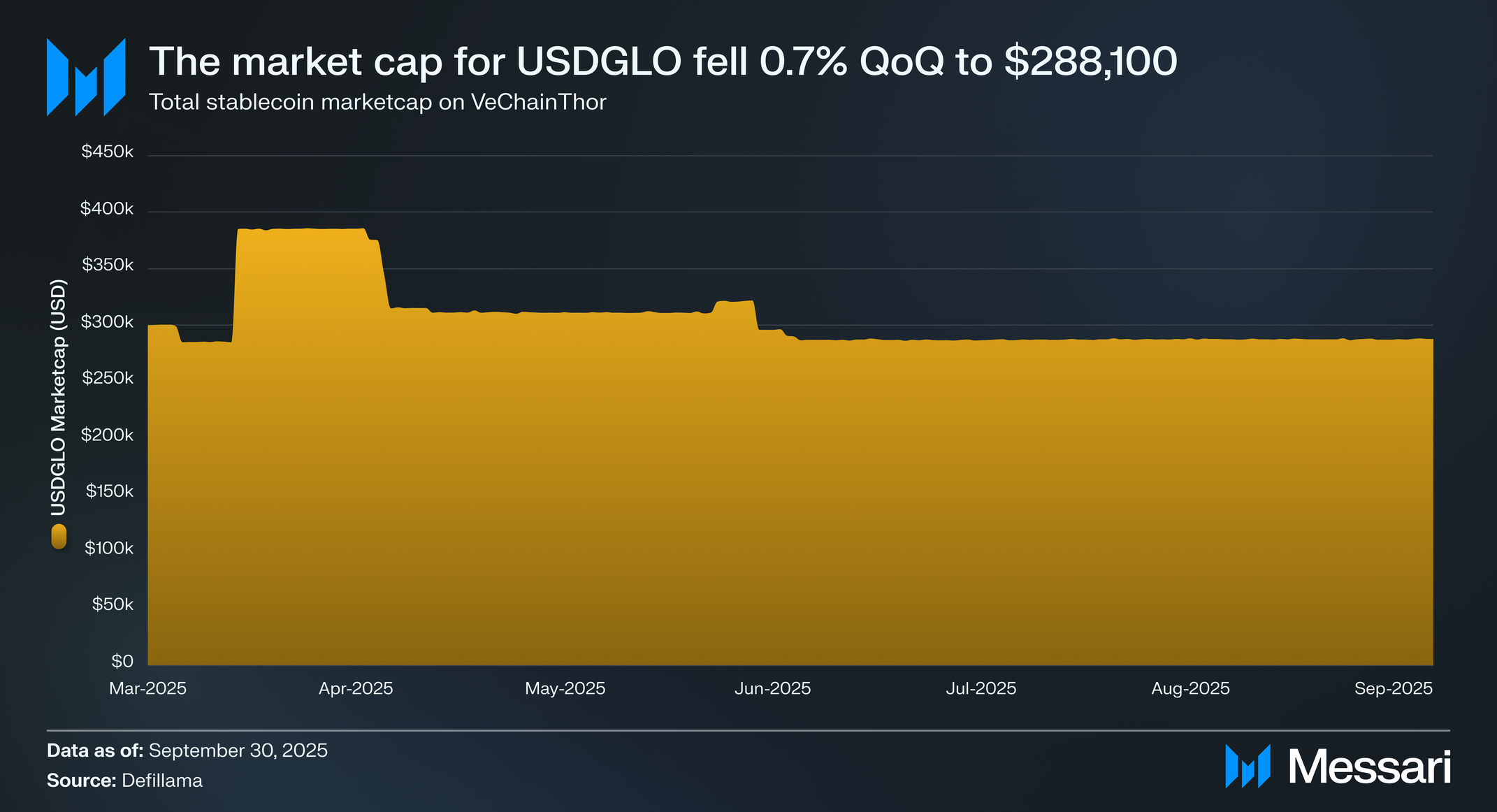
On March 18, 2025, USDGLOlaunched on VeChain, replacing VeUSD as the primary stablecoin on the network. The introduction of USDGLO marked an important step in building out the network’s financial infrastructure, providing a stable settlement layer for DeFi protocols, trading pairs, and retail use cases. By reducing exposure to volatility, stablecoins like USDGLO create a predictable medium of exchange that can support both enterprise adoption and consumer-facing applications. Additionally, profits from USDLO activity will go directly to the VeChain Foundation and will be used to buy B3TR tokens. B3TR tokens that are purchased through USDGLO profits will be given to VeBetter and will be used to support ecosystem initiatives and incentivize participation in the ecosystem. USDGLO closed Q3 with a market cap of $288,100, down just 0.7% QoQ.
Developer Ecosystem
VeChain accelerated its developer outreach and infrastructure in Q3 through multiple initiatives aimed at onboarding builders, enhancing transparency, and scaling community participation.
First, the Verified Smart Contracts system launched on VeChainStats on June 19, enabling developers to upload and verify deployed source code. This addition enhances security and accountability while simplifying auditing and compliance for enterprise and institutional use cases.
Second, VeChain initiated the Global VeChain Hackathon, running from September 22 to October 5, 2025, which invites builders from across the world to compete for funding and ecosystem visibility. On September 9, the VeFounder Program was introduced to support project founders through tailored incubation support, access to the VeChain Foundation, and long-term alignment with ecosystem priorities.
Additionally, community initiatives like the VeChain Creator Competition, which was hosted by Restify and launched on July 17, incentivized NFT and dApp experimentation through targeted rewards.
Partnerships & Adoption
VeChain expanded its presence across consumer applications, enterprise partnerships, and strategic integrations throughout Q3 2025.
Product Launches and Consumer Applications
Redeno Staking Platform: Redeno, a new staking platform built on VeChain, officially launched on July 1. The platform enables users to stake VET and other ecosystem tokens, offering new utility and expanding VeChain’s DeFi footprint.
VeWorld Upgrade: On September 3, the VeWorld wallet rolled out a redesigned interface and deepened integration with VeBetter. Users can now participate in governance, manage assets, and interact with dApps through an improved onboarding experience.
Strategic Partnerships and Advisors
Revolut Learn & Earn Program: On July 18, 2025, VeChain joined Revolut's Crypto Learn & Earn program, introducing VeChain's blockchain solutions to Revolut's 60+ million customers. The program offers interactive lessons on the VeBetter platform, tokenization, and sustainability solutions, rewarding participants with VET tokens. This partnership expands VeChain's mainstream reach through education-driven user onboarding.
BitGo Custody Integration: On July 29, VeChain announced a partnership with BitGo to introduce institutional-grade custody services for VET and VTHO. The collaboration provides secure storage and compliance infrastructure for enterprise clients and regulated entities, supporting VeChain’s efforts to expand into institutional markets.
Keyrock Network Validator: On July 30, Keyrock, a Brussels-based digital asset market maker, joined the VeChain network as an official validator. The integration strengthens network diversity and validator professionalism while incorporating Keyrock’s liquidity management capabilities into VeChain’s market ecosystem.
Franklin Templeton: On August 14, VeChain announced it would become a user of Franklin Templeton’s Benji platform, opening institutional avenues for regulated payments, leveraging distinctive features such as intraday yield, instant liquidity, and composability. The relationship advances VeChain’s move towards becoming an institution-ready ecosystem, with the necessary infrastructure and tools to facilitate easy onboarding.
Crypto.com Partnership: On August 18, VeChain expanded its exchange and ecosystem footprint through a new partnership with Crypto.com. The collaboration enhances user access to VeChain’s native assets and integrates the network more deeply into global payment and trading platforms, improving accessibility for both retail and institutional participants.
Closing Summary
VeChain closed Q3 2025 with measurable gains across both protocol fundamentals and ecosystem development. VET’s market cap increased 2.2% QoQ to $1.9 billion, while VTHO’s market cap fell 15.5% QoQ to $148.8 million due to both price compression and modest inflation. Average daily active addresses rose 85.2% QoQ to 62,800, and average daily clauses increased 32.3% QoQ to 370,000. DeFi performance also improved. TVL rose 815.4% QoQ to $6.1 million, while DEX volume grew 18.4% QoQ to $71,000 per day.
Protocol upgrades centered around the Galactica Mainnet launch, which introduced typed transactions, EVM tooling parity, and a dynamic base-fee burn model. The StarGate staking platform marked the beginning of VeChain’s transition to an active staking economy, and the Hayabusa Devnet introduced staking-only VTHO generation and began testing VeChain’s upcoming Delegated Proof-of-Stake (DPoS) consensus. Lastly, VeBetter expanded governance depth with two new GM NFT tiers and updated proposal mechanics to improve transparency and participation quality.
Interoperability and institutional alignment also advanced. VeChain integrated Wanchain’s cross-chain bridge, enabling decentralized transfers with over 40 chains. It deepened its institutional footprint through custody and compliance partnerships with BitGo, and Crypto.com, while also securing validator participation from Keyrock. These developments support VeChain’s broader goal of enabling real-world enterprise use cases with scalable infrastructure and transparent governance.
With momentum from the Renaissance roadmap and rising engagement across user and institutional layers, VeChain is positioned to further evolve its network economics, application ecosystem, and cross-chain integrations in Q4 and beyond.
This report was commissioned by VeChain. All content was produced independently by the author(s) and does not necessarily reflect the opinions of Messari, Inc. or the organization that requested the report. The commissioning organization may have input on the content of the report, but Messari maintains editorial control over the final report to retain data accuracy and objectivity. Author(s) may hold cryptocurrencies named in this report. This report is meant for informational purposes only. It is not meant to serve as investment advice. You should conduct your own research and consult an independent financial, tax, or legal advisor before making any investment decisions. Past performance of any asset is not indicative of future results. Please see our Terms of Service for more information.
No part of this report may be (a) copied, photocopied, duplicated in any form by any means or (b) redistributed without the prior written consent of Messari®.
Alexander is a protocol researcher specializing in Layer-1 and Layer-2 infrastructure, as well as RWA's and Stablecoins. Before Messari, he worked at Jump Trading and Bull-Moose Consulting. He graduated from Northeastern University with a degree in Economics and Data Science, and helped run Northeastern's blockchain club.
Alexander is a protocol researcher specializing in Layer-1 and Layer-2 infrastructure, as well as RWA's and Stablecoins. Before Messari, he worked at Jump Trading and Bull-Moose Consulting. He graduated from Northeastern University with a degree in Economics and Data Science, and helped run Northeastern's blockchain club.