VeBetter’s top two apps, Greencart and Mugshot, each surpassed 1 million accounts, showing continuous growth in the VeBetter ecosystem.
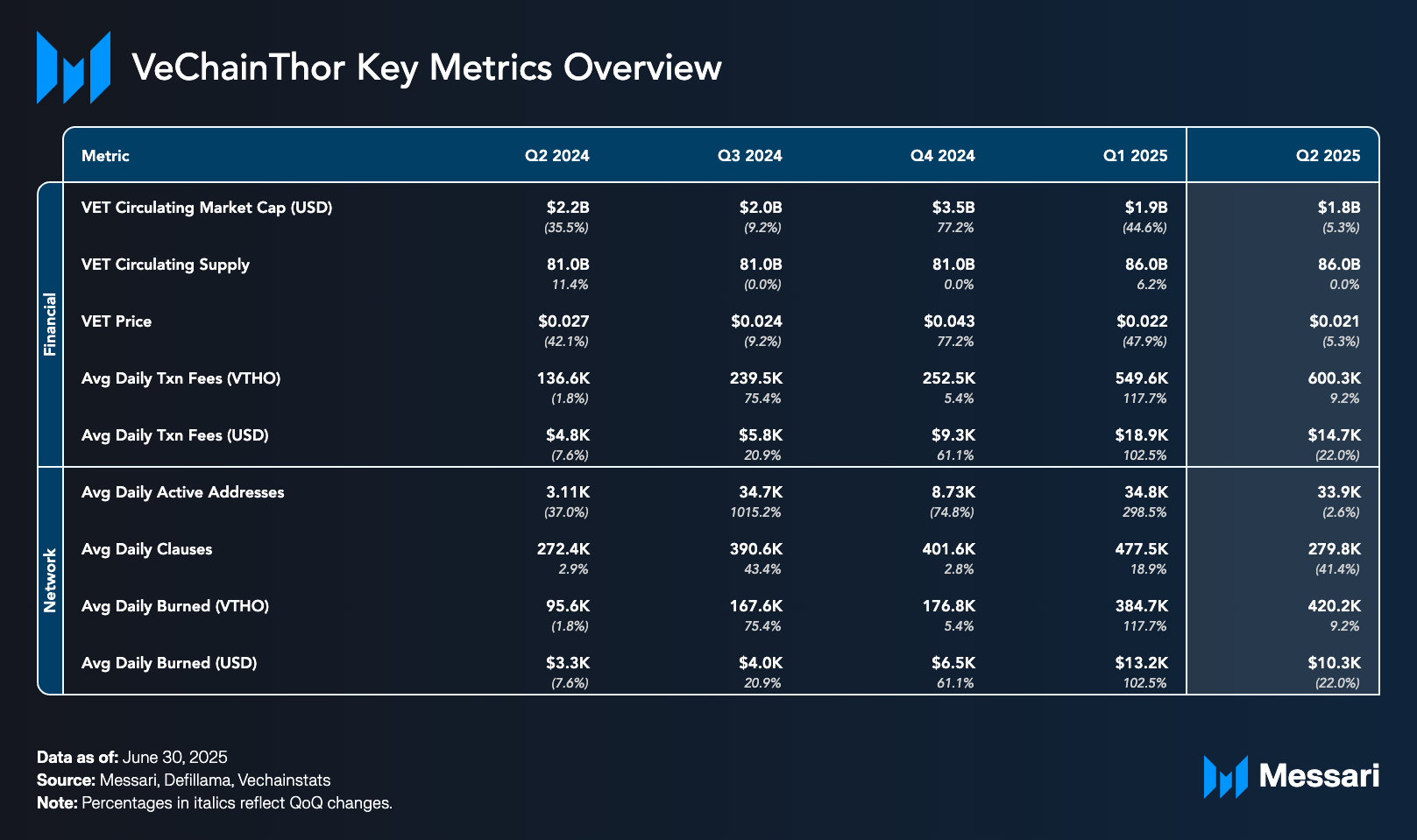
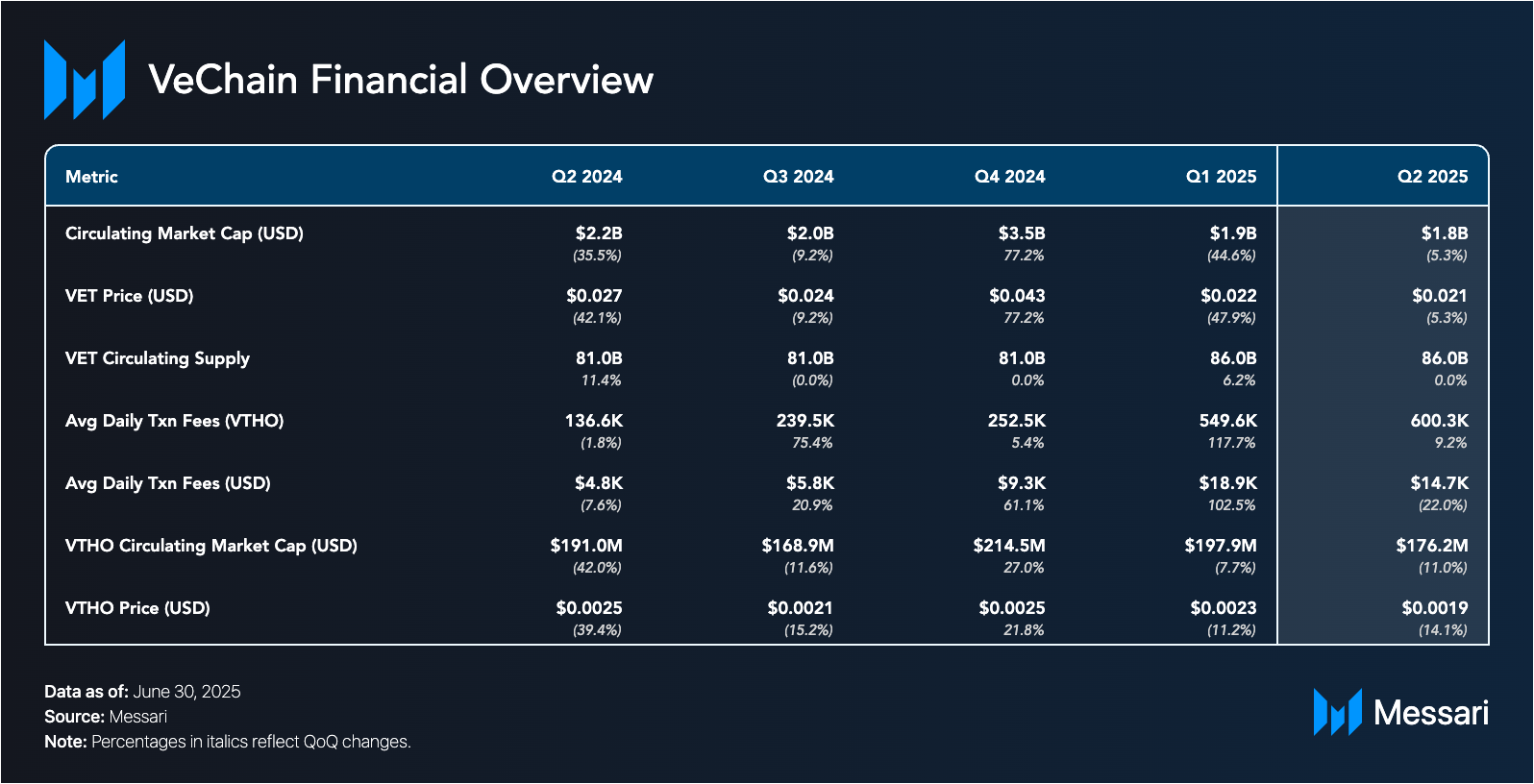
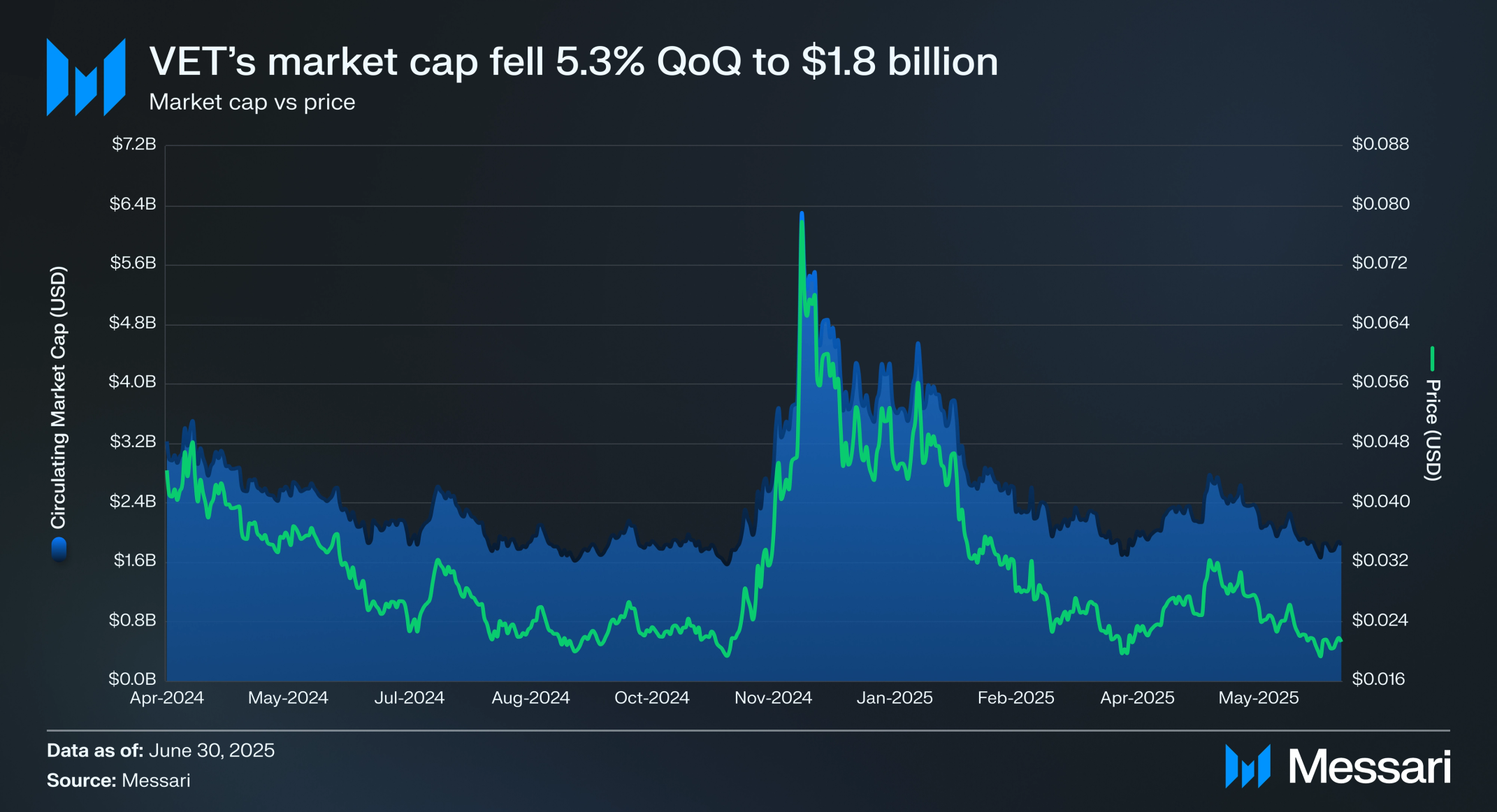
VET’s market cap declined 5.3% QoQ to $1.8 billion, driven by a drop in the token’s price, which ended the quarter at $0.021. Despite the downturn, VET still ranked among the top 50 crypto assets in terms of market cap.
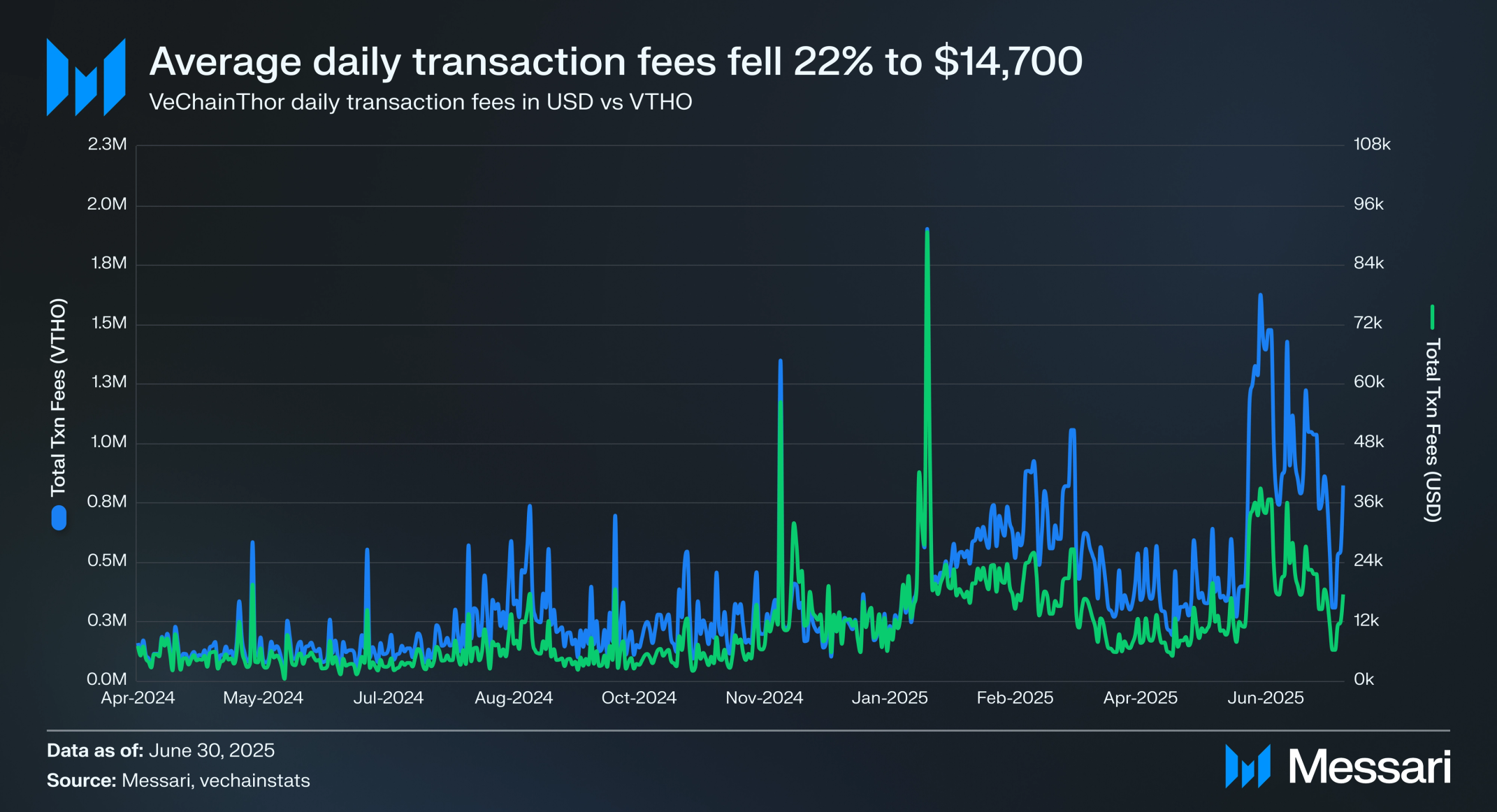
Average daily transaction fees in VTHO increased 9.2% QoQ to 600,300, despite a 41.4% QoQ decrease in average daily transaction clauses.
VeChain launched the Galactica testnet and announced the StarGate Staking platform, key steps toward VeChain’s tokenomics redesign and the Renaissance Upgrade.
VeBetterDAO launched three new GM NFT tiers namely Venus, Jupiter, Saturn, adding depth to its tiered governance framework.
Primer
VeChain, founded in 2017, uses blockchain technology to incentivize sustainability efforts and tackle real-world problems. At the heart of VeChain is VeChainThor, a Layer-1 public smart contract platform designed for predictable fees and real-world application support.
The network uses a dual-token model with VET as the primary token, used for staking and governance, and VTHO as the gas token used to pay for transactions and smart contract execution. This separation is intended to stabilize fees for users and developers while allowing VET to capture network value.
VeChainThor uses Proof of Authority (PoA) as the consensus mechanism. The process currently relies on a fixed set of KYC’d validators, referred to as authority master nodes, who produce blocks under a governance framework maintained by the VeChain Foundation. PoA is presented as a pragmatic tradeoff that targets high throughput and deterministic finality with low energy use, consistent with the chain’s focus on environmental sustainability.
For a full primer on VeChain, refer to our Initiation of Coverage report.
In Q2 2025, VET’s total market cap declined 5.3% QoQ to $1.8 billion. Similarly, VET’s price ended the quarter at $0.021, a 5.3% QoQ decrease from $0.022 in Q1. VET finished the quarter as the 44th largest asset in terms of market cap compared to all other cryptocurrencies.
VTHO Market Cap
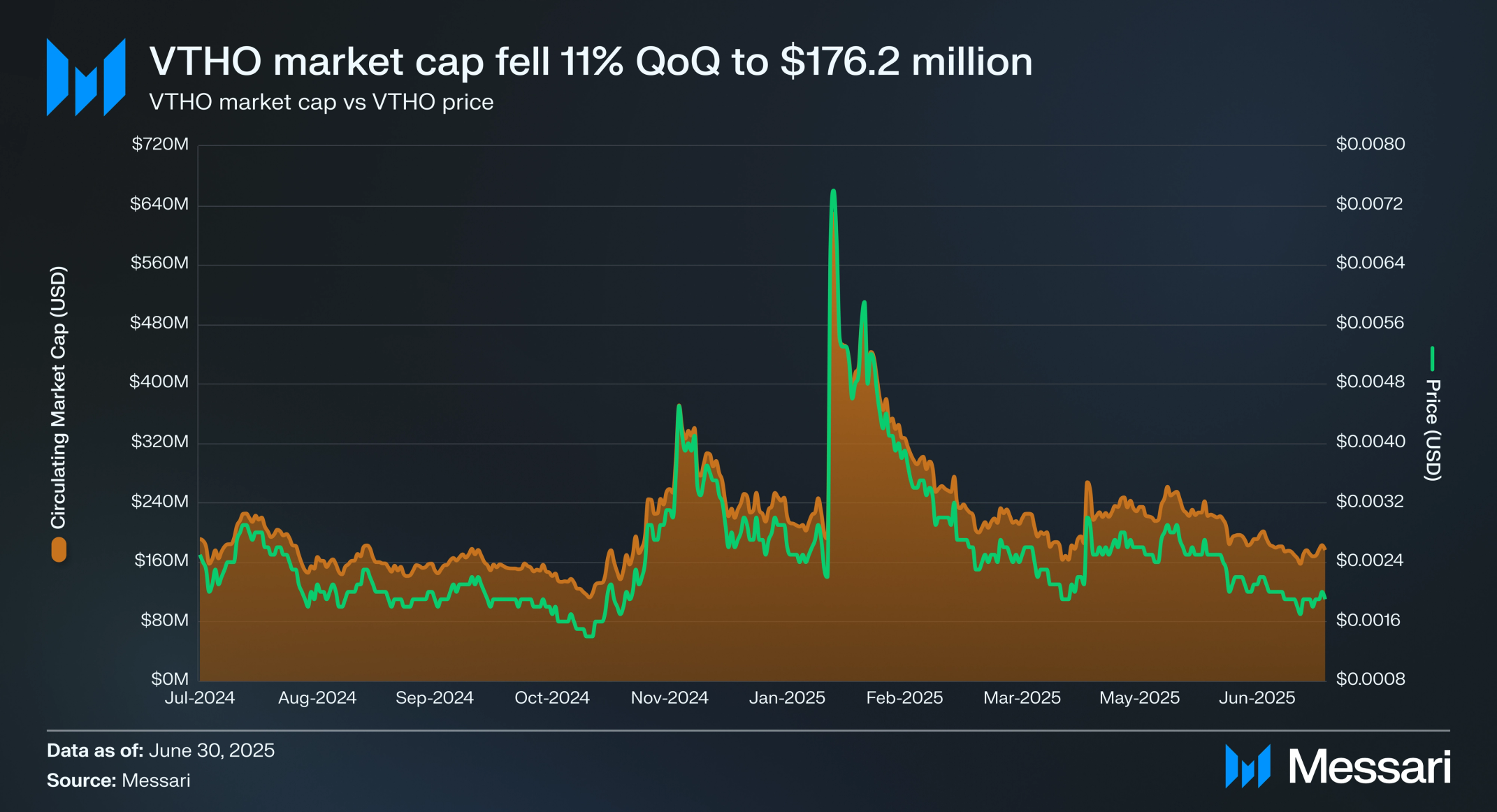
VTHO, VeChainThor’s gas token, which is earned through staking rewards, finished Q2 2025 with a total market cap of $176.2 million, down 11.0% QoQ from $197.9 million in Q1. Similarly, the price of VTHO fell 14.1% QoQ to $0.0019, down from $0.0023. The discrepancy between the QoQ change in market cap and price for VTHO comes from an increase in the total supply of VTHO, which rose 3.8% over the quarter. Among all other cryptocurrencies, VTHO ranked 193rd in terms of market cap.
Fees
In Q2, VeChainThor’s onchain fee generation increased in VTHO terms but declined in USD terms. Average daily transaction fees totaled approximately $14,700 USD, down 22% QoQ, while fees denominated in VTHO rose 9.2% QoQ, averaging 600,300 per day. This relationship can partly be explained by the 14.1% drop in VTHO’s price; however, it also indicates a drop in onchain activity, resulting in fewer transactions and less fee generation.
Network Overview
Onchain Activity
VeChainThor transactions are composed of clauses, which are discrete components that allow multiple actions, such as transfers or smart contract calls, to be bundled together in a single transaction. This design enables users and dApps to execute complex operations efficiently while minimizing gas costs.
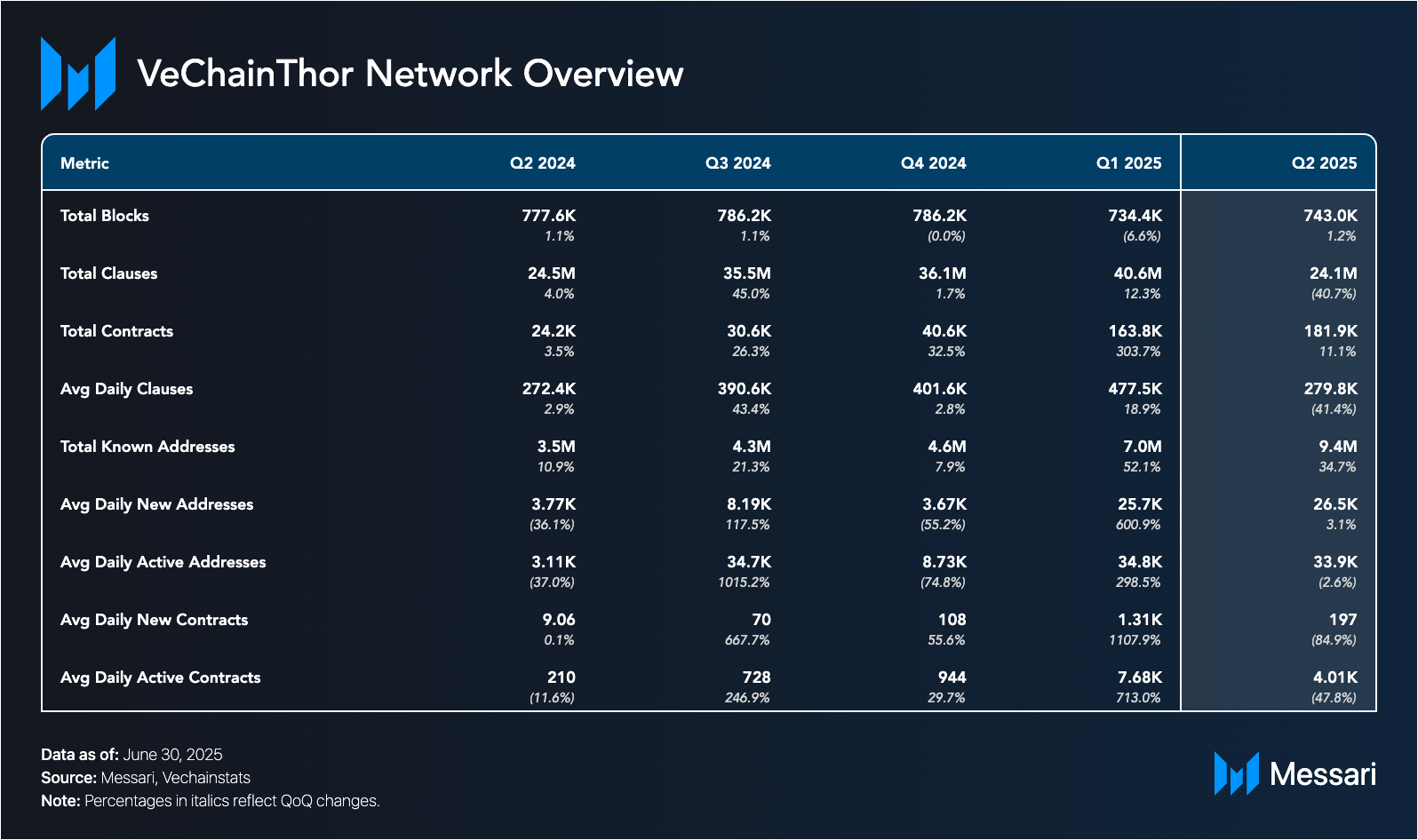
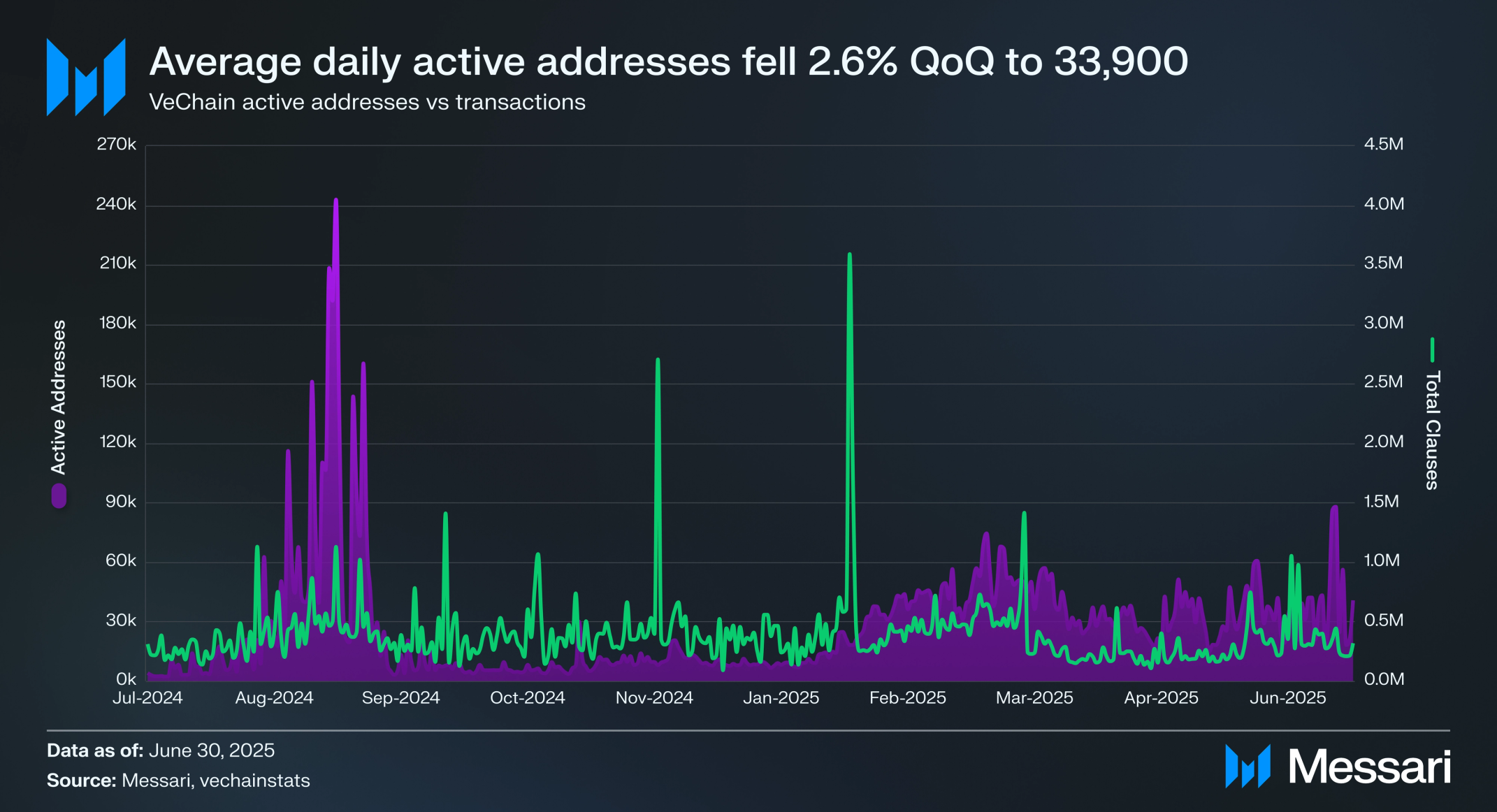
VeChainThors’s onchain activity contracted in Q2 2025. Average daily active addresses declined 2.6% QoQ to 33,900, while transaction clauses dropped 41.4% QoQ to 279,800. The drop in clauses reflects lighter use of bundled, multi-function transactions. It also extends the broader downtrend in onchain activity that started in the previous quarter.
Protocol Upgrades
Renaissance Upgrade
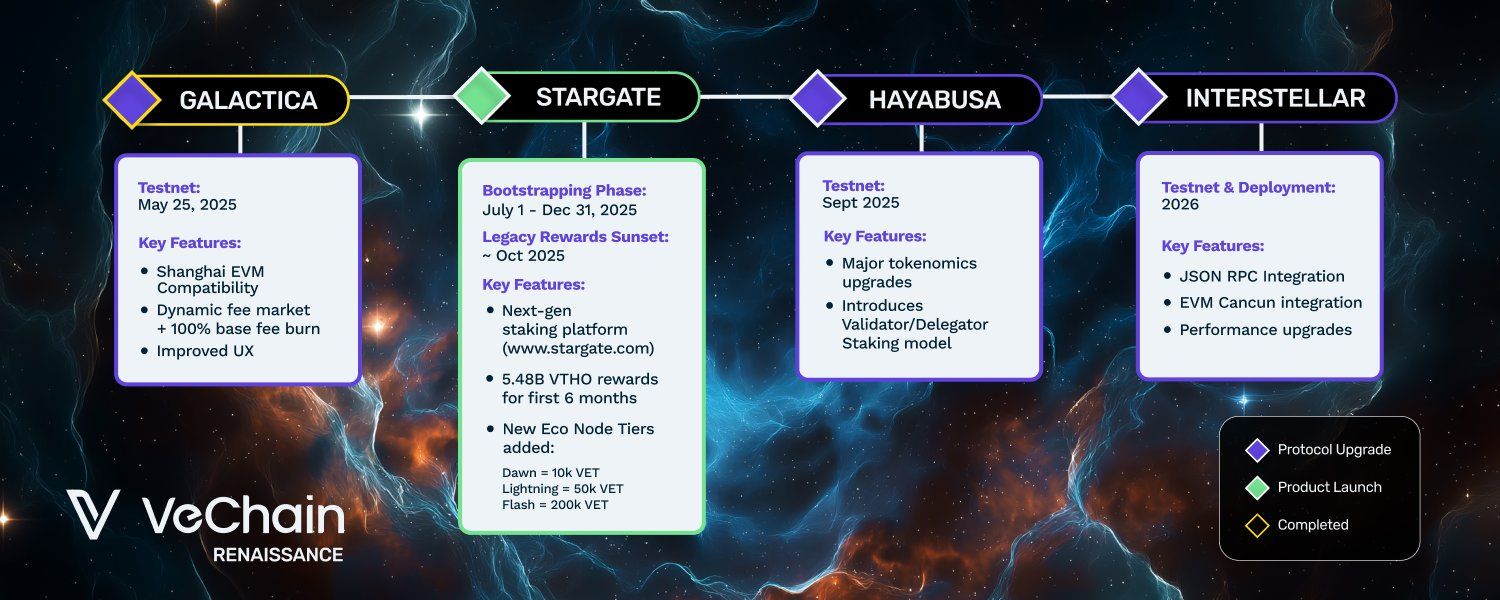
VeChain’s most ambitious protocol overhaul, the VeChain Renaissance Upgrade, advanced significantly in Q2 2025. The upgrade aims to improve VeChain’s tokenomics, incentive structure for users and validators, and grow the network's ecosystem. The rollout began with the Galactica testnet launch on May 20, 2025. Following independent audits by NCC Group and Coinspect, Galactica officially went live on mainnet on July 1, 2025, marking the first major phase of the Renaissance Upgrade.
Shanghai EVM Upgrade (VIP-242): Ensures compatibility with the latest Ethereum tooling and developer standards.
Typed Transactions (VIP-252): Streamlines transaction formatting for improved flexibility.
Extension Contract Improvements (VIP-250): Enhances contract functionality and reduces development overhead.
In April 2025, VeChain announced the StarGate staking platform. StarGate, which marks the start of the Hayabusa phase of the Renaissance Upgrade, changes the way VTHO is created, moving away from passive generation into wallets that hold VET to solely coming from staking rewards. Through Stargate, users mint unique staking NFTs tied to staked VET, which serve as both delegation instruments and governance tokens, giving Delegators and Validators greater control over consensus participation. VTHO is generated based on the amount of VET staked, with larger VET holdings leading to increased rewards. New Economic Node tiers (Dawn, Lightning, Flash) were also announced, lowering barriers to entry for new nodes and enabling broader community involvement.
Looking ahead, the Renaissance roadmap continues with:
Hayabusa (Q3–Q4 2025): Full Delegated Proof-of-Stake (DPoS) mechanics and enhanced tokenomics where only active stakers earn VTHO rewards.
Interstellar (Q4 2025):JSON-RPC integration and complete EVM parity, aligning VeChainThor with the broader Ethereum ecosystem.
Wanchain Bridge
On June 24, 2025, VeChain announced a partnership with Wanchain to integrate its cross-chain bridge infrastructure. The integration, which went live in early Q3, connects VeChain to 42 blockchain networks and over 130 assets, enabling direct asset transfers and expanding liquidity access.
Wanchain brings a seven-year operational record with no major security incidents and has processed more than $1.5 billion in cross-chain volume. Its system uses a network of bridge nodes secured through multiparty cryptography and threshold signatures.
For VeChain, the bridge is expected to:
Allow VET, VTHO, and B3TR (VeBetterDAO’s utility token) to circulate across other networks.
Improve developer access to users and capital beyond VeChain’s native ecosystem.
This integration extends VeChain’s reach into broader DeFi and cross-chain markets while reinforcing the network’s updated tokenomics.
Sustainability & Green Metrics
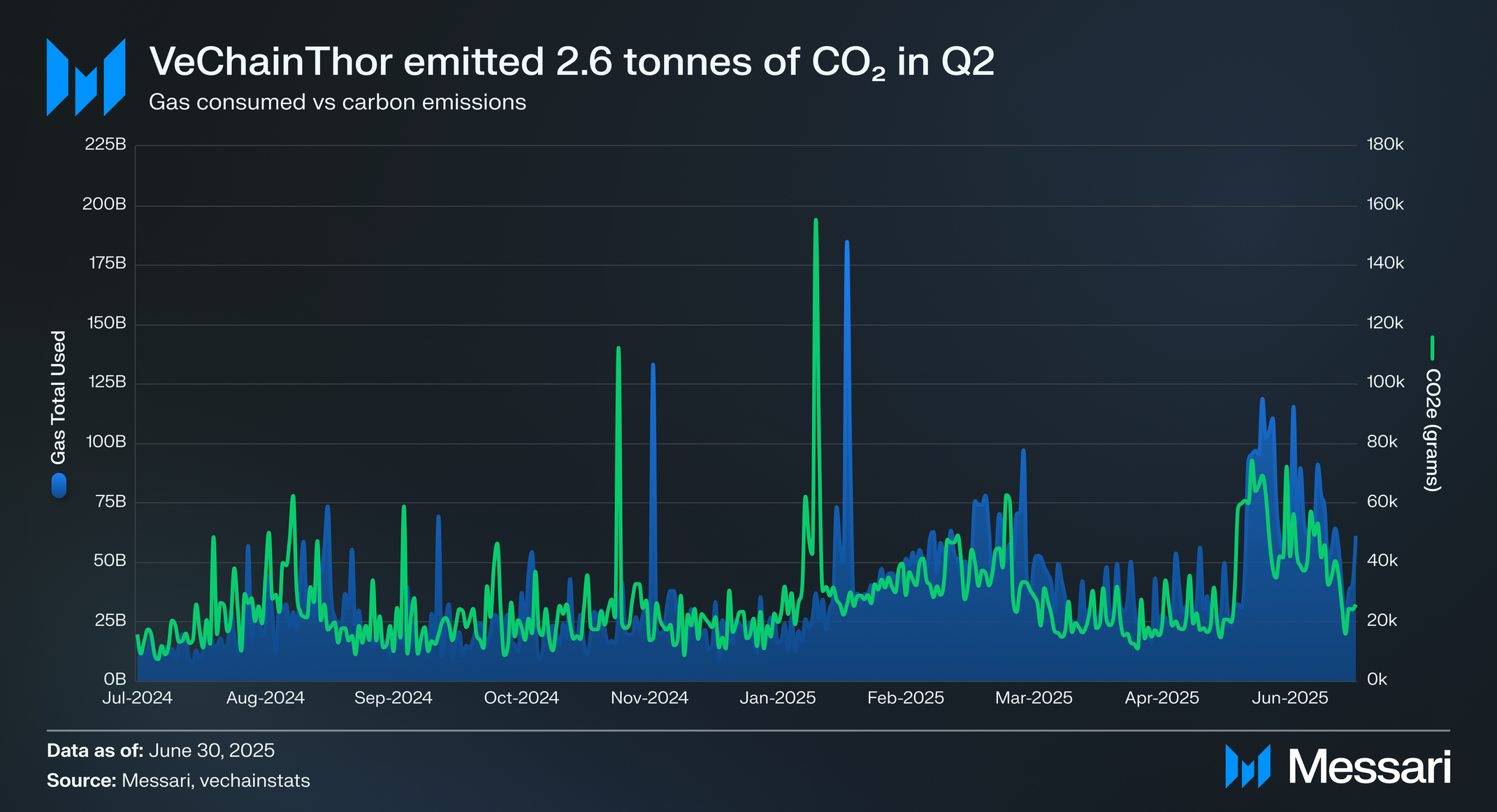
VeChain maintained its status as a low-emission blockchain in Q2 2025. The network emitted an estimated 2.6 tonnes of CO₂ during the quarter, a 9.7% decline from Q1, roughly equivalent to the annual carbon absorption of 34–50 trees.
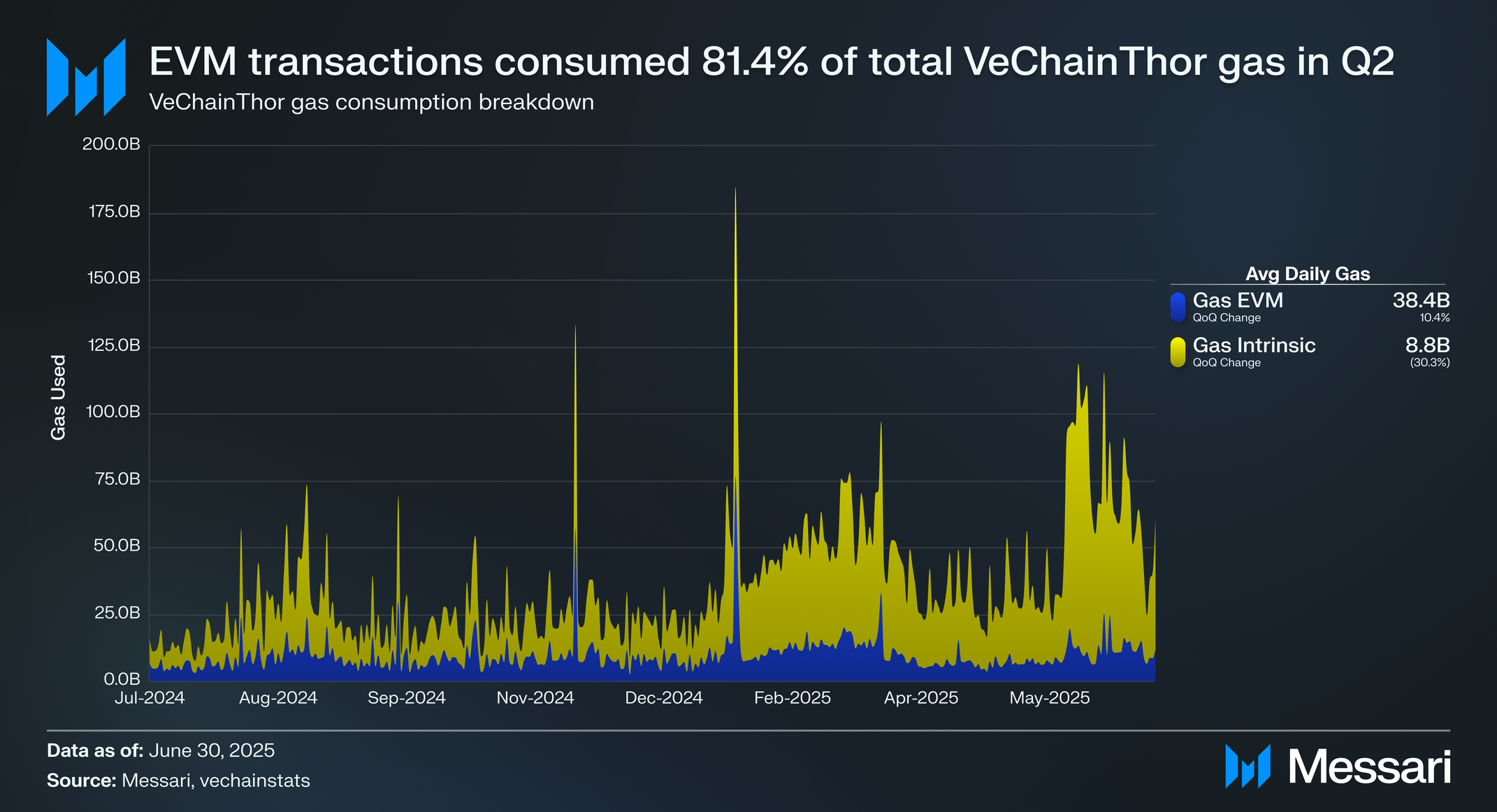
Gas usage was dominated by EVM-based transactions, which accounted for 81.4% of total gas consumed, averaging 38.4 billion gas units per day. This represented a 10.4% increase QoQ in EVM-based gas consumption, indicating higher reliance on smart contract execution. In contrast, intrinsic gas usage, linked to simpler transaction types, fell 30.3% to an average of 8.8 billion daily gas units, lowering its share of overall network activity to 18.6%.
The shift toward EVM-driven demand highlights the growing role of contract-based interactions in VeChain’s ecosystem. These results reinforce VeChain’s focus on providing a scalable infrastructure with low environmental overhead.
Ecosystem Overview
DeFi
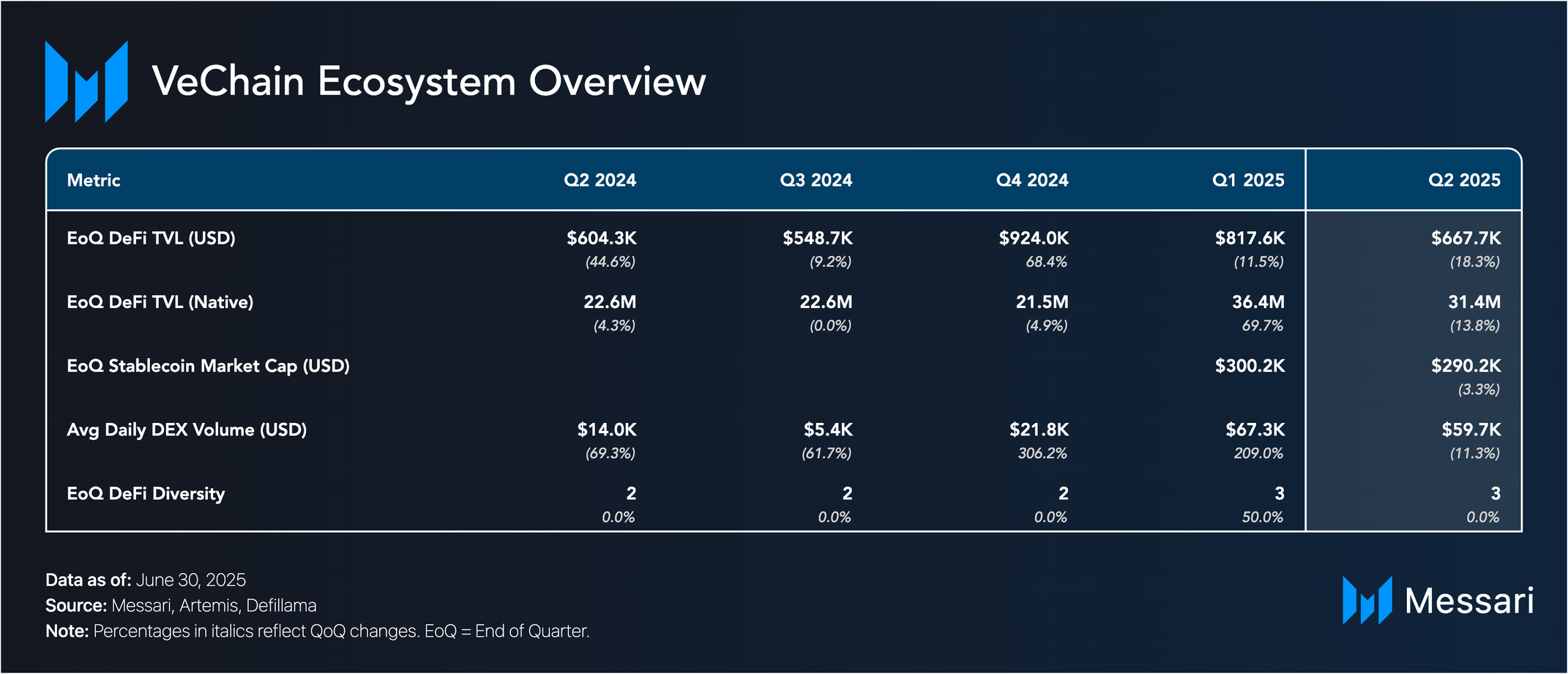
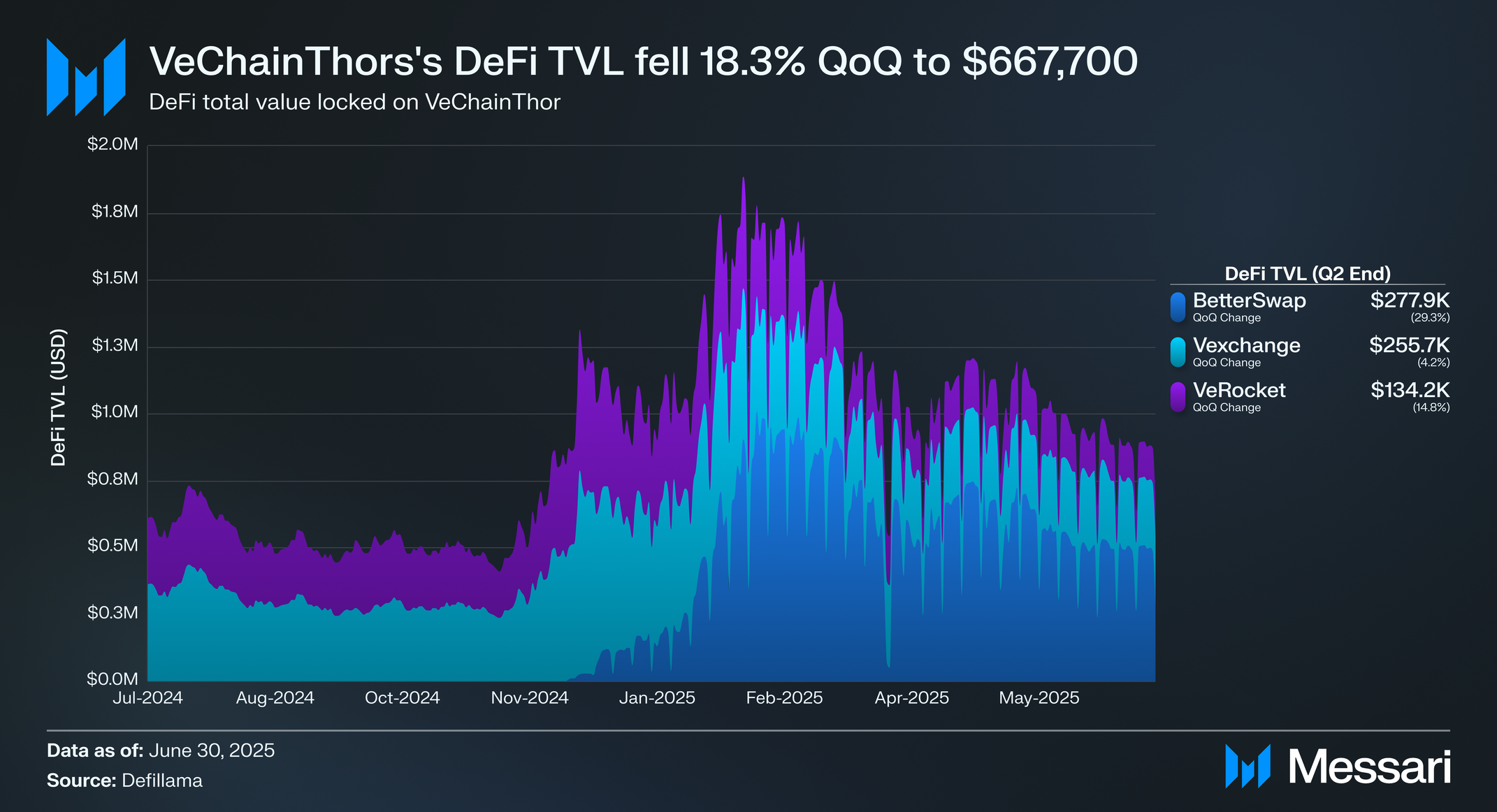
VeChainThor’s DeFi ecosystem contracted in Q2 2025, with total value locked (TVL) falling 18.3% QoQ to $667,700. The decline was universal across the ecosystem, with BetterSwap down 29.3% to $277,900, Vexchange down 4.2% to $255,700, and VeRocket down 14.8% to $134,200.
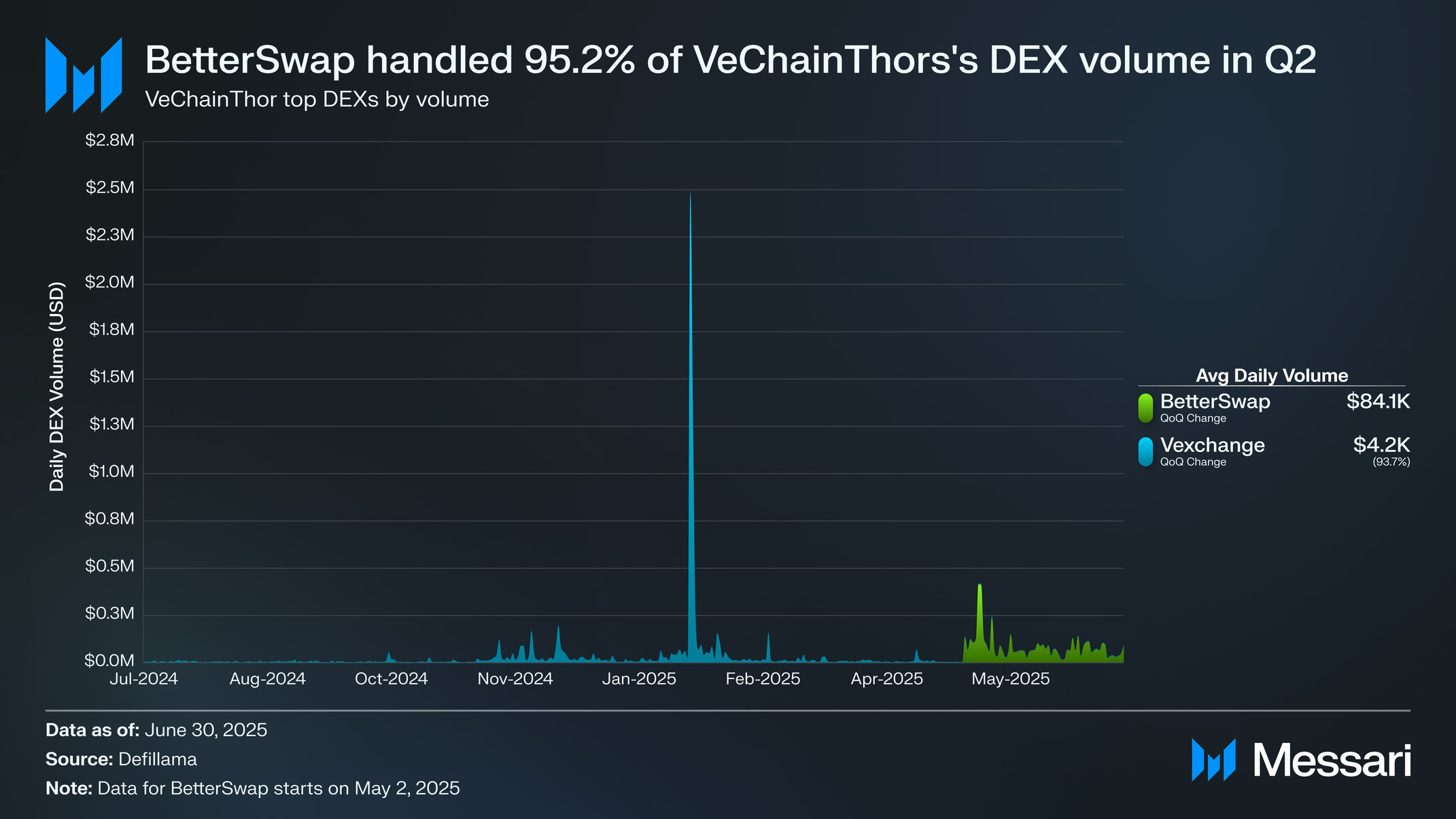
Average daily DEX volume reached $59,700, representing an 11.3% QoQ decline from $67,300 in Q1 2025. The market was highly concentrated, with BetterSwap handling 95.2% of activity and $84,100 in daily volume, while Vexchange accounted for $4,200 in daily volume, a 93.7% drop from Q1. Overall, while liquidity contracted, volumes suggest that user engagement and trading demand remained steady relative to total activity.
Stablecoins
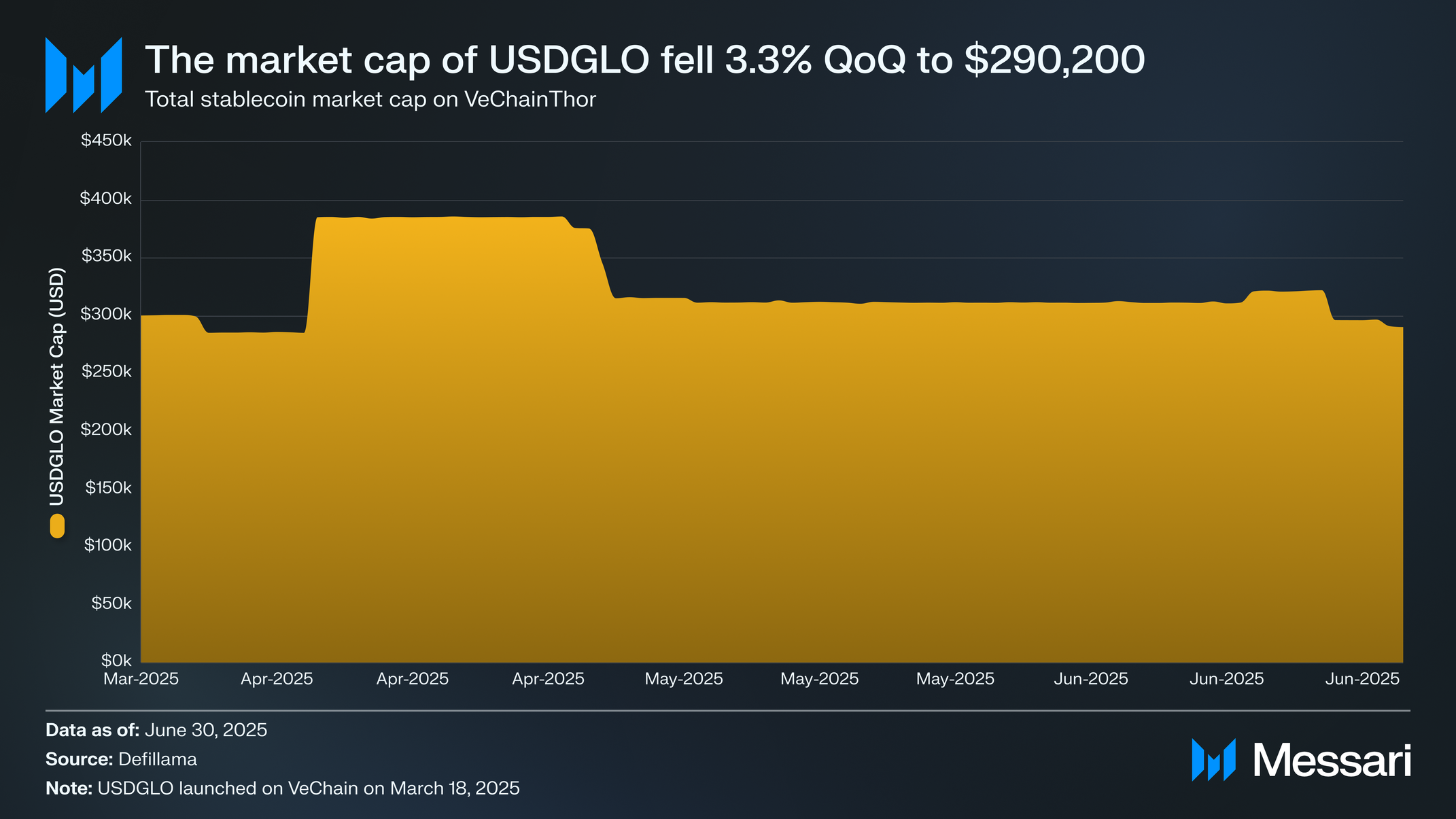
On March 18, 2025, USDGLOlaunched on VeChain, replacing VeUSD as the primary stablecoin on the network. The introduction of USDGLO marked an important step in building out the network’s financial infrastructure, providing a stable settlement layer for DeFi protocols, trading pairs, and retail use cases. By reducing exposure to volatility, stablecoins like USDGLO create a predictable medium of exchange that can support both enterprise adoption and consumer-facing applications. Additionally, profits from USDLO activity will go directly to the VeChain Foundation and will be used to buy B3TR tokens. B3TR tokens that are purchased through USDGLO profits will be given to VeBetterDAO and will be used to support ecosystem initiatives and incentivize participation in the ecosystem.
USDGLO closed Q2 with a market cap of $290,200, down just 3.3% from the end of March. While adoption remains small in absolute terms, the launch establishes a foundation for stable liquidity within the ecosystem.
VeBetter
VeChain’s ecosystem centers around VeBetter, an onchain app store and incentive layer, governed by VeBetterDAO. VeBetter focuses on the development of sustainability-focused applications and rewarding users for participating in sustainability efforts. The VeBetter ecosystem centers around two tokens:
B3TR: the primary incentive and participation token, awarded to users for participation in the VeBetter ecosystem.
VOT3: the primary governance token for VeBetterDAO, implemented via a suite of smart contracts deployed on VeChainThor.
Together, these components enable voting, treasury management, and rewards aligned to user activity across partner dApps.
VeBetterDAO
VeBetterDAO’s GM NFT program continued to expand in Q2 2025, further developing its tiered governance system. GM NFTs serve as both voting instruments and reward multipliers, giving holders greater influence over VeBetterDAO proposals and increasing their share of ecosystem incentives. The system is designed to gamify governance while encouraging sustained participation, with each new tier providing enhanced benefits and reinforcing long-term engagement.
During the quarter, three new GM NFT tiers were introduced:
Venus: Expanded voting power and multiplier effects, increasing the influence of active participants.
Jupiter: Added further governance weight and rewards for community members who donate B3TR to the VeBetterDAO treasury.
Saturn: The latest tier to launch, marking a significant step in VeBetterDAO’s ongoing “cosmic journey” toward a multi-level governance framework.
The launch of Jupiter and Saturn followed a community-approved upgrade to the GM NFT system, which adjusted parameters to make progression smoother and participation more accessible. With additional tiers such as Uranus, Neptune, and Galaxy still planned, VeBetterDAO is steadily building a comprehensive governance model that combines structured decision-making with incentive alignment.
Developer Ecosystem
Two major initiatives in Q2 2025 targeted developer growth and transparency across VeChain.
First, the VeBetter Grants program was relaunched with a new structure designed to fund early-stage projects aligned with VeChain’s sustainability and enterprise adoption goals. The upgraded program provides grants of up to $50,000 per project, with community involvement in the selection process. In addition to direct funding, the program offers mentorship, technical support, and access to VeChain’s enterprise and ecosystem partners, aiming to lower the barriers for new builders. The relaunch signals an effort to create a more structured pipeline for onboarding developers and ensuring that applications contribute to long-term ecosystem priorities, particularly in sustainability-linked use cases.
Second, Verified Smart Contracts were introduced on VeChainStats on June 19, 2025, marking an important improvement in transparency and developer trust. The new system allows developers to upload and verify source code for deployed contracts, making it possible for users to confirm that a contract’s behavior matches its published specifications. Verified contracts help reduce risks of malicious code, improve user confidence, and provide greater accountability for teams building on VeChain. This feature also facilitates auditing and due diligence, which are critical for attracting enterprise and institutional users to the network.
Partnerships & Adoption
VeChain’s ecosystem expansion in Q2 2025 was marked by progress across product launches, token listings, strategic partnerships, and regulatory milestones.
Product Launches and Consumer Applications
VeBetter Milestone:Mugshot and Greencart, two flagship dApps within the VeBetterDAO ecosystem, each surpassed one million registered accounts on June 19, highlighting strong consumer adoption.
Stella Pay Visa Card: VeChain partnered with Stella Pay to launch a Visa debit card that allows users to spend B3TR, VET, and VTHO globally. Early participants were incentivized with a 200 B3TR reward for the first 5,000 cardholders.
Token Listings and Exchange Activity
B3TR Listing on LBank: VeBetterDAO’s governance token B3TR made its exchange debut on LBank, expanding its accessibility to a broader user base.
VET Listing on Bybit: VeChain’s native token, VET, was added to Bybit, strengthening its presence across major trading platforms.
Strategic Partnerships and Advisors
Dana White Advisory Role: UFC President Dana White joined as an official advisor, aiming to support VeChain’s push into mainstream adoption through brand exposure and real-world partnerships.
4ocean Collaboration: VeChain partnered with 4ocean to integrate blockchain into sustainability initiatives focused on land and marine conservation.
San Marino Expo 2025: VeChain was named an official partner for San Marino’s pavilion at Expo 2025, where it will showcase blockchain-enabled sustainability solutions.
Greencart and Retail Institute Italy:Greencart, VeChain’s eco-commerce platform, joined the Retail Institute Italy, an association of supermarket leaders, positioning blockchain in everyday retail use cases.
Power Slap Partnership: VeChain became the official title partner of Power Slap, a growing sports entertainment brand, extending its reach into global sports marketing.
Compliance and Regulation
MiCAR Compliance: VeChain confirmed that both VET and VTHO whitepapers had been reviewed and accepted by the European Securities and Markets Authority (ESMA), achieving compliance with the EU’s Markets in Crypto-Assets Regulation (MiCAR) framework. This positions VeChain favorably for enterprise and institutional adoption in European markets.
Closing Summary
Q2 2025 was a transition period for VeChain. Market cap, fees, and activity declined, continuing the slowdown from late 2024. Even so, the quarter laid the groundwork for major upgrades. The Renaissance Upgrade advanced with the announcements of Galactica and StarGate, introducing a new VTHO tokenomic model, NFT-based staking, and expanded validator participation. Additionally, the announced Wanchain integration further broadened VeChain’s reach, connecting it to over 40 blockchains and 130 assets.
Ecosystem growth was mixed: DeFi TVL fell, but volumes held steady, and the launch of USDGLO brought VeChain its first native stablecoin. Governance expanded through new GM NFT tiers, while developers gained support through VeBetter Grants and verified contracts.
Adoption also progressed. VeBetter’s top two apps, Mugshot and Greencart, both surpassed one million users. VET was listed on Bybit, and B3TR debuted on LBank. Partnerships with Stella Pay, 4ocean, San Marino Expo, Greencart, and Power Slap extended VeChain’s footprint, while MiCAR compliance strengthened its regulatory standing in Europe.
This report was commissioned by VeChain. All content was produced independently by the author(s) and does not necessarily reflect the opinions of Messari, Inc. or the organization that requested the report. The commissioning organization may have input on the content of the report, but Messari maintains editorial control over the final report to retain data accuracy and objectivity. Author(s) may hold cryptocurrencies named in this report. This report is meant for informational purposes only. It is not meant to serve as investment advice. You should conduct your own research and consult an independent financial, tax, or legal advisor before making any investment decisions. Past performance of any asset is not indicative of future results. Please see our Terms of Service for more information.
No part of this report may be (a) copied, photocopied, duplicated in any form by any means or (b) redistributed without the prior written consent of Messari®.
Alexander is a protocol researcher specializing in Layer-1 and Layer-2 infrastructure, as well as RWA's and Stablecoins. Before Messari, he worked at Jump Trading and Bull-Moose Consulting. He graduated from Northeastern University with a degree in Economics and Data Science, and helped run Northeastern's blockchain club.
Alexander is a protocol researcher specializing in Layer-1 and Layer-2 infrastructure, as well as RWA's and Stablecoins. Before Messari, he worked at Jump Trading and Bull-Moose Consulting. He graduated from Northeastern University with a degree in Economics and Data Science, and helped run Northeastern's blockchain club.