Major announcements and milestones lead Kyber to outperform the broader DEX market

This report is part of a weekly series where we will explore the mechanics behind major Open Finance protocols and evaluate them on a fundamental basis. You can view prior reports here.
February proved to be a busy month for Kyber as it got listed on Coinbase and announced they will be implementing staking and upgrading to a DAO in Q2. Furthermore, the exchange hit some prominent milestones as it surpassed $100 million in trading volume and 100,000 trades on the year. As of March 1, Kyber has facilitated $168 million in volume putting it on pace for $1 billion traded on the year, or 2.5x last year’s volume. This activity has KNC up 269% year-to-date, significantly outpacing its peers.
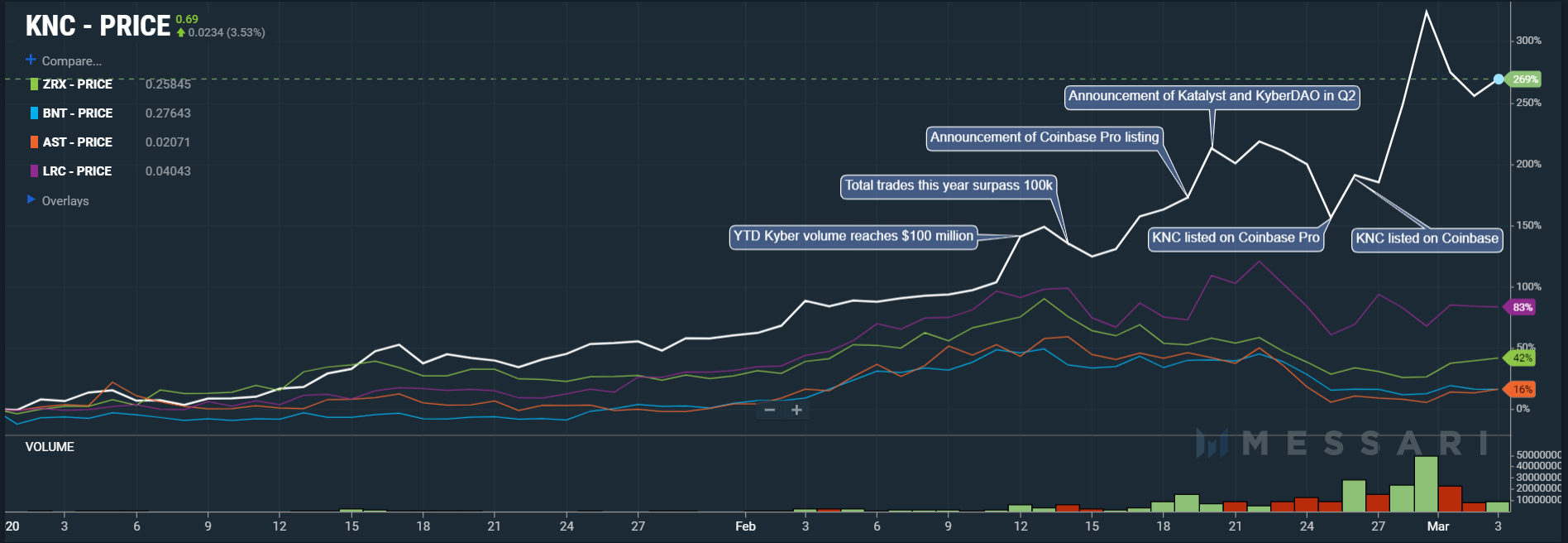
Courtesy of Messari’s sleek new charting features
The increasing volume is part of a broader trend in DEX volume that isn’t Kyber specific. Total monthly volume across all DEXs reached new all-time highs in February.
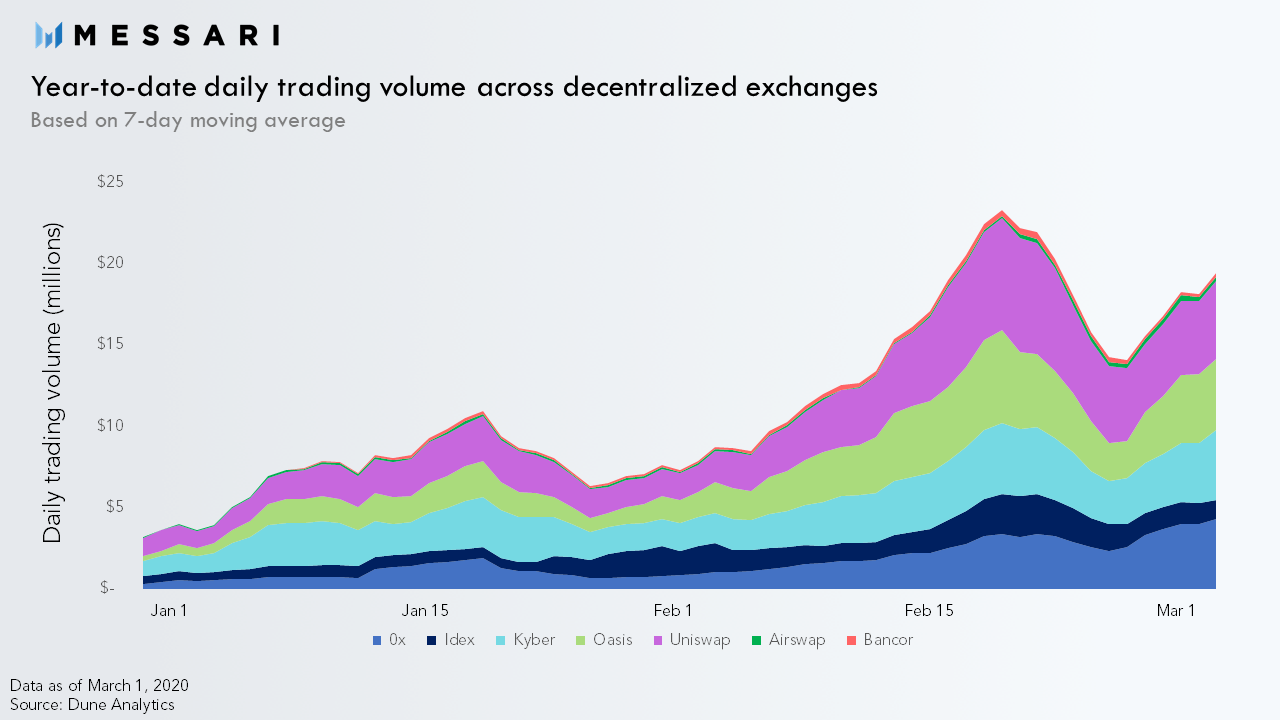
While total volume increased, Kyber's share of total volume actually diminished slightly ceding ground to 0x and Oasis.
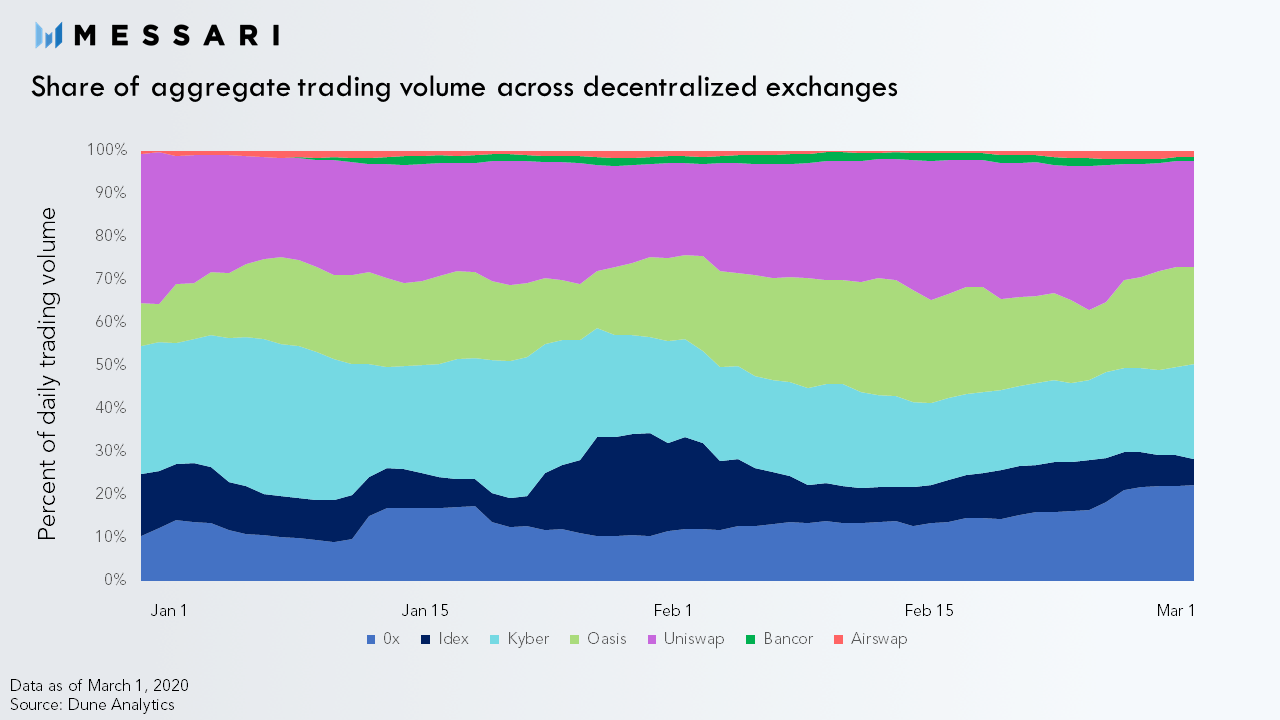
The rising volumes come as the overall trading experience is constantly improving, largely due to the introduction of DEX aggregators which allow traders to minimize slippage on their trades. Another factor is projects changing their token economics to incentivize liquidity. Both Bancor and 0x have made major upgrades to include staking mechanisms for this purpose, while Kyber will be following suit in the next few months. The impending Katalyst upgrade will be a major milestone that should, in theory, fundamentally improve the Kyber network. However, with those changes comes a host of new risk factors introduced by decentralizing governance that have the potential to cause major losses. It remains to be seen how exactly the market will respond to this massive upgrade, but regardless Katalyst will be a major event to watch given Kyber’s inextricable link to the world of DeFi.
