The Community Economy

The Creator Economy enabled content creators, influencers, freelancers, and streamers to monetize their passions, unique skillsets, and social capital to build personal brands that function as businesses. This transition has enabled individuals to monetize their human and social capital – natural skillsets and social media prowess – most often using an advertising or subscription-based model.
Without question, the Creator Economy has improved the lives of millions of individuals and generated billions of dollars in value around how these creators monetize and manage their audience. In the Creator Economy, creators develop and distribute content, and in exchange they receive revenue from advertising (i.e. YouTube or Spotify ads) or in some cases, sell direct subscriptions (i.e. OnlyFans, Patreon, Substack). The only flow of value the audience receives is content.
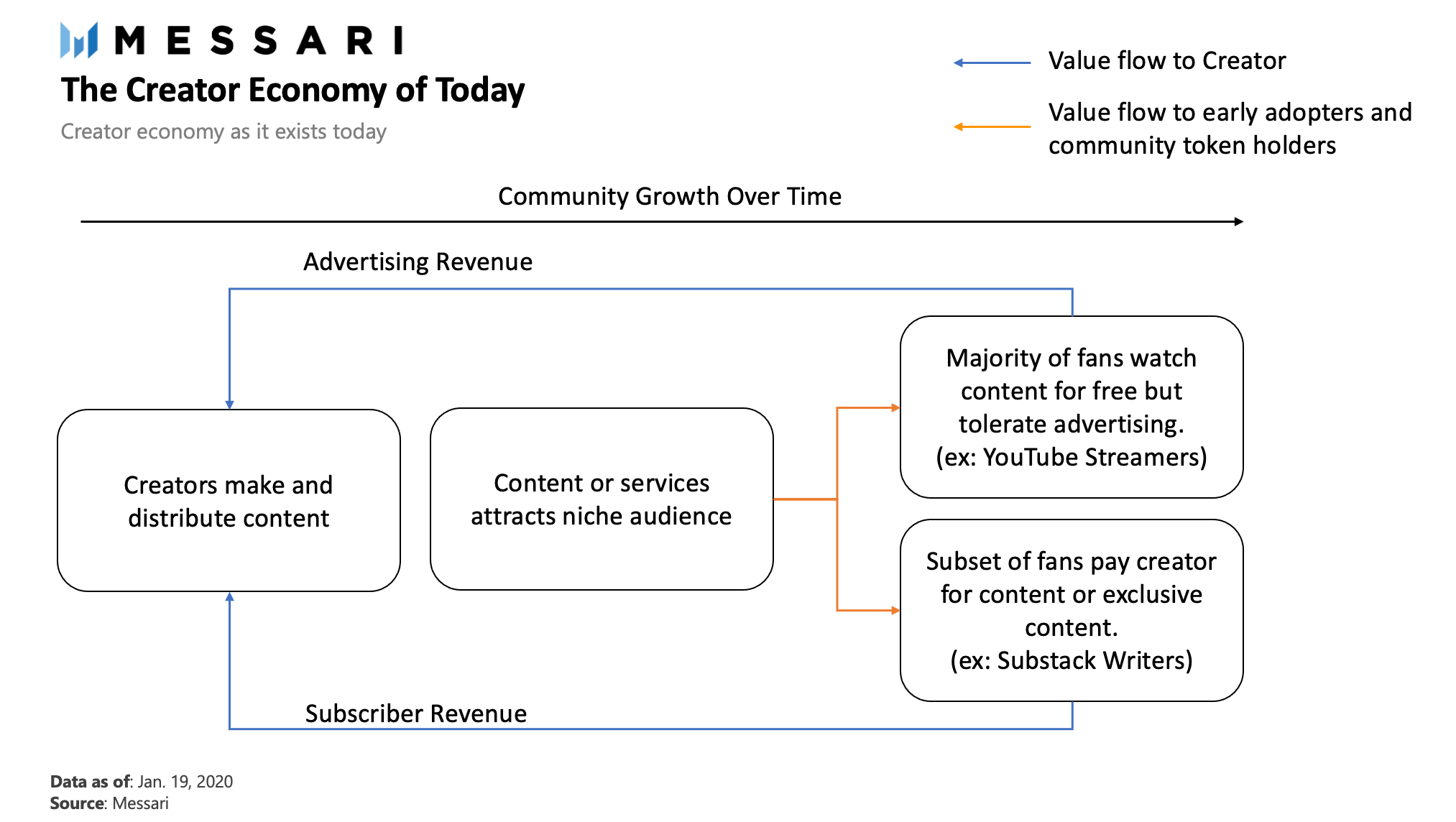
As a creator or influencer grows their network, much of the value resides in the strength of the communities they develop. After all, content creators, podcasters, YouTubers, and other influencers become incredibly wealthy and successful, in part because of their loyal fanbases that make advertising possible.
One can make the argument that fans are receiving something valuable in return, free content. But, this misses the point on two key issues. The first issue is that a creator has to make their content free until they hit a certain flywheel where they get paid enough to quit their day-job. In the beginning of the Creator Economy timeline, early fans that initiate the flywheel provide greater value to the creator’s new community than later arriving fans.
Second, while consumers sacrifice attention in exchange for free content or services, all attention is not equal. The attention of individuals willing to pay or help build a community is meaningfully more valuable than bystander consumers. Currently, both types of fans are treated equally. Additionally, as a community grows, earlier fans lose value since the increased number of fans dilutes their connection to the creator.
An Economy for Fan and Followers

Mason was a Senior Research Analyst at Messari focused on Web3 protocols and cryptoassets. Before Messari, Mason worked at ConsenSys as a Content Marketer focused on marketing strategy. Mason obtained his Master’s in Business Management at Hong Kong Baptist University.