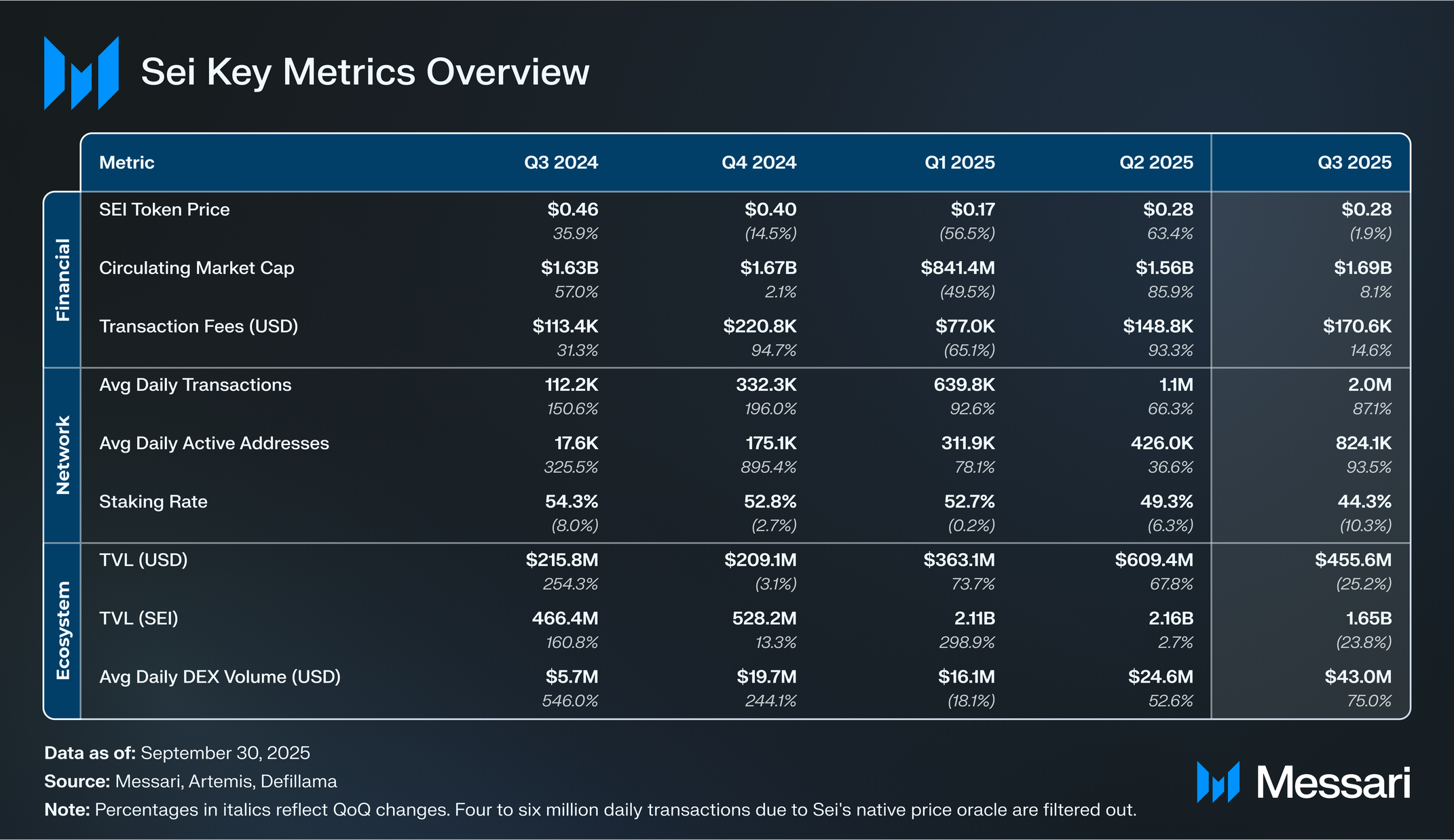
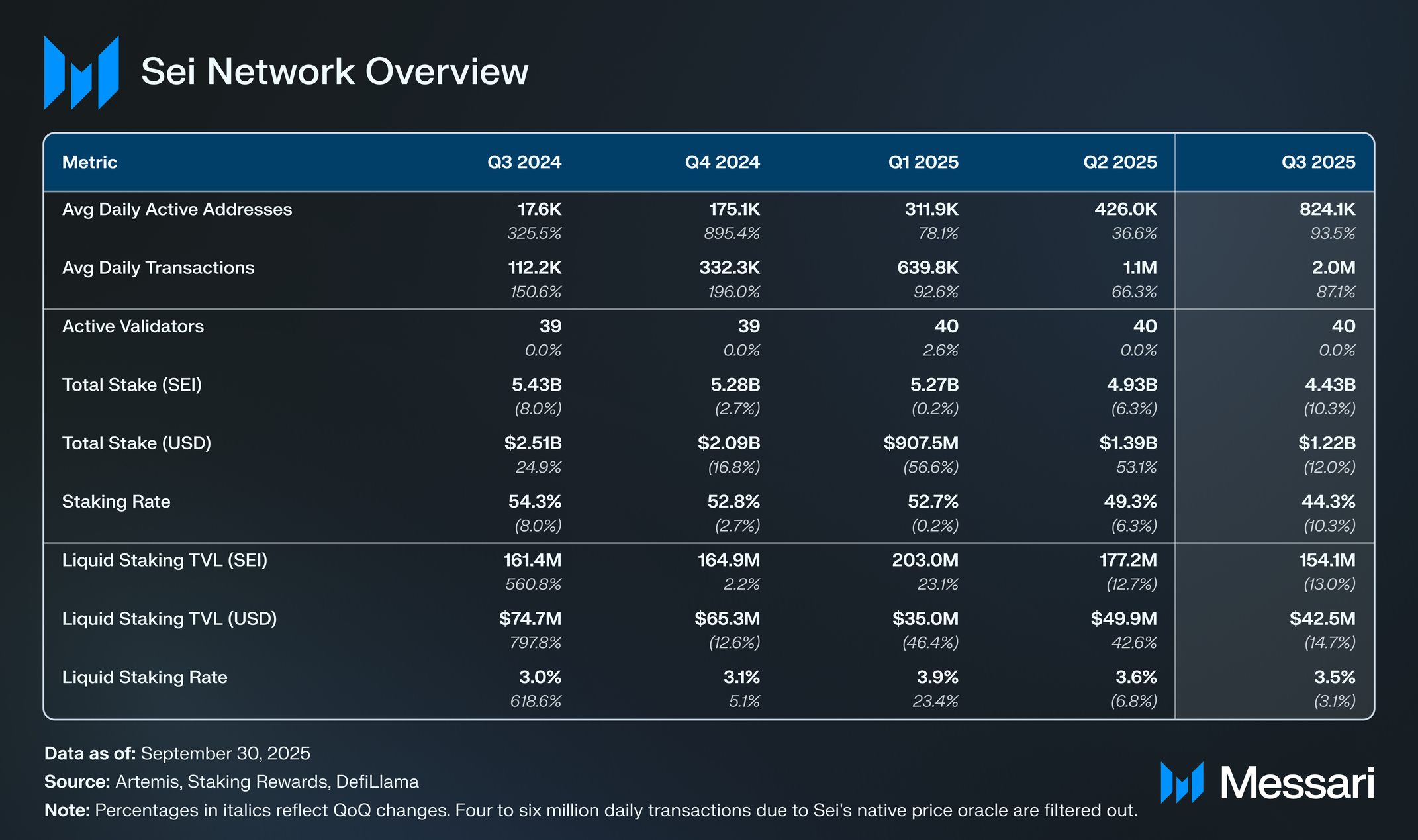
Network activity on Sei continued to grow, rising for the 5th straight quarter in Q3 2025. Average daily active addresses (DAAs) increased 93.5% QoQ to 824K, while average daily transactions made by active addresses rose 87.1% QoQ to 2 million.
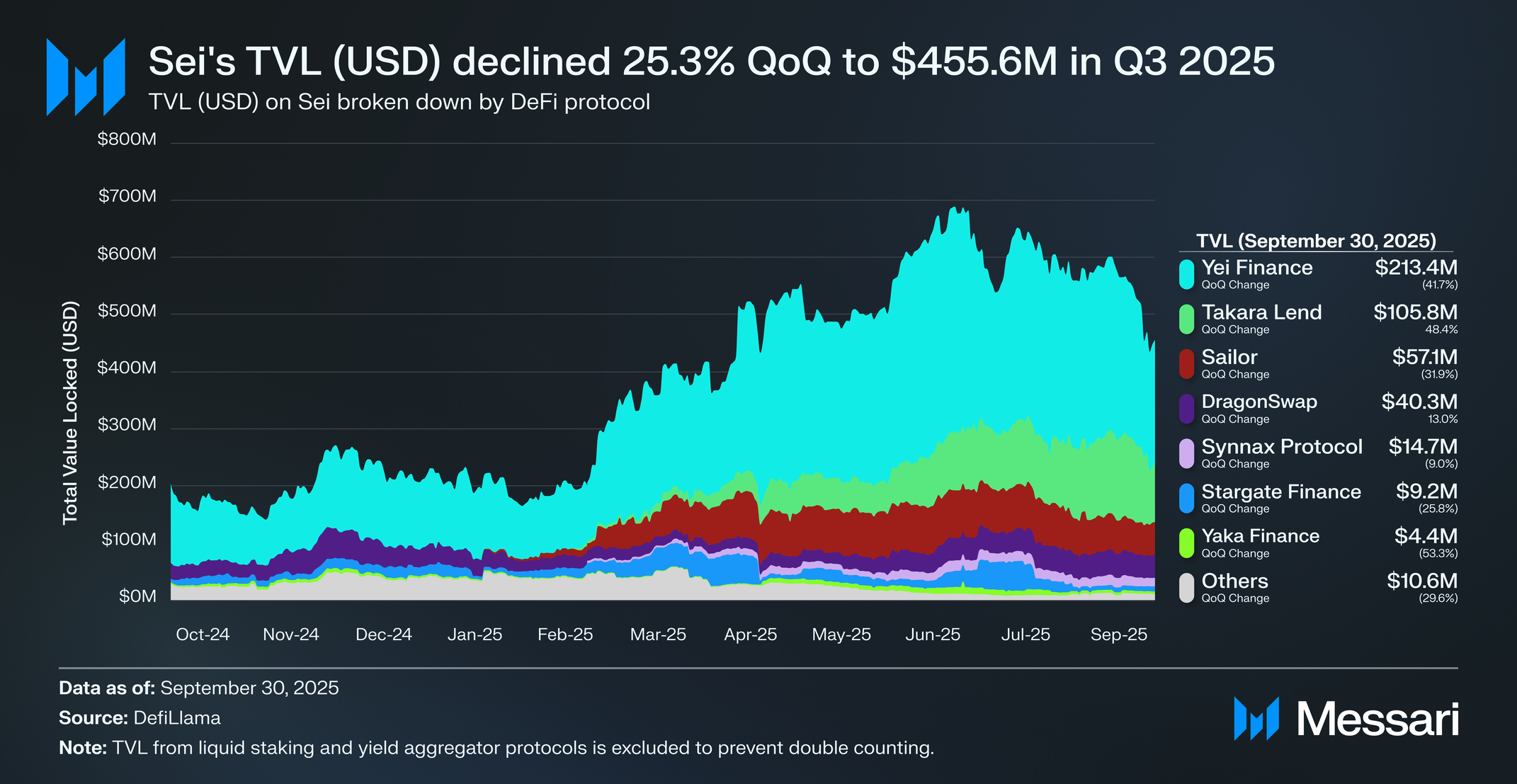
TVL (USD) fell 25.2% QoQ to $455.6 million, down 33.8% from the all-time high of $688.4 million on July 18, 2025. However, DEX activity reached new heights in Q3 2025 as average daily spot trading volume (USD) reached $43 million, up 75% QoQ.
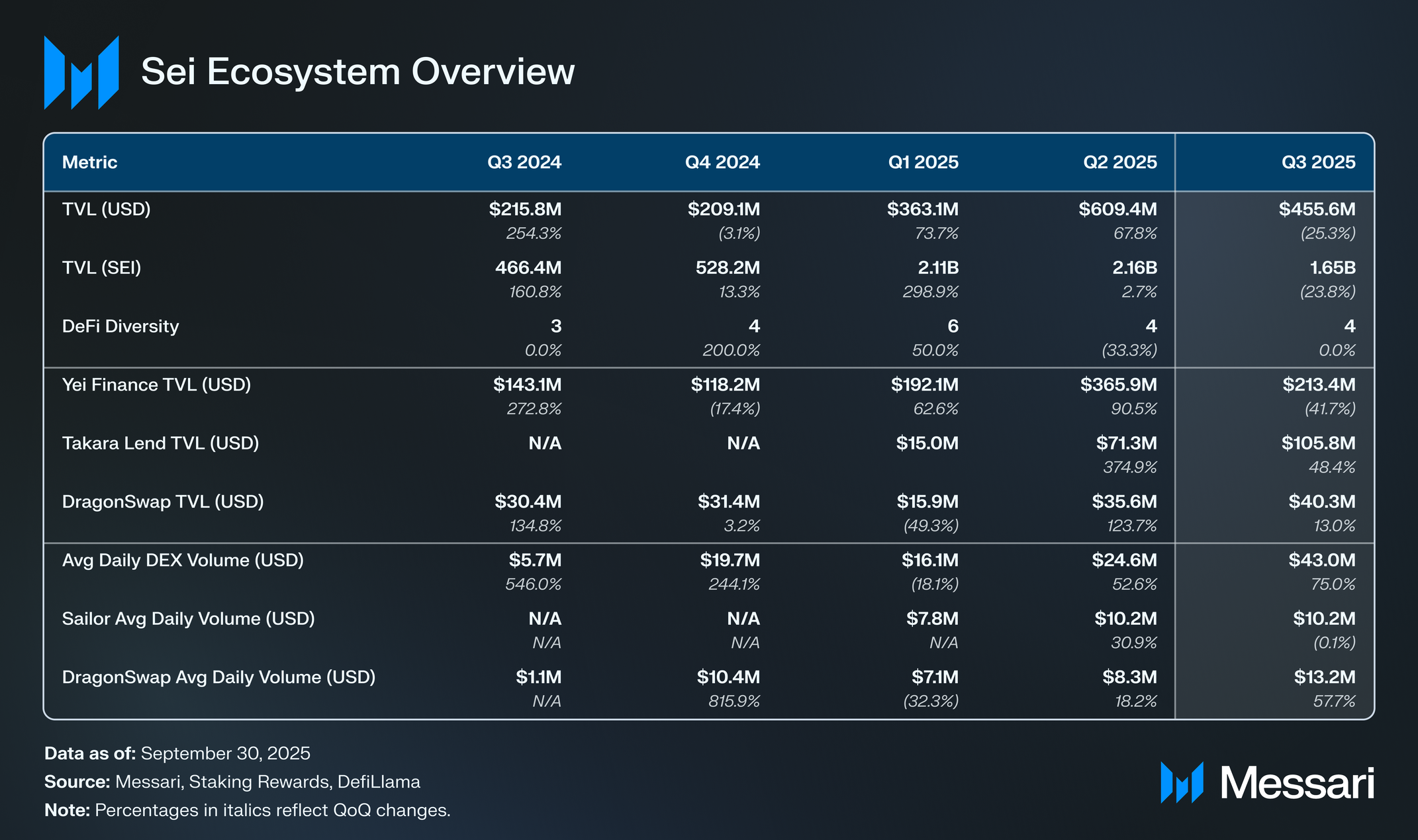
Yei Finance raised 1 million SEI in an initial DEX offering (IDO) for its CLO token. However, Yei’s TVL (USD) fell 41.7% QoQ to $213.4 million. Meanwhile, Takara Lend grew 48.4% QoQ to $105.8 million as its Takara Karats points program began.
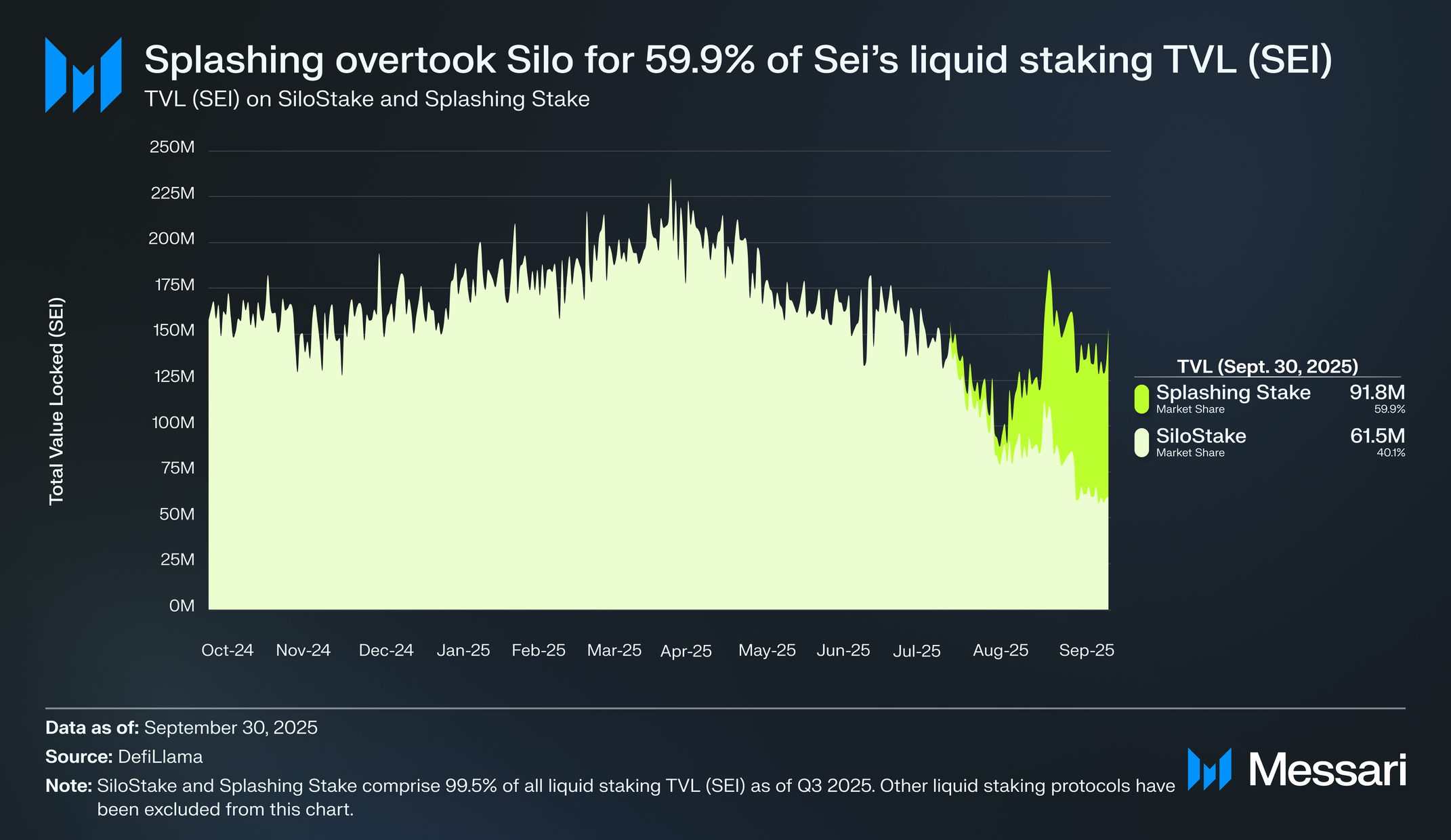
Sei’s liquid staking sector was disrupted with the launch of spSEI by Splashing Stake on July 17, 2025. Splashing Stake overtook Silo, reaching 91.8 million in liquid staked SEI, accounting for 59.9% of Sei’s liquid staking TVL (SEI) compared to Silo’s 40.1%.
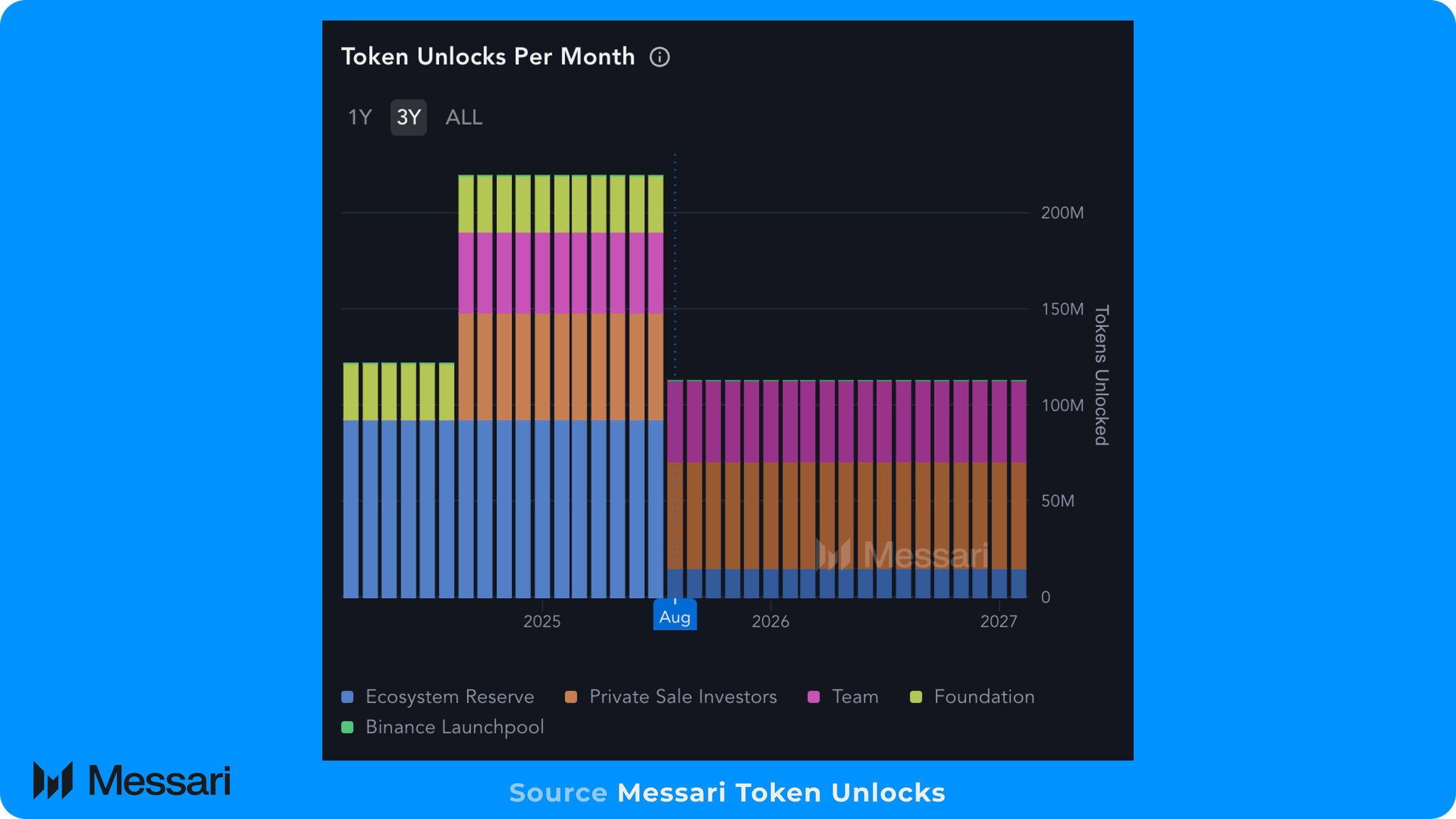
The monthly vesting rate of SEI decreased in August 2025, from 219.7 million to 113 million SEI, as the Sei Foundation’s allocation fully vested and the ecosystem reserve’s monthly vesting decreased from 92.7 to 15.2 million SEI.
Primer
Primer
Sei (SEI) is a general-purpose Layer-1 network that combines the best of Ethereum and Solana. Specifically, the developer tooling, mindshare, and network effects of the Ethereum Virtual Machine (EVM), with the performance and scalability of high-performance networks like Solana. For a full primer, refer to our Initiation of Coverage report.
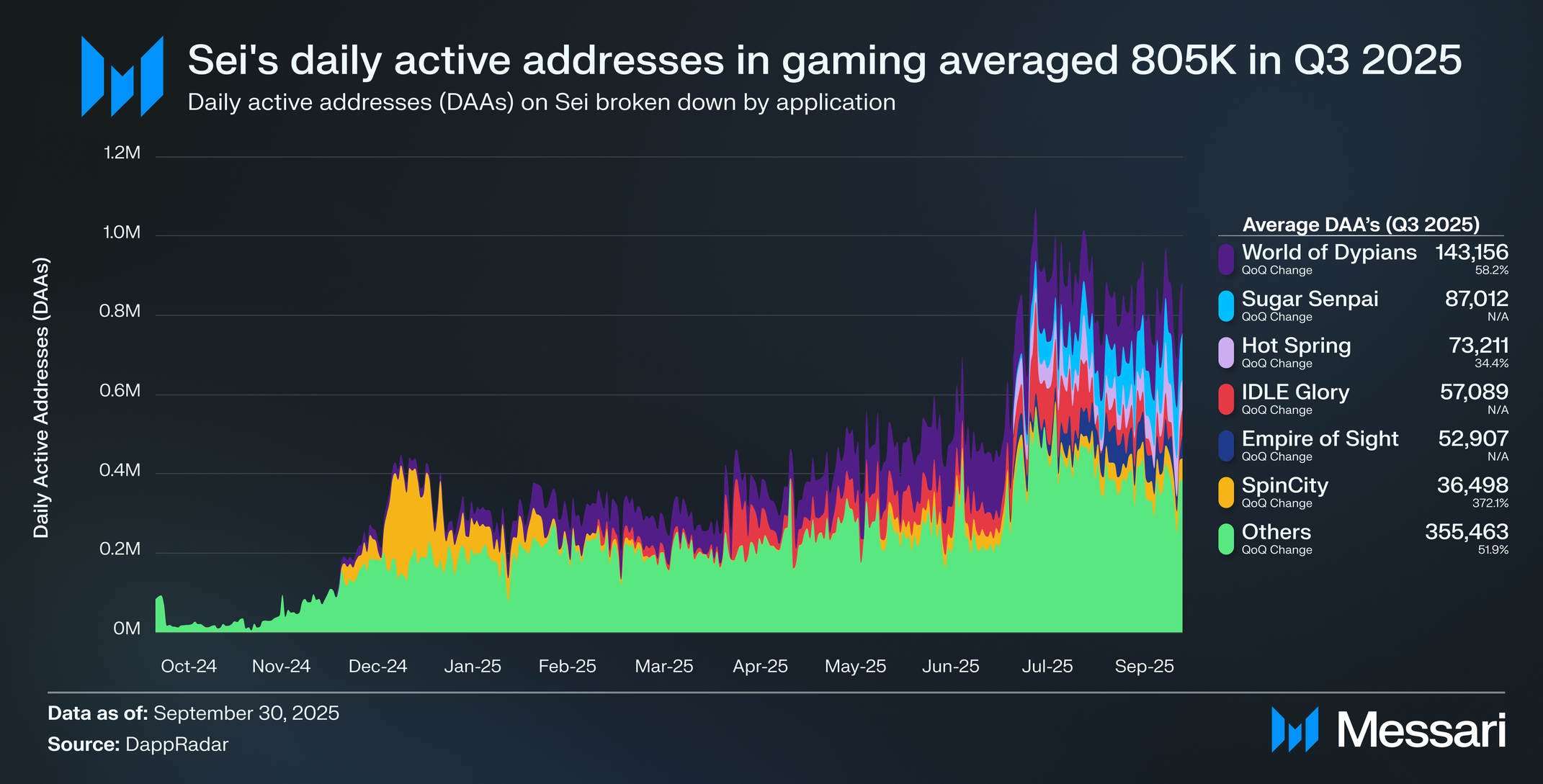
Sei’s gaming ecosystem continued to thrive in Q3 2025, becoming one of the leading gaming ecosystems in crypto. Sei reached a total of 116 million gaming-related transactions, an increase of 137.8% from 48.8 million in Q2’25. In terms of daily active addresses (DAAs), average DAAs in Sei’s gaming sector were 805K, up 108.2% QoQ from 386.7K in Q2’25. World of Dypians remained a standout as the leading game by average DAAs in Q3’25, while Sugar Senpai and IDLE Glory emerged throughout the quarter.
Other notable gaming ecosystem highlights include projects like Hot Spring, SpinCity, Archer Hunter, My Guardian Base, Solo Survivor, Mokoko, Quizmatch, Bike Master Challenge, DragonLand, Match Fighters, FishWar, Piratopia, and more. Several of these games, such as Hot Spring, are able to be optimized for mobile experiences due to Sei’s infrastructure partners. All in all, Sei’s gaming sector has been a major contributor to network activity growing for a fifth straight quarter in Q3’25, as overall average daily active addresses (DAAs) increased 93.5% QoQ to 824K, while average daily transactions made by active addresses rose 87.1% QoQ to 2 million.
DeFi
In Q3 2025, TVL (USD) fell 25.3% QoQ to $455.6 million, down 33.8% from the all-time high of $688.4 million set on July 18, 2025. With SEI’s price staying relatively flat in Q3’25, decreasing just 1.9% QoQ to $0.28, TVL (SEI) fell by 23.8% QoQ to 1.65 billion.
Sei’s DeFi Diversity score (i.e., the number of protocols making up 90% of a network’s TVL), saw its first-ever contraction from six to four in Q2’25, but remained at four in Q3’25. Sei’s top DeFi protocols continue to cement, and assets held on Yei Finance, Takara Lend, Sailor, and DragonSwap are proving to be relatively sticky.
Borrowing & Lending
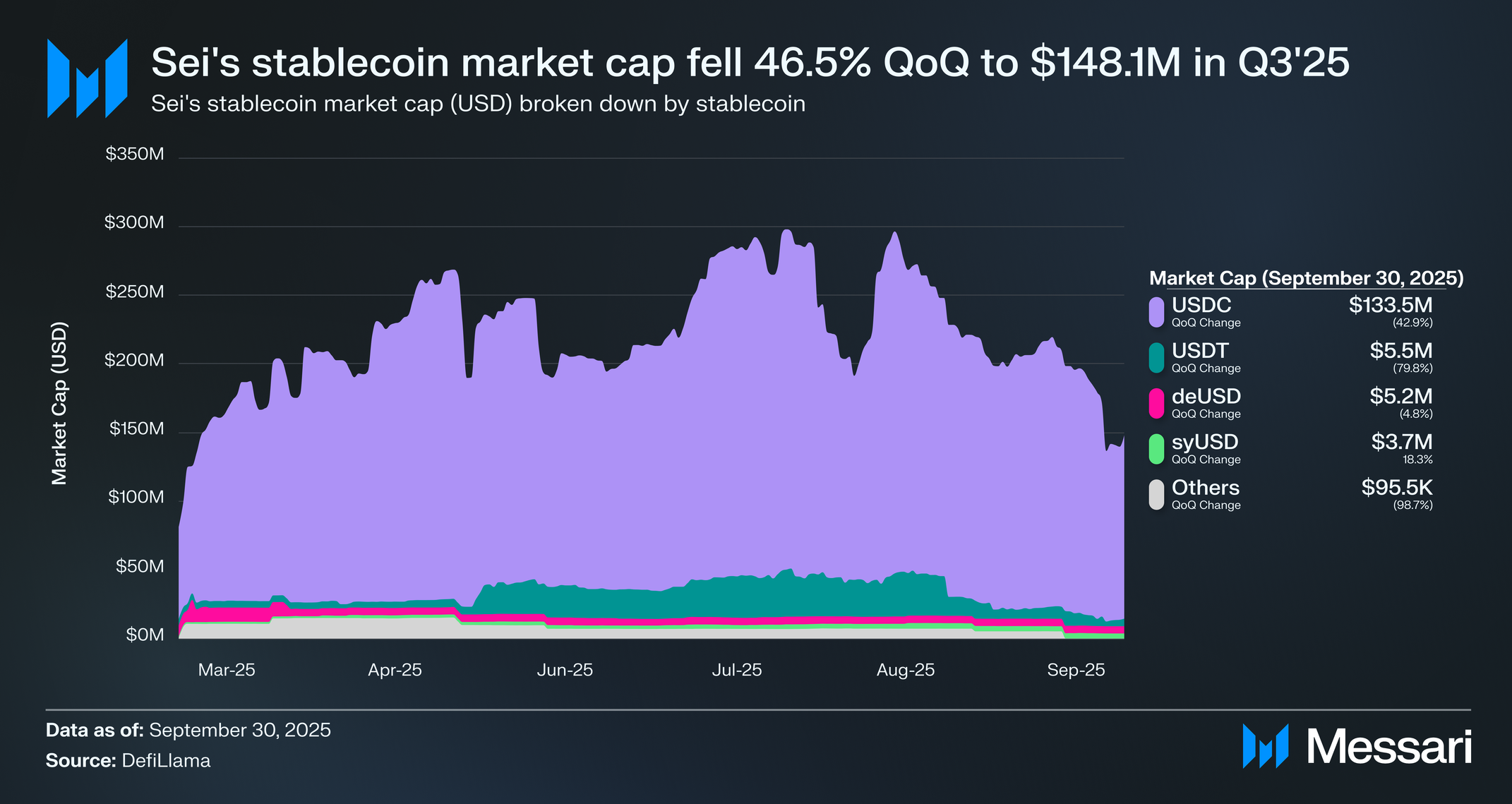
Sei’s stablecoin market cap (USD) fell 46.5% QoQ to $148.1 million by the end of Q3 2025, down 50.3% from the all-time high of $297.9 million on July 17, 2025. Circle launched support for native minting and burning, and Cross-Chain Transfer Protocol (CCTP) compatibility for USDC on Sei in July 2025. USDC accounts for 90.2% of all stablecoins on Sei with $133.5 million, though its supply fell 42.9% QoQ. Tether’s USDT accounts for just 3.7% of stablecoins on Sei, as its supply fell by 79.8% QoQ to $5.5 million despite strong growth in Q2’25 after the launch of USD₮0 on Sei in April 2025.
Stablecoins are a core part of borrowing and lending activity on Sei, which has always been dominated by Yei Finance. The protocol ended Q3’25 with a TVL of $213.4 million, down 41.7% QoQ, but still accounting for 46.8% of Sei’s TVL. Yei Finance had its most active quarter ever in terms of developments in Q3’25.
On Aug. 5, 2025, Yei launched Season 4 of its incentive program in collaboration with Binance Wallet, which spanned until Oct. 3, 2025, and featured $1.4 million in SEI token incentives. This was extended with Season 5, which spanned until Oct. 31, 2025, and featured $600,000 in SEI token incentives.
On Aug. 8, 2025, Yei launched Yei V2, which features Yei’s lend, swap, and bridge products in a refreshed, unified front-end.
On Aug. 28, 2025, Yei introduced the Clovis protocol, a multi-chain liquidity hub aiming to solve fragmented liquidity. Pre-deposit vaults followed shortly after the announcement, featuring four capped deposit periods that earned Clovis points for depositors.
Outside of Yei, Takara Lend has become its leading competitor. The protocol’s TVL increased 48.4% QoQ to $105.8 million, accounting for 23.2% of Sei’s TVL and nearly half as large as Yei’s TVL. In August 2025, Takara partnered with Bitget Wallet again to provide 1 million SEI in token incentives through November 2025, which contributed to the protocol’s TVL growth in Q3’25. Another factor was Takara launching its Takara Karats points program on Aug. 11, 2025.
DEXs
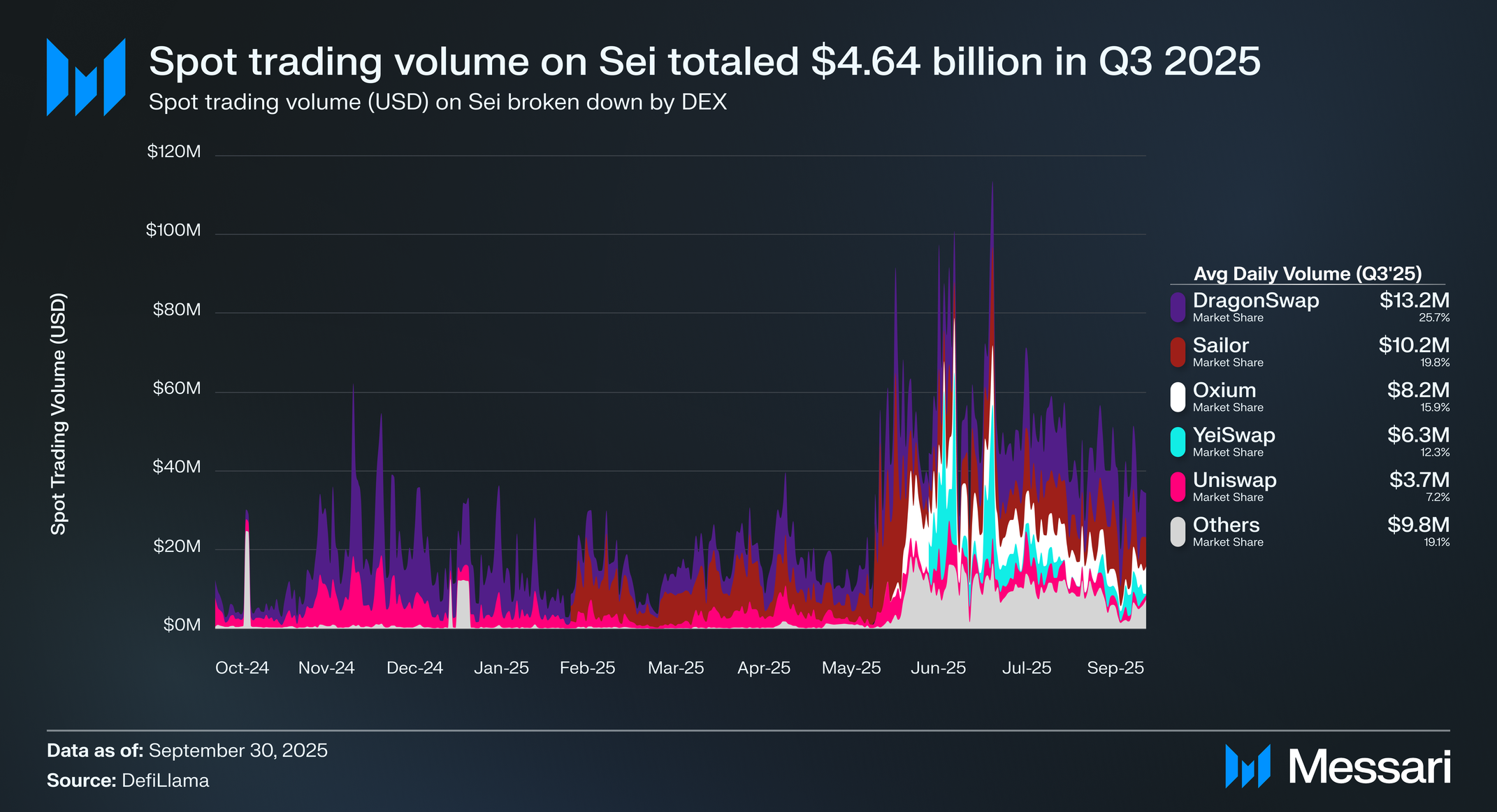
Average daily spot trading volume (USD) on Sei increased 75% QoQ to $43 million and has sustained elevated levels throughout 2025 compared to 2024. DragonSwap overtook Sailor to lead activity in Q3 2025.
DragonSwap: DragonSwap launched its DRG token on July 8, 2025, concluding a points program that began on June 25, 2024. The initial airdrop of 0.5% of the total supply occurred on July 16, 2025. Tokenomics included 20% to the team, 5% to investors, 2% for airdrops, and 70% for community and ecosystem growth. The token’s utility primarily includes staking for protocol revenue and partner incentives.
DragonSwap averaged $13.2 million in daily trading volume in Q3’25, an increase of 59.9% QoQ. The protocol ended Q3’25 with a TVL of $40.3 million, up 13% QoQ for a total share of 8.8% of Sei’s TVL.
Sailor: Launched in January 2025, Sailor has taken over spot trading volume on Sei in 2025 with a focus on majors and stablecoins. The protocol’s average daily trading volume of $10.2 million was flat QoQ.
Sailor's largest liquidity pool of Solv’sSolvBTC/xSolvBTC sits largely idle and lacks trading activity. Nonetheless, Sailor ended the quarter with a TVL of $57.1 million, decreasing 31.9% QoQ but still accounting for 12.5% of Sei’s TVL.
Outside of automated market maker (AMM) DEXs like those above, onchain central limit order books (CLOBs) are emerging on Sei. Citrex Markets was first to go live in January 2025 and announced its points program in June 2025. Oxium followed, launching in June 2025 and averaging $8.2 million in daily spot trading volume in Q3’25. Monaco Protocol is next, a perpetual futures exchange incubated by Sei Labs. As seen in Messari’s report on Next Generation CLOBs, CLOBs are the optimal architecture for capital efficiency, price discovery, and scalability. With Sei’s Giga upgrade looming, the network is perfectly primed to return to its roots and become a leading venue for highly performant, next-gen CLOBs.
Development, Growth, & Community
In Q3 2025, Sei experienced key developments spanning AI, stablecoins, infrastructure, and DeSci:
In July 2025, Sei expanded its AI stack by integrating the Model Context Protocol (MCP), enabling AI agents to read Sei state, execute transactions, and coordinate multi-protocol strategies via Anthropic’s MCP standard.
From June to August 2025, Sei’s ai/accelathon that included up to $1 million in prizes and seed funding, allowed Sei’s MCP-enabled AI stack to become a focal point for teams building autonomous onchain agents and AI-powered applications. The hackathon attracted 542 builders across 186 projects and awarded 12 winners.
In September 2025, Etherscan added support for Sei with SeiScan, bringing familiar analytics, contract verification, and API tooling to the network.
In September 2025, Chainlink added support for Data Streams, providing low-latency price and data feeds designed for high-frequency DeFi and RWA applications on Sei.
In August 2025, it was announced that Michael Baran, PhD, MBA, and Partner at Pfizer Ventures, had joined Sapien Capital as a Strategic DeSci Advisor to help guide investment and deployment strategy for the fund and support Sei’s role as infrastructure for health, longevity, biotech, and broader DeSci initiatives.
In September 2025, several institutions announced their intentions to launch products on Sei, including Apollo (ACRED), PayPal (PYUSD), and Agora (AUSD). Additionally, in July 2025, it was announced that Ondo’s USDY would be deploying on Sei. However, only ACRED went live in Q3’25.
Financial Analysis
Token Supply
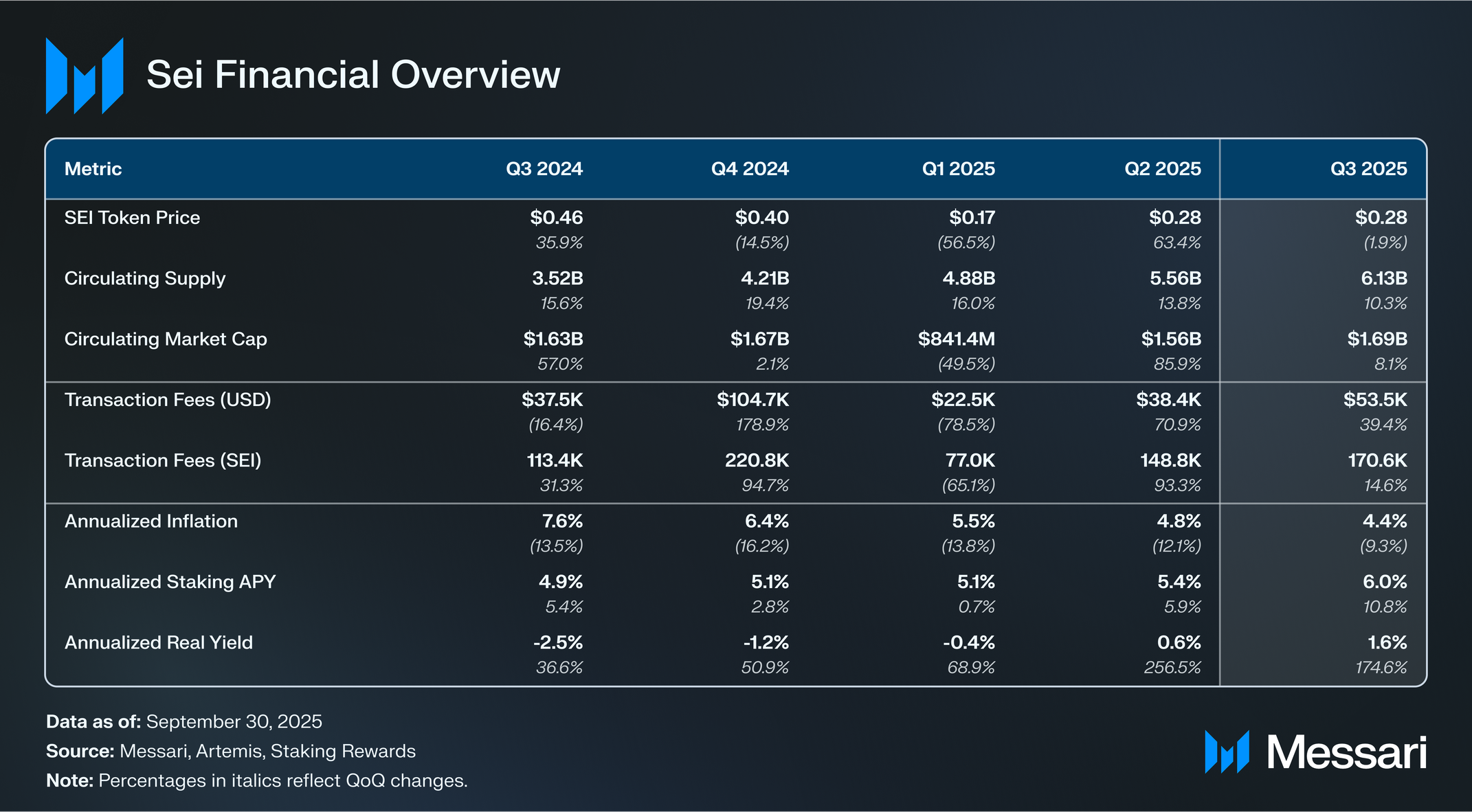
Annualized inflation fell from 4.8% to 4.4% in Q3’25. Combined with a 10.3% QoQ decrease in the amount of staked SEI, annualized staking APY increased from 5.4% to 6.0%. This resulted in the second quarter in which SEI stakers experienced a positive annualized real yield, with this quarter’s annualized real yield being 1.6%.
SEI’s circulating supply increased 10.3% QoQ to 6.13 billion, due to a mix of token unlocks and staking rewards. The monthly rate of vesting decreased in August 2025, from 219.7 million to 113 million SEI. This change was due to the Sei Foundation’s allocation having fully vested, and the ecosystem reserve allocation’s monthly vesting decreasing from 92.7 to 15.2 million SEI. In Q3’25, 445.6 million SEI vested, as investor and core team allocations continue vesting at a combined rate of 97.8 million SEI per month. SEI tokens will continue to vest until Aug. 14, 2033.
Network Analysis
Usage
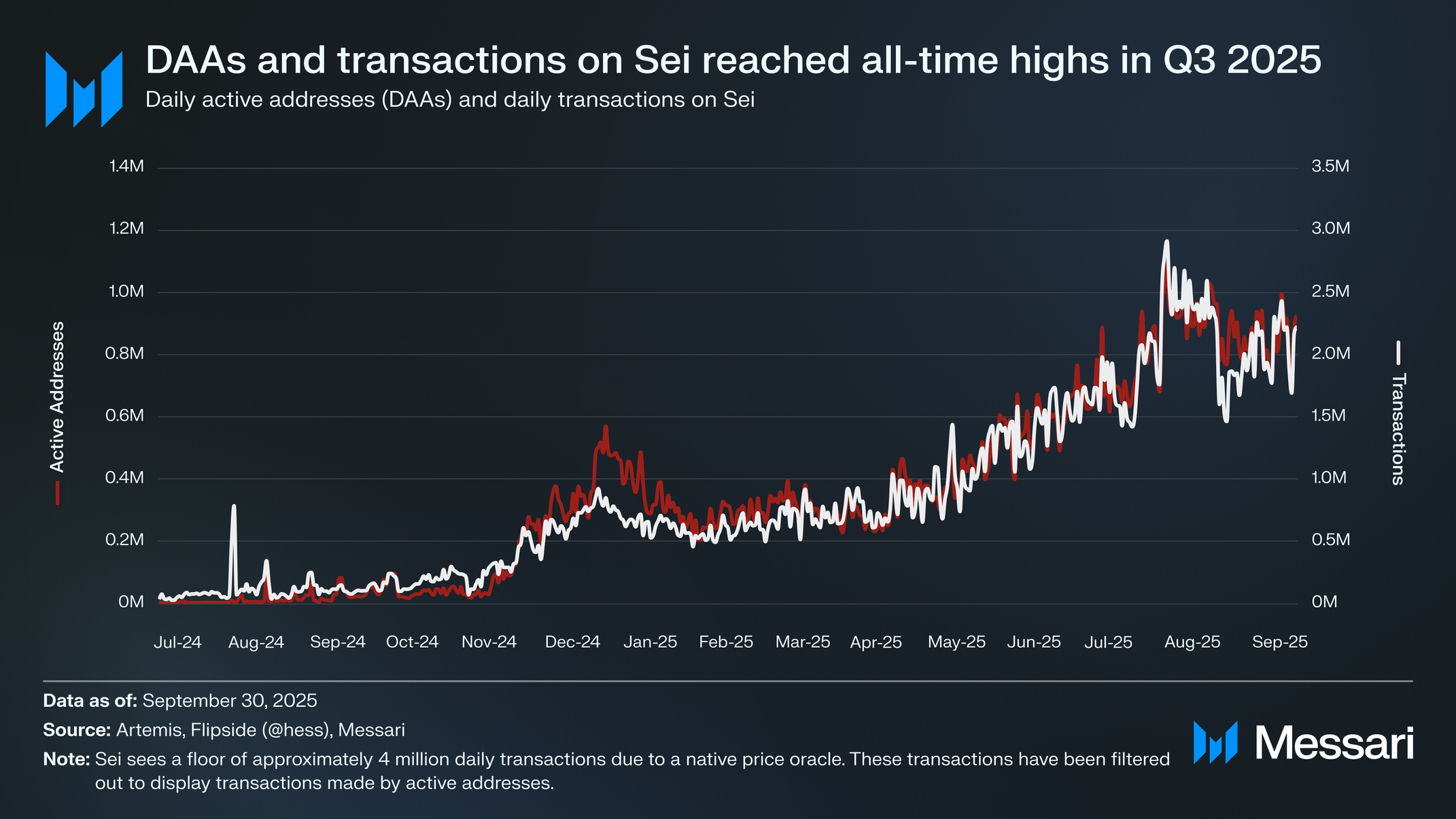
Average daily active addresses (DAAs) increased 93.5% QoQ to 824K in Q3 2025, while daily transactions made by active addresses increased 87.1% QoQ to 2 million. A major uptrend in DAAs and transactions began in November 2024 and has continued through 2025, reaching new all-time highs in Q3’25. Specifically, 1.1 million DAAs and 2.9 million transactions both on Aug. 9, 2025.
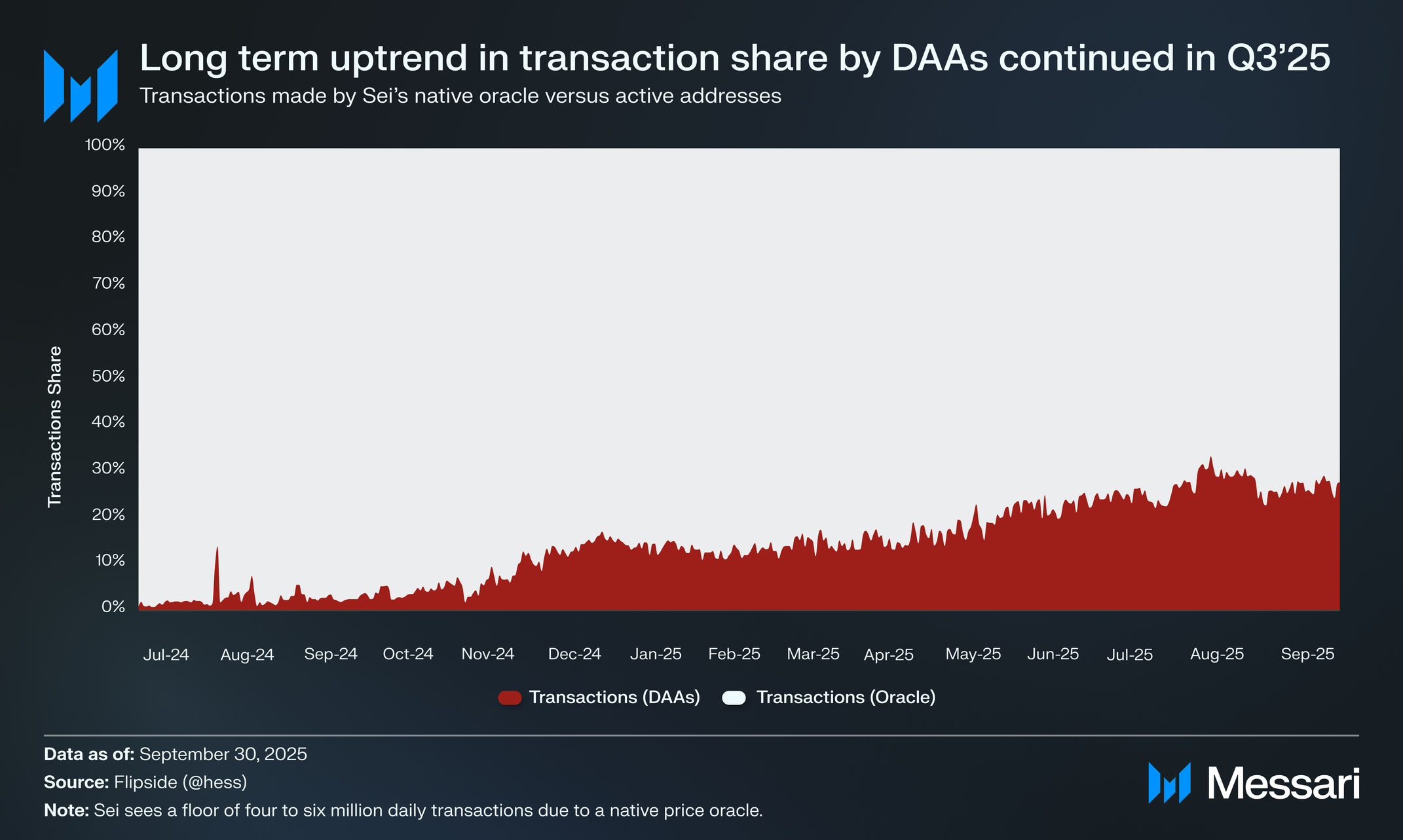
Notably, Sei sees a floor of four to six million daily transactions due to a native price oracle. All validators are required to participate as oracles by sending vote transactions and providing updated price data in every other block. Filtering out these transactions leaves only transactions made by active addresses, which is more indicative of network usage trends over time.
The portion of Sei’s total transactions made by active addresses has been continually increasing. Specifically, transactions made by active addresses made up 8.8% of all transactions on Sei in Q4’24, 13.5% in Q1’25, 19.5% in Q2’25, and 9.8% in Q3’25. Overall, the positive changes in average daily transactions and DAAs show that Sei continued to grow at a rapid pace once again in Q3’25.
Staking
Sei’s total stake (SEI) decreased by 10.3% QoQ to 4.43 billion. Due to the aforementioned stabilization in SEI’s price, total stake (USD) saw a similar change, decreasing 12% QoQ to $1.22 billion. Notably, these metrics include unvested, locked SEI tokens that can be staked to earn liquid rewards.
Liquid Staking
SiloStake allows users to stake SEI in return for their liquid staking token, iSEI, which can be redeemed to receive the underlying SEI after a 21-day unbonding period. As of the end of Q2 2025, SiloStake comprised 99.5% of all liquid staking TVL (SEI) on Sei, consistent with its historical dominance. That shifted for the first time in Q3 2025 with the launch of Splashing Stake and its spSEI token on July 17, 2025.
Splashing Stake overtook Silo on Sept. 17, 2025, ending the quarter accounting for 59.9% of Sei’s liquid staking TVL (SEI) compared to Silo’s 40.1%. Splashing Stake expanded DeFi integrations post-launch with the likes of Takara Lend, Yaka Finance, Sailor, and Oxium. spSEI operates similarly to iSEI, but differs in its Buffer Pool, which is a liquidity reserve that enables instant redemption of the underlying SEI.
By the end of Q3’25, 153.3 million SEI had been liquid staked on Sei, a 13% QoQ decrease from the 176.3 million SEI that had been liquid staked by the end of Q2’25. This was the second quarter in which liquid staking activity on Sei decreased. Compared to Sei’s total stake (SEI), the liquid staking rate fell from 3.6% to 3.5%.
Technical Developments
In December 2024, Sei Labs announced Giga, an in-development upgrade that plans to offer a 50x improvement in throughput over other EVM-compatible networks. Specifically, Giga aims to reach a maximum capacity of five gigagas per second. Gigagas is a measure of a blockchain’s computational capacity that replaces the commonly used measure of transactions per second (TPS). However, the anticipated maximum TPS post-Giga is approximately 200,000, with a time-to-finality (TTF) of under 400ms.
This level of performance will be achieved by revamped execution, consensus (Autobahn), and storage workstreams. Key upgrades include intelligent transaction parallelization that predicts dependencies, the decoupling of consensus over transaction ordering from transaction execution, and the introduction of the first-ever instance of multiple concurrent proposers on an EVM Layer-1 network, allowing multiple validators to propose transactions simultaneously.
In May 2025, Sei Labs published the Sei Giga whitepaper, along with updated metrics. Sei achieved 5.2 gigagas per second, approximately 148,900 TPS, and 211ms TTF in an internal devnet environment using a set of 20 validators distributed across the United States, Europe, and Asia Pacific.
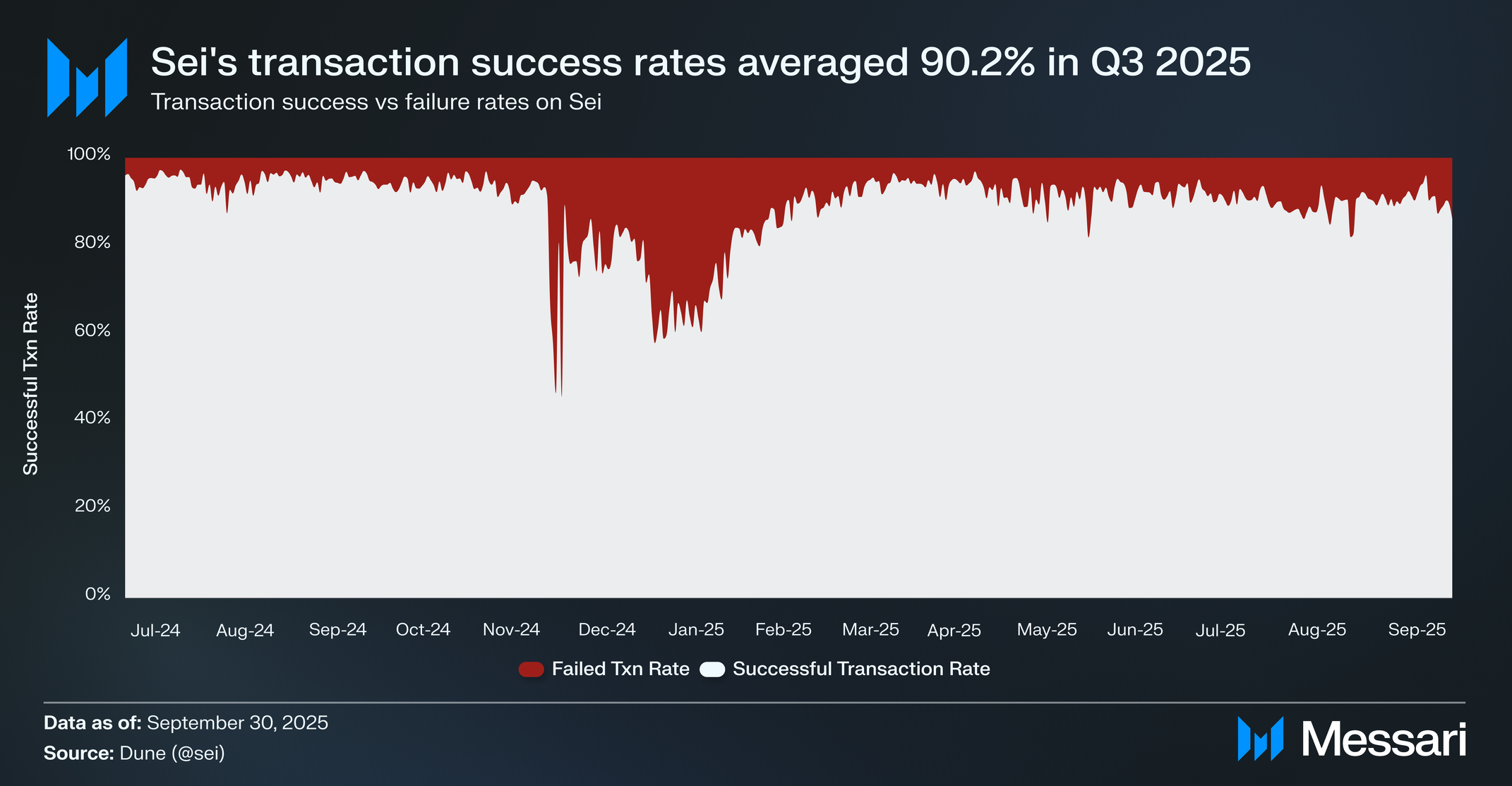
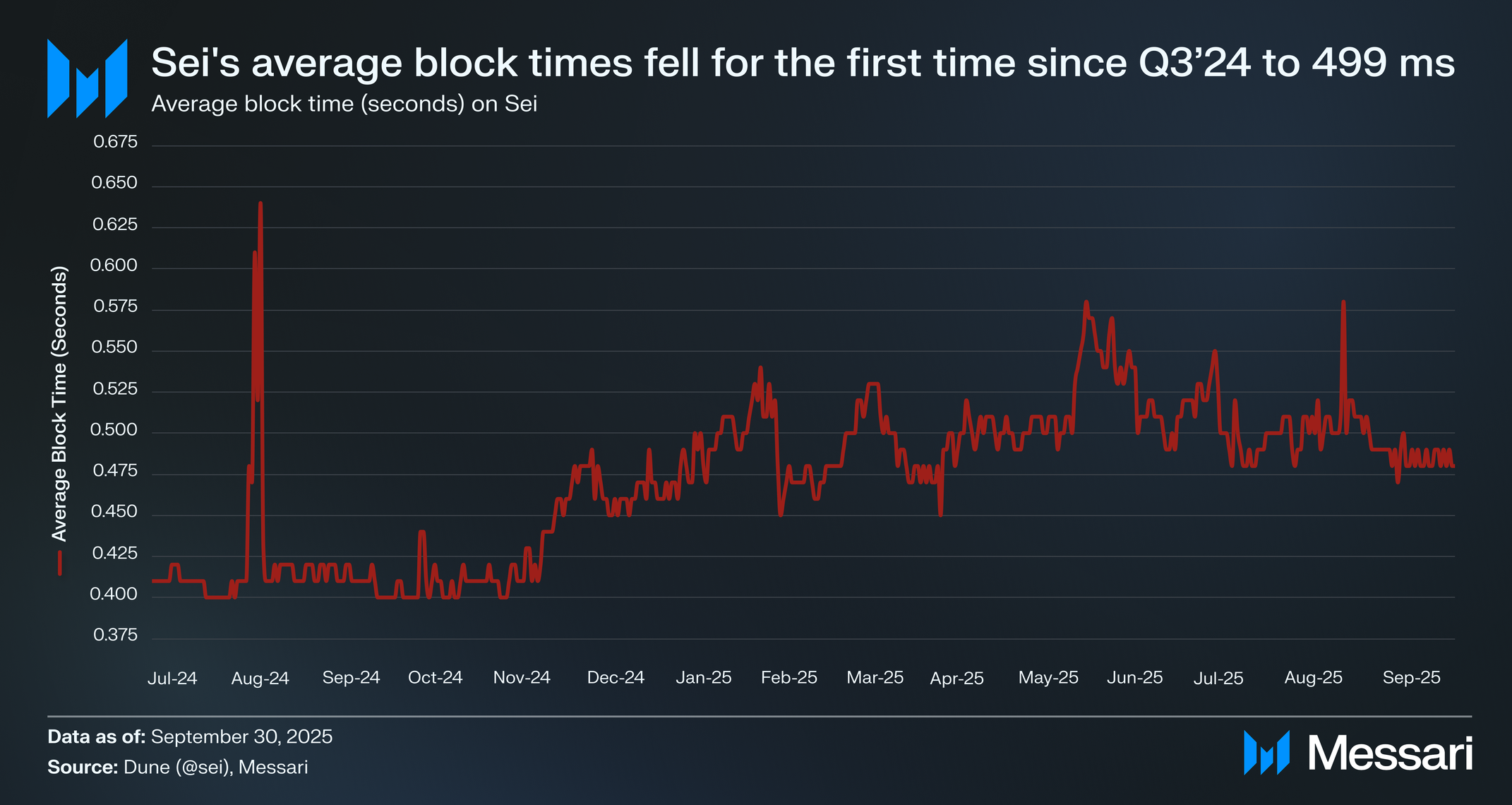
Transaction failure rates on Sei surged in December 2024 and January 2025 to 22.7% and 29.7%, respectively. Failure rates began to normalize after that period, falling to 12.5% in February and 6.4% in March, before averaging 7.7% throughout Q2’25 and 9.8% in Q3 2025. Meanwhile, average block times on Sei fell, going from an average of 513ms in Q2’25 to 499ms in Q3’25, a 2.7% QoQ decrease.
Closing Summary
Sei extended its growth streak in Q3 2025, marking a fifth consecutive quarter of rising network activity. Average daily active addresses (DAAs) nearly doubled to 824K as average daily transactions by active addresses rose 87.1% QoQ to 2 million, driven largely by a rapidly expanding gaming ecosystem that processed 116 million transactions over the quarter. Despite stablecoin outflows and a 25.3% QoQ decline in TVL (USD) to $455.6 million, Sei’s core protocols (Yei Finance, Takara Lend, Sailor, and DragonSwap) remained resilient. DEX activity reached new heights as average daily spot trading volume (USD) increased 75% QoQ to $43 million, with DragonSwap retaking the lead from Sailor while new CLOBs like Oxium launched.
Token unlocks for the SEI token decreased as monthly vesting dropped from 219.7 million to 113 million SEI. Meanwhile, SEI stakers recorded a second consecutive quarter of positive real yields as inflation fell to 4.4% and staking APY rose to 6.0%. Liquid staking underwent its first major shift, though, as Splashing Stake’s spSEI launched and quickly overtook Silo’s iSEI.
With development on the Giga upgrade continuing, Sei is positioned to strengthen its presence across high-performance DeFi, next-gen CLOBs, and AI-driven applications. Coupled with expanding infrastructure support and institutional interest, Sei looks to enter 2026 with strong momentum and a broad set of catalysts for continued growth.
This report was commissioned by Aster Foundation. All content was produced independently by the author(s) and does not necessarily reflect the opinions of Messari, Inc. or the organization that requested the report. The commissioning organization may have input on the content of the report, but Messari maintains editorial control over the final report to retain data accuracy and objectivity. Author(s) may hold cryptocurrencies named in this report. This report is meant for informational purposes only. It is not meant to serve as investment advice. You should conduct your own research and consult an independent financial, tax, or legal advisor before making any investment decisions. Past performance of any asset is not indicative of future results. Please see our Terms of Service for more information.
No part of this report may be (a) copied, photocopied, duplicated in any form by any means or (b) redistributed without the prior written consent of Messari®.
During his 3.5-year tenure at Messari, Patryk contributed across Messari's Diligence, Protocol, and Enterprise research teams. As Research Manager, his primary focus was on Layer-1 and Layer-2 infrastructure and the DeFi ecosystems atop them.
During his 3.5-year tenure at Messari, Patryk contributed across Messari's Diligence, Protocol, and Enterprise research teams. As Research Manager, his primary focus was on Layer-1 and Layer-2 infrastructure and the DeFi ecosystems atop them.