State of Pocket Q3 2023


Key Insights
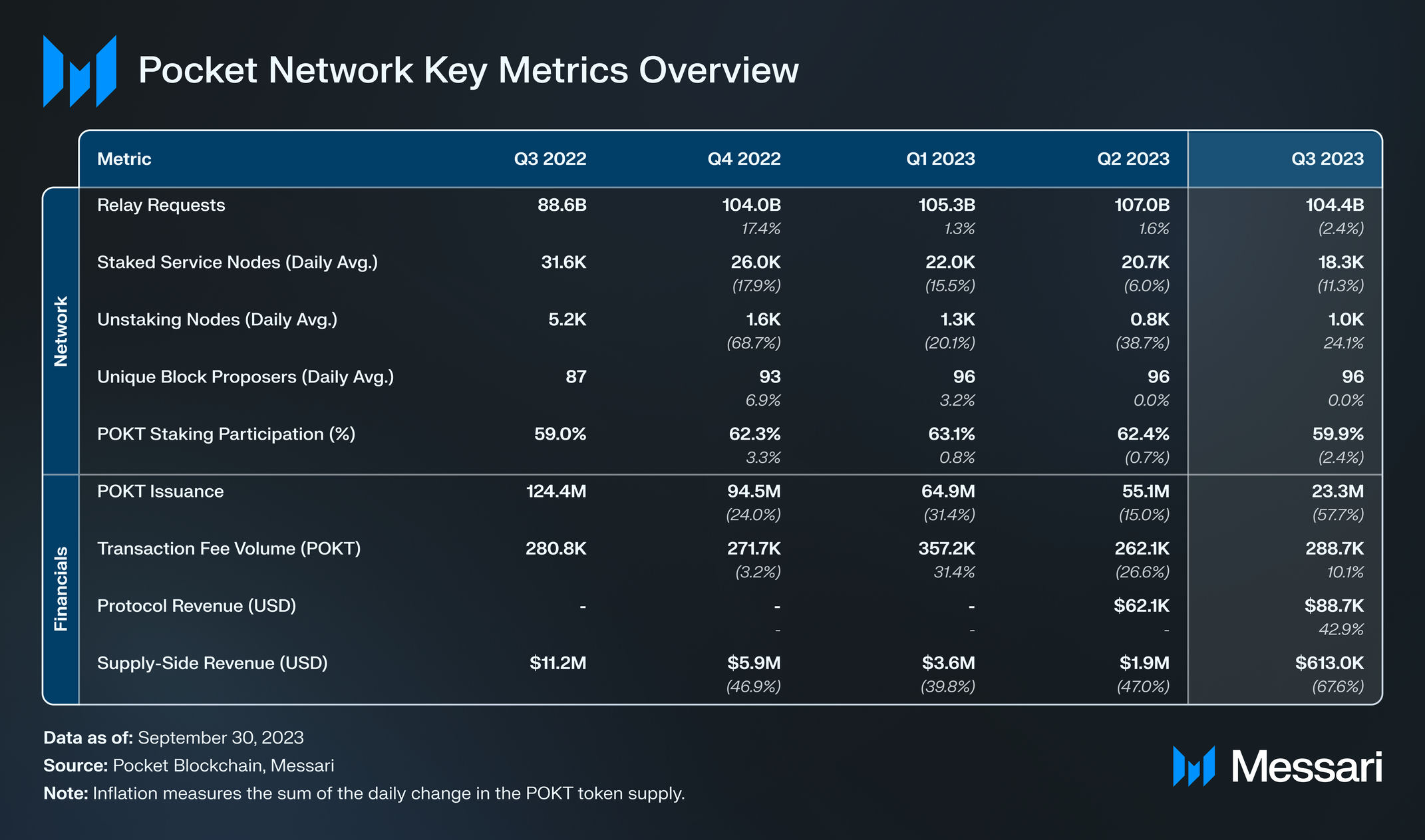
- Activity measured in relays serviced decreased 2% in Q3’23 but is still up 18% YoY.
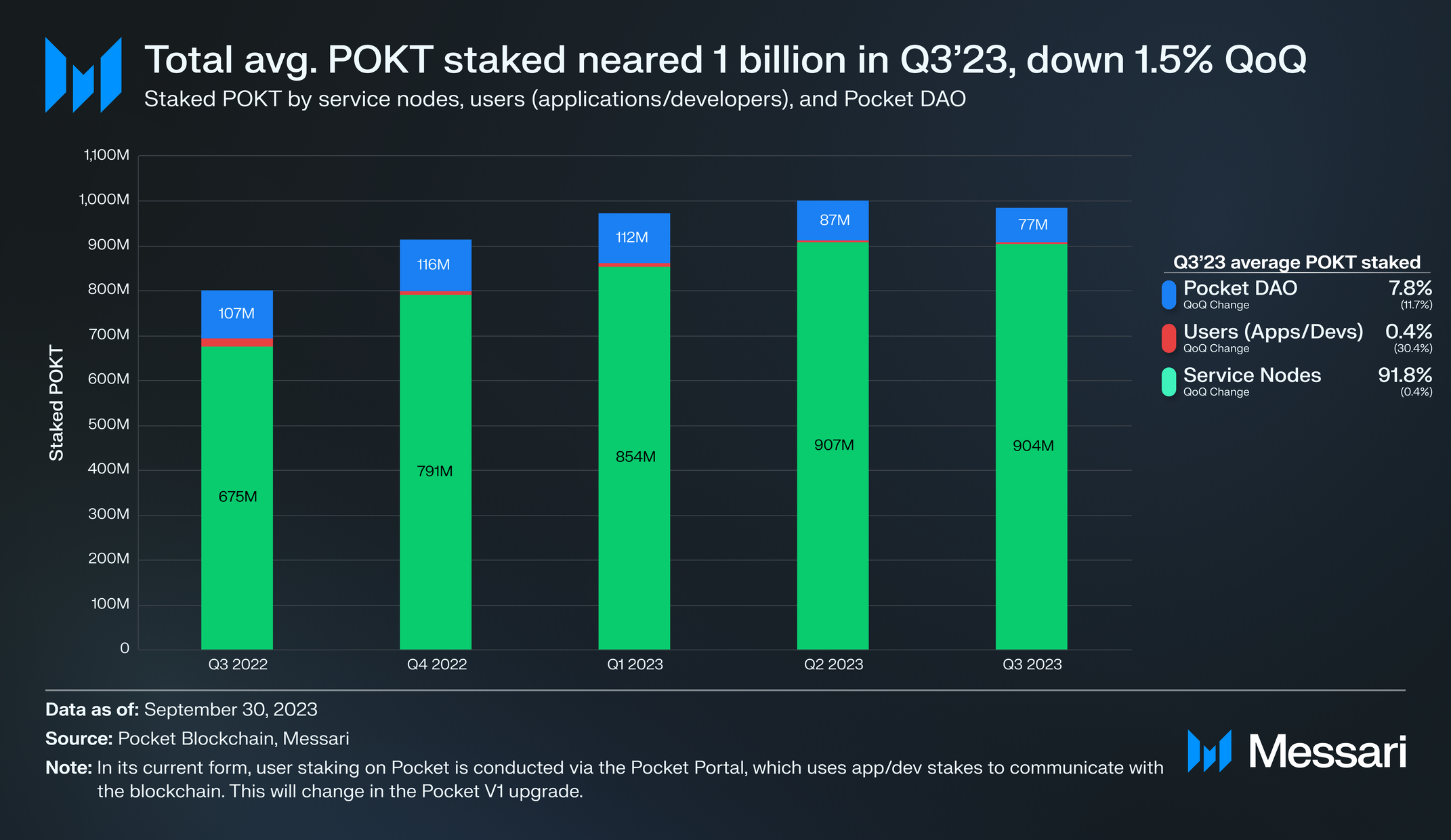
- Average staking participation was 60% in Q3’23, down 2% QoQ. Service nodes and the Pocket DAO accounted for 92% and 8% of staked POKT, respectively.
- The decision to limit POKT issuance to 220,000 per day and the 22% QoQ fall in POKT-USD price led to supply-side revenue (POKT minting) decreasing 68% to $613,000 in Q3’23.
- Simultaneously, protocol revenue (POKT burns) grew 43% QoQ to $89,000 in Q3’23 and accounted for 13% of total revenue of the Pocket Network in Q3’23, up from 3% in Q2’23.
- For the Shannon upgrade in 2024, the core team has decided to adopt the Rollkit framework as a rollup and to integrate Celestia as the network's data availability layer. The upgrade will introduce a new consensus and will enable permissionless Gateways.
Primer on Pocket Network
Pocket Network (POKT Network) is a decentralized node infrastructure protocol that enables users (applications/developers) to access blockchain data. Users submit API requests (relay requests) to service nodes via access points (gateways) that build on top of the POKT Network. The protocol runs on top of POKT Network’s Proof-of-Stake blockchain, which uses a Stake-for-Access (SFA) token model to capture value.
The key participants in the POKT Network are:
- Service Nodes: Stake POKT to service relays to users (applications/developers); get compensated in POKT per relay serviced; receive 85% of total POKT rewarded for relays serviced.
- Validator Nodes: Stake POKT to validate the PoS blockchain; confirm blocks that contain proofs of the relays serviced; retain 5% of total POKT rewarded for relays and 1% of transaction fees.
- Pocket DAO: A whitelisted group of POKTDAO tokenholders (on Gnosis Chain) exercising governance on Snapshot. Members undergo a proof-of-participation onboarding process before admission to the Pocket DAO. The DAO retains 10% of total POKT rewarded for relays and 99% of transaction fees.
- Gateways: access points for users that optimize for specific use cases and audiences. Gateways pay the POKT DAO a $0.00000085 fee per relay serviced. This fee is then burned by the POKT DAO.
- Users (Applications and Developers): Submit relay requests through a gateway.
As of October 2023, there are two gateways: Grove and NodiesDLB. Simultaneously, the POKT Network is working towards further decentralization of demand-side access points by onboarding more gateways. The upcoming Shannon Upgrade will enable permissionless gateways.
Key Metrics
Performance Analysis
The Pocket Network creates a two-sided marketplace connecting:
- The supply, i.e., service nodes that enable users (applications/developers) to access blockchain data.
- The demand, i.e., relay requests from users to service nodes via access points (Gateways).
Network Usage
The interaction between users and service nodes represents the fundamental utility of the Pocket Network. Relay requests (calls) to service nodes are usually required by exchanges, wallets, and applications in order to, e.g., retrieve wallet balances, smart contract event logs, or interact with DeFi liquidity pools. Thus, the demand for Pocket Network’s services can be derived by measuring relay requests.
Relay Requests
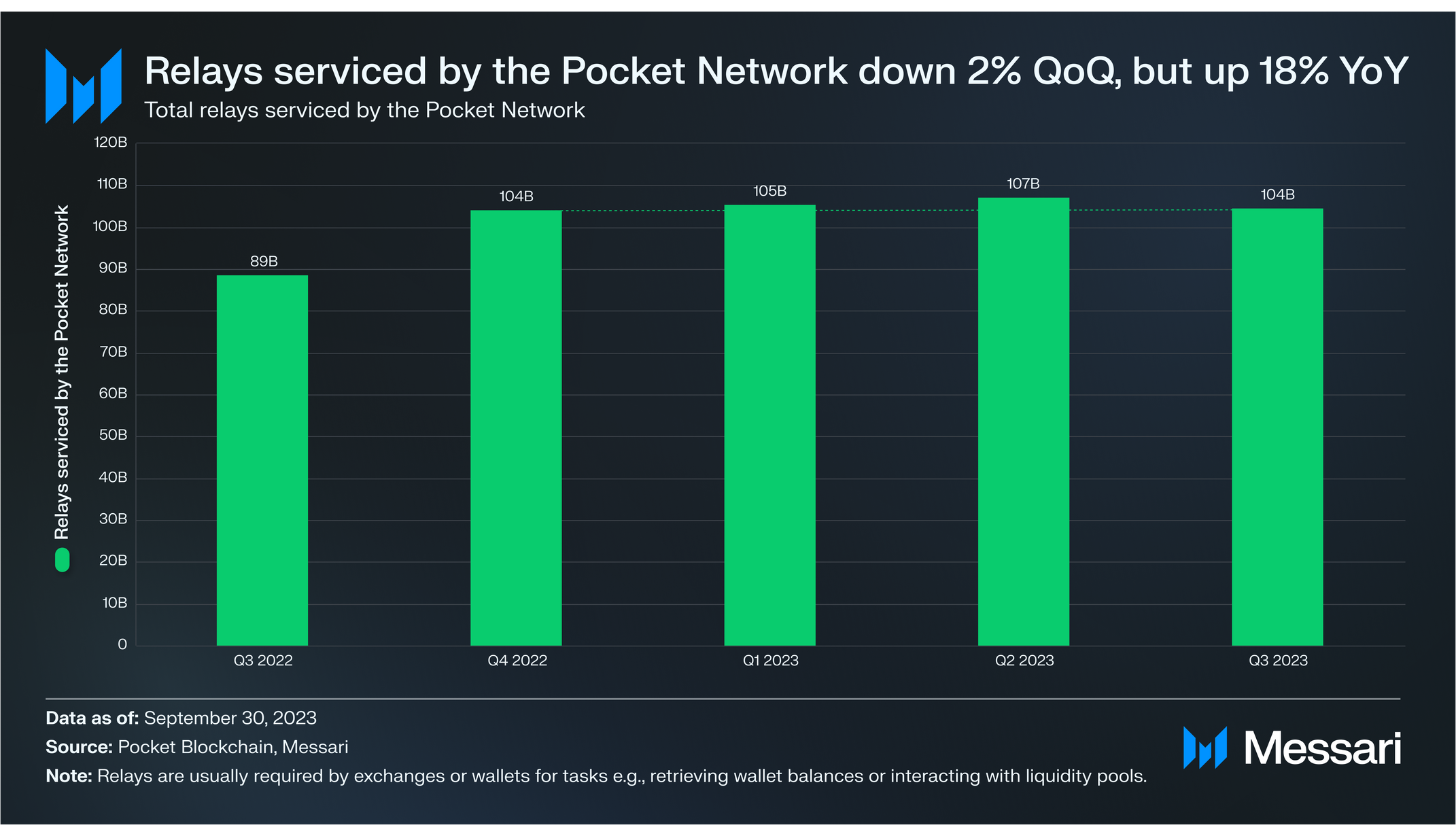
Relays serviced by the Pocket Network decreased 2% in Q3’23 to approximately 104 billion (i.e., over 1.1 billion relays serviced daily). Simultaneously, the stable demand for Pocket Network’s services is shown by the consistent number of relays serviced throughout the past year, up 18% YoY.
Relay Chains
Relay requests are routed to any of the supported blockchains (relay chains). Pocket can support the routing of relay requests from any relay chain that uses the remote procedure call (RPC) standard.
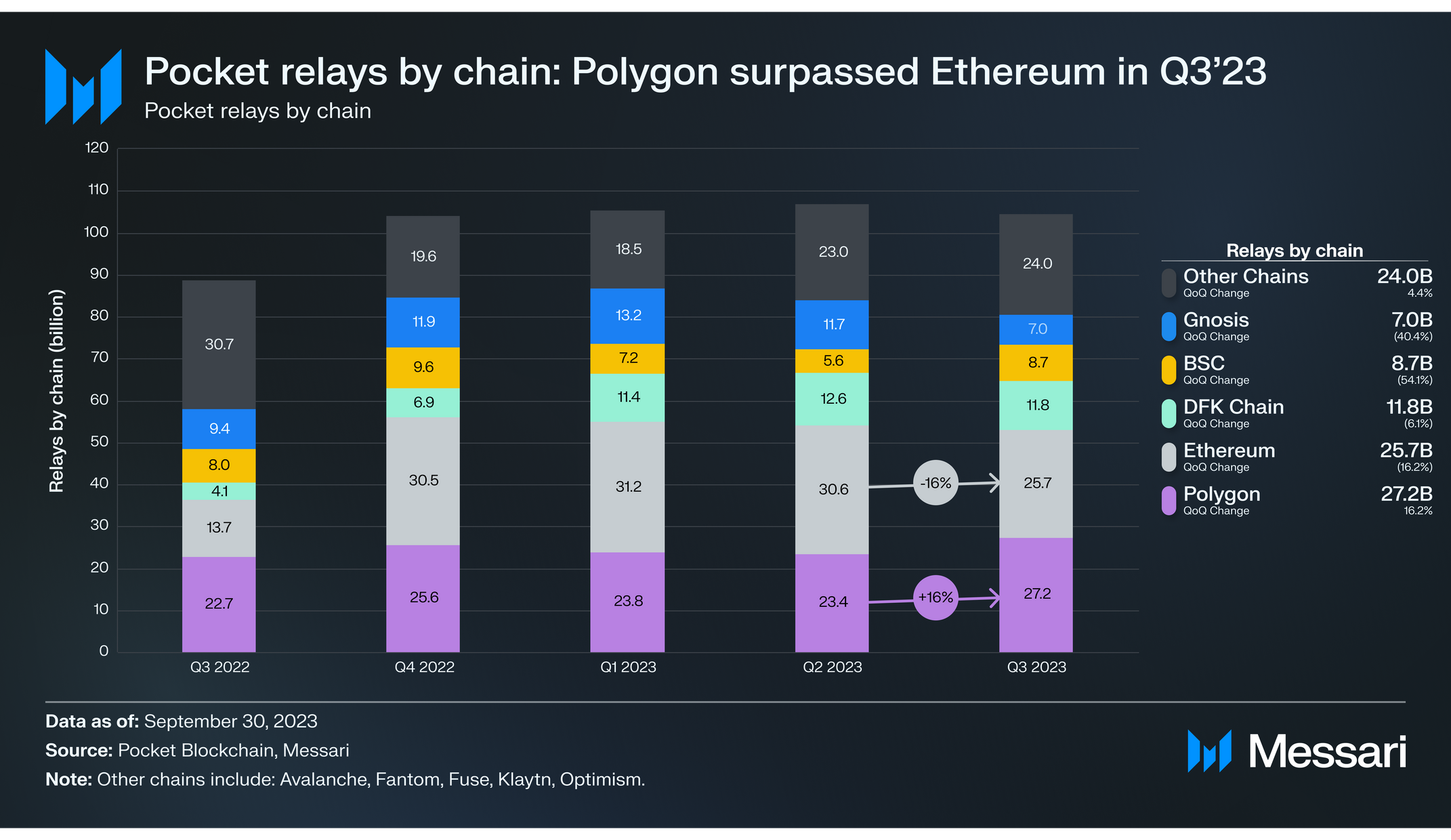
The distribution of Pocket relays by chains shows that Polygon accounted for 27 billion relays in Q3’23, up 16% QoQ from 23 billion relays in Q2’23. Simultaneously, Ethereum accounted for nearly 26 billion relays in Q3’23, down 16% from almost 31 billion relays in Q2’23. The remaining relay requests throughout Q3’23 were serviced by DFK Chain (12 billion relays), Binance Smart Chain (9 billion relays), Gnosis Chain (7 billion relays), and other chains (24 billion relays), including Avalanche, Fantom, Fuse, Klaytn, and Optimism.
Service Nodes
Staked service nodes on the Pocket Network route relay requests from users (applications/developers) to relay chains, then forward the responses back to applications. Nodes that unstake POKT are referred to as unstaking nodes and must wait 21 days before their POKT is unstaked. Staked service nodes that double-sign a block or fail to sign a certain amount of blocks within a set time period are called jailed nodes.
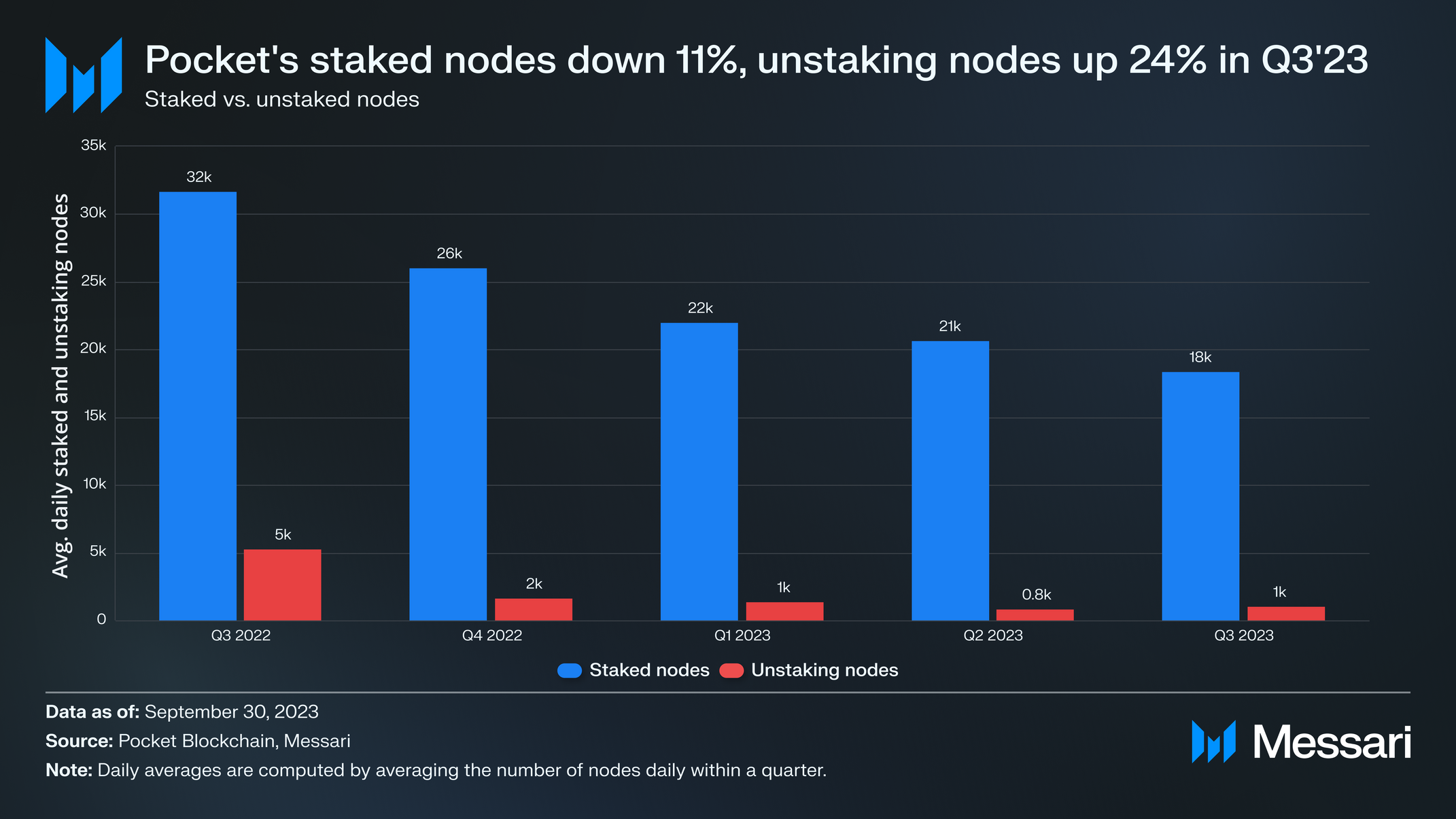
While staked nodes declined over the past four quarters to nearly 18,000 in Q3’23, down 11% QoQ, unstaking nodes were up 24% QoQ to almost 1,000 in Q3’23. Simultaneously, jailed nodes followed a similar downtrend over the past four quarters. Notably, the percentage of jailed nodes continued to remain low in Q3’23, accounting for 0.2% of all service nodes on the Pocket Network.
Validators
Validators are service nodes that also propose and validate blocks on the Pocket blockchain. Hence, all validators are service nodes, but not all service nodes are validators. The top 1,000 service nodes in terms of POKT staked are eligible to become validators. Validators earn 1% of transaction fees and 5% of POKT inflation when they are a proposer for a given block.
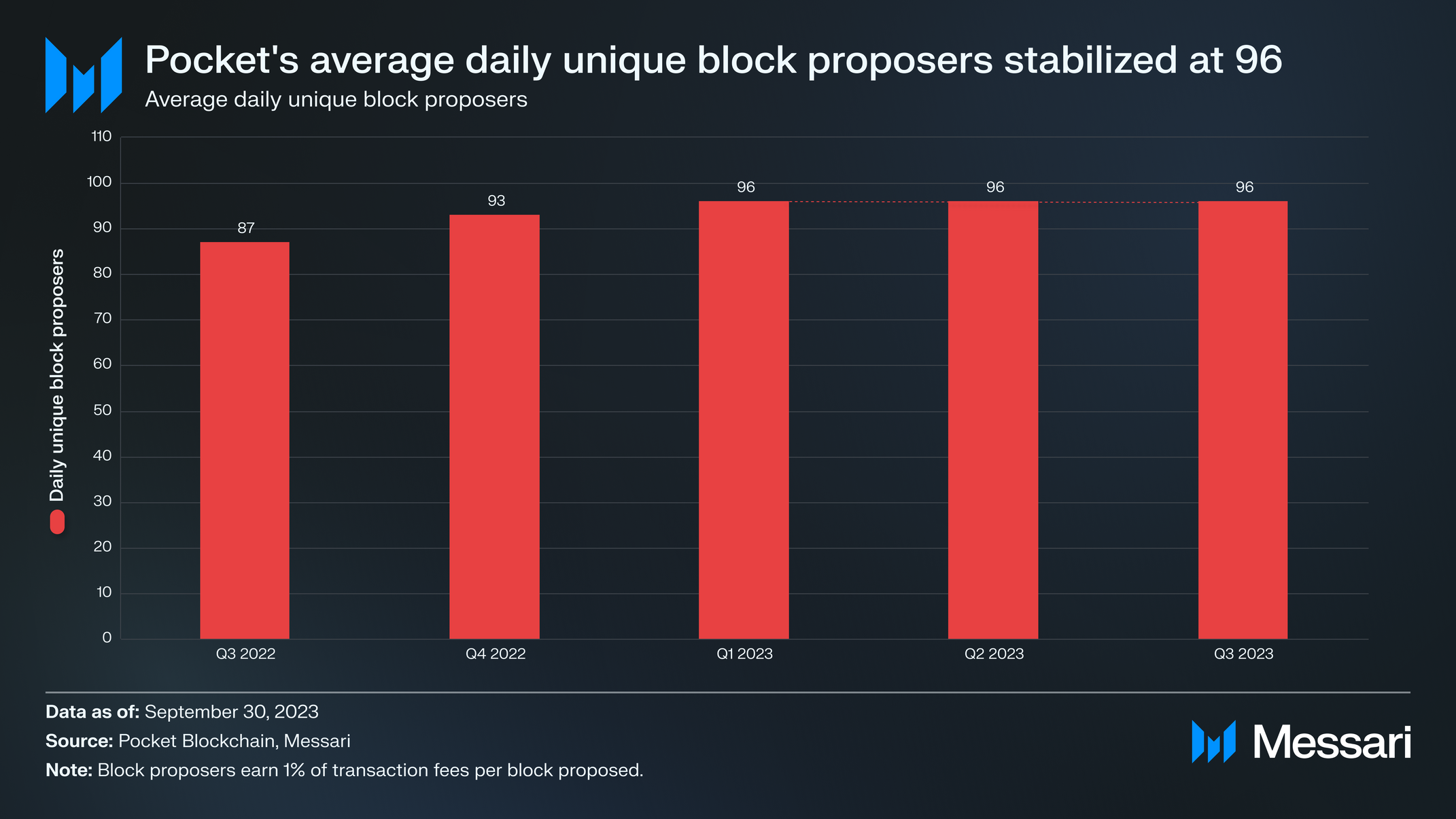
The number of average daily unique block proposers remained stable at 96 in Q3’23, after it grew throughout 2022. The rise and subsequent stabilization in unique block proposers shows that POKT is becoming more widely distributed among the validator set. Given that block rewards are only sent to the proposers, the mechanism distributing POKT is even further decentralizing the holder base as more unique validators continue to propose new blocks.
Staking Participation
To capture value, the Pocket Network uses a Stake-for-Access (SFA) token model, also known as a utility token model. Pocket Network has an inflating total supply of 1.6 billion POKT where newly issued POKT is distributed to key network participants: 85% to service nodes, 5% to block proposers (validators), and 10% to the Pocket DAO, rather than paying for each RPC relay.
Historically, the Pocket protocol would issue new POKT for each relay, directly paying nodes through minting. With the recent introduction of the Parameter Update Proposal-32 (PUP-32), the POKT issuance was set to roughly 220,000 POKT per day. Service nodes earn POKT rewards in proportion to their stake-weight (and rewards multipliers).
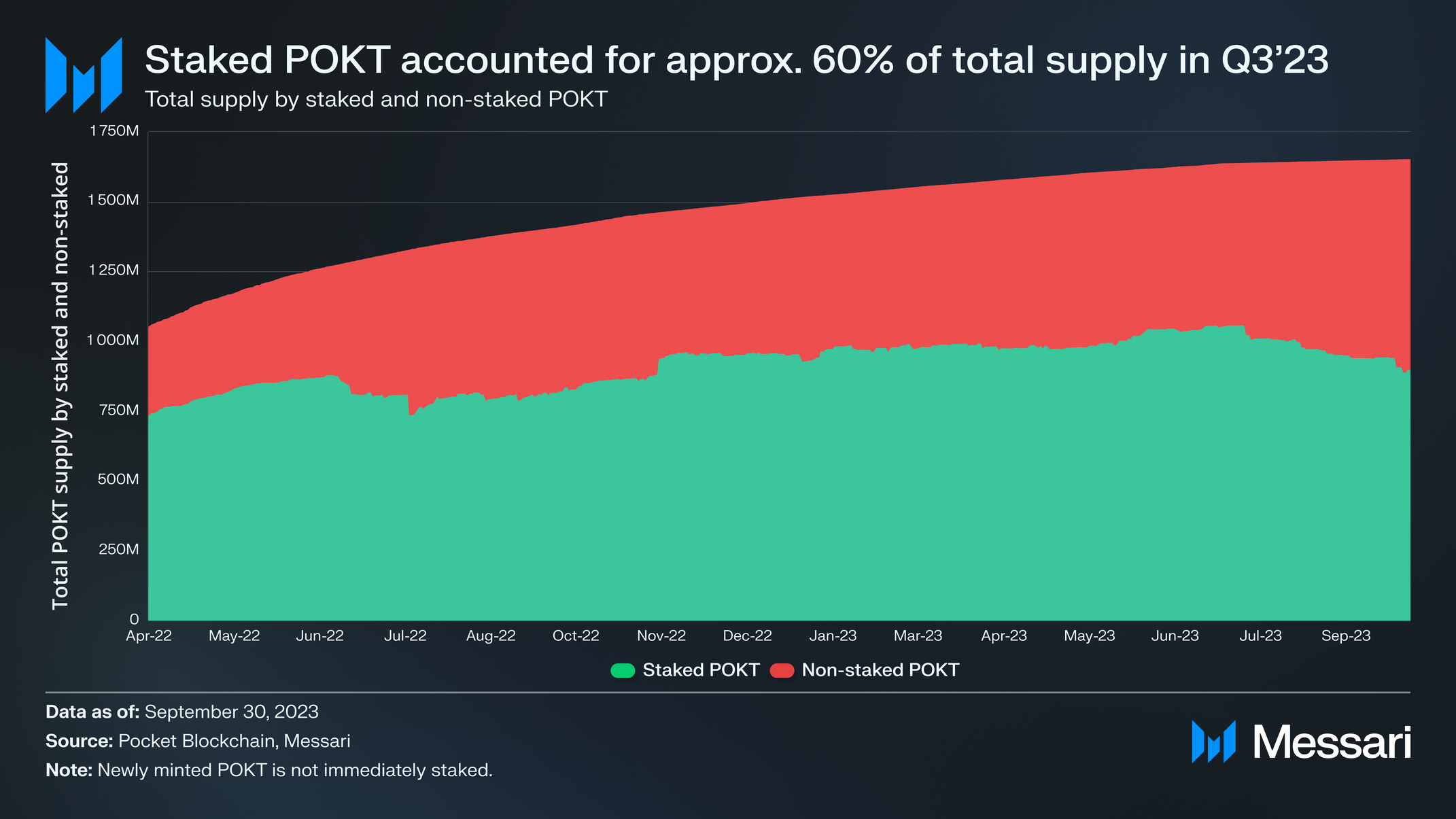
Because relays are paid through the issuance of POKT (i.e., by issuing and distributing rewards to the key participants), staking participation reflects the percentage of POKT utilized for services on Pocket Network. An average of 60% of the POKT tokens were staked throughout the Pocket Network in Q3’23.
Nearly 1 billion of POKT was staked in Q3’23, up 3% QoQ and up 21% YoY. In Q3’23, service nodes accounted for 91.8% of the POKT staked, whereas 0.4% was staked by users. The remaining 7.8% was staked by the Pocket DAO. Of note, the Shannon Upgrade will enable decentralized demand-side access points for gateways and applications/developers, giving users a more direct way to stake on Pocket and access RPC service by service nodes.
Revenue
The revenue generated by the Pocket Network consists of:
- Supply-side revenue: generated from POKT issuance, where 85% is distributed to service nodes in proportion to their stake-weight (and rewards multipliers), and 5% is distributed to block proposers (validators). What’s not recorded as revenue is the remaining 10% that goes to Pocket DAO.
- Protocol revenue: accounts for gateway fees burned by the Pocket DAO. That is, after PIP-29, a gateway fee of $0.00000085 per relay serviced was introduced where gateway operators send gateway fees to Pocket DAO to then be burned.
- Transaction fee revenue: accounts for 1% of the transaction fees that are rewarded to block proposers, while the remaining 99% that goes to Pocket DAO is not considered revenue.
In Q3’23, approximately 87% of the revenue represented supply-side revenue from POKT issuance, whereas nearly 13% of the revenue accounted for protocol revenue from burns. Theoretically, transaction fee revenue is included in total revenue; however, in practice, it accounted for a negligible amount in Q3’23.
Supply-Side Revenue
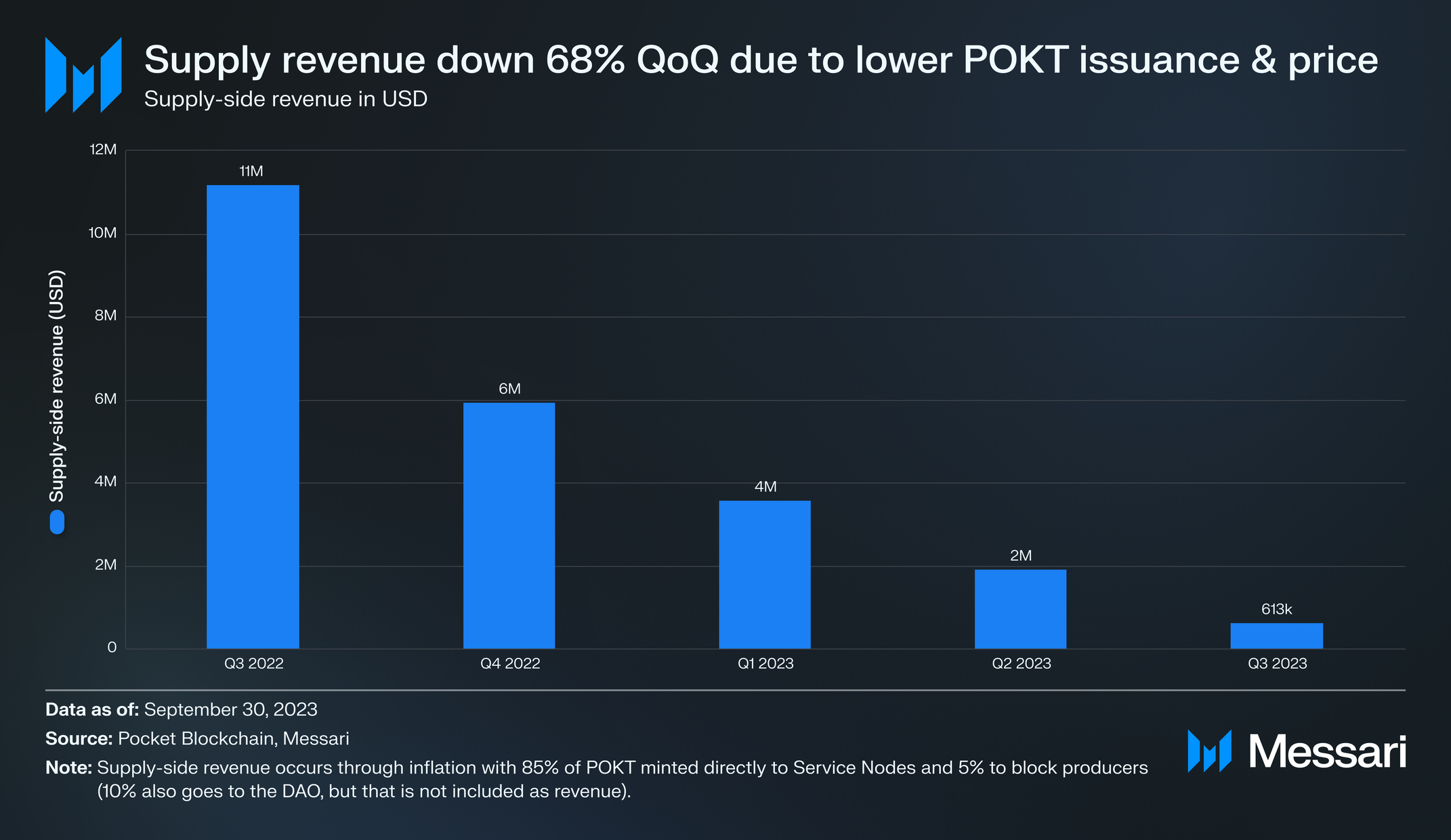
Supply-side revenue in USD terms accounted for $613,000 in Q3’23, down 68% QoQ. This drop needs to be put in the context of the overall POKT issuance and the USD price of the POKT token.
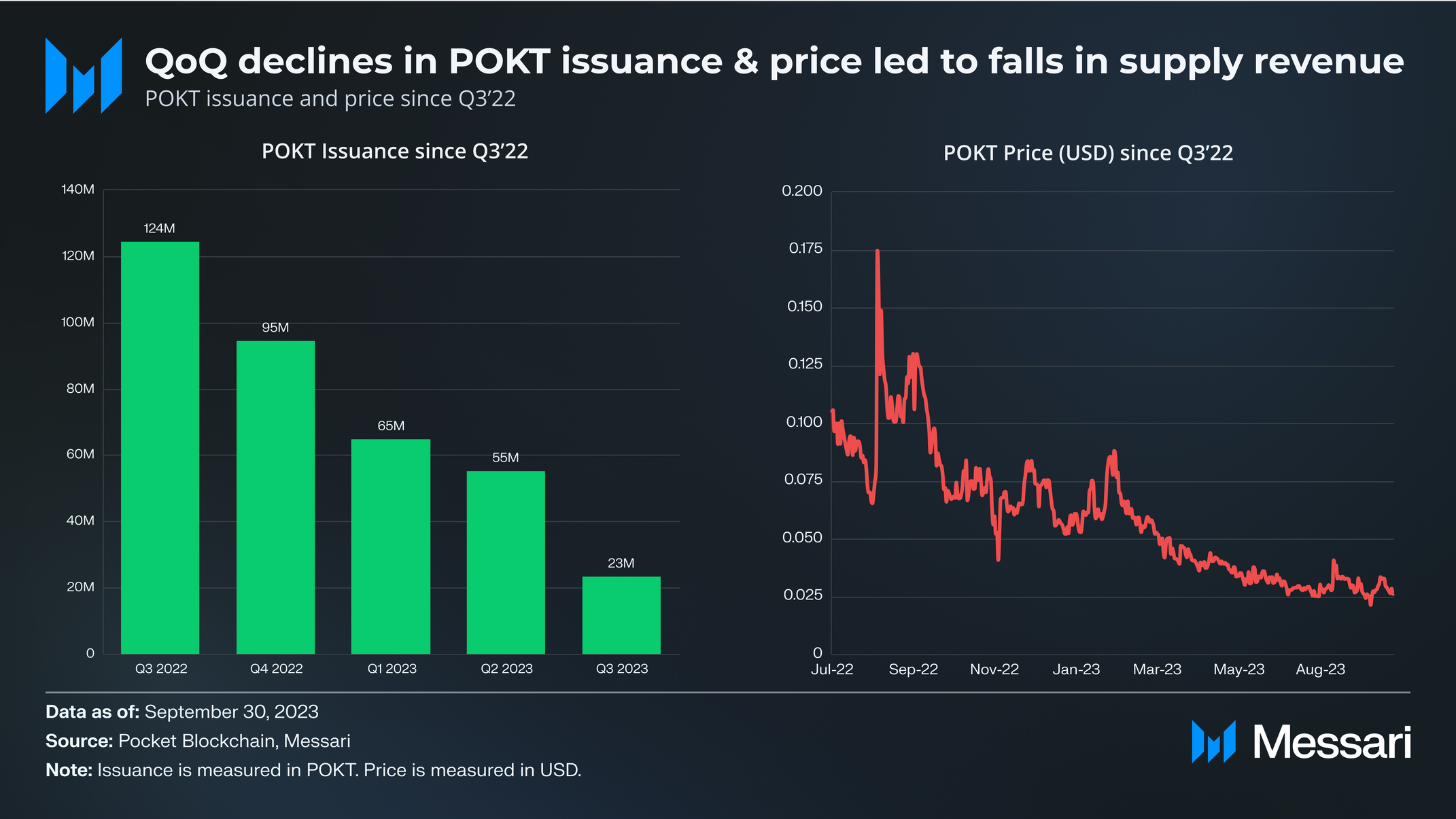
The successful introduction of the Parameter Update Proposal-32 (PUP-32) set the minting to roughly 220,000 POKT per day (~4.9% inflation). In Q3’23, this translated to a 58% QoQ decrease in POKT issuance. This lower issuance, coupled with a 22% QoQ fall in POKT-USD price, led to the supply-side revenue (from POKT minting) decreasing 68% QoQ in USD to $613,000. This amount represents approximately 87% of the revenue by the Pocket Network in Q3’23. The rest of the revenue consists of protocol and transaction fee revenue.
Protocol and Transaction Fee Revenue
Protocol revenue started to accrue as of May 2023, after the successful introduction of POKT burns as part of the PIP-29. Burns consist of the $0.00000085 gateway fee per relay that is sent to Pocket DAO to then be burned weekly. The rationale for including burns in the protocol revenue calculations is that burning POKT accrues value to all POKT tokenholders. In Q3’23, protocol revenue (POKT burns) grew 43% QoQ from $62,000 in Q2’23 to almost $89,000 in Q3’23. Protocol revenue accounted for 13% of total revenue of the Pocket Network in Q3’23, up from 3% in Q2’23.
Transaction fee revenue accounts for 1% of the transaction fees that are rewarded to block proposers (validators), while 99% of the transaction fees are sent to Pocket DAO. Transaction fees on Pocket Network function similarly to gas fees on Ethereum. In Q3’23, total transaction fees summed up to nearly 289,000 POKT, up 10% QoQ. Conversely, transaction fee revenue accounted for nearly 2,890 POKT ($84 in USD terms). Overall, revenue from transaction fees only plays a small part in total revenue.
Qualitative Analysis
Governance
Liquidity Yields for wPOKT (PEP-63)
This successful proposal has been introduced to optimize wPOKT liquidity by:
- Utilizing $200,000 from the DAO (in ETH and wPOKT), for the Uniswap V2 wPOKT/ETH pool, and
- Adding $75,000 in wPOKT (2.6 million POKT) as weekly incentives over 90 days.
As of October 2023, the wPOKT bridge, the Uniswap V2 wPOKT/ETH pool, and the DAO-sponsored incentives for the pool are live.
Consensus Rule Change (PIP-30)
This successful proposal has been introduced to double the number of transactions that can be included in a block. This aims to increase the network’s relay capacity prior to the Shannon upgrade in 2024. Further changes in this release include allowing flexible session block height tolerance on the client side and allowing output address owners to change the output address.
New Features to Morse (formerly known as V0) (PIP-31)
This ongoing proposal aims to introduce two consensus-breaking features to Morse:
- The "Per-chain Relays To Token Multiplier" feature which proposes a new parameter to set the "Relays To Tokens Multiplier (RTTM)" on a per-chain basis. This modification is motivated by differing operational costs for maintaining nodes across various blockchain networks.
- The "Built-in Reward Share" feature permits staked nodes to distribute block/relay rewards across several wallets based on predetermined percentages. The objective behind this feature is to harmonize non-custodial staking with a reward share pricing model while addressing the issue of reward custody.
PoktNews Funding (PEP-64)
This ongoing proposal requests $5,000 in POKT per month until the end of the Era to fund PoktNews as a core contributor. The proposal suggests increasing PoktNews' compensation in line with comparable agency fees and formalizing their role as reporting to the Head of Marketing.
3D Governance (PGOV-1)
This ongoing proposal aims to address several aspects of Pocket Network's governance model, such as:
- Identifying gaps in representation: making the governance model more inclusive of various stakeholder categories.
- Addressing inertia in the voting group: proposing a more dynamic and automated system.
- Observing imbalances in representation among stakeholders: designing systematic balances to ensure equitable representation.
The proposal suggests that the governance model should be realigned around three dimensions of contribution: Citizen, Builder, and Staker. Each dimension represents different contribution aspects, from community participation to value creation and staking tokens. This restructuring intends to make recognition and voting rights more inclusive and representative of the community's diversity.
The proposal also identifies the need for more dynamic representation, recommending using automated verified credentials systems to streamline the onboarding and offboarding of voters. This approach would enable more responsive representation, making it easier for new participants to join and ensuring inactive participants don't overly influence outcomes.
Lastly, to address the imbalances in representation, the 3D Governance system would work to systematize the balance of power among the three dimensions, setting specific voting power percentages for Citizens, Builders, and Stakers.
Modular Governance Implementation (PGOV-2)
This ongoing discussion aims to upgrade Pocket's governance model to a modular governance model that is customizable and composable. In this model, each module can be unbundled into a set of specifications that can be reviewed and understood independently. These modules include personhood, citizenship, reputation, stake, voting and execution, and finally, metagovernance which ties everything together.
Development
Shannon Upgrade (formerly known as V1)
Pocket Network has announced a change in its development roadmap for the upgrade to V1, referred to as the Shannon Upgrade. The Pocket Network’s core team has decided to adopt the Rollkit framework in its first version of the Shannon upgrade as a rollup and to integrate Celestia as the network's data availability layer.
The team mentioned the following reasons for this change:
- Modularity: The change enables POKT Network to construct modular layers, allowing potential modifications to parts of the network without overhauling the entire system.
- Focus on Core Utility: By using Celestia, developers have the capacity to establish their own virtual execution environments. POKT Network intends to delegate certain components to other entities, centering on its distinct function and potential collaborative aspects.
- Speed: Using Celestia's data availability (DA) layer might permit protocol alterations without necessitating hard forks on the Celestia main chain, thus improving the development velocity.
- Security: Each application on Celestia possesses its own rollup, utilizing the security aspects of Celestia's consensus, thus suitable to accommodate a growing blockchain framework.
- Censorship-resistance: Celestia's structure is designed to prioritize data consistency by striving to ensure that data, once uploaded, remains unaltered. Its setup also enables the formation of multiple independent rollups.
- Scaling: Celestia's approach seeks to address scaling issues by distinguishing execution from consensus and incorporating data availability sampling, potentially enhancing the network’s relay and node management.
The Pocket Shannon mainnet aims to improve Pocket’s utility, with greater scalability to enable more relays served and onchain mechanisms to ensure the quality of service. Notably, Pocket Network’s Shannon upgrade will decentralize the demand-side access points for gateways and application developers.
Updates related to the specification, roadmap, and expected testnet and mainnet releases are mentioned for the future, with a mainnet release projected for Q2 2024.
Closing Summary
Activity on the Pocket Network measured in relays serviced decreased 2% in Q3’23, but is still up 18% YoY, in line with the Web3 infrastructure sector. Average staking participation was 60% in Q3’23, down 2% QoQ. The decision to limit POKT issuance to 220,000 per day and the 22% QoQ fall in POKT-USD price led to supply-side revenue (POKT minting) decreasing 68% to $613,000 in Q3’23. Simultaneously, protocol revenue (POKT burns) grew 43% QoQ and accounted for 13% of the total revenue of the Pocket Network in Q3’23, up from only 3% in Q2’23.
Pocket Network’s Shannon protocol upgrade aims to enable decentralized demand-side access points for gateways and application developers in 2024. The Pocket Network’s core team has decided to adopt the Rollkit framework in their first version of the Shannon upgrade as a rollup and to integrate Celestia as the network's data availability layer.

Mihai is Director of Research at Messari. Mihai leads Protocol Research, covering base layers, mid-layer infrastructure, DeFi, and consumer apps. Prior to joining Messari, Mihai was a tech entrepreneur and worked in AI at UBS and Swiss Re in Zurich. His background is in computer science and math. Mihai holds a PhD in information systems from ETH Zurich, Switzerland

Onchain Jíbaro. Background: Photography, Quantitative Banking, & Manual Labor.