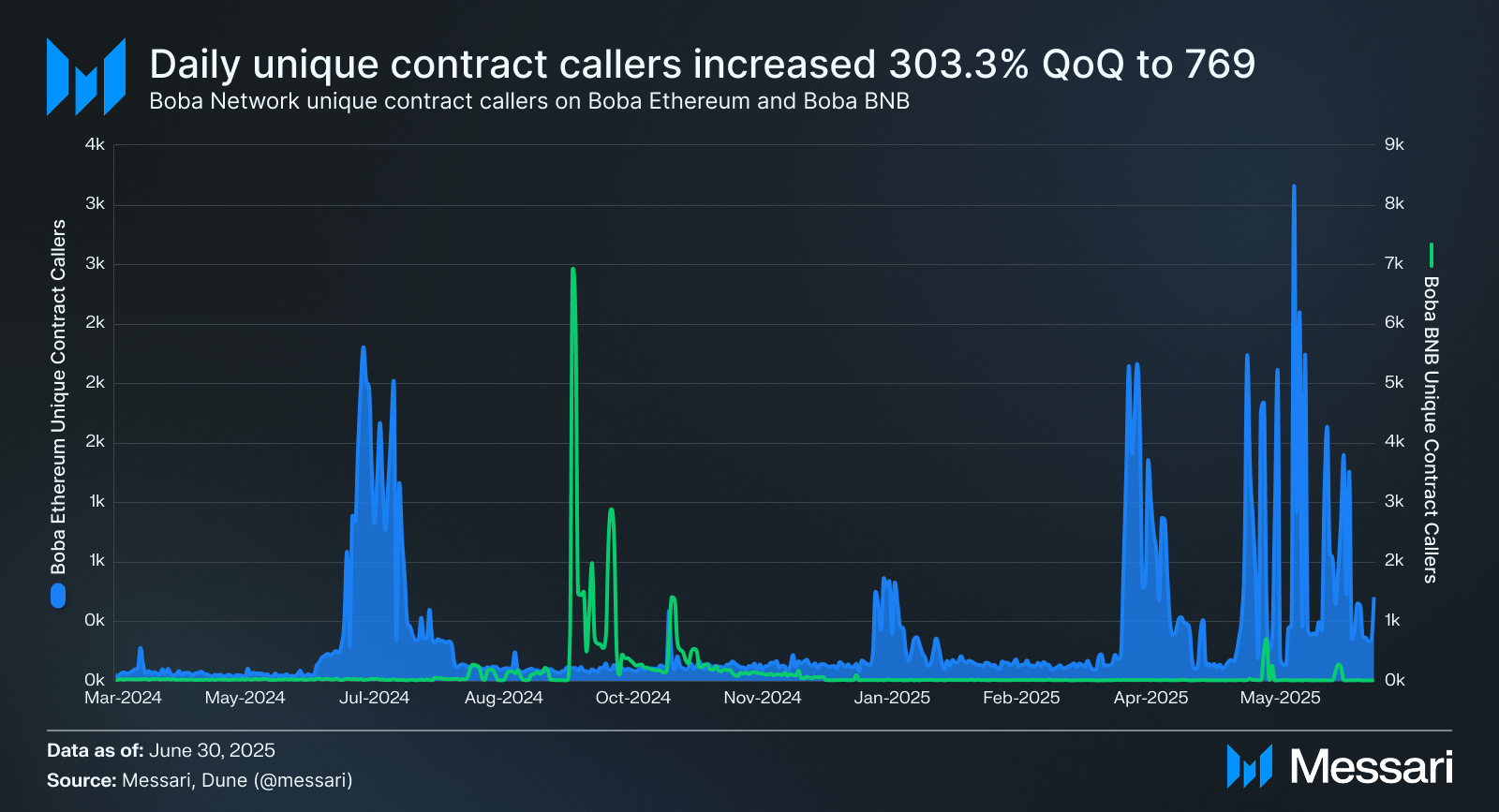
Unique contract callers surged 303% QoQ, signaling broader user engagement and deeper smart contract interaction on Boba Network.
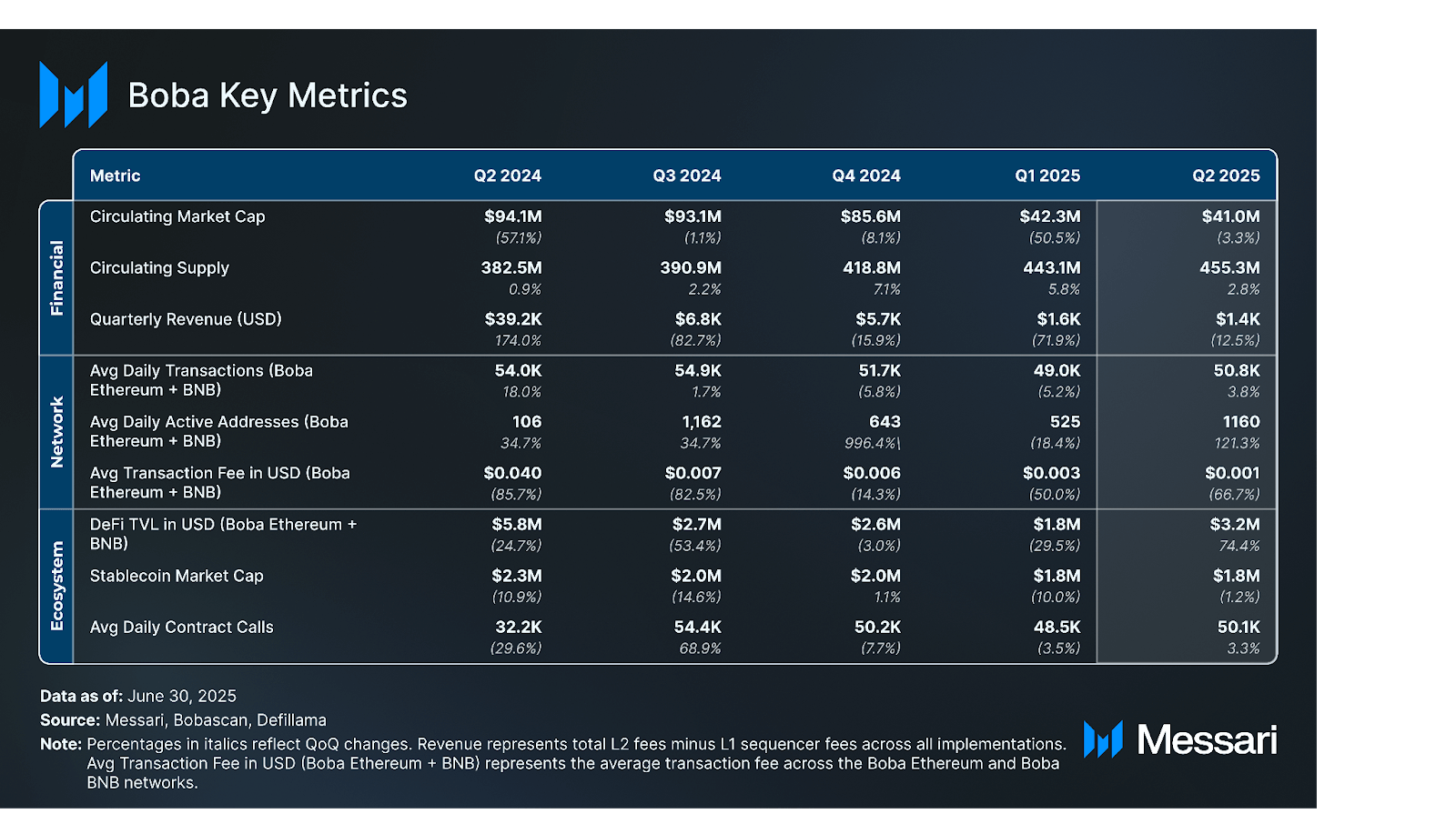
Average daily active addresses rose 121% QoQ, reflecting renewed user participation across Boba Network.
BOBA's token unlock schedule concluded, removing future supply overhang and bringing the full 500M supply into circulation.
HybridCompute 2.0 went live, enabling smart contracts to natively access offchain data and AI services.
Boba Governance Foundation secured $70M in funding to support infrastructure, ecosystem growth, and AI-powered application development.
Primer
Boba Network (BOBA) is a Layer-2 (L2) multichain scaling solution focusing on decentralized finance (DeFi), gaming, AI, and RWAs. Boba, which is operated and maintained by Enya Labs, is deployed on both Ethereum (ETH) and BNB Chain (BNB). As an optimistic rollup (OR) based on Optimism’s software development kit (SDK) OP Stack, Boba offers reduced gas fees, increased transaction throughput, Layer-1 (L1) security guarantees, and EVM compatibility for smart contracts, such as NFTs and DeFi. Boba Network is also a part of Optimism’s Superchain ecosystem, providing interoperability across L2 networks within the Superchain.
The network also has unique features that set it apart from other ORs and Optimism forks, such as Hybrid Compute, which is the ability to connect to offchain computational resources, data, and APIs. Boba Network also provides a multichain focus and zkRand, a non-interactive distributed verifiable random function (NI-DVRF). Boba’s combination of features, specifically Hybrid Compute, enables decentralized applications (dApps) to run at a fraction of the cost of L1 dApps, leverage offchain computation such as generative AI, and provide the multichain solutions needed for blockchain applications. Boba Network was previously active on Avalanche, Fantom, and Moonbeam, but those implementations have since been deprecated. For a full primer on Boba Network, refer to our Initiation of Coverage report.
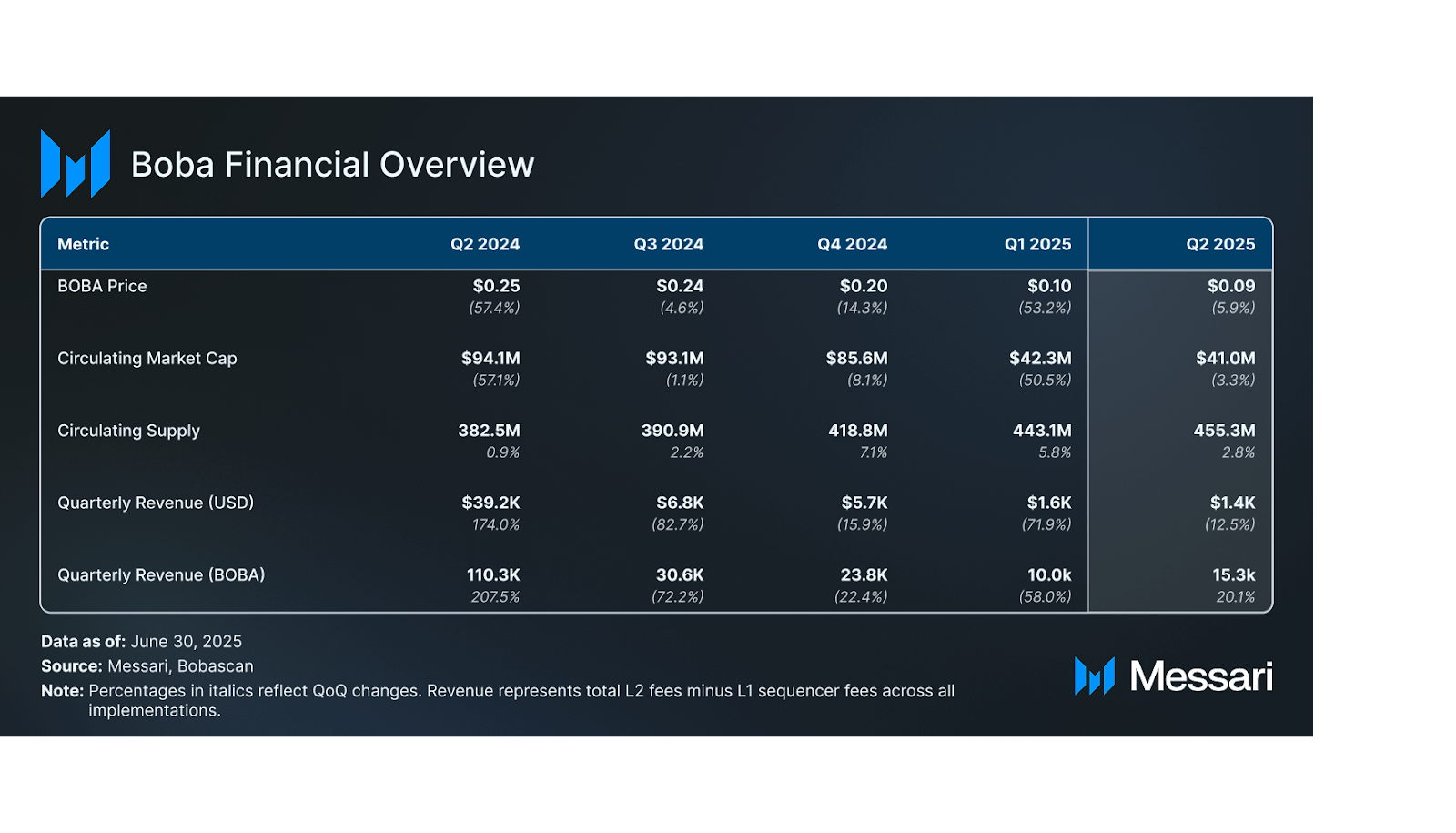
In Q2 2025, BOBA’s market cap fell 3.3% QoQ from $42.3 million to $41.0 million. As the native asset of Boba Network, BOBA’s primary use cases include settling gas fees, engaging in governance, and invoking Hybrid Compute within smart contracts. BOBA is an ERC-20 on Ethereum, Boba Ethereum, and Boba BNB. BOBA ended Q2 with a circulating supply of 455.3 million. BOBA primarily experienced inflationary pressure from staking rewards and the quarterly unlocks of its initial 500 million token allocation. The unlocking schedule concluded on June 20, 2025, with 100% of the supply in circulation.
As a rollup, Boba Network implementations mainly focus on execution while outsourcing other core functions, such as settlement, consensus, and data availability, to their respective Layer-1s (L1s). As such, its revenue is measured as total L2 fees generated minus L1 sequencer fees, respectively, on Boba Ethereum and Ethereum Mainnet or Boba BNB and BNB Chain.
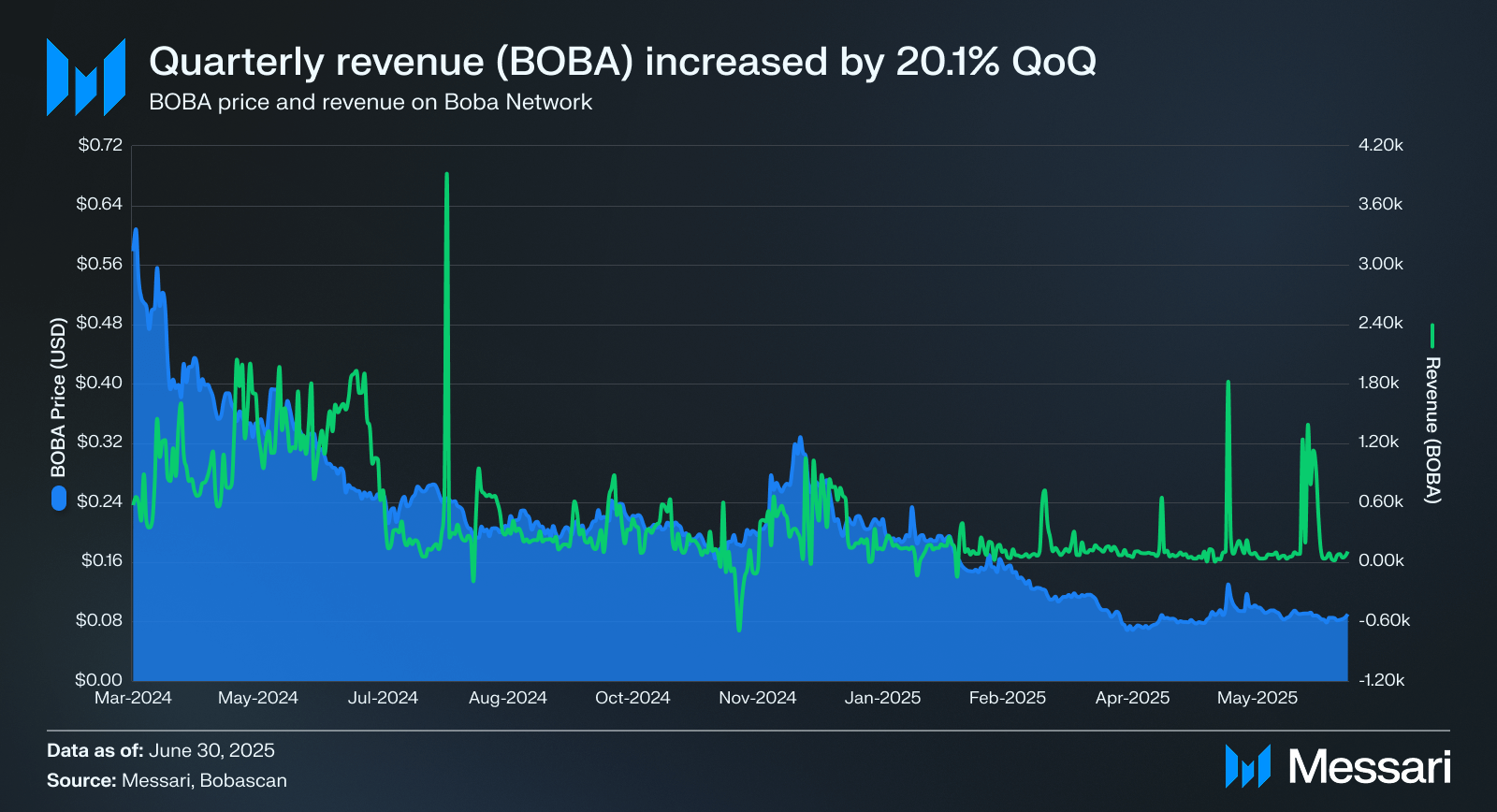
In Q2 2025, Boba Ethereum generated $950 in revenue, a 666% increase from the $124 recorded in Q1. The sharp rise extended the positive impact of Ethereum’s February gas limit increase, which raised the block limit to nearly 32 million gas units. This change allowed more transactions per block, reducing congestion and lowering average L1 fees. Boba BNB, which settles on the BNB Chain, generated $487 in revenue in Q2 2025, down 67.6% from $1,500 in the previous quarter.
Combined, Boba Ethereum and Boba BNB generated $1,436 in revenue in Q2 2025, down 12.5% from the previous quarter. Unlike Q1, when Boba Ethereum accounted for just 7.6% of total revenue, it contributed the majority in Q2 at approximately 66.1%.
Network Overview
Usage
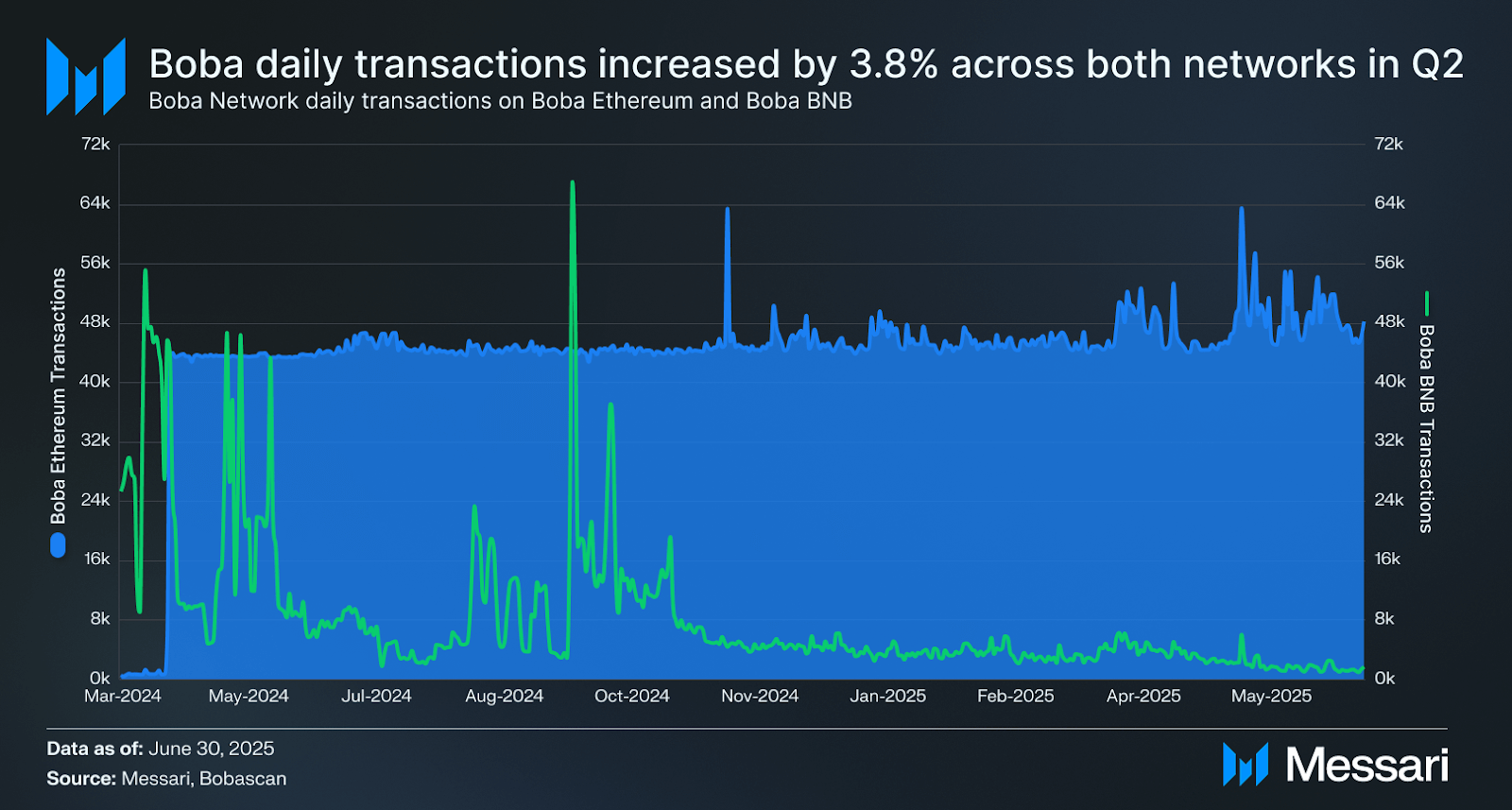
In Q2 2025, average daily transactions combined from Boba Ethereum and Boba BNB increased slightly by 3.8% QoQ, rising from 48,985 to 50,849. This was the first uptick after two straight quarters of declining transaction activity.
A deeper breakdown reveals that Boba Ethereum continued to account for nearly all transaction activity. Average daily transactions on Boba Ethereum rose to 48,243 in Q2, a 6.0% increase from the prior quarter, making up 94.9% of total volume. Meanwhile, Boba BNB's average daily transactions declined for the fourth consecutive quarter, falling from 3,478 to 2,605, down 25.1% QoQ.
Boba Ethereum has consistently been the main driver of activity, and its dominance has continued to strengthen as Boba BNB’s transaction volume has constantly declined.
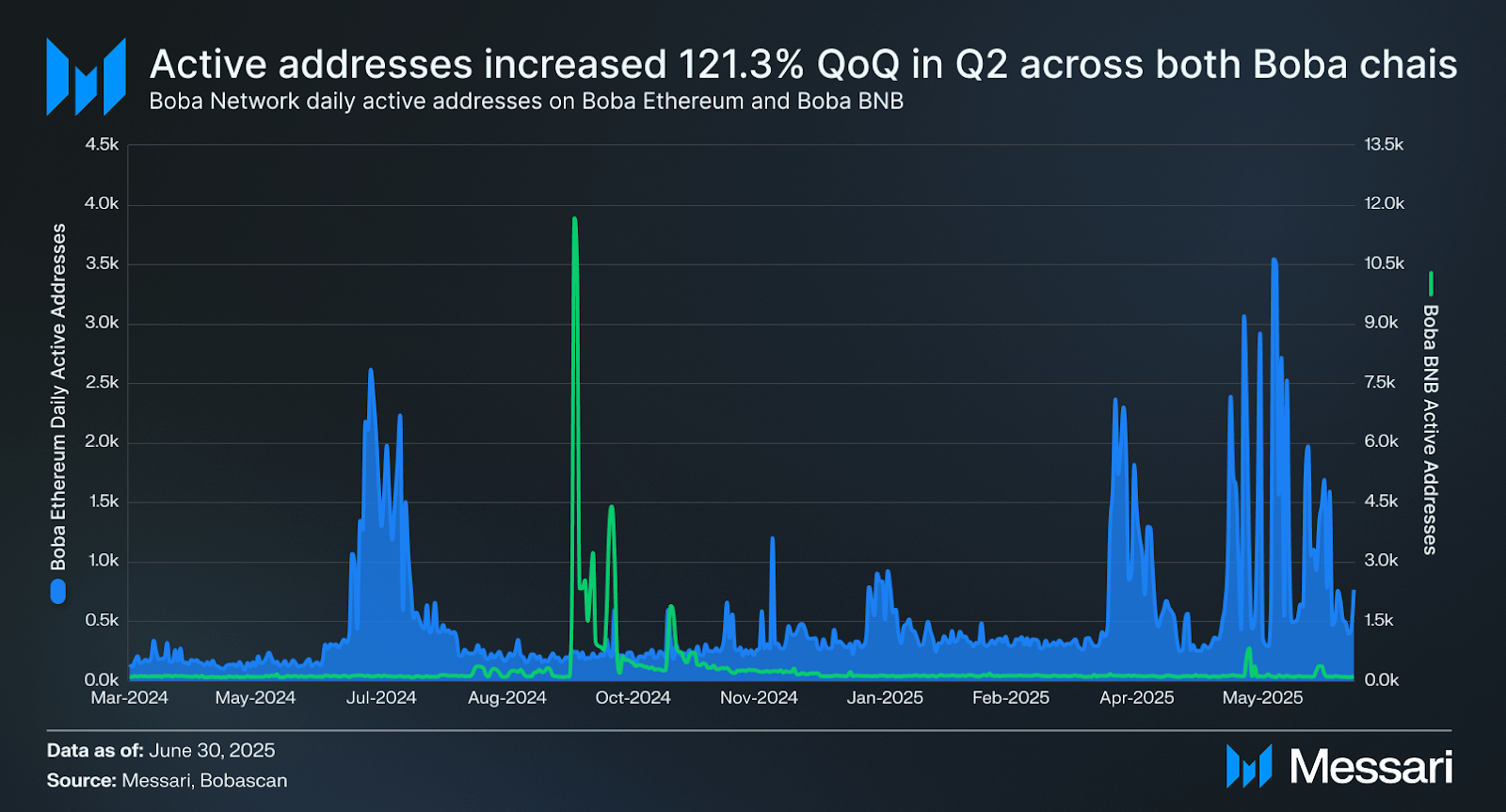
Boba Network’s average daily active addresses rose 121.3% QoQ in Q2 2025, increasing from 525 to 1,160 across Boba Ethereum and Boba BNB. The growth was primarily driven by Boba Ethereum, where average daily active addresses surged 157.5% QoQ. Boba BNB saw a modest 10.0% increase, rising from 129 to 141.
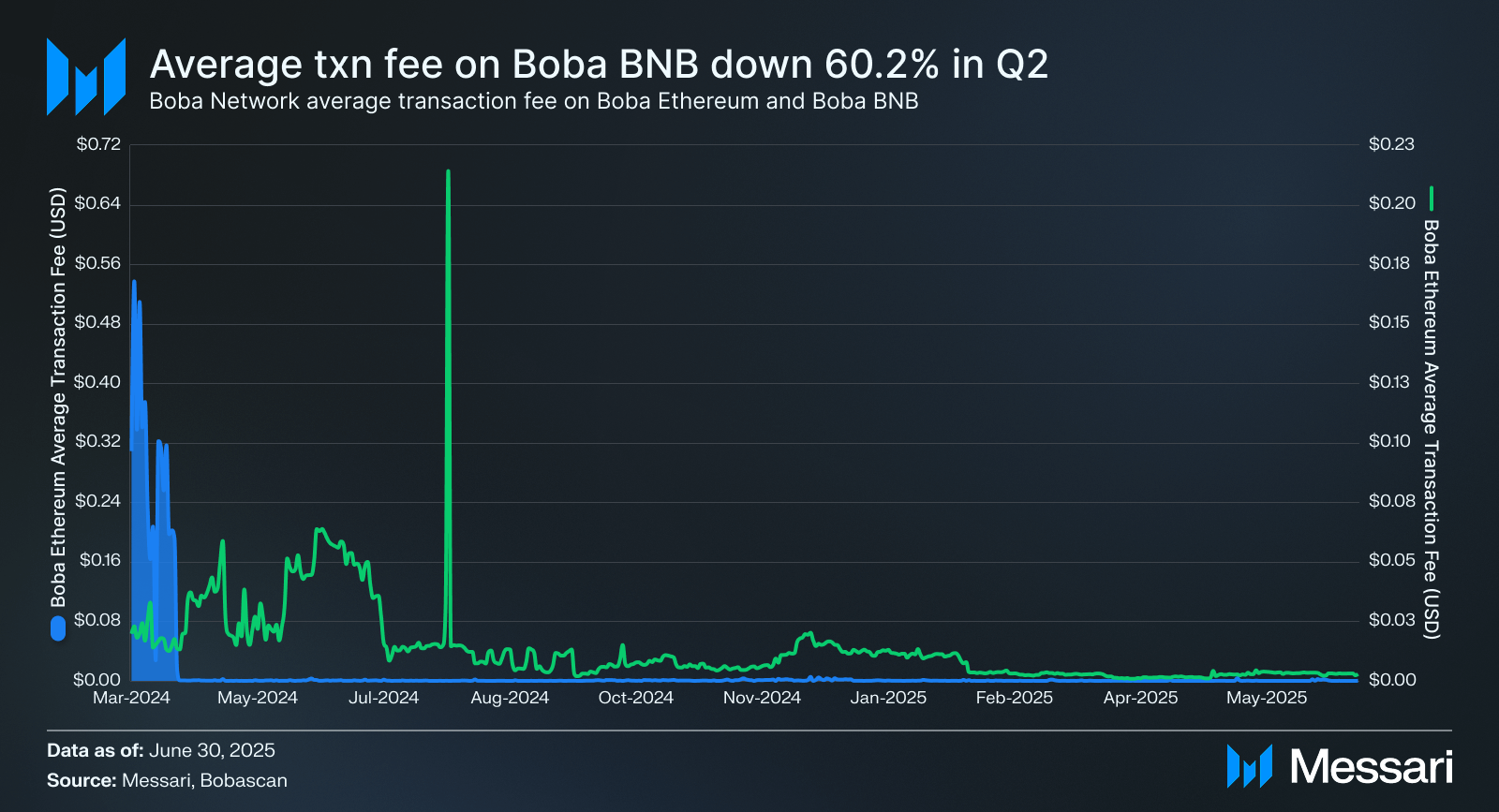
Transaction fees on Boba Ethereum are paid in ETH, while transaction fees on Boba BNB are paid in BOBA. In Q2, the average transaction fee on Boba Ethereum decreased 13.4% QoQ from $0.00024 to $0.00021. On Boba BNB, the average transaction fee dropped 60.2% from $0.006 to $0.002, reflecting reduced network congestion.
Technical Developments
In Q2 2025, Boba Network introduced two major upgrades to expand functionality and improve the developer and user experience across Boba Ethereum. These updates included the mainnet deployment of HybridCompute 2.0 and the launch of a redesigned Boba Hub. Key details for each release are outlined below:
HybridCompute 2.0 Went Live: On April 22, Boba Network deployed HybridCompute 2.0 to the mainnet, enabling native smart contract access to offchain systems like AI models, Web2 APIs, and enterprise services. Key features include:
Two-way integration: Smart contracts can fetch and use offchain data in a single atomic transaction.
No custom infrastructure: No oracles, sequencer changes, or external tooling required.
OP Stack compatible: Built using ERC-4337 and a custom bundler.
Streamlined execution: Offchain calls made during estimateGas() and consumed during execution.
MetaMask Snap support: Users can interact with AI-enabled contracts through familiar interfaces.
Boba Hub Launch: On June 10, Boba Network unveiled the redesigned Boba Hub, introducing a streamlined user interface and several new features aimed at improving usability and access to key network tools. The upgraded Hub integrates real-time BOBA price tracking, a live transaction viewer, and expanded wallet compatibility. The launch also introduced a new “Where to Buy” page, providing a curated list of exchanges with direct links for acquiring BOBA. In parallel, Boba Hub added support for Smart Accounts via ERC-4337 account abstraction. Powered by deterministic keys through Snap, Smart Accounts allow users to batch actions, reduce friction in dApp interactions, and improve security through programmable UX flows.
Ecosystem Overview
DeFi
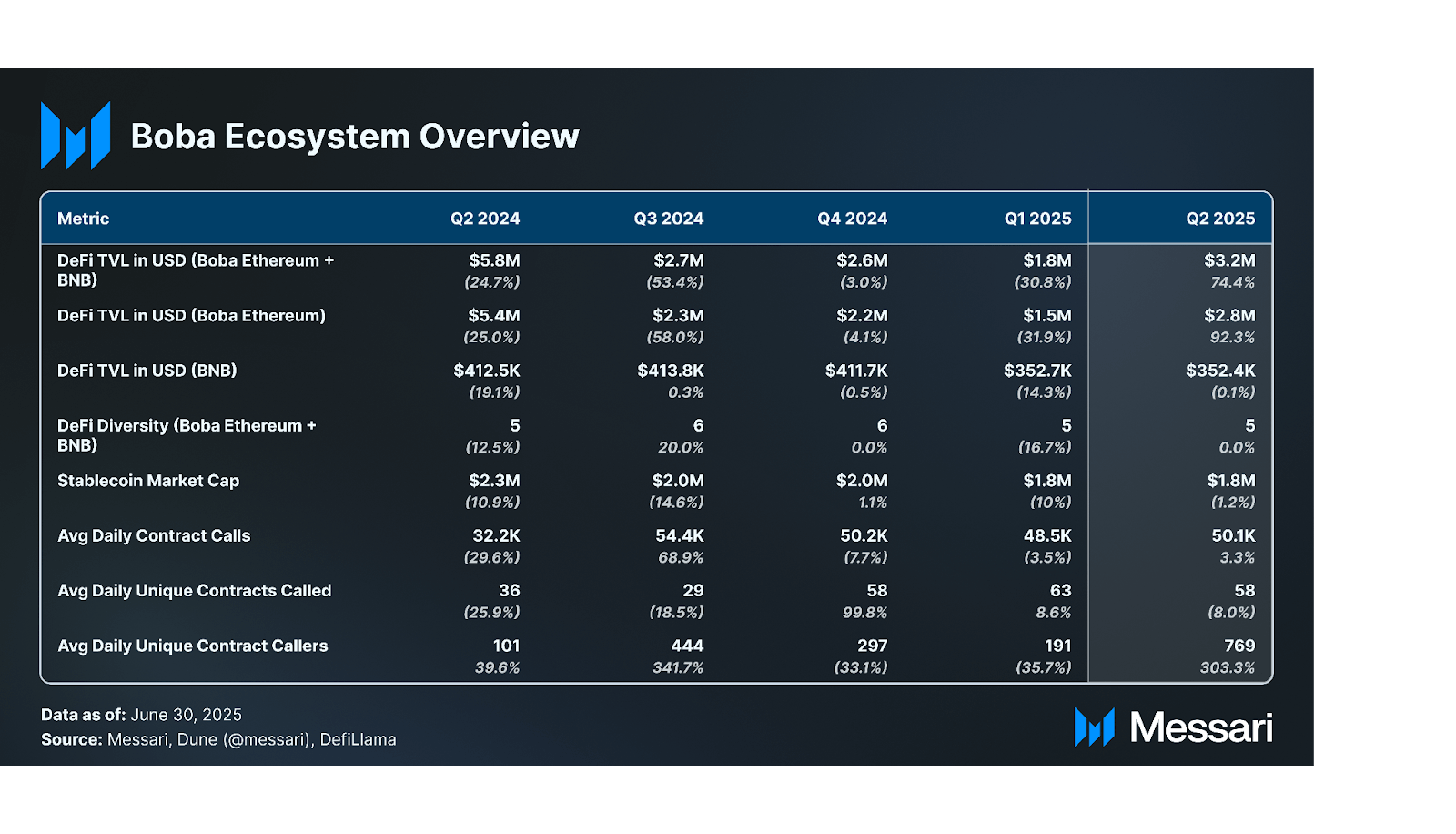
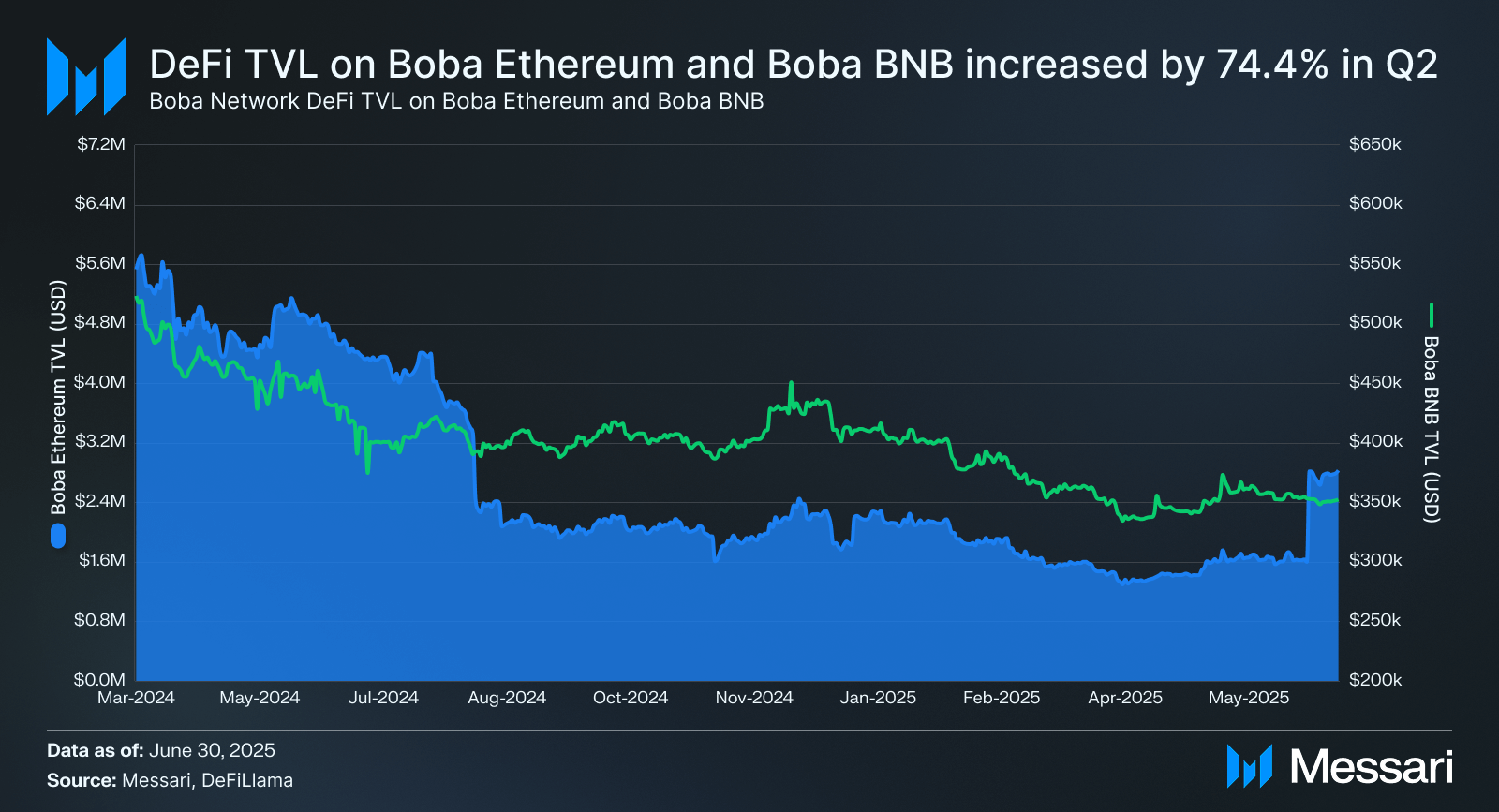
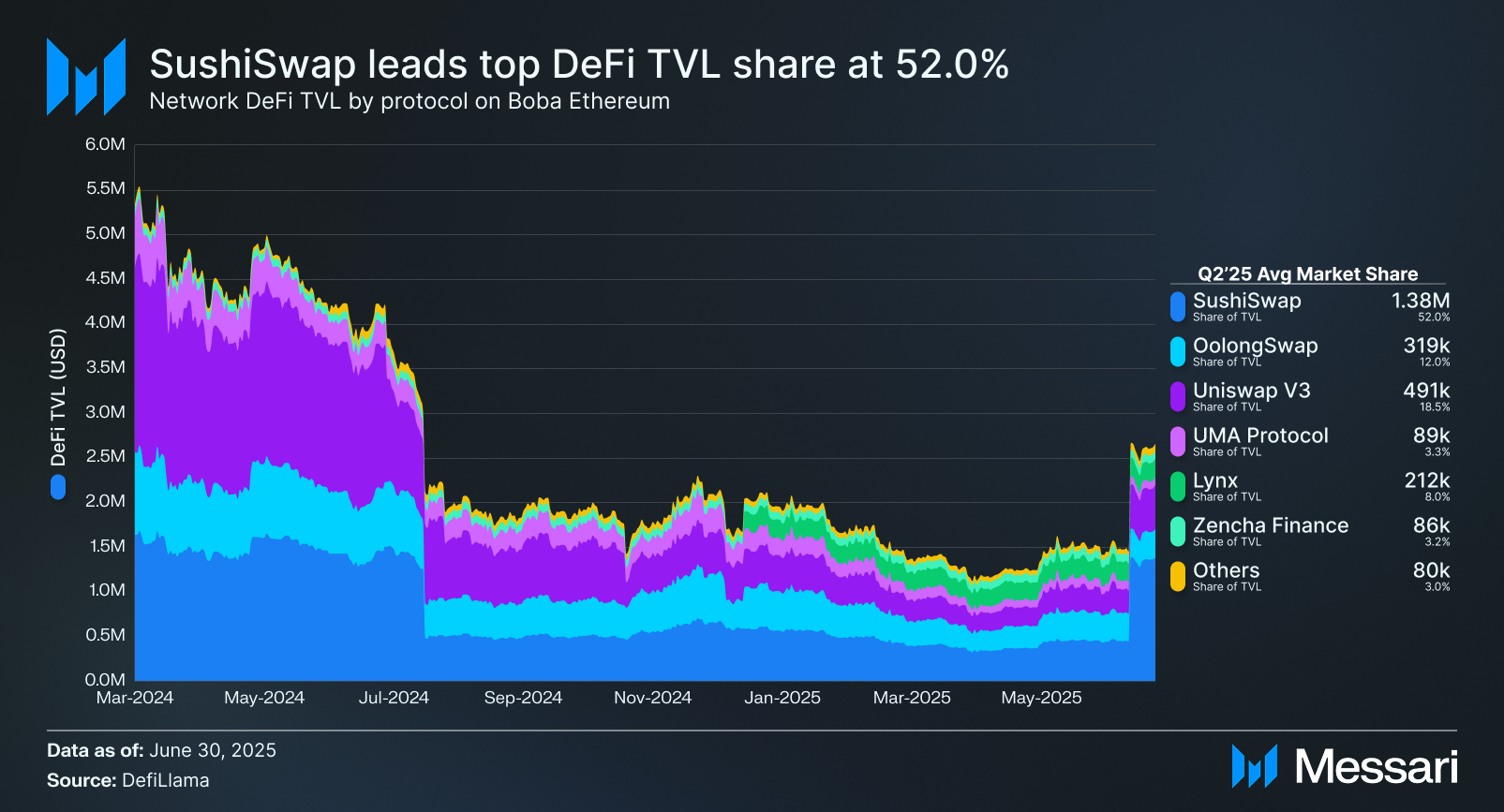
This quarter, DeFi total value locked (TVL) for both Boba implementations increased 74.4% QoQ, rising from $1.8 million to $3.2 million. The expansion was led by Boba Ethereum, which saw its TVL surge 92.3% QoQ from $1.5 million to $2.8 million. Boba Ethereum continues to account for the majority of Boba’s TVL, making its performance the dominant driver of network-wide changes. On Boba BNB, TVL decreased slightly by 0.1% QoQ, from $352,700 to $352,367, marking the fourth consecutive quarter of decline.
The surge on Boba Ethereum began in late June, roughly 10 days after the redesigned Boba Hub went live. The new Hub introduced improved wallet access, price visibility, and Smart Account support, which may have helped re-engage users and improve capital onboarding.
In Q2 2025, the top three protocols on Boba Ethereum remained the same as in Q1. SushiSwap, OolongSwap, and Uniswap V3 combined for 82.5% of the total DeFi TVL. SushiSwap strengthened its position significantly, growing its share from 24.3% to 52.0%. OolongSwap and Uniswap V3 followed with 12.9% and 18.5%, respectively.
Note that Uniswap V3’s liquidity pools on Boba Network are accessed through Oku Trade’s front-end, as Uniswap did not deploy its own interface. For consistency, this report will refer to these pools as Uniswap V3.
Compared to Q1 2025, Zencha Finance replaced Symbiosis as the sixth-largest protocol by TVL, holding a 3.2% share. Overall, TVL became more concentrated, with the majority of liquidity now held in SushiSwap.
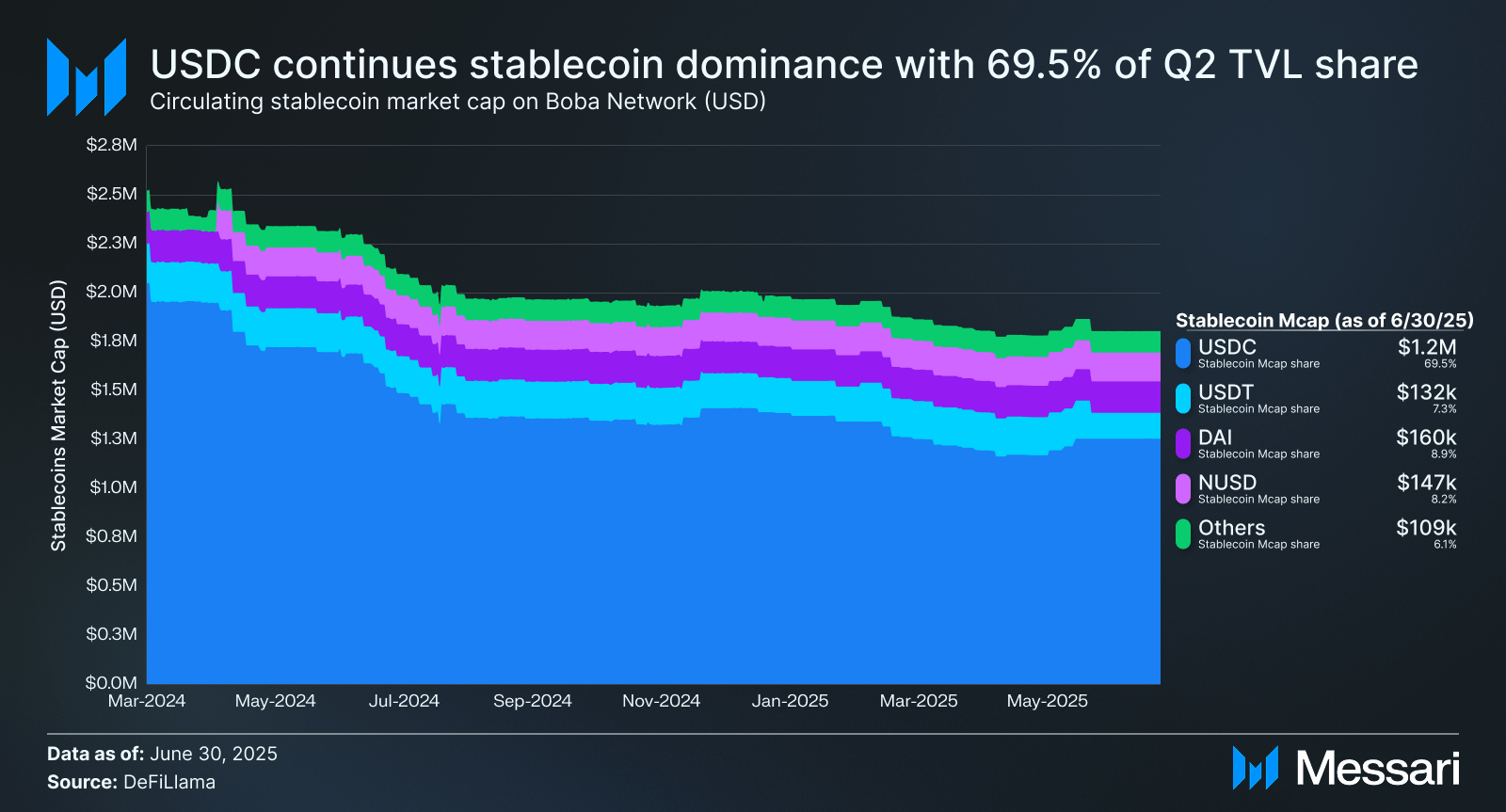
USDC continues to dominate the stablecoin market on Boba Network, accounting for 69.5% of the total stablecoin market cap as of the end of Q2 2025, up from 66.5% in Q1. While the shift was modest, it further solidified USDC’s position as the primary stablecoin used across the network. Other leading stablecoins saw slight declines or remained stable: USDT fell from 10.7% to 7.3%, DAI held steady at around 8.9%, and NUSD edged up from 8.0% to 8.2%.
Contract Activity
In Q2 2025, the average daily number of unique contracts called on Boba Network declined slightly. Boba Ethereum averaged 48 unique contract calls per day, down from 52, and Boba BNB averaged 9 per day, down from 10. While the change was modest, Boba Ethereum continued to account for the vast majority of usage. The slight decline suggests a narrower range of active smart contracts, potentially reflecting reduced experimentation, fewer new deployments, or more concentrated user activity around a smaller set of applications.
The number of daily unique contract callers on Boba Network surged 303.3% QoQ in Q2 2025, rising from 191 to 769. This sharp increase was driven almost entirely by Boba Ethereum, which recorded 735 unique contract callers, up 612.6% from 103 in the previous quarter. The surge in contract callers on Boba Ethereum indicates a broad expansion in user participation at the contract level.
Growth and Development
$70 Million Capital Commitment and FTX Resolution
On July 1, Boba Governance Foundation announced a $70 million capital commitment from Awaken Foundation and LDA Capital to accelerate the development of Boba Network. The funding will support infrastructure upgrades, ecosystem expansion, and the development of AI-powered dApps, with a portion allocated to community growth initiatives and developer incentives.
Alongside the funding announcement, the Foundation finalized an agreement with the FTX Recovery Trust. Under the terms, all BOBA tokens held by the Trust were transferred to the Foundation. In exchange, the Trust received the right to purchase up to 29.4 million BOBA at $0.09 per token within 18 months. This resolution removed a major overhang on the BOBA token and clarified the token’s future supply conditions.
Thrive Boba Season 1 Recap
On May 22, Boba Network concluded Season 1 of its Thrive Boba grants program, which was designed to support early-stage applications across gaming, DeFi, and infrastructure. Collectively, the program generated over 31,000 onchain transactions, onboarded more than 2,400 unique wallets, and minted over 10,000 NFTs. Key projects include:
World of Rogues: The post-apocalyptic MMORPG brought onchain game logic to life with 10,000+ transactions powered by its Daily Streak and Cooldown System contracts. The game averaged 202 daily active users during a 10-day period, peaking at 275, and saw a 65% reward claim success rate using ERC-1155 NFTs.
Toaster Finance: Toaster developed a multi-feature DeFi interface that logged 11,301 transactions, nearly 9,000 of which were directly tied to DeFi activity. The protocol engaged 553 unique wallets, minted 1,872 ERC-721 profile NFTs, and distributed over 7,400 ERC-1155 assets.
MotoDEX: MotoDEX showcased Boba’s performance under load with 10,000 transactions completed over just 17 days, involving 9,095 unique wallets. The game averaged 588 transactions per day with a 100% success rate, while consuming only 0.0003 ETH in total gas.
Thrive Boba Season 2 Launch
On May 14, Boba Network opened applications for Season 2 of Thrive Boba. Running through July 9, the program offers up to $50,000 in BOBA per project, with funding disbursed across four performance-based milestones to ensure accountability and real traction.
Season 2 targets five focus areas: core DeFi primitives, RWA tokenization, gaming and high-frequency applications, AI-integrated smart contracts, and infrastructure tools such as bridges, wallets, and privacy layers. Projects can apply through two tracks: Boost for existing teams expanding to Boba, and Genesis for new ideas building from scratch. Applicants are supported from testnet deployment through mainnet usage.
Boba Network Officially Listed in the OP Superchain Index
Boba Network was officially listed in the OP Superchain Index after meeting the updated onchain criteria outlined in the Superchain Registry 2.0 upgrade. These criteria include using the OP Contracts Manager for L1 deployments and complying with standardized fault-proof parameters. The listing confirms Boba’s alignment with Optimism’s technical standards and its eligibility for inclusion in the broader Superchain coordination framework.
Quest Ecosystem Performance with Flipside
Flipside’s quest-driven activation program on Boba Network delivered strong user engagement and measurable onchain impact. Over the course of 16 quests, the initiative onboarded 13,618 users, exceeding the original 3,000 user target by 354%, and generated $94.4 million in direct transaction volume. Flipside’s user refinement process led to a 22% increase in high-quality users, with 2,724 participants reaching elevated status. The average quest completion rate stood at 76.4%, with liquidity provisioning quests achieving 87% to 97% completion.
MetaSoccer Deployed on Boba Network
MetaSoccer has integrated Boba Network, allowing players to buy and use Boba-native assets, including Scouts, Players, Packs, and Stars, directly in-game. The integration improves onboarding and enables smoother NFT interactions, supporting future gameplay development onchain.
New BOBA Token Listing
BOBA was listed on Bitpanda and LCX Exchange in Q2 2025, increasing its availability across regulated European platforms. Bitpanda, an Austrian fintech firm, provides retail access to digital assets, securities, and commodities. LCX, regulated under Liechtenstein’s TVTG framework, offers crypto trading and tokenization services targeted at institutional and retail users.
Closing Summary
In Q2 2025, Boba Ethereum solidified its role as the dominant implementation across the network, accounting for the majority of transaction volume and driving nearly all user and contract-level engagement. Average daily active addresses on Boba Ethereum rose 157.5%, while unique contract callers increased more than sixfold. Contract activity remained concentrated, but the user base broadened meaningfully. Meanwhile, Boba BNB continued to decline across key metrics, contributing less than 5% of total usage and recording its fourth consecutive quarter of contraction.
Qualitative developments reinforced Boba Network’s strategic direction. The mainnet deployment of HybridCompute 2.0 introduced real-time offchain data access into smart contracts, enabling new AI-powered use cases. In June, the redesigned Boba Hub launched with Smart Account support and improved access to token markets and developer tools. These upgrades expanded the network’s technical capabilities and positioned Boba Ethereum as a platform for more sophisticated applications.
In addition, Boba Governance Foundation secured a $70 million commitment from Awaken Foundation and LDA Capital to support network development and ecosystem funding. The quarter also marked the completion of BOBA’s token unlock schedule, with 100% of the 500 million supply now in circulation. With funding secured, unlocks concluded, and core infrastructure upgraded, Boba Network enters the second half of 2025 with greater clarity and momentum.
This report was commissioned by Enya Labs. All content was produced independently by the author(s) and does not necessarily reflect the opinions of Messari, Inc. or the organization that requested the report. The commissioning organization may have input on the content of the report, but Messari maintains editorial control over the final report to retain data accuracy and objectivity. Author(s) may hold cryptocurrencies named in this report. This report is meant for informational purposes only. It is not meant to serve as investment advice. You should conduct your own research and consult an independent financial, tax, or legal advisor before making any investment decisions. Past performance of any asset is not indicative of future results. Please see our Terms of Service for more information.
No part of this report may be (a) copied, photocopied, duplicated in any form by any means or (b) redistributed without the prior written consent of Messari®.
Alice is a Research Analyst on the Protocol Services team. She previously worked as a Research Analyst at The Block and was an Investment Intern at Variant Fund. Alice graduated from Northwestern University, where she studied Economics.
Alice is a Research Analyst on the Protocol Services team. She previously worked as a Research Analyst at The Block and was an Investment Intern at Variant Fund. Alice graduated from Northwestern University, where she studied Economics.