BNB’s market cap rose 7.5% to $92.6 billion, while BNB Smart Chain revenue fell 37.5% QoQ to $44.1 million. The drop in revenue wasdue to a 90% reduction in base gas fees, which fell from 1 gwei to 0.1 gwei over the quarter.
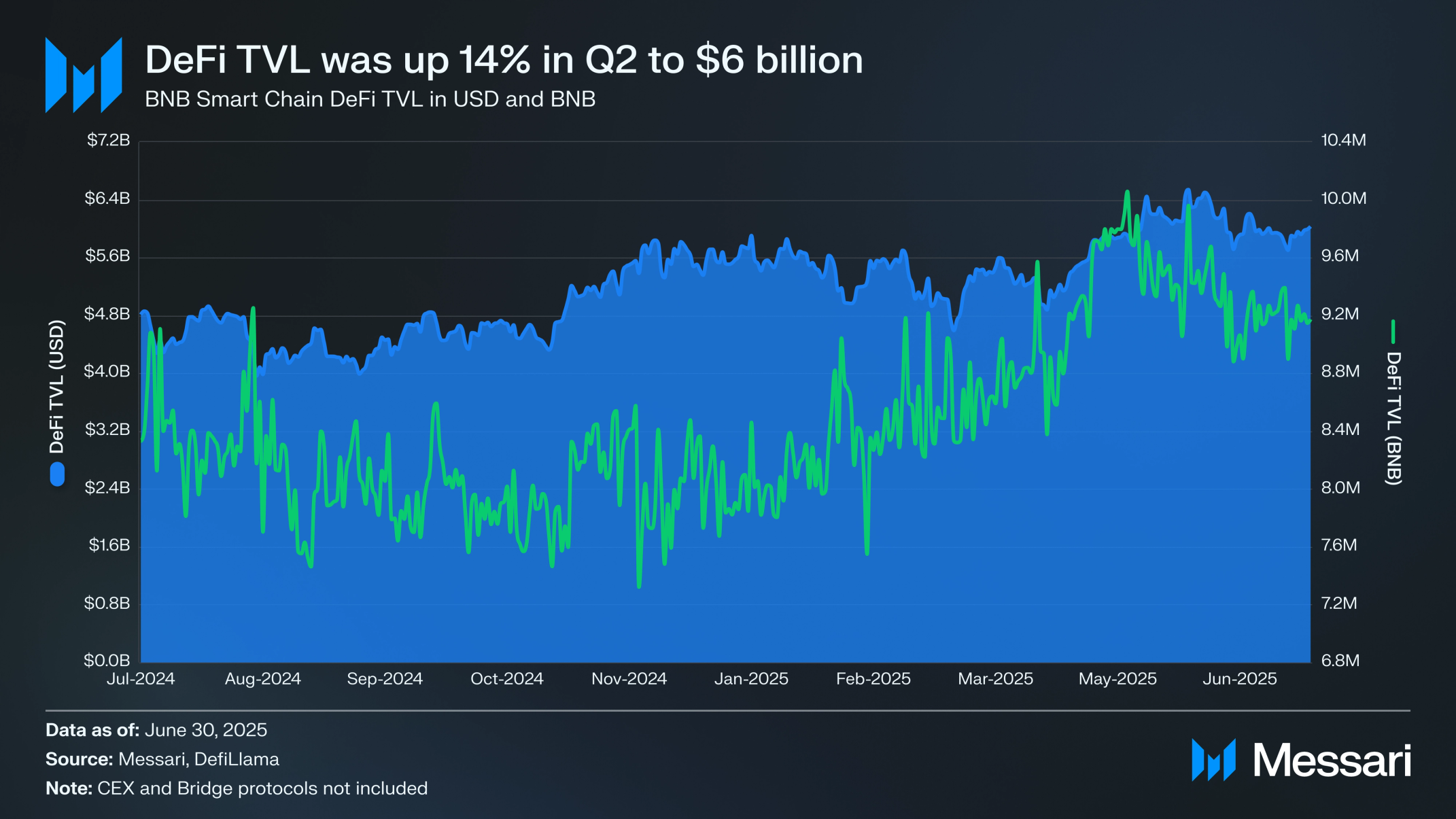
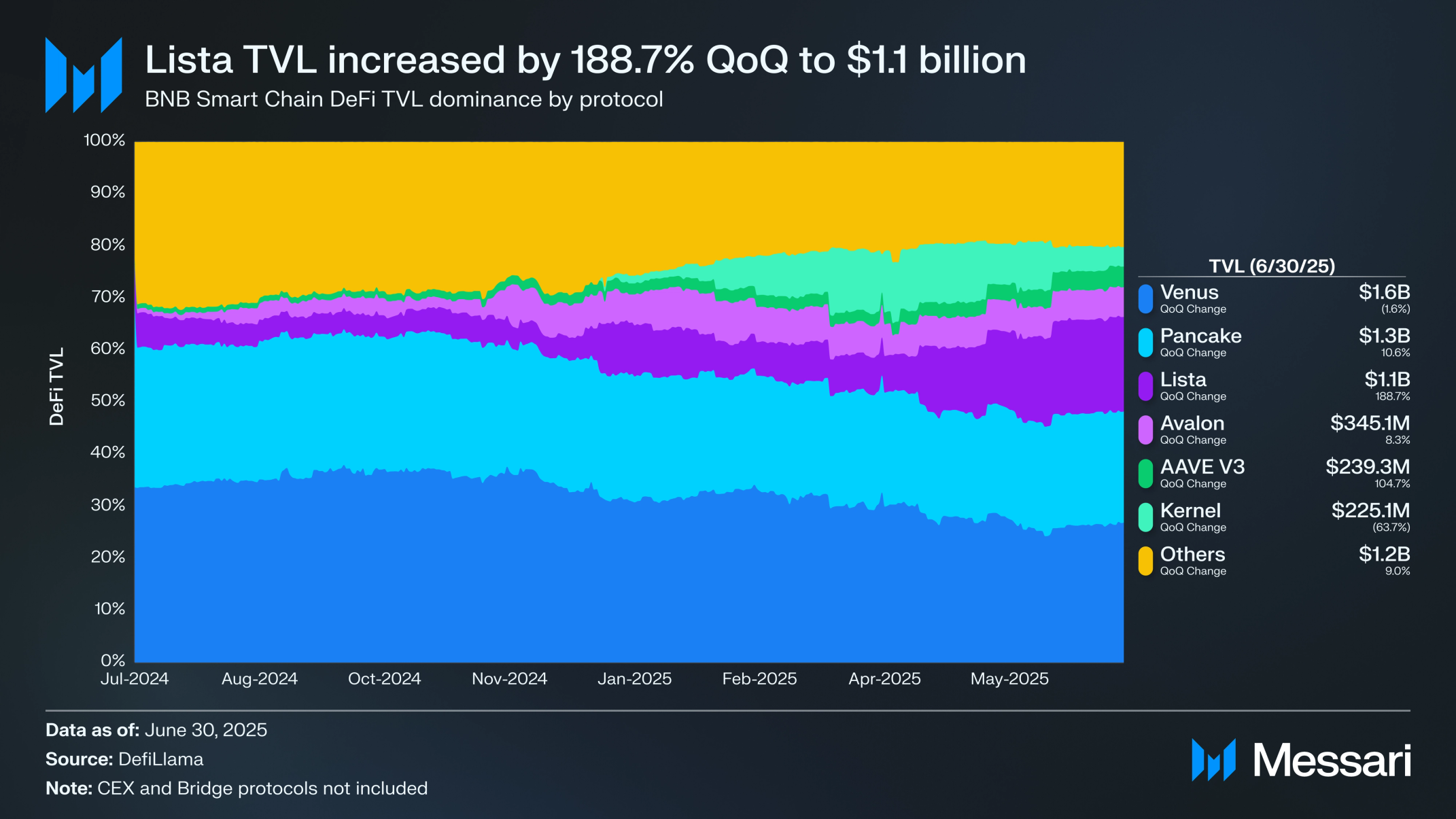
DeFi TVL grew 14.0% QoQ to $6.0 billion, driven by gains in liquid staking and lending. ListaDAO’s TVL rose 188.7%, becoming the third-largest DeFi protocol.
DEX volume increased 132.6% QoQ to $1.9 billion daily, the highest across all chains. PancakeSwap led with 71% share, while Uniswap and StableSwap saw outsized growth.
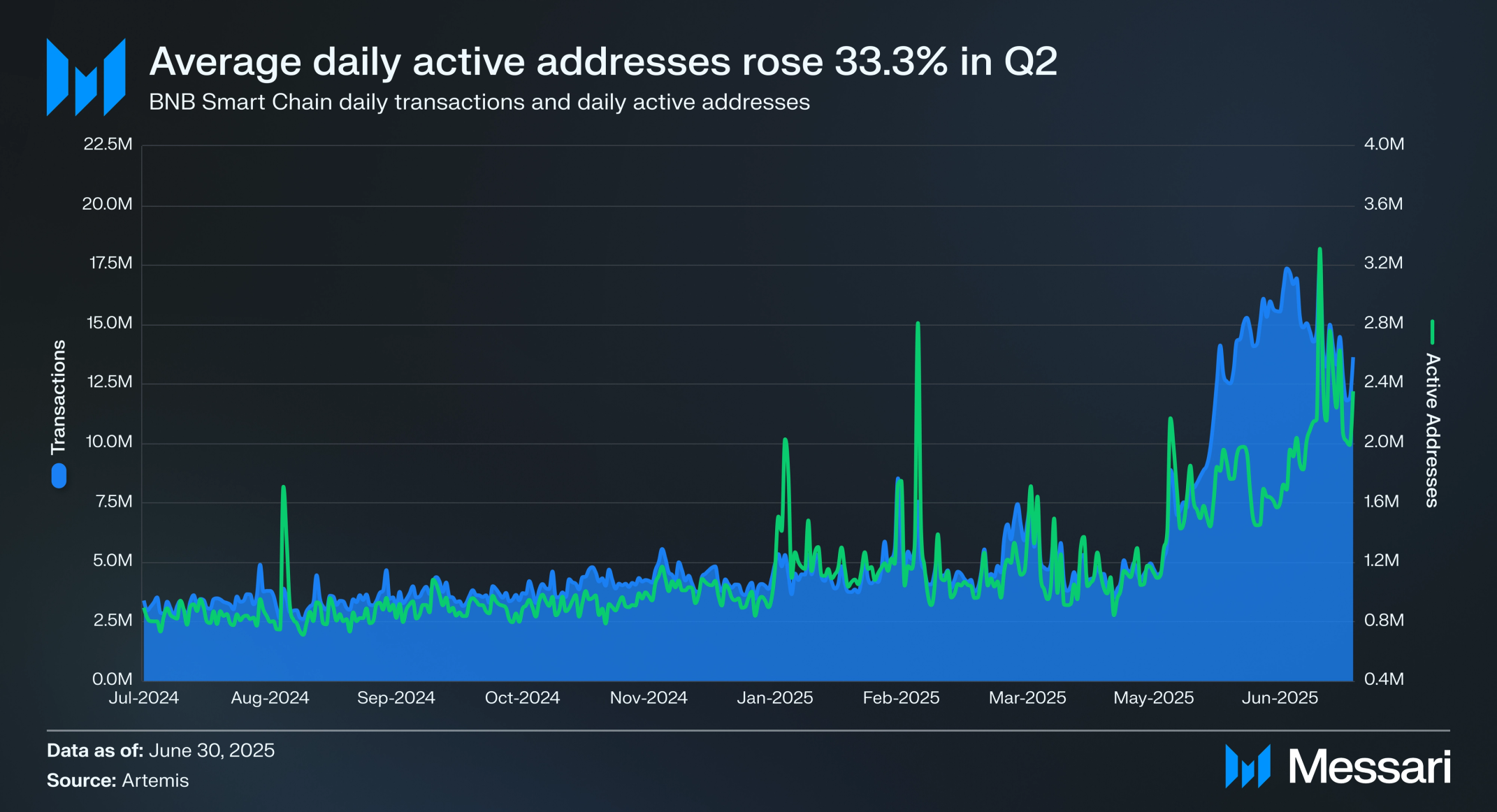
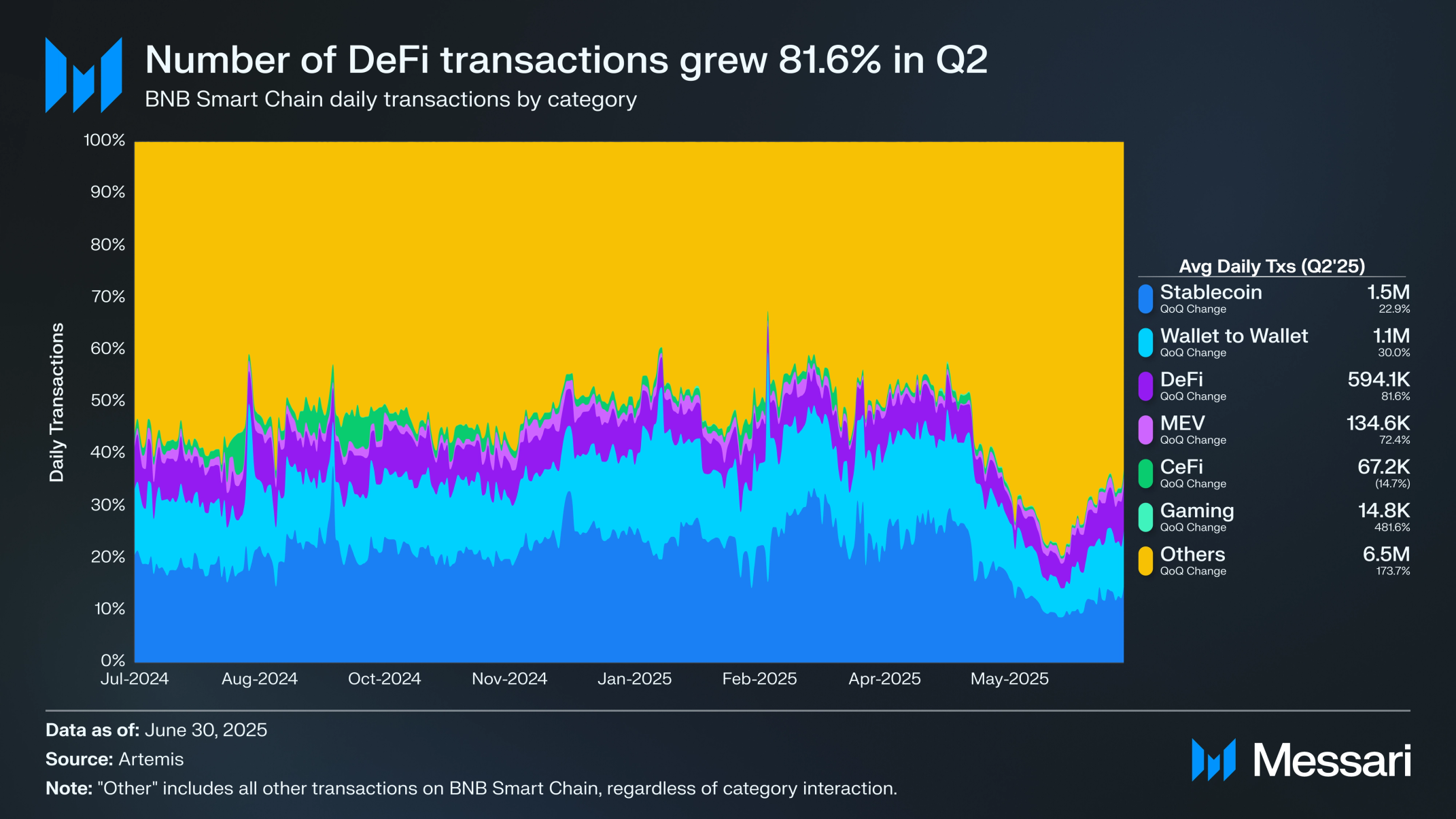
Daily active addresses and transactions grew 33.2% and 101.9% QoQ, respectively, fueled by Binance Alpha campaigns. The “Others” category grew 173.7%, reflecting gamified, non-standard activity.
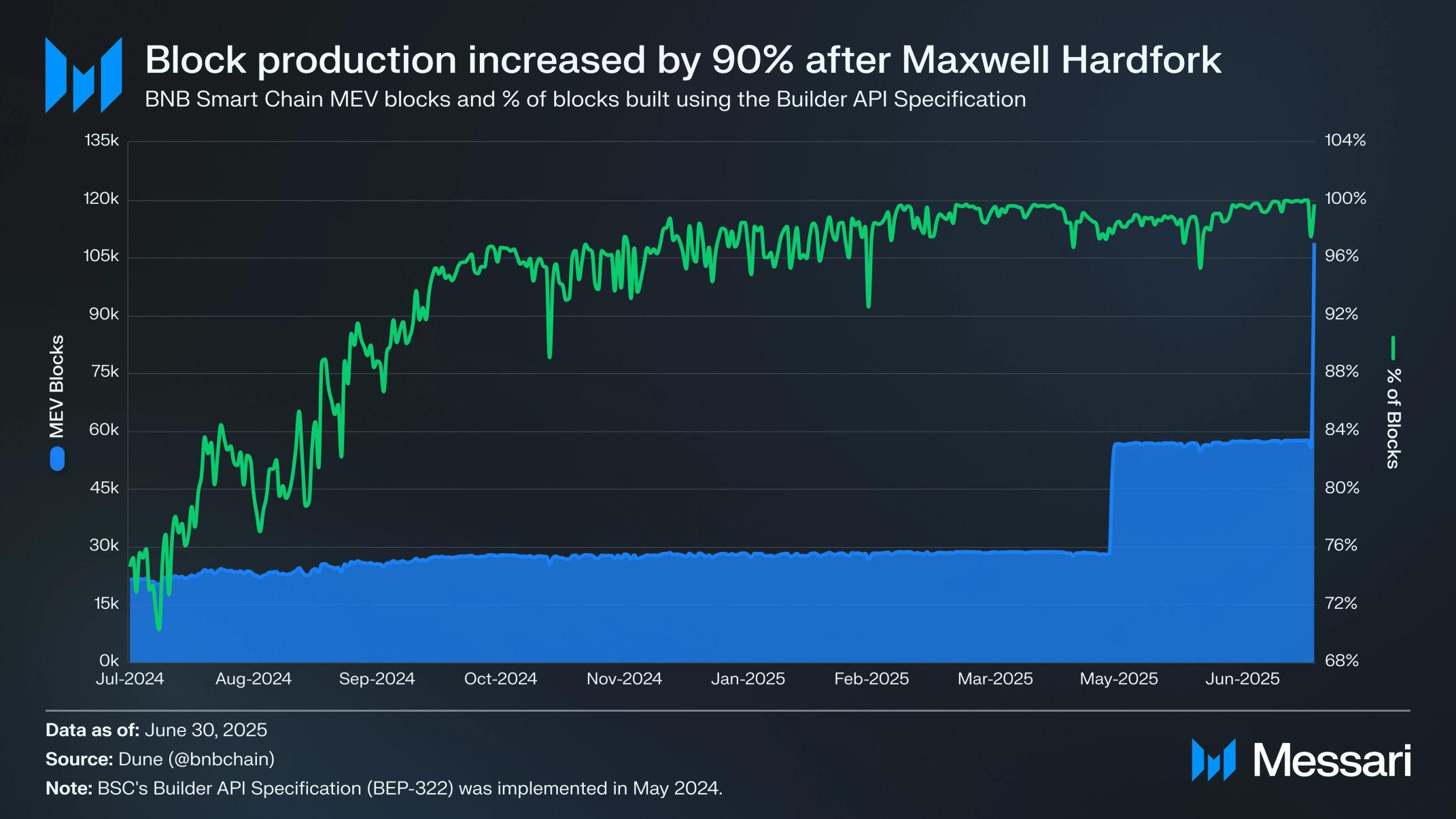
Lorentz and Maxwell hard forks cut block times to 0.75 seconds, boosting daily block output by 90%. Fast Finality now confirms transactions in 1.875 seconds.
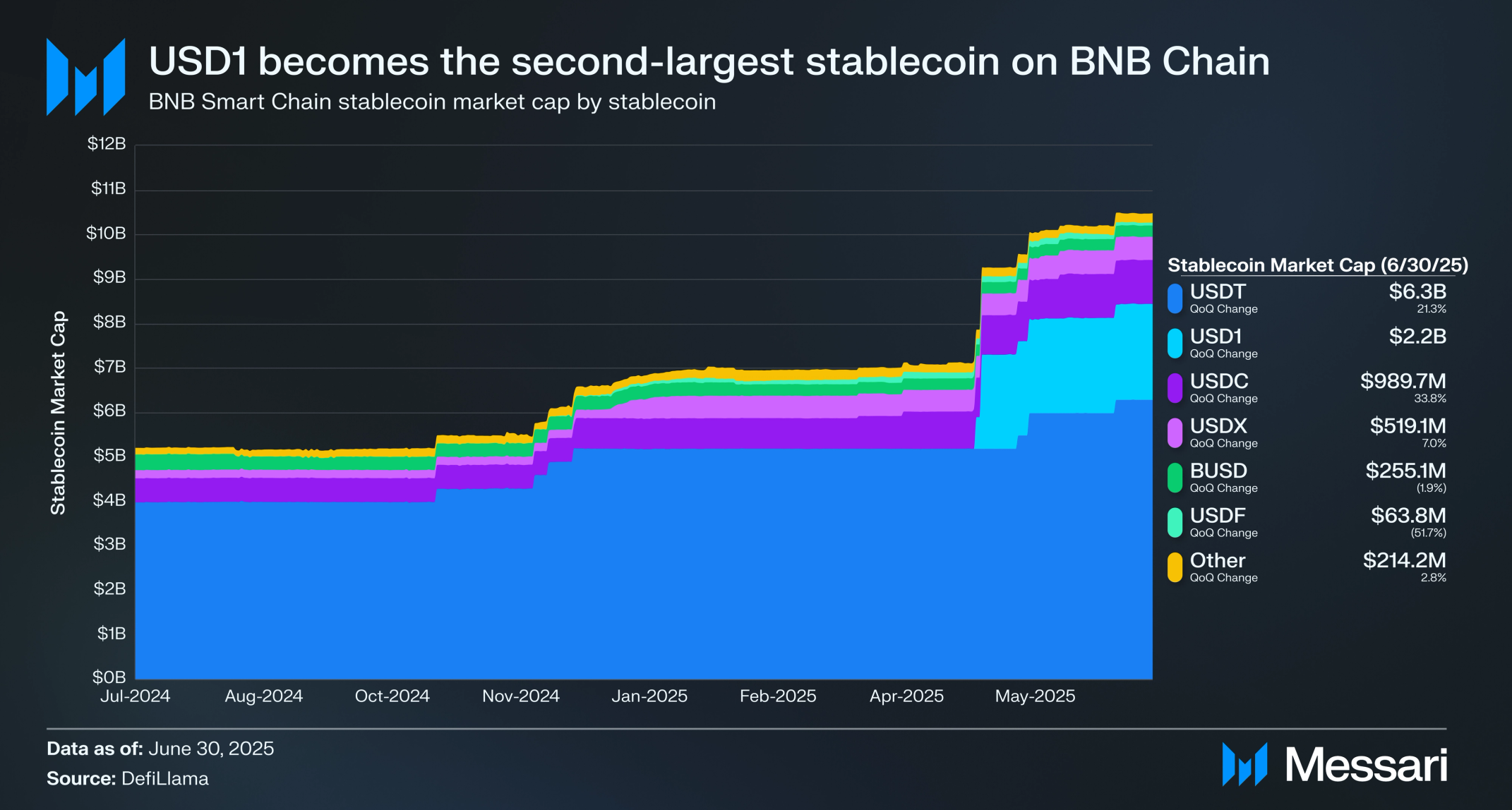
Stablecoin market cap rose 49.6% to $10.5 billion, led by USD1’s $2.2 billion debut. Fee subsidies from the 0-Fee Carnival helped drive adoption, securing a leading position in stablecoin transactions and active users
Primer
BNB Chain (BNB) is an ecosystem of blockchains where each chain serves a particular function. The three core components of BNB Chain are as follows:
BNB Smart Chain (BSC): Smart contract layer and DeFi hub. Since its merge with BNB Beacon Chain, BSC also serves as the staking and governance layer.
BNB Greenfield: Decentralized storage network. As a vital component of the One BNB paradigm, Greenfield focuses on live, valuable data and lets users create their own personal data marketplace.
opBNB: High-performance optimistic rollup. opBNB is ideal for Dapps that require high transaction frequency, like fully onchain games. It offers the lowest gas fees among L2s, with transactions costing <$0.0001. It also delivers very high performance, processing between 5,000 and 10,000 TPS.
The metrics in this report will mostly focus on BNB Smart Chain (BSC). BSC is an EVM-compatible, Layer-1 blockchain secured by a form of Proof-of-Staked-Authority (PoSA) that combines aspects of Proof-of-Authority (PoA) and Delegated Proof-of-Stake (DPoS). In PoSA on BSC, the validator set is of fixed size and is elected by stake weight (staked plus bonded). In addition, validators must continue staking assets to secure the network, and validators chosen to produce blocks are rotated (not based on stake weight).
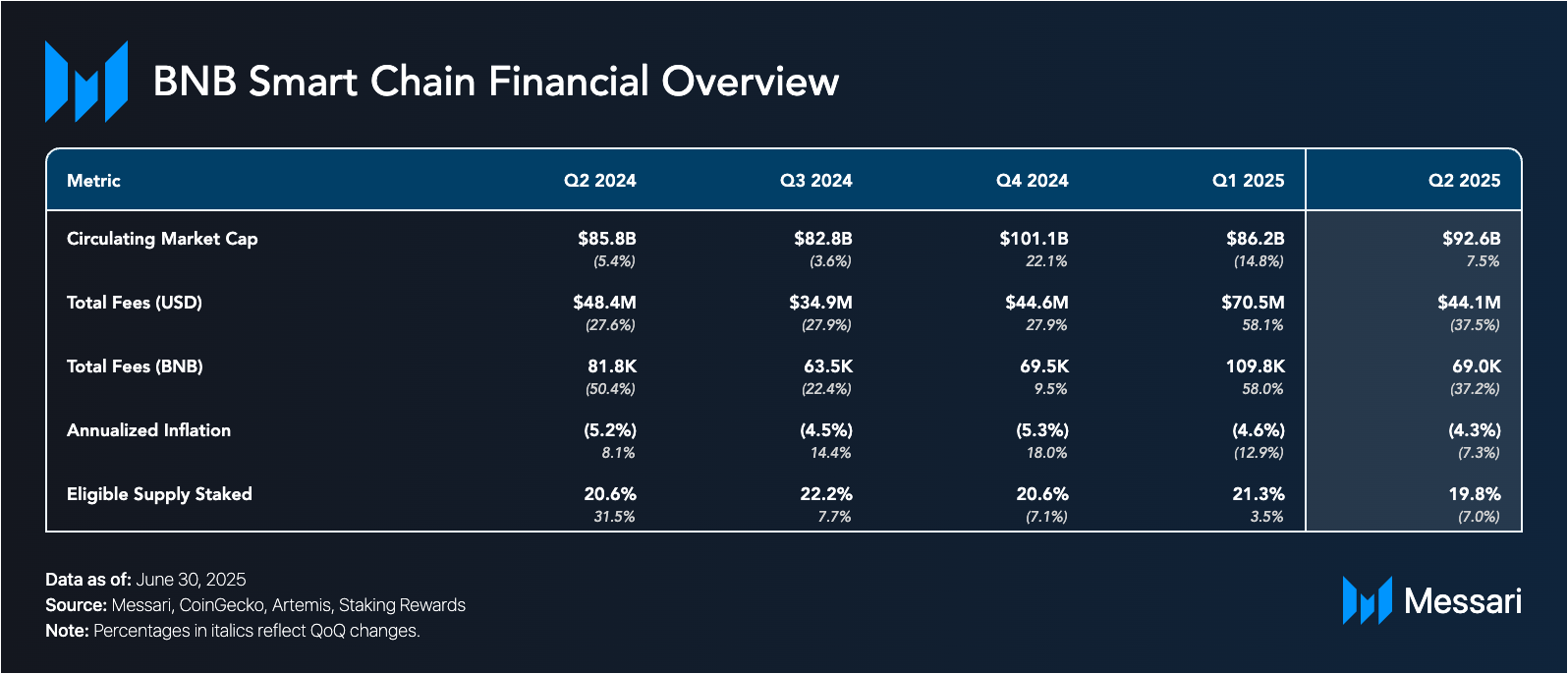
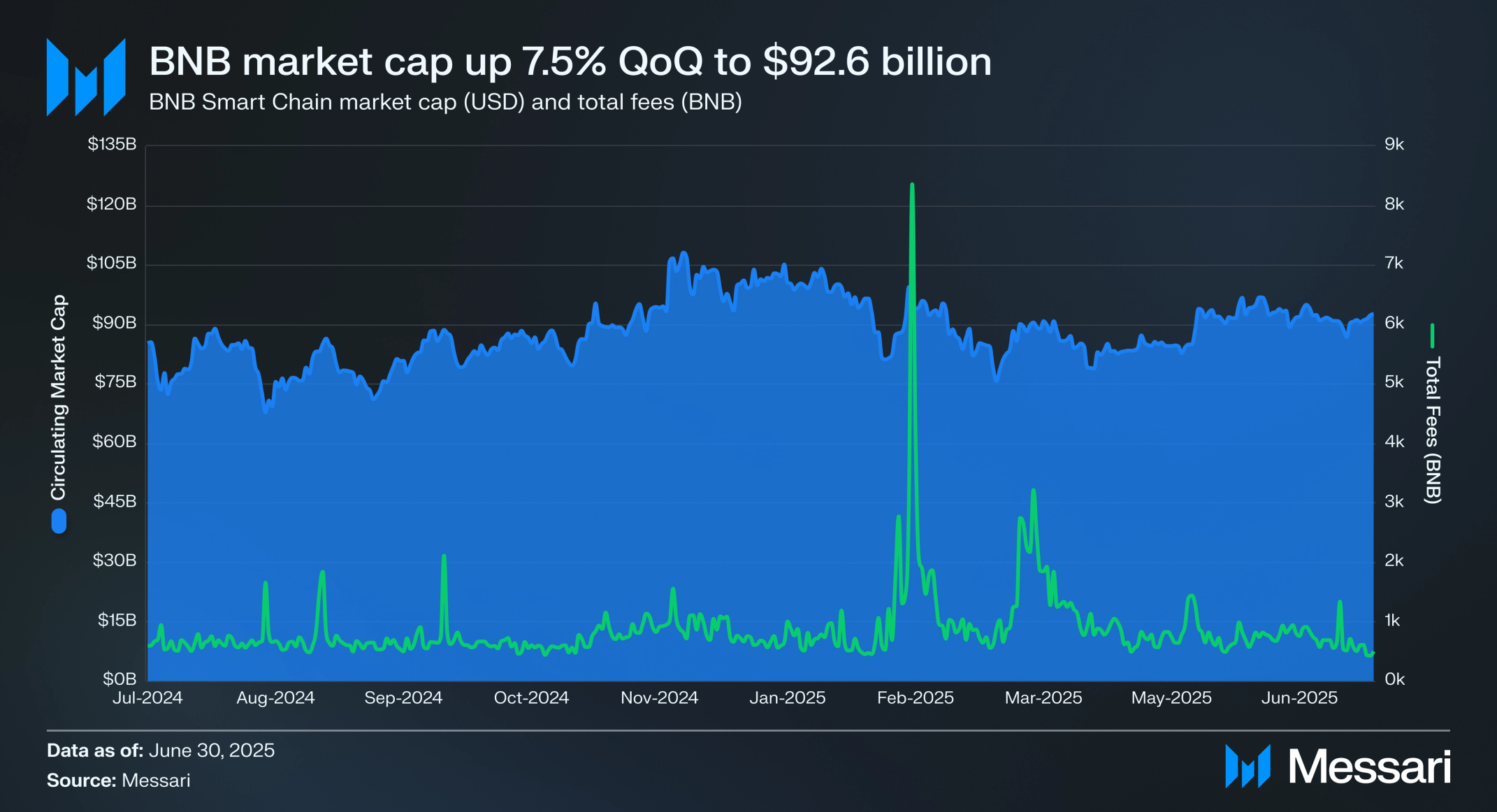
BNB’s market cap increased 7.5% quarter-over-quarter (QoQ) to $92.6 billion by the end of Q2, recovering from a Q1 decline. The modest rebound in BNB’s valuation came during a quarter of generally mixed asset performance, as market participants recalibrated risk in response to tightening liquidity and macro uncertainty. While not returning to its Q4 2024 peak, BNB’s relative resilience suggests growing investor confidence in the chain’s roadmap execution and long-term positioning.
BNB Smart Chain generated $44.1 million in total fees during Q2 2025, marking a 37.5% QoQ decline from $70.5 million in Q1. This drop was in part due to a decrease in the minimum gas price from 1 gwei to 0.1 gwei over the quarter, which lowered fee revenue, but incentivized increased onchain activity. Despite the decline, Q2 remained the third-highest revenue quarter for BNB Chain in the last 12 months, underscoring continued baseline demand for network usage.
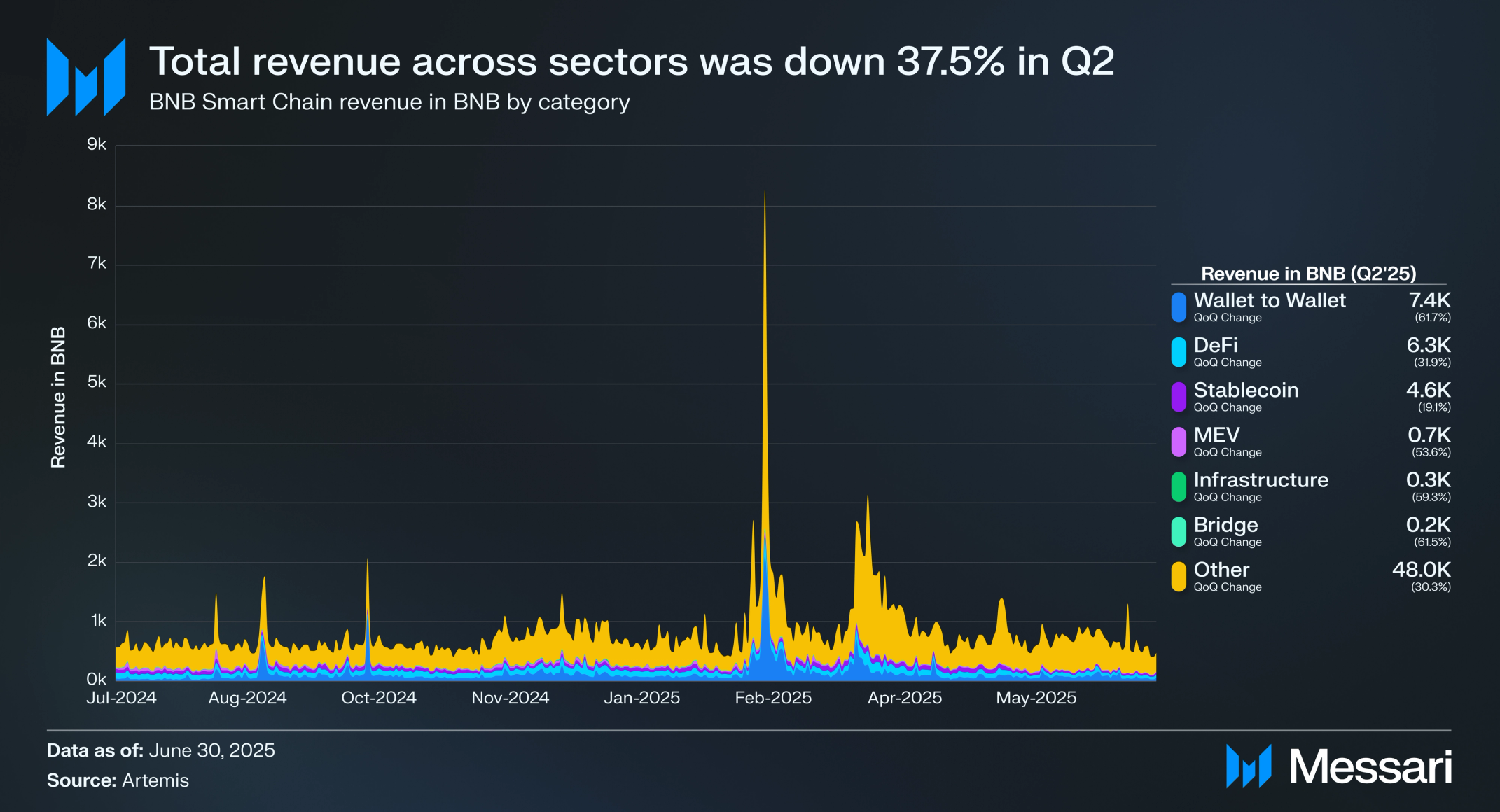
Wallet-to-wallet transactions saw the biggest drop, falling 61.7% QoQ to 7,375.6 BNB, and representing just 10.9% of total market share (down 40% QoQ). The second-largest category in terms of fees generated was DeFi, which fell 31.9% QoQ to 6,338.6 BNB and represented 9.4% of total fees. Stablecoins came in third place, generating 4,646.9 BNB (down 19.1% QoQ) and making up 6.9% of total fees. MEV (down 53.6% QoQ to 749.5 BNB), Infrastructure (down 59.3% QoQ to 268.6 BNB), and Bridges (down 61.5% QoQ to 161.4 BNB) all saw declines as well. All other categories, which combined represented 71.1% of total revenue, cumulatively fell 30.3% QoQ, generating just under 48,000 BNB.
Infrastructure upgrades deployed in Q1, including the Lorenz Hardfork, along with ongoing DeFi and stablecoin incentive programs, helped to reduce costs and enhance the user experience. The result was a quarter of solid market recovery amid a strategically engineered decline in protocol revenue.
Supply Dynamics
The initial total token supply for BNB was 202 million tokens (launched in July 2017). BNB is deflationary through a series of burning mechanisms:
Auto-Burn: A mechanism that automatically burns varying amounts of BNB every quarter, depending on the token’s price and the number of blocks generated on BNB Chain during said quarter.
Pioneer Burn: A program that counts all BNB accidentally lost by new or careless BNB Chain users as part of the quarterly burns. The project team reimburses users for accepted cases.
Gas Fees Burn: In accordance with BEP-95, 10% of all gas fees incurred on BNB Smart Chain are burned automatically. The remaining 90% is rewarded to validators and stakers.
After the 31st BNB Burn in mid-April, the circulating supply of BNB was 139.3 million, giving BNB an annualized deflation rate of 4.5% (down 12.6% QoQ). Lastly, the 31st quarterly BNB burn occurred on April 16, 2025. In this burn, 1.6 million BNB was burned, equivalent to $916.1 million at the time of the burn transaction.
Network Overview
Onchain Activity
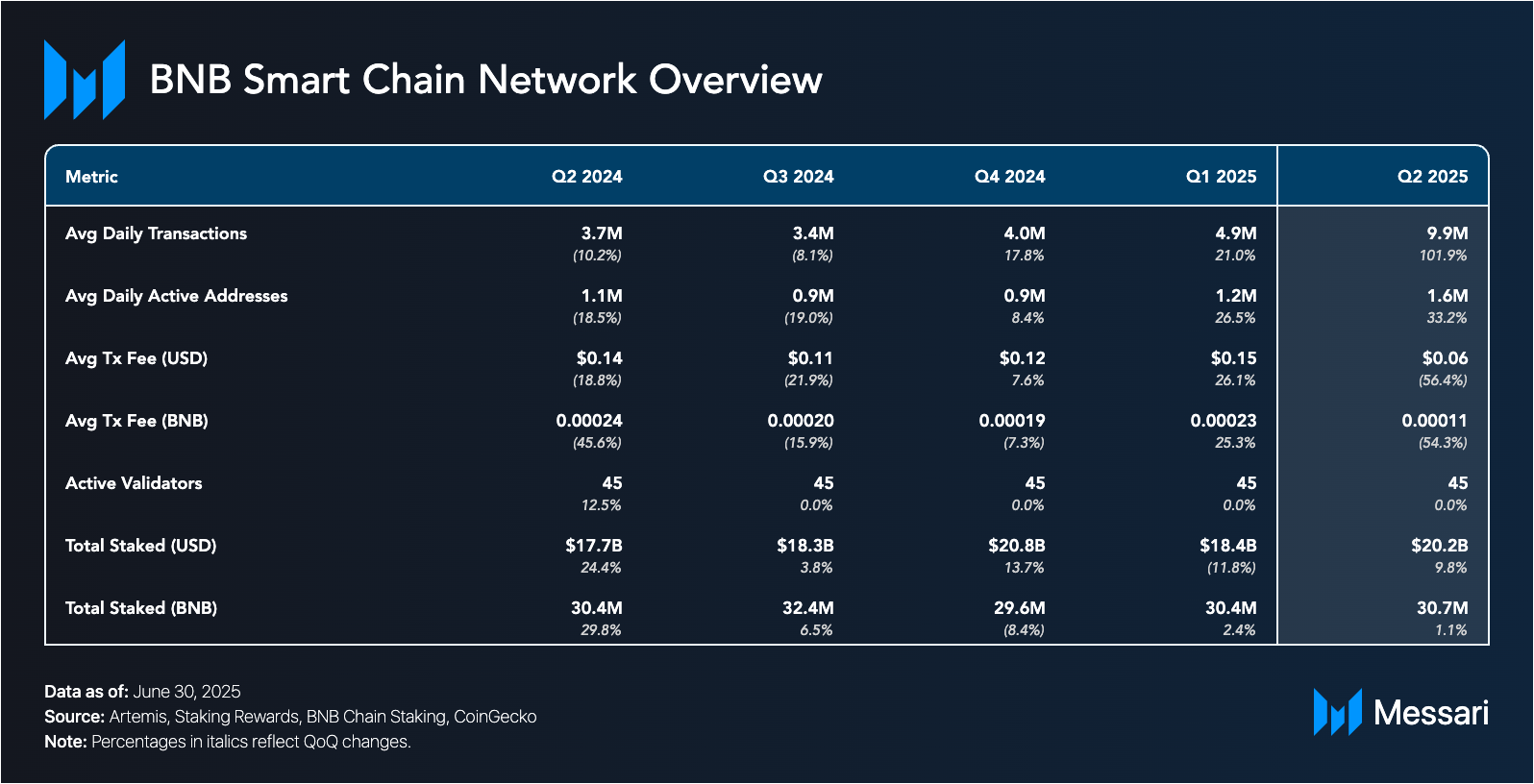
BNB Chain recorded a sharp increase in onchain activity during Q2 2025, with average daily transactions more than doubling to 9.9 million, up 101.9% QoQ from 4.9 million in Q1. Average daily active addresses also rose significantly, reaching 1.6 million, a 33.2% QoQ increase from 1.2 million in Q1.
Much of this activity was driven by incentive programs and promotional campaigns tied to Binance Alpha, Binance’s early-stage token launch platform. Throughout the quarter, Binance Alpha rolled out a series of airdrop campaigns, trading competitions, and token listing events, which required onchain actions to earn participation points or rewards. In particular, the Alpha Points system created a competitive environment for users to maximize engagement across both trading and onchain metrics.
Key ecosystem events, including the Balance (EPT) and EthSign (SIGN) airdrops, the SONIC Chainintegration, and several pre-TGE campaigns, catalyzed significant wallet and transaction growth. These campaigns led to a record 291 million total transactions in May, with a single-day peak of 15.2 million transactions on May 29, and the addition of 17 million new addresses during the month.
Average daily transactions on BNB Smart Chain more than doubled in Q2, rising 101.9% to 9.9 million. Stablecoin transfers, historically the largest single category, averaged 1.5 million daily transactions, a 22.9% increase QoQ. However, due to growth in other sectors, their share of total transactions dropped from 24.2% to 14.7%. Wallet-to-wallet transfers grew 30.0% QoQ to 1.1 million, while market share declined 35.6% QoQ to 11.0%. DeFi transactions saw a sharp rebound, rising 81.6% QoQ to 594,100 per day, partially reversing declines from earlier quarters and indicating renewed engagement with decentralized finance protocols.
MEV-related transactions increased 72.5% QoQ, reaching an average of 134,600 daily transactions. Despite this rise, the number of sandwich attacks declined by 95%, driven by improvements in block production and coordinated mitigation efforts from the Good Will Alliance. The sharp drop in malicious MEV activity reflects ongoing efforts by the BNB Smart Chain ecosystem to enhance user protection and network integrity.
Trading activity also increased significantly over the quarter with average daily swaps in May increasing 405.5% MoM to 4.7 million, and an additional 72.6% MoM in June to 8.1 million.
Additionally, CeFi interactions dropped 14.7%, averaging just 67,182 transactions per day, while gaming activity surged 481.6% QoQ, averaging 14,800 daily transactions. This suggests early momentum in the chain’s gaming vertical, possibly linked to AI-integrated projects promoted during Binance Alpha events.
The “Others” category saw the largest absolute increase in volume, averaging 6.5 million daily transactions, up 173.7% QoQ from 2.4 million. Its share of overall activity rose from 48.7% in Q1 to 65.9% in Q2, reflecting the impact of Binance Alpha-related campaigns, airdrops, and gamified participation mechanics that did not fall neatly into existing classifications.
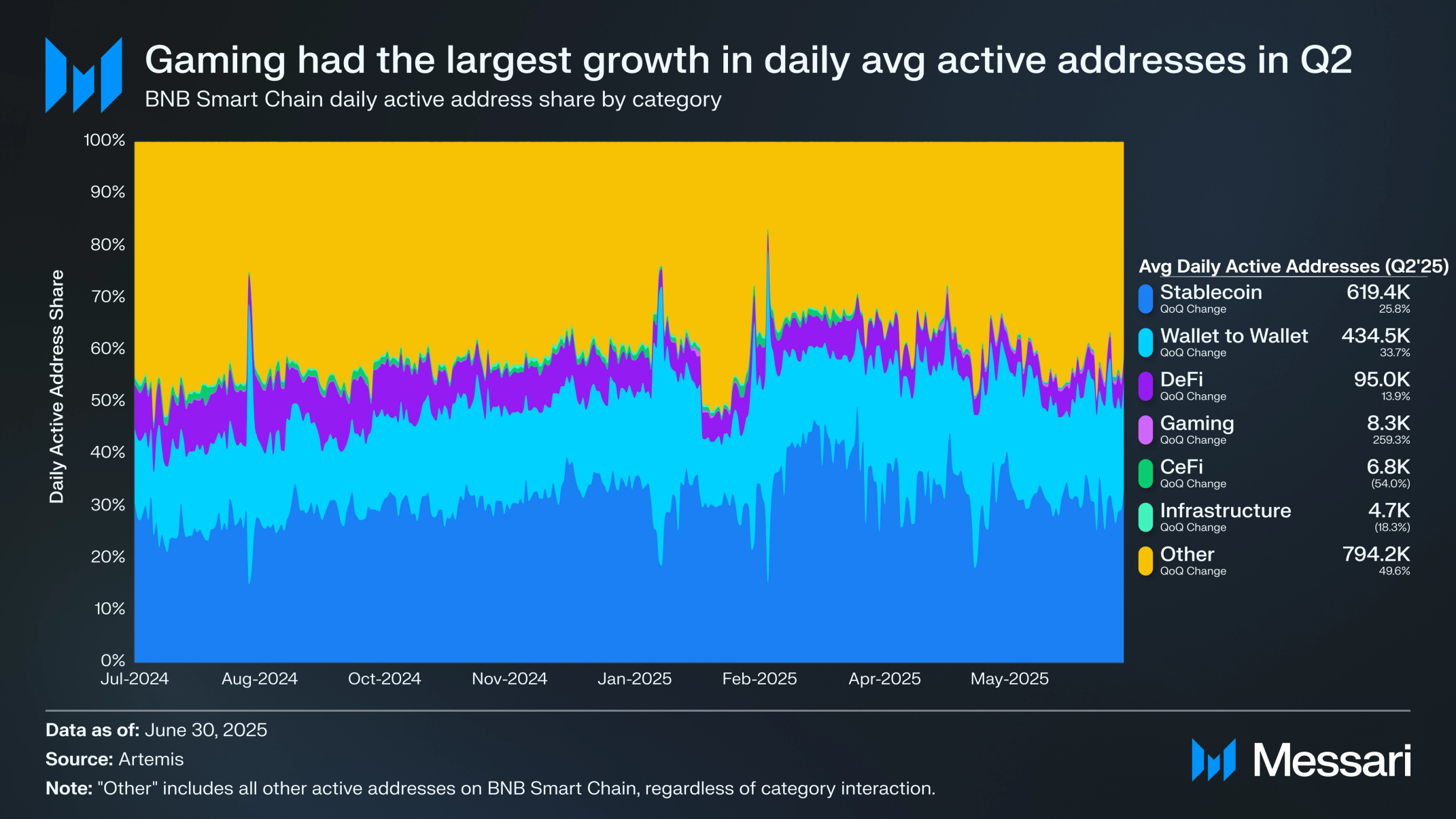
In Q2, BNB Smart Chain averaged 1.6 million daily active addresses, up 33.2% QoQ from 1.2 million. This places BNB Smart Chain as the fourth-largest chain in terms of daily active addresses. Similar to transactions, stablecoins accounted for the most active addresses of any singular category on BNB Smart Chain in Q2. Stablecoins ended the quarter with an average of 619,400 daily active addresses (up 25.8% QoQ from 492,200). On a monthly basis, BNB averaged 14.5 million monthly active stablecoin addresses, making it the most popular chain for stablecoin users.
Average daily active addresses for wallet-to-wallet transfers were 434,500 (up 33.7% QoQ from 324,900), making it the second largest category by share. The biggest gainer of the quarter was gaming, which saw average active addresses grow 259.3% QoQ to 8,261. The only categories with a QoQ decrease were CeFi (down 54.0% QoQ to 6,815) and infrastructure (down 18.3% QoQ to 4,703).
Security and Decentralization
BNB Smart Chain uses a Proof-of-Staked Authority (PoSA) consensus mechanism. Every 24 hours, 45 validator nodes are elected based on the total amount of BNB staked to each node. The top 21 nodes by stake are designated as "Cabinets," while the remaining 24 are considered "Candidates." For each epoch, 18 of the 21 Cabinets and 3 of the 24 Candidates are randomly chosen to produce blocks. These selected validators take turns producing blocks using a system modeled on Ethereum’s Clique consensus protocol.
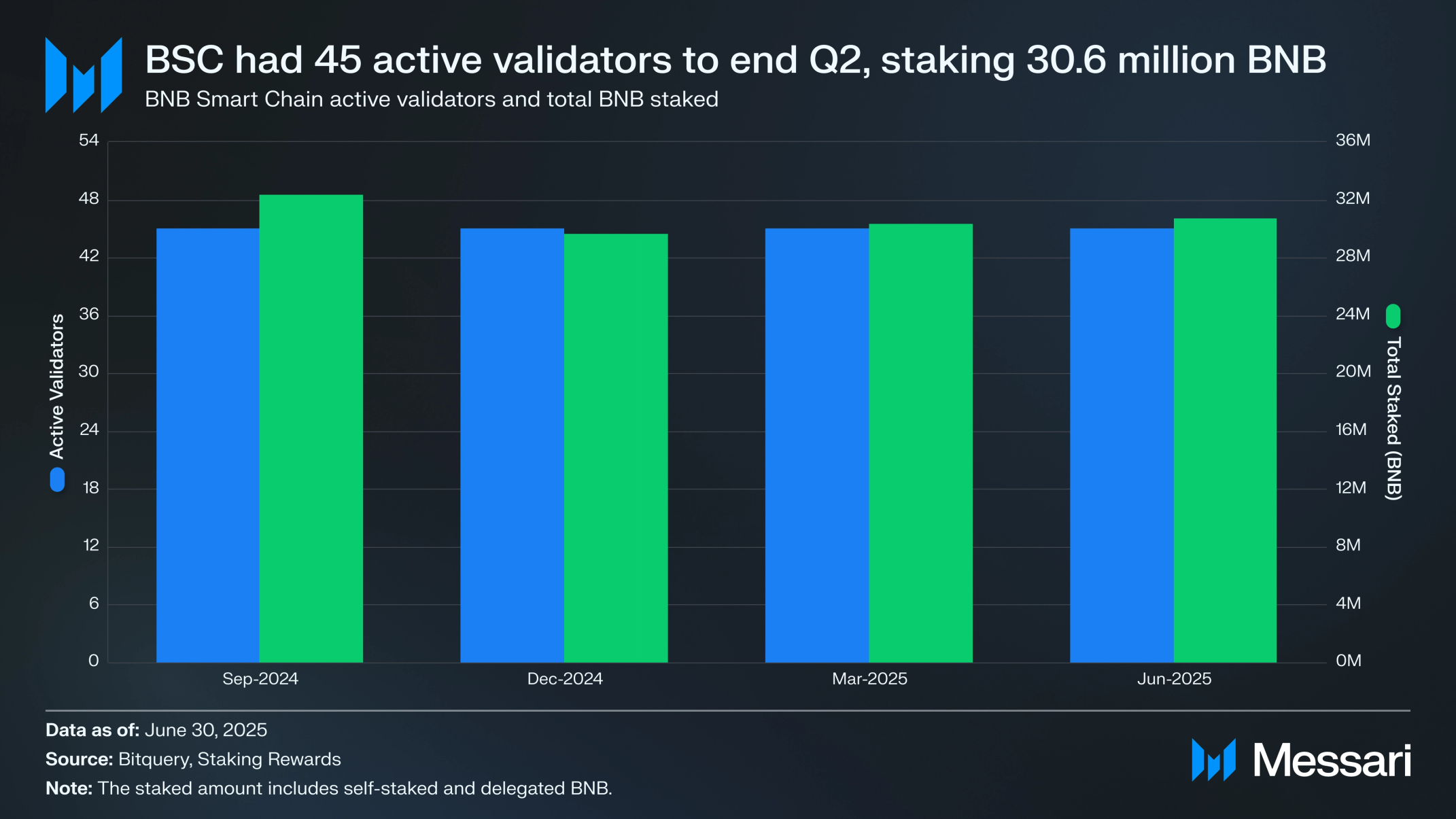
BNB Smart Chain maintained its full validator set of 45 active validators throughout Q2 2025, consistent since the Feynman Upgrade in April 2024, which raised the cap from 40 to 45. Sustained participation at maximum capacity reflects stable validator engagement and a reliable level of network security.
On the staking side, total staked BNB rose 1.1% QoQ to 30.7 million, up from 30.4 million in Q1. In U.S. dollar terms, the total value of staked assets increased by 9.8%, reaching $20.2 billion, driven primarily by BNB’s price appreciation over the same period. Compared to other PoS networks, BNB Smart Chain had the fourth-highest dollar value of funds staked by the end of Q2, falling one spot behind Sui.
Protocol Upgrades
BNB Smart Chain executed two major protocol upgrades during Q2 2025. These upgrades were part of BNB’s broader performance roadmap to increase transaction speed, improve validator communication, and support high-frequency decentralized applications. Together, these hardforks mark significant milestones in BNB Chain’s transition toward sub-second block times and real-time execution capacity.
Lorentz Hardfork
The Lorentz Hardfork, activated on April 29, reduced block times on BNB Smart Chain from 3 seconds to 1.5 seconds, a key step toward improving network responsiveness. This upgrade also introduced critical enhancements to validator synchronization and network communication.
Two core improvements enabled Lorentz’s performance gains:
Efficient block fetching via the bsc/2 protocol allowed nodes to request multiple recent blocks in a single round trip.
Enhanced validator networking enabled direct private communication between validators by registering NodeIDs on-chain, bypassing public message relays for faster consensus coordination.
While Lorentz’s faster blocktimes increased sensitivity to network latency, BNB Chain addressed these challenges through enhancements to validator messaging and synchronization. The upgrade maintained stable 1.5-second block production and consistent consensus performance without compromising throughput. These changes also advanced the chain’s technical readiness for latency-sensitive applications, including real-time and AI-integrated workloads.
Maxwell Hardfork
Building on the groundwork laid by Lorentz, the Maxwell Hardfork went live on June 30 and further reduced block times to 0.75 seconds, pushing BNB Chain into a sub-second execution environment. The upgrade included three major proposals:
BEP-524: Reduced block interval to 0.75 seconds, improving transaction latency and user experience.
BEP-563: Strengthened validator peer-to-peer messaging to ensure stable consensus under tighter block windows.
BEP-564: Introduced range-based block fetching for faster node synchronization.
Maxwell also updated consensus parameters to accommodate faster block production. Epoch lengths were doubled, and validator rotation periods were adjusted to preserve a 12-second cycle. These changes reduced time-to-finality to around 1.875 seconds, a significant improvement in confirmation speed.
MEV
Following the Maxwell Hardfork, daily block production increased by nearly 90%, rising from approximately 56,000 to 108,800 blocks per day. This built on the earlier impact of the Lorentz Hardfork, which had already doubled block output from the previous level of 28,000 per day. They were supported by the rollout of Fast Finality, which now enables economic finality in approximately 1.875 seconds.
Simultaneously, adoption of the Builder API Specification (BEP-322) reached near-universal levels. By the end of Q2, 99% of blocks were built using the Builder API, up from 96% in Q1. The Builder API enables offchain block construction, allowing for more efficient transaction ordering and integration of MEV mitigation strategies. As of June 30, 36 distinct block builders were actively producing blocks on BNB Smart Chain.
To strengthen protection at the validator level, BNB Chain launched the Good Will Alliance in March 2025. This initiative includes infrastructure partners such as BlockRazor and 48 Club and establishes ethical guidelines for block builders and validators. The alliance’s first effort, implementing filters against sandwich attacks during block construction, has led to a reported 90% reduction in sandwich attacks across the network.
Ecosystem Overview
DeFi
BNB Smart Chain’s DeFi ecosystem continued to grow in Q2 2025, with TVL rising 14.0% QoQ to $6.0 billion, up from $5.3 billion in Q1. In BNB terms, TVL increased 4.9% QoQ, from 8.7 million to 9.2 million BNB. The rise in both USD and BNB-denominated TVL reflects a combination of positive market performance and increased onchain activity.
As of the end of Q2, BNB Smart Chain remained the fourth-largest network by TVL, trailing Ethereum, Tron, and Solana. The quarter’s growth signals incremental strengthening of BNB Chain’s DeFi base, supported by faster block times and user incentives through Binance Alpha.
At the end of Q2 2025, Venus and PancakeSwap remained the two largest DeFi protocols by TVL on BNB Smart Chain, with TVLs of $1.6 billion and $1.3 billion, respectively. Venus saw a slight 1.6% decline QoQ, maintaining its lead despite continued deleveraging in money markets. PancakeSwap’s TVL grew 10.6% QoQ, supported by gains across its AMM and V3 offerings.
The most notable gainer was ListaDAO, which saw a 188.7% increase QoQ in TVL, reaching $1.1 billion by quarter-end. This jump moved Lista into the third-largest position by TVL on BNB Smart Chain, up one spot from Q1. Lista’s growth reflects rising demand for liquid staking and CDP-backed stablecoin products, and is bolstered by improving market conditions and a more active incentive environment.
Aave V3 also experienced strong growth, with TVL rising 104.7% QoQ to $239.3 million, while Avalon, a lending platform for BTC-based assets, grew 8.3% QoQ to $345.1 million. By contrast, Kernel, a BNB restaking protocol that surged in Q1, saw a 63.7% decline in TVL, ending the quarter at $225.1 million. The reversal followed the end of Phase 5 of the BNB Chain TVL Incentive Program, which had temporarily boosted Kernel’s onchain capital via delegated BNB support.
While Phase 5 concluded in Q1, BNB Chain’s incentive strategy expanded in Q2 through the launch of a new $100 million Liquidity Incentive Program, which includes direct token acquisitions and centralized exchange support. The initiative aims to reward native projects that meet criteria related to TVL, market cap, and onchain activity. Early recipients such as PUMP received up to $280,000 in liquidity support following listings on major CEXs.
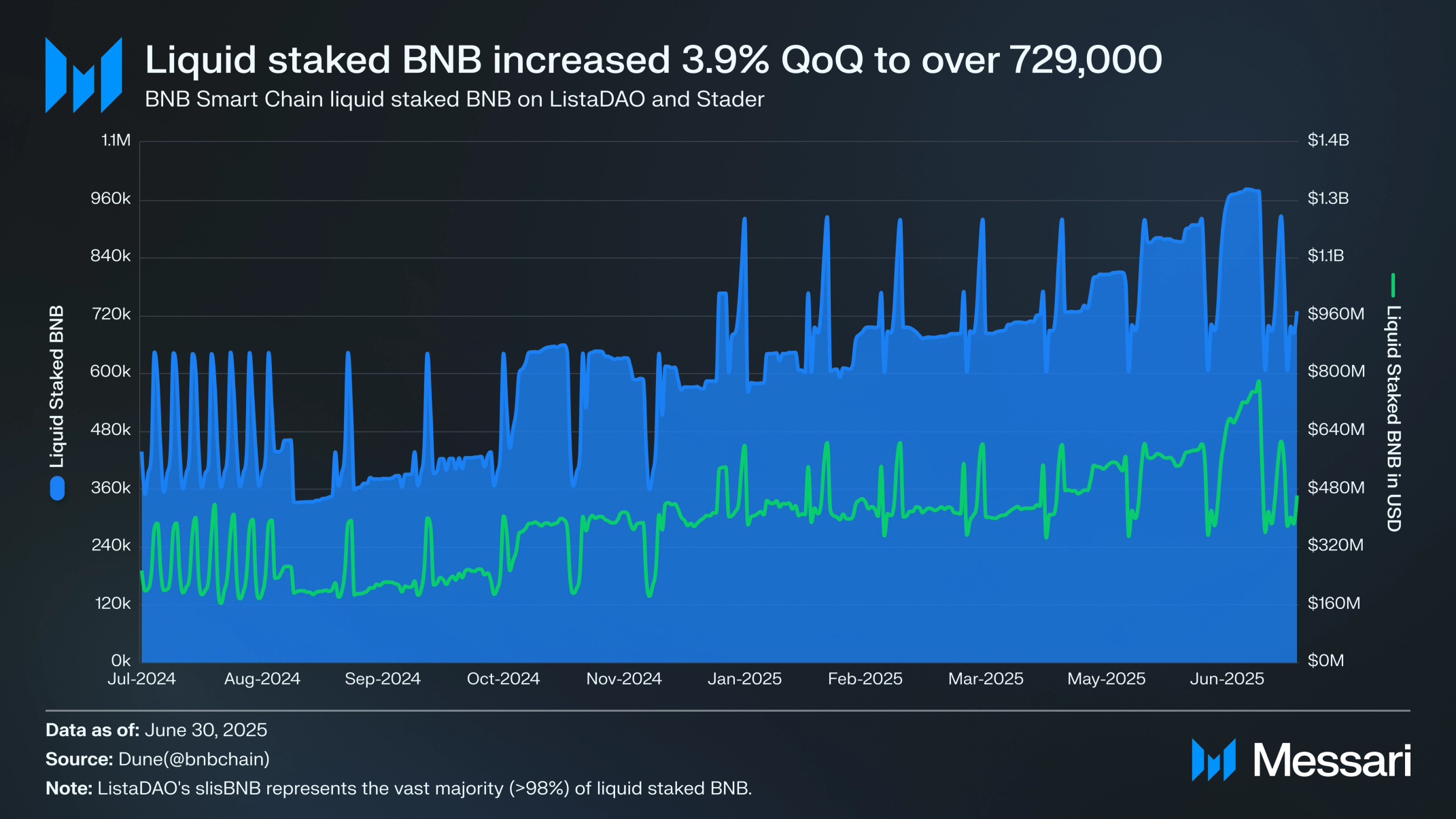
With the migration of validation and staking services to BNB Smart Chain this past year, liquid staking has become a top priority for the BNB Chain ecosystem. Concurrently, ListaDAO’s liquid staking solution, slisBNB, has emerged as the dominant liquid staking solution on BNB Smart Chain. By the end of Q2, 729,100 BNB ($462,300 million) was deposited in liquid staking solutions. This represents a 3.9% QoQ increase in the liquid staked BNB, up from 701,200 at the end of Q1.
BNB Chain’s DEX ecosystem saw continued momentum in Q2 2025, with average daily DEX volume rising 132.6% QoQ to $1.9 billion, up from $809.5 million in Q1. This growth pushed BNB Chain to the number one spot among all other chains in terms of average daily DEX volume.
PancakeSwap remained the dominant DEX on BNB Smart Chain, processing an average of $1.4 billion in daily volume, a 133.2% QoQ increase. Despite this growth, its market share declined slightly to 71%, down from 75.9% in Q1.
Uniswap saw the most notable growth, with average volumes increasing 1,058.1% QoQ to $415.1 million, capturing 20.4% of market share and ending the quarter as the second-largest DEX by average daily volume. StableSwap, PancakeSwap’s stablecoin-focused AMM, also grew rapidly, up 929% QoQ to $41.1 million in average daily volume. SquadSwap and DODO posted 265.2% and 175% growth, respectively, while THENA declined 67.5% QoQ to $32.2 million, reflecting shifting user preferences and liquidity fragmentation.
Stablecoins & BTC
The stablecoin market on BNB Chain grew substantially in Q2 2025, with total stablecoin market cap reaching $10.5 billion, up 49.6% QoQ from $7.0 billion. This marks the largest quarterly increase since 2022 and positions BNB Chain as the third-largest network by stablecoin market cap, trailing only Ethereum and TRON.
USDT remained the dominant stablecoin, with a market cap of $6.3 billion (up 21.3% QoQ), representing 59.9% of BNB Chain’s stablecoin supply. While USDT’s market cap increased, its market share declined by 18.9% QoQ as other stablecoins gained traction.
The largest new entrant was USD1, which launched on BNB Smart Chain in March 2025, and quickly grew to a $2.2 billion market cap by quarter-end, capturing 20.6% of the stablecoin market. USDC also recorded notable growth, climbing 33.8% QoQ to $989.7 million, though its market share declined slightly to 9.5%. USDX, a synthetic stablecoin backed by delta-neutral strategies, rose to $519.1 million (up 7.0% QoQ). Other stablecoins posted mixed results: BUSD fell slightly to $255.1 million, while USDF saw a sharp decline of 51.7% to $63.8 million.
At the end of Q3 2024, BNB Smart Chain launched the “0-Fee Carnival” to promote stablecoin adoption across the network. The initiative, which was extended through Aug 31, 2025, partnered with 12 wallets, eight centralized exchanges, and two bridges to eliminate user transaction fees.
The program offered multiple fee-free options for stablecoin activity:
Gas-Free Stablecoin Transfers: Users could send USDT, USDC, USD1, and FDUSD across BNB Smart Chain and opBNB without paying gas fees. Supported wallets included Binance Wallet, SafePal, Trust Wallet, Bitget Wallet, Coin98, TokenPocket, Gate Web3 Wallet, Wello, MathWallet, UXUY, imToken, Reveel, Fizen, and CodexField.
Zero-Fee Withdrawals: Participating exchanges such as Binance, Bitget, Gate.io, MEXC, Hashkey, Ourbit, Bitmart, BingX, LBank, and Flipster enabled free withdrawals of supported stablecoins to BNB Smart Chain.
Free Bridging: Celer cBridge and MESON allowed users to bridge stablecoins to BNB Smart Chain and opBNB at no cost.
By removing friction from stablecoin usage, the 0-Fee Carnival contributed to a sharp rise in transaction volume and played a key role in supporting new entrants like USD1. Since the launch of the initiative, the 0-Fee Carnival has covered a total of $4 million in stablecoin gas fees.
Additionally, Ethena Labs launched USDe and sUSDe on BNB Smart Chain on April 4, expanding the ecosystem’s synthetic stablecoin offerings. These assets were integrated across PancakeSwap, Venus, and Pendle, supported by liquidity mining campaigns and high-yield staking programs.
Overall, Q2 2025 marked a turning point in BNB Smart Chain’s stablecoin landscape. The ecosystem became more diverse and competitive, with new issuers gaining share and infrastructure-level incentives driving adoption. As transaction costs continue to fall and integrations expand, stablecoins are poised to play a larger role in both user onboarding and DeFi capital formation on BNB Smart Chain.
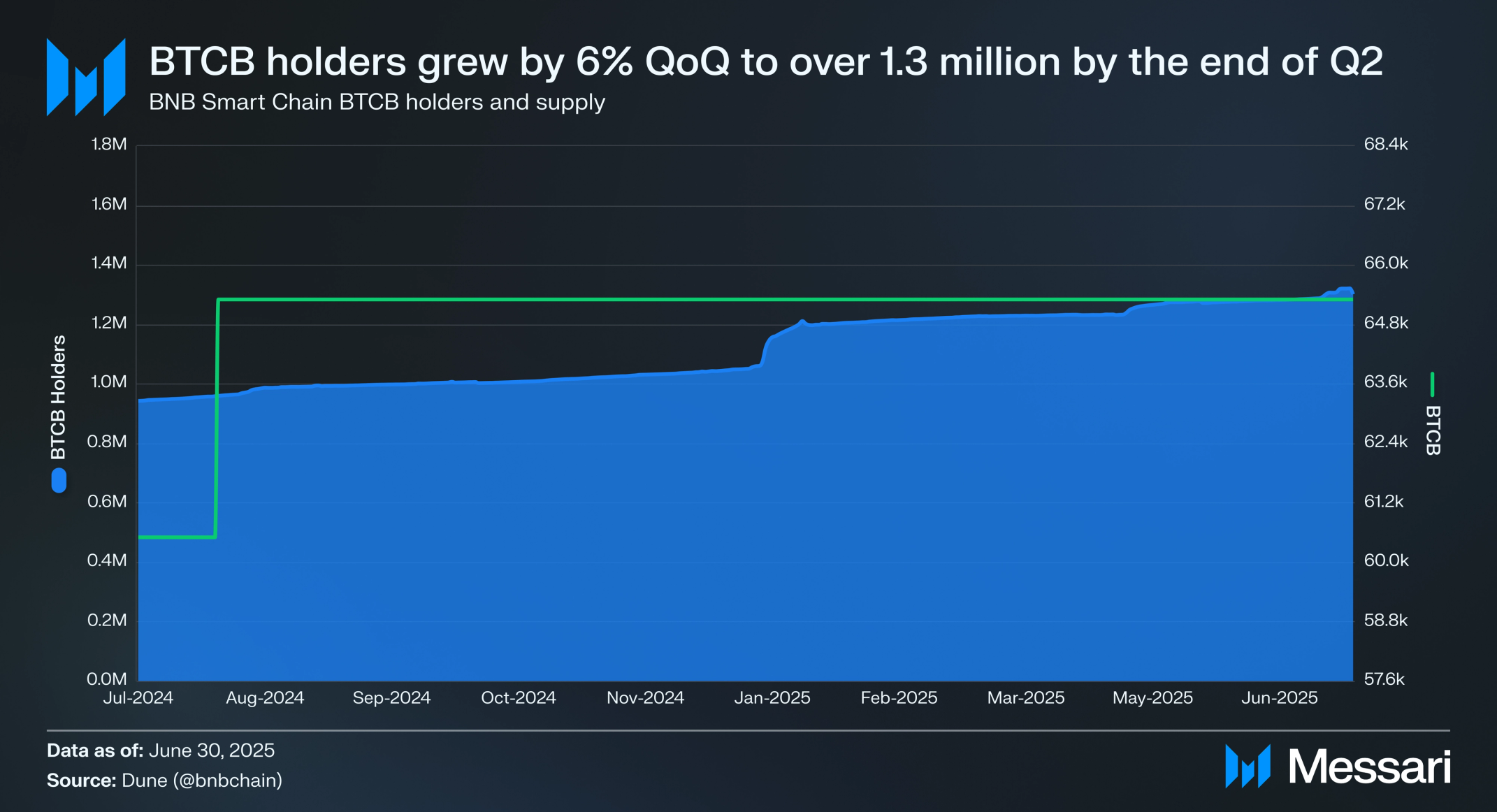
BTCB is one of the largest assets by market cap on the BNB Smart Chain, outside of BNB and stablecoins. It is a tokenized version of Bitcoin on the BNB Smart Chain. The supply of BTCB in Q2 was flat QoQ at 65,300. As for BTCB holders, they increased by 6% QoQ to 1.3 million. BNB Smart Chain has been bolstered by its emergent BTCFi ecosystem. Projects like Solv Finance, Lorenzo, Lombard Finance, and more offer BTCB holders on BNB Smart Chain the opportunity to participate in various DeFi opportunities.
opBNB
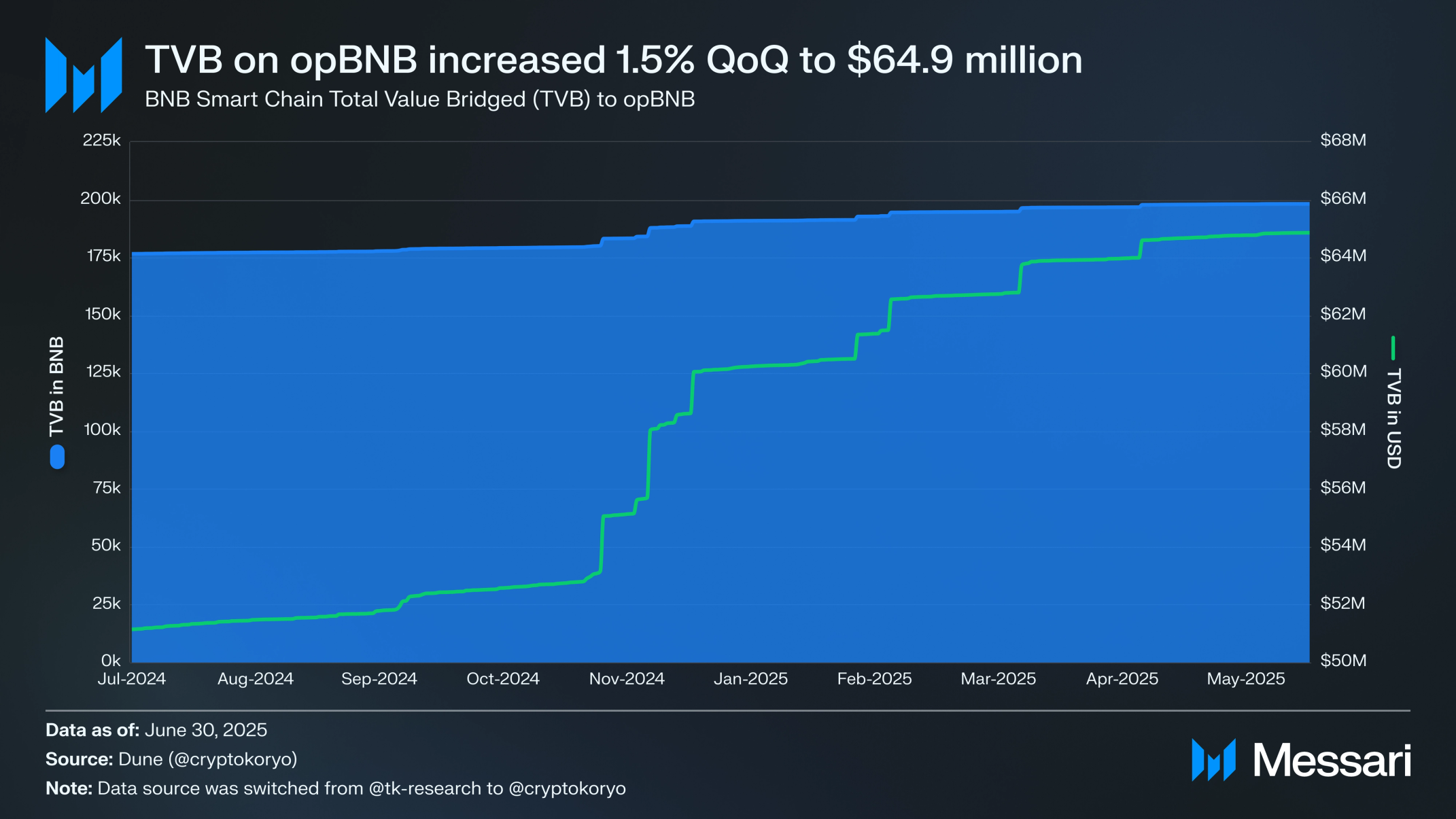
opBNB, an EVM-compatible optimistic rollup designed to scale execution for BNB Smart Chain, continued to see modest growth in bridged value during Q2 2025. Total value bridged (TVB) to opBNB increased by 1.5% QoQ in USD terms, reaching $64.9 million. In BNB terms, TVB rose 0.8% QoQ to 198,200 BNB.
In tandem with this growth, BNB Chain implemented a major network upgrade to opBNB in April. On April 21, 2025, the Volta Upgrade was activated on mainnet, introducing BEP-543, which reduced the rollup’s block interval from one second to 500 milliseconds. This change aligned opBNB’s cadence with the faster block times on BNB Smart Chain following the Lorentz and Maxwell upgrades.
BEP-543 introduced millisecond-level timestamps in block headers, enabling sub-second block production while preserving backward compatibility for dApps. By halving the block interval, the upgrade improved transaction finality, reduced latency, and enhanced the network’s ability to support high-frequency use cases such as decentralized exchanges and gaming applications.
NFTs
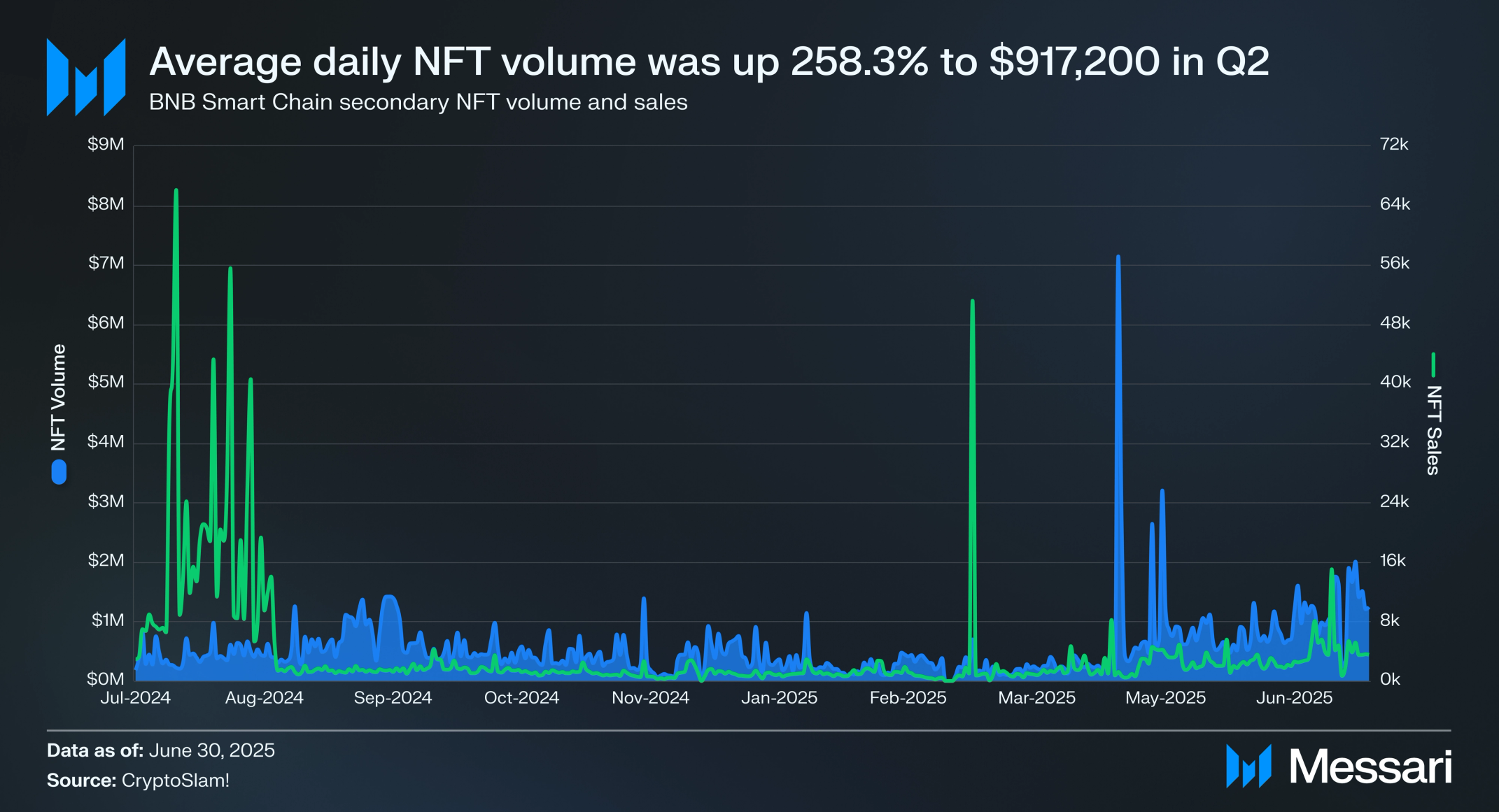
NFT activity on BNB Chain rebounded strongly in Q2 2025. Average daily NFT trading volume surged 258.9% QoQ to $917,200, up from $256,000 in Q1. This marked the highest quarterly volume since Q3 2024 and suggests a return of capital to the NFT sector following two quarters of subdued demand.
Average daily NFT sales also increased, rising 84.7% QoQ from 1,160 to 2,143 sales per day. The simultaneous rise in both transaction count and trading volume indicates broader participation and higher-value sales, reversing the prior trend of low-value, high-frequency activity.
Ecosystem Growth
BNB Chain continued to advance ecosystem development in Q2 2025 through the ninth season of its Most Valuable Builder (MVB) Accelerator Program, a four-week initiative supporting early-stage Web3 startups. Run in partnership with YZi Labs and CMC Labs, Season 9 launched on April 5 with an offline kickoff event in Hong Kong, coinciding with the Hong Kong Web3 Festival and BNB Super Meetup.
Season 9 received over 500 applications, with just 16 projects selected, reflecting the program’s growing competitiveness. The cohort featured a strong emphasis on AI-driven use cases, consistent with BNB Chain’s broader AI-first strategy. Selected projects spanned sectors including AI, DeFi, DePIN, DeSci, gaming and entertainment, and infrastructure.
Participants received access to a structured curriculum, one-on-one mentorship from BNB Chain and Binance Labs teams, and go-to-market and fundraising strategy support. The program culminated in an online Demo Day on April 24, where project teams pitched to investors. YZi Labs will make investment decisions based on Demo Day performance and progress throughout the program.
Closing Summary
BNB Chain closed Q2 2025 with a strong mix of infrastructure progress, user growth, and ecosystem expansion. Despite a 37.5% decline in network revenue, BNB’s market cap rose 7.5% QoQ, reflecting growing confidence in the network’s long-term trajectory. Network usage surged, with average daily transactions more than doubling and stablecoin activity reaching new highs. These metrics point to broad-based engagement, even as monetization per transaction declined due to fee-reduction efforts and increased throughput.
The quarter was defined by two major protocol upgrades, Lorentz and Maxwell, which together reduced block times from 3 seconds to 0.75 seconds and significantly improved validator synchronization, transaction finality, and block production capacity. Adoption of the Builder API reached 99%, and block production jumped by nearly 90% post-Maxwell, cementing BNB Chain’s position as one of the most performant EVM-compatible networks in operation.
In the ecosystem, DeFi TVL grew 14.0% QoQ, supported by renewed liquidity and the expansion of liquid staking via ListaDAO. BNB Smart Chain also reclaimed the top spot in DEX volumes, averaging $1.9 billion in daily trades, while stablecoin market cap climbed 49.6% QoQ to $10.5 billion, driven by the launch of USD1 and incentive mechanisms like the 0-Fee Carnival. NFT activity rebounded strongly, and opBNB continued to scale with sub-second block production introduced in April’s Volta Upgrade.
Finally, the chain’s developer ecosystem remained active, with Season 9 of the MVB Accelerator Program supporting 16 early-stage projects across AI, DeFi, DeSci, and gaming. Taken together, Q2 2025 was a pivotal quarter that saw BNB Chain expand capacity, reduce friction, and improve user and developer experience across core verticals, laying the foundation for scalable, high-performance adoption in the quarters ahead.
This report was commissioned by BNB Chain. All content was produced independently by the author(s) and does not necessarily reflect the opinions of Messari, Inc. or the organization that requested the report. The commissioning organization may have input on the content of the report, but Messari maintains editorial control over the final report to retain data accuracy and objectivity. Author(s) may hold cryptocurrencies named in this report. This report is meant for informational purposes only. It is not meant to serve as investment advice. You should conduct your own research and consult an independent financial, tax, or legal advisor before making any investment decisions. Past performance of any asset is not indicative of future results. Please see our Terms of Service for more information.
No part of this report may be (a) copied, photocopied, duplicated in any form by any means or (b) redistributed without the prior written consent of Messari®.
Alexander is a protocol researcher specializing in Layer-1 and Layer-2 infrastructure, as well as RWA's and Stablecoins. Before Messari, he worked at Jump Trading and Bull-Moose Consulting. He graduated from Northeastern University with a degree in Economics and Data Science, and helped run Northeastern's blockchain club.
Alexander is a protocol researcher specializing in Layer-1 and Layer-2 infrastructure, as well as RWA's and Stablecoins. Before Messari, he worked at Jump Trading and Bull-Moose Consulting. He graduated from Northeastern University with a degree in Economics and Data Science, and helped run Northeastern's blockchain club.