Stargate V2: The Cross-chain Bridge Upgrades with a Wrapped Asset Masterplan

Stargate is a bridge built on LayerZero with an original focus on native assets, but now expanding into the realm of wrapped assets through Project Hydra. Currently live on twelve chains, it allows users to swap between native assets and between chains in one transaction. For example, a user can swap native USDC on Avalanche to native USDT on Arbitrum, paving the way for fast cross-chain transfers with no wrapped asset risks. Currently supported tokens include stablecoins such as USDC/USDT/BUSD and tokens such as ETH (only for Ethereum, Arbitrum, and Optimism) and WBTC.
Introduction
The core Stargate protocol differs from wrapped asset bridges in a few ways.
1. Native assets: Most bridges mint wrapped assets on the destination chain while locking up the underlying asset on the source chain. In comparison, all of the assets on Stargate are native assets.
2. Guaranteed finality: Once a user has confirmed a transaction on the source chain, they can be sure that the corresponding transaction will occur on the destination chain.
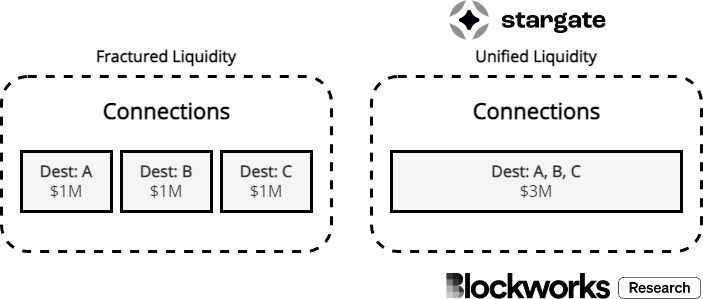
3. Unified liquidity: Stargate shares a single liquidity pool across multiple chains that it is connected to, resulting in deeper liquidity for users rather than liquidity being fragmented across each pairwise connection. This is primarilyenabled by the use of native assets rather than wrapped assets. As a result, all deposits and withdrawals are routed through a single pool of liquidity for each chain.
The protocol charges a 6bps fee, in addition to a pool rebalance fee that depends on how imbalanced the source & destination chain liquidity pools are relative to their equilibrium weights. Out of the 6bps base fee, LPs keep 1bp, whitelisted partners keep 0.3bps, veSTG holders keep 1bp, and 3.7bps is allocated to Stargate’s POL. Importantly, if there are emissions on the source pool for a transfer, and the volume did not originate from a partner, then Stargate keeps 5 bps of fees in total.
Delta Algorithm

Ren leads coverage on Options, Structured Products, Money Markets, and AMMs. Previously worked at a crypto hedge fund managing DeFi strategies.