Robinhood Chain: Can It Move Robinhood’s Bottom Line?

Introduction: Robinhood Crypto at a Crossroads
There is perhaps no other company that has captured the rise of the retail investor as well as Robinhood. It has become synonymous with retail investing, and its underlying business has blossomed as a result.
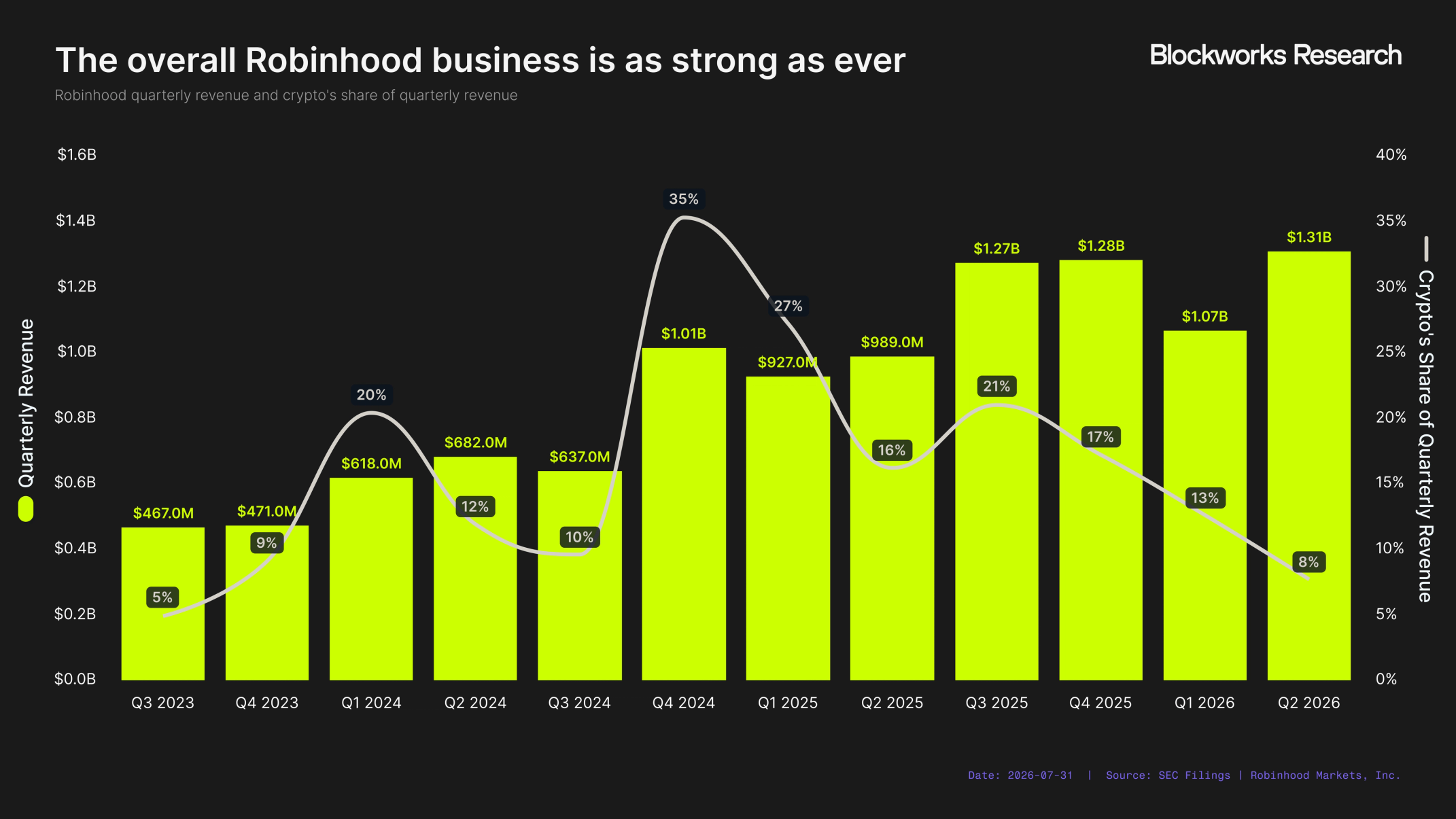
In Q2 2026, Robinhood reported quarterly revenue of $1.31 billion (its highest ever) up 32% YoY and 92% from Q2 2024. This strength has come not only from its core equity and options trading businesses, but also from an ever-expanding suite of products. Robinhood now has thirteen different business lines producing more than $100 million in annualized revenue. In fact, every transaction-based revenue line recorded double-digit YoY growth in Q2… well, except for one: crypto.
What once accounted for over a third of Robinhood’s revenue has been reduced to little more than a rounding error for the business. In Q2 2026, only 8% of Robinhood’s quarterly revenue was attributable to crypto, its lowest share since Q3 2023. Crypto’s share of Robinhood’s revenue pie has fallen so far that event contracts, which launched only last year, generated more revenue in Q2 ($156 million versus $100 million for crypto).
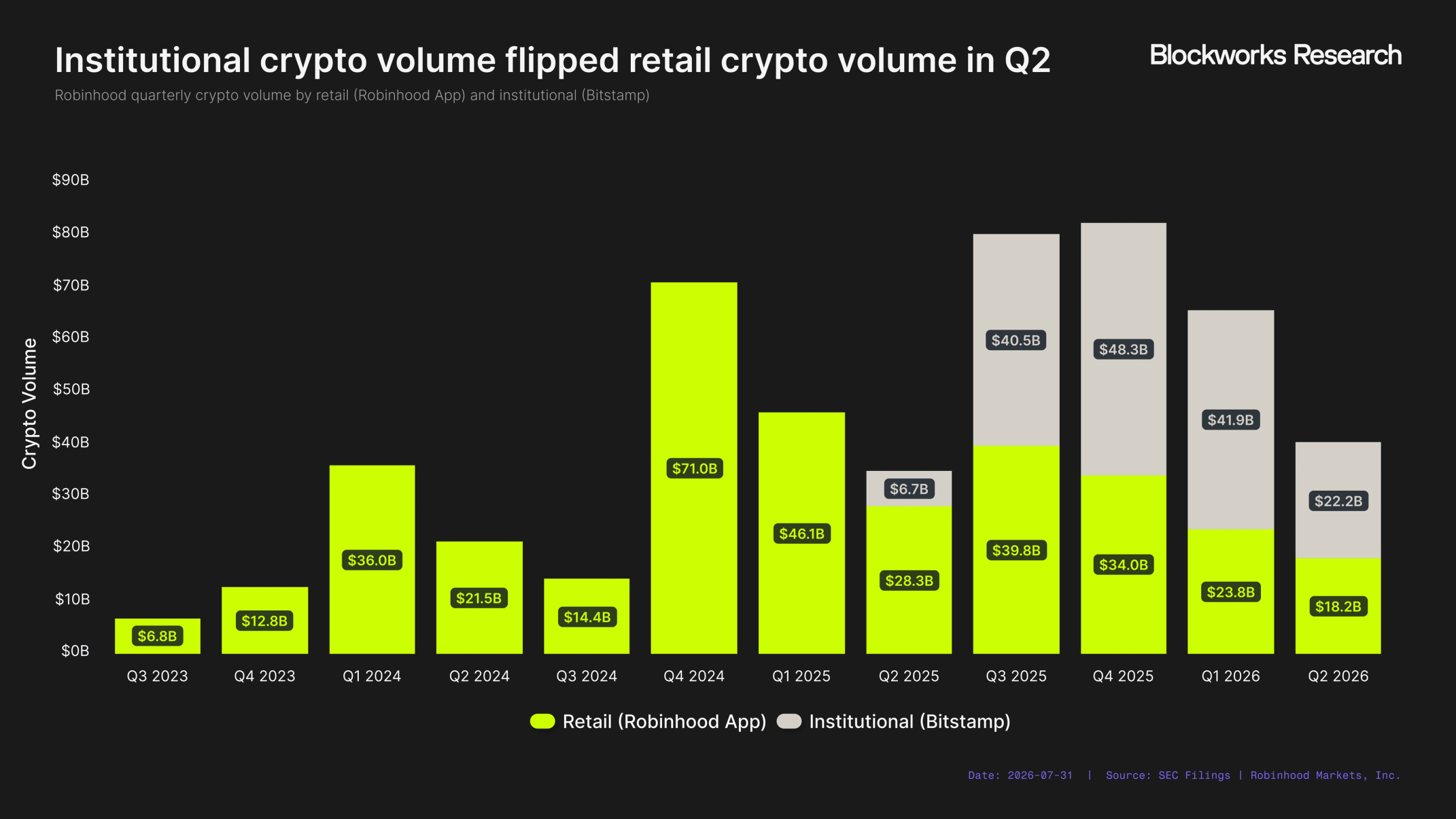
The weakness extends well beyond crypto’s declining share of Robinhood’s revenue. By and large, its core user base is losing interest in crypto. While the reasons for this are not unique to Robinhood, the extent of the weakness is startling.