Power and seigniorage in proof of stake

Consensus mechanisms are contentious. A cryptocurrency is worthless if it cannot reach consensus over the state of its ledger.
While many analysts tend to focus on the security implications of consensus mechanisms, few have considered consensus mechanisms’ implications on the distribution of power and wealth. This discussion is especially pertinent as some blockchains move beyond proof-of-work (PoW) towards alternative consensus mechanisms like proof-of-stake (PoS).
PoS may providetheoretical advantages over PoW regarding security, efficiency, and decentralization (although detractors would argue theory means nothing until it becomes practice) however it may also bring adverse consequences for power and wealth distribution. This is especially true for PoS blockchains with tightly coupled on-chain governance.
The most significant of these consequences is that PoS blockchains will forever be burdened by their initial token distribution. With staking made cheap and easy through staking-as-a-service providers, not only do initial token holders have a perpetual claim to a blockchain’sseigniorage, but they also have a perpetual claim to a blockchain’s decision-making power.
In a world that isincreasingly losing faith in institutions, a public blockchain’s power and wealth distribution may prove critical to adoption rates. The 99% that does not own cryptocurrency now, will be hesitant to transition to a new global economic system that favors a new concentrated class of stakeholders
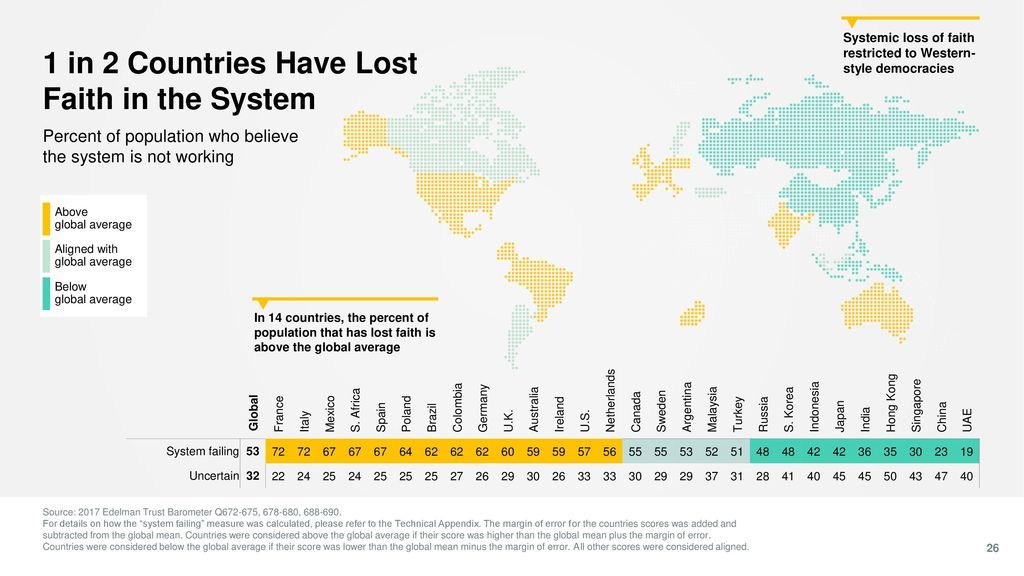
Source: Edelman Trust Barometer 2017

Ryan Watkins was a Senior Research Analyst at Messari. Previously, he worked at Moelis & Company as an Investment Banking Analyst where he worked on deals in the technology, telecom, and fintech sectors. Ryan graduated Magna Cum Laude from the Gabelli School of Business at Fordham University.