Overview of Cross-Chain Bridges


The demand for cross-chain swaps is booming as new smart contract platforms grow in popularity. Bridges facilitate value transfer between heterogeneous blockchains that are otherwise not interoperable. There are many different approaches to bridging, each with its own decentralization, scalability, and security tradeoffs. Security has been a major focus since Chainalysis concluded more than $1 billion of assets have been stolen in bridge-related exploits since 2021.
When selecting a bridge, users must consider the level of centralization, type of security model, and type of asset (native or wrapped) they are comfortable with. This report outlines the value transfer process and security mechanism for five popular cross-chain bridges today.
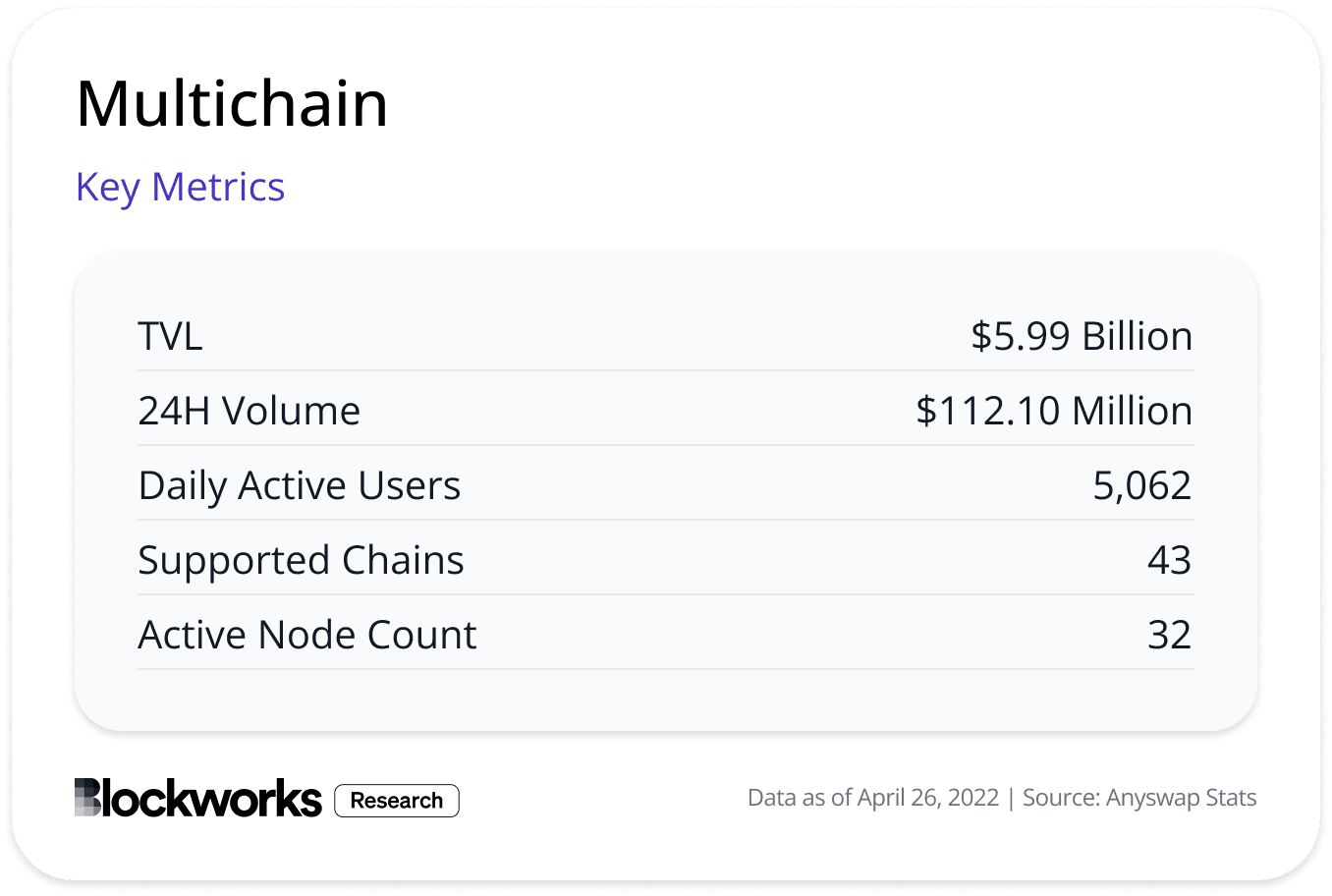
Multichain
Formerly known as Anyswap, Multichain is a cross-chain asset bridge and transaction router developed for arbitrary cross-chain interactions to enhance interoperability between heterogeneous blockchains and dapps.
Value Transfer
Multichain has two methods for bridging assets: cross-chain bridges and routers.

Dan leads the build out of the Analytics product, spending most of his time with onchain data.

Sam leads coverage on Ethereum, L2s, Aave, Compound, as well as NFTs and gaming. Previously worked on a hedge desk at UGC.