
JTX: Owning The Interface
JTX is the main upside driver. Jito is launching a self-custodial Solana trading front end with best-in-class execution, pro trader tooling, and a roadmap that extends into equities, perps, and prediction markets. The key shift is economic as Jito moves from backend infrastructure to capturing front end trading flow.
The base case does not require aggressive monetization. These bps take rates are our own assumptions, since Jito has not yet disclosed JTX's fee schedule. The model assumes 0.5 bps on stable/SOL-stable flow, 2 bps on tokenized/project/foreign token flow, 3 bps on memes/long-tail, and 1 bps gross on other flows (BWR estimates; JTX's fee schedule is not yet disclosed).
This is far more conservative than pure retail-facing crypto front ends that monetize users at 50 to 100 bps, but that is the point. JTX is targeting institutional participants and serious traders, but the philosophy extends down-market too: users should not need to be a pro to trade like one. The opportunity is to charge a modest explicit take rate while still improving all-in execution quality for everyone.
These bps assumptions are justified by:
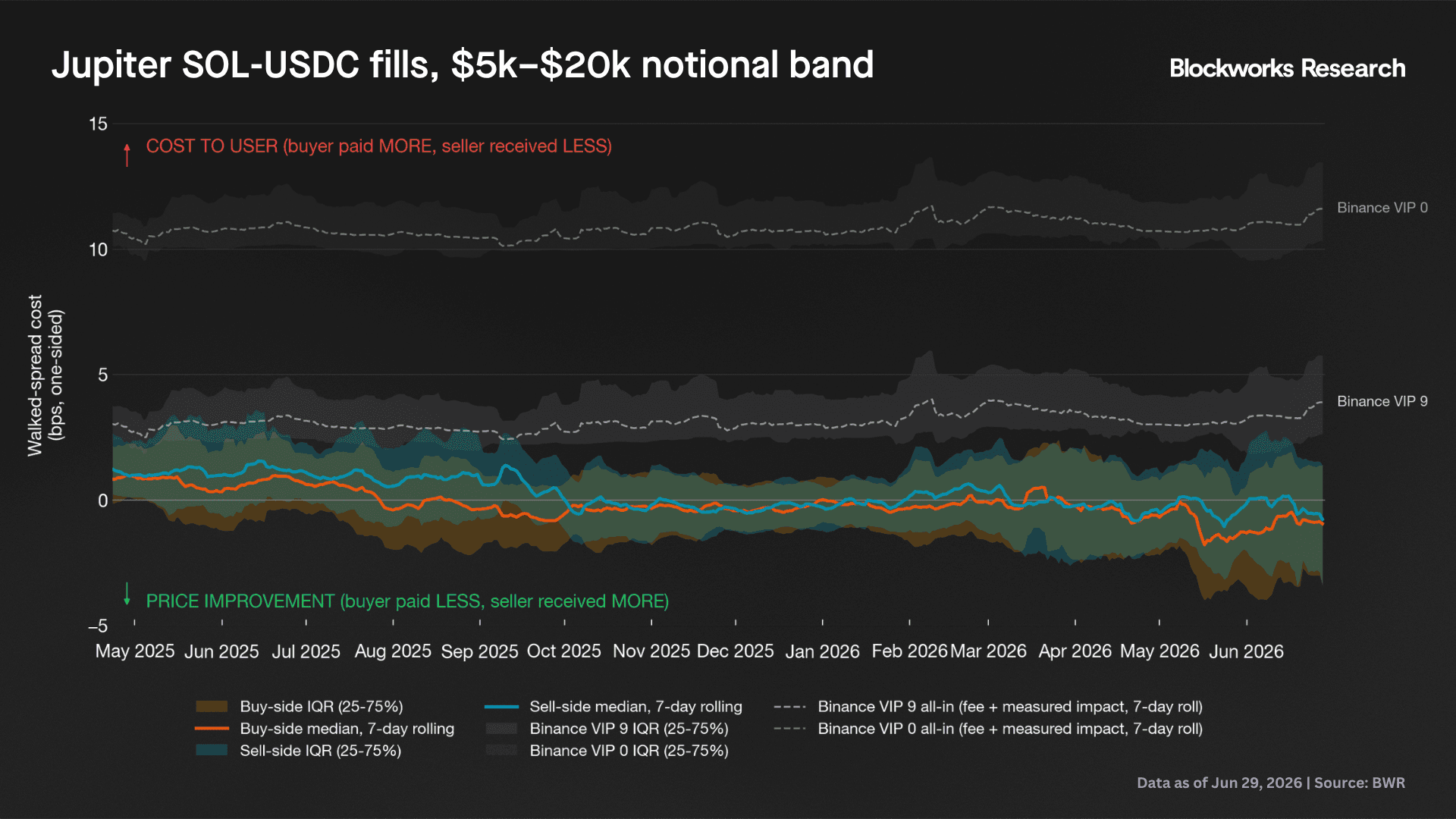
- Prior Solana spreads work suggests that interfaces such as Jupiter can already save users a median round-trip cost of 7 to 8 bps on SOL-USDC versus centralized exchange execution, even when benchmarked against Binance’s highest VIP tier and drift execution impact. If JTX can surface those savings directly to users as they trade, a 2 bps take rate on tokenized equities, project tokens, and foreign tokens looks defensible while still leaving users better off on all-in execution.
Blockworks Intel