Is Ethereum Good?


Primer
Ethereum pivoted to a Layer-2 (L2) scaling roadmap in 2020 from its original execution sharding plan. In the L2 scaling roadmap, Ethereum delegates transaction execution to a myriad of L2s but provides them data availability which ensures a high degree of security. Currently, Ethereum provides data availability through proto-danksharding (6 data blobs) and will eventually enable danksharding (64 blobs).
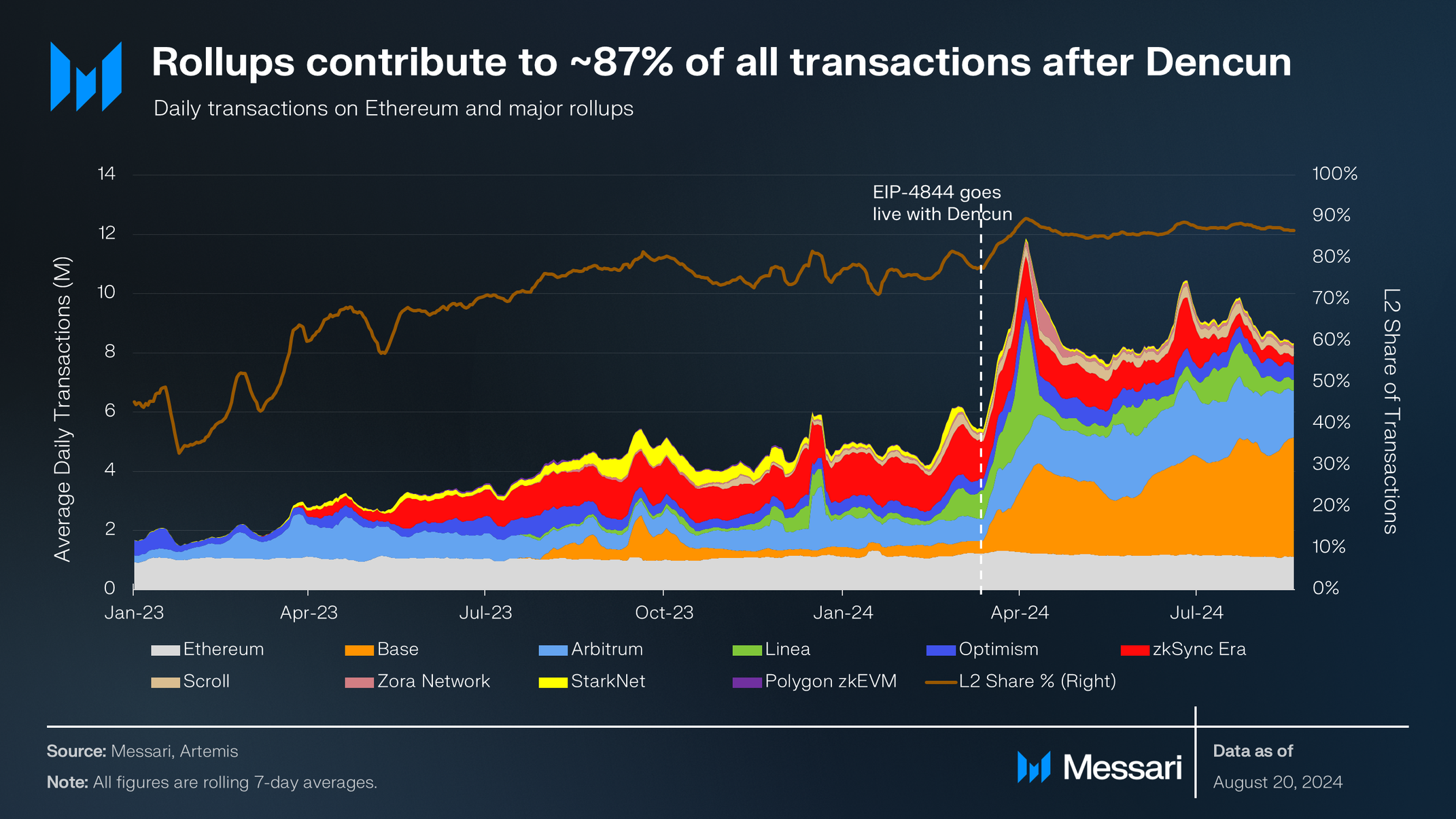
This roadmap has been highly successful. Rollups now account for 87% of daily transactions, which is 6+ times of the Ethereum mainnet. L2 transactions typically cost less than a cent allowing growth in users and use cases. Vitalik Buterin even argues that the L2 design is not dissimilar to execution sharding. Instead, it is even better because it allows for more experimentation in design without overloading Ethereum’s consensus.
However, critics argue that Layer-2s are “value extractive.” The argument is that execution and transaction ordering (MEV) generate the most value in the crypto stack, and data is commoditized. As such, L2s retain most of the value, not Ethereum, in this rollup-centric scaling framework.
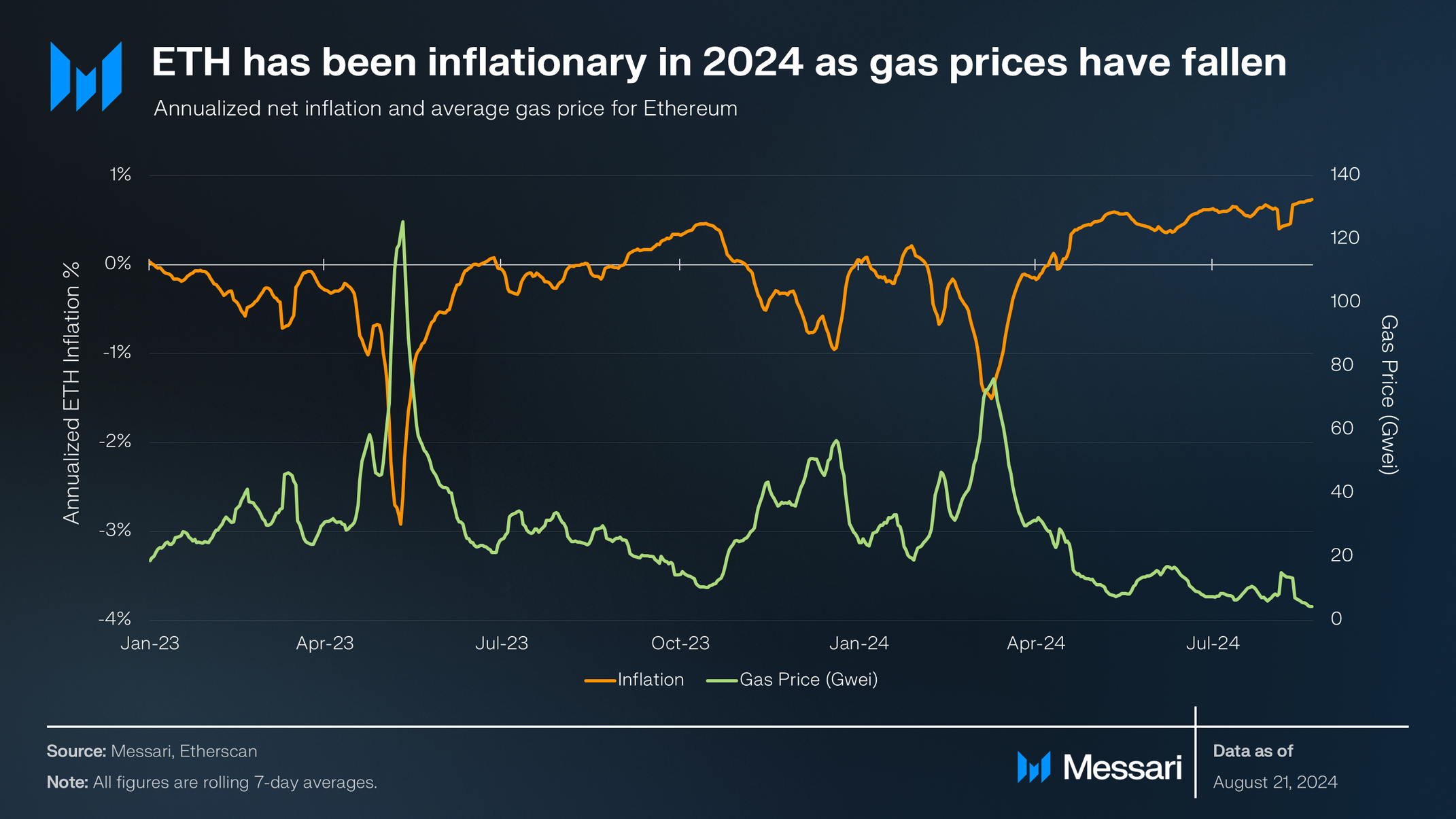
The critics further point to the fact that Ethereum’s gas fee is the lowest it’s been in many years even as we are in a ~bull market. It is no longer “ultra sound money” as inflation exceeds burn. Further, they argue that there will be no economic incentive to decentralize the sequencer as it is profitable to keep it centralized. Even further, if a Layer-2 were to build a strong network, it would move off Ethereum so as not to pay rent.

Kunal previously worked in equity research and now considers himself a financial analyst in crypto. He specializes in valuation and bottom-up analysis for Layer-1 and DeFi protocols because he has yet to learn of a way to value NFTs.

Prior to joining Messari, Seth worked in traditional finance software and services, and has a MSc in Applied Mathematics. Seth is a Senior Research Analyst on the Enterprise Research team, and focuses on infrastructure, verifiable compute, and the AI x Crypto intersection.

Kinji formerly covered crypto at Morgan Stanley. His primary interests are DeFi, Ponzi's and unstable stablecoins.