Analyzing EIP-4844: Is It Enough?


Prompt
Since EIP-4844 has arrived, L2 users are already experiencing dramatically lower transaction costs. But the question remains: how long will low transaction fees be sustained in the face of growing demand for blobs? In other words, is EIP-4844 enough?
Primer
At ~10:00 am EST on March 13, 2024, the Ethereum protocol officially rolled out its latest upgrade, Dencun. The upgrade included the much anticipated EIP-4844, which introduces a new mechanism for data storage. In particular, Ethereum L2s can now opt into using this new data storage facility (dubbed blobs) for publishing transaction data, which aims to significantly reduce data publishing costs for these networks.
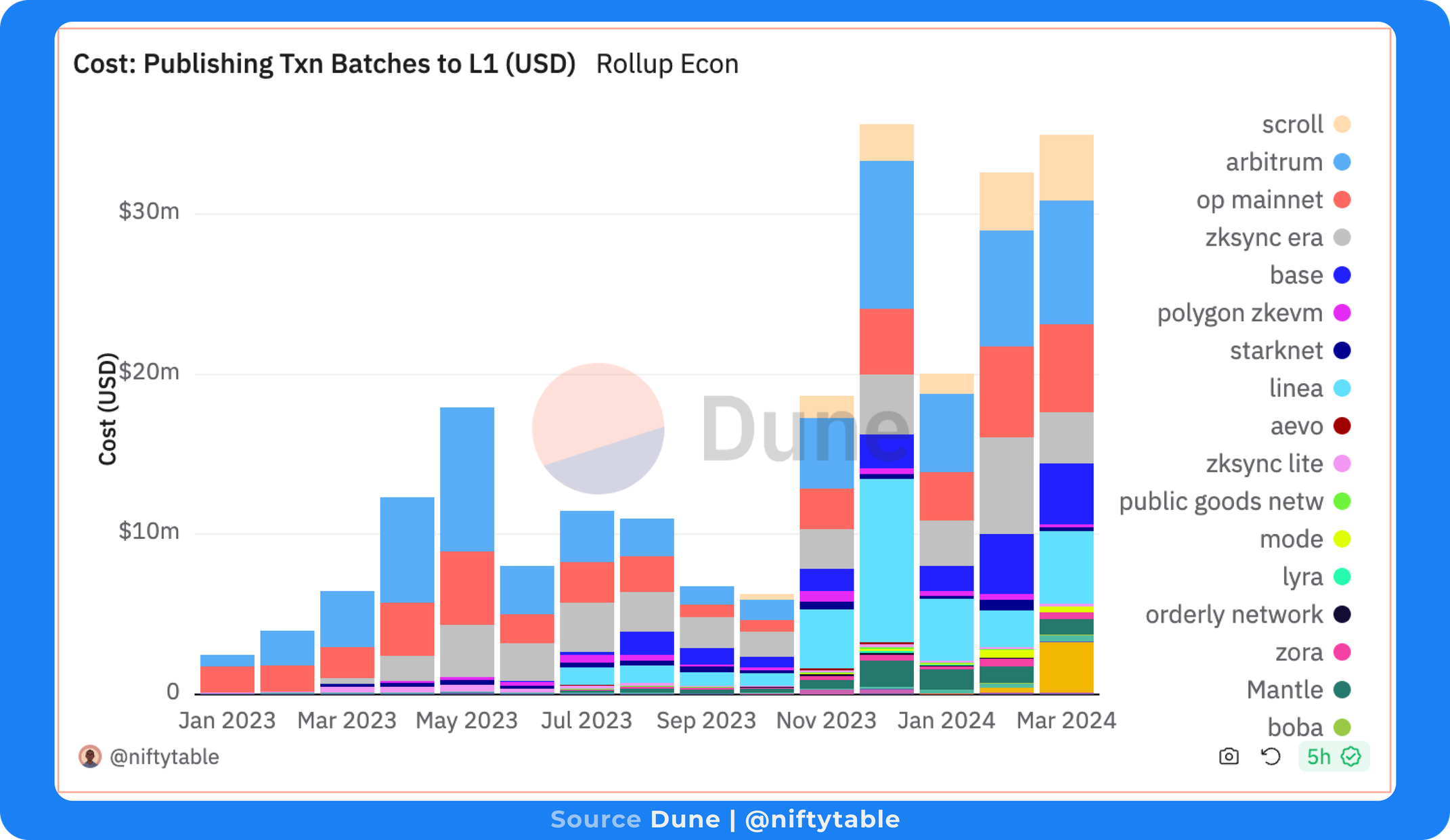
Prior to EIP-4844, L2s, and thus, L2 users, have spent millions of dollars paying for data publishing on Ethereum.
The EIP-4844 upgrade introduces data blobs, which act as temporary storage for L2 transaction data. As noted above, publishing this transaction data is expensive, and, for a sense of current data publishing demand, in February, 17,800 MBs of data were collectively published by L2s down to Ethereum.

Nikhil is a Researcher focused on Web3 Infrastructure and Decentralized AI. Previously he was leading BD at Upshot and prior to that was working on growing Avalanche at Ava Labs.

Ally is a Research Analyst on the Enterprise team at Messari. Prior to joining the team, Ally worked as a Structural Engineer at Magnusson Klemencic Associates. Ally graduated from the University of Illinois in 2018 with a master’s degree in Civil and Structural Engineering.

Dustin was previously the Enterprise research director at Messari. He has a broad focus across crypto with a particular interest in AI x Crypto, Consumer financialization, DeFi, and general infrastructure.