Halving Hype: A look at bitcoin’s volatility and trading volume around the halvings

As Bitcoin’s third halving approaches, all eyes will be on the orange coin to see how it performs. While there has been much debate over any fundamental reason the price would change, one thing you can be certain of is that it will draw increased attention both from those inside and outside of the crypto industry. With this increased attention, one might expect an increase in the desire of traders to express their viewpoints which could lead to an uptick in volatility amidst the halving hype.
Looking back to the prior halvings, there was a definitive increase in volatility before the last halving while no noticeable shift occurred in 2012. This year, Bitcoin has been extraordinarily volatile, even before the COVID fears rattled the markets. As global markets have calmed down, Bitcoin followed suit and is now below the levels seen in 2016.
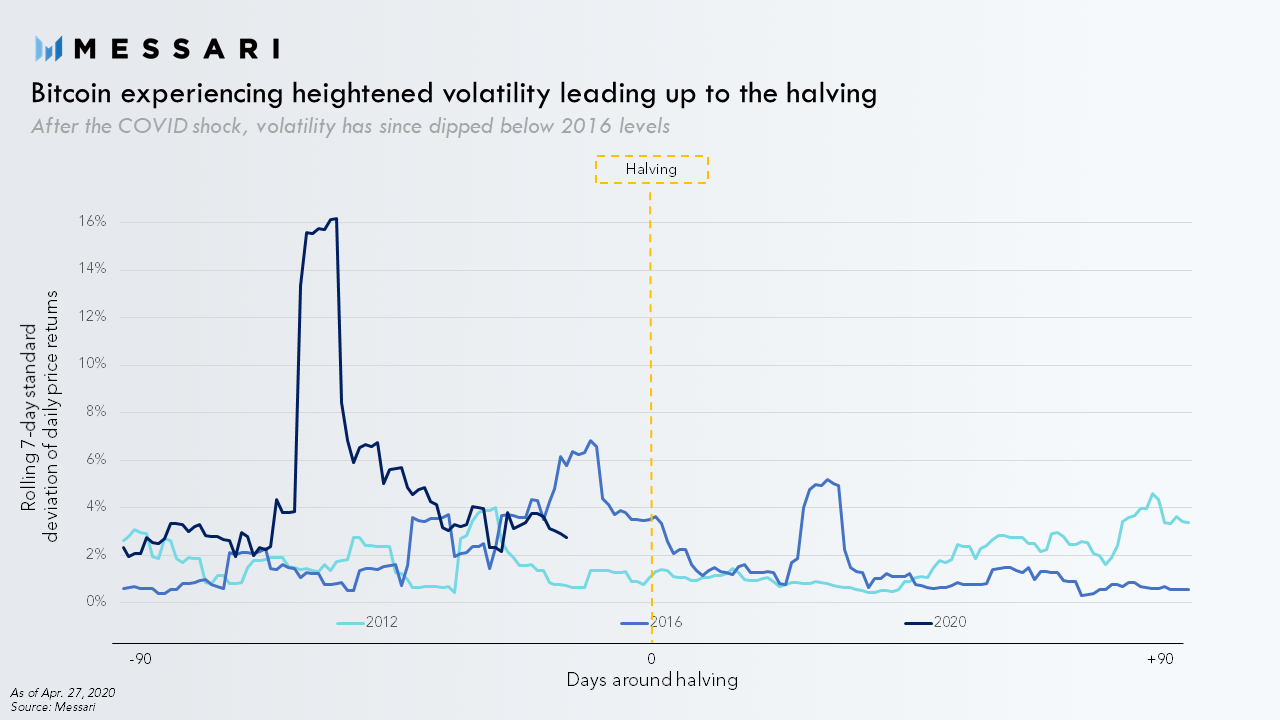
In 2012, this lack of volatility could be explained by the general uncertainty as to how the network would react, There was no precedent to look back on thereby creating hesitancy to trade around it. Trading volumes support this conclusion as there was no increase in volumes around the halving until almost two months later as a major bull run was underway. Four years later, there was much more excitement around it as traders were hoping for a similar 20x increase in price within five months, or better yet, 100x within a year. Volumes around the 2016 halving showcase this anticipation as they nearly tripled in the weeks around it. Many traders were left disappointed as the event proved to be anticlimactic and bitcoin's price remained unchanged in the aftermath of the halving causing volumes to quickly recede to prior levels.
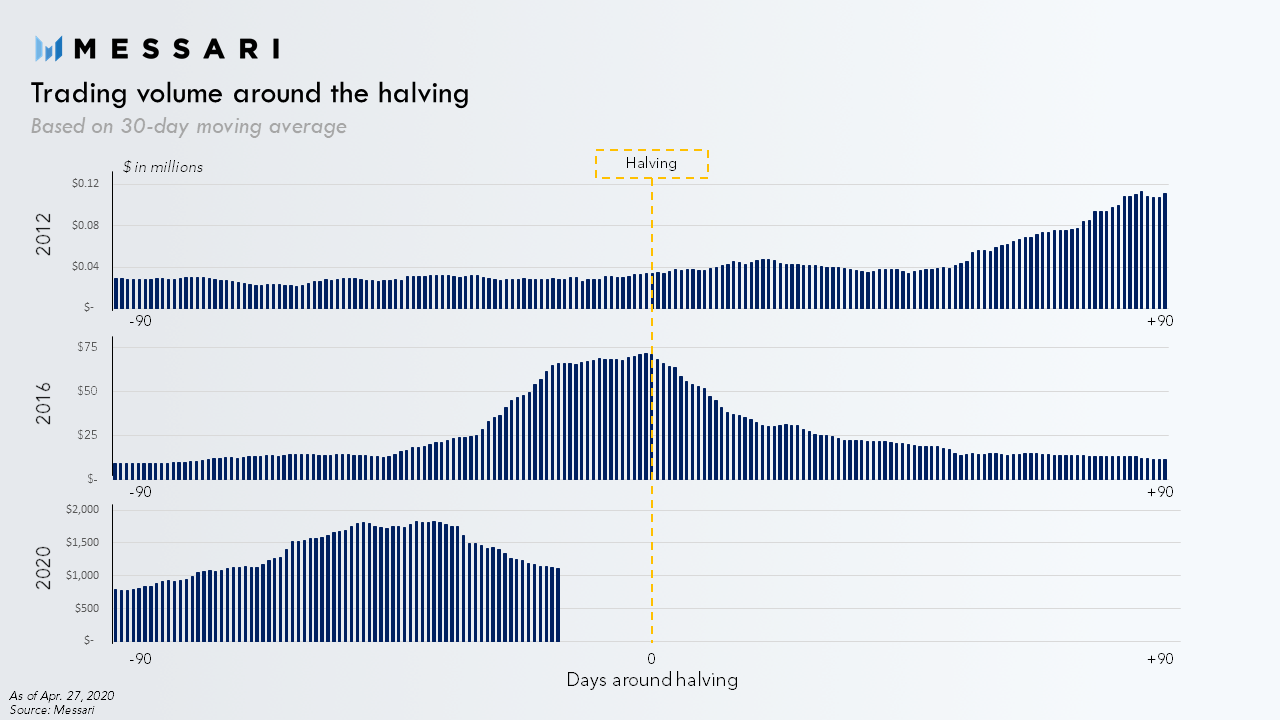
As we look towards the impending issuance reduction, trading activity feels somewhat subdued after the mania around Black Thursday, one of bitcoin’s worst days in history. But with two weeks left until the halving, there’s still time for markets to reveal their animal spirits.
