Governor Note: Decentralizing Gitcoin


Key Insights
- The GR16 Structure proposal stems from the Gitcoin DAO contributors’ overwhelming workload. Contributor workload needs to be reduced to successfully launch the Gitcoin Protocol in early 2023.
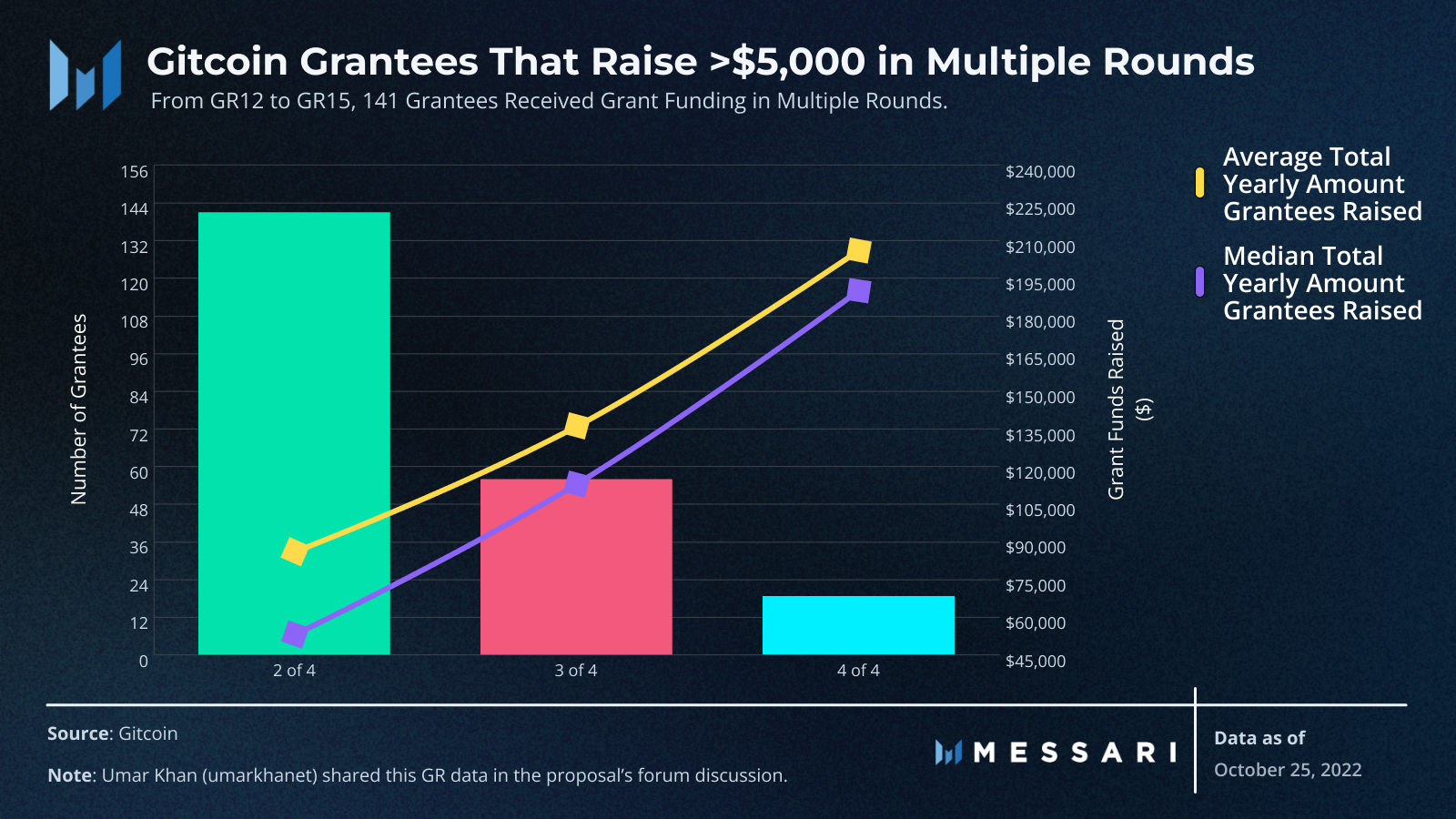
- Previous Gitcoin grantees are allowed to re-apply and raise additional quadratic grant funding. Notably, 141 previous grantees have raised over $5,000 in multiple rounds.
- Since March 2022, the Gitcoin Grants Program has been slowly decentralizing by introducing future Gitcoin Protocol modules.
Introduction
Gitcoin is transitioning from a centralized grants (c-grants) program to a decentralized grants protocol, Gitcoin Grants 2.0. This transition was first announced on the Gitcoin Forum on Mar. 1, 2022, and Gitcoin began to implement and test various grants 2.0 modules in Grant Round (GR) 13. Gitcoin aims to transition the centralized monolith grants 1.0 program into a forkable, modular decentralized protocol, which aligns with Gitcoin’s values of building open-source public goods for the benefit of the broader Web3 community.
To date, the grants 2.0 transition process, scale, and complexity of running a normal GR has put the Gitcoin DAO contributors under significant strain. The associated challenges include GR operations, effectively handling fraud and Sybil attacks with the current manual processes, and the tech debt and fragility of the c-grants legacy product. Thus, Janine Leger, Gitcoin Grants Program Lead, proposed the following options on behalf of the Gitcoin DAO’s leadership:
- Sunset c-grants and not run GR16 in Q4 2022, and move forward with plans to launch the Gitcoin Protocol in Q1 2023.
- Run a small GR16 c-grants round in Q4 2022 and postpone the Q1 2023 launch of the Gitcoin Protocol.
Grants 2.0 Transition
The proposal clearly stated the benefits and risks that both proposed options brought to Gitcoin stakeholders.
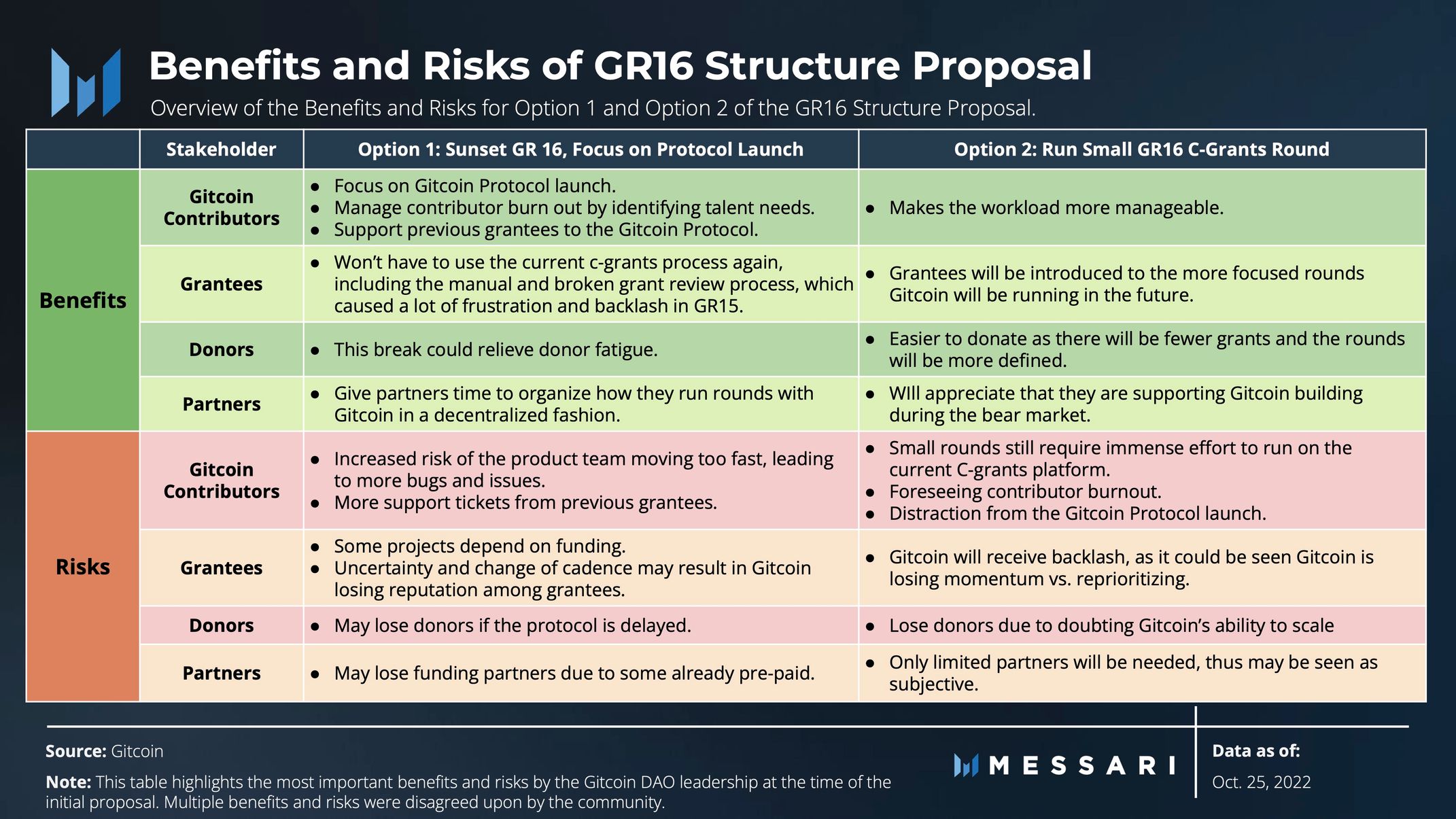
The DAO’s leadership was leaning towards option one, immediately sunsetting the c-grants and not running GR16 in Q4 2022, because they want to fully focus on a successful protocol launch in Q1 2023. However, the Gitcoin community raised some concerns about both options in the forum discussion which led to Annika Lewis proposing a third option.
The proposed third option was to run a Main Round for only GR16 and GR17 and push the Gitcoin Protocol launch to Q2 2023. Annika also suggested redefining which protocols could participate in these Main Rounds to be as inclusive as possible until the Gitcoin Protocol was able to launch. This proposed option aimed to address two key recurring concerns from the Gitcoin community: GR16 is less than two months away and sunsetting GR16 would disappoint funders and possibly hurt grantees that are reliant on Gitcoin quadratic grant funding. Further, the potential of Gitcoin not launching the Gitcoin Protocol in Q1 2023 would damage Gitcoin’s credibility. Based on Annika’s experience, this proposed third option should reduce the GR operational workload by approximately 80% and allow the Gitcoin DAO contributors more time to focus on the launch of the Gitcoin Protocol.
Regarding the importance of running GR16 for existing grantees, Umar Khan quantified the importance of running a GR16 based on the number of grantees that raised over $5,000 of quadratic grant funding over the past year (GR12 to GR15). Khan’s analysis highlights that many previous grantees rely on recurring quadratic grant funding for their project’s financial runway.
Finalized GR16 Structure Proposal
Two weeks after Leger’s original proposal, she proposed a finalized GR16 Structure. This proposal seeks to run GR16 as a streamlined Alpha Round on the Gitcoin Protocol in mid-Jan 2023 for Gitcoin’s oldest running rounds: Open Source Software, Ethereum Infrastructure, and Climate. This will allow Gitcoin to test the protocol's technology stack and receive feedback from the community on what areas of focus they should prioritize funding around for the full Gitcoin Protocol launch in early Q2 2023.
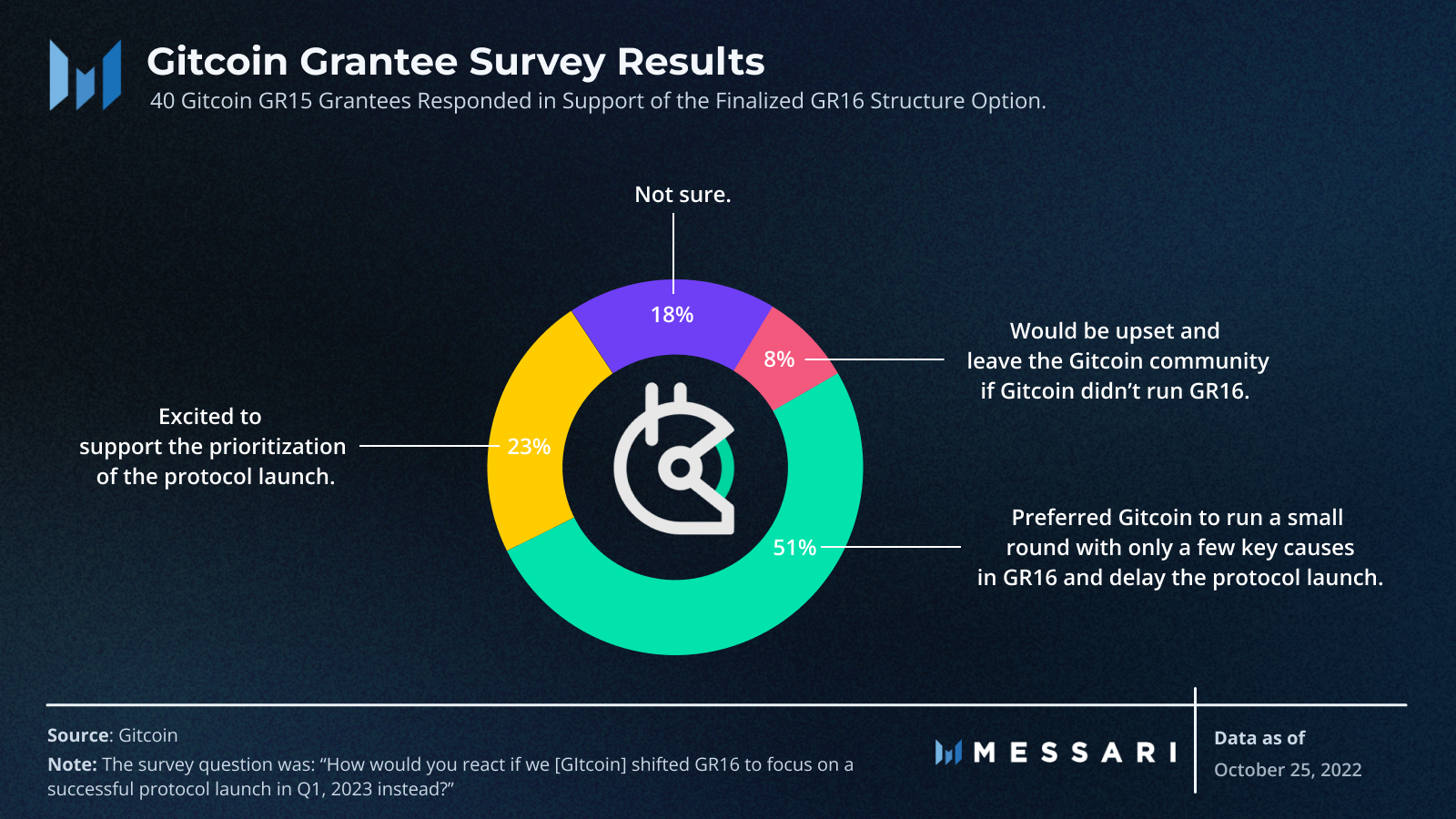
This proposal was a modified version of Annika’s third option proposal based on feedback from other Gitcoin community members and survey results from 40 GR15 grantees.
Once the Snapshot vote ends on Oct. 28, 2022, this GR16 Structure decision-making process will formally have taken three weeks. However, the GR16 structure will look slightly different than the one Gitcoin DAO’s leadership had originally envisioned. Gitcoin’s engaged community of active contributors created a net positive solution to this GR16 Structure proposal that looks to be beneficial for previous grantees, funders, and the Gitcoin DAO contributors. This GR16 Structure proposal received valuable insights from the community on aspects that the Gitcoin DAO leadership had overlooked. The community involvement led to an outcome allowing Gitcoin to maintain its reputation (as long as it executes the Gitcoin Protocol on time), reduce the strain on Gitcoin DAO contributors, and allow previous grantees the opportunity to potentially receive more funding and increase their projects’ runways.
Importance of the GR16 Structure Proposal
As previously mentioned, the Gitcoin Grants 2.0 forum post marked the beginning of the transition process in March 2022. However, Gitcoin Grants had been planning to slowly decentralize and become a protocol well before March 2022. The forum post, which included the diagram below, evinced the ongoing shift to decentralization as the Gitcoin DAO contributors were already building modules that would be ready to implement and test in the subsequent three GRs.
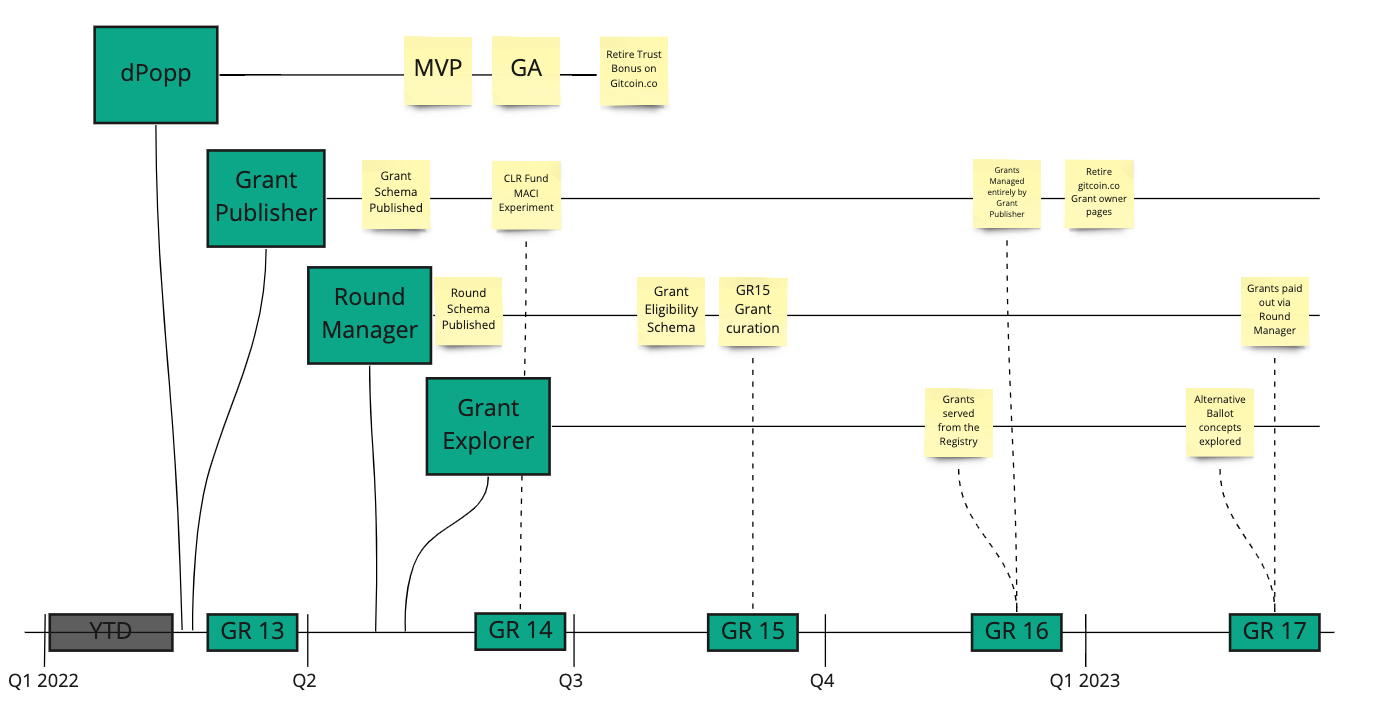
Source: Gitcoin Grants 2.0 forum post
This GR16 Structure proposal was one of the final steps to decentralizing the Gitcoin Grants Program, and the Gitcoin Grants Program is now only a couple of quarters away from launching the Gitcoin Protocol. The proposal’s importance is to continue Gitcoin’s momentum of moving closer to achieving Gitcoin’s short- and long-term goals as a DAO and allowing the Gitcoin Grants Program to be a permissionless protocol. Effectively, Gitcoin will no longer be a gatekeeper and will allow any community to use the Gitcoin Protocol to run and manage their own grants program. This shift to a protocol will allow the Gitcoin Grants Program to reduce the number of rounds it runs, allow other communities to spearhead their own rounds, and allow the Gitcoin DAO to focus on key, impact areas.To maximize impact, the Gitcoin Grants Program has set objectives to continue running rounds to help grow Gitcoin’s brand and drive further interest in the protocol. As more communities use the protocol, this will create an opportunity for the Gitcoin DAO to be a service provider for communities running their own grants program and funders looking to deploy capital in the most effective manner. Gitcoin DAO aims to offer its quadratic grant funding expertise as an optional service to these groups. Once Gitcoin begins to charge for these services, the Gitcoin Grants Program will work toward financial sustainability, as the program is currently not financially sustainable.
Analysis of the GR16 Structure Proposal
Leger’s finalized GR16 proposal has solved the problem of Gitcoin Contributors heading toward burnout as the Gitcoin Protocol launch approaches. This proposed solution signals the Gitcoin leadership’s confidence in the modules they have built and may force Gitcoin to abandon the previously proposed Tokemak C.o.R.E launch model.
First, the most emphasized point throughout the forum discussion was the lack of notice regarding the possibility of sunsetting the c-grants program. The lack of notice seems to be representative of the current strain on the Gitcoin Team and contributors, and it was collectively viewed as suboptimal. Despite the known goal of launching the Gitcoin Protocol in Q1 2023, the Gitcoin DAO contributors were unable to make this proposal earlier. The delay can most likely be attributed to the increase in responsibilities during this transition to the Gitcoin Protocol. The current Gitcoin Team members and contributors have been juggling standard GR operational responsibilities while taking on the additional responsibilities of executing the transition to the Gitcoin Protocol. If this GR16 Structure proposal succeeds, it will reduce approximately 80% of the GR operations workload and allow the Gitcoin DAO contributors to focus on decentralizing the Gitcoin Grants Protocol – achieving the main objective of this proposal.
Second, the Fraud Detection and Defense (FDD) Workstream actively monitors and fights against fraud and Sybil attacks throughout each GR. The eagerness of the Gitcoin Leadership to decentralize as soon as possible signals that Gitcoin and the FDD Workstream are confident in the current FDD processes and technology. Thus the confidence will enable the decentralization of the Gitcoin Grants Program and open-sourcing of the various modules for other communities to build upon. Arguably the most important module, Gitcoin Passport, is an open-source and forkable module that has been a tool over the last couple of GRs that the FDD Workstream has used to increase the Sybil resistance of the Gitcoin Grant Program.
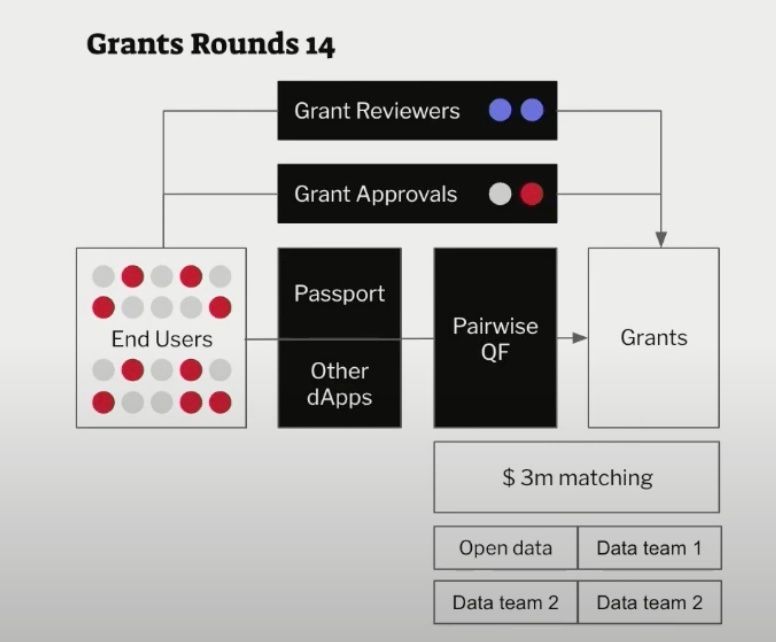
Source: Kevin Owocki’s Presentation at DevCon Bogota 2022
As mentioned in Kevin Owocki’s presentation at DevCon Bogota 2022, one of the biggest challenges in Web3 is “The Infinite Game of Sybil Resistance”. He stated that by more users actively using Gitcoin Passport will create a flywheel effect that will enable Web3 protocols and communities to continually have better Sybil resistance. Although the Gitcoin Passport module is already open-sourced and forkable, the Gitcoin Protocol launch will also serve as an important marketing campaign to encourage more developers and protocols to build upon the Gitcoin Passport and drive more users to Passport. Ultimately, increasing the power of Passport’s Sybil resistance.
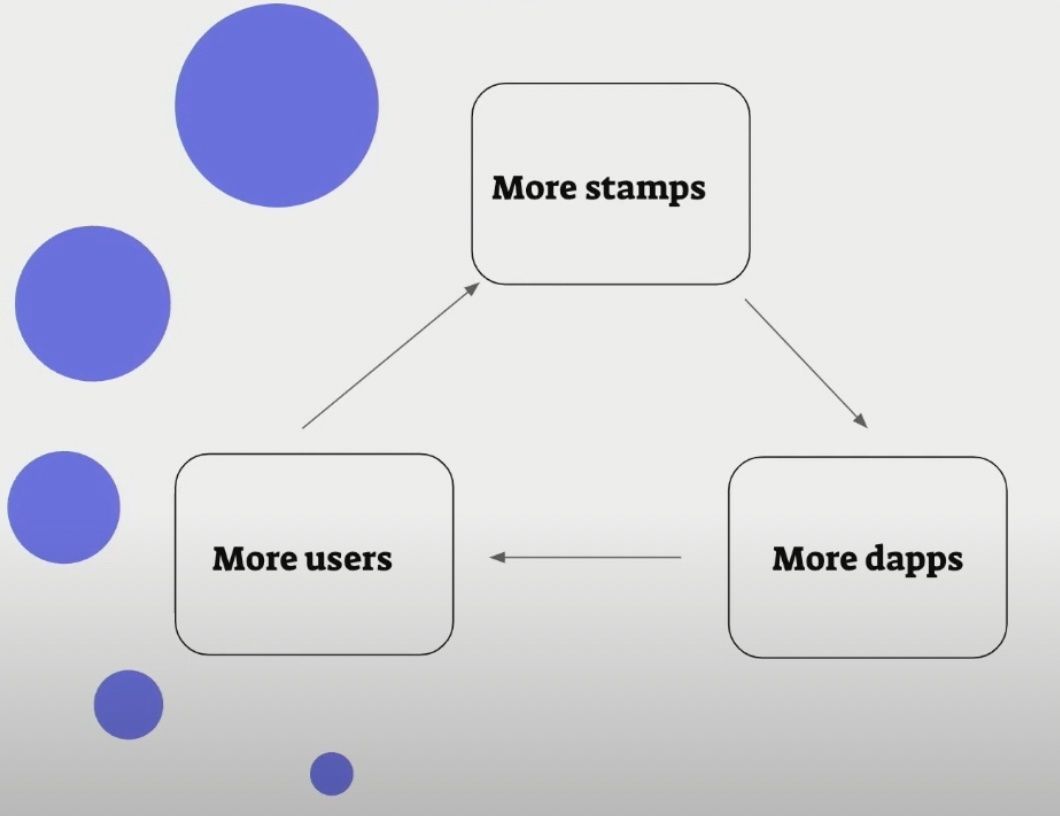
Source: Kevin Owocki’s Presentation at DevCon Bogota 2022
Third, the Gitcoin Team suggested in an earlier proposal that it may use the Tokemak C.o.R.E launch model. Following this model would mean using the protocol’s governance token to vote and decide which five projects will be the first projects to pilot the Gitcoin Protocol. However, based on the finalized proposal that Leger put forward, the first projects to pilot the Gitcoin Protocol will be the previous grantees GR16 in Q1 2023. The Tokemak C.o.R.E launch model is not crucial to a successful launch of the Gitcoin Protocol. However, this form of gamification could have potentially been a beneficial form of marketing that rewarded Gitcoin DAO with increased GTC voter engagement and positive publicity.
Conclusion
Gitcoin is in the midst of its progressive decentralization transition from a c-grants program to a protocol. The GR16 Structure proposal was a fruitful discussion that lead to an improved solution from the initial two options that the Gitcoin DAO leadership proposed. The proposal highlights the current strain on the Gitcoin Team and contributors. Overall, the proposal signals that Gitcoin DAO contributors are confident in the modules they have built and are ready to launch the Gitcoin Grants 2.0 Protocol in Q2 2023.
______________________________________________________________________
Let us know what you loved about the report, what may be missing, or share any other feedback by filling out this short form.
Author(s) may hold cryptocurrencies named in this report, and each author is subject to Messari’s Code of Conduct and Insider Trading Policy. Additionally, employees are required to disclose their holdings, which are updated monthly and published here. This report is meant for informational purposes only. It is not meant to serve as investment advice. You should conduct your own research, and consult an independent financial, tax, or legal advisor before making any investment decisions. Messari does not guarantee the sequence, accuracy, completeness, or timeliness of any information provided in this report. Please see our Terms of Use for more information.
Prior to joining Messari as a Governance Analyst in May of 2022, Joel was a protocol lead for RabbitHole’s Metagovernance Pod. Joel has a Bachelor of Commerce degree from the University of Manitoba.
Tomas Molin is the research lead of Messari Governor. Prior to joining Messari, Tomas worked at Ardian in the Growth Equity team focusing on technologies. At Messari, he began within the Intel team covering DeFi and governance related topics before taking the lead of the Governor team when the product was launched.