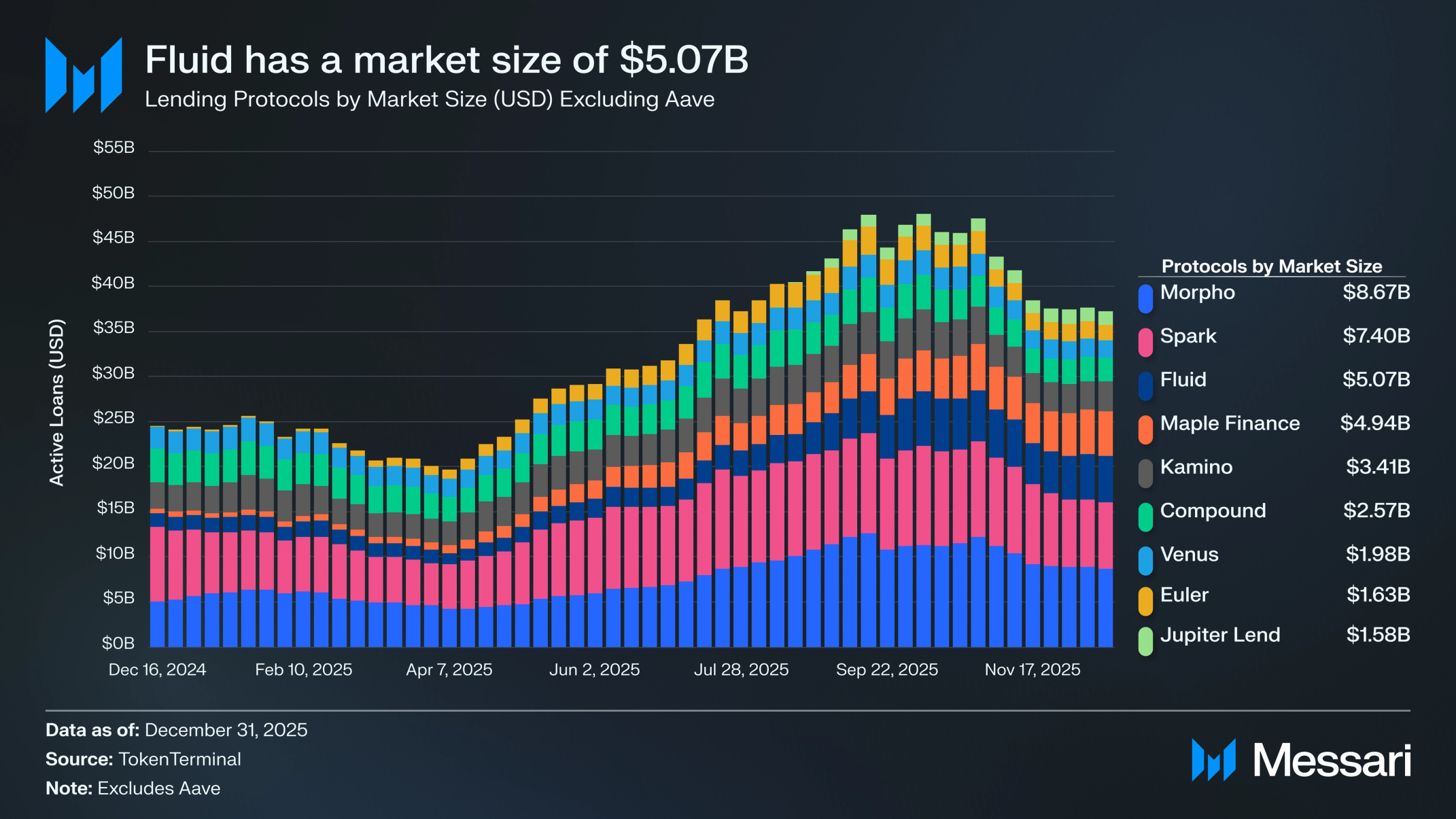
Fluid has scaled into a top-tier DeFi protocol, reaching $5.10 billion in total market size across chains, including $1.6 billion via Jupiter Lend on Solana, firmly placing it among the largest crosschain lending platforms.
Fluid ranks 3rd in active loans when accounting for Jupiter Lend, with $2.12 billion borrowed, signaling strong product-market fit and sustained borrowing demand rather than passive deposits driven by incentives.
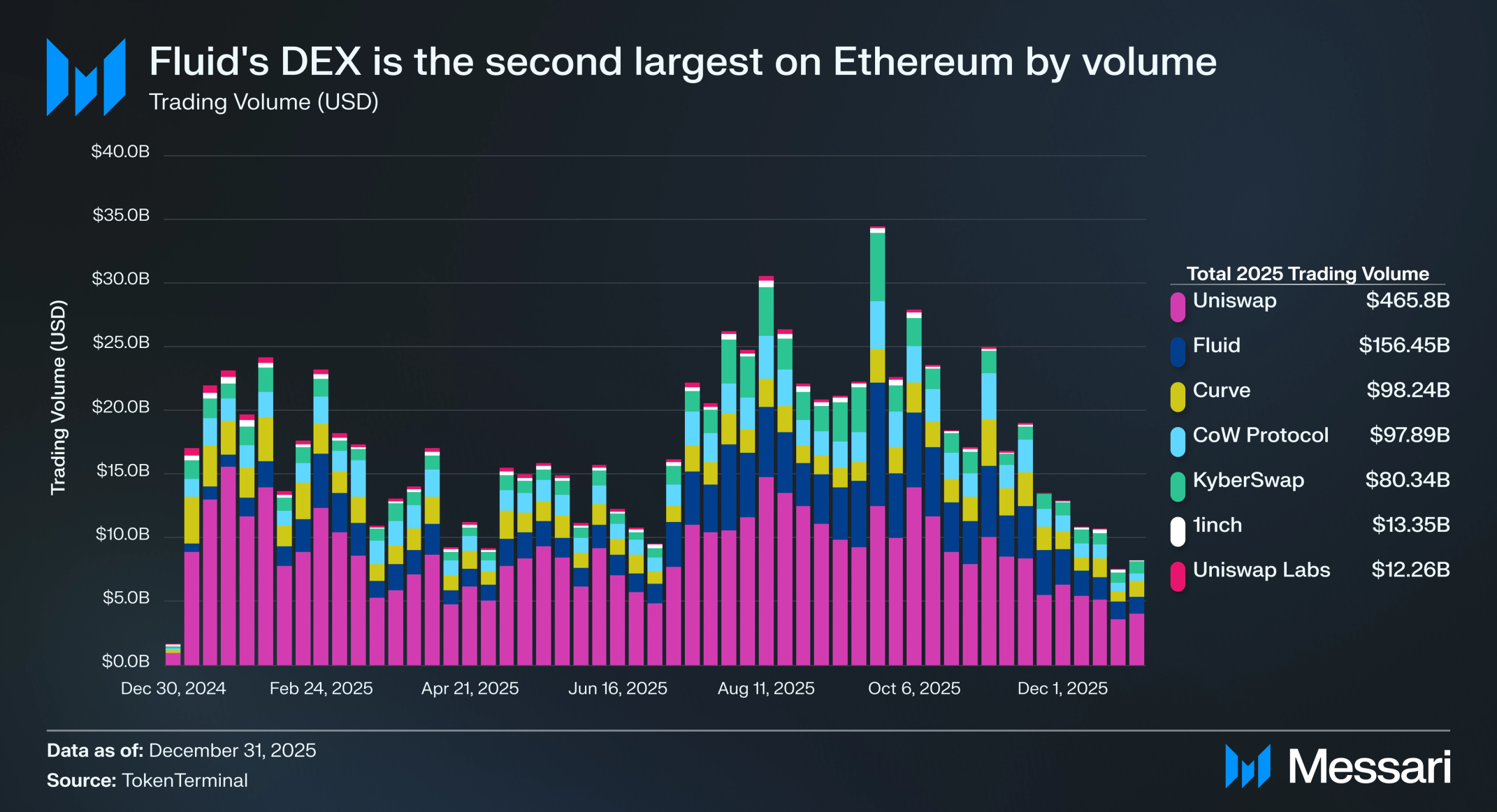
Fluid DEX finished 2025 as the second-largest DEX on Ethereum by trading volume, processing $156.45 billion in volume during the year, validating its Smart Collateral and Smart Debt model as a scalable alternative to traditional AMMs.
The introduction of the Fluid Reserve in October 2025 marked a transition toward long-term sustainability, with protocol revenue funding onchain FLUID buybacks to support governance, alignment, and resilience as the protocol matures.
The upcoming launch of Fluid DEX V2 represents a structural evolution from a single DEX into a general-purpose liquidity engine, enabling multiple AMM designs, range-based strategies, and permissionless expansion without fragmenting liquidity.
Introduction
As DeFi continues to scale across chains and protocols, liquidity fragmentation remains a persistent bottleneck, hindering capital efficiency, interoperability, and user experience. Most attempts to solve this issue either build aggregation layers or optimize isolated protocol mechanics. Fluid takes a different approach, embedding unified liquidity as a foundational design principle across its stack, bringing capital efficiency to all financial products.
Fluid rebranded from Instadapp in December 2024 after the early success of its DEX protocol, which went live at the end of October 2024. As part of this rebrand, the project’s token ticker changed from INST to FLUID. The protocol now operates a deeply integrated suite of financial primitives: a Lending protocol, a Vault protocol, and a DEX protocol, all powered by a shared Liquidity Layer. This architecture enables cross-protocol capital reuse, transforming idle deposits and collateral into productive assets that simultaneously power borrowing, lending, and trading.
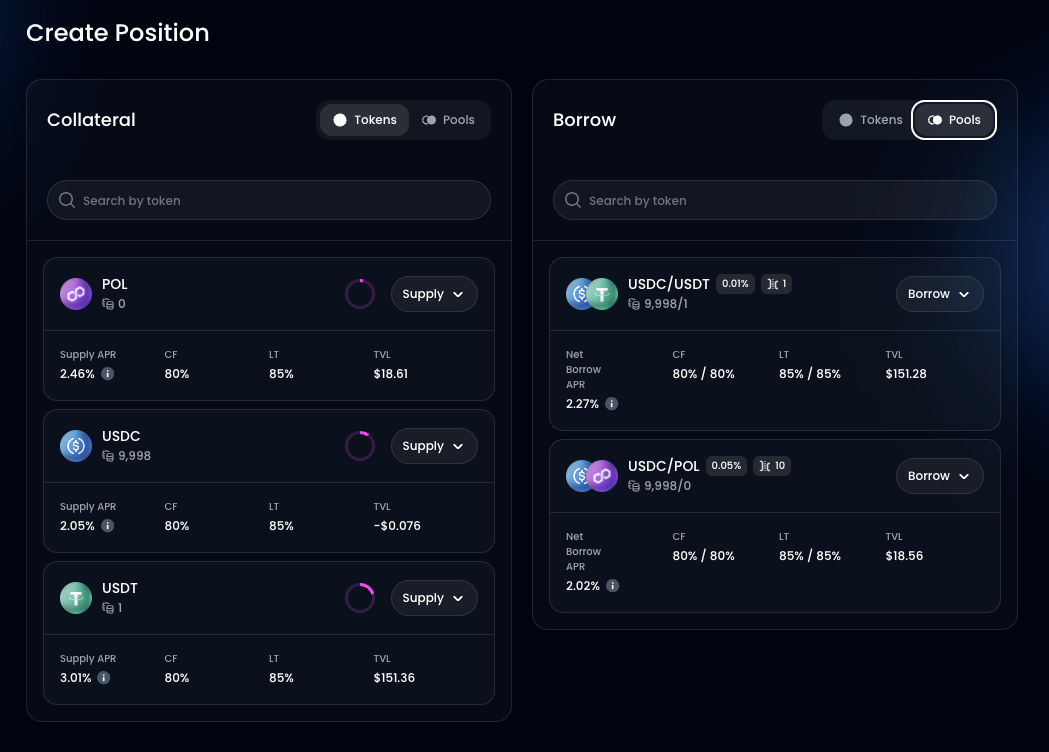
In contrast to siloed DeFi protocols, Fluid allows collateral and debt to act as liquidity itself. Smart Collateral and Smart Debt, two primitives unique to Fluid’s DEX, allow users’ borrowing positions to also serve as market-making capital. This enables Fluid to reach the highest levels of capital efficiency seen in DeFi.
The protocol’s technical architecture is modular but tightly coupled. Protocols are deployed via factories, orchestrated by a unified Liquidity Layer, and protected through risk management primitives, such as dynamic ceilings and multi-source oracle systems. Most interactions occur through permissioned vaults and standardized token wrappers (ERC-4626), supporting broad composability with other DeFi systems.
Since its DEX launch in October 2024, Fluid has scaled rapidly, with over $5 billion in deposits for its Lending protocol and over $170 billion in cumulative trading volume through Fluid DEX. With its second-generation DEX (DEX V2) planned to launch in Q2 2026, a newly released Solana deployment via Jupiter Lend, and a partnership with Venus for the upcoming launch of Venus X, Fluid’s lending protocol on BNB Chain, Fluid is establishing itself as a leading infrastructure layer in DeFi. The Fluid protocol is governed by the Fluid DAO, which is controlled by FLUID tokenholders.
Fluid has quickly established itself as a meaningful player in the highly competitive DeFi lending market. When evaluating lending protocols, two metrics matter most: market size, typically measured by total deposits including rehypothecation, and active loans, which reflect actual usage rather than passive capital. Together, they provide a clearer picture of both scale and relevance.
Historically, Aave has dominated the DeFi lending market. It has consistently held more than 50% of total lending market deposits for multiple years (59% at the end of Q4), benefiting from first-mover advantage, deep liquidity, and strong integrations across DeFi. However, outside of Aave, the remaining market share has been contested by a long tail of lending protocols that have historically struggled to maintain sustainable moats.
This competitive pressure has intensified as lending margins have compressed and users have become more sensitive to capital efficiency and borrowing costs. In that environment, gaining share no longer depends solely on incentives or brand recognition, but on offering a meaningfully better lending experience. It’s within this increasingly competitive segment of the market that Fluid has been able to capture attention and grow share, positioning itself as one of the few newer protocols to break through the long tail.
Fluid Lending
Since launch, Fluid’s lending protocol has scaled rapidly, reaching $5.07 billion in total deposits across all deployments, making it the fourth-largest lending protocol in the ecosystem. Jupiter Lend, Fluid’s Solana-based deployment, has added $1.58 billion in market size since launching in July.
Scale alone doesn’t capture how effectively a lending protocol is being used. Active loans provide a more accurate signal of real demand, measuring how much deposited capital is actually borrowed rather than remaining idle. On this metric, Fluid’s deployments also rank fourth overall, ending 2025 with $2.17 billion in active loans, including Jupiter Lend.
Taken together, these figures suggest that Fluid’s growth has not been driven solely by passive deposits. Its ability to convert liquidity into sustained borrowing activity indicates strong product-market fit in a category where many protocols struggle to keep capital engaged.
Fluid DEX Volume
Fluid DEX continued to gain market share throughout 2025, building on what had already been a record-setting pace of adoption. After becoming the fastest decentralized exchange to surpass $100 billion in cumulative trading volume, Fluid finished the year as the second-largest DEX on Ethereum by trading volume, processing $156.45 billion over the course of 2025 alone.
This rapid ascent wasn’t driven by incentives or short-term liquidity programs. Instead, it served as validation of Fluid’s underlying design, particularly its Smart Collateral and Smart Debt primitives. Unlike traditional DEXs that rely on dedicated liquidity pools and LP tokens, Fluid sources liquidity directly from user positions within its Vault protocol. Capital deposited and borrowed for lending can simultaneously act as trading liquidity.
The result is meaningfully higher capital efficiency as all deposits and borrows can be treated as productive assets. Users earn lending interest and trading fees on the same capital, reducing the opportunity cost that typically forces users to choose between lending and liquidity provision. By collapsing these functions into a single system, Fluid DEX offers a structurally different approach to onchain liquidity, one that helps explain both its rapid volume growth and its ability to compete with established exchanges without relying on aggressive incentives.
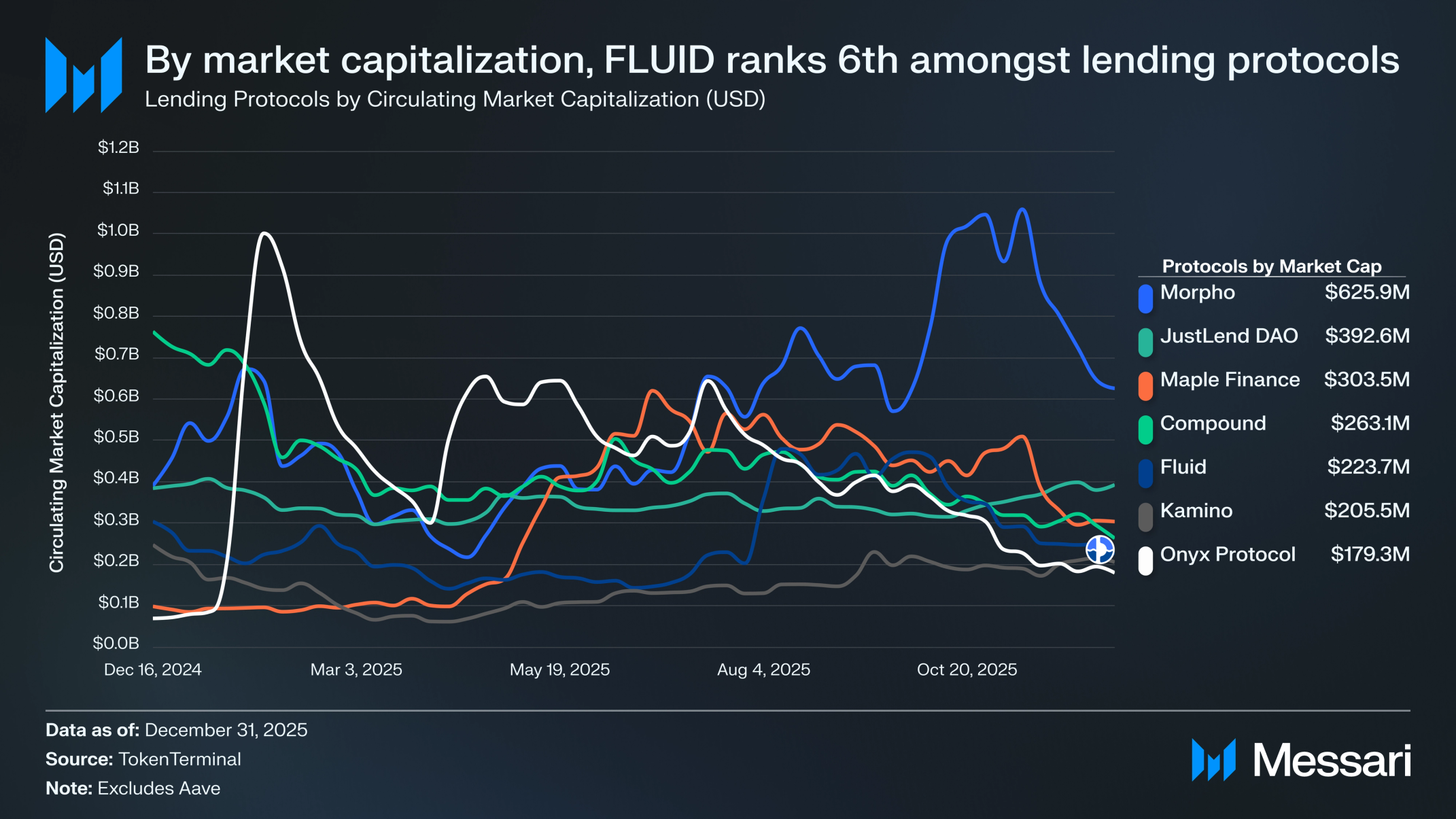
While token performance does not map one-to-one with protocol success, FLUID’s current market capitalization appears low relative to Fluid’s position across key onchain metrics. At a circulating market capitalization of $223.7 million, FLUID ranks as the sixth-largest token among lending protocols and the fourth-largest DEX token on Ethereum, despite Fluid operating at the intersection of both categories and ranking near the top in usage, revenue, and capital efficiency.
This disconnect highlights a common lag between fundamentals and token valuation, particularly for protocols that scale through product differentiation rather than aggressive token incentives. As Fluid continues to consolidate share across lending and trading, the gap between protocol relevance and token market size remains a notable point of focus.
Fluid Reserve
Following an August 2025 governance proposal, Fluid is entering a new phase focused on long-term sustainability and alignment. In October 2025, the protocol initiated the Fluid Reserve, an onchain reserve of FLUID tokens funded through a structured buyback program tied to protocol revenue.
The rationale is straightforward. Fluid now generates meaningful, recurring cash flow, over $15M in annualized revenue, and has reached sufficient scale across lending, trading, and stablecoin liquidity to support a more deliberate capital strategy. In fact, Fluid generates more revenue than any other lending protocol per dollar or market size. The Fluid Reserve is designed to formalize that transition, creating a strategic pool of tokens that can support governance, ecosystem growth, and resilience across market cycles.
Buybacks began in October under a transitional framework, with 100% of Ethereum mainnet revenue temporarily directed toward FLUID buybacks while dedicated infrastructure is developed. Buybacks are executed through multiple smaller transactions for transparency and market stability, with activity tracked publicly. In the 4 months since launching the reserve, the protocol has already bought back 0.9% of the FLUID supply. Over time, the DAO plans to expand the program to include revenue from additional deployments, including Jupiter Lend and L2s, and to dynamically adjust parameters based on market conditions and protocol growth.
More broadly, the Fluid Reserve reinforces the protocol’s existing growth flywheel. As revenue scales alongside usage, a portion is recycled into the ecosystem through buybacks, while the remainder supports continued product development and expansion. Rather than signaling a shift away from reinvestment, the Reserve reflects Fluid’s maturation into a protocol capable of balancing growth, governance, and long-term alignment.
Fluid DEX V2
Following the rapid adoption of Fluid DEX v1, the protocol is preparing to launch Fluid DEX v2, a significant architectural upgrade designed to expand LP flexibility. Rather than iterating on a single AMM design, DEX v2 reframes the DEX as a liquidity engine capable of hosting multiple market structures, strategies, and financial primitives within a unified system.
At the core of DEX v2 is a singleton contract architecture built directly on top of the Fluid Liquidity Layer. This design allows all DEX types to share liquidity, collateral, and accounting infrastructure, enabling deep composability and materially improving capital efficiency and gas usage. Governance can deploy an unlimited number of DEX types, each with distinct logic and pricing models, without fragmenting liquidity across isolated pools.
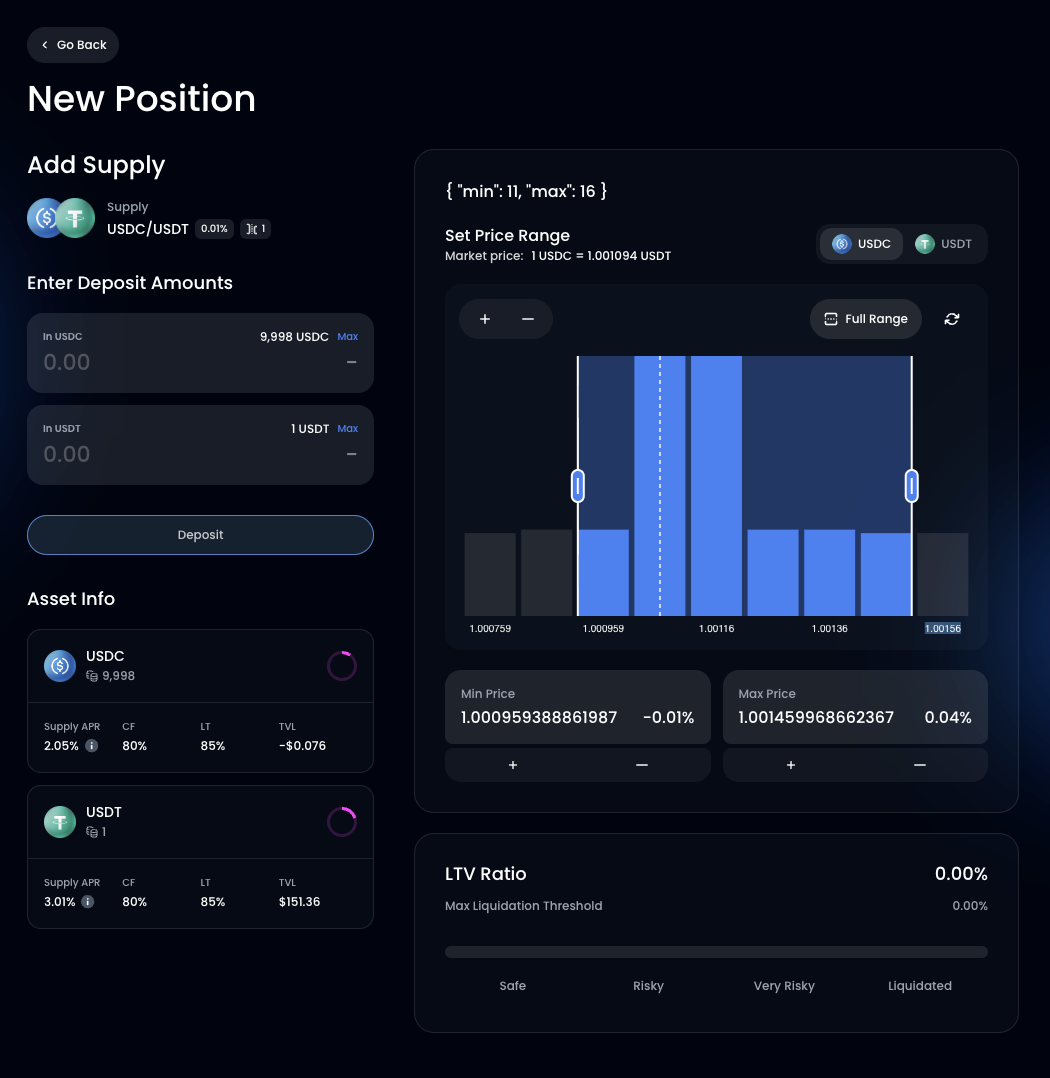
At launch, DEX v2 will support four primary DEX types. The first two extend Fluid’s existing Smart Collateral and Smart Debt models from DEX v1, ported into the new architecture with improved efficiency and expanded functionality. The latter two introduce entirely new primitives: Smart Collateral Range Orders and Smart Debt Range Orders. These enable users to provide liquidity and borrow within defined price ranges while simultaneously earning lending yield, or to express range-based strategies on the borrowing side, something not possible in traditional AMMs.
This design blurs the line between lending and trading. Liquidity provision no longer requires choosing between yield sources. Smart Debt and Smart Collateral can earn trading fees, lending APR, and be used as collateral simultaneously. For LPs, this unlocks a broader design space for risk-managed, yield-enhanced strategies. For the protocol, it allows liquidity to be reused across multiple functions without sacrificing safety or composability.
DEX v2 is also built with modularity and permissionless expansion in mind. While some deployments will initially be gated by governance, the architecture supports progressively more permissionless creation of Smart Collateral and Smart Debt pools. Over time, this enables users and third-party protocols to deploy their own custom DEXs, collateral types, and debt strategies directly on Fluid’s infrastructure.
Beyond structural changes, DEX v2 introduces features typically scattered across multiple platforms: onchain dynamic fees, hook-based customization inspired by Uniswap v4, flash accounting for improved arbitrage efficiency, and native limit orders that earn lending yield while waiting to be filled. Importantly, all DEX v1 functionality is preserved, but executed more efficiently within the new framework.
Taken together, DEX v2 represents a shift from Fluid as a single DEX product to Fluid as a general-purpose liquidity layer. If DEX v1 demonstrated demand for capital-efficient trading, DEX v2 aims to turn that demand into an extensible platform where new AMM designs, leverage structures, and yield strategies can be built without fragmenting liquidity or sacrificing efficiency.
Closing Summary
Fluid’s growth over the past year illustrates what’s possible when capital efficiency is treated as a core design constraint rather than an afterthought. In a DeFi landscape still defined by fragmented liquidity and siloed protocols, Fluid has taken a structurally different approach, building a unified liquidity layer that allows lending, borrowing, and trading to reinforce one another instead of competing for capital.
The results speak for themselves. Fluid has scaled into a top-tier lending protocol by both deposits and active loans, while its DEX has become one of the largest on Ethereum without relying on short-term incentives. This combination is rare. Most protocols excel in one vertical or the other; Fluid has demonstrated that a tightly integrated architecture can support both simultaneously, converting idle capital into productive liquidity across multiple use cases.
Looking ahead, the protocol appears to be entering a new phase of maturity. The introduction of the Fluid Reserve reflects a shift toward deliberate capital management and long-term alignment, while the upcoming launch of DEX v2 expands Fluid’s ambition beyond a single product into a general-purpose liquidity platform. With cross-chain deployments already live and additional products on the roadmap, Fluid is positioning itself less as a niche DeFi protocol and more as foundational infrastructure.
None of this eliminates execution risk, nor does it guarantee that token valuation will immediately converge with protocol fundamentals. But it does suggest that Fluid has moved beyond experimentation. The protocol has found product-market fit, demonstrated an ability to scale without sacrificing efficiency, and articulated a clear path forward. In a market increasingly focused on sustainable revenue and real usage, Fluid stands out as one of the few protocols building toward that future from the ground up.
This report was commissioned by Fluid. All content was produced independently by the author(s) and does not necessarily reflect the opinions of Messari, Inc. or the organization that requested the report. The commissioning organization may have input on the content of the report, but Messari maintains editorial control over the final report to retain data accuracy and objectivity. Author(s) may hold cryptocurrencies named in this report. This report is meant for informational purposes only. It is not meant to serve as investment advice. You should conduct your own research and consult an independent financial, tax, or legal advisor before making any investment decisions. Past performance of any asset is not indicative of future results. Please see our Terms of Service for more information.
No part of this report may be (a) copied, photocopied, duplicated in any form by any means or (b) redistributed without the prior written consent of Messari®.
Drexel is a Research Manager at Messari for the Protocol Reporting team with a focus on base layers and DeFi. He is a strong follower of the crypto mullet thesis of diligence in the front and degen in the back.
Drexel is a Research Manager at Messari for the Protocol Reporting team with a focus on base layers and DeFi. He is a strong follower of the crypto mullet thesis of diligence in the front and degen in the back.