ERC-20 tokens market cap reach parity with ETH market cap

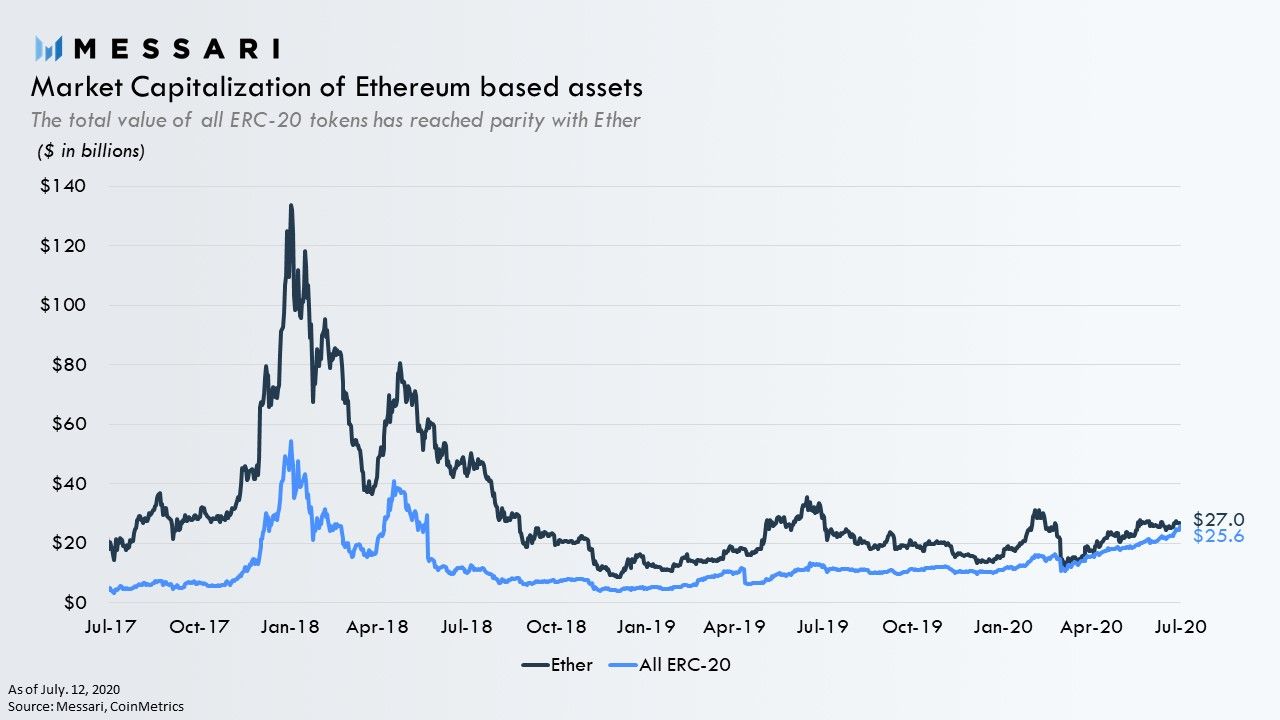
Over the past couple months the market capitalization of all ERC-20 tokens has rapidly approached the market capitalization of Ether, Ethereum’s native currency. The Ethereum blockchain currently secures $52.6 billion in assets, $25.6 billion of which are tokens.
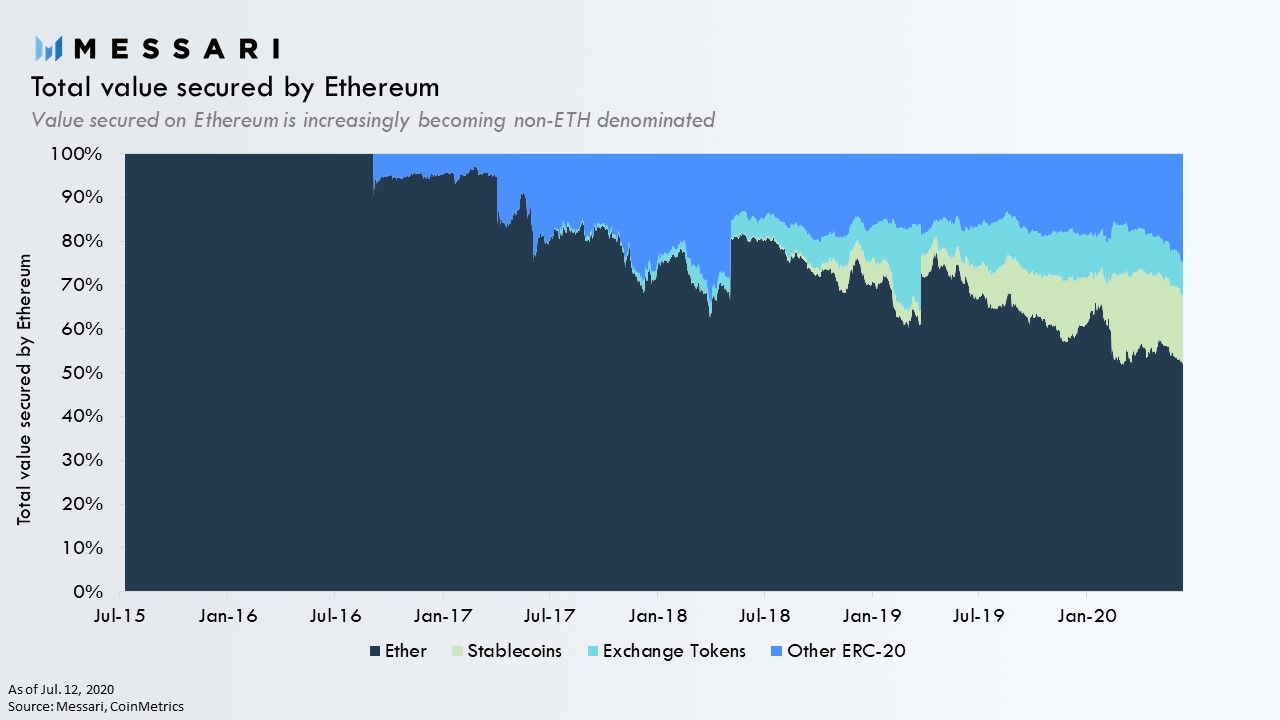
Ether now only accounts for 51% of the value secured on the Ethereum blockchain - the least amount accounted for in its history. As suggested previously, the phenomena demonstrates Ethereum’s evolution from a blank canvas to an agglomeration of novel forms of value and use cases. 49% of the value stored on Ethereum now incentivizes economic activity beyond the maintenance and execution of the Ethereum blockchain.
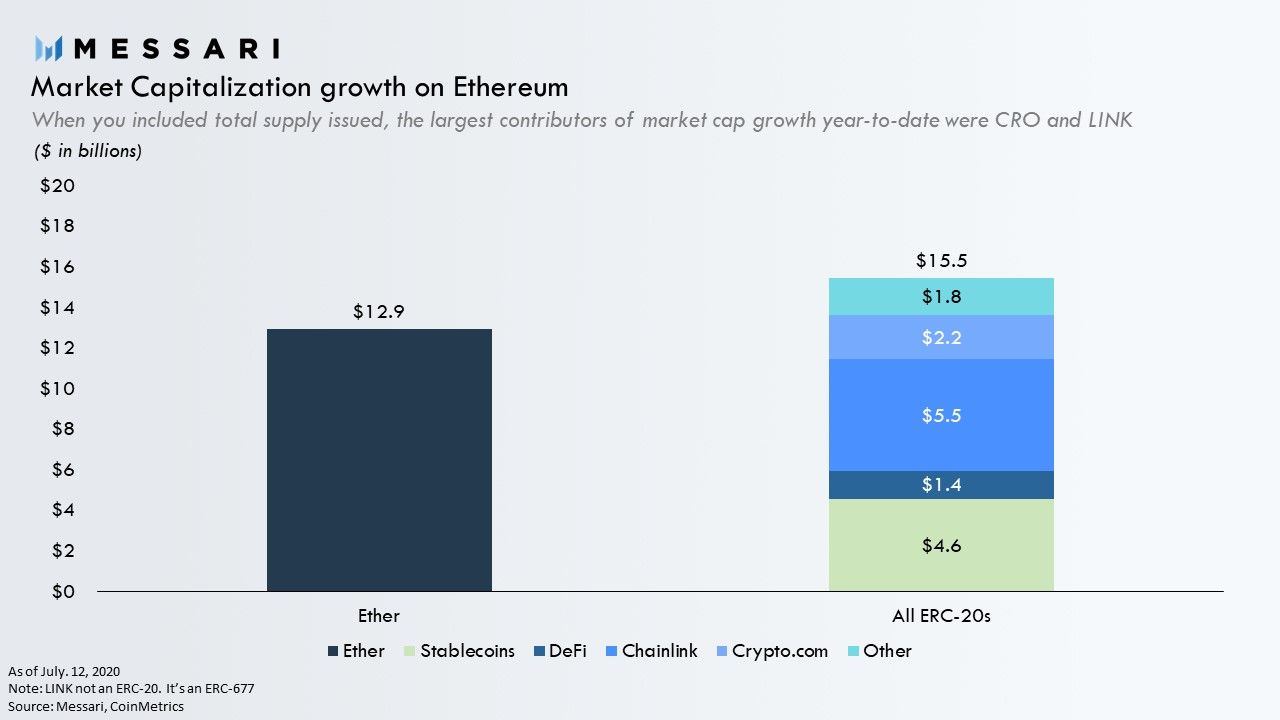
The growth in ERC-20 market capitalization this year came from many sectors of the Ethereum economy, like stablecoins and DeFi. However, it was two assets, perhaps unexpected that contributed most to growth so far this year. Chainlink (LINK) and Crypto.com (CRO) contributed $5.5 billion and $2.2 billion in market cap growth, respectively. LINK’s numbers include all tokens issued and unencumbered on-chain, not just circulating.
LINK's outstanding supply is fixed, and can be divided into tokens distributed in its ICO, tokens held by the company, and tokens reserved for node operators. Although the node operators rewards (35% of the total supply) haven't yet been distributed, they are nonetheless liquid as there are no signs that they are locked within any kind of contract. The same goes for the tokens the company holds. The difference in supply accounting is the difference between LINK’s circulating market cap of $2.6 billion and LINK’s liquid market cap of $7.5 billion.

Ryan Watkins was a Senior Research Analyst at Messari. Previously, he worked at Moelis & Company as an Investment Banking Analyst where he worked on deals in the technology, telecom, and fintech sectors. Ryan graduated Magna Cum Laude from the Gabelli School of Business at Fordham University.