


Prompt
How does Polygon’s vision of an ecosystem of ZK-based chains differ from other rollup environments, such as Optimism’s Superchain? What are the immediate and 2nd-order impacts and implications of Polygon’s AggLayer?
Primer
Nearly every rollup ecosystem has a similar growth strategy; developers choose a rollups tech stack (e.g., OP Stack, Polygon’s CDK, etc), plug in their selected modular components (i.e., Execution layer, Data Availability layer, etc), and deploy their own chain. The end game is to have a thriving ecosystem of connected chains. For example, Optimism, providing one of the earliest examples of this growth strategy, envisions OP Stack chains forming the Superchain, with chains opting into the Superchain via abiding by the Law of Chains.
In the summer of 2023, when Optimism originally laid out the Law of Chains, L2s were just reaching past $10 billion in aggregate TVL. Now, L2 TVL is nearing $40 billion and there is an ever-growing number of L2s and rollups settling to Ethereum. Liquidity fragmentation and interoperability, commonly cited challenges rollups must overcome, are now moving from theoretical concerns to real, practical issues that must be addressed.
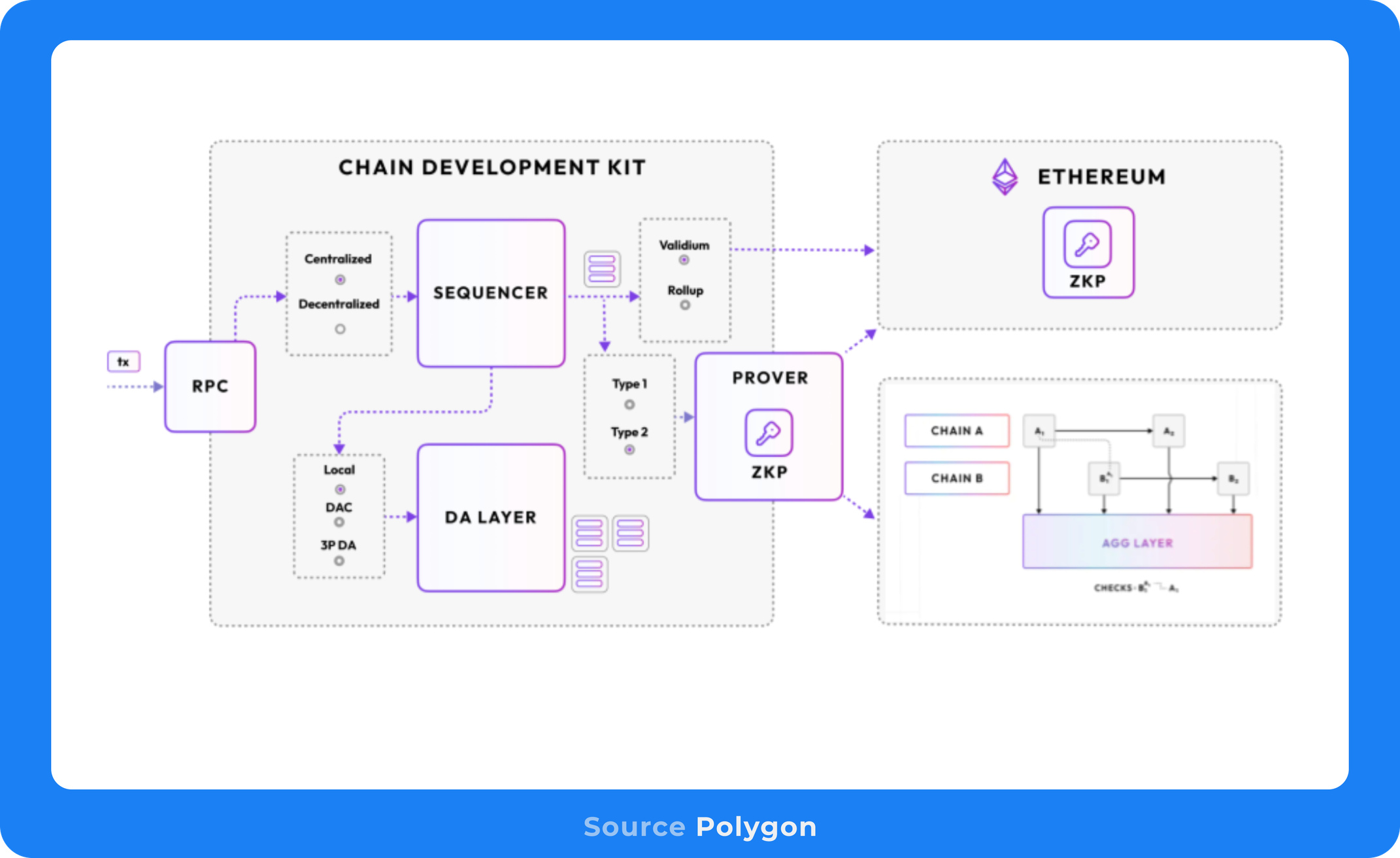
In contrast to Optimism’s optimistic rollup solution, Polygon is doubling down on an ecosystem of ZK-based chains. After a long stretch of investment within the ZK sector, including a $400 million acquisition of Mir, Polygon is laying the groundwork for a ZK chain future via its Chain Development Kit (CDK) and the AggLayer.
Blockworks Intel