Crypto’s Reprogramming: The Propagation of Agents Across Sectors


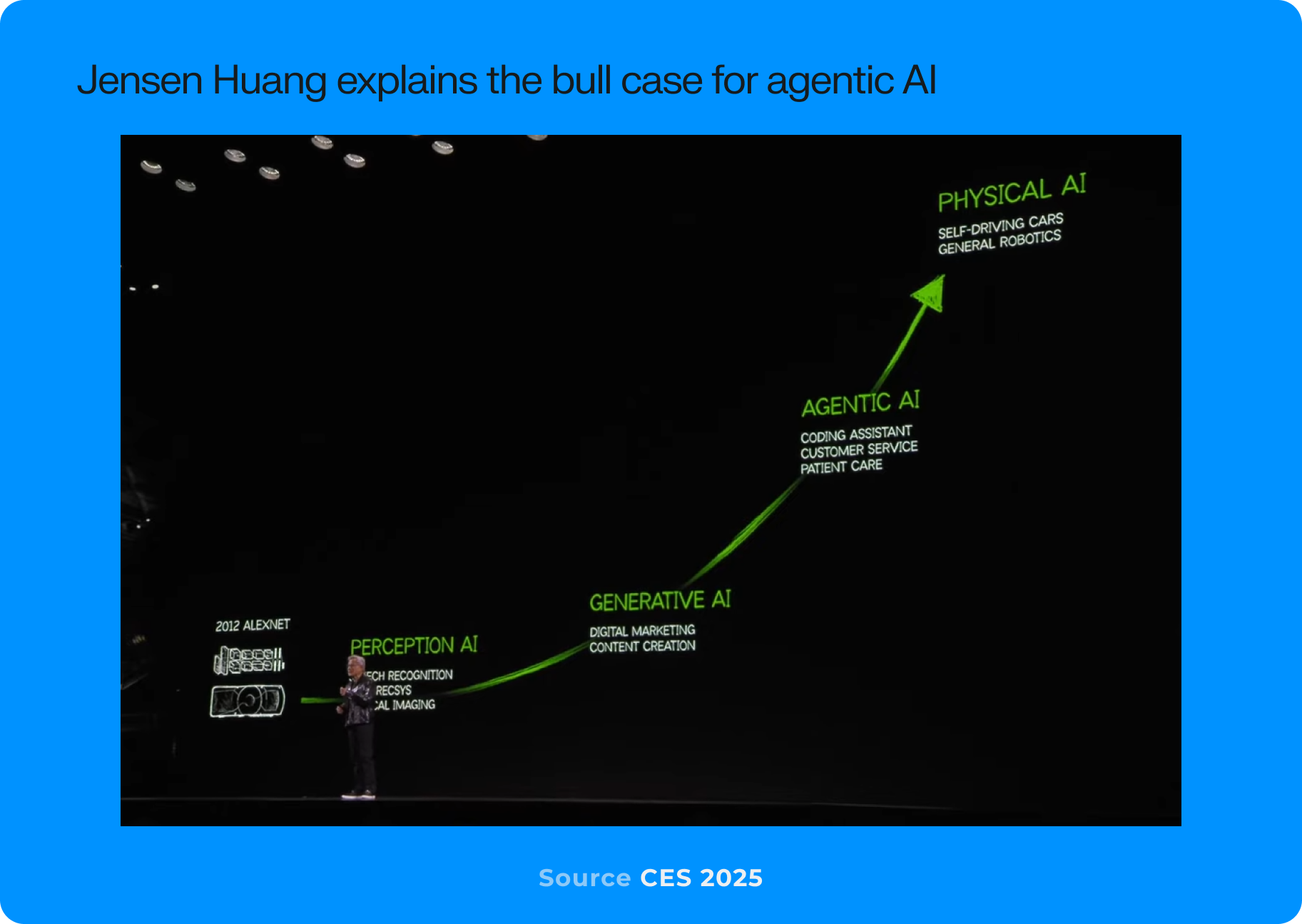
“AI agents is probably the next robotics industry and likely to be a multi-trillion dollar opportunity.” - Jensen Huang
“We are now confident we know how to build AGI as we have traditionally understood it. We believe that, in 2025, we may see the first AI agents “join the workforce” and materially change the output of companies. We continue to believe that iteratively putting great tools in the hands of people leads to great, broadly-distributed outcomes.” - Sam Altman
We’ve only scratched the surface for what impact LLMs will have on the consumer and enterprise fronts. Both closed and open-source models will continue to rapidly improve in the coming year through the brute force of more compute and technical advancements in implementation. We know that the end state of this new technology is not just chatbots, research assistants, or summary generators. It is more likely on a trajectory toward something like Artificial Super Intelligence.
But baby steps first. Before we reach OpenAI’s Level 5 - AI that can replace entire organizations - we will need to have specialized agents that dominate individual workflows within companies. Based on Langbase’s State of AI Agents survey, workflows within software development, marketing, and IT will likely be targeted first. The low-hanging fruit for this first wave of agents is a combination of automating repetitive administrative tasks and providing productivity-enhancing tools for skilled laborers like programmers. Jensen Huang revealed Nvidia’s initial foray into agents at the CES Keynote with their "AI Blueprints.” Developers can already use NVIDIA microservices to create AI agents for tasks like fraud detection, customer service, and supply chain optimization.
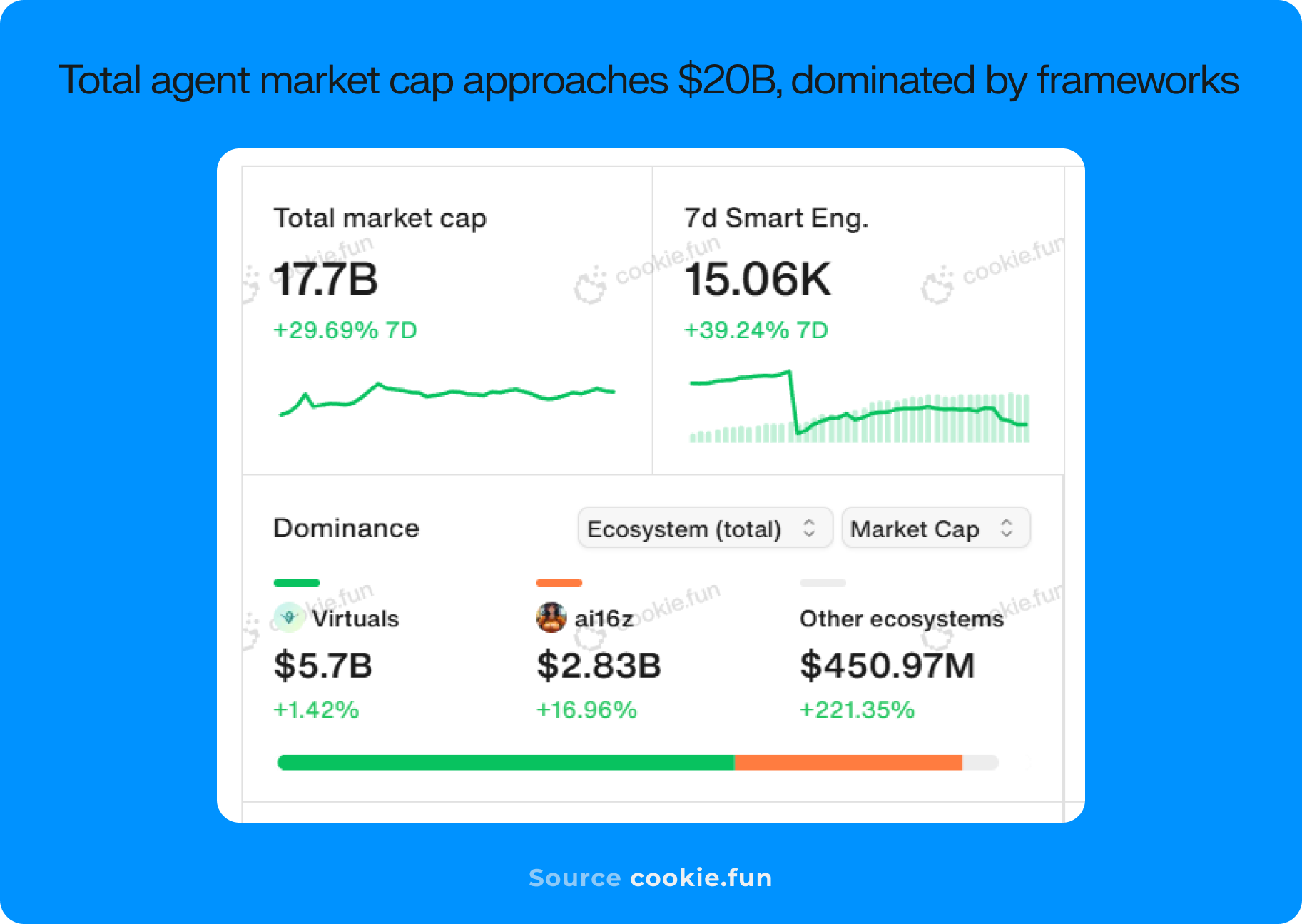
Within crypto, however, we have already seen an explosion of experimentation with agents across very different verticals. Users on VIRTUALS have launched more than 13,000 agents on the platform, and showcase agents using other frameworks like RIG are set to be revealed soon. While the majority of agents thus far have been interactive characters or social media personas, we have also seen agents that: excel at token quant work, bet on sports, and run their own investment funds. Agents are infiltrating DeFi front-ends, metaverse worlds, and gaming initiatives. This leads us to a few questions:

Prior to joining Messari, Andrew was an equity trader at a proprietary trading firm. His primary interests are understanding market dynamics, riding trends, and finding the occasional onchain winner.

Kinji formerly covered crypto at Morgan Stanley. His primary interests are DeFi, Ponzi's and unstable stablecoins.

Prior to joining Messari, Chris was the Growth Lead at a Paradigm and a16z-backed gaming startup called LootRush. His primary focus is Consumer Products, Music x Crypto, Gaming, Digital Art, and market buying local tops.

Sam was previously a product manager at ether.fi, as well as LifeMed AI. He graduated from Ohio State University, where he founded the Ohio State Blockchain Club. He is now an Enterprise Research Analyst at Messari focused on finding the next best applications and protocols in internet finance.