Aggregators in Web2 vs Web3

According to Ben Thompson’s Aggregation Theory, the dominant Web2 platforms were aggregator models who aggregated user demand, rather than content suppliers. With user attention aggregated, the platforms could profit by brokering supplier’s access to users. For example, Facebook and Spotify aggregated users and digitally distributed content for near-zero cost while incumbents, like print publications, saw their distribution scale moats crumble as a result.
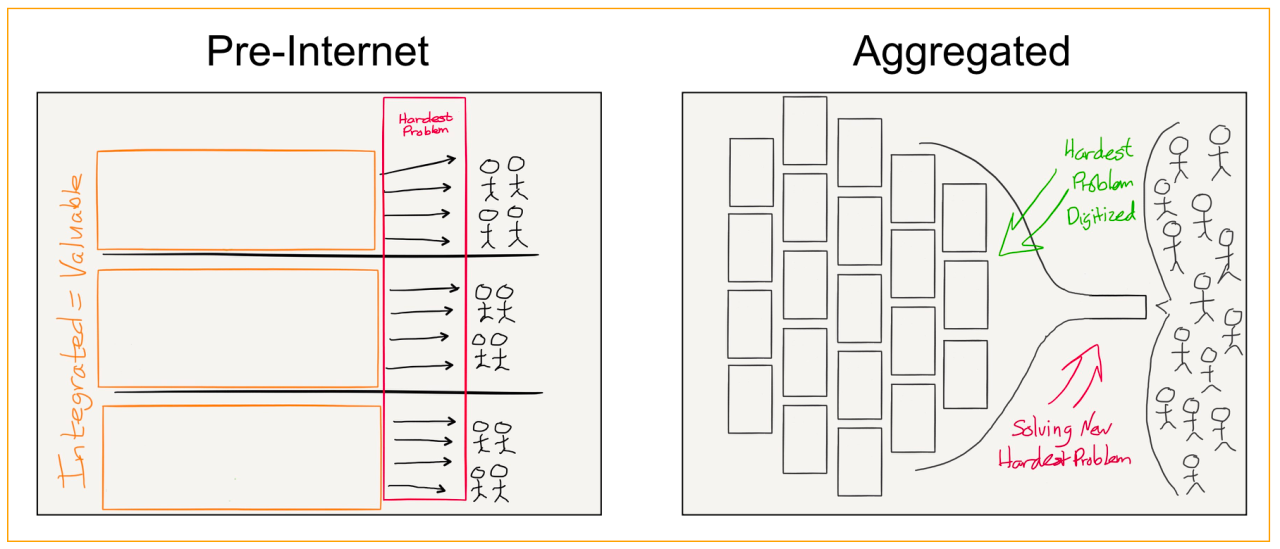
Source: Ben Thompson, Stratechery
Web2 platforms raced to acquire users as they are what drove the flywheel: better data, better UX, better ads, and thus better user and supplier retention, leading back to more data and so on. Once the flywheel hit escape velocity, the platforms were able to take large profits brokering access (ads) to its aggregated user pool.
As powerful as the aggregation model was in Web2, it does not translate directly to Web3. There are some subtle nuances between the Web2 and Web3 tech stack that change the runaway dynamics seen in Web2:
- Open Data — Web2 users pushed data into platforms which defended the data for a competitive advantage. In Web3 however, the data and content are pulled in from open networks. As such, any application can show users the same data, and users are free to interact with content on any site.

Dustin was previously the Enterprise research director at Messari. He has a broad focus across crypto with a particular interest in AI x Crypto, Consumer financialization, DeFi, and general infrastructure.