
Key Insights
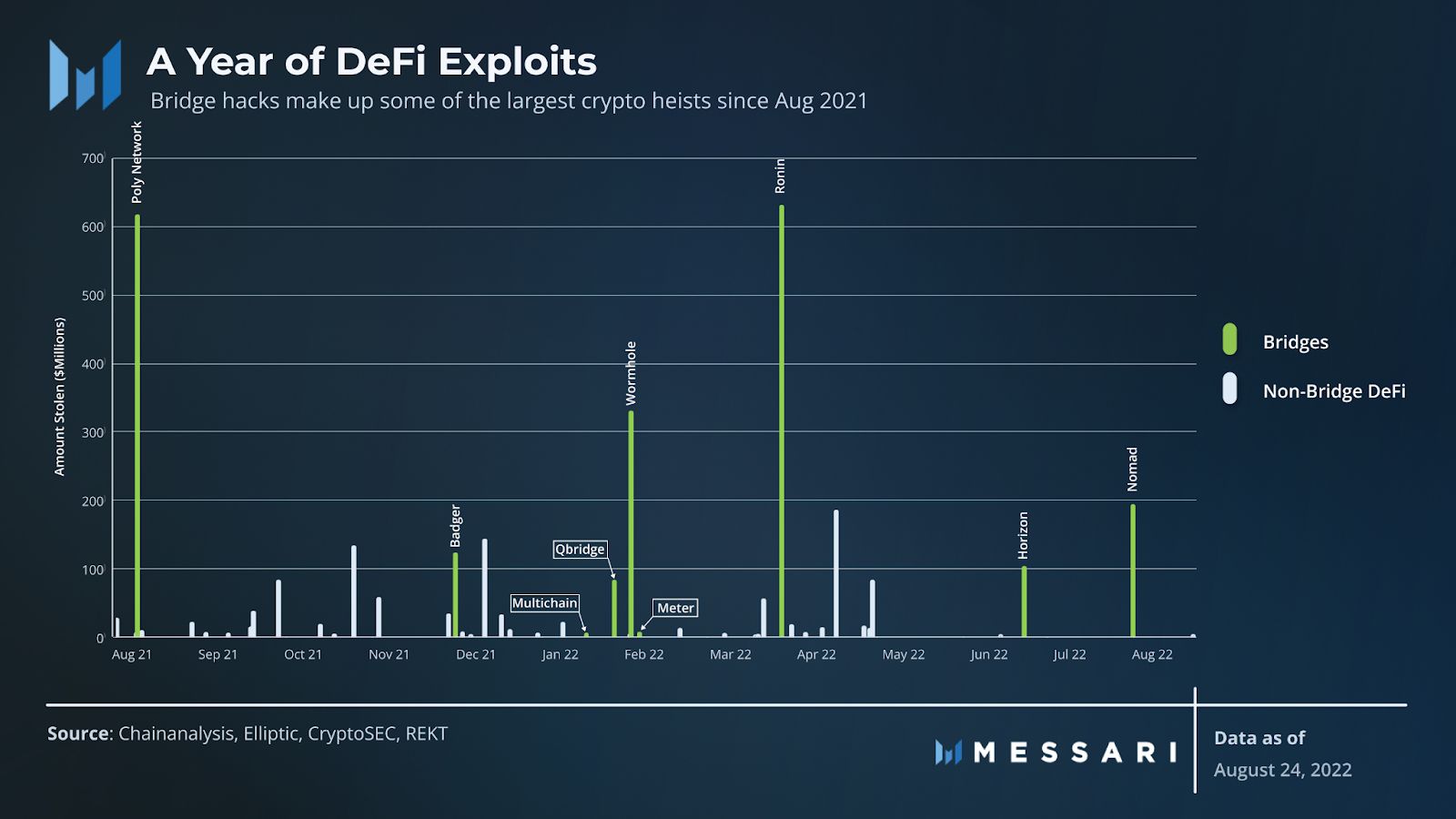
- In the past year, over $2 billion has been stolen from the greater DeFi ecosystem via bridges due to vulnerabilities in smart contract code, multi-signature compromises or from a backend exploit.
- A cross-chain bridge enables the transfer of data, primarily token assets, between blockchains to take advantage of greater liquidity, to build a better user experience in terms of cost and transaction finality, and to reduce main chain congestion by distributing transaction loads across the greater ecosystem.
- NEAR’s Rainbow Bridge has successfully mitigated two attacks over the past year due to its unique infrastructure and preventative tactics.
In the past year, over $3 billion has been stolen from the overall decentralized finance (DeFi) ecosystem, with over ⅔ of the stolen value stemming from bridge hacks. In order for DeFi to evolve as a credible and secure ecosystem, the vulnerabilities within the space need to be mitigated. This report dives into how a bridge works, the types of hacks that have occurred over the past year, and how one bridge in particular was able to mitigate two separate exploit attempts.
Bridging Basics
Let us know what you loved about the report, what may be missing, or share any other feedback by filling out this short form. All responses are subject to our Privacy Policy and Terms of Service.
Get an edge with
Blockworks Intel
Upgrade For $4,500/YrBlockworks Intel
Upgrade to unlock 300+ industry leading reports from our researchers, including:
Have questions?Schedule a Demo