

Similar to assets within DeFi, non-fungible tokens require similar primitives like lending, liquidity, and asset management, an area that is currently being built on. Additionally, while the fundamental value proposition for NFTs lies within their uniqueness, fungibility is important for increasing liquidity and the financialization of NFTs.
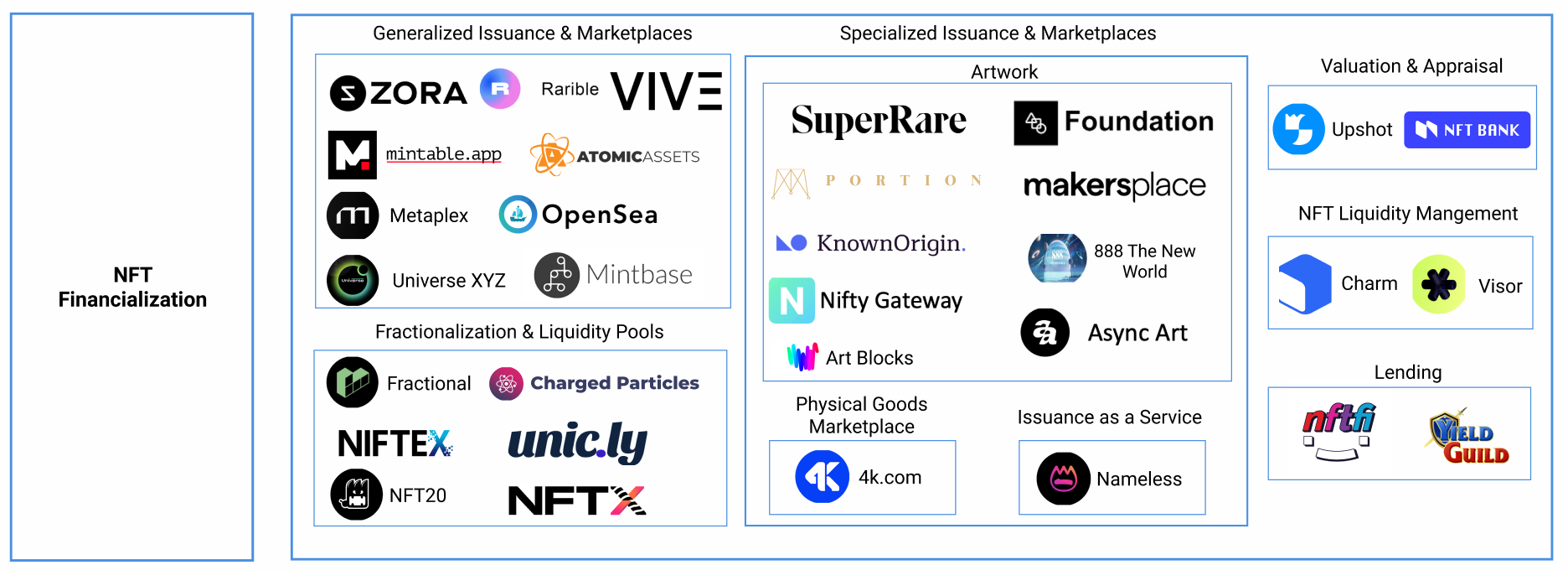
Source: The NFT Stack by Messari
Liquid tokens have thousands of buyers and sellers, but every NFT transaction requires a single buyer and a seller––pointing to lower liquidity. To date, the projects focused on the financialization of NFTs are attempting to, unironically, make non-fungible tokens as fungible (and liquid) as possible.
Show Me The Liquidity
Similar to physical collectibles, like trading baseball cards, NFTs face the illiquidity issue especially for projects that are not highly valued and coveted. Though the NFT market is on the rise, we typically see that the potential for this asset is untapped. NFT trading volume has surpassed $13 billion on Ethereum alone and will continue to increase over time as new types of assets are tokenized onto blockchains.
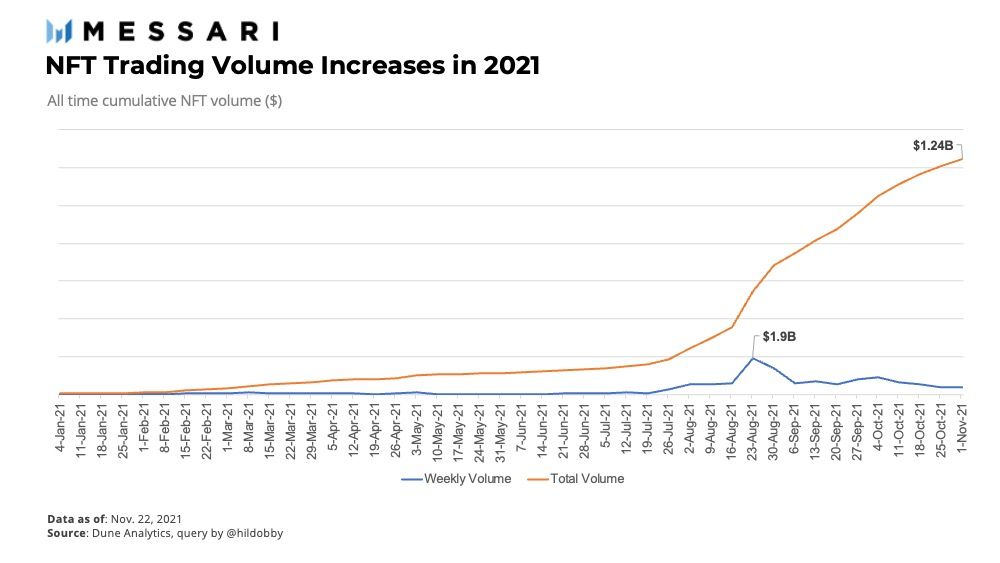
Blockworks Intel