Re-evaluating Cryptocurrency as a Risky Asset Class

After a period of skepticism, cryptocurrencies have firmly entered the big leagues in global finance. Bitcoin, Ether, and other major cryptocurrencies have now been through enough market swings to be considered by financial professionals directly in line with major asset classes and indices. While crypto industry participants have considered the asset class mainstream since the Bitcoin whitepaper in 2008, it’s taken the financial world some time to come around. We now see Bitcoin and Ethereum mentioned along with every other major asset on daily price tickers and even as one of the top handful of items mentioned during major market moves.
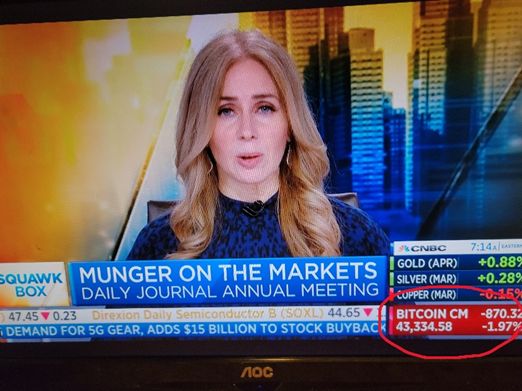
(this wasn’t there a few years ago)
It’s for good reason of course that these assets should be discussed daily, and not just because of their price movements. We know cryptocurrencies provide open, fair, and decentralized access to a new world of financial opportunity and innovation for millions. Not to mention the groundbreaking use cases in decentralized finance, web3, and the like; disintermediating legacy fluff and largesse. Still, increasing prices have attracted those not as interested in the ethos of the industry or the new technological use cases. In terms of pure return, BTC and ETH have both been generational investment opportunities returning over 80,000% each since their launches. Even controlling for the enormous volatility, these assets are some of the best performing investments in history. Using the Sortino ratio, a measure that allows investors to view positive volatility as a benefit for their investments (unlike the Sharpe ratio which implicitly dings assets for both positive and negative volatility), both BTC and ETH measure above 2.0, even going above 3.0 for periods. These are very good readings for any asset and should lead to inclusion in ANY portfolio, regardless of the investor’s risk tolerance. The size of the allocation is, of course, up for debate based on how much volatility the investor can withstand but with that sort of return profile, it would be imprudent not to have at least have some allocation.
Because of their impressive profile and growing track record, many in the financial world are starting to think of cryptocurrencies as a totally new asset class in league with stocks and bonds. There generally isn’t any nuance in this view, with allocators referencing crypto as a monolith. Most traditional investors have yet to even understand the basic differences between Bitcoin and Ethereum. It is likely this view will gain proper nuance over time, but at the current juncture, there isn’t much distinction even from most institutional allocators.
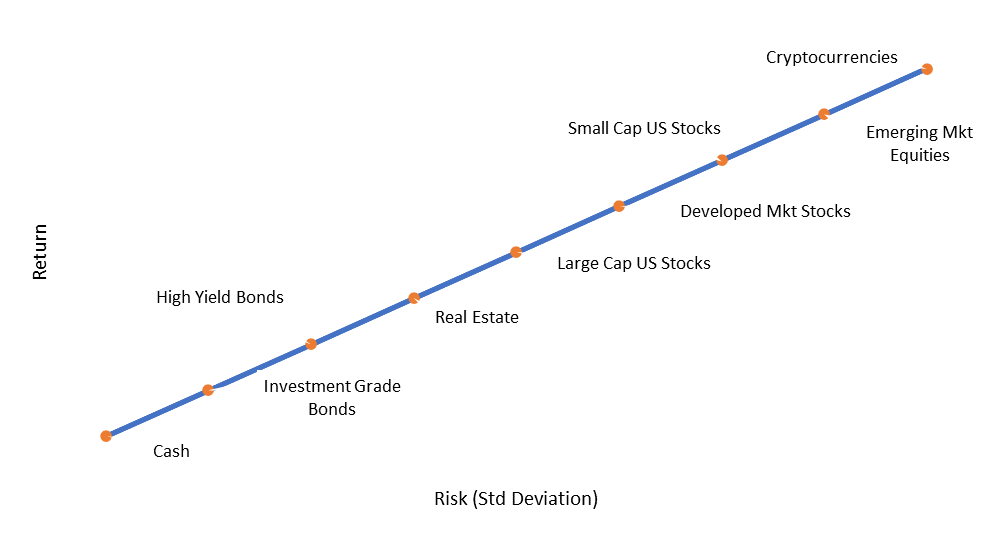
Investors in the traditional finance world like to categorize investments on a risk and return spectrum. This helps them frame portfolio decisions when deciding how to allocate their assets. Working from the framework of the 60/40 portfolio (60% stocks, 40% bonds) investors can then decide to add or subtract riskier assets from that baseline if they desire a higher or lower expected return, with the understanding that higher returns come with more expected volatility. The below chart is an example of how the traditional risk-return spectrum would be presented today if an investor was speaking with an advisor.

Tom is a Sr. Research Analyst at Messari. His primary focus is on Layer-1's as well as the relationship between traditional finance and crypto. Prior to joining Messari, Tom worked in Investment Consulting at Meketa and Investment Management at SSGA. Tom studied Finance at Bentley University and earned his CFA and CAIA Charters.