Yield Basis: The End of Idle Assets?

Overview
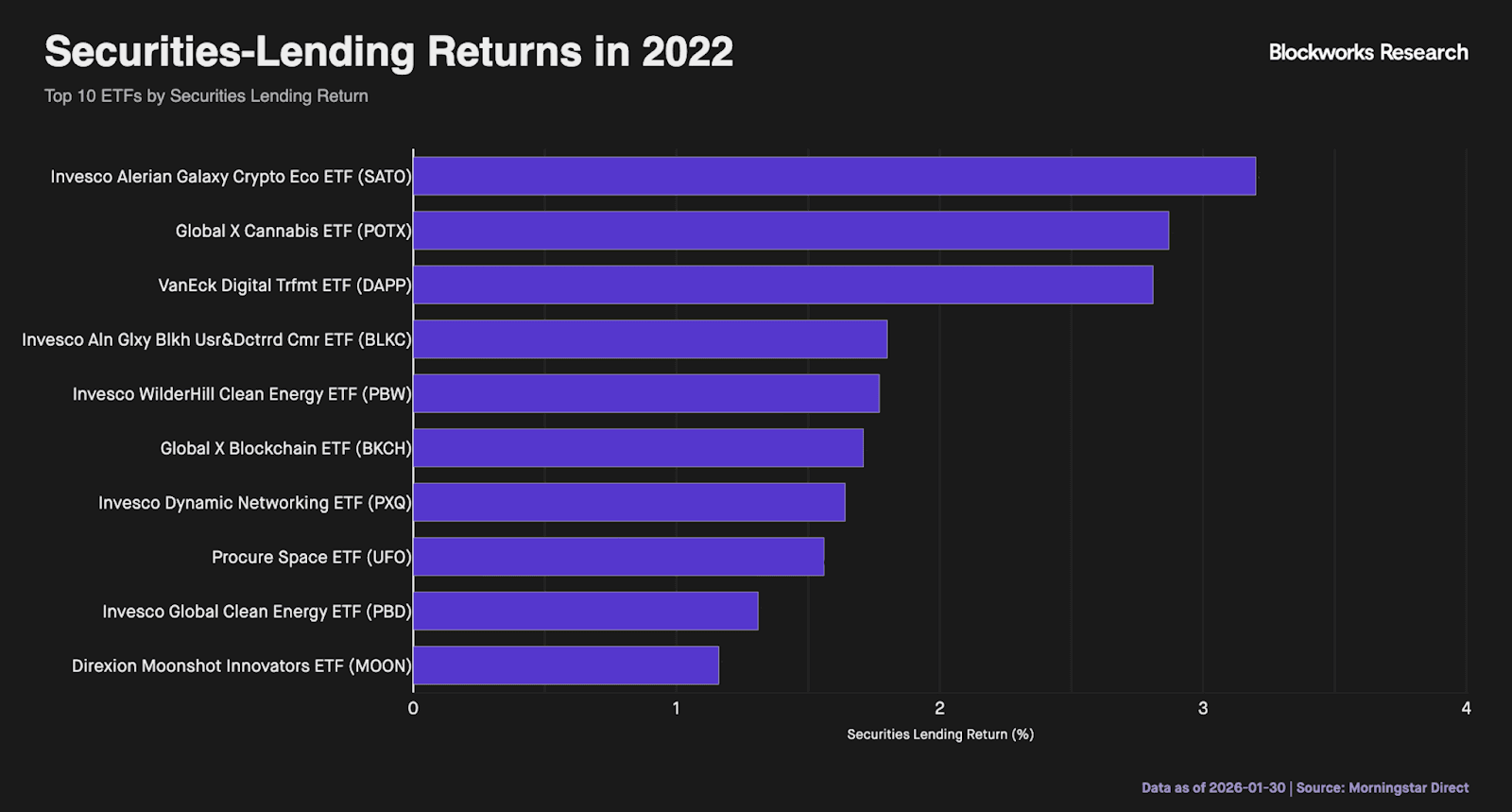
The convergence of traditional equity markets and decentralized ledger technologies has birthed a new paradigm for asset productivity: onchain yield for equities. While traditional securities lending remains a multi-billion-dollar institutional industry, most investors are excluded from this revenue source. In the securities lending supply chain, beneficial owners (pension funds, insurers, ETFs, large custodians) typically lend through agent lenders and prime brokerage networks to short sellers and levered funds. Notably, there is justification for this. Securities lending yield is structurally hard for retail to capture because most lending revenue is concentrated in a small set of hard-to-borrow specials, while the majority of stocks clear at low general-collateral fees. Retail programs are broker-intermediated and constrained by operational and risk controls (collateral management, recalls, settlement) and by regulatory/customer-protection requirements. In addition, stock loans introduce credit and custody/settlement frictions; retail holders can lose voting rights while shares are on loan and must rely on the broker’s counterparty framework. Consequently, even when lending is available, it is for select stocks and typically offers a low yield (0.2%+). Outside of this, there are no standardized ways to earn yield on equities offchain. Below, we show that even some of the highest yields for lending ETFs were mostly below 2%.
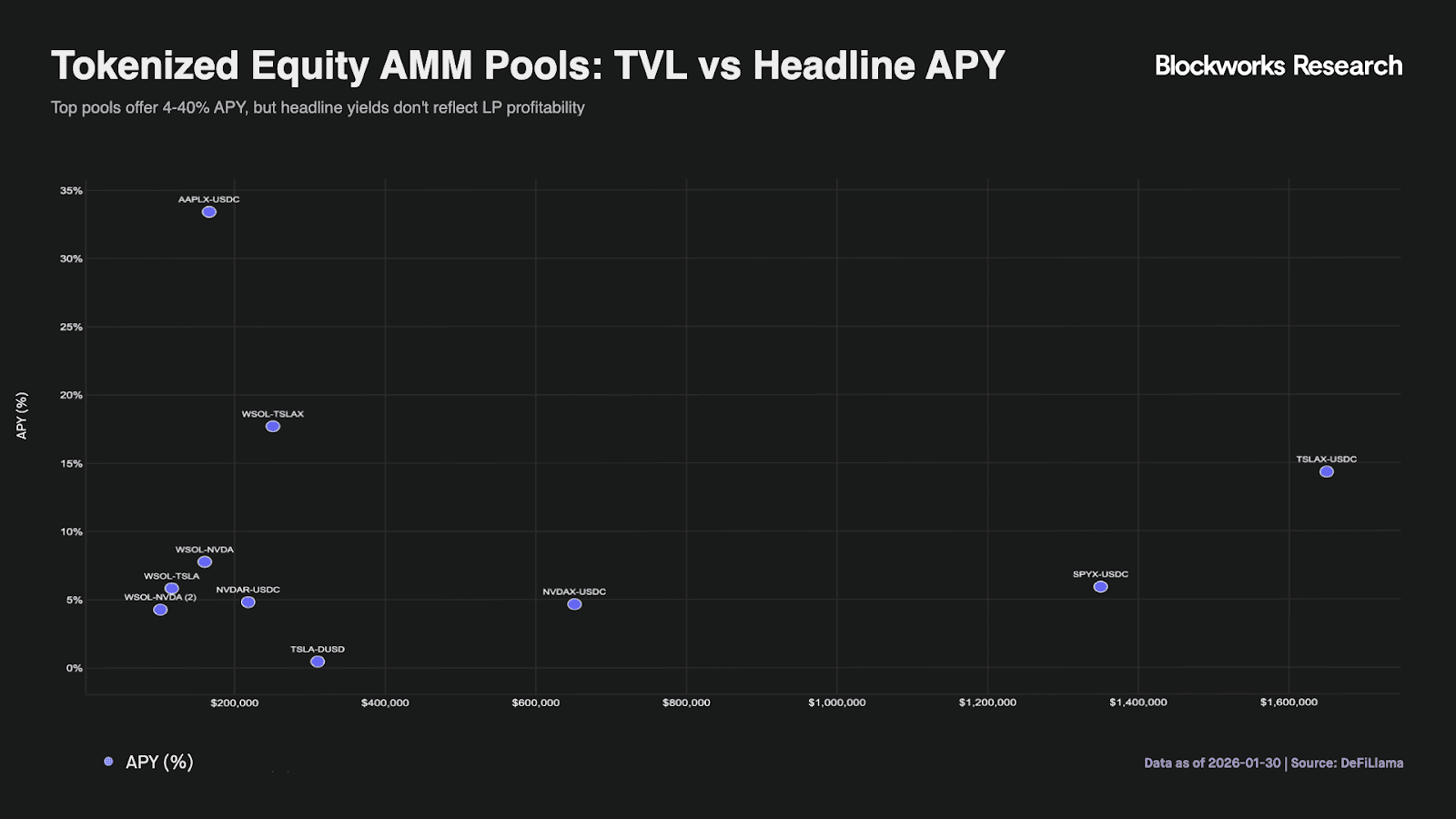
The advent of tokenized real-world assets (RWAs) allows equities to participate in the money legos of decentralized finance. As of late 2025, tokenized stocks like NVDA, AAPL, and SPY are becoming more popular on public blockchains like Solana and Ethereum. However, even onchain, the yield opportunities are limited but growing. Borrowing demand is primarily generated by short sellers and structured traders, but short exposure can be more easily expressed through perpetual futures. This is why, when looking at onchain yield opportunities for tokenized equities, the vast majority stem from providing liquidity to an AMM. The top 30 pools by TVL are all AMMs offering between 4% and 40%, depending on the token pair. However, these are just the headline numbers, not an LP’s profitability. It’s worth noting that TVL in these pairs is extremely low (only $1.65m for the biggest pool). This is not a coincidence - capital allocators don’t want to be exposed to IL risk while owning stocks with high upside expectations.
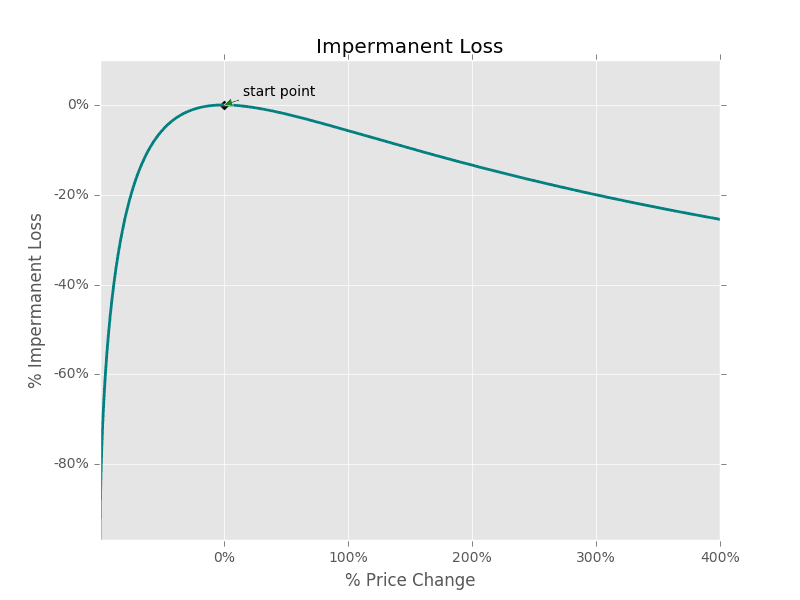
In fact, for half a decade, many LPs have been losing money from impermanent loss (IL). Impermanent loss is the difference in value between holding a set of assets in your wallet versus providing those same assets as liquidity to an AMM. It effectively measures the opportunity cost of being a liquidity provider when the market price of the assets shifts significantly.

Marc covers Ethereum, Bitcoin and their L2s. Previously led Ethereum and DeFi research at CoinShares.