U.S. Treasuries Fuel Real World Asset Growth

Key Narrative: U.S. Treasuries Fuel Real-World Asset Growth
Incorporating real-world assets (RWAs) as DeFi collateral has been a dream for many in the crypto space since the advent of smart contract platforms. Tokenizing assets from the analog world promises to give DeFi greater collateral diversity, revenue streams, fractionalized ownership, and reduced costs and volatility.
After an initial wave of tokenized real estate projects failed to get off the ground in 2018 and 2019, RWAs seemed to gain their first sense of legitimate traction during the 2021 bull market on the back of private credit protocols like Maple Finance, TrueFi, Goldfinch, and Centrifuge. The idea of these protocols is that stablecoin lenders can enjoy above average returns by lending to undercollateralized borrowers that are vetted by the protocol.
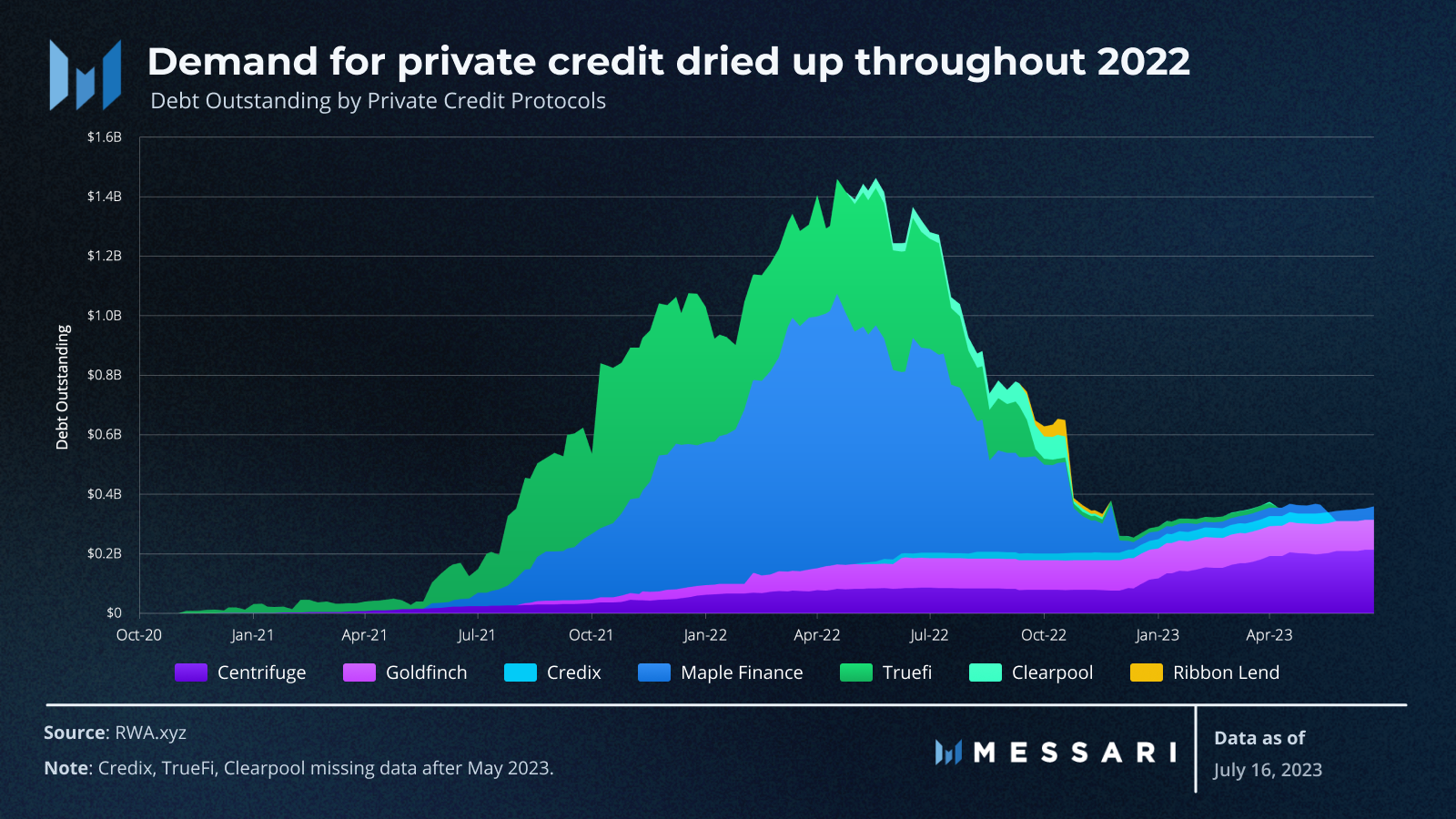
In theory, borrowers use this capital to finance productive endeavors in the real world. However, a closer look shows that the majority of the borrowing growth in 2021 and early 2022 was mostly due to crypto-native businesses using Maple Finance and Truefi. These businesses likely used the funds for cheap leverage or on-chain arbitrage strategies rather than producing net-new services in the real world.
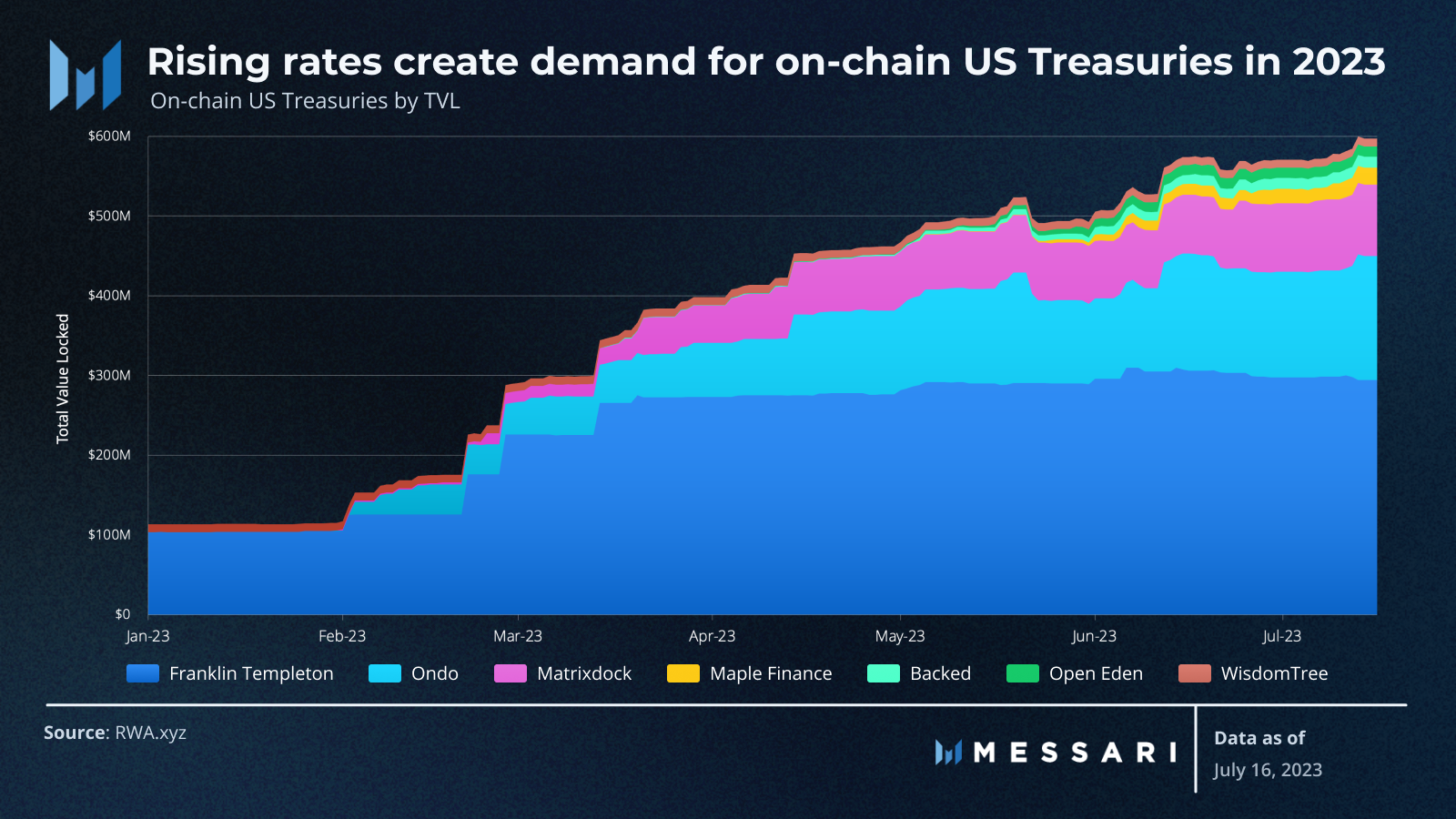
While some private credit protocols such as Centrifuge and Goldfinch are enjoying steady growth, their numbers pale in comparison to the rise of a newer RWA subcategory experiencing consistent growth throughout 2023: on-chain U.S. Treasuries.

Chase's interest in crypto lies at the intersection of economics, psychology, and social coordination.