Unpacking concerns about upping Ethereum's gas limit

Ethereum miners have made the executive decision to increase the network’s gas limit by 25%. While seemingly innocuous, and perhaps a welcomed change to help reverse rising gas costs, the move has sparked some pushback among a few core developers.
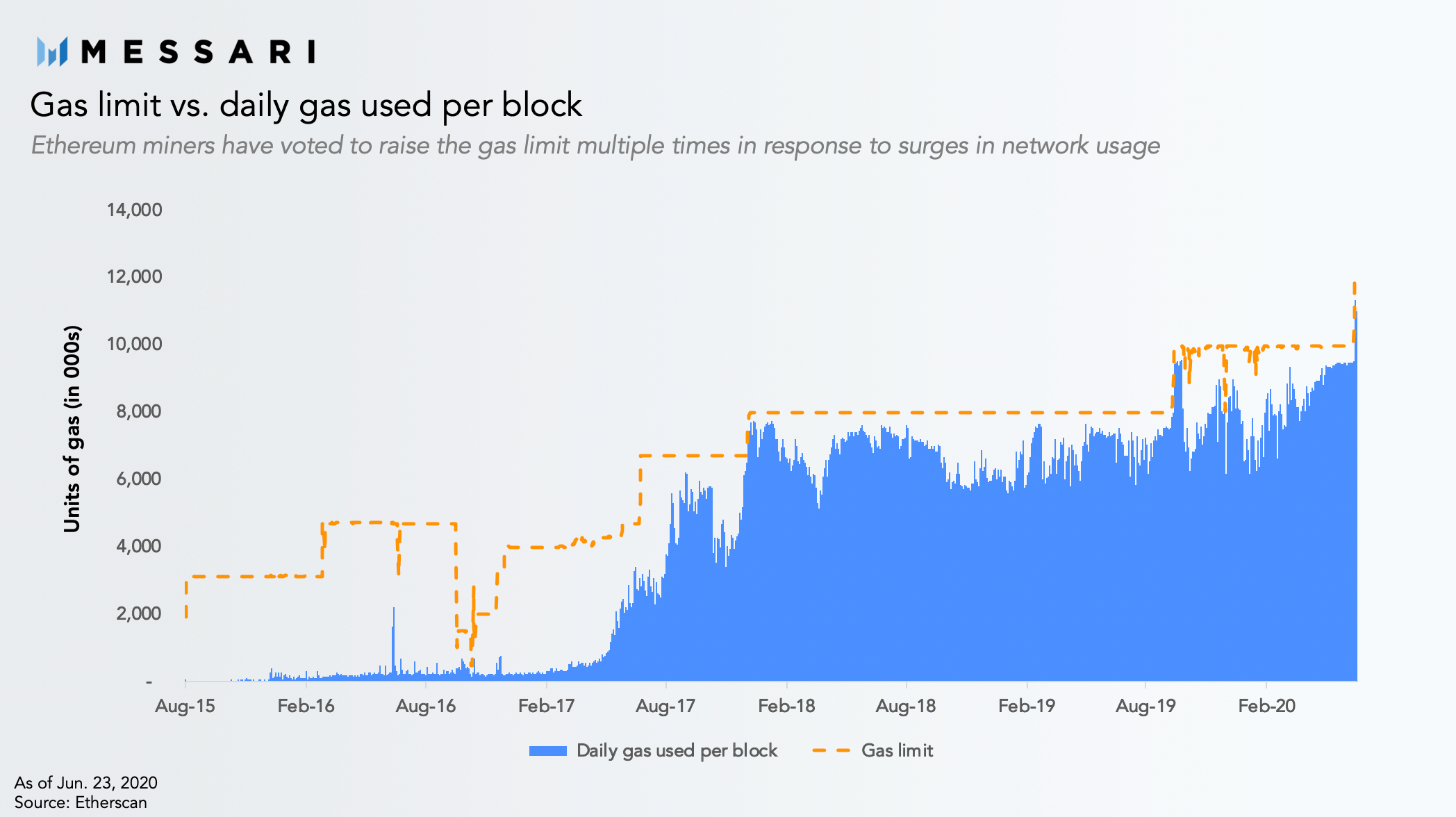
These developers alongside client teams have substantial influence over various network decisions and parameters (including block rewards). But the protocol gives miners the responsibility of maintaining the gas limit, which dictates how many transactions and state changes Ethereum can process per block. Every block, the winning miner can adjust this limit by a factor of 1/1,204 (0.0976%) in either direction based on the needs of the network.
Miners coordinated to raise the gas limit now in response to a recent surge in daily network usage (up over 100% YTD), which drove transaction fees to their highest levels since mid-2018. Making block space more available can alleviate the upward pressure on the average cost per transaction that’s starting to ward off potential users.
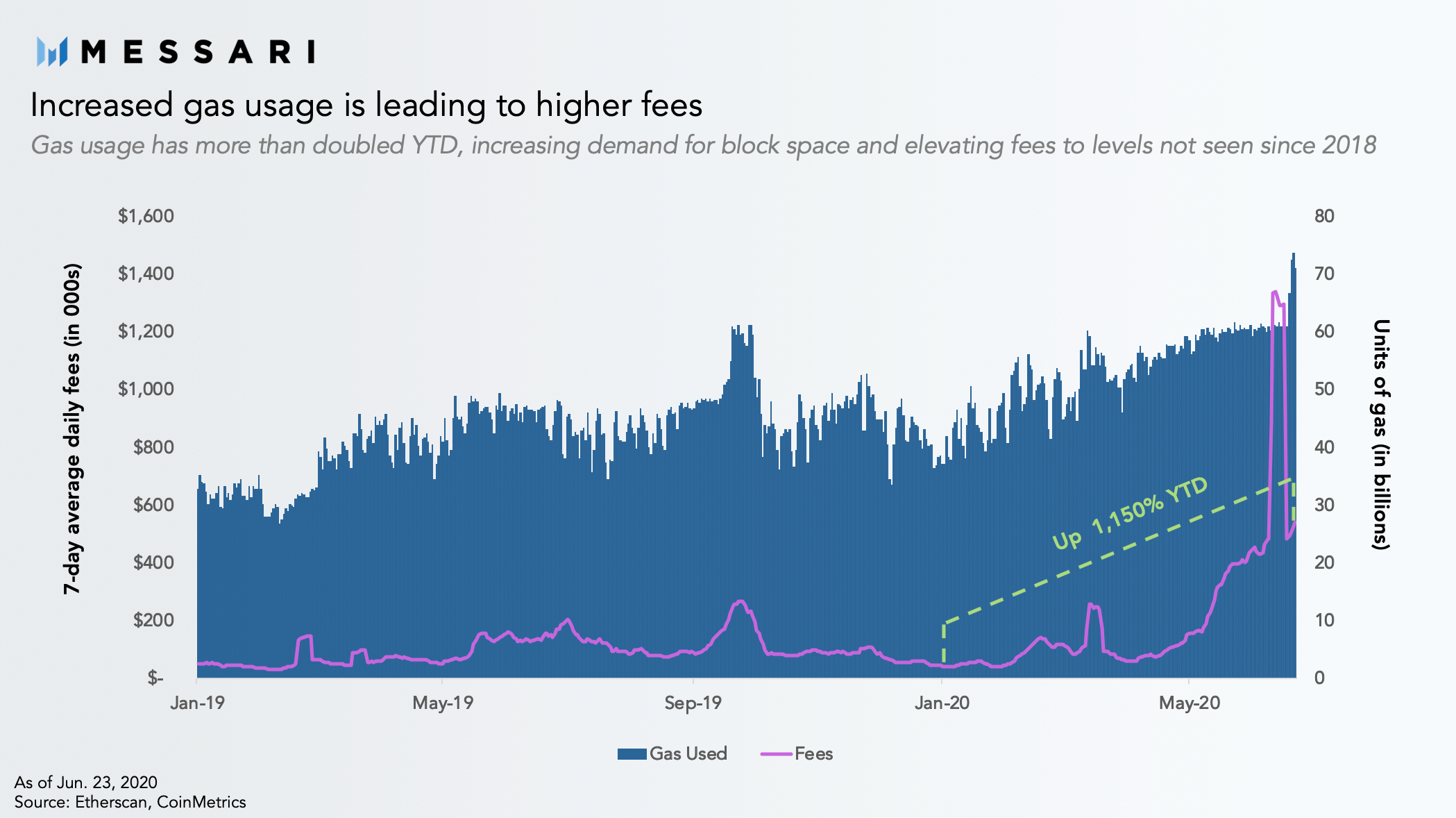
A sign of adoption?
Ethereum is not new to gas limit hikes. Miners have previously expanded block capacity in times of network congestion. The last one occurred about nine months ago, which led to a 25% increase in the gas limit to help the network process the mass printing of ERC-20 USDT.

Wilson Withiam was a Senior Research Analyst at Messari. Previously, he worked at Circle Research where he conducted research on cryptoassets. He graduated with a B.Sc. in Kinesiology and Exercise Science before studying computer science and economics at UConn.