Unit Protocol: More Than a Degen’s New Favorite Toy

The recent May 19th crash provided a stark reminder of just how volatile the crypto market can be. With many assets losing 50% of their value in just a few hours, most centralized exchangesexperienced outages and Ethereum gas fees reached arecord level as traders rushed to save their positions. Despite the chaos, DeFi’s interconnected system of smart contracts functioned flawlessly. No decentralized protocols failed and no regulatory intervention was needed.
While most projects simply weathered the storm of cascading liquidations, Unit Protocol proved the legitimacy of its business model while booking its largest day of revenue to date. Unit is a fast-growing DeFi project that allows its users to create collateralized debt positions (CDPs) and mint the protocol’s native stablecoin, USDP from a wide variety of cryptoassets on both the Ethereum network and Binance Smart Chain.
Rather than quickly dismissing Unit merely as a degen’s MakerDAO, we will explore its role within the broader DeFi ecosystem, its grassroots growth, how its governance token DUCK may serve as a hedge against the volatility of long-tail of cryptoassets, and overall protocol risks.
DeFi’s Borrowing and Lending Models
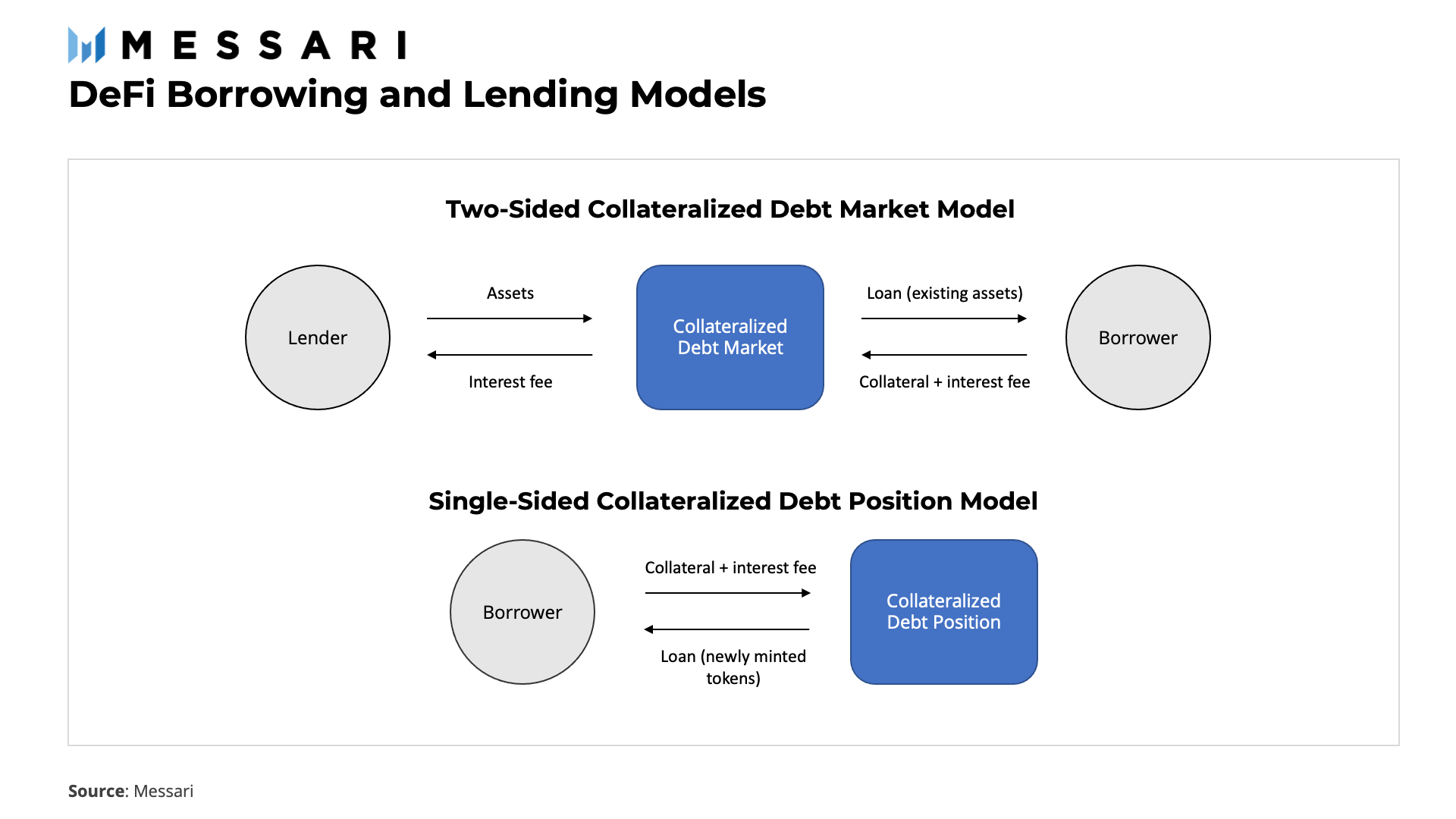
Today’s decentralized borrowing and lending platforms use one of two variations: collateralized debt markets (CDMs) and collateralized debt positions (CDPs). Protocols that use the CDM model, such as AAVE and Compound, transfer existing cryptoassets from lenders to borrowers and can therefore be thought of as two-sided markets. Protocols that use the CDP model, such as MakerDAO, allow users to mint new cryptoassets backed by their collateral, effectively creating a single-sided market where the user does not need to rely upon other participants to source liquidity.
Understanding The CDP

Chase's interest in crypto lies at the intersection of economics, psychology, and social coordination.