Understanding CVP's Role in PowerPool Indices

On Thursday I posted a proposal to the PowerPool community to create a Yearn Ecosystem Token Index (YETI) consisting of all the new tokens in Yearn’s ecosystem following its recent mergers. One common question about the proposal was about CVP’s presence in the index. This post helps explain why CVP is included in PowerPool indices and why it enhances PowerPool’s value proposition as a meta-governance protocol.
PowerPool and the PowerIndex
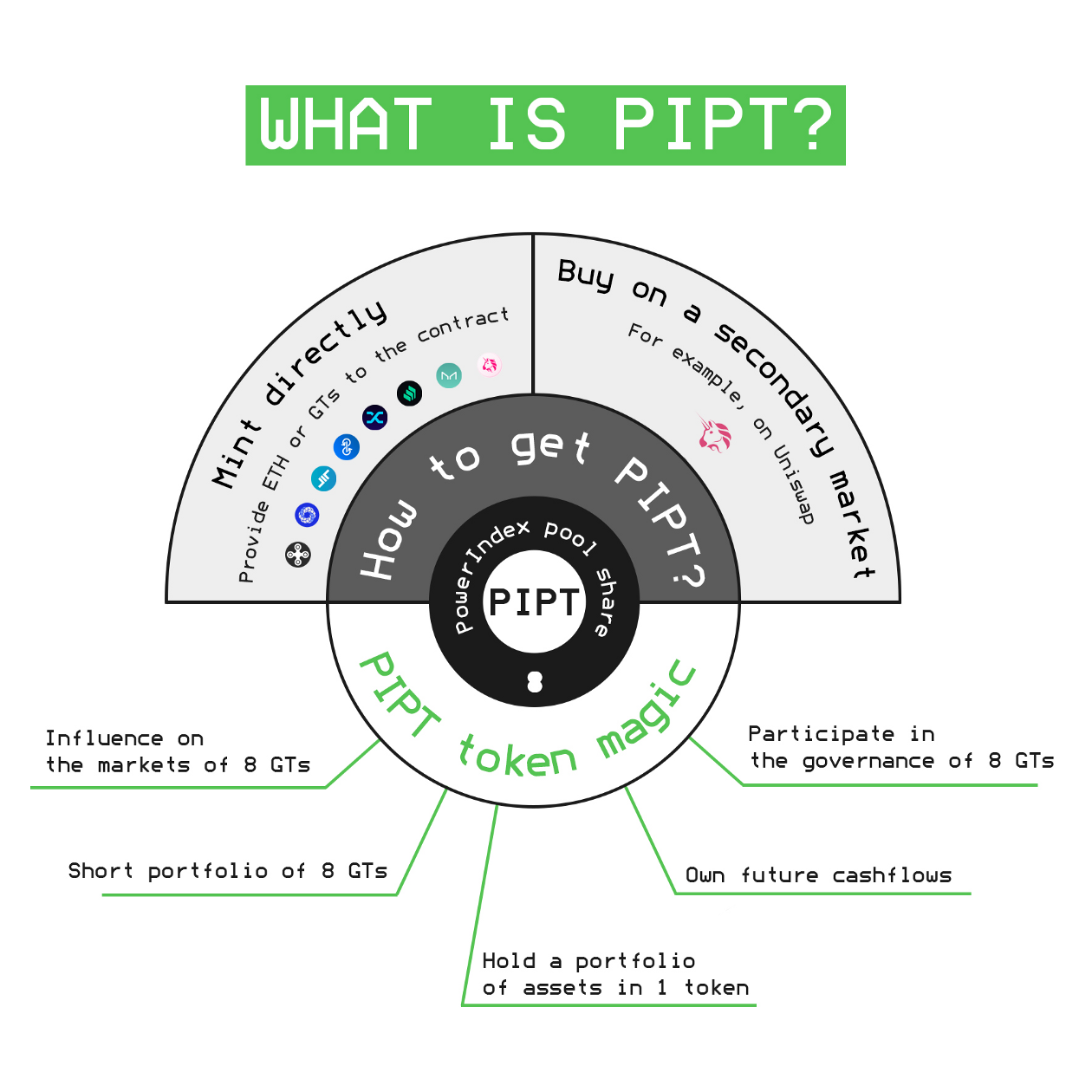
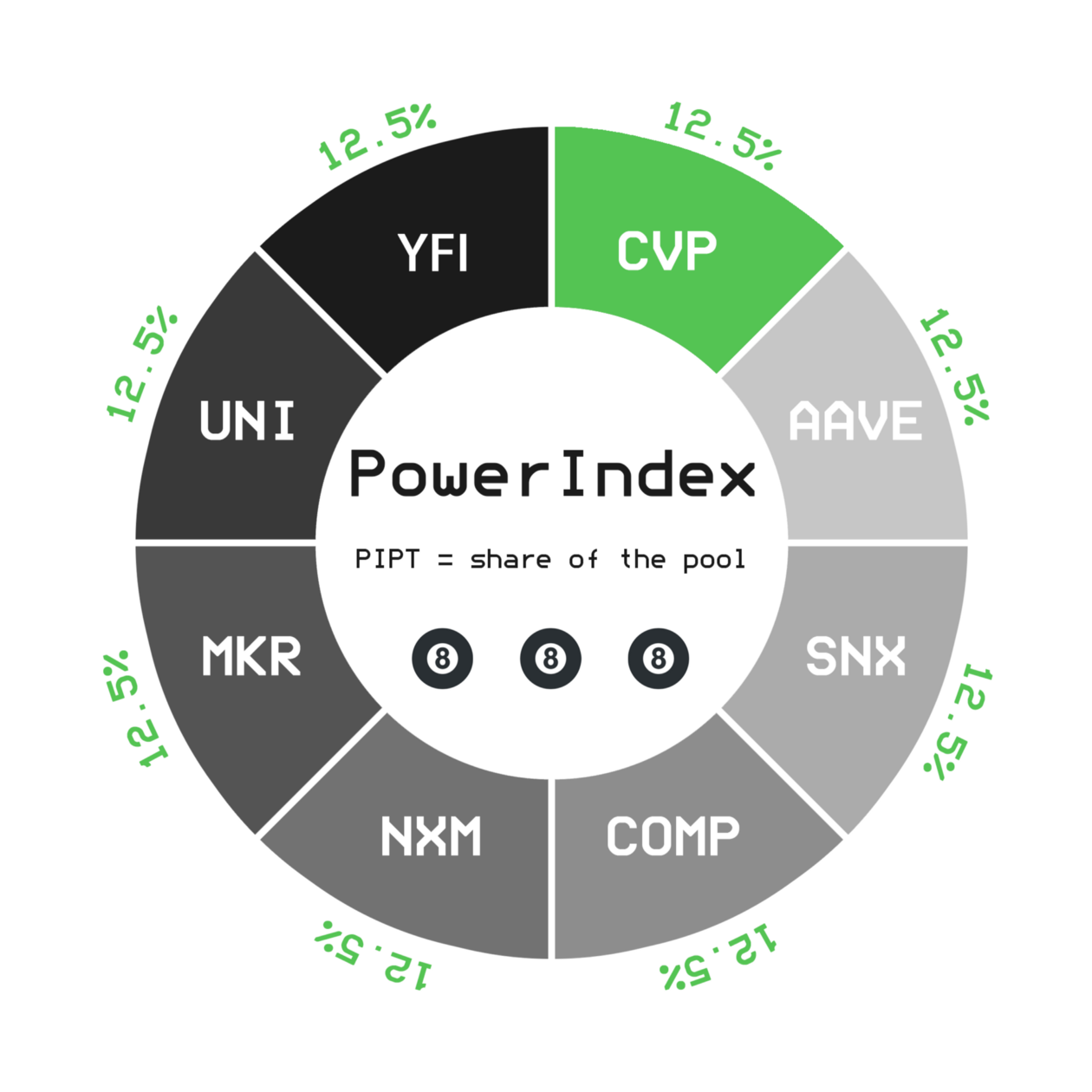
PowerPool’s first index, PowerIndex, is an ETF-like DeFi index, consisting of eight DeFi governance tokens (GTs). The index, referred to as PIPT (PowerIndex Pool Token), is implemented as a Balancer Smart Pool, and by owning PIPT users own a share of the pool (as with any liquidity pool).
PowerPool uses the tokens in the index for the following purposes:
- Meta-governance - All tokens stored in the pool contract can be used to vote in their native protocols.
- Fund-managements strategies - Pooled tokens can be used in “Vault” strategies, which generate cash flows for holders of this portfolio.
- Token swapping - Pooled tokens can be traded against like any other liquidity pool for swapping tokens.
Source: PowerPool Blog
The Role of CVP in PowerPool Indices
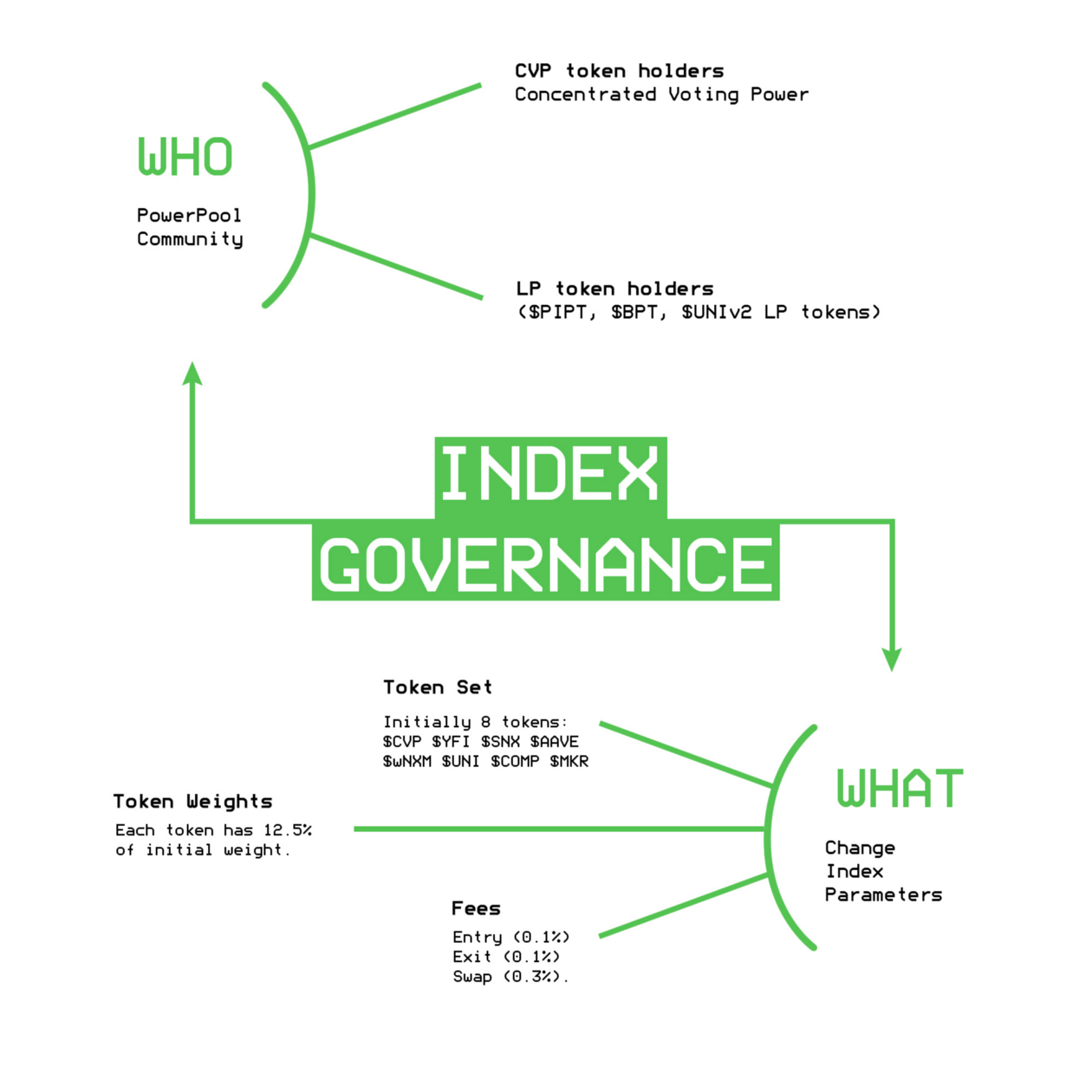
CVP (Concentrated Voting Power) is PowerPool’s native governance token and it is used broadly for governing all PowerUniverse products.
For PowerPool’s indices, CVP is used to change token sets, token weights, and index fees, as well as used to coordinate governance decisions for the underlying protocols and each of PowerPool’s indices. In return for these services, PowerPool indices charge fees for token swapping and depositing / withdrawing capital. These fees are accumulated in the Permanent Voting Power treasury and will be rewarded to CVP token holders for actively participating in governance (For more information on CVP’s value accrual mechanisms read this).
CVP is included in each PowerPool index for two reasons.
The first is to enable index holders to participate in PowerPool governance. Each index holder's voting power will be a function of their share of CVP locked in the index. Index token holders will be able to vote on all proposals and collect rewards using this CVP locked in the index. For example each PIPT holder's voting power will be a function of their share of the 12.5% of CVP in the PowerIndex pool. PowerPool’s governance system was designed so that users providing liquidity can simultaneously use their CVP to participate in governance.
Source: PowerPool Blog
The second and perhaps more important reason why CVP is included in each index is to align incentives between PowerPool and the underlying tokens (protocols) in its indices. For example, based on the initial weightings for PowerPool’s PowerIndex, CVP must make up 12.5% of the total value locked in the PowerIndex pool.
What this does is create skin in the game for CVP holders to ensure they are aligned with the governance of underlying DeFi tokens in PowerIndex. If CVP holders do their job well, more users will supply their governance tokens to the index, increasing the total value locked in PowerIndex and positively influencing the CVP token price. If CVP holders do their job poorly (making clearly bad decisions for index composite protocols), users will withdraw their governance tokens from the index, decreasing total value locked in PowerIndex and negatively influencing CVP token price. These CVP price increases and decreases will occur deterministically based on the total value locked in the pool because CVP must account for a fixed percentage of the pool. This dynamic also provides strong incentives for CVP holders to do what's best for the composite protocols of each index.
Thus, the presence of the CVP token in the index provides a simple incentive design that highly motivates CVP token holders to govern composite protocols effectively as it possesses positive or negative feedback loops for value of their holdings. Plus is provides the ancillary benefit of scaling Index liquidity mining rewards with total value locked (TVL increases --> higher CVP price --> higher CVP rewards).
Source: PowerPool Blog
Implications for YETI
CVP is an integral part of each PowerPool Index. It allows index holders to participate in PowerPool’s governance, as well as creates skin in the game for CVP holders to govern tokens underlying each PowerPool index well.
Meta-governance for each PowerPool index is not just a feature of PowerPool indices, it’s at the core of what PowerPool indices do. Having CVP in each index, ensures that index holders have a voice in PowerPool governance and ensures that PowerPool will only be successful if it does its job well. Thus CVP is included in YETI not to “ride the Yearn merger hype wave,” rather its included because it economically aligns PowerPool with the underlying protocols in YETI.

Ryan Watkins was a Senior Research Analyst at Messari. Previously, he worked at Moelis & Company as an Investment Banking Analyst where he worked on deals in the technology, telecom, and fintech sectors. Ryan graduated Magna Cum Laude from the Gabelli School of Business at Fordham University.