Tokenized Virtual Power Plants

Sector Overview
The convergence of DePIN and energy generation aims to address modern grid challenges by incentivizing distributed generation. Traditional grids are centralized and single-directional, but the rise of Distributed Energy Resources (DERs) is slowly converting consumers into “prosumers”, individuals or businesses that both consume and produce power, turning technologies like solar panels, batteries, and smart devices into grid-responsive assets.
This shift calls for more resilient, flexible solutions, with Virtual Power Plants (VPPs) being a key part of the answer. VPPs are software-managed networks of decentralized producers that collectively act like a single large power source or load balancer. By aggregating DER output, VPPs can smooth out intermittency and respond to grid signals for demand or supply, providing services typically delivered by traditional power plants, including frequency regulation, demand-response, emergency support, and other ancillary services aimed to reduce grid-wide power consumption during periods of high demand.
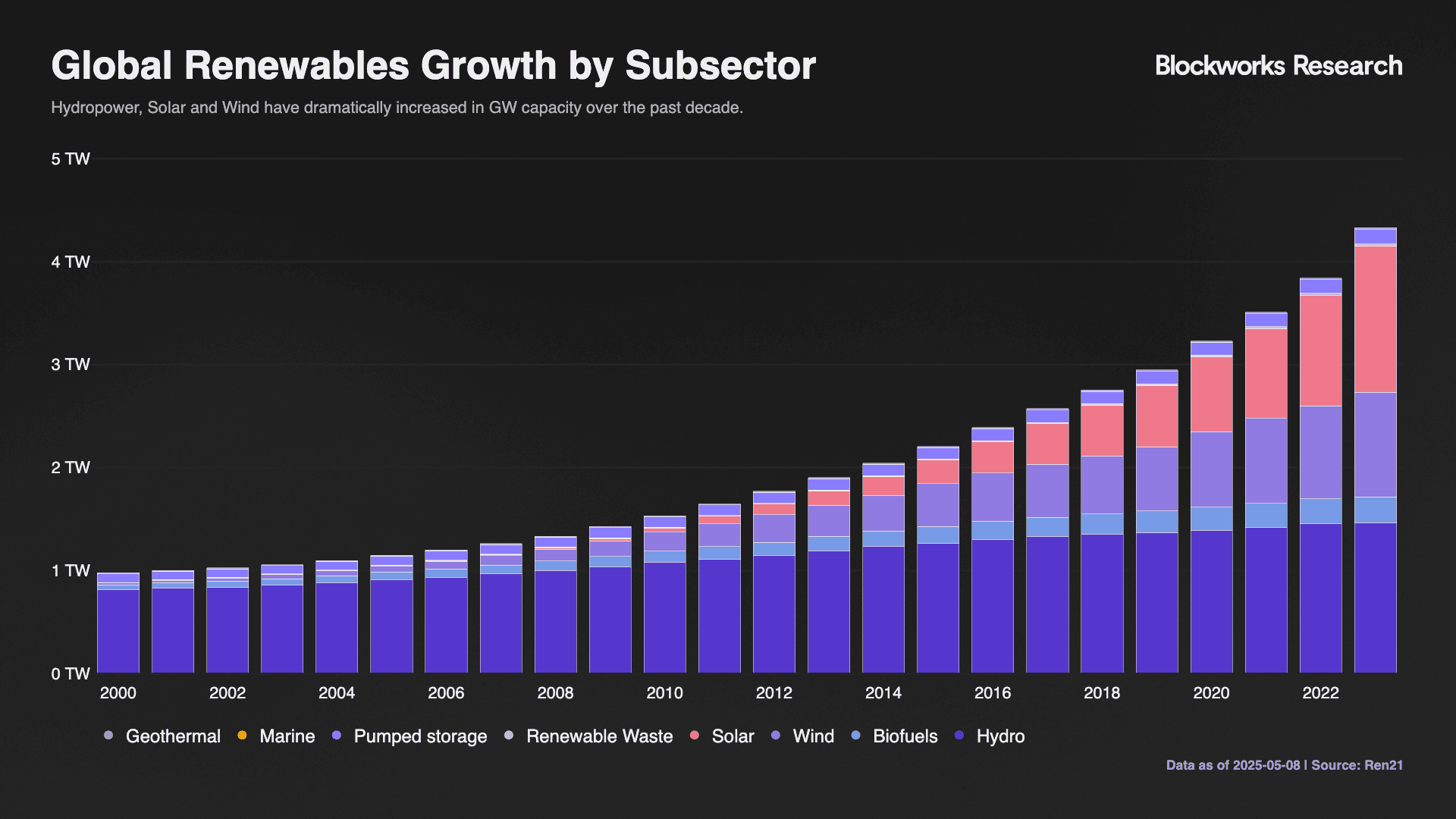
Meanwhile, the global market backdrop is accelerating with renewable capacity growing from 3.8 TW in 2023 to 4.4 TW in 2024. DePIN energy projects are riding this 15% YoY surge in renewable capacity, expanding their addressable market, but must navigate challenges like long interconnection queues, export limits, and queue management policies that delay access to the grid.
Blockchains add verifiability and automation to the mix via real-time settlements, P2P energy markets, and tokenized environmental credits. These systems enable metered production tracking, dispatch coordination (scheduling DERs to meet grid signals and capture premium balancing fees), and sales of renewable energy certificates (RECs), tradable proofs of each clean MWh, or carbon credits, helping projects avoid greenwashing while unlocking revenues aligned with environmental social governance (ESG). New mechanisms like carbon pre-sales (contracts for future offsets that front‑load project financing) and environmental attribute sales (monetizing ancillary data such as avoided emissions) offer early capital recovery, especially for projects in emerging markets.
Decentralized models also improve monetization routes, by removing intermediaries and enabling instant, verifiable settlement, ranging from spot sales of electricity to utilities or peers, to power purchase agreements (PPAs) with guaranteed buyers, and fixed capacity contracts that pay networks for maintaining grid availability during high-demand periods like peak-time load reductions. Smart‑contract clearing could reward metered production instantly, allowing DERs of any size to reliably capture these revenue streams, while embedded hardware like smart meters and inverter telemetry systems help verify real-time output for these contracts.

Nick leads coverage on the DePIN and Proof of Work sectors. Previously led research and engineering at a DePIN-focused accelerator.