Tokemak 1Q22 Update: TOKE Wars — A New Hope for DeFi

Tokemak arrived in the middle of the DeFi "2.0” revolution as a solution for protocols whose tokens were being farmed and dumped by third-party liquidity providers who quickly left when rewards ceased.
Tokemak’s Liquidity-as-a-Service (LaaS) model, sometimes known as “rented” liquidity, has been more successful than the bonding approach favored by Ohm and its forks, topping out at over $1 billion in TVL staked across 18 “reactors”. The protocol is generating more than $2 million in monthly revenue while only deploying a limited portion of total liquidity.
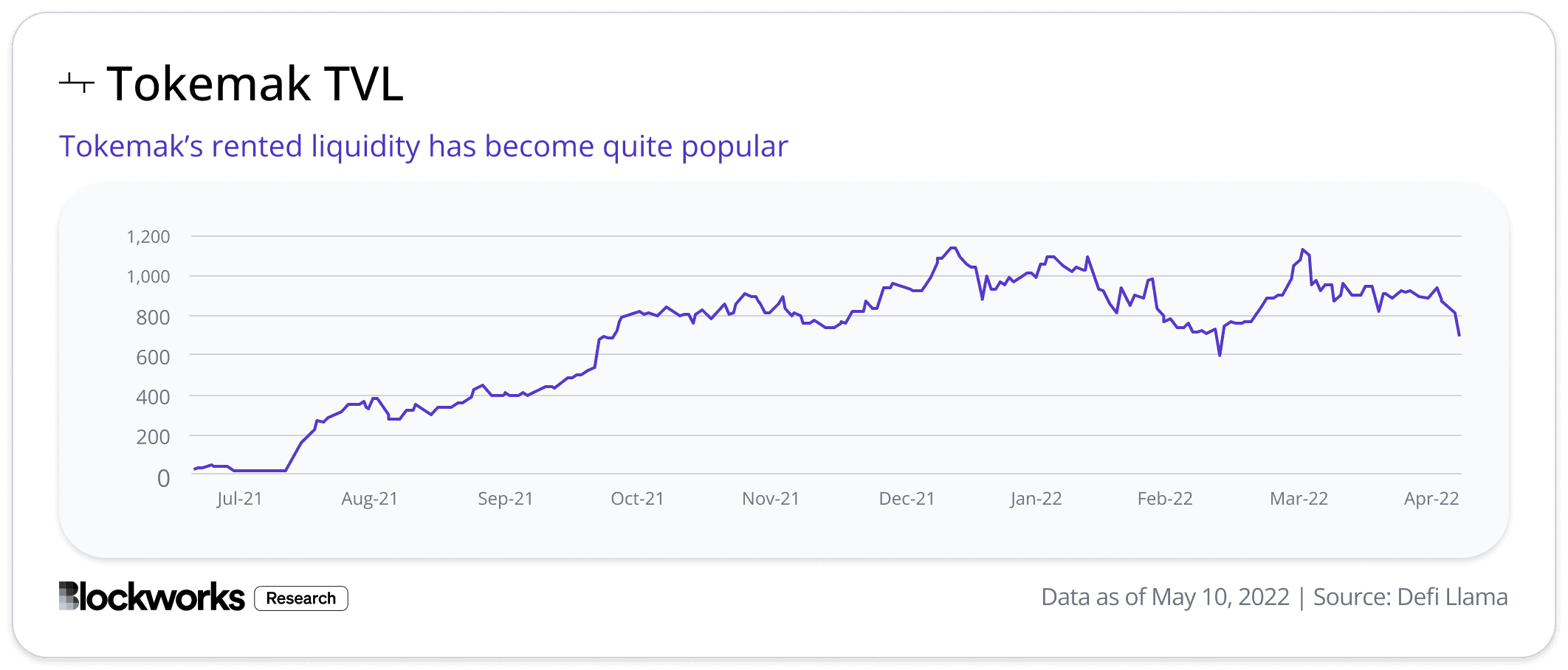
Targeted at followers of the native TOKE token, this report is a deep dive into both Tokemak’s most recent collateralization of reactors event (C.o.R.E) and reworked emissions schedule for their native TOKE. An introduction to the protocol can be found in the Tokemak Asset Profile.
Tokemak’s Collateralization, Earlier Events
C.o.R.E. is short for Collateralization of Reactor Event, the invitation-only competition where established DAOs fight to establish a Token Reactor. While the eventual goal is to allow any DAO to establish a reactor independently, C.o.R.E. allows the Tokemak team to safely test their liquidity deployment contracts and ensure maximum security measures are in place for both DAOs and TOKE holders alike. The first C.o.R.E. took place last October, with 42 whitelisted DAOs selected by the Core Team fighting for 5 reactor slots. These DAOs were selected for their established presence in the Ethereum DeFi ecosystem.
In order to vote, TOKE must be staked, either in a single-sided reactor pool or as part of a Uni/Sushi LP pool. Different staking methods garner different votes per token:
