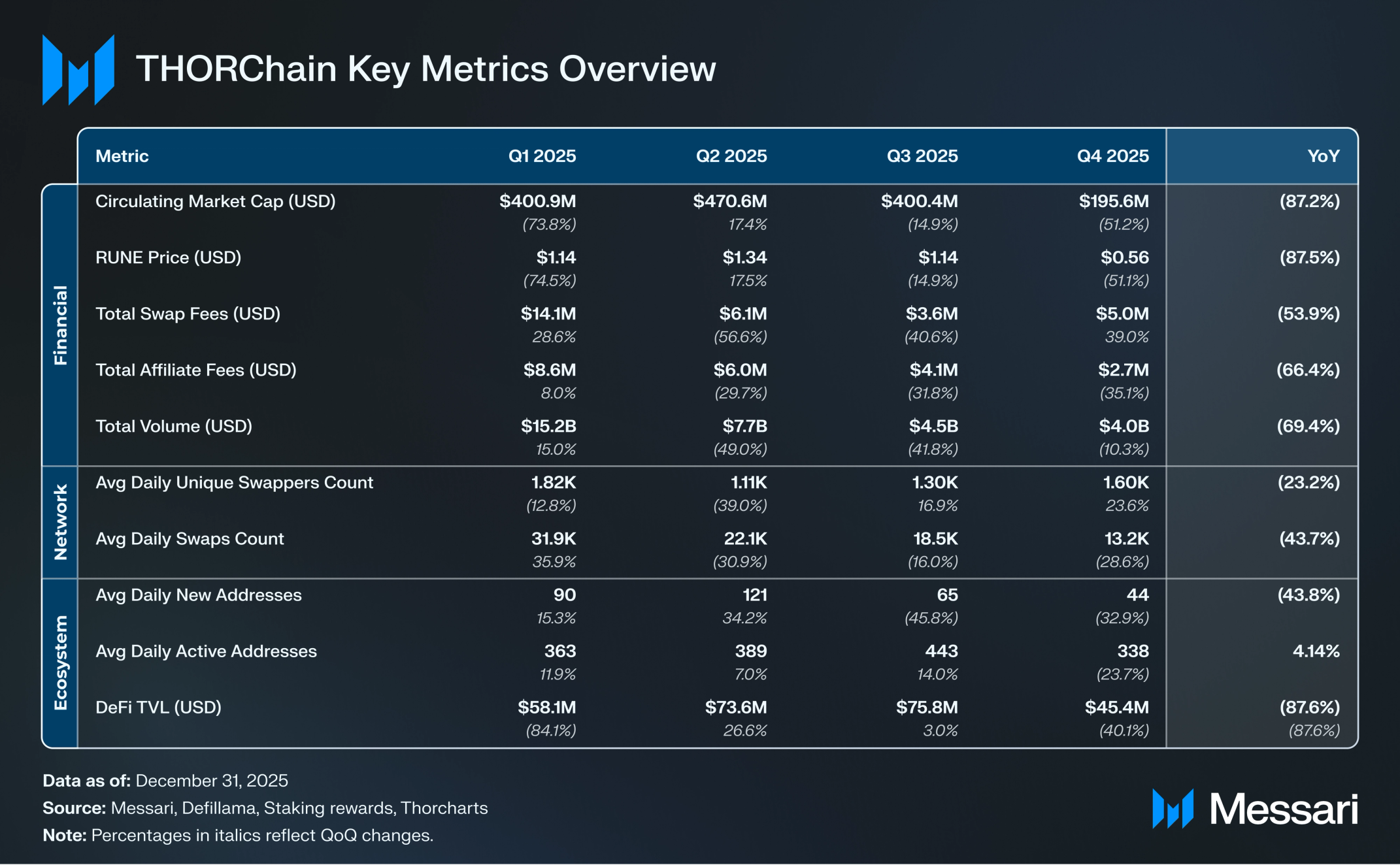
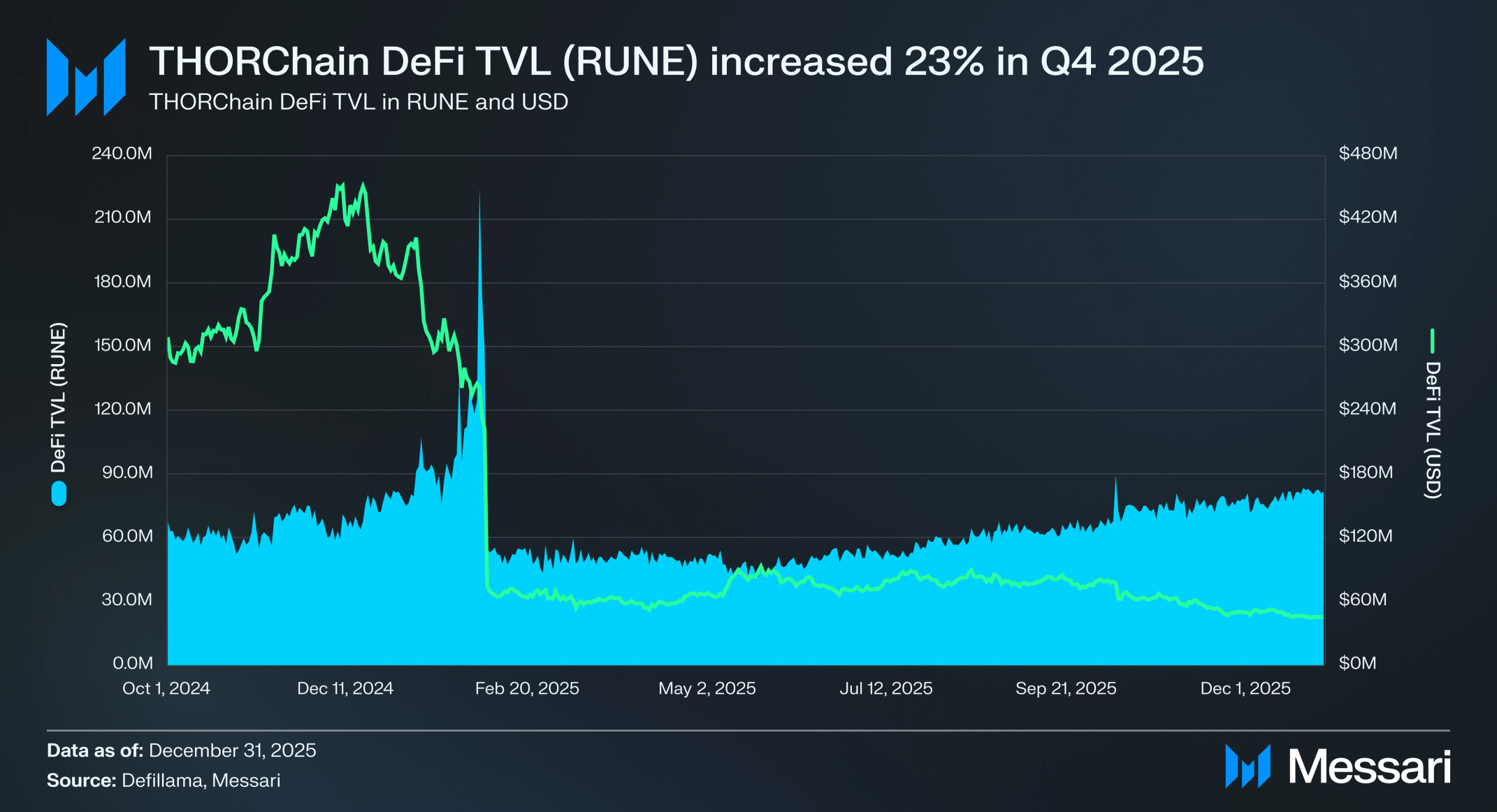
RUNE-denominated TVL increased 22.6% QoQ to 81.6M RUNE, even as RUNE’s price fell 51.1%. This divergence indicates that existing liquidity providers continued to add or maintain positions, despite adverse market conditions.
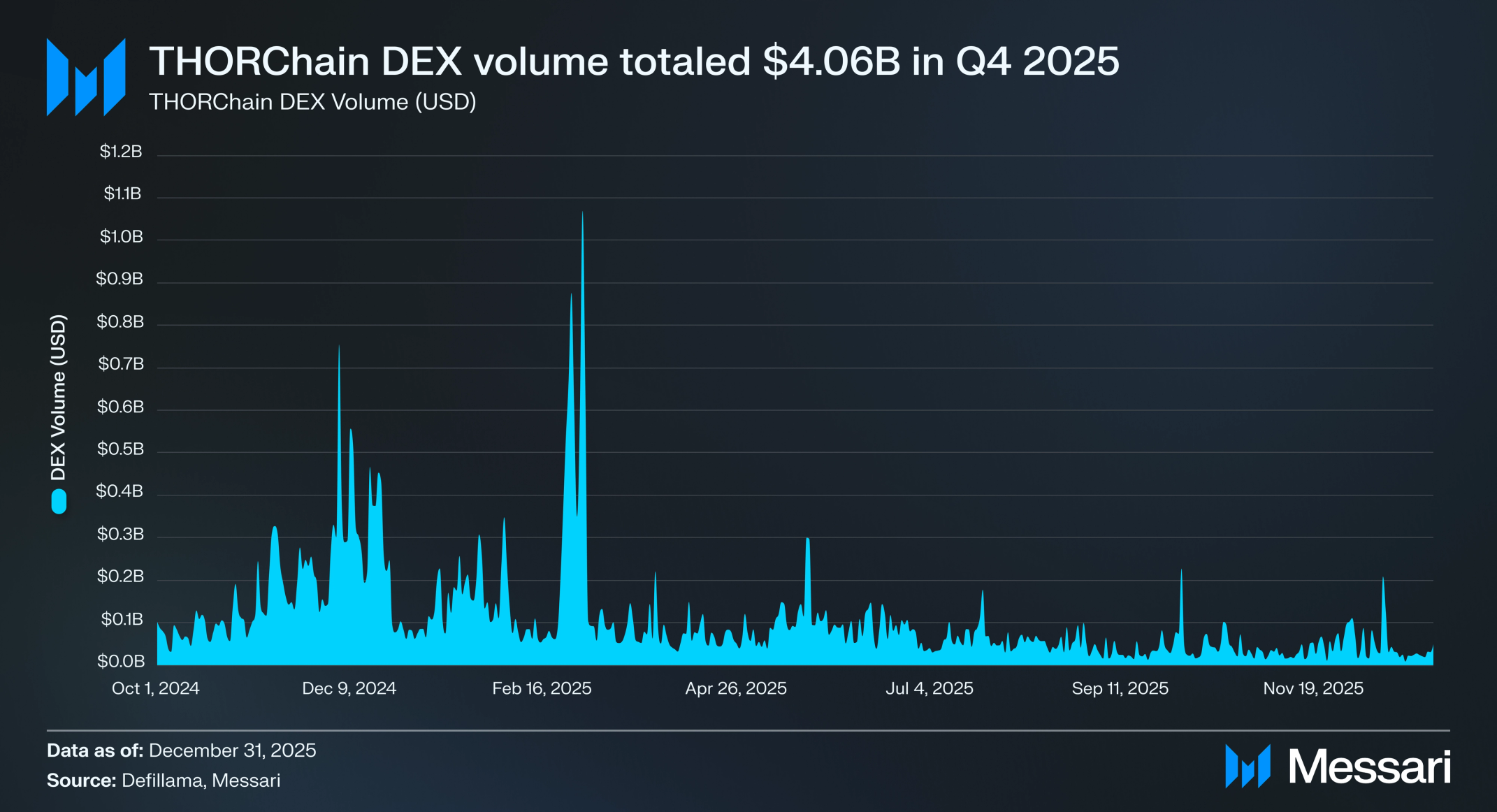
Total swap volume declined 10.3% QoQ to $4.06B, extending the correction following the Q1 spike caused by the exploit of Bybit, but average daily unique swappers increased 23.6% to 1.6K. This means that while trade sizes fell, the number of users interacting with THORChain continued to grow.
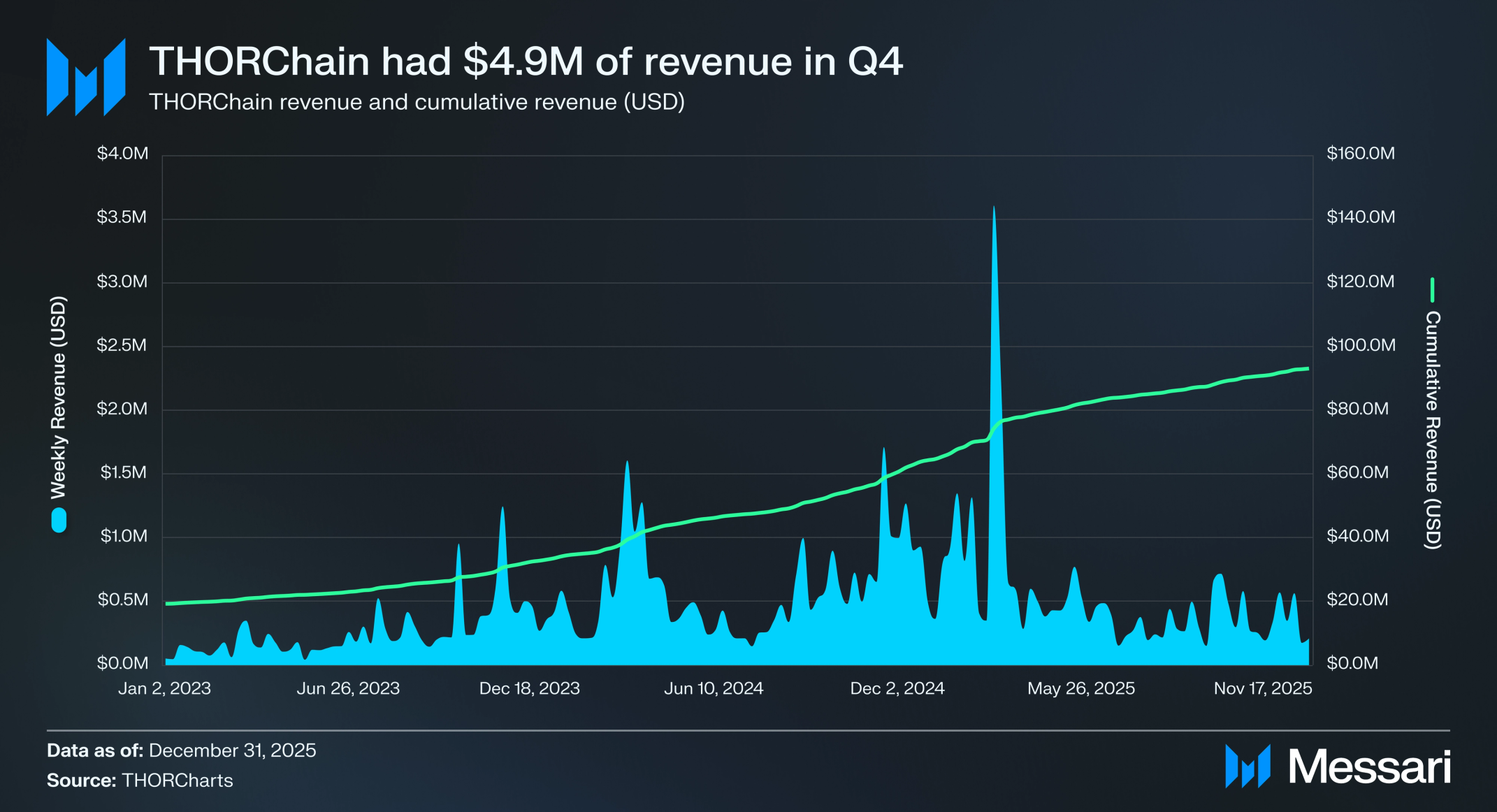
Protocol revenue rose 39.0% QoQ to $5.0M despite declining swap volume, reflecting improved fee capture efficiency. As a result, THORChain exited Q4 with a compressed trailing P/E ratio of 9.8, down from 11.2, driven primarily by lower market capitalization rather than weakening fundamentals.
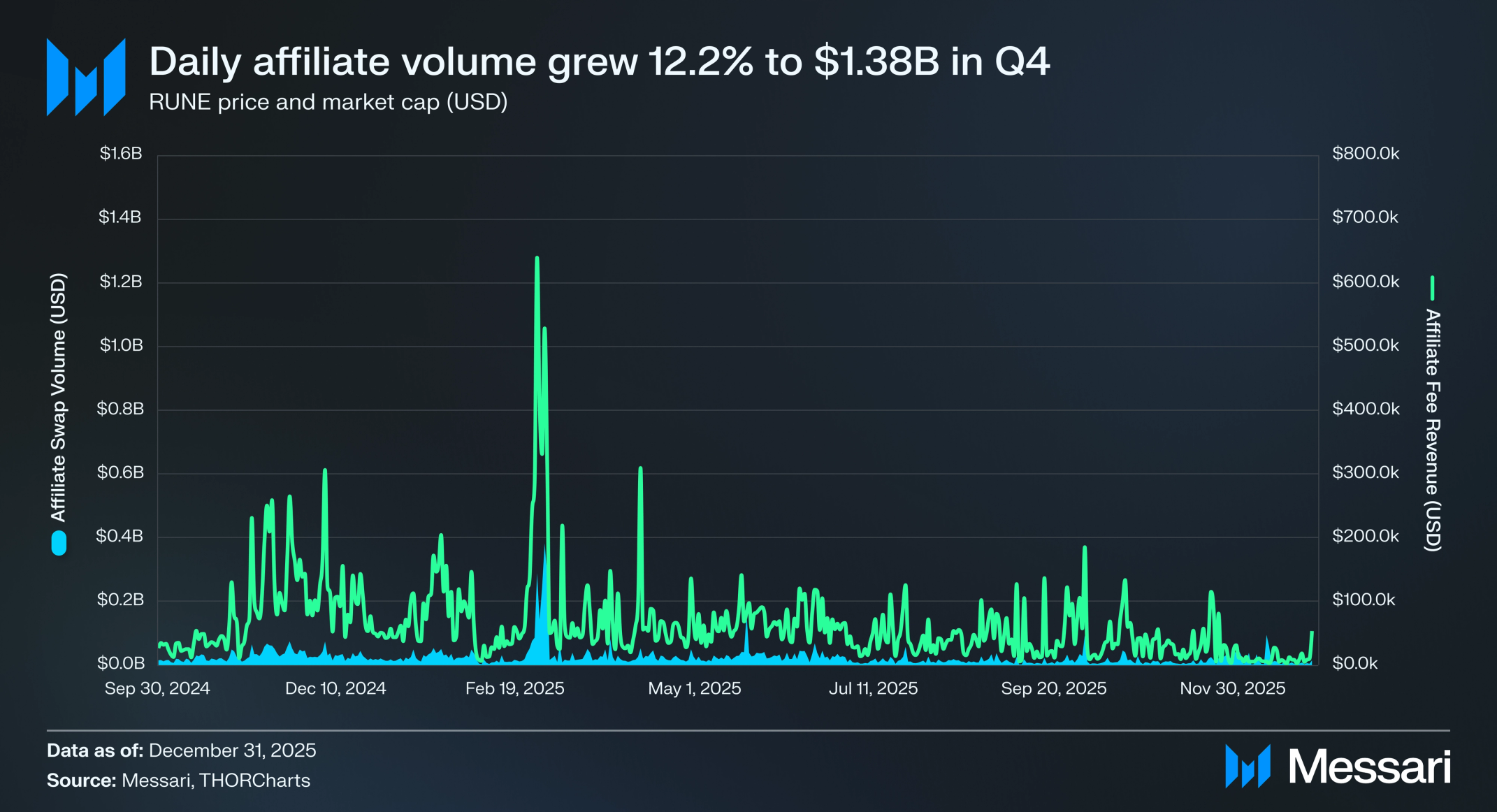
Affiliate revenue fell 35.1% QoQ to $2.7M even as affiliate swap volume increased 12.2%, indicating that integrators likely reduced fee rates to remain competitive.
The beta release of THORChain’s swap interface established an official direct user-facing entry point for the protocol for the first time.
Rujira launched RUJI Lending, a money market with CDP loans, allowing users to borrow against native BTC in a fully decentralized manner.
Primer
THORChain (RUNE) is a Layer-1 (L1) network designed to facilitate crosschain DEX swaps without the need for wrapped assets. The blockchain is developed on the Cosmos SDK and uses the BFT Tendermint consensus engine. Native assets are managed directly in onchain vaults, and funds are secured by nodes with bonded RUNE.
The network employs Threshold Signature Schemes (TSS) requiring a two-thirds majority of nodes for the movement of funds to and from vaults. THORChain has 103 active nodes with an average of 929k RUNE bonded (staked) per node, for a total of 97.8 million RUNE (27% of the circulating supply), which acts as a deterrent against node collusion.
THORChain uses continuous liquidity pools (CLP) where all pools are paired with RUNE and provide consistent liquidity to all assets in the network. Fees are adjusted according to the liquidity depth of the pool.
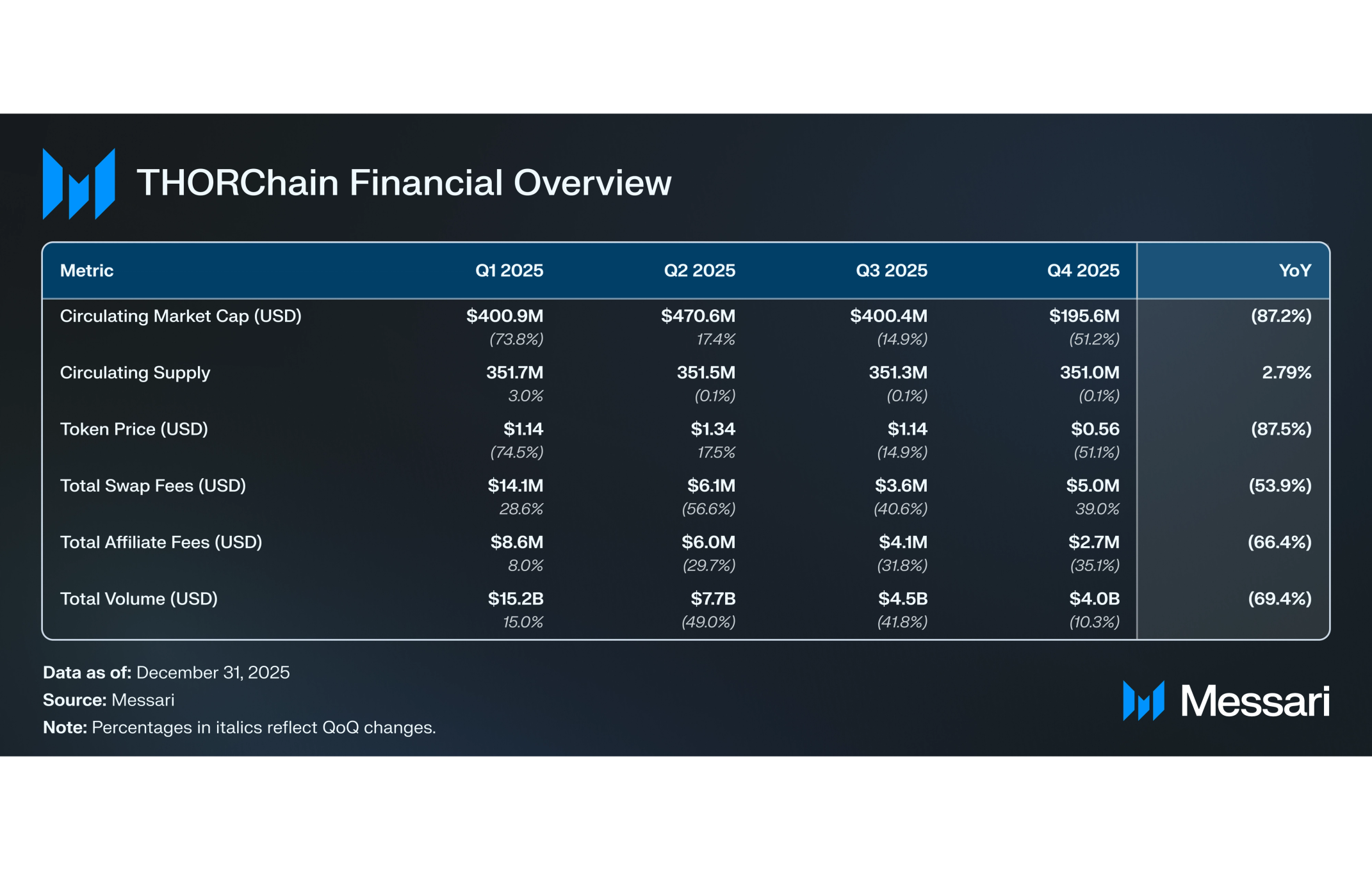
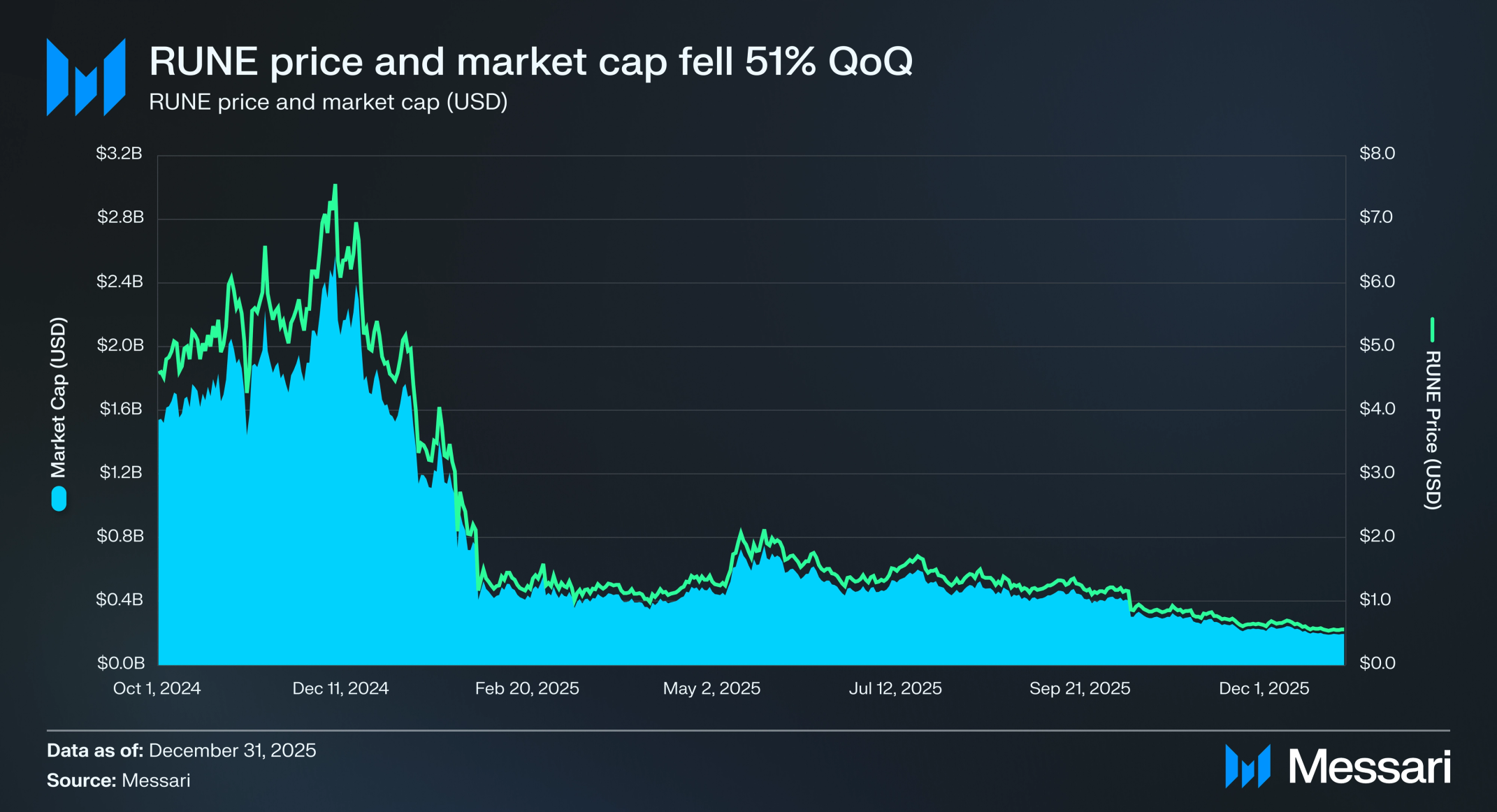
Following relative stability in Q3, THORChain’s native asset, RUNE, drew down sharply in Q4 2025 amid continued weakness across mid-cap DeFi assets, which finished 2025 down an average of 72%. RUNE ended the quarter at $0.56, down 51.1% QoQ, significantly underperforming BTC, which finished Q4 down 25%. The decline in price drove a corresponding contraction in circulating market capitalization, which fell 51.2% QoQ from $400.4 million to $195.6 million.
The drop in market cap was primarily price-driven, as RUNE’s circulating supply remained broadly stable throughout the quarter. Circulating supply declined marginally from 351.3 million to 351.0 million, consistent with the protocol’s ongoing token burn mechanism. As in prior quarters, 5% of protocol revenue was allocated to token burns, extending RUNE’s deflationary supply trend into a third consecutive quarter, as there is no longer any RUNE block rewards (inflation). However, the absolute impact of burns remained modest relative to the magnitude of price declines.
Despite weaker asset performance, protocol-level revenue showed mixed signals. Total swap fees increased 39.0% QoQ to $5.0 million, rebounding from Q3 lows, while total swap volume declined 10.3% QoQ to $4.0 billion. This divergence reflects a higher effective fee capture per unit of volume, partially offsetting lower overall activity. In contrast, affiliate fees continued to trend downward, falling 35.1% QoQ to $2.7 million, in line with reduced aggregator-driven flow.
Overall, Q4 was characterized by a disconnect between improving fee generation and deteriorating asset valuation. While THORChain demonstrated some resilience in revenue capture, sustained price pressure on RUNE remained the dominant factor shaping its financial profile during the quarter.
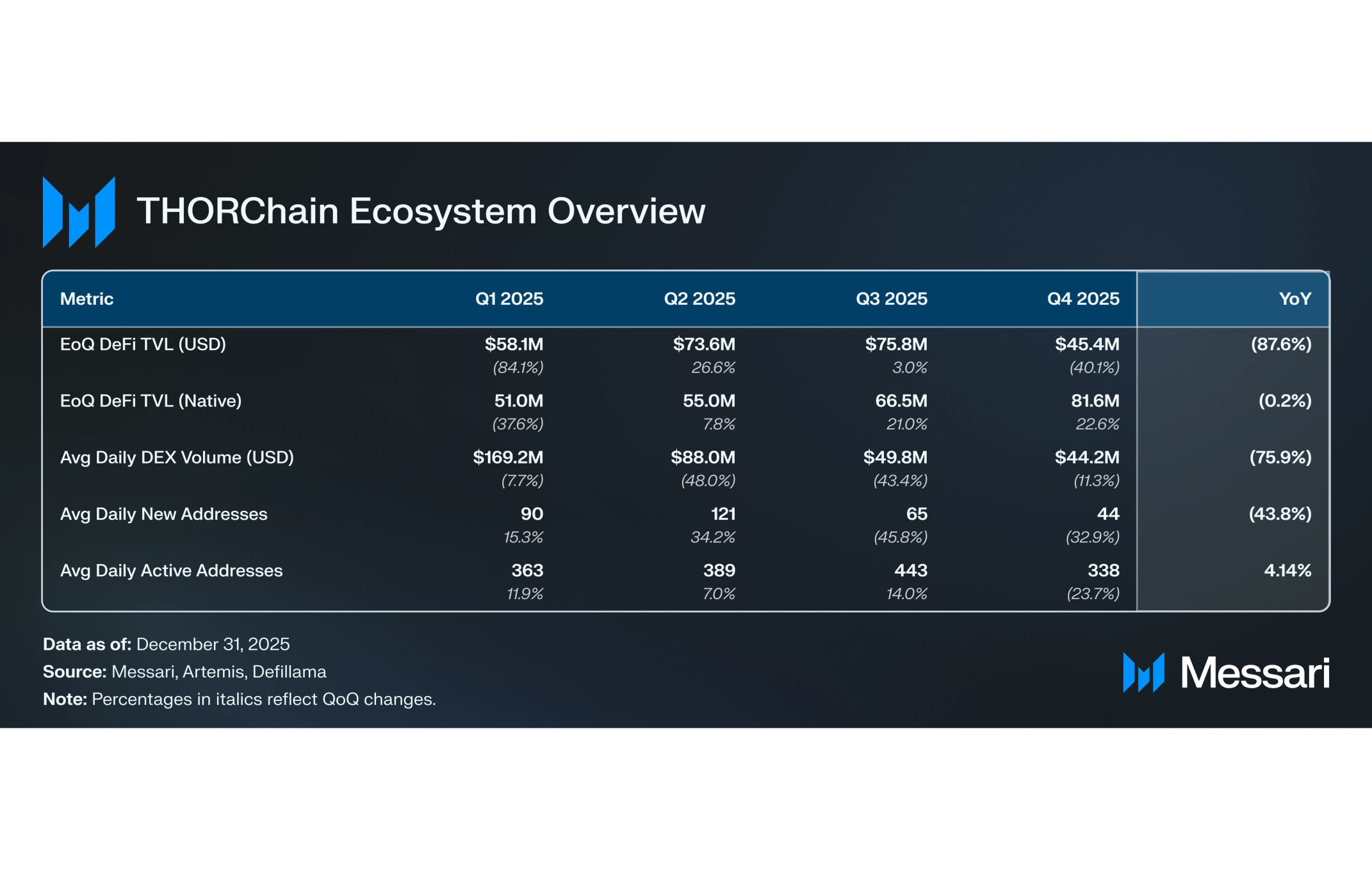
THORChain’s ecosystem activity weakened in Q4 2025, reflecting continued contraction in DeFi participation and user engagement. Average daily DEX volume fell 11.3% QoQ to $44.2 million, extending a multi-quarter decline from Q1 highs. On a year-over-year basis, average daily volume decreased by 75.9%, indicating a decline in crosschain swap demand amid broader market risk aversion. While THORChain remains one of the few live production crosschain liquidity protocols, its aggregate usage has not yet recovered to the levels of the prior year.
User activity metrics also softened during the quarter. Average daily active addresses declined 23.7% QoQ to 338, reversing gains seen in Q3. Average daily new addresses fell more sharply, down 32.9% QoQ to 44, signaling weaker user onboarding and reduced speculative inflows. Despite the quarterly pullback, active addresses remained slightly higher on a year-over-year basis, suggesting a relatively stable core user base.
DeFi
THORChain DeFi Total Value Locked (TVL) declined sharply in Q4 2025, primarily reflecting significant price compression across supported assets, especially the 51.1% drop in RUNE’s price as underlying liquidity positions remained broadly stable.TVL ended the quarter at $45.4 million, down 40.1% QoQ from $75.8 million in Q3.
When measured in native terms, DeFi TVL increased significantly during the quarter. RUNE-denominated TVL rose 22.6% QoQ to 81.6 million RUNE, marking its highest level since Q4 2024. This divergence between USD and RUNE-denominated TVL suggests that existing liquidity providers continued to add or maintain positions despite adverse market conditions.
Swap Volume
Swap activity on THORChain continued to cool in Q4 2025, extending the post-Q1 normalization that followed elevated volumes earlier in the year following the exploit of the Bybit exchange. Total swap volume declined 10.3% QoQ to $4.06 billion, down from $4.49 billion in Q3. On a daily basis, the protocol averaged $44.2 million in swap volume, compared to $48.8 million in the prior quarter.
Usage metrics followed a similar trajectory. Average daily swap counts declined 28.6% during the quarter from 18.5K to 13.2K, indicating reduced transactional throughput alongside lower volumes. Unlike Q3, which had rising participation despite falling volumes, Q4 did not exhibit a comparable increase in user activity. However, average daily unique swappers grew on a QoQ basis, rising 23.6% from 1.3K to 1.6K, suggesting that although total swap volume was down, it’s possible that the total number of unique users continues to increase.
Protocol Revenue
THORChain generates revenue from fees on every crosschain swap and transfer executed through the protocol. These fees are distributed according to a fixed allocation framework: 75% to node operators and liquidity providers (adjusted dynamically via the Incentive Pendulum), 10% to TCY holders, and 5% each to marketing, the developer fund, and token burns. The Incentive Pendulum remains central to THORChain’s economic design, continuously rebalancing rewards between security providers (nodes) and liquidity providers to maintain the target 2:1 bond-to-stake ratio.
In Q4 2025, THORChain generated $5.0 million in protocol revenue, representing a 39.0% increase QoQ from Q3 and bringing THORChain’s cumulative revenue to $93.08 million. The rise in revenue occurred despite a 10.3% QoQ decline in total swap volume, indicating improved fee capture efficiency during the quarter. Higher average fees per unit of volume helped offset lower overall activity, reflecting changes in asset mix and routing behavior. Based on the Q4 closing market capitalization of $195.6 million, THORChaiin has a trailing P/E ratio of 9.8, falling from 11.2 in Q3.
While revenue growth was a positive signal, it did not translate into improved token performance. With RUNE’s market capitalization falling sharply over the quarter, the disconnect between fee generation and asset valuation widened. Still, the protocol’s ability to grow revenue in a lower-volume environment underscores the durability of its fee model and the continued relevance of THORChain as crosschain settlement infrastructure, even amid subdued market conditions.
Affiliate Revenue
THORChain users generally access the protocol through third-party interfaces rather than interacting directly with THORNodes. To incentivize these integrations, THORChain allows wallets and applications to specify an affiliate address and apply a custom fee rate ranging from 0 to 1,000 basis points. These affiliate fees are collected on each transaction and paid directly to the affiliate in a non-custodial and transparent manner. Importantly, affiliate fees are not counted as protocol revenue and are accounted for separately.
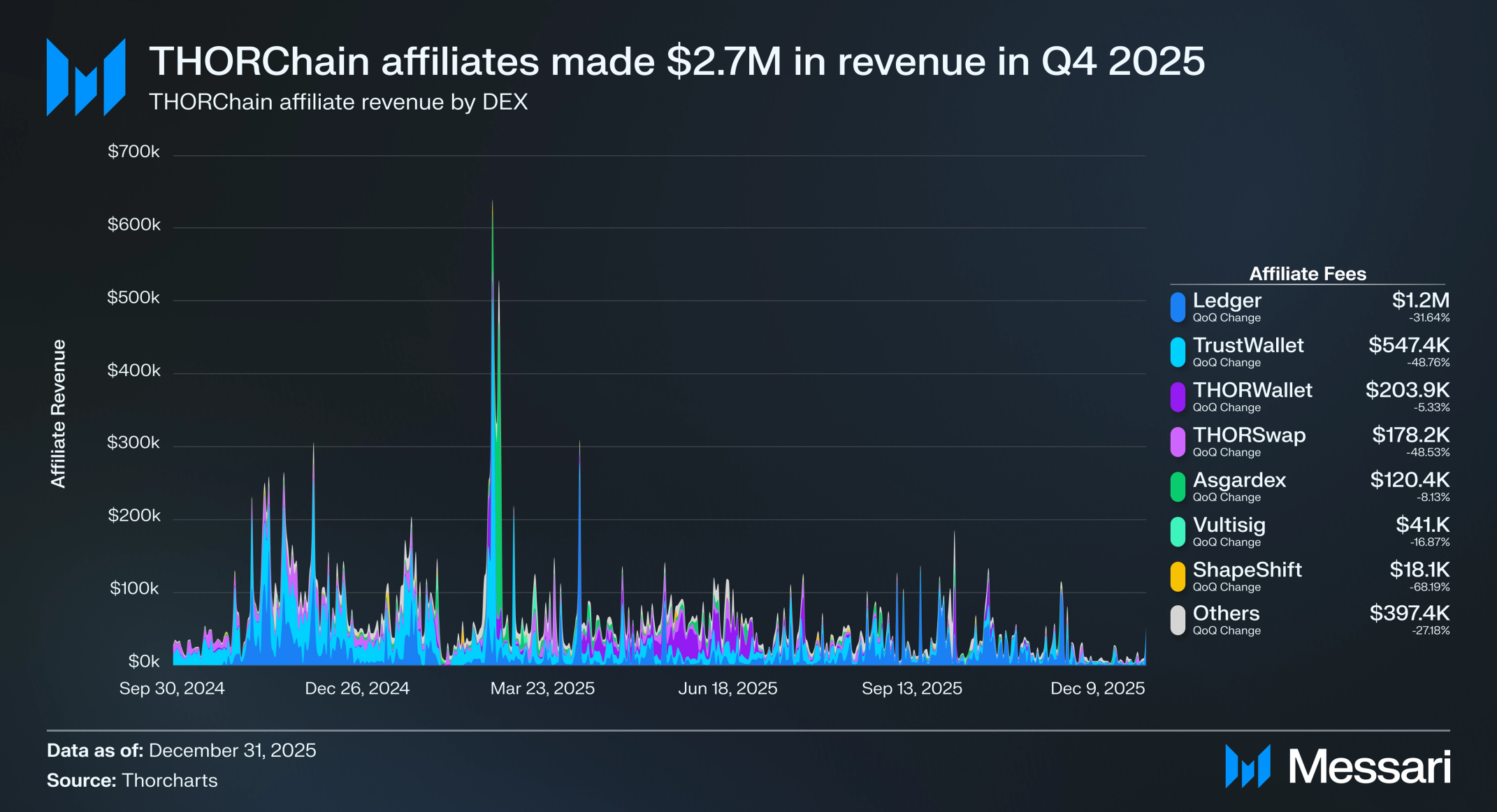
Affiliate revenue declined again in Q4 2025, falling 35.1% QoQ from $4.1 million to $2.7 million. This was despite affiliate swap volume increasing 12.2% QoQ from $1.23 billion to $1.38 billion.
Despite the continued decline, THORChain’s affiliate model remains a core component of its ecosystem strategy. By directly compensating integrators, the protocol maintains alignment with wallets and routing services that rely on THORChain as backend infrastructure, even during periods of lower overall activity.
Affiliate revenue concentration remained high in Q4 2025, with a small number of large integrators accounting for the majority of fees generated through THORChain. Ledger continued to lead all affiliates by a wide margin, generating approximately $1.2 million in fees during the quarter, which accounted for 43.6% of all affiliate revenue. While this represented a 31.6% QoQ decline from $1.7 million, Ledger retained its position as the dominant interface driving THORChain swap activity, underscoring the importance of its integration within Ledger Live.
Trust Wallet remained the second-largest affiliate, generating $547.4K in fees in Q4. Similar to Ledger, Trust Wallet had lower revenue compared to Q3, reflecting reduced swap volumes rather than a loss of market share.
Native THORChain interfaces and ecosystem wallets continued to see meaningful declines. THORSwap, THORWallet, and Asgardex each posted lower affiliate revenue on a QoQ basis, consistent with reduced direct-user activity and softer retail participation. These platforms remain important for power users, but their contribution to total affiliate fees continued to shrink relative to embedded wallet integrations.
THORChain Native Swap Interface Launch
In December 2025, THORChain introduced its first native swap interface, marking a strategic shift toward direct user-facing distribution. Historically, THORChain has operated primarily as backend infrastructure, with most user activity routed through wallets, aggregators, and third-party interfaces. The native interface establishes an official “front door” to the protocol, allowing users to interact with THORChain directly.
The interface is designed to prioritize native crosschain swaps without wrapped assets or centralized intermediaries. Users can swap native assets such as BTC, ETH, and AVAX directly, either by connecting a self-custodial wallet or by sending funds without a wallet connection for supported chains. The product is open source and intentionally minimal, emphasizing simplicity and transparency over feature breadth.
From a strategic perspective, the native interface gives THORChain greater control over user experience, routing logic, and fee dynamics. While the release remains in beta, it has already seen significant usage, with $534.2 million of volume since launch. An official launch is planned for Q1 2026, with expanded token support and additional protocol features expected to follow.
Rujira Ecosystem Progress
Rujira, THORChain’s application layer, made meaningful progress in Q4 2025 with the mainnet launch of Credit Accounts, a core primitive that underpins its broader DeFi roadmap. Credit Accounts function as flexible, onchain margin accounts, allowing users to deposit various forms of collateral and borrow against them. This architecture serves as the foundation for Rujira’s debt products and is intended to support future offerings including collateralized debt positions (CDP) based loans, spot margin trading, Perps v2, and a BTC-backed stablecoin.
Alongside Credit Accounts, Rujira launched RUJI Lending, its first production debt product. RUJI Lending operates as a money market built around CDPs, enabling users to borrow against BTC, XRP, LTC, and other THORChain-supported assets without relying on wrapped tokens or centralized custodians. This design allows users to unlock liquidity from long-term holdings without selling, with potential use cases ranging from portfolio leverage to operational financing for BTC miners.
To support risk management within the lending system, Rujira also introduced RUJI Liquidations. Unlike many DeFi protocols and centralized platforms where liquidation access is restricted, RUJI Liquidations routes liquidated collateral to Rujira’s orderbook DEX, RUJI Trade, where assets are auctioned openly. Participants can bid on liquidated assets at discounts of up to 30%, creating a competitive liquidation market that aims to improve price discovery and reduce losses for liquidated borrowers.
These products are enabled by Rujira’s position as an application layer built directly on THORChain, allowing it to work with native assets across connected chains. In Q4, Rujira took an additional step toward a unified omnichain user experience by rolling out an upgrade that aggregates balances across supported chains into a single view. This abstraction reduces cross-chain complexity for users and aligns with Rujira’s goal of making multichain activity feel chain-agnostic.
Overall, Q4 marked a transition for Rujira from infrastructure buildout to live financial products. While adoption remains early, the launch of Credit Accounts, RUJI Lending, and open liquidations establishes the core components needed for a native, cross-chain DeFi stack built directly on THORChain.
Closing Summary
Q4 2025 highlighted THORChain’s underlying resilience despite a difficult market backdrop. Protocol fundamentals strengthened during the quarter, with revenue rising 39% QoQ, swap activity stabilizing after earlier normalization, and RUNE-denominated TVL reaching its highest level in over a year. These trends indicate continued engagement from core liquidity providers and users, even as speculative activity across DeFi remained subdued. Improved fee capture in a lower-volume environment further reinforced the durability of THORChain’s economic model.
Ecosystem dynamics continued to evolve, with swap flow increasingly routed through large wallet integrations. Affiliate revenue became more concentrated among dominant partners, reflecting THORChain’s role as backend infrastructure for consumer-facing wallets. In parallel, the beta launch of THORChain’s native swap interface marked a strategic shift toward direct user distribution, giving the protocol greater control over user experience, routing, and long-term growth. While still early, this initiative expands THORChain’s optionality beyond third-party integrations.
Against these operational improvements, asset-level performance lagged. RUNE underperformed the broader market in Q4, resulting in sharp declines in USD-denominated metrics such as market capitalization and TVL. These declines were primarily price-driven rather than driven by liquidity withdrawals, as evidenced by rising native-unit liquidity.
Overall, Q4 reinforced THORChain’s position as durable crosschain infrastructure rather than a momentum-driven DeFi application. While near-term performance remains tied to broader market conditions, sustained revenue generation, strengthening native liquidity, and ongoing product development leave the protocol structurally well positioned heading into 2026.
This report was commissioned by THORChain. All content was produced independently by the author(s) and does not necessarily reflect the opinions of Messari, Inc. or the organization that requested the report. The commissioning organization may have input on the content of the report, but Messari maintains editorial control over the final report to retain data accuracy and objectivity. Author(s) may hold cryptocurrencies named in this report. This report is meant for informational purposes only. It is not meant to serve as investment advice. You should conduct your own research and consult an independent financial, tax, or legal advisor before making any investment decisions. Past performance of any asset is not indicative of future results. Please see our Terms of Service for more information.
No part of this report may be (a) copied, photocopied, duplicated in any form by any means or (b) redistributed without the prior written consent of Messari®.
Drexel is a Research Manager at Messari for the Protocol Reporting team with a focus on base layers and DeFi. He is a strong follower of the crypto mullet thesis of diligence in the front and degen in the back.
Drexel is a Research Manager at Messari for the Protocol Reporting team with a focus on base layers and DeFi. He is a strong follower of the crypto mullet thesis of diligence in the front and degen in the back.