THORFi Lending: Cross-chain Liquidation Free Borrowing

On August 20th, THORChain introduced THORFi lending, a zero-interest, no liquidation cross-chain lending market. Loans have a minimum 30-day term and no expiration, with plans to expand beyond current collateral types BTC and ETH to BNB, DOGE, AVAX, ATOM, LTC, and BCH. Debt is always owed in USD terms but can be taken in any asset. For instance, using native BTC as collateral, one can borrow native ETH, but repayment hinges on the initial USD value of the borrowed ETH.
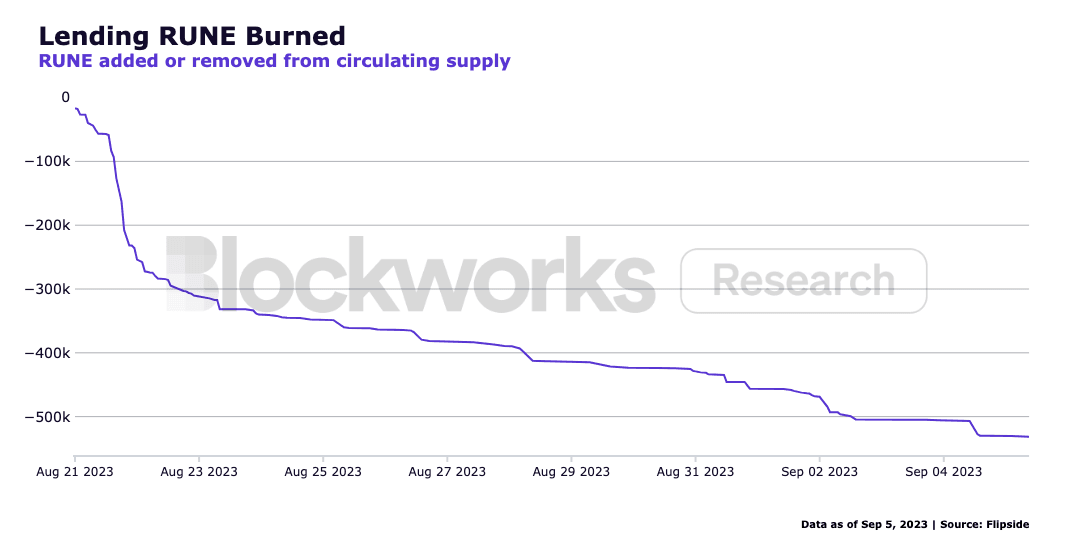
The lending process involves converting all collateral to RUNE, which is then used to acquire the debt asset for the borrower. A dynamic collateralization ratio (CR) determines the borrowing limit, a set percentage of the collateral’s notional value. The difference in notional value between the collateral and debt equates to the amount of RUNE burned and removed from the circulating supply while the loan is open.
While this model may increase RUNE demand, it carries risks. If RUNE's value drops versus the collateral asset, more RUNE could enter circulation to meet collateral obligations upon repayment. There are risk-mitigating steps such as a circuit breaker, dynamic fees, a conservative collateralization ratio, and a cap on the amount on collateral the protocol is willing to accept, but their efficacy is unproven.
Loan Life Cycle
Unlike protocols like AAVE or Compound, THORFi doesn't hold collateral. Instead, RUNE token holders act as the counterparty for every loan.
The THORFi loan life cycle at the start of each new loan is as follows:

Matt leads coverage on DEXs, derivatives, governance, and the Avalanche ecosystem. Previously he worked as an Analyst at Ikigai Asset Management and Teller Finance.