The Yield Curve Cometh: Why Fixed-Rate Loans in Crypto Matter

Historically if you wanted to earn interest on your stablecoins, you went to your favorite decentralized money market (Compound, Aave, etc.) and made a deposit to earn the market rate. It didn’t matter if you wanted to lend them for a month or two years, you got the same rate as everyone else during that time. There was no way to differentiate time preference and reward those wanting to lock-up capital for an extended period of time.
If that seems weird, that’s because it is.
It ignores a fundamental principle regarding the time value of money. A dollar today is worth more than a dollar tomorrow. Therefore, if I give you a dollar for two years as opposed to one month, you should pay me more (on an annualized basis). However, in crypto, the instruments needed to express this have not existed… until recently.
A Primer on the Yield Curve
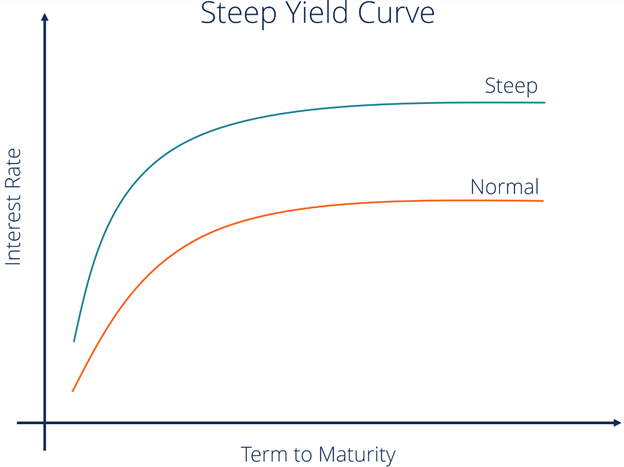
Typically, in fixed-income markets, lenders can match their preferred time horizon with the maturity of a bond. As that maturity extends into the future, the yield increases to adequately compensate for the opportunity cost of capital. This is known as fixed-rate lending. And it's a useful tool for investors as it enables them to earn a predetermined interest rate over a set amount of time. It is also helpful for borrowers as they too would like certainty around the interest rate they pay on loans.
Not only are fixed-rate loans a necessary instrument for a functioning financial system, but they have some important emergent properties. By setting distinct rates over time you can derive a yield curve that provides critical insights into the sentiment of the market. In “normal” times the curve is upward sloping to reflect the increased yield needed to offer investors for longer-dated securities. If this curve steepens, it means that even more incentive is required to convince them to lend over longer time horizons because they deem there to be more profitable opportunities elsewhere. In other words, the market believes in good times ahead.