The tether-ization of wBTC

Crypto is full of tradeoffs. Users who don’t want to worry about losing their private keys can sacrifice control for better user experience by moving funds to Coinbase. Developers who want to build a dApp can concede node decentralization for higher throughput by moving from Ethereum to a DPoS chain like EOS. Traders who care about self-custody can opt for DEXs over centralized exchanges knowing they’ll face higher fees and slippage.
These types of trade-offs are core design decisions of crypto networks. We’re seeing this play out with stablecoins and other pegged assets where tokens are optimizing for either scalability or trustlessness.
Stablecoins prefer scalability
Scalability is the ease and likelihood with which the asset can expand its supply. This means mechanisms must be in place to increase the supply in line with demand. For example, as demand for a stablecoin like tether increases, it will drive up the price which incentivizes arbitrageurs to mint more and sell them on the open market to restore the peg.
On the other hand, in a more trustless system like MakerDAO, it’s more difficult to arbitrage price discrepancies in the absence of 1:1 transferability with the underlying asset, making it less scalable. That being said, this model does not require trust to be conferred in a third party who can unilaterally censor transactions.
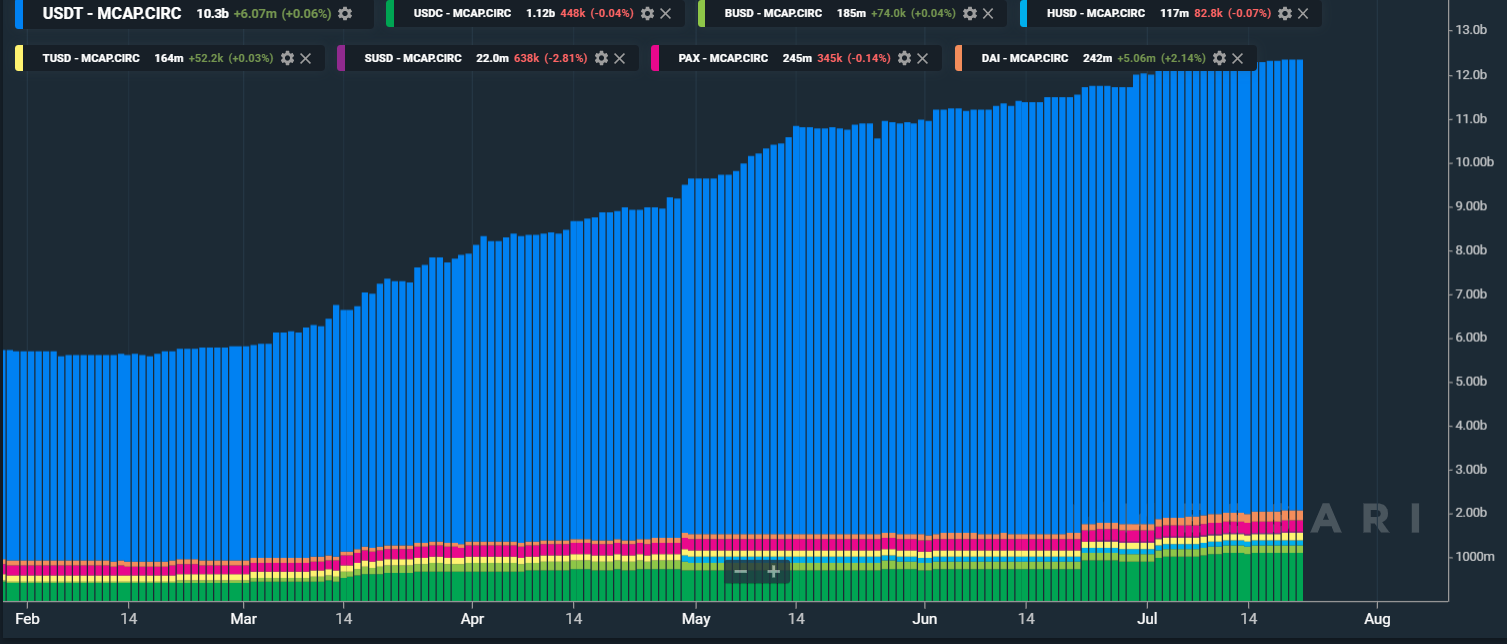
We’re seeing this battle played out between these different approaches with the market deciding in favor of the more scalable assets.