The NFT Effect on the Music Industry

The NFT renaissance is transforming all pieces of media from traditional formats and business models to digitally native ones. Visual Art has been the prominent format that has seen billions of dollars in volume, with continued growth in market size and players. Art NFTs have seen activity around profile pictures (PFPs), generative collections, visualizers, digital/physical pieces, gaming objects, etc. Typically, art NFT owners, outside of profit, find intrinsic value in the art and artists, and bluechip collections have done exceptionally well, even though investments in NFTs remain largely illiquid.
Music has proven to be a more complex situation as it involves multiple layers of creation and production effort from many persons and entities. Compared to static images, audio content is dynamic and requires iterations of sound, writing, and production value before coming to its final form. However, the effect of NFTs on music appears to be something artists and builders alike are trying to figure out as NFTs provide increased opportunity for artists to unlock added channels of revenue and opportunity, including bringing fans into the mix.
Rather quickly the market is forming a consensus – NFTs will restructure the music industry as a whole, first by altering how music is created and consumed.
The Current Playing Field
Various collectives have formed to support music in areas such as discovery, production, and distribution.
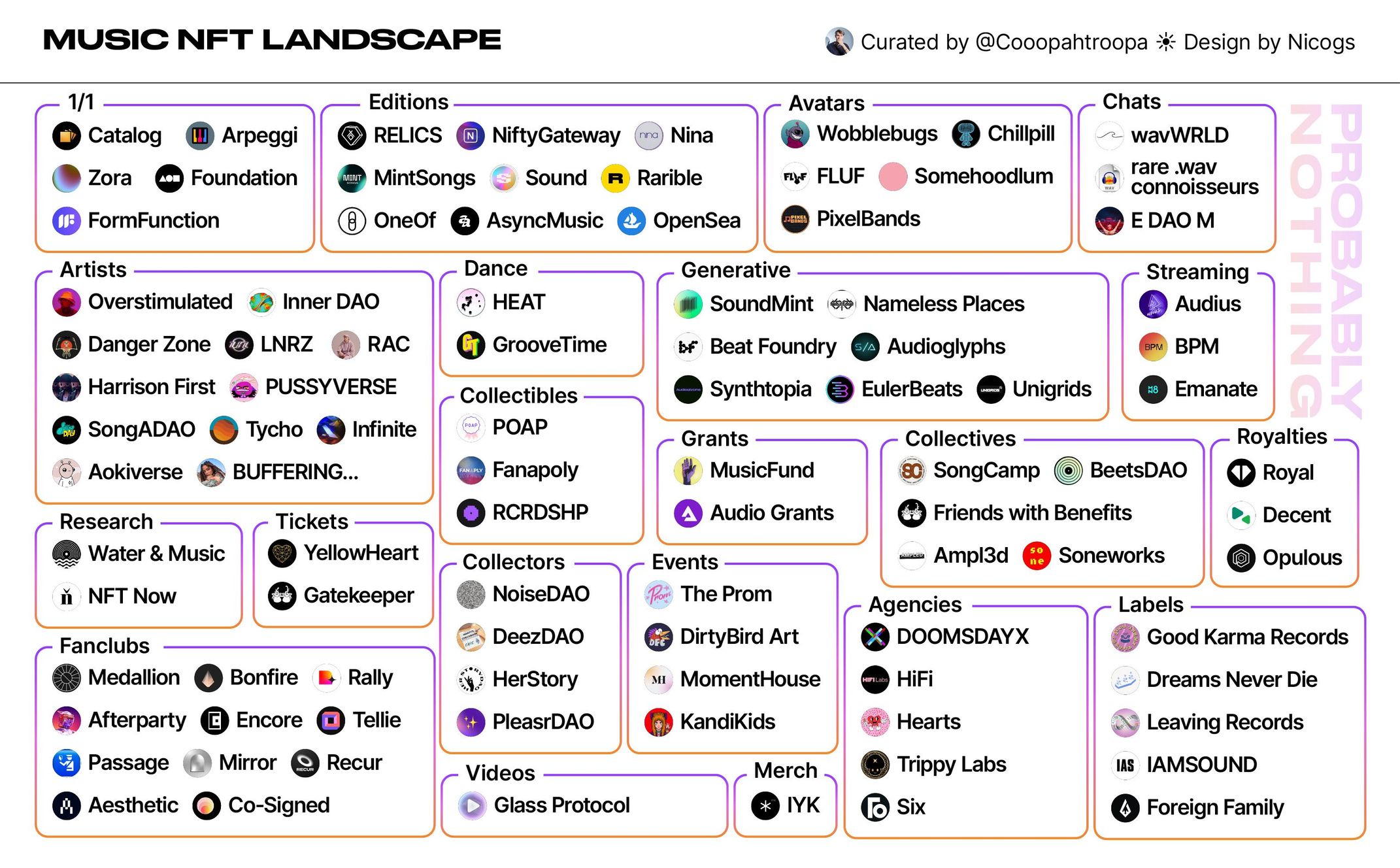
Source: Cooper Turley

Eshita is a Research Analyst at Messari focused on Web3 topics. Previously, she was a Venture Fellow at Bloomberg Beta and prior to that was working on data at Shareworks by Morgan Stanley.