The Financialization of NFTs


Similar to assets within DeFi, non-fungible tokens require similar primitives like lending, liquidity, and asset management, an area that is currently being built on. Additionally, while the fundamental value proposition for NFTs lies within their uniqueness, fungibility is important for increasing liquidity and the financialization of NFTs.
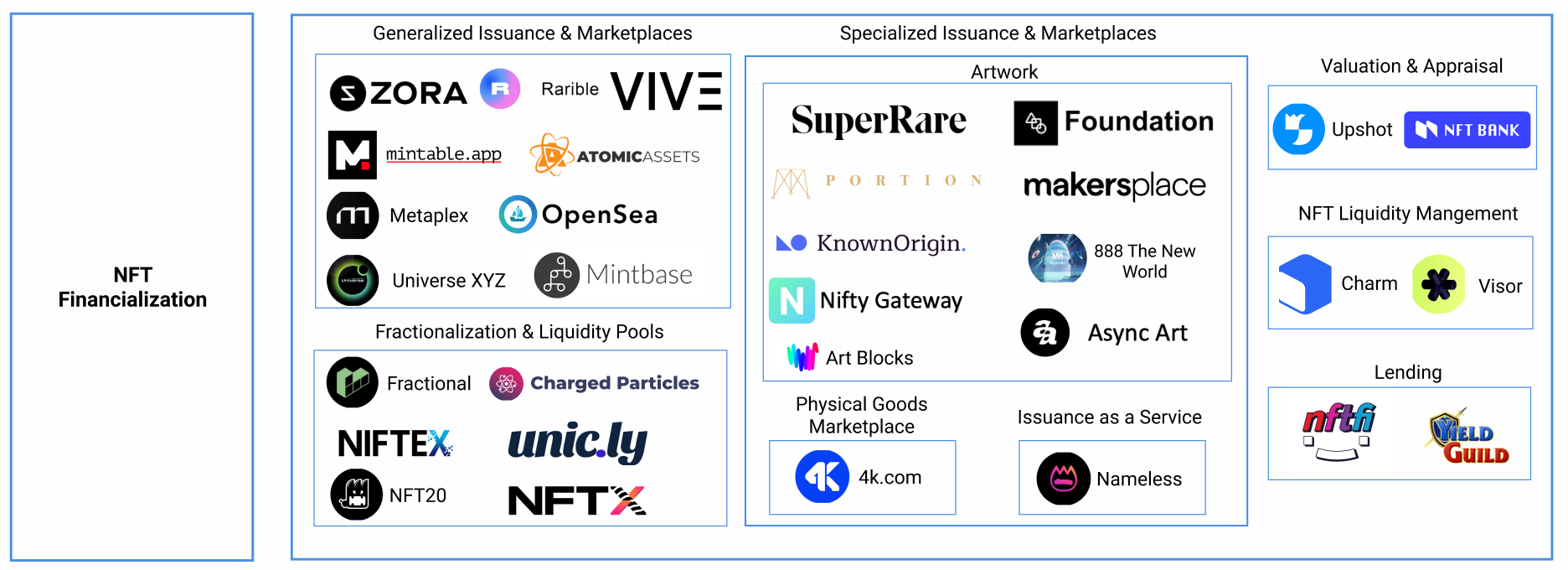
Source: The NFT Stack by Messari
Liquid tokens have thousands of buyers and sellers, but every NFT transaction requires a single buyer and a seller––pointing to lower liquidity. To date, the projects focused on the financialization of NFTs are attempting to, unironically, make non-fungible tokens as fungible (and liquid) as possible.
Show Me The Liquidity
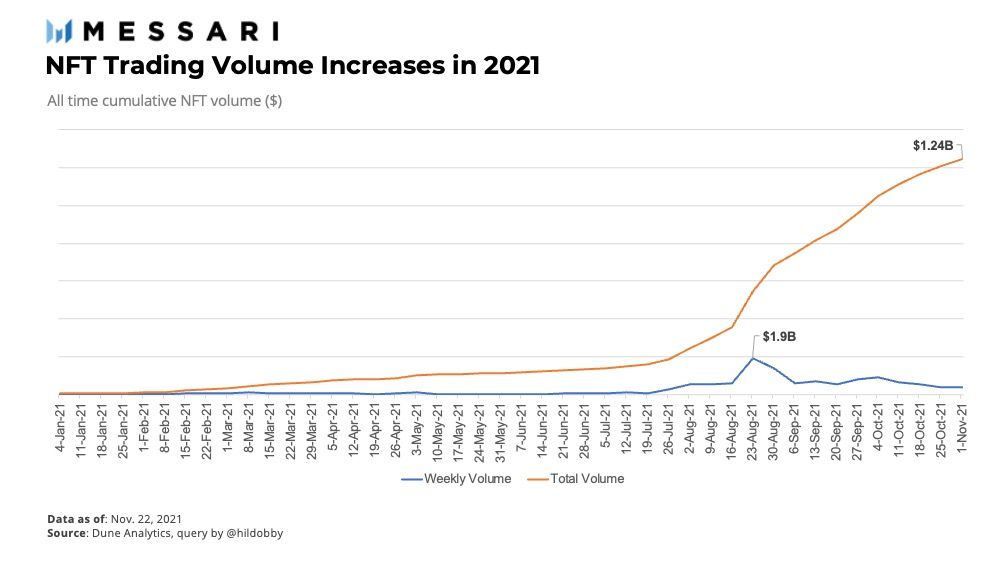
Similar to physical collectibles, like trading baseball cards, NFTs face the illiquidity issue especially for projects that are not highly valued and coveted. Though the NFT market is on the rise, we typically see that the potential for this asset is untapped. NFT trading volume has surpassed $13 billion on Ethereum alone and will continue to increase over time as new types of assets are tokenized onto blockchains.

Eshita is a Research Analyst at Messari focused on Web3 topics. Previously, she was a Venture Fellow at Bloomberg Beta and prior to that was working on data at Shareworks by Morgan Stanley.

Mason was a Senior Research Analyst at Messari focused on Web3 protocols and cryptoassets. Before Messari, Mason worked at ConsenSys as a Content Marketer focused on marketing strategy. Mason obtained his Master’s in Business Management at Hong Kong Baptist University.