The DePIN Sector Map

Decentralized Physical Infrastructure networks (DePIN) are the next step in the evolution of crypto-based networks. Building on the success of decentralized protocols coordinating and incentivizing activity in the digital realm, DePIN networks leverage cryptoeconomic protocols for the deployment of real-world physical infrastructure and hardware networks.
DePIN networks – also known as Proof of Physical Work (PoPW), Token Incentivized Physical Infrastructure Networks (TIPIN), and EdgeFi networks – utilize blockchains to coordinate and align millions of individuals in the deployment and operation of trustless, permissionless, and programmatic infrastructure. This bottom-up approach is both more equitable and efficient compared to the traditional top-down deployment model of centralized entities.
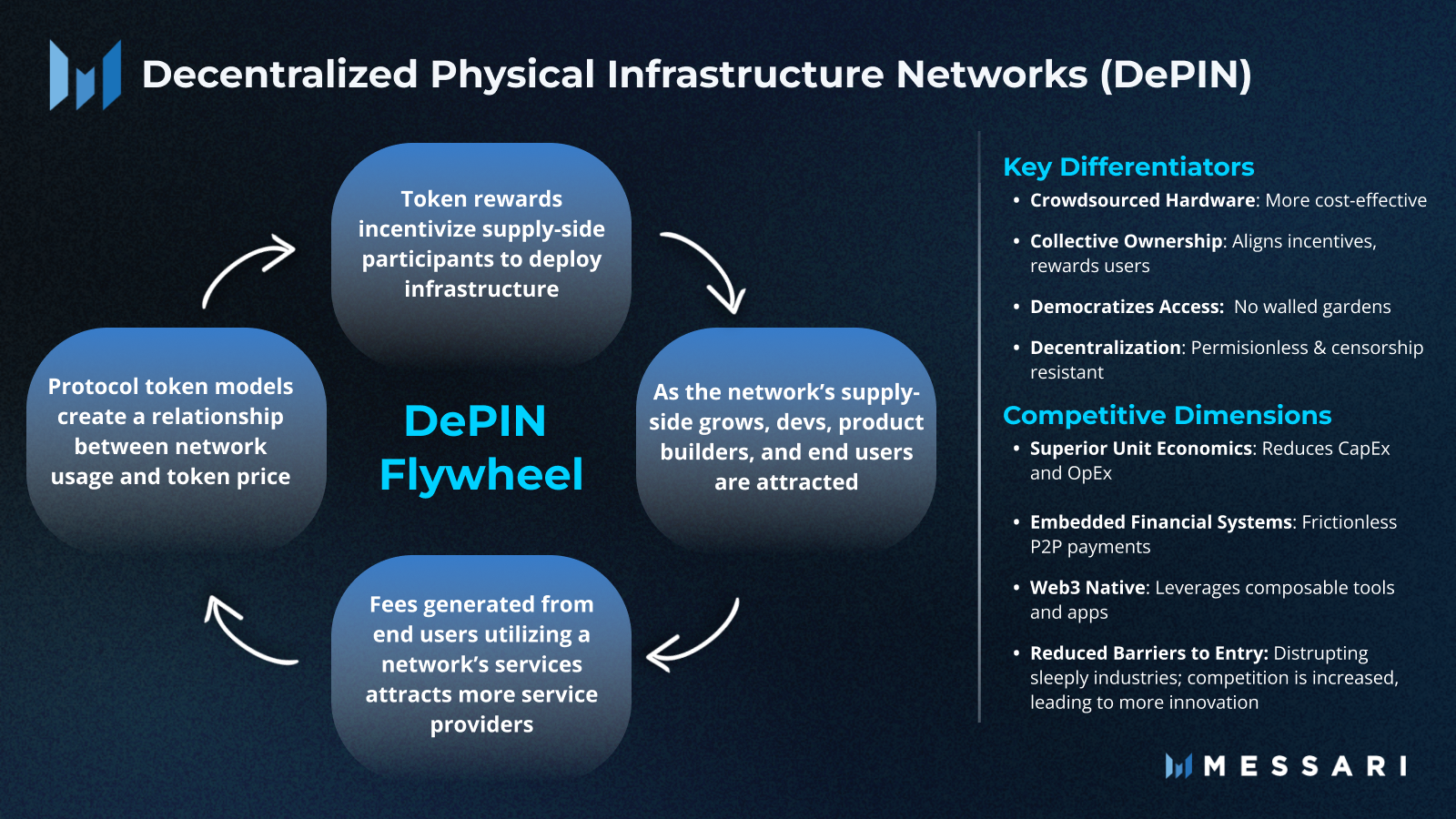
The DePIN economic model effectively solves the chicken-and-egg problem associated with traditional hardware networks. Using token rewards, a protocol can motivate individuals to bootstrap the supply-side of the network to the point where end users find its services attractive to use. Through this reward system, networks can build the initial momentum necessary to compete with established Web2 companies and gain adoption.
The shift away from traditional, centralized models of infrastructure deployment could potentially provide new levels of efficiency, security, and resilience, while also being more cost effective. For a deeper dive, see our previous report on building real-world infrastructure networks.
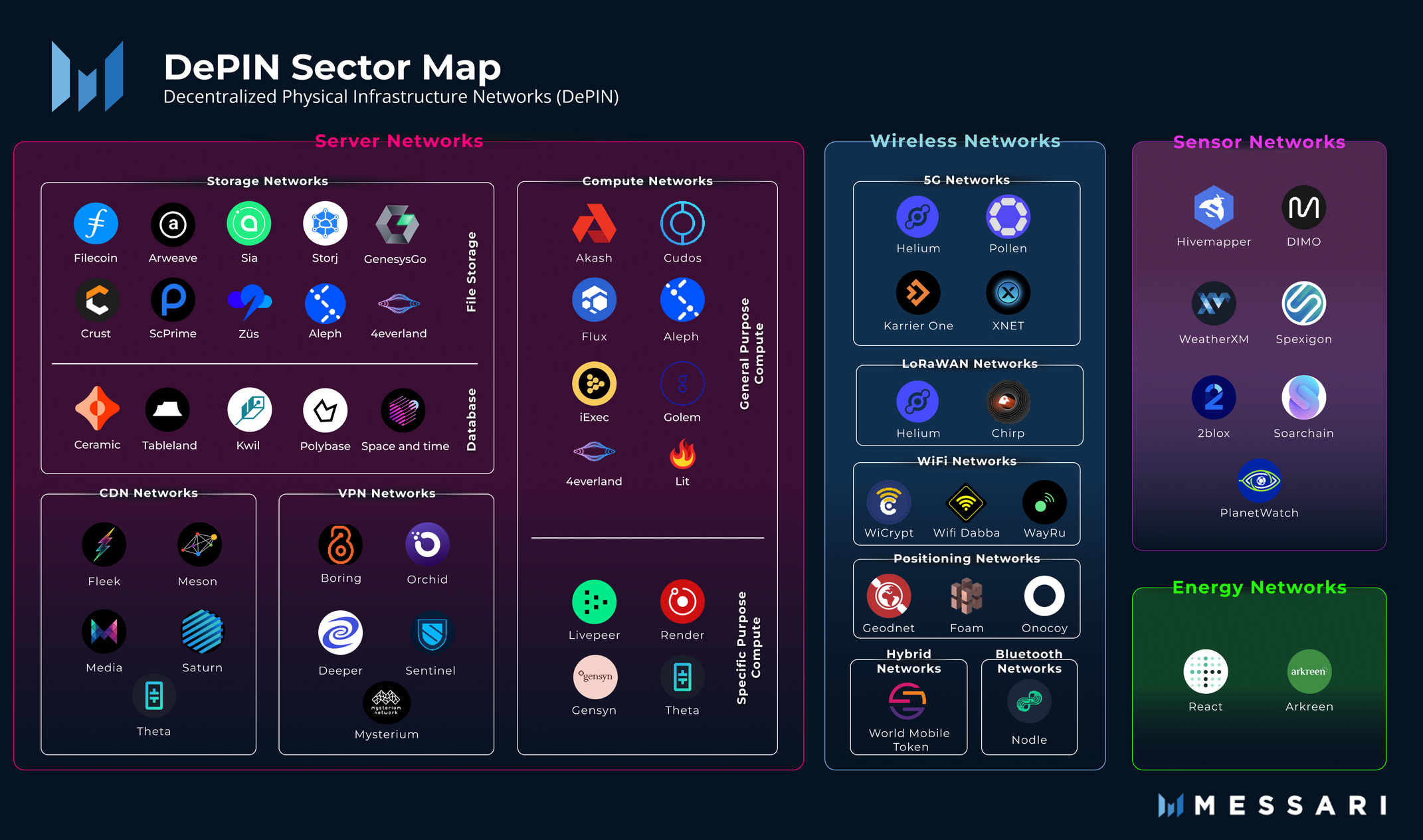
DePIN Sector Map

Sami Kassab is an Enterprise Research Analyst focusing primarily on Web3 Infrastructure and Bitcoin. Sami previously spent 5 years as an Aerospace Engineer designing aircraft engines and missile & defense systems.