The Dark Side of the Moon: Litecoin’s Halving

It’s impossible to go a day without someone mentioning Bitcoin’s halving as the catalyst for the next Bitcoin bull run. On average, every 10 minutes Bitcoin distributes new Bitcoin to miners as an incentive to provide hash power to secure the network. This distribution of new Bitcoin is called the block reward. This block reward halves every 210,000 blocks (~4 years) according to a programmatic schedule. The Bitcoin block reward has halved twice, and the current Bitcoin block reward is 12.5 BTC per block. Around May 2020 when Bitcoin will reach its 630,000th block, the block reward will be cut in half to 6.25 BTC per block.
The logic underpinning the belief that this could be a catalyst for the next Bitcoin bull run in supposedly simple. After the halving, there will be half as many new bitcoins available every block. Theoretically, there would be less selling pressure from miners who sell their Bitcoin to cover their fiat denominated costs. Furthermore, the reduced block reward would reinforce Bitcoin’s scarcity narrative. After the 2020 halving Bitcoin’s inflation rate will drop to 1.8%, with its stock-to-flow ratio coming within striking distance of gold’s. Despite limited historical data, as there’s only been two Bitcoin halvings to date, this “halving as a catalyst for the next bull run” narrative seems to be supported empirically. Each of Bitcoin’s two previous halvings were followed by breathtaking bull runs.
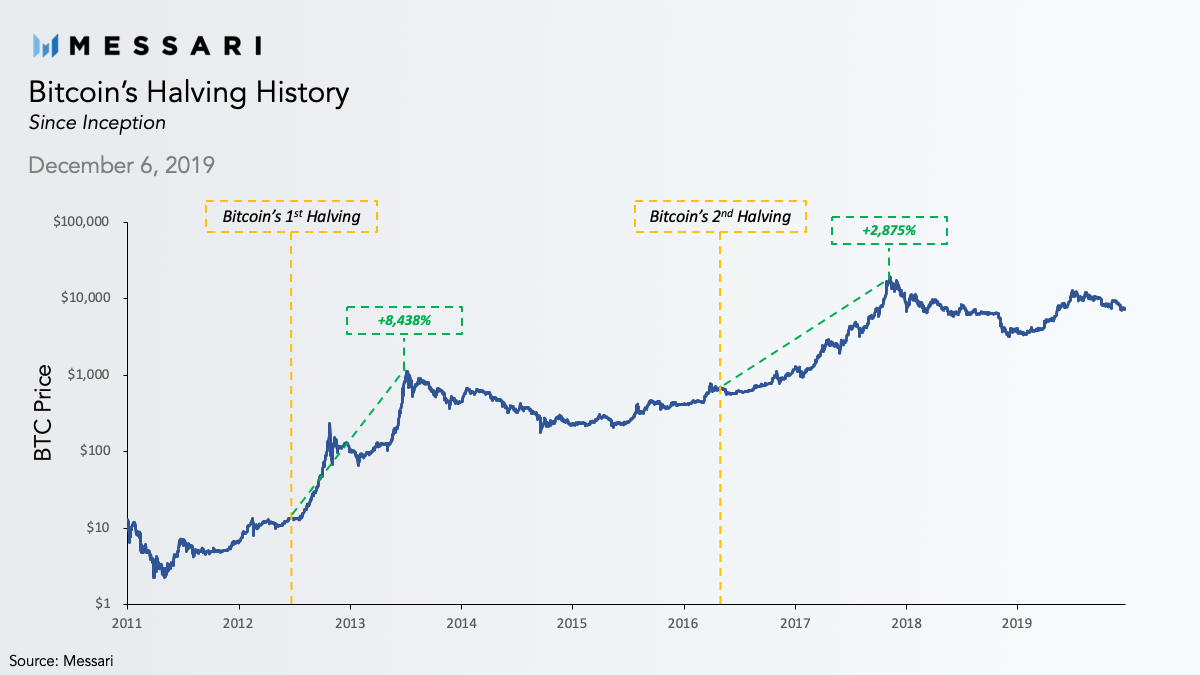
Bitcoin’s two halvings have been unquestionably positive events. But what is it that’s special? Is it halvings or Bitcoin? Are all halvings made equal? Must halvings always be followed by bull runs? For this, we turn to the “silver to Bitcoin’s gold”, Litecoin.
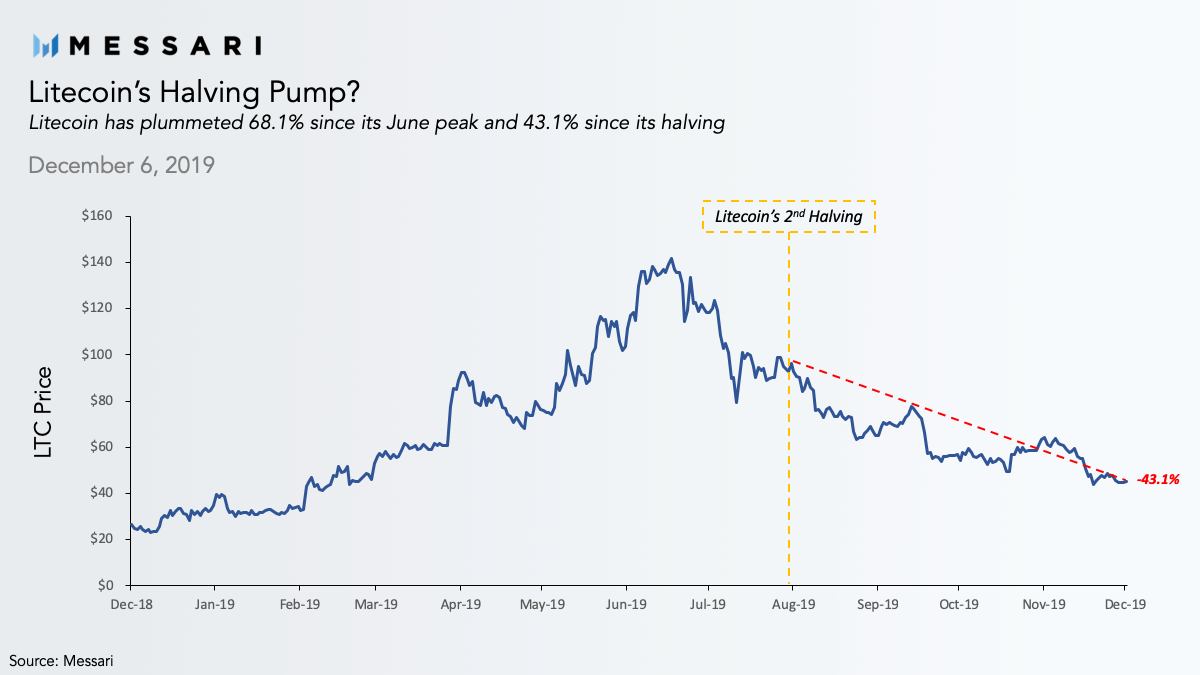
Like Bitcoin, Litecoin found itself the subject of significant hype leading up to its halving. Armed with the history charted above, spectators hypothesized Litecoin would also take off after its halving. And leading up to Litecoin’s halving… it did. Litecoin rose over 340% from January 1, 2019 until it peaked in June, just 2 months before its halving. However, the story afterwards is different.Litecoin has plummeted 68.1% since its June peak and 43.1% since its halving. With such a dramatic price decrease and a 50% cut to block rewards, hash rate has not faired well either. More than 66% of miners have dropped off the network since July after having their margins violently slashed. All things equal this behavior generally is not unusual as halvings tend to rid the network of inefficient and older miners, but such a severe drop is alarming.
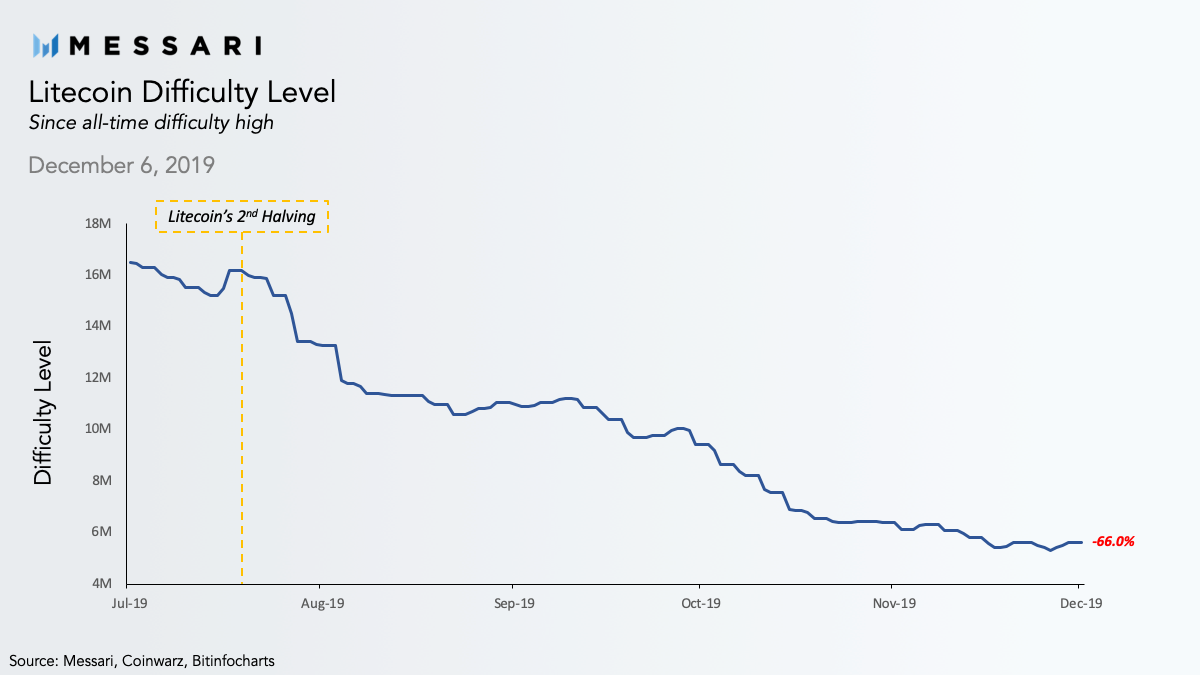
After all the hype around Litecoin’s halving, it now finds itself in an interesting position. Hash rate now sits where it was in January, while price now sits just over 2 times where it was to start the year. Block reward halves, price doubles, hash rate stays the same… maybe Litecoin’s hash rate has found a local bottom?
Regardless, and once again I acknowledge our data points are limited, Litecoin’s recent halving suggests that halvings are not unilaterally positive events for cryptocurrencies. Maybe Bitcoin is different, but maybe it’s not, and if that’s not enough then maybe Bitcoiners can find solace in the fact that Litecoin ran up more than 340% leading up to its halving. A self-fulfilling prophecy of sorts.

Ryan Watkins was a Senior Research Analyst at Messari. Previously, he worked at Moelis & Company as an Investment Banking Analyst where he worked on deals in the technology, telecom, and fintech sectors. Ryan graduated Magna Cum Laude from the Gabelli School of Business at Fordham University.