The Convex Complex: How Convex Finance is Shaping DeFi

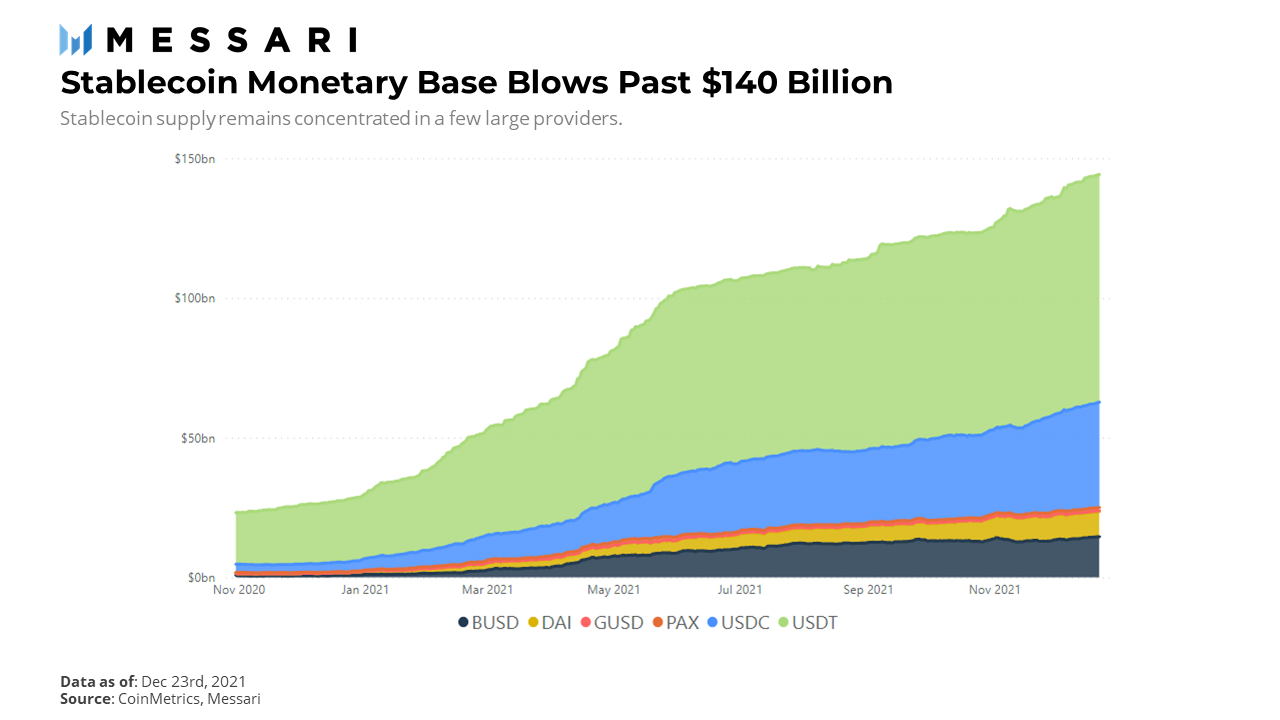
We’ve recently seen the total stablecoin supply top $130 billion, and Curve’s role as an automated market maker (AMM) is instrumental to these stablecoin users. Curve’s AMM pools use a specialized price curve to concentrate liquidity for pegged asset swaps, making it a choice destination for those looking to swap DAI → USDC, or USDC → USDT for example. Aside from just stablecoins, Curve’s model also allows efficient pegged asset swaps for assets that are designed to be stable relative to one another. For example, sBTC and wBTC are both ERC-20 tokens built on top of the Ethereum network which are pegged to the price of Bitcoin, meaning they can easily be swapped 1:1 on Curve. Curve also helps those looking to swap staked derivatives such as stETH for ETH. Operating on Ethereum, Avalanche, Fantom and scaling solutions such as Arbitrum and Polygon, Curve has amassed a very wide foot-print across the multi-chain DeFi ecosystem with a TVL of $21.1 billion. This growth has made its CRV governance token an increasingly important source of yield and a tool for protocols to maintain their assets’ pegs.
A Multi-Chain Leader
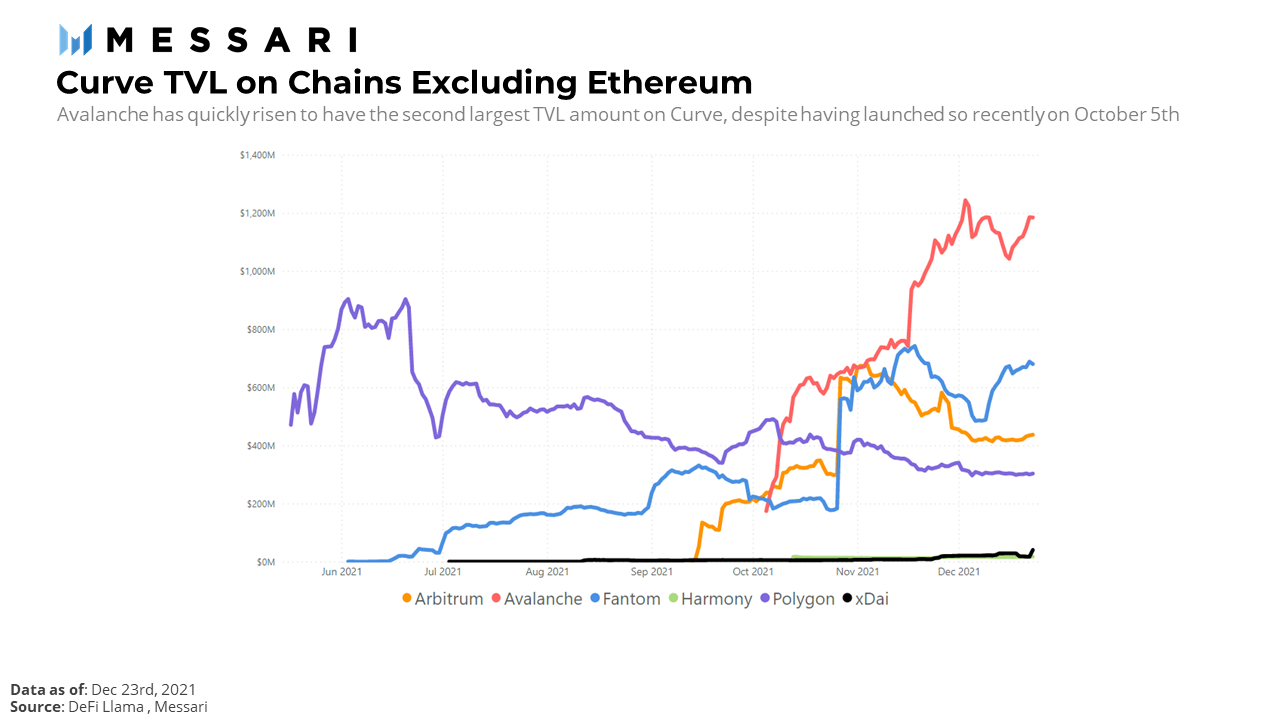
As bridging capabilities from Ethereum to other chains emerge, capital is finding its way to new chains. In addition to Ethereum, Curve Finance is currently operational on six other chains, giving it an additional $2.5 billion in TVL. Most impressively, we’ve seen Avalanche quickly rise to become Curve’s dominant alternative platform with over $1.2 billion of TVL despite having launched in early October. While chains other than Ethereum continue to develop, stablecoins and other stable assets will likely grow in popularity, furthering the need to have a protocol like Curve Finance, or something similar to it. Note that all Curve governance activity remains solely on Ethereum. As liquidity continues to grow across these different chains, the total number of Curve pools across all chains will likely grow as well.
Curve Functionalities
Let’s retrace a bit to first understand how Curve Finance operates, and why there is any value in holding governance power for it. The CRV token currently has three main uses: voting, staking, and boosting. To understand voting, it’s important to note Curve Finance operates as a DAO (Decentralized Autonomous Organization), meaning there is no central authority which decides the future of the protocol. Instead, the ambitions of the project are governed by the Curve DAO token holders (CRV). To gain voting power, CRV holders must time-lock their tokens for a period of one week to four years, and in return holders are given a non-transferable veCRV token (ve= vote escrowed). The longer you lock your tokens, the more voting power you receive, meaning a four year time lock gives you the most voting power possible and a one week lock gives you the least. Once you receive veCRV, you can vote on proposals that dictate the future endeavors of the Curve protocol. Proposals can extend Curve’s reach by launching on new chains or supporting new asset pools, but most notably, they can dictate the rewards distributed to existing pools.
