The Bull Case for Automated Market Makers Tokens

Decentralized exchanges (DEXs) have become foundational pieces of infrastructure in the crypto world. Last month they surpassed 5% of total crypto exchange volume with that figure growing every day. This is largely due to the meteoric rise of automated market makers (AMMs) like Uniswap, Curve, and Balancer, which account for over 90% of total DEX volume.
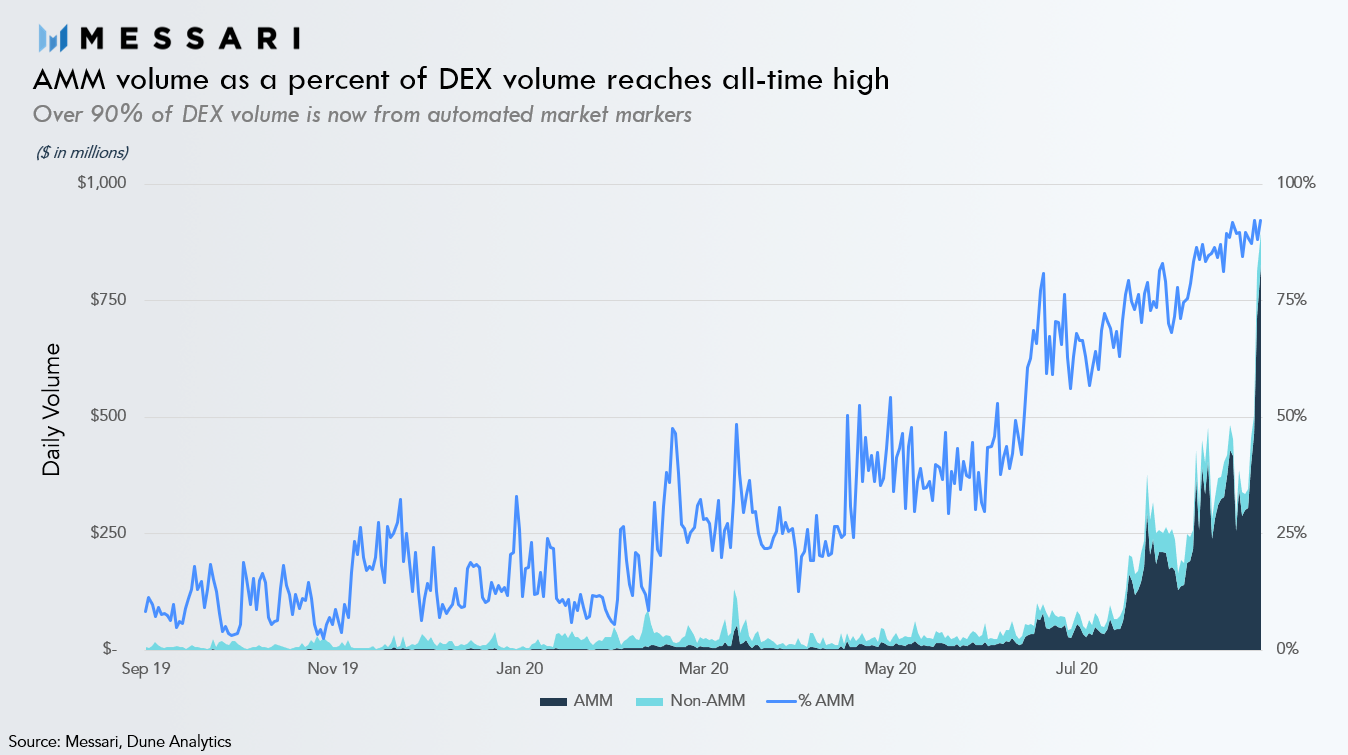
AMMs are a type of exchange where rather than individuals placing buy and sell orders to determine the price like central limit order books (CLOBs), assets are pooled together with the price determined by the ratio between the two assets looking to be traded. This allows anyone to become a market maker by depositing idle assets and earning fees as the smart contracts automatically execute the trades. This contrasts with CLOBs where traders need to actively monitor order books using sophisticated risk management techniques.
Given the number of token holders searching for yield but lacking this expertise, the supply side of AMMs has been more easily bootstrapped compared to order book DEXs. This in turn provides a better trading experience by reducing slippage, which as noted above, succeeded in attracting the demand side.
It’s evident AMMs are dominating with no signs of slowing down. While questions remain as to their long term viability, a path towards their continued success is materializing in front of us. Below I outline the driving forces behind this success as well as how it translates to value for token holders.
.
Bull Case: niche use cases drive revenue growth
