Synthetix on Optimism

Ethereum’s high gas fees make trading synths on Synthetix expensive and compress SNX staking returns. Creating, redeeming, and trading synths are all complex transactions, so Synthetix is a gas guzzler.
Luckily, Optimism Ethereum (OE) will reduce gas fees by orders of magnitude as Synthetix moves to Ethereum’s Layer 2. Early results from SNX staking and synthetic asset trading tests on OE show promising potential. Gas savings create opportunities for stakers to grow the synthetic asset base and for asset management protocols to earn fees to trade synths on behalf of investors. The Synthetix revenue model creates a positive feedback loop, and OE’s improved performance and cost reductions will compound it. If Synthetix can manage execution risks, like L2 migration, and systemic risks, like Optimism adoption, Synthetix is positioned to be one of L2’s greatest beneficiaries.
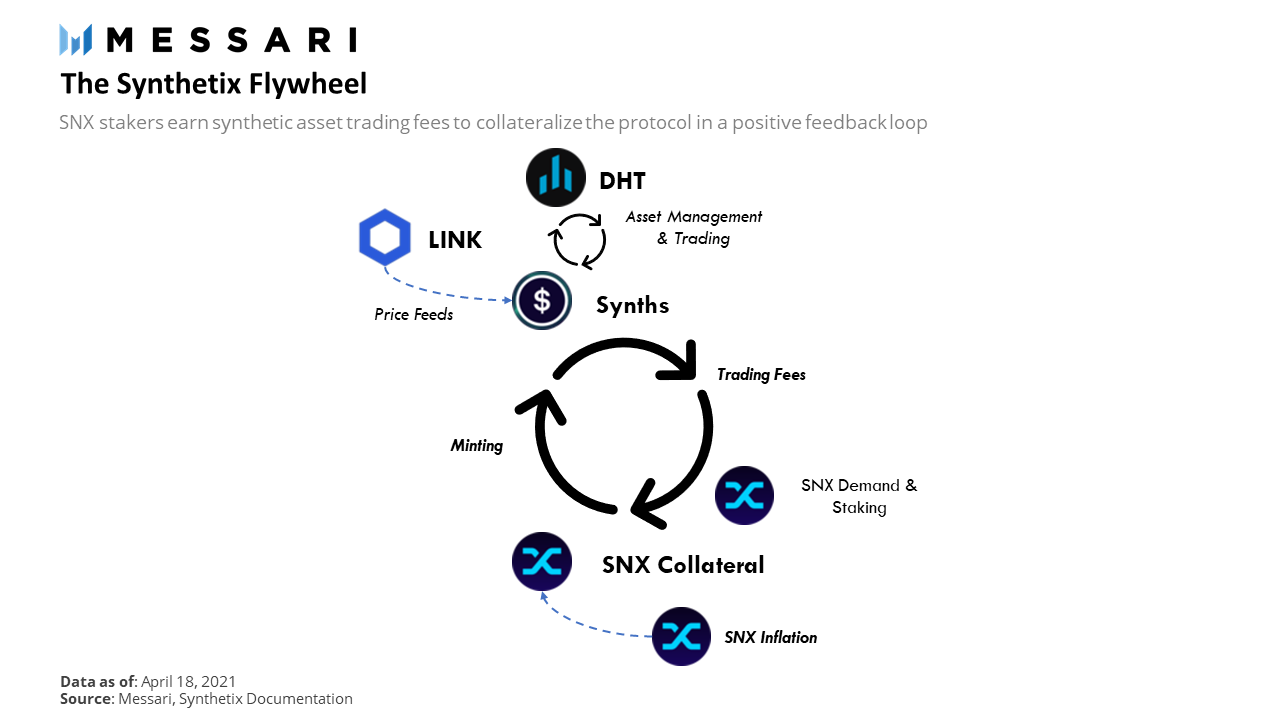
The Synthetix Flywheel
Synthetix rewards SNX stakers with two income streams - SNX inflation and sUSD trading fees. Inflation is programmatic and controlled by the Synthetix DAO. Its purpose is to incentivize Synthetix’s liquidity given that the total synth supply is a function of how much SNX is staked as collateral. Stakers earn SNX rewards each epoch, weekly, according to the inflation schedule and the staker’s proportion of the SNX pool on Synthetix. Stakers can claim their reward at the end of each epoch and must escrow their new SNX in the protocol for one year. Trading fee rewards are also controlled by the DAO, and averaged 41 bps per trade on Synthetix.Exchange over the last year. Stakers earn sUSD trading fees based on their SNX pool share during each epoch with no escrow required.
SNX stakers currently receive an APY of 31.2%, which includes 30.3% from SNX inflation yield and 0.9% sUSD trading fees. Inflation yields require DAO decisions to change, so they remain stable. Trading fee yields, however, require more Synthetix.Exchange trading to grow.
The trading reward model is designed to propel a positive SNX staking feedback loop that grows the platform’s collateralization, or capacity to mint more synths. Synthetix collateral increases as total SNX value staked increases. More synth trading generates more trading fees rewarded to SNX stakers. As SNX staking becomes more attractive, SNX demand increases, which also increases the Synthetix collateralization ratio, and increases synth capacity. Synth trading creates the following flywheel for SNX value: