Synthetic Dollars Collateralized by GPU Cash-Flows

Introduction
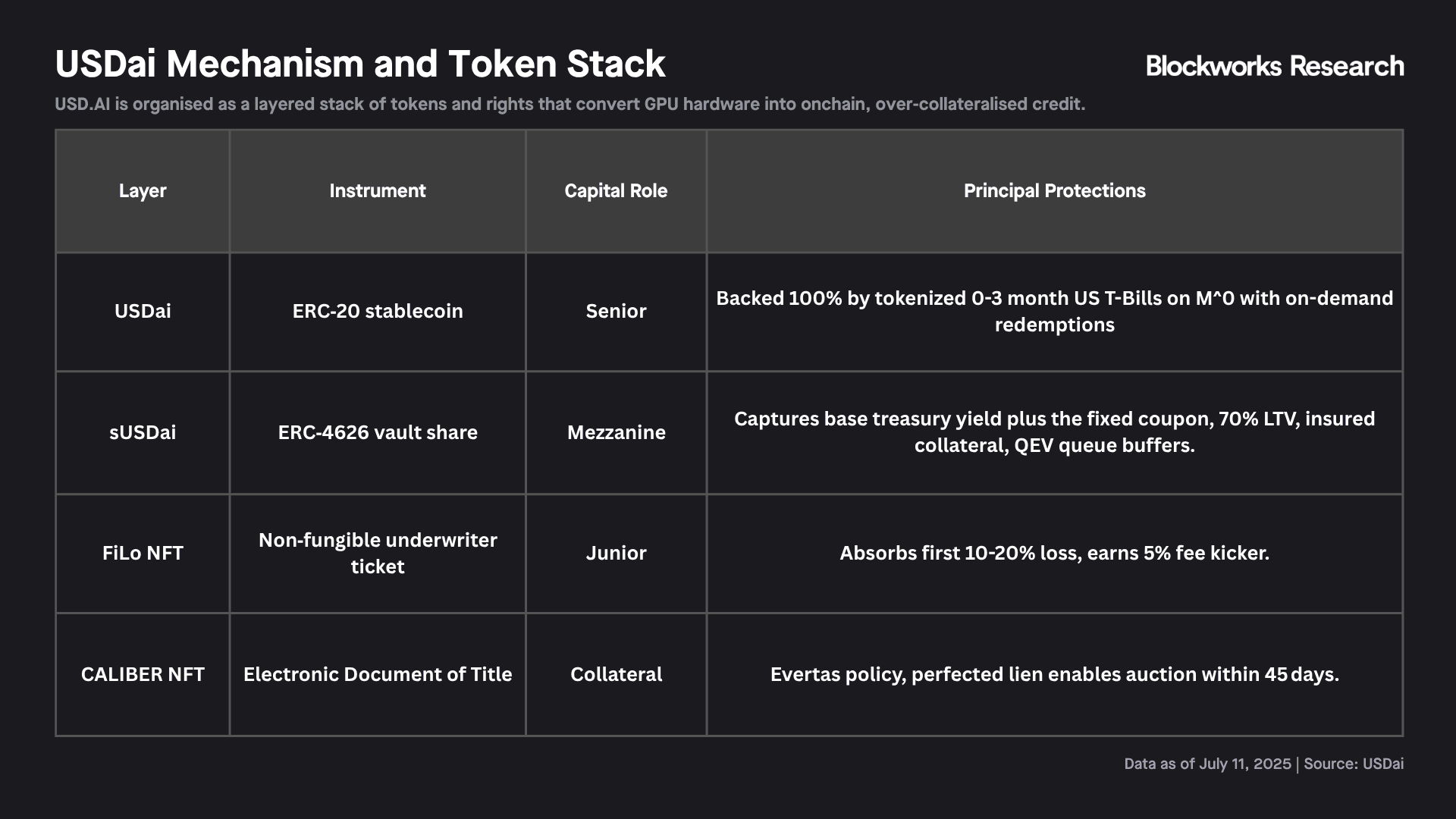
USDai, developed by Permian Labs, is a synthetic dollar fully backed by tokenized three‑month T-bills custodied by M^0. When holders stake USDai in an ERC-4626 vault, they mint sUSDai, which finances short-term, amortizing loans secured by NVIDIA-class GPUs and servers. sUSDai NAV equals the vault’s idle, staked USDai plus the loan book, valued conservatively at principal only, or optimistically at principal + accrued interest to allow for potential defaults. CALIBER NFTs confer legal title to each asset, while a Uniform Commercial Code lien and Evertas insurance policy enable the protocol to repossess and liquidate the hardware in the event of default. FiLo NFTs supply junior capital through curators originating the loans and absorbing the first-loss tranche, aligning incentives and supporting rapid scale.
Every 30 days the vault takes a snapshot of the idle USDai and principal‑plus‑interest due from the amortizing GPU loans it plans to receive in the next month, and releases about 40‑50% of that immediately‑liquid cash for redemptions. A dark‑pool mechanism then batches that month’s time‑weighted sUSDai withdrawal requests into a single redemption block, settling bids strictly against the cash on hand for each window. At this time, any stakers can choose to exit their position by depositing their sUSDai into a time‑stamped redemption queue. Instead of processing that queue strictly first‑come‑first‑served, the protocol runs a sealed‑bid “Queue Extractable Value” (QEV) Dutch auction at the end of the epoch. Redeemers may attach basis-point quoted tips, to purchase a redemption priority, while external market makers can simultaneously submit blind offers to purchase sUSDai for fresh USDai. When the auction closes, withdrawal requests are filled in descending order of tips until the utilization cap is reached, and any unfunded requests roll automatically to the next month. The tips paid by impatient redeemers, together with any spread earned from market makers, are recycled into the vault and accrue to the benefit of stakers who stayed, monetizing liquidity demand in exchange for priority redemptions.
Because the clearing price in a Dutch auction starts high and falls until enough bids appear, each participant only pays the marginal premium needed to secure their place, avoiding last‑second “gas wars” and giving smaller depositors a fair shot at fast liquidity. Crucially, the QEV auction governs sequencing, not price. Every USDai that clears is redeemed 1‑for‑1 in the base stablecoin (USDC or USDT). If the queue is over‑subscribed, a bid may be partially filled and the unpaid portion simply waits for the next window, but is never force‑sold at a discount. Market makers can pre‑buy USDai from impatient users in secondary markets or add larger tips to the Dutch auction, which enlarges that epoch’s payout pool but still requires them to win priority like everyone else, disabling queue leapfrogging. With GPU rental income accruing daily while withdrawals clear monthly, this mechanism monetizes impatience, intends to shield the vault from sudden drains, and compels large exits either to pay a steeper tip or wait, making the dual‑token system behave much like asset‑backed commercial paper with a built‑in, market‑driven gate.
Should a borrower default, an offchain recovery agent appointed by the protocol can repossess and liquidate the machines or claim on the insurance policy, and realized proceeds flow back into the same liquidity pot that funds future redemptions. The combination of over‑collateralised, insured loans on the asset side and a market‑priced queue on the liability side lets USD.AI turn real‑world cash flows into an orderly, on‑chain exit lane where impatient stakers pay to leave early, patient stakers earn the premium, and the vault is not forced into a fire‑sale of GPUs as it would own those machines only if a borrower defaults. Until a default occurs, it simply holds the loan portfolio secured by them.
Why GPUs?

Nick leads coverage on the DePIN and Proof of Work sectors. Previously led research and engineering at a DePIN-focused accelerator.