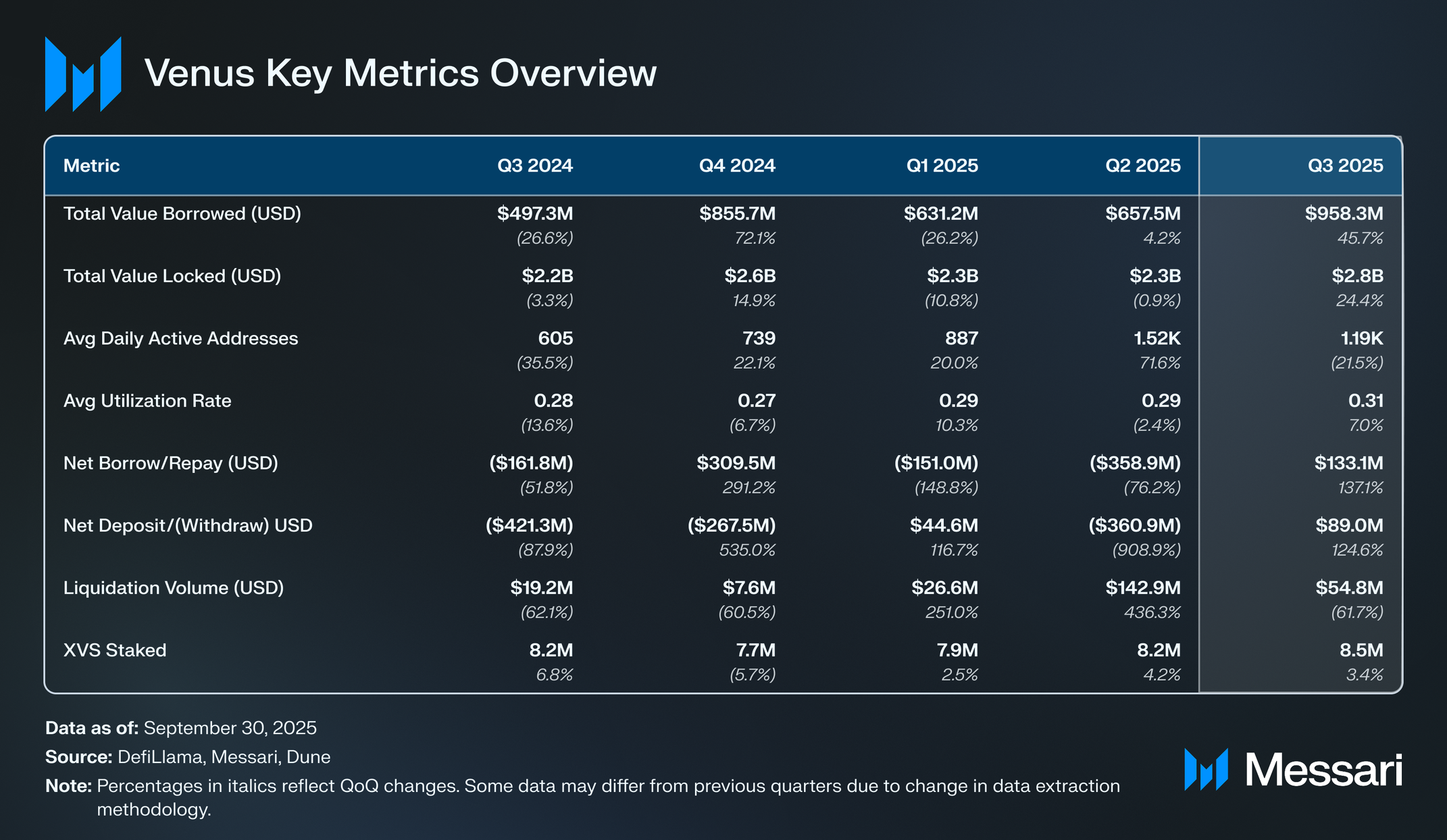
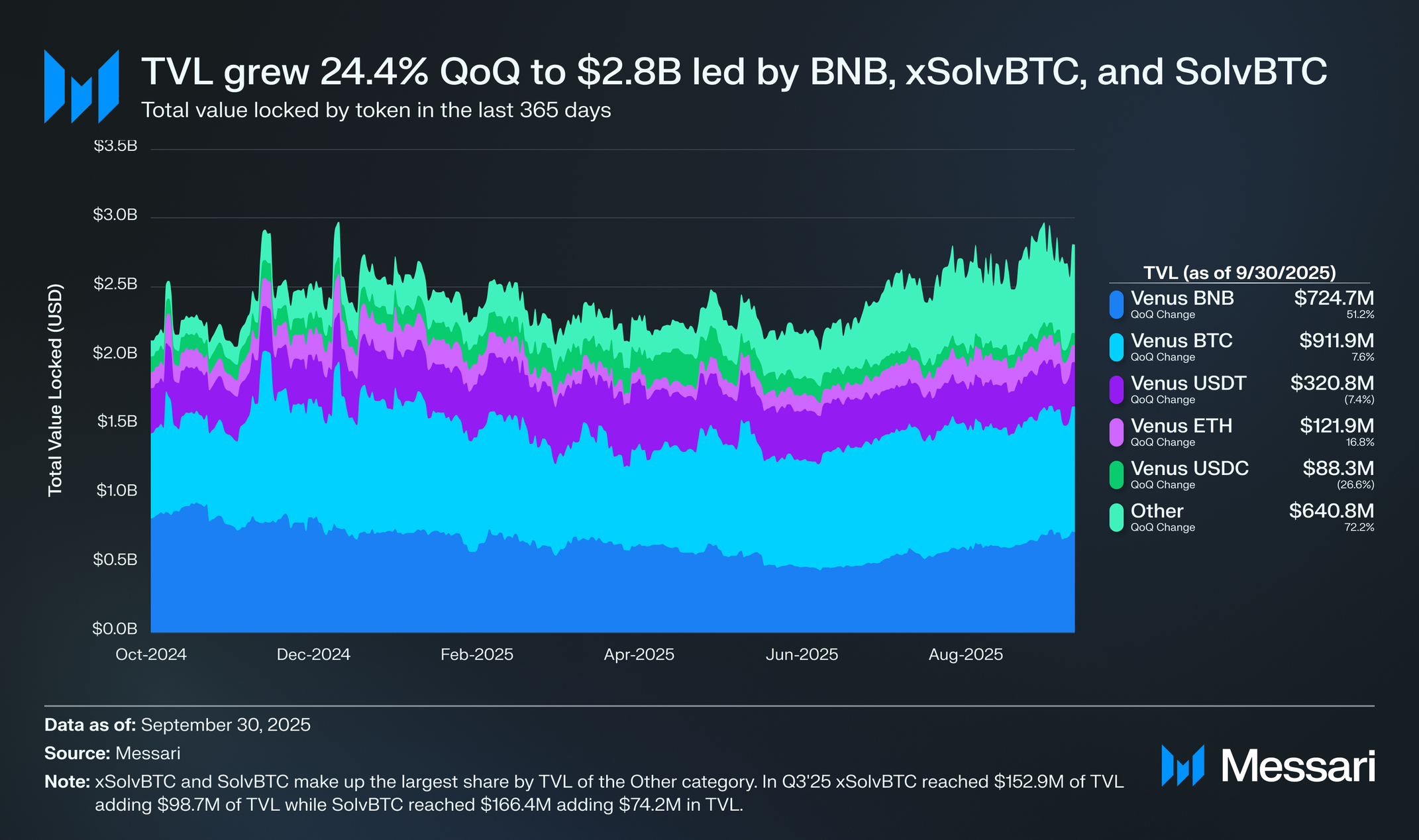
Venus TVL reached a new yearly high, growing 24.4% QoQ to $2.8B. TVL growth was driven by a surge in BNB and BTC-backed assets, including xSolvBTC and SolvBTC.
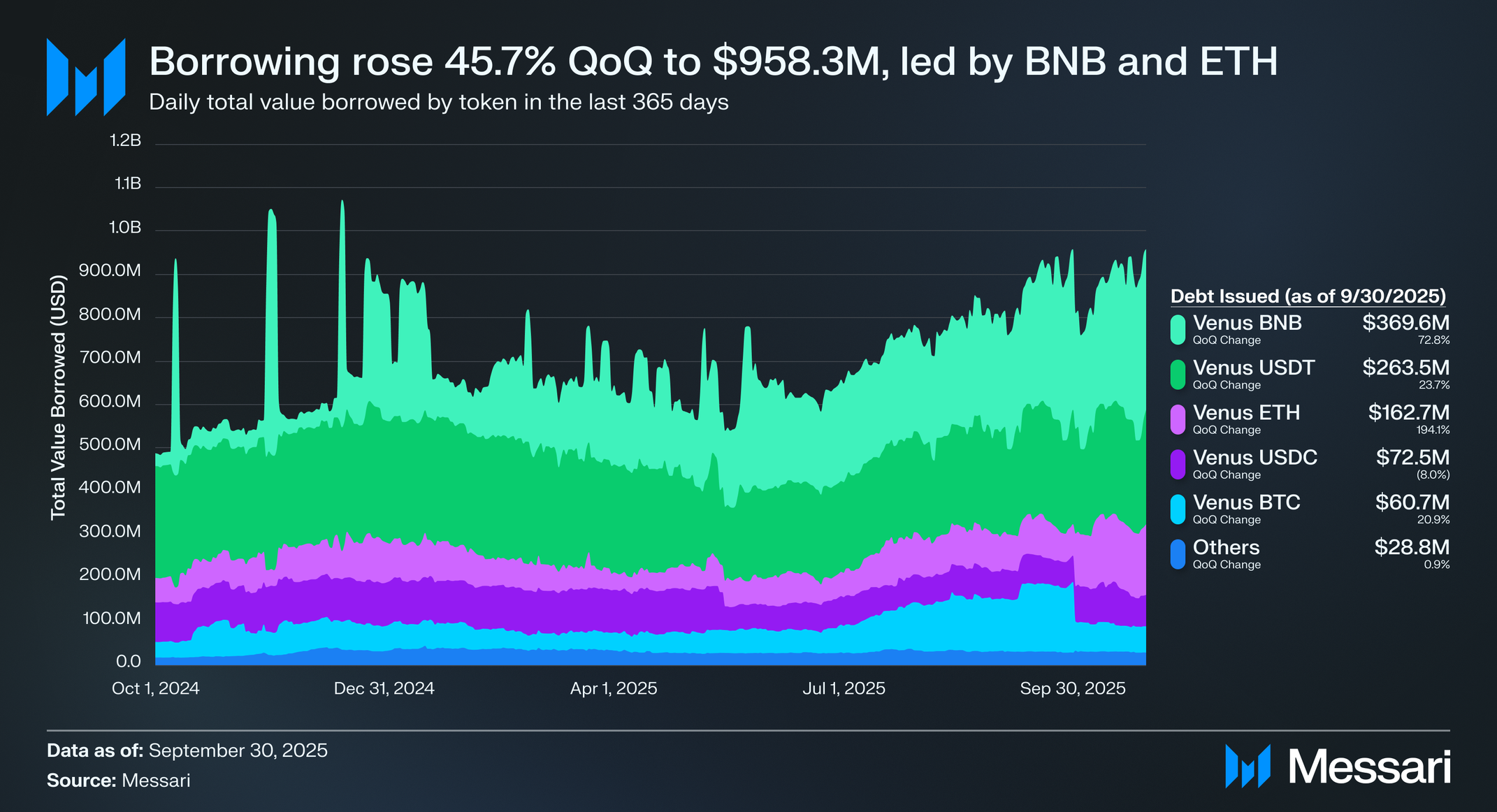
Venus’ total value borrowed climbed 45.7% QoQ to $958.3M. BNB borrowing rose 72.8% to $369.6M, and ETH borrowing grew 194.1% to $162.7M, lifting protocol utilization by 7.0%.
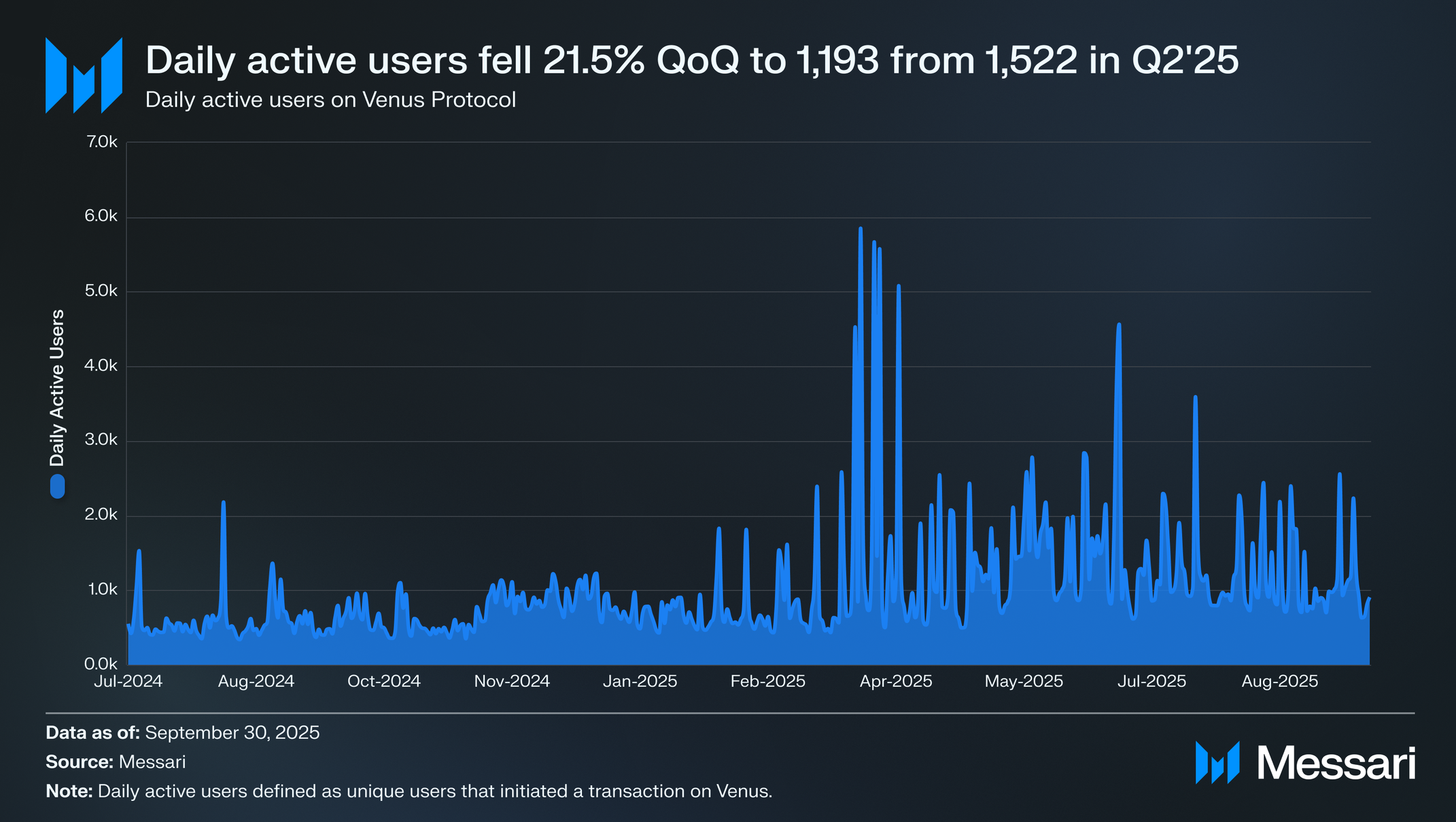
Daily active users declined 21.5% QoQ to 1,193, while deposits rose 6.2%. Despite lower user counts, overall activity remained strong as participants actively rebalanced portfolios.
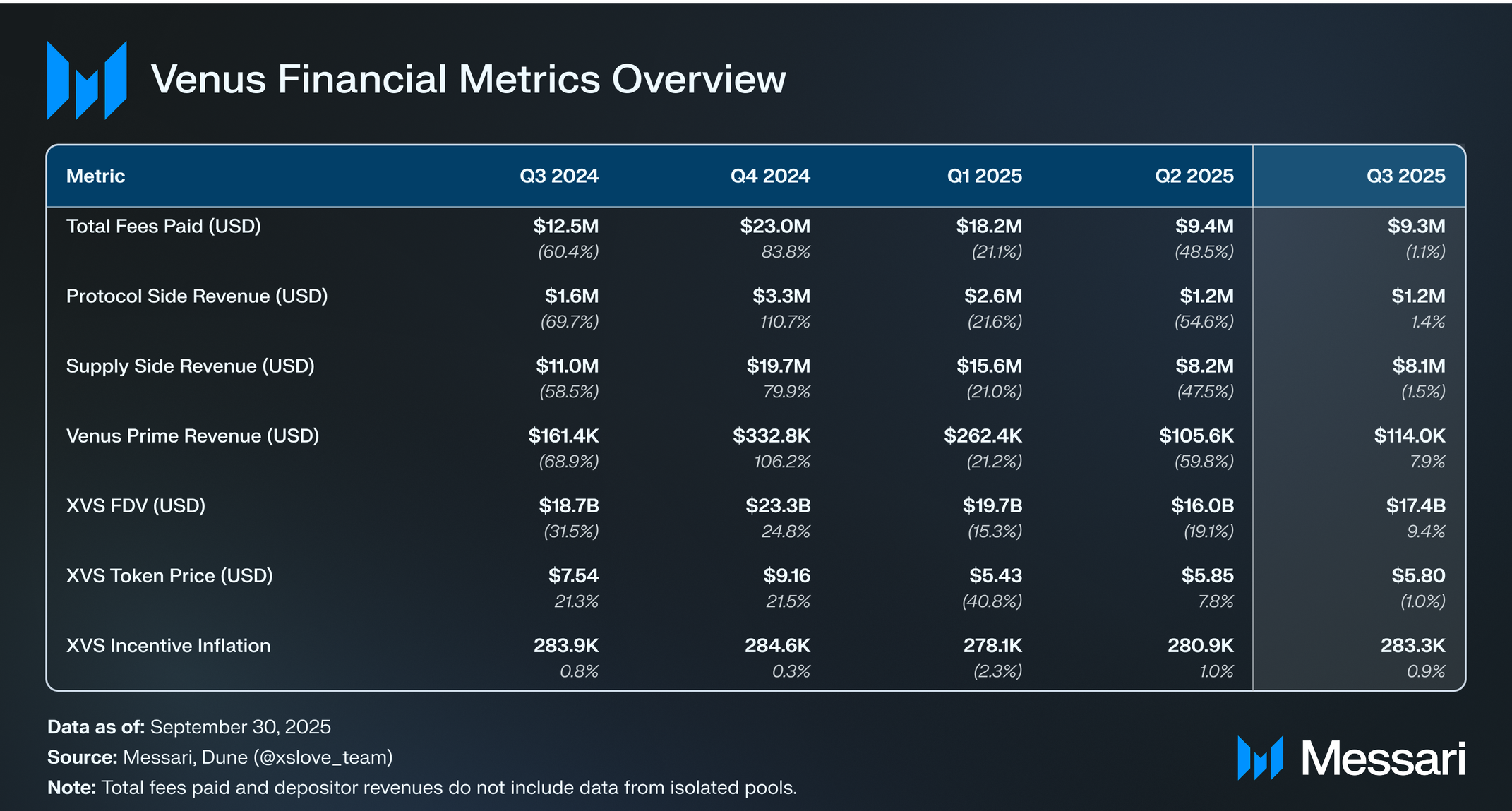
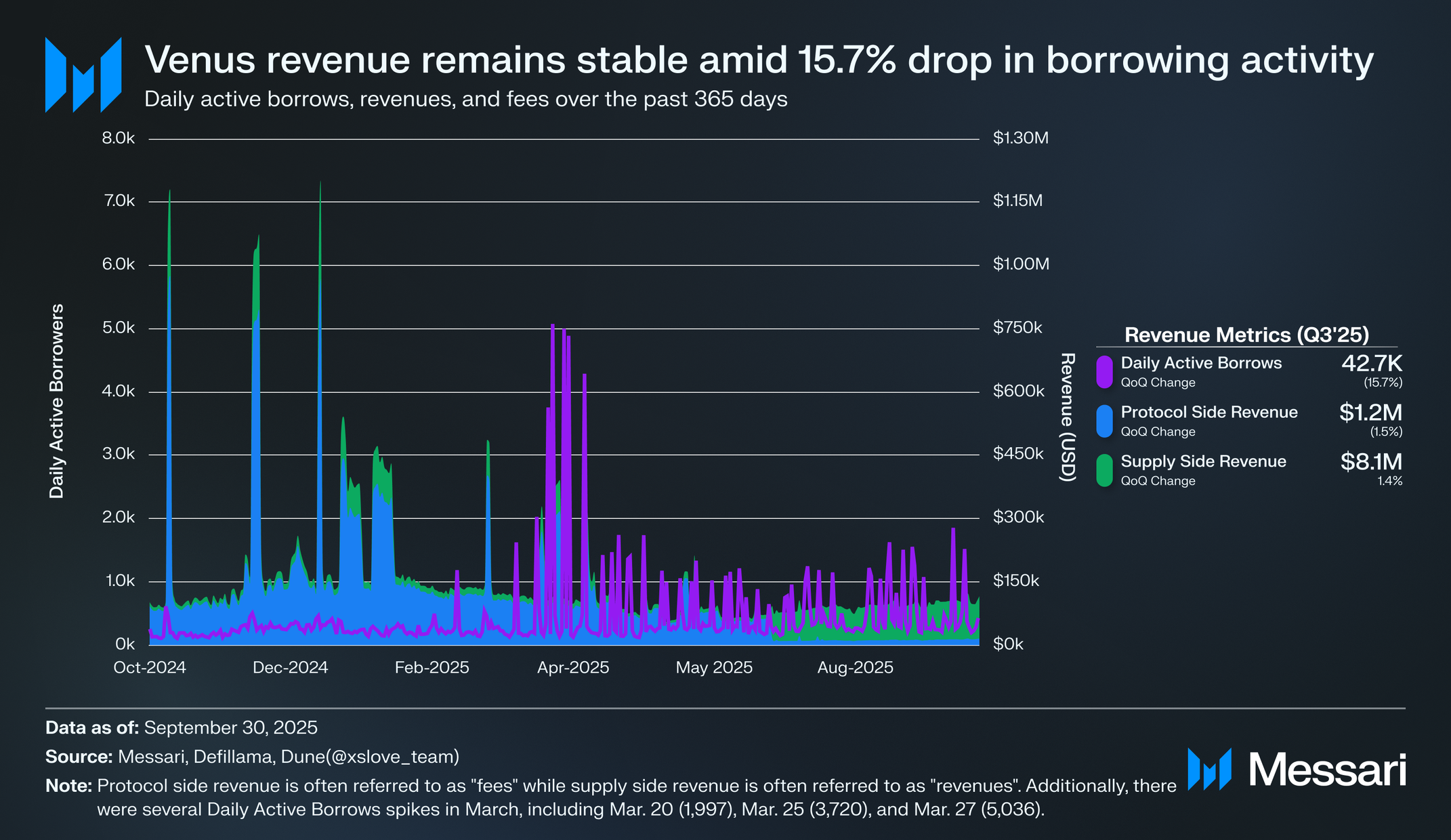
Protocol-side revenue remained stable, increasing 1.4% QoQ to $1.2M, while supply-side revenue fell 1.5% to $8.2M. The minimal variance across revenue streams signaled steadier rate spreads with a stronger balance between borrower incentives and depositor yields.
Venus executed 18 governance proposals, including new features and risk-management integrations. Key launches included Venus Port, which enabled gas-free position imports, and E-Mode, which improved capital efficiency for correlated assets.
Introduction
Venus (XVS) is a borrow/lend protocol originally built on BNB Chain, recently launched on Base in Q4 2024, and currently deployed on eight blockchains. At its core, Venus enables users to deposit various cryptocurrencies as collateral, allowing them to borrow other assets based on the value of their collateral. Unlike traditional financial systems, where central authorities manually set interest rates through policy decisions, Venus utilizes an algorithmic interest rate model that adjusts automatically in response to real-time supply and demand dynamics for each asset. The interest rates for borrowing and lending on Venus are dynamically adjusted based on a jump rate model and a whitepaper rate model. These models leverage the utilization ratio, which is the proportion of collateralized deposited assets against the borrowed assets.
The utilization ratio is a critical component of the Venus Protocol. As borrowing demand rises, the ratio and interest rates increase. Conversely, lower demand decreases both, maintaining balance by incentivizing lenders in high demand and borrowers when demand wanes.
The Venus Protocol is governed by its DAO community and is enabled by the XVS governance token. Tokenholders can propose and vote on governance decisions. Furthermore, they can stake their tokens in a specialized vault to receive financial incentives, following the Venus tokenomics model. This model allocates a portion of the protocol’s revenue to stakers through a buyback and redistribution mechanism, rewarding active participation in governance. For a full primer on Venus, refer to our Initiation of Coverage report.
Total Value Locked (TVL) represents the total value of assets deposited into Venus Protocol across its supported markets. It serves as a key indicator of the platform’s size, liquidity, and overall user trust.
Venus Protocol’s total value locked (TVL) grew 24.4% QoQ to $2.8 billion at the end of Q3 2025, marking its strongest quarterly expansion since late 2023. The increase was driven primarily by BNB, xSolvBTC, and SolvBTC collateral growth, supported by broader risk-on sentiment and the integration of new productive Bitcoin assets.
BNB collateral rose 51.2% QoQ to $724.7 million, reclaiming its position as a leading collateral type after two quarters of contraction. Venus BTC collateral, consisting of Binance-peg BTCB tokens, expanded 7.6% to $911.9 million, maintaining its dominance as the largest category by total value locked. Stablecoin collateral showed moderate gains, with USDT up 7.4% to $320.8 million and USDC up 26.6% to $88.3 million, supported by Base deployment and cross-chain integrations. ETH collateral increased 16.8% to $121.9 million amid renewed leveraged ETH demand and growing staking token adoption. The “Other” category surged 72.2% to $640.8 million, driven by the inclusion of xSolvBTC and SolvBTC, which added $89.7 million and $74.2 million in TVL, respectively. Overall, the quarter’s growth demonstrates Venus’s expanding presence in Bitcoin-based DeFi and a clear recovery from the flat TVL recorded in Q2, as new collateral markets attracted fresh inflows.
Total Value Borrowed (TVB)
Total Value Borrowed (TVB) represents the aggregate value of all assets borrowed from Venus Protocol across its supported markets. It serves as a key metric for evaluating the protocol’s utilization and overall demand for its lending services. Unlike TVL, which measures deposits, TVB reflects the borrowing activity that drives revenue generation and lending efficiency.
Borrowing activity on Venus Protocol accelerated sharply in Q3 2025, with total value borrowed (TVB) increasing 45.7% QoQ to $958.3 million, up from $657.5 million in Q2. The surge reflected a broad recovery in lending demand, led by strong growth in BNB and ETH borrowing, alongside renewed participation in stablecoin and BTC markets.
BNB borrowing increased 72.8% QoQ to $369.6 million, marking its highest quarterly total since early 2024 and expanding its share of total borrowing to nearly 39%. USDT borrowing grew 23.7% to $263.5 million, maintaining its position as the second-largest category. ETH borrowing rose 194.1% to $162.7 million, supported by heightened leveraged trading activity and staking-related liquidity strategies. USDC borrowing fell 8.0% to $72.5 million, while BTC borrowing increased 20.9% to $60.7 million. The Other category remained stable at $28.8 million, up marginally by just 0.9% as smaller markets experienced limited new participation.
The broad-based increase in borrowing coincided with a 7.0% rise in the average utilization rate to 0.31, indicating improved capital efficiency and lending demand across major markets. Q3 marked a decisive shift toward renewed risk-taking as users re-engaged with leveraged strategies, aided by expanding collateral options and favorable onchain liquidity conditions.
User Activity
User activity refers to the total volume of user-driven transactions on Venus Protocol, including asset deposits, withdrawals, loan repayments, and new borrows. These activities directly impact metrics such as TVL and TVB, providing a clear picture of the protocol’s utilization and user engagement trends.
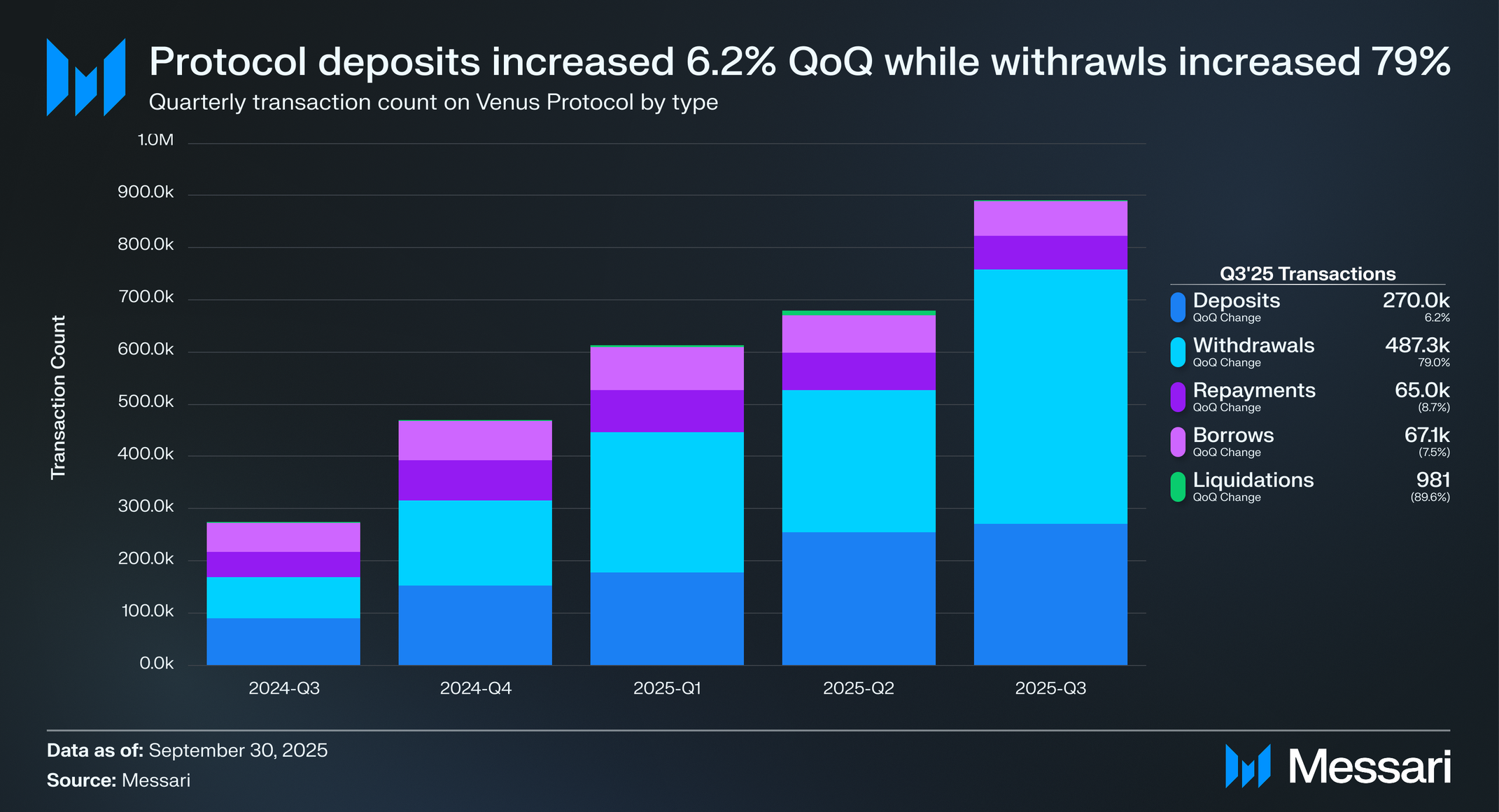
User activity on Venus protocol remained elevated in Q3 2025, with transaction counts rising across most categories despite a moderation in daily active users. The quarter saw a notable increase in both deposits and withdrawals, suggesting continued user engagement and active portfolio rebalancing amid shifting market conditions.
Despite only a decline in daily active users, several user activity metrics on Venus Protocol increased in Q3 2025, indicating consistent engagement and active capital management across the platform.
Deposits increased 6.2% QoQ to 270,040, extending a four-quarter trend of positive inflows as users continued adding collateral.
Withdrawals rose 79.0% QoQ to 487,315, indicating heightened position adjustments following shifts in market conditions and collateral valuations.
Repayments declined 8.7% to 64,974, consistent with stable borrowing balances and fewer active loan closures.
Borrows decreased 7.5% to 67,098, indicating moderation in new borrowing despite a higher total value borrowed, which implies larger average loan sizes.
Liquidations fell 89.6% to 981, marking a sharp reduction from Q2’s elevated levels as collateral conditions normalized.
While borrowing activity consolidated, the rise in deposits and withdrawals alongside fewer liquidations suggests a more stable, actively managed user base responding to improving onchain market conditions.
Daily Active Users
The average daily number of users on Venus Protocol declined to 1,193 in Q3’25, down from 1,522 in Q2’25, representing a 21.5% decrease. The drop followed a period of heightened user activity in Q2, as market conditions normalized and transaction volumes consolidated. Despite the decline, overall participation remained above early-year levels, indicating a sustained core user base. The moderation in daily activity likely suggests a shift toward more stable, long-term engagement patterns rather than a broad contraction in protocol usage.
Revenue Metrics
In the context of Venus Protocol, revenue is categorized into two primary types: protocol revenue (often referred to as "fees") and supply-side revenue (commonly referred to as "revenues"). These metrics provide insight into the financial performance of the protocol and its participants.
Protocol Revenue (Fees): This represents the portion of total revenue retained by the protocol itself. Protocol revenue is primarily generated from interest payments and, in some cases, penalties accrued during liquidations. However, the figures and analysis in this section reflect only reserves revenue derived from borrow APYs and exclude liquidation-related income. This revenue supports protocol operations, governance, and treasury reserves.
Supply-Side Revenue (Revenues): This refers to the revenue earned by users who supply assets to the protocol. Supply-side revenue is generated from interest paid by borrowers and distributed to lenders as compensation for providing liquidity.
Within Venus, interest revenue is the interest paid by borrowers on loans, which is split between supply-side and protocol revenue. Liquidation revenue arises when borrowers fail to maintain the required collateral ratio, triggering liquidations that generate additional funds for the protocol. Liquidation revenue is typically shared between the protocol and liquidators, with the liquidation fee split roughly 50/50. The portion retained by the protocol contributes to protocol-side revenue, while the remainder compensates liquidators for executing the process.
Venus Protocol’s revenue remained stable in Q3 2025 despite a sharp decline in borrowing activity. While transaction counts among borrowers decreased, falling 15.7% QoQ to 42,744, down from 50,717 in Q2, total value borrowed (TVB) rose 45.7% QoQ to $958.3 million, indicating stronger demand for leverage even as user activity consolidated among fewer users. Protocol-side revenue increased 1.4% QoQ to $1.2 million, and supply-side revenue decreased slightly by 1.5% to $8.1 million, signaling relative stability after two consecutive quarters of contraction.
The consistent revenue performance despite lower transaction activity indicates a normalization of interest-rate spreads and improved balance between borrower and depositor yields. Earlier volatility in Venus’s revenue was driven by temporary spikes in BNB borrowing during BNB Launchpools, which ended in May 2025. Since then, borrow demand and revenue have grown steadily throughout Q3’25 supported by broader recovery in leverage appetite and more stable capital utilization across major markets.
Staked XVS
XVS staking on Venus allows tokenholders to participate in the protocol’s governance and earn rewards. By staking XVS, users gain voting power to influence Venus Improvement Proposals (VIPs), which guide protocol development, treasury management, and risk parameters.
Additionally, staked XVS contributes to the protocol’s buyback and redistribution mechanism, with 20% of the protocol’s revenue allocated to buying back XVS tokens for distribution to vault stakers. This ensures that stakers receive a share of the platform’s earnings while also supporting token demand. Beyond direct rewards, the Venus Prime Program offers additional incentives by providing enhanced APYs and exclusive benefits for long-term participants, further aligning staking with the protocol’s sustainability.
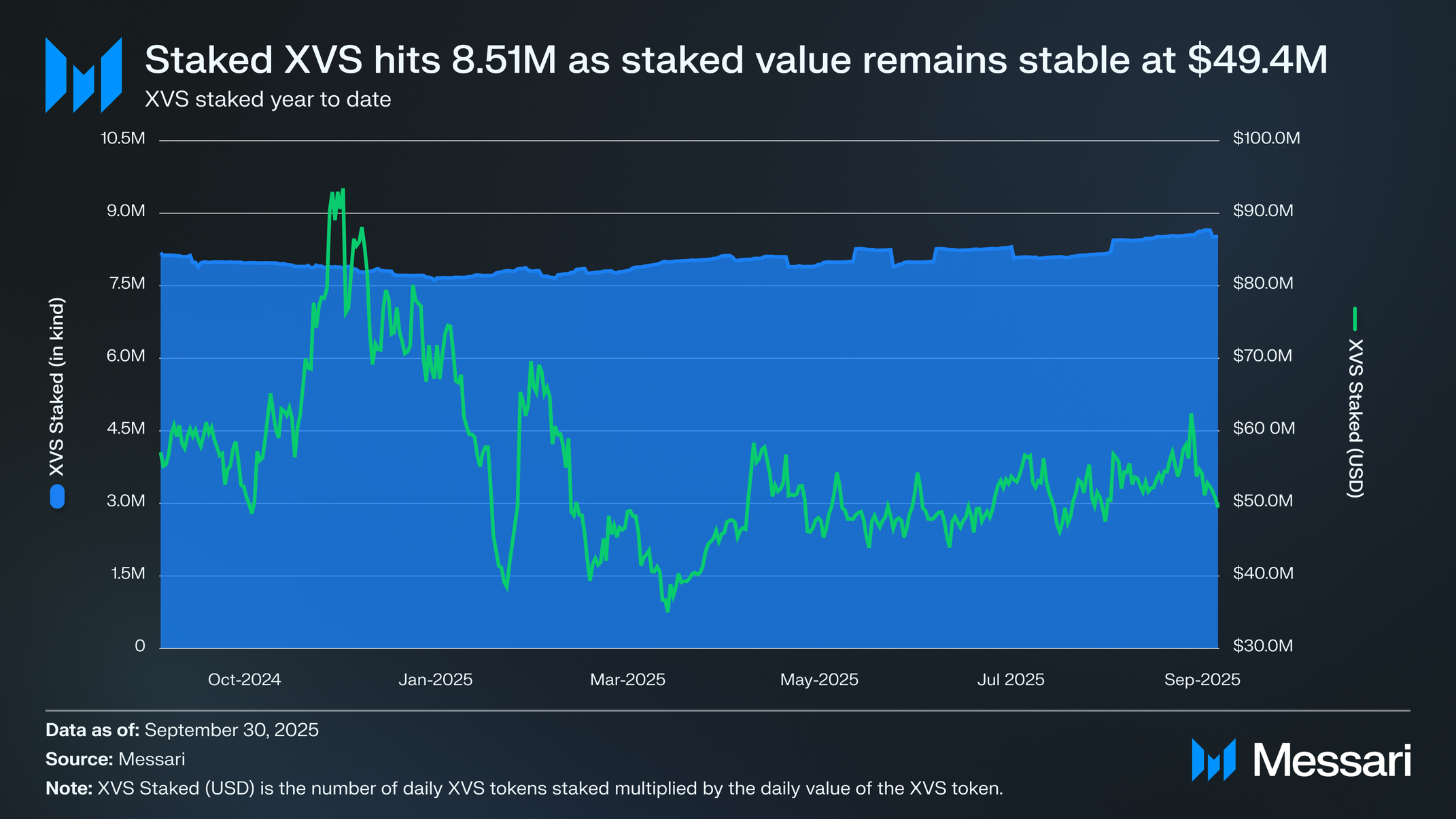
Staked XVS on Venus increased 3.4% QoQ, rising from 8.2 million to 8.5 million in Q3’25. The dollar value of staked XVS grew 2.4% to $49.4 million, up from $48.2 million in Q2’25. This slight gain occurred despite a small decline in the XVS price from $5.85 to $5.80, indicating that growth was driven primarily by higher staking participation rather than price appreciation. Staking activity has remained steady for five consecutive quarters, indicating consistent engagement in Venus governance and continued alignment between long-term tokenholders and protocol incentives.
Qualitative Analysis
Protocol Updates
Infrastructure, Security, and Operational Continuity
Throughout Q3 2025, Venus Protocol operated across eight supported networks, maintaining consistent technical performance, although the quarter was temporarily disrupted by a user-targeted phishing attack.
On Sept. 2, 2025, a Venus user was compromised after installing a malicious Zoom client that granted attackers delegated control of their account. Using this access, the attacker borrowed and redeemed assets on the user’s behalf, draining approximately $13 million in collateral. Automated alerts from Hexagate and Hypernative prompted Venus to pause protocol operations within 20 minutes as a precautionary measure. A subsequent audit confirmed that the protocol and front-end remained secure, with the incident limited to the user’s wallet permissions. Through a lightning Snapshot vote, Venus Labs coordinated a recovery plan that force-liquidated the attacker’s wallet, recovered the stolen assets, and restored full operations in under 13 hours. No other users were affected, and all markets resumed normal activity after the incident.
Beyond the incident, Venus continued routine backend optimizations aimed at improving capital efficiency and liquidation performance. The protocol maintained dynamic interest rate tuning across major markets and preserved expanded reserve buffers introduced earlier in the year to reinforce stability under volatile conditions.
Feature Launch: Venus Port
On July 21, 2025, Venus announced Venus Port, a migration tool allowing users to import existing supplied positions from external lending platforms directly into Venus via a three-step process that only allowed users to 1. connect a wallet, 2. select positions, and 3. import positions. Venus Port supports gas-free imports and automatic compounding once funds are transferred, lowering switching costs for liquidity providers and simplifying onboarding from competing money markets. The feature aims to expand Venus’ market share of supply-side liquidity by reducing friction and improving capital stickiness across its multichain deployment.
While no major architectural upgrades or product launches were publicly disclosed during the quarter, the protocol continued to support a diverse range of collateral markets and lending activity through its core pool-based model.
E-Mode (Efficiency Mode)
In Q3’25, Venus introduced E-Mode (efficiency mode) for its BNB Chain core pool. E-Mode enhances capital efficiency by grouping correlated assets, such as stablecoins or LSTs, into specialized pools with custom collateral factors (CF), liquidation thresholds (LT), and liquidation incentives (LI). E-Mode allows users to borrow more aggressively within defined pools while limiting systemic exposure across the broader protocol. Unlike isolated pools, E-Mode operates natively within the Core Pool, so users do not need to migrate assets to access new parameters. Governance retains the ability to dynamically adjust per-market CF, LT, LI, toggle borrow permissions, and set fallback behavior for non-pool assets.
Staking Infrastructure
Venus Vaults remained central to the protocol’s incentive framework in Q3’25, allowing users to stake XVS for governance participation and yield distribution. While the vault structure itself was unchanged, community discussions began around a proposal to revise the XVS emissions strategy for Q4. The proposal would maintain the current reward rate on BNB Chain at 308.7 XVS per day, approximately 28,092 XVS for the quarter, while pausing emissions on Ethereum, Arbitrum One, zkSync Era, and Unichain. Those Vaults would continue to receive rewards through the existing 20% protocol income allocation defined in Venus tokenomics. The proposed change follows a 15.5% year-to-date increase in staked XVS and aims to reduce dilution, estimating a Q4 savings of 15,594 XVS, ~$92,000. A broader review of cross-chain incentive efficiency is underway.
Governance
Venus Protocol governance revolves around the XVS token, a BEP-20 token that grants holders voting power to participate in decision-making. Tokenholders can stake XVS on the Venus application to create and vote on Venus Improvement Proposals (VIPs), which guide the protocol’s development and operations. Governance encompasses treasury management, collateral parameters, stablecoin minting fees, and more.
Venus Improvement Proposals (VIPs) serve as the mechanism for implementing changes within the protocol. They are categorized based on their scope, ranging from adjustments to token emissions and liquidity to the introduction of new features and integrations. Each XVS token equals one vote, and decisions require community approval through on-chain voting.
Venus governance activity remained strong in Q3’25, with 18 proposals passed during the quarter. Governance actions spanned treasury management, risk parameter tuning, emission updates, and protocol upgrades.
In July 2025, Venus approved multiple treasury payments (VIP 528, 536, and 540) to Quantstamp, CertiK, Chaos Labs, and Messari for audits, research, and infrastructure services. The DAO also executed its quarterly XVS buyback and fund allocation (VIP 529) under Tokenomics V4, distributing $7.7 million in BNB Chain revenue and smaller allocations across Ethereum, Arbitrum, zkSync Era, and Unichain. The XVS Emissions Strategy Update (VIP 533) consolidated emissions exclusively to BNB Chain, reducing incentives on other networks to zero and saving an estimated $220,000 in Q3 for redeployment toward higher-impact initiatives.
Risk management remained an operational priority, with numerous proposals implementing Chaos Labs’ recommendations. These included parameter adjustments for ETH LSTs (VIP 534), asBNB and SOL (VIP 537), SolvBTC and xSolvBTC (VIPs 538, 539, 542, 546), and USDT and USDC (VIP 549). The DAO also approved Chaos Labs’ engagement renewal through 2026 and passed VIP 544, integrating the Chaos Labs Risk Oracle for dynamic cap updates across isolated pools.
In September, governance conducted an emergency lightning vote following a user-targeted phishing attack. The community approved a phased plan that paused operations, liquidated the attacker’s wallet, and restored the protocol within 13 hours, demonstrating the DAO’s rapid coordination and incident response capacity. Other notable proposals included the launch of a new WBNB market (VIP 543) and a Solidity upgrade (VIP 545) for Venus Core Pool smart contracts from v0.5.16 to v0.8.25 to enhance code security and maintain audit compatibility.
Overall, Q3 2025 governance balanced risk mitigation, treasury optimization, and technical modernization, sustaining a disciplined approach to protocol safety and cross-chain scalability.
Partnerships and Integrations
Venus Protocol strengthened its ecosystem in Q3 2025 through a series of integrations and collaborations designed to enhance accessibility, security, and performance across its multichain markets. The quarter featured key developments with SafeBlock and RedStone, alongside the managed wind-down of the wUSDM stablecoin by Mountain Protocol. Each initiative reflected Venus’s ongoing focus on building reliable infrastructure and improving user experience across lending, staking, and asset management.
In July, Venus integrated with SafeBlock, enabling direct XVS staking and multichain swaps within a single smart wallet interface. The partnership allows users to stake, swap, and manage positions without leaving the SafeBlock platform, reducing transaction friction and simplifying DeFi participation. By leveraging smart contract wallets instead of externally owned accounts, this integration also enhances security for institutional users and teams managing shared assets. The collaboration aligns with Venus’s mission to expand secure, user-friendly DeFi access through interoperable wallet infrastructure.
Venus also became one of the first protocols to implement RedStone Atom, a next-generation oracle framework featuring liquidation intelligence and onchain execution value capture. RedStone Atom delivers event-driven price updates the instant an asset reaches a liquidation threshold, ensuring faster and more efficient market responses. This system enables Venus to improve capital efficiency, reduce liquidation lag, and strengthen collateral safety, all without requiring any contract-level modifications. The integration represents a major advancement in oracle architecture, positioning Venus at the forefront of lending protocol performance and risk mitigation.
During the quarter, Mountain Protocol initiated the wind-down of the wUSDM stablecoin, which had previously been listed on Venus. Following its acquisition by Anchorage Digital, Mountain transitioned USDM reserves to a Uniswap pool backed by USDC, halting minting and reward accrual in the process. Venus coordinated with users to ensure an orderly withdrawal of wUSDM positions, helping preserve capital and reduce exposure during the asset’s deactivation phase. The event highlighted Venus’s commitment to maintaining ecosystem stability amid third-party market changes.
Collectively, these integrations and coordinated actions reinforced Venus’s reputation as a resilient, security-conscious, and forward-looking protocol. The quarter’s developments advanced Venus’s broader goals of improving user accessibility, optimizing risk management, and supporting sustainable growth across its multichain DeFi ecosystem.
Closing Summary
Venus Protocol ended Q3 2025 with its strongest quarterly growth in over a year, led by a 24.4% increase in TVL to $2.8 billion and a 45.7% rise in total borrowing to $958.3 million. Gains were driven by renewed lending demand, higher BNB and BTC collateral, and improving market sentiment. While daily active users declined 21.5%, deposits and withdrawals rose, indicating stable participation and active capital management. Revenue remained steady after two quarters of contraction, supported by balanced borrower and supplier incentives.
Operationally, Venus introduced Venus Port for frictionless position migration and launched E-Mode to enhance capital efficiency across correlated assets. Governance approved 18 proposals focused on treasury management, emissions optimization, and automated risk parameter updates through Chaos Labs’ new oracle integration. The DAO also demonstrated strong incident response by resolving a phishing-related attack within 13 hours. Partnerships with SafeBlock and RedStone strengthened accessibility and oracle performance, while the protocol coordinated the wUSDM wind-down to protect users. Overall, Q3 highlighted Venus’s renewed momentum, disciplined governance, and maturing multichain infrastructure.
This report was commissioned by VenusDAO. All content was produced independently by the author(s) and does not necessarily reflect the opinions of Messari, Inc. or the organization that requested the report. The commissioning organization may have input on the content of the report, but Messari maintains editorial control over the final report to retain data accuracy and objectivity. Author(s) may hold cryptocurrencies named in this report. This report is meant for informational purposes only. It is not meant to serve as investment advice. You should conduct your own research and consult an independent financial, tax, or legal advisor before making any investment decisions. Past performance of any asset is not indicative of future results. Please see our Terms of Service for more information.
No part of this report may be (a) copied, photocopied, duplicated in any form by any means or (b) redistributed without the prior written consent of Messari®.
Hayden is a Research Analyst specializing in the intersection of crypto-economic incentive mechanisms and their role in DeFi, DePIN, and AI ecosystems. Prior to joining Messari, Hayden worked as a Research Analyst at The Block and as a Venture Associate at a crypto-native venture capital fund.
Hayden is a Research Analyst specializing in the intersection of crypto-economic incentive mechanisms and their role in DeFi, DePIN, and AI ecosystems. Prior to joining Messari, Hayden worked as a Research Analyst at The Block and as a Venture Associate at a crypto-native venture capital fund.