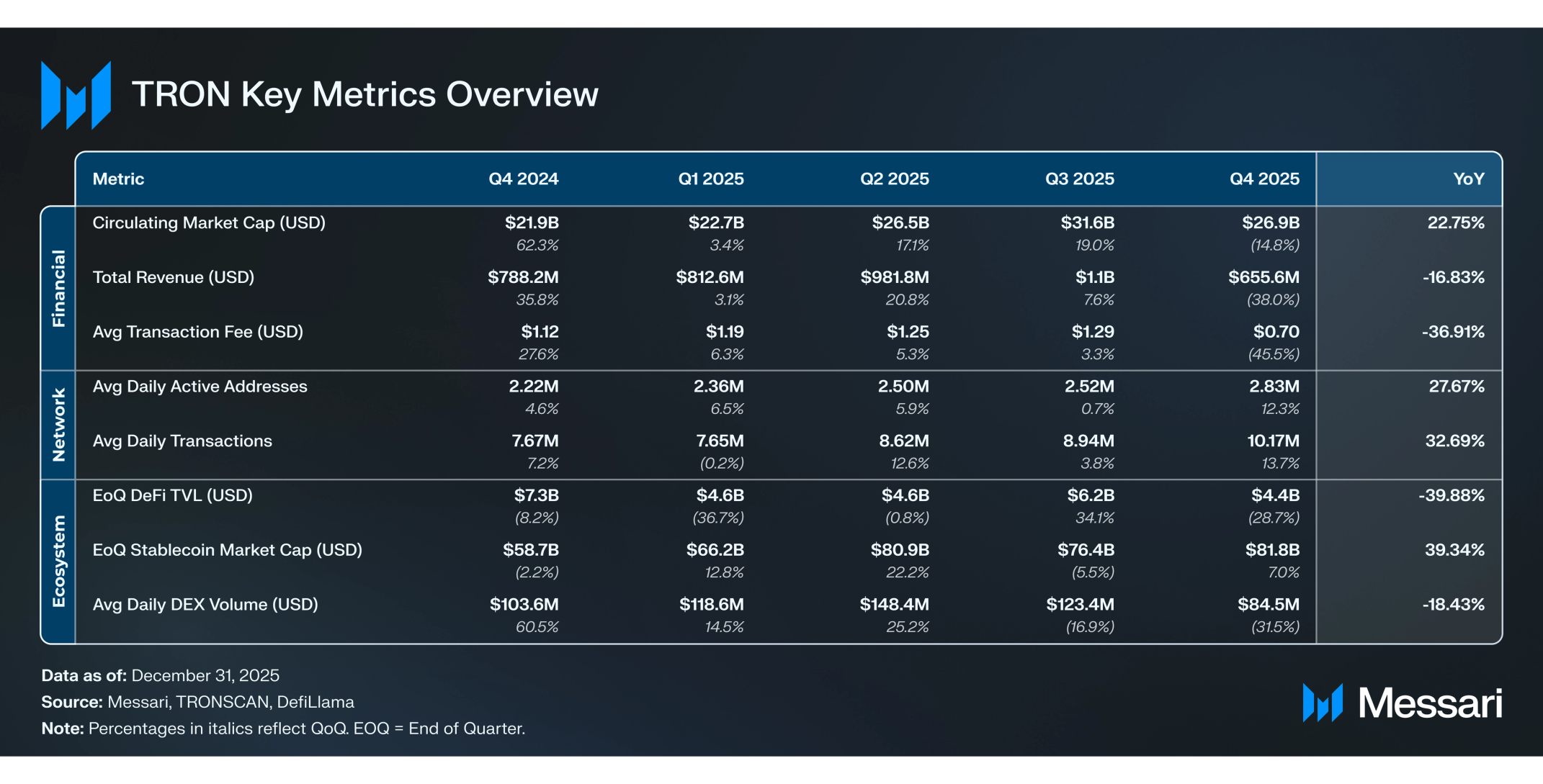
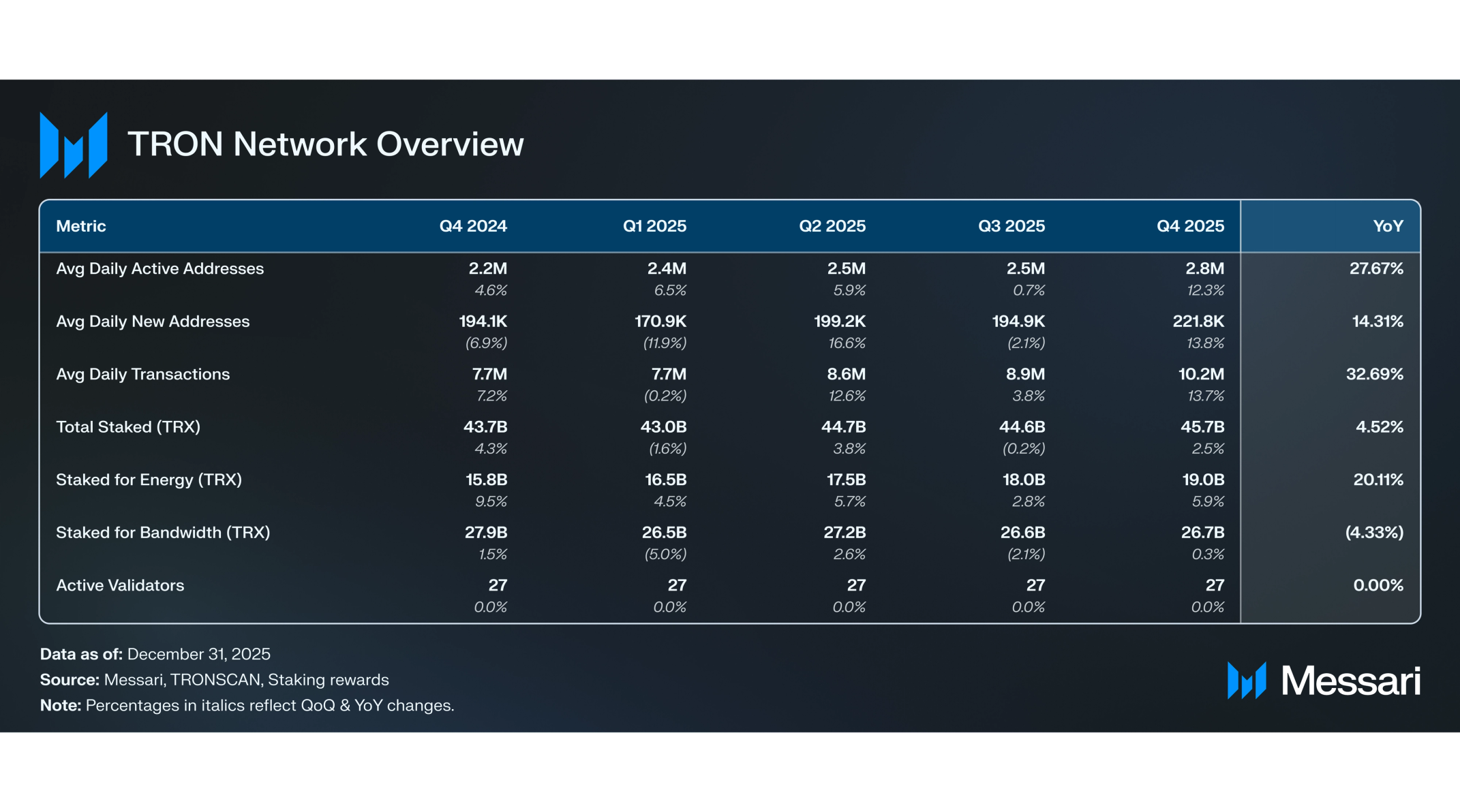
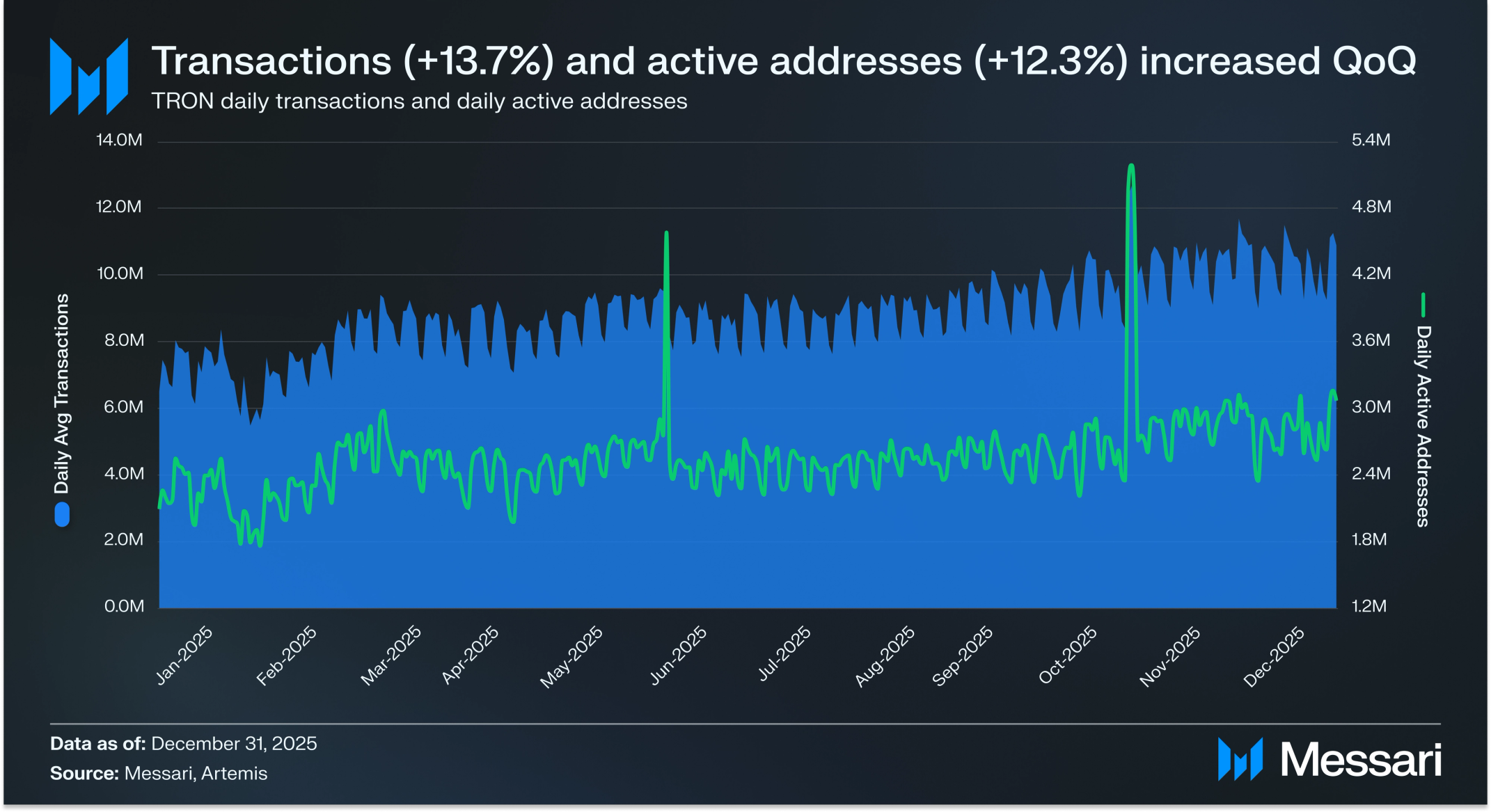
Network activity reached new heights in Q4, with average daily transactions increasing 13.7% QoQ to 10.2 million and average daily active addresses growing 12.3% to 2.8 million.
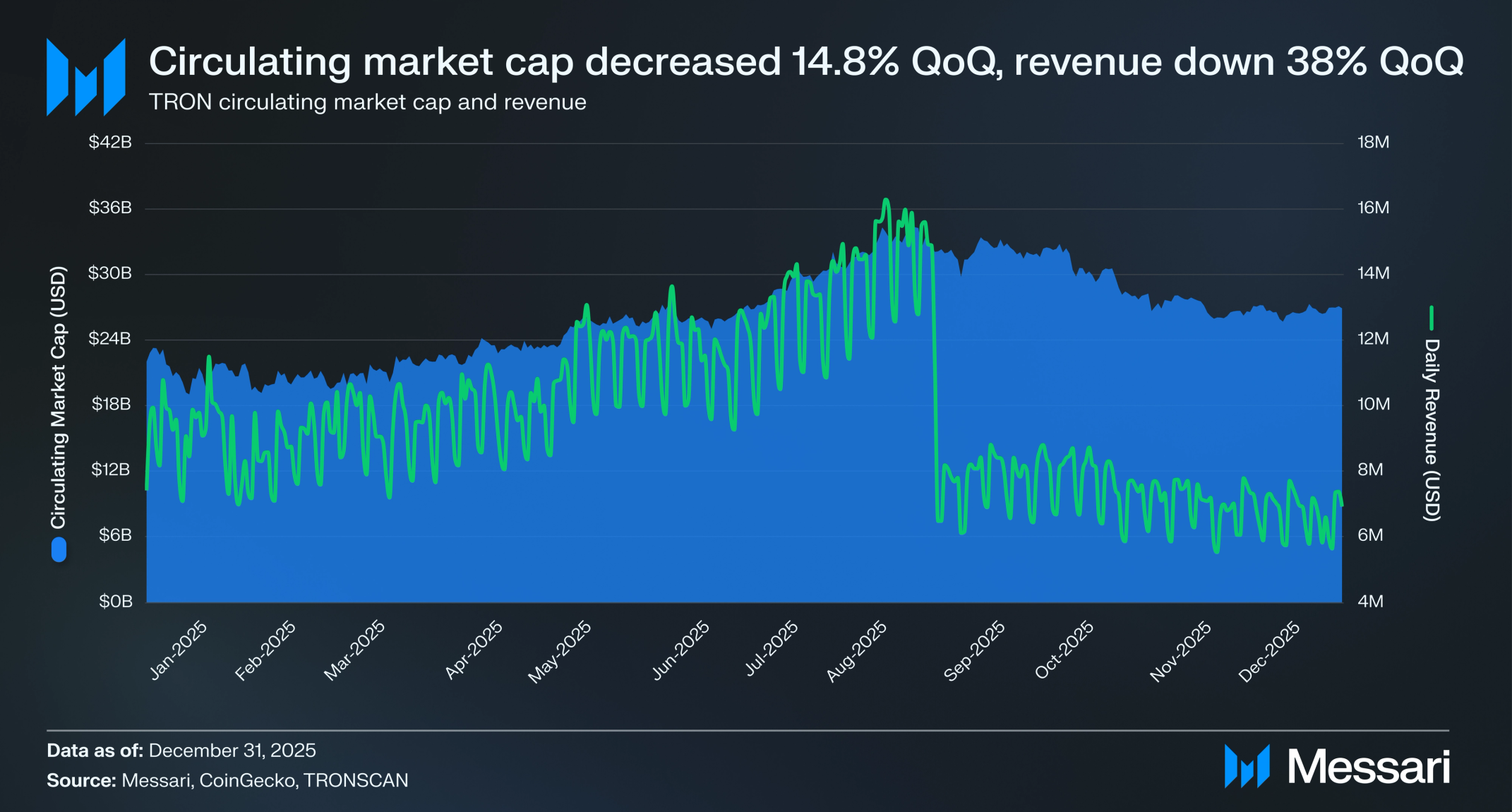
In Q4 2025, TRON experienced a contraction in revenue, falling below the billion-dollar mark achieved in the previous quarter. Total revenue in USD decreased by 38% QoQ, dropping from $1.1 billion to $655.6 million.
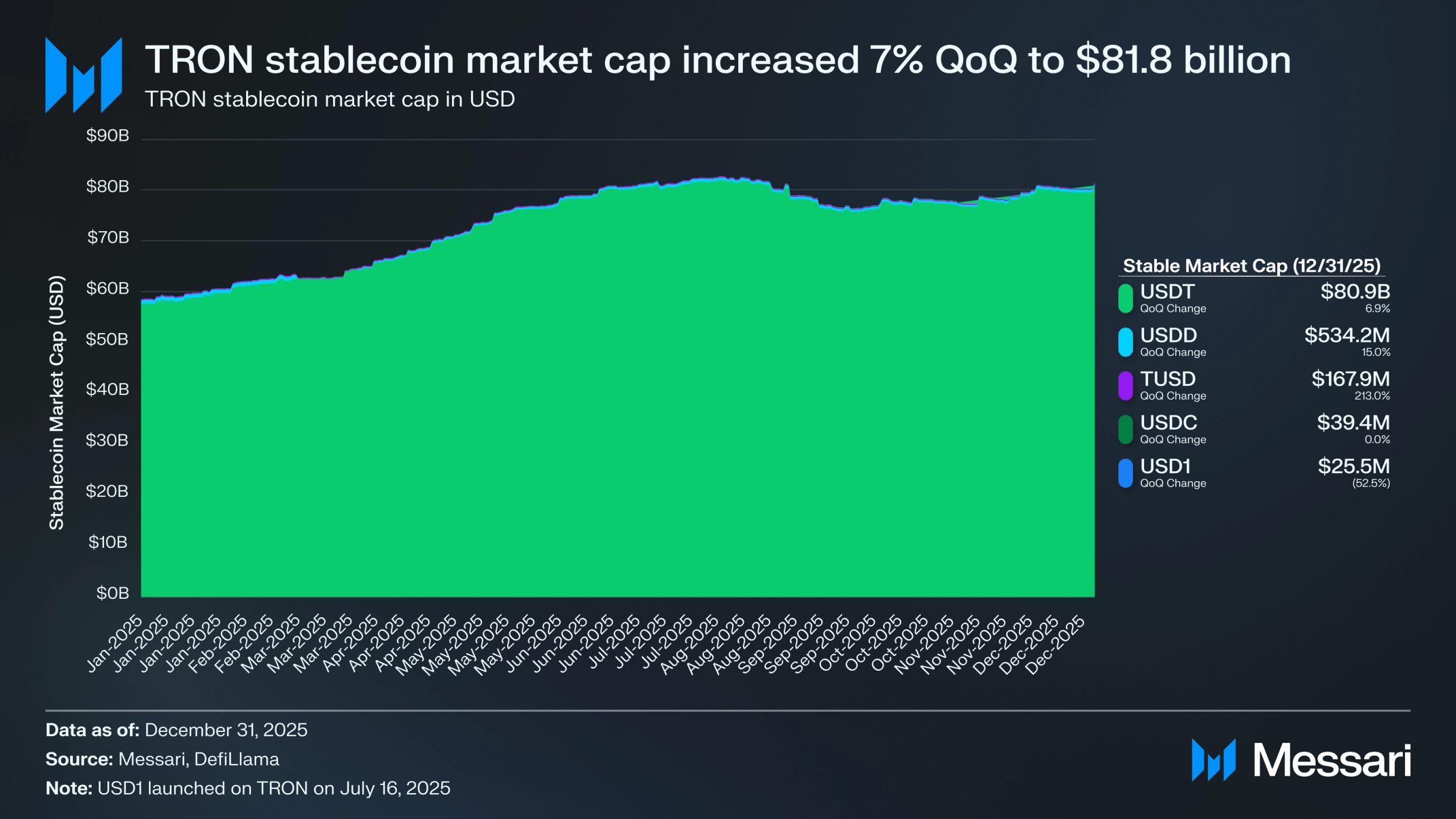
The stablecoin ecosystem continued its steady expansion, with TRON’s stablecoin market cap increasing 7.0% QoQ to $81.8 billion. USDT remains the dominant asset with a $80.9 billion market cap, representing over 99% of the network's stablecoin supply.
Ecosystem momentum was driven by major institutional and cross-chain integrations, including native staking on Ledger Live, TRX launching on the Base network via LayerZero, and USDT on TRON being cleared by the Abu Dhabi Global Market (ADGM) for regulated use.
SunPerp marked a successful first full quarter, achieving over $25 billion in total trading volume since its launch, utilizing a hybrid model to offer zero-gas-fee trading and high-speed execution.
Primer
TRON (TRX) is a public, open-source blockchain network that relies on a Delegated Proof-of-Stake (DPoS) consensus mechanism. An election process is used to determine which validators participate in consensus. All TRX stakers vote onchain for the candidates they want to become Super Representatives (SRs). In each epoch, the top 27 most voted-for candidates become SRs within the active set and take turns producing blocks. A new election occurs every six hours.
The TRON Virtual Machine (TVM) powers applications on the network and uses “Energy” and “Bandwidth” instead of gas, like its Ethereum Virtual Machine (EVM) counterpart. Bandwidth is gas spent on transactions, whereas Energy is gas spent on smart contract calls. Energy and Bandwidth can be acquired by staking TRX or burning TRX to pay for the Energy/Bandwidth required to execute a smart contract call or transaction. The TVM is EVM-compatible and offers developers affordable and fast smart contract execution.
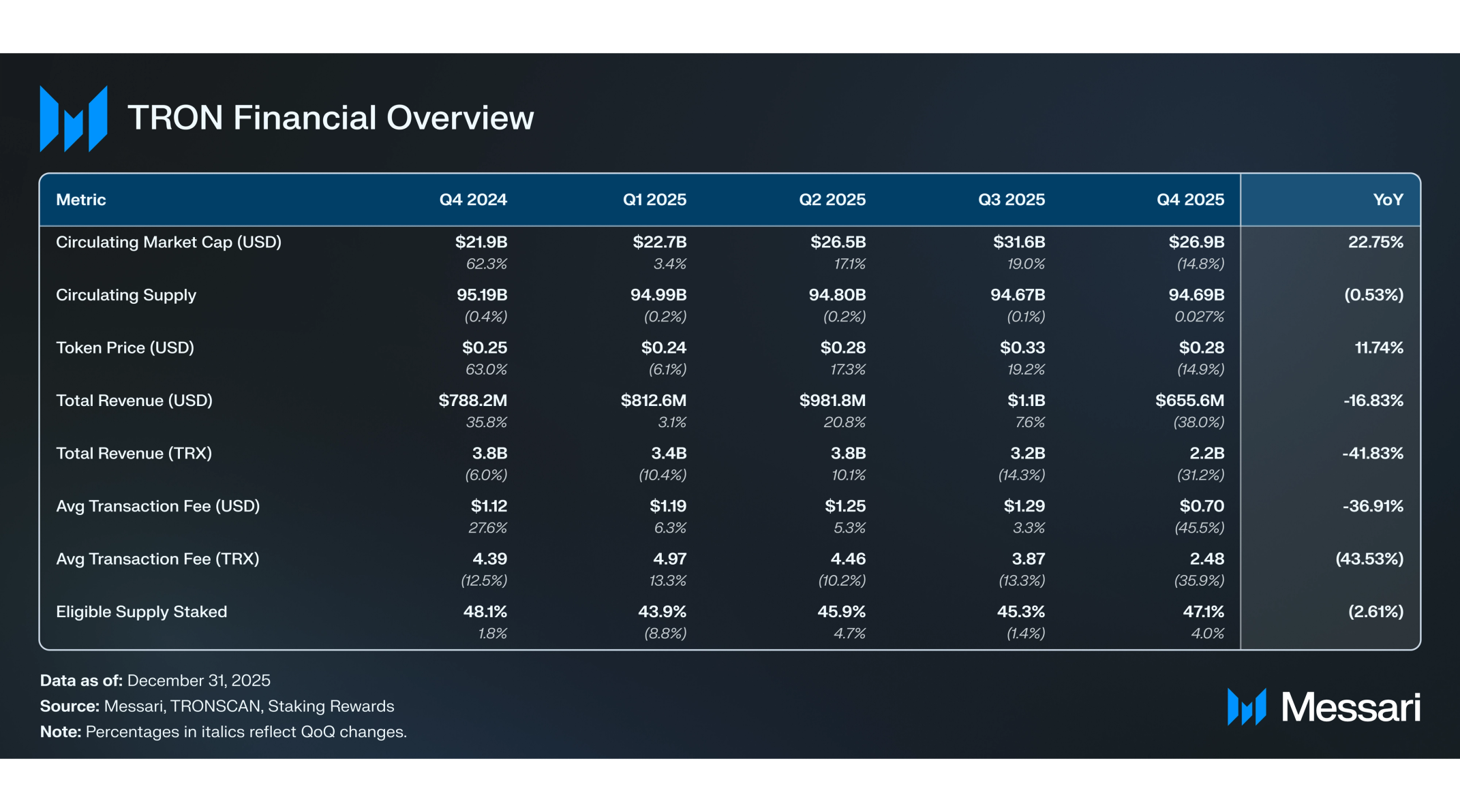
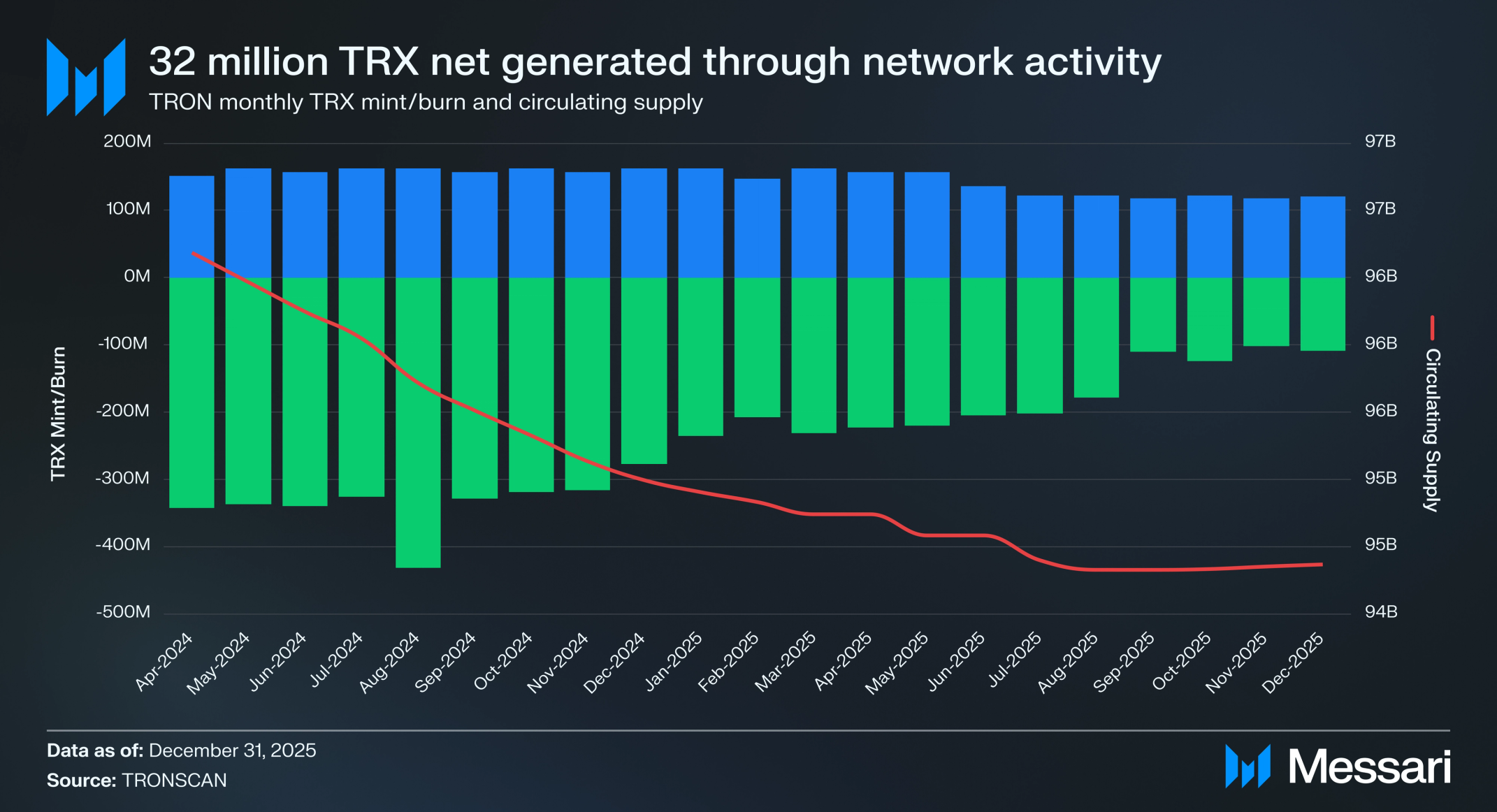
TRX’s circulating market cap decreased in Q4 for the first quarter in three years, down 14.8% QoQ from $31.6 billion to $26.9 billion. However, TRX performed similarly to other large-cap cryptocurrencies as its market cap ranking amongst all tokens (excluding stablecoins) gained one spot from 9 to 8. Notably, TRX has maintained a deflationary trend for many quarters, and in Q4, we saw a reversal of that trend, with a 0.027% increase in circulating supply.
TRON utilizes a resource model to execute transactions onchain. To summarize, the resource model is based on distributing Bandwidth and Energy to stakers. As long as stakers have acquired enough resources, they can use those resources to transfer tokens and execute smart contracts for free. Users must cover transaction fees with TRX if they utilize more computing power than their resources allow, all of which is burned. Accordingly, network revenue on TRON is attributed to TRX burns that occur when users consume resources beyond their allocated Bandwidth or Energy. To track these numbers in real time, see the TRON Portal.
TRON also experienced a decrease in revenue in Q4. Total revenue in USD was down 38% QoQ from $1.1 billion to $655.6 million. Driven by a 14.9% decrease in token price (USD) during Q4, total revenue in TRX decreased by 31.2%, from 3.2 billion to 2.2 billion TRX.
Supply Dynamics
The circulating supply of TRX is primarily affected by two parameters: (i) tokens minted to reward stakers and block producers, and (ii) tokens burned due to network transaction fees. Approximately 3.9 million TRX are minted daily as block and vote rewards distributed to Super Representatives and stakers. As such, the circulating token supply will decrease over time if more than 3.9 million TRX are burned daily, on average.
In Q4, the circulating supply of TRX increased from 94.67 billion to 94.69 billion.
TRON incentivizes participation in its staking mechanism through a combination of the following:
Block Reward - Super Representatives earn 8 TRX for each block produced (subject to change through onchain governance). After producing a block, the Super Representative’s chosen commission ratio is kept, while the remaining TRX is distributed amongst the representative’s associated voters.
Vote Reward - The 28th to 127th most voted-for Super Representatives become Super Representative Partners for the next epoch. Although partners are not involved in block production, both they and the TRX stakers who voted for them receive voting rewards. For every block produced, 128 TRX are cumulatively rewarded to Super Representatives and Super Representative Partners in proportion to their respective TRX stakers’ votes.
Network Analysis
Usage
Q4 usage was positive for TRON, with increases in onchain activity metrics like average daily transactions and average daily active addresses. Average daily transactions increased 13.7% QoQ from 8.9 million to 10.2 million, and average daily active addresses grew 12.3% QoQ from 2.5 million to 2.8 million.
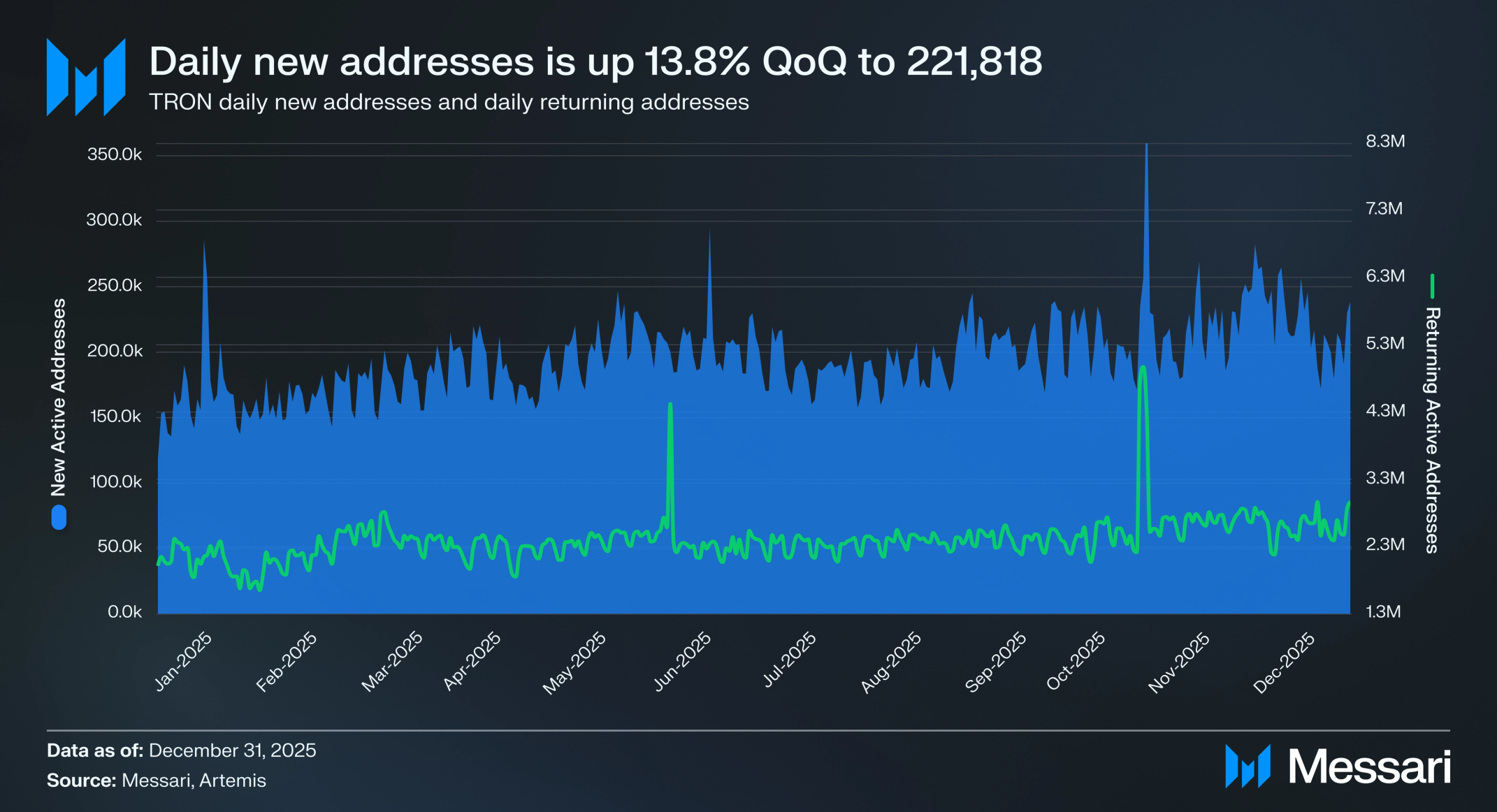
Average daily new addresses increased in Q4, up 13.8% QoQ from 194,919 to 221,818. Of Q4’s average daily active addresses, 7.88% were new addresses.
Security and Decentralization
TRON uses a Delegated Proof-of-Stake (DPoS) consensus mechanism and the Practical Byzantine Fault Tolerance (PBFT) consensus algorithm to secure the network. A DPoS election occurs every six hours, in which 27 Super Representatives (SRs) take turns producing blocks. Those wishing to run a TRON node can pay 9,999 TRX to become an SR candidate.
While there may be centralization concerns regarding only 27 SRs participating in securing the network, at the end of Q4, over 400 SR candidates (up from 397 in Q3) received votes. This diversity of candidates helps mitigate centralization concerns and promotes a more distributed governance model, enhancing the network's resilience and security. The growing number of SR candidates encourages broader vote distribution and more diverse governance participation. Additionally, no singular entity received over 10% of all votes. The entity with the most votes was Poloniex, which received 3.3 billion (7.5%) of the 43.6 billion votes in the most recent election.
Although there may be some benefits to a democratic voting system for block production and a set of SR candidates, neither feature fully does away with centralization risks. Metrics such as the geographic diversity of nodes may also factor into a network’s level of centralization. At the end of Q4, there were 7,957 TRON nodes (up from 7,511 in Q3) distributed across 91 different geographic locations around the globe, with the highest concentration in the United States (19.3%). Geographic node concentration, while currently diverse, remains a factor to monitor given potential geopolitical risks, regulations, and acts of nature, among other reasons.
Since the introduction of the new staking mechanism, Stake 2.0 (TIP-467), in April 2023, it has become the default for all new staking activity. Any TRX staked after April 2023 is automatically assigned to Stake 2.0, while TRX previously staked under Stake 1.0 remains valid and unaffected. Stake 2.0 implemented a new layer to separate low-frequency staking operations and high-frequency resource delegating operations. It also introduced resource delegating without unstaking and improved resource utilization.
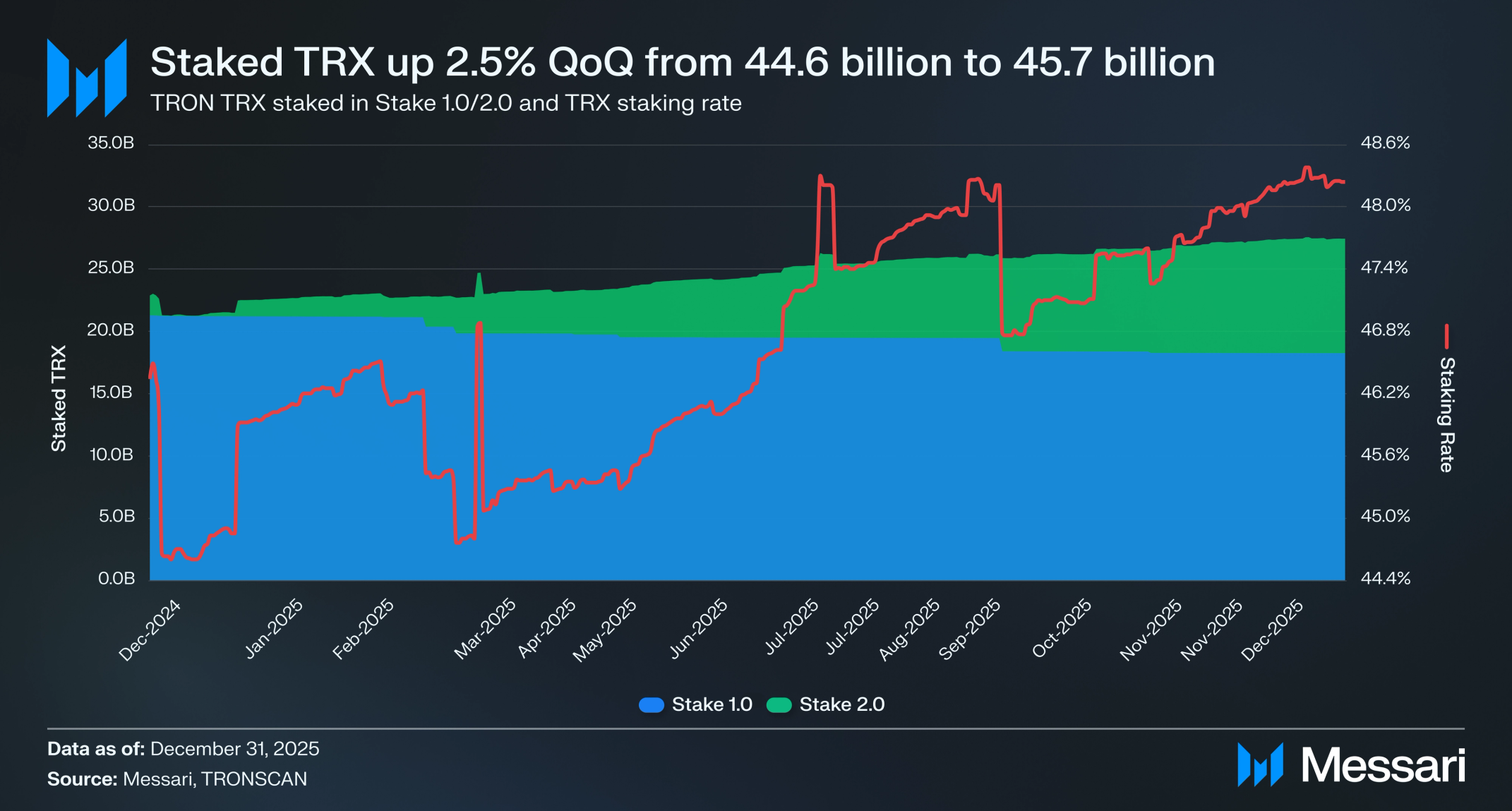
The staking ratio (the proportion of TRX’s total supply actively staked) increased to 48.2% in Q4. Additionally, more users continued to switch to Stake 2.0 in Q4. Stake 2.0 ended the quarter with 27.4 billion TRX staked (+4.8% QoQ), whereas Stake 1.0 finished with 18.2 billion TRX staked (-0.8% QoQ). In sum, 45.7 billion TRX were staked at the end of Q4, an increase of 2.5% QoQ. Although TRX’s price decreased, an increase in the total amount of TRX staked led to the total stake in USD being up 2.7% QoQ from $14.7 billion to $15.1 billion. Compared to other PoS networks, TRON had the fifth-highest dollar value of funds staked by the end of Q4, increasing its position from the prior quarter by two spots.
It is worth noting that to compromise consensus through a two-thirds supermajority attack, a malicious actor would need to control 18 of the 27 SRs. At the end of Q4, this threshold was 34.3 billion TRX ($11.3 billion).
Bandwidth is the gas spent on transactions, while energy is the gas spent on contract calls. Users can stake TRX to acquire either resource accordingly:
The amount of bandwidth obtained from an account’s stake = (the amount of TRX staked for obtaining bandwidth / the total amount of TRX staked for obtaining bandwidth in the whole network * 43.2 billion)
The amount of energy obtained from an account’s stake = (the amount of TRX staked for obtaining energy / the total amount of TRX staked for obtaining energy in the whole network * 180 billion)
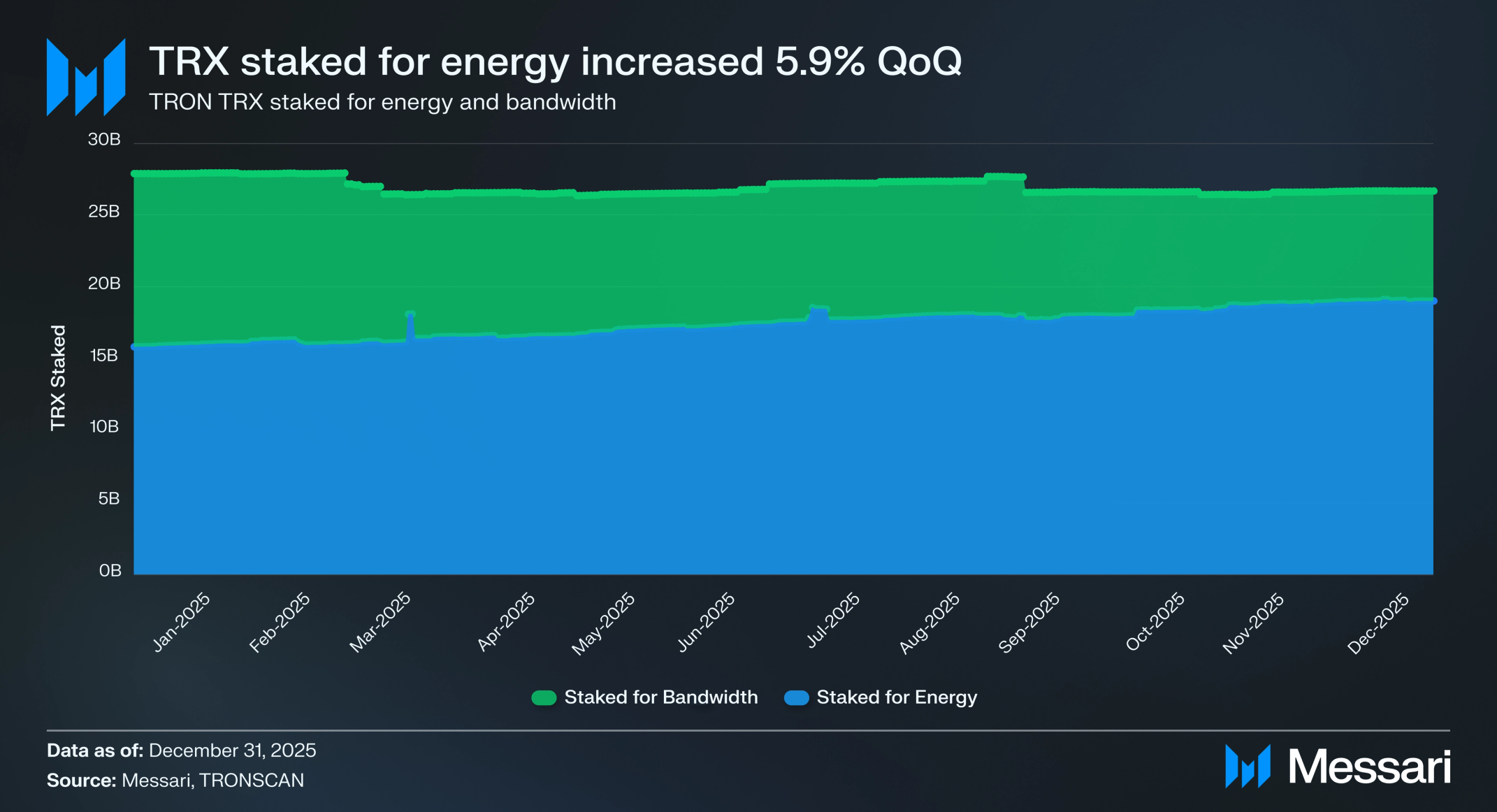
Notably, the amount staked for bandwidth increased 0.3% QoQ from 26.6 billion to 26.7 billion. As for energy, staking increased 5.6% QoQ from 18.0 billion to 19.0 billion, in part due to overall higher gas fees. The amount staked for each resource is correlated with consumption.
Ecosystem Analysis
DeFi
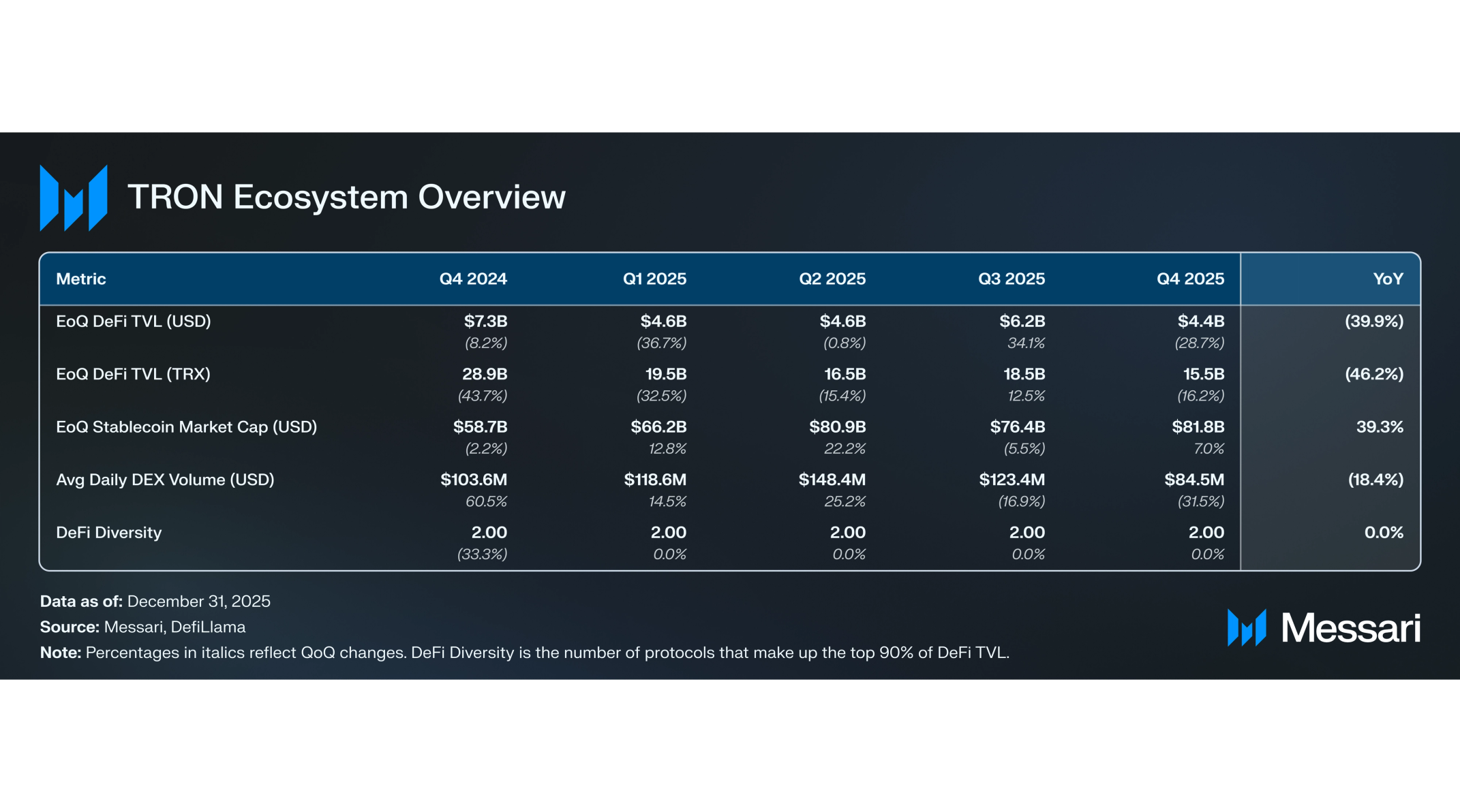
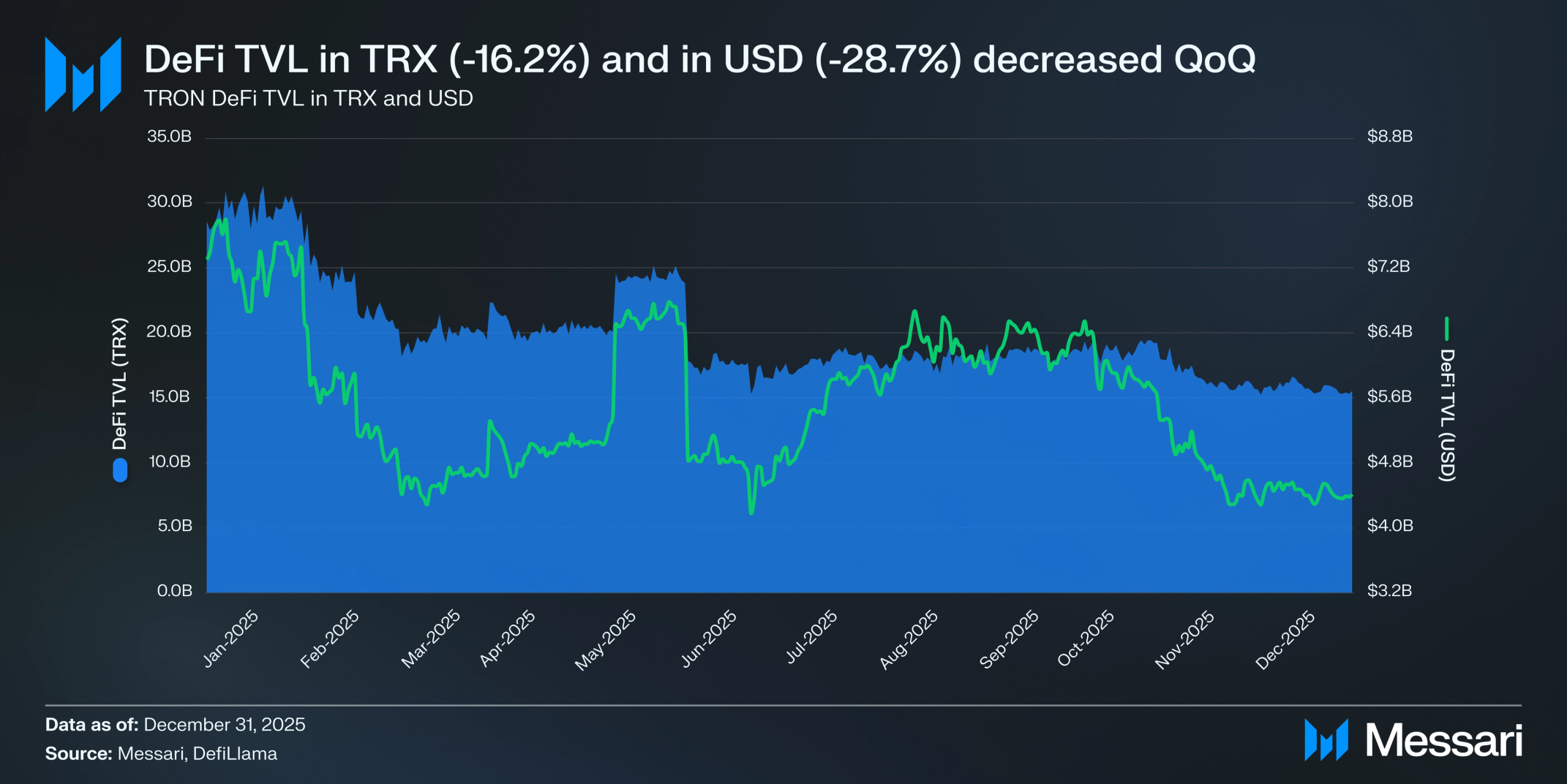
DeFi TVL on TRON denominated in TRX decreased 16.2% QoQ from 18.5 billion to 15.5 billion. The TVL denominated in USD also decreased, down 28.7% QoQ from $6.2 billion to $4.4 billion. Compared to other networks, TRON dropped its rank by one to the sixth-highest network by TVL at $4.6 billion, ranking behind fifth-place Base ($4.7 billion), fourth-place BNB Chain ($6.9 billion), third-place Bitcoin ($7.0 billion), second-place Solana ($8.9 billion), and first-place Ethereum ($71.6 billion).
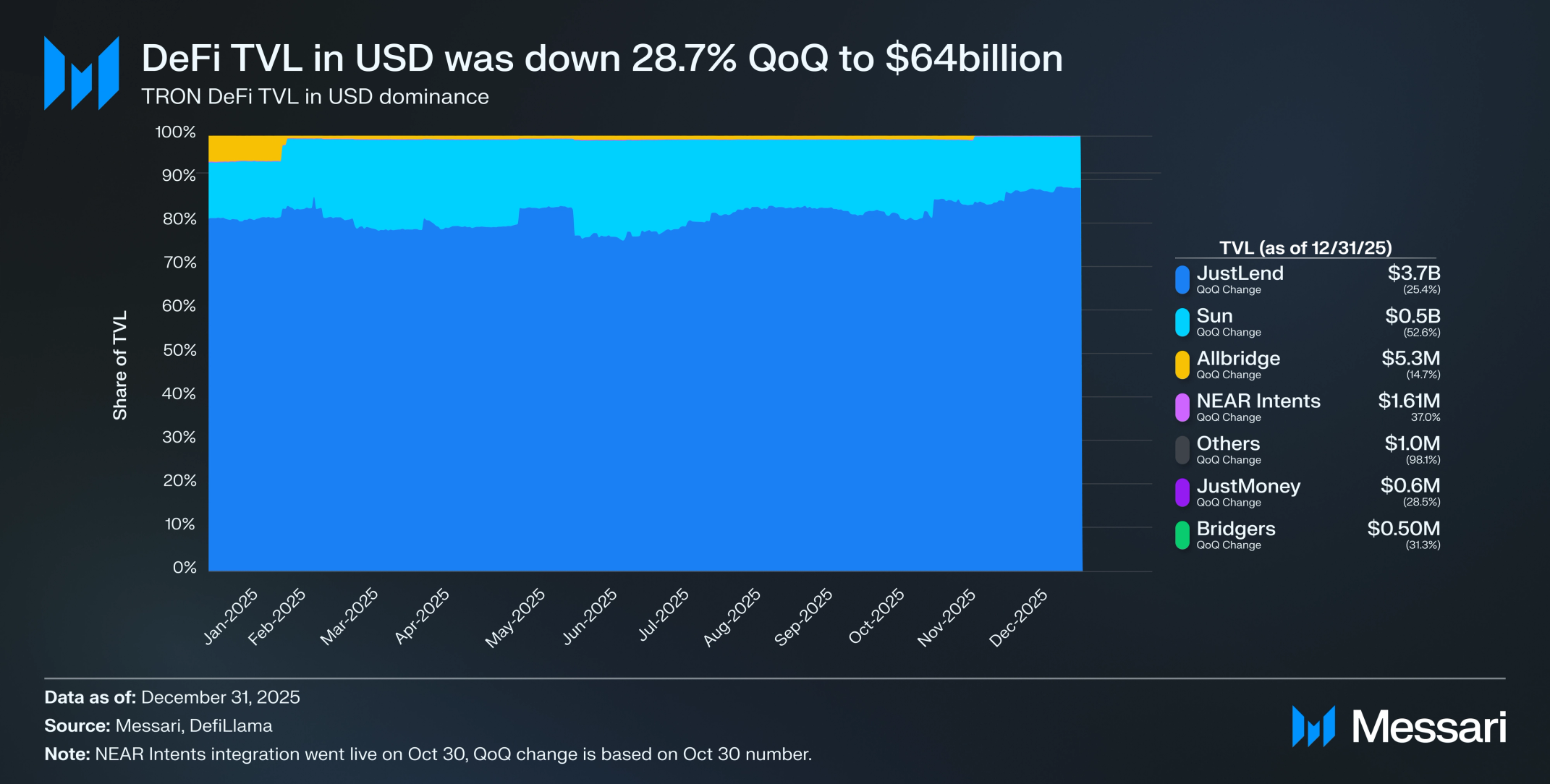
JustLend, the largest protocol by TVL, saw its TVL decrease 25.4% QoQ from $5.0 billion to $3.7 billion. Total borrow volume on JustLend increased by 37.6% QoQ from $154.3 million to $212.3 million.
SUN saw a decrease in its TVL, down 52.6% QoQ from $1.0 billion to $495.2 million. The protocol comprises three different AMMs (V1, V2, and V3). By the end of Q4, V1 TVL was $56.7 million (11.9% of TVL), V2 TVL was $244.6 million (51.3% of TVL), and V3 TVL was $175.7 million (36.8% of TVL).
In sum, JustLend and SUN represent 99.7% of DeFi TVL on TRON.
DEX Volume
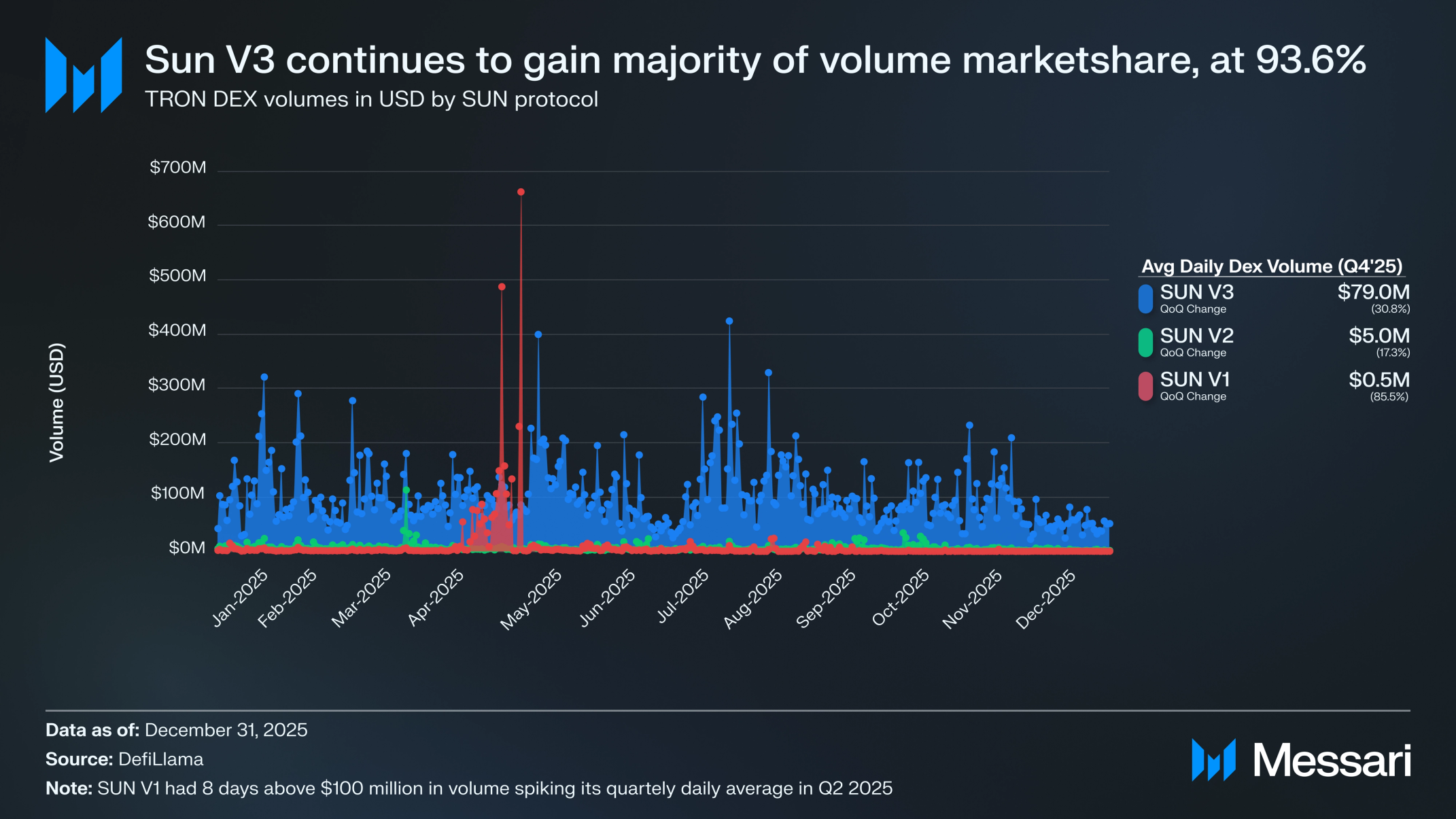
Overall DEX activity on TRON in Q4 was down, with average daily DEX volumes decreasing 31.5% QoQ. Zooming in on SunPump, activity has lessened with volume now concentrated on SUN V3, which continues to dominate TRON DEX trading. The average daily DEX volume on SUN V3 decreased 30.8% QoQ to $79 million, maintaining the majority share of total volume. SUN V2 volumes decreased by 17.3% QoQ from $6 million to $5 million, and SUN V1 activity dropped 85.5% QoQ to just $0.5 million following temporary spikes in early 2025 that had previously inflated its quarterly averages.
The vast majority of DEX volume on TRON occurs on SUN-related liquidity venues. In June 2023, SUN introduced a concentrated liquidity (CL) AMM to its product suite (SunSwap V3). Q1’24 marked the first time since SunSwap V3’s introduction that the majority of volume on SUN was routed through the V3 AMM. SUN V3 accounted for 93.6% of all volume on TRON in Q4’25.
Q4 was the first full quarter for SunPerp, a perpetual futures exchange on the TRON, and has already seen over $25 billion in total trading volume. Instead of a traditional AMM, SunPerp employs a hybrid model combining offchain execution for speed with onchain settlement for security, enabling zero gas fee trading and millisecond-order matching. Key technical differentiators include cross-chain liquidity aggregation for near-zero slippage, multi-layered risk controls with anti-snipe mechanisms, multi-source oracle pricing, and ZK privacy features for positions.
Stablecoins
The stablecoin market cap on TRON has been steadily trending up over the past year. In Q4, it continued to climb, increasing by 7.0% QoQ from $76.4 billion to $81.8 billion. The increase was primarily driven by a 6.9% increase in USDT, which remains overwhelmingly dominant with a $80.9 billion market cap, representing 99.1% of TRON’s stablecoin supply. Notably, 42.4% of all USDT in circulation is on TRON.
Other stablecoins on TRON also had QoQ increases in Q4. The second-largest stablecoin, USDD, was up 15.0% QoQ from $464.7 million to $534.2 million. USDD reached a milestone of over 457,493 accounts (+927 holders in Q4) that hold the stablecoin. On July 16, 2025, USD1, World Liberty Financial USD, was also launched on TRON and has already amassed 101,655 holders (+24,957 holders in Q4).
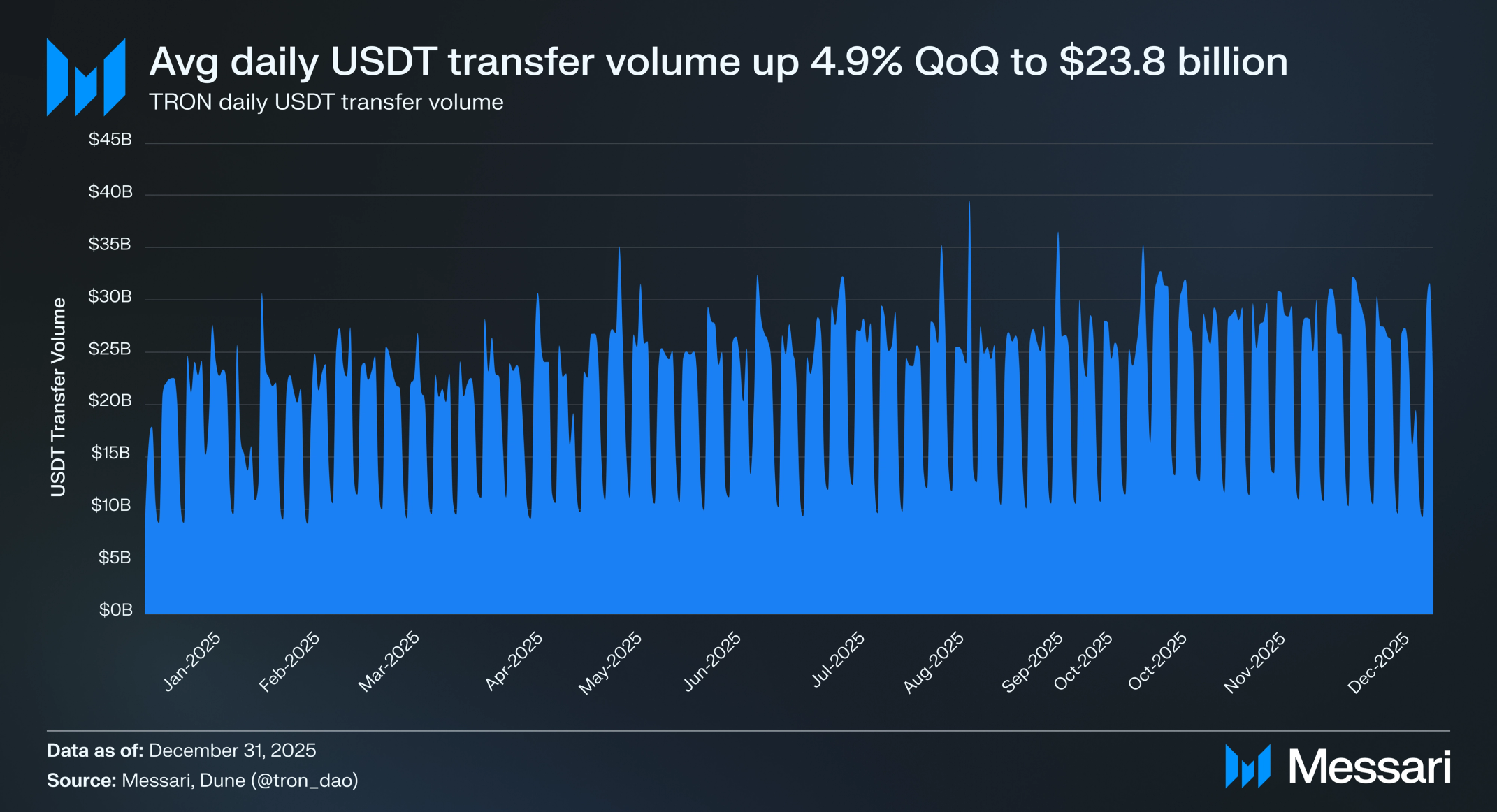
Another useful metric for evaluating stablecoins is transfer volume. This metric measures the dollar value of stablecoins moving onchain, not just when interacting with DEX-based smart contracts. The average daily USDT onchain transfer volume maintained its upward growth in Q4, increasing by 4.9% QoQ from $22.7 billion to $23.8 billion.
Technical Upgrades
In Q4, TRON had one proposal and a testnet upgrade.
TIP-6780 (Nov. 18, 2025): Meant to increase alignment with Ethereum’s EIP-6780 and maintain behavioral consistency with the EVM.
Java-Tron 4.8.1 (Nov. 30, 2025): An upgrade that has been deployed on the Nile testnet to enhance performance, security, and EVM compatibility across the network.
Ecosystem Growth
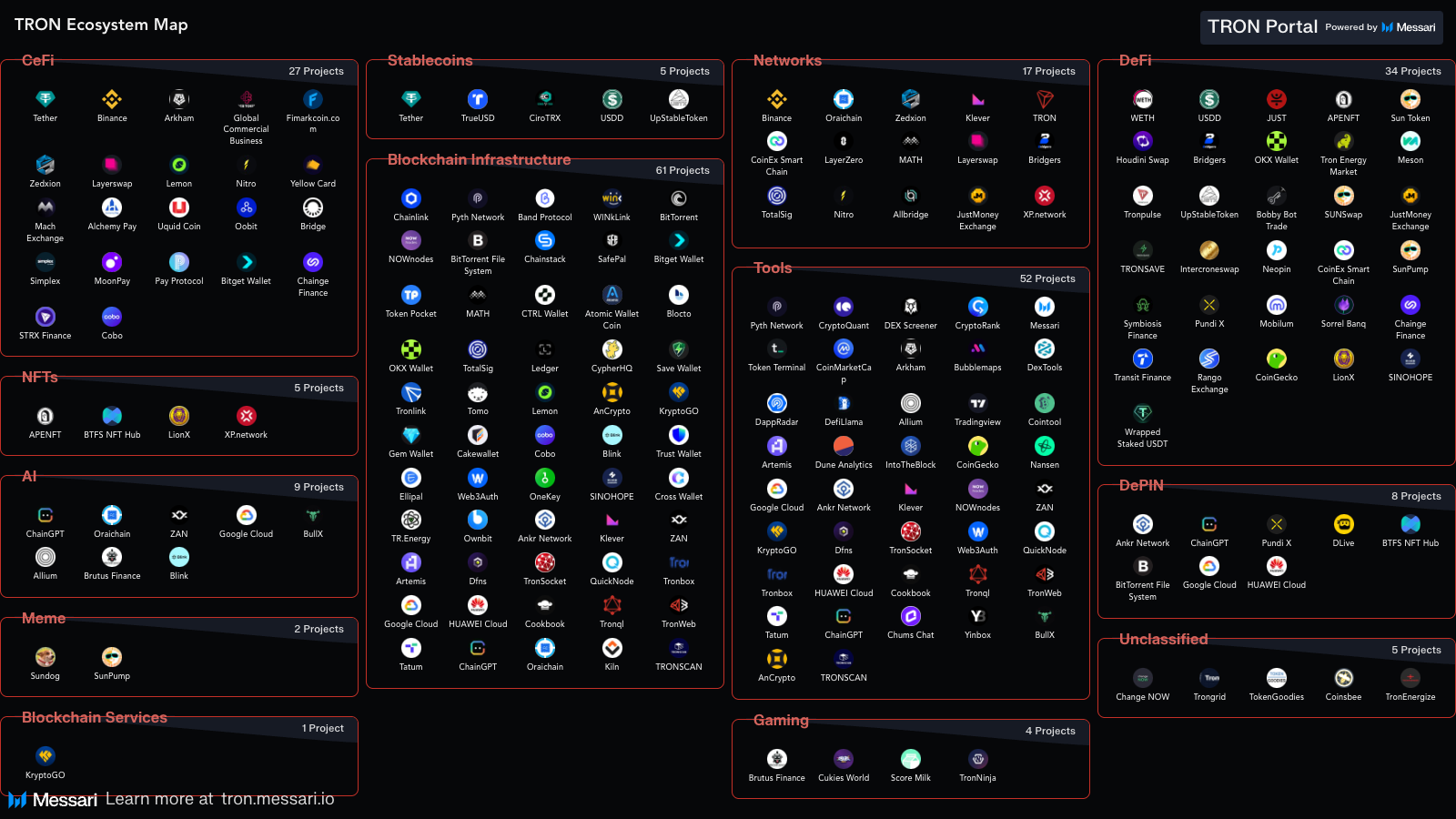
TRON continues to partner with leading companies in the blockchain space, with over 141 projects building on TRON with $20+ million market caps. A few notable partnerships and ecosystem upgrades that were announced in Q4 included:
Ledger Live has integrated native staking for TRON, allowing users to secure the network and earn rewards directly within the Ledger interface.
Halliday integrated with TRON to provide programmable commerce infrastructure and seamless onboarding experiences for developers and users.
LayerEdge has partnered with TRON to enhance cross-chain scaling solutions and improve interoperability for decentralized applications.
Dynamic has integrated with TRON to offer developers a suite of multi-wallet authentication tools and advanced onboarding features.
Gelato integrated its automation layer with TRON, enabling "gasless" transactions and automated smart contract execution for ecosystem developers.
Relay has integrated with TRON to facilitate instantaneous cross-chain asset transfers and simplified bridging for users.
The Graph expanded its data indexing services on TRON via Pinax, providing developers with more robust tools for accessing and querying blockchain data.
Allora Network integrated with TRON to bring decentralized AI-driven insights and machine learning capabilities to TRON’s DeFi ecosystem.
Revolut expanded its TRON support, allowing its global user base to trade, hold, and interact with TRX directly within the app.
TRX is now accessible on the Base network through a LayerZero integration, enabling seamless cross-chain liquidity between the two platforms.
Kalshi integrated with TRON to allow users to utilize TRX for regulated prediction market trades and event contracts.
USDT on TRON was officially cleared for institutional and regulated use by the Abu Dhabi Global Market (ADGM) as an Accepted Virtual Asset.
Uquid, a multichain Web3-enabled shopping platform, reported that the largest transaction volume occurred on TRON in 2025.
TRON was a top sponsor at many events in Q4, including:
TRON continues implementing strategies to grow its ecosystem beyond stablecoins, with initiatives such as the TRON Builders League, an incubator program with a $10 million fund, designed to support builders on TRON.
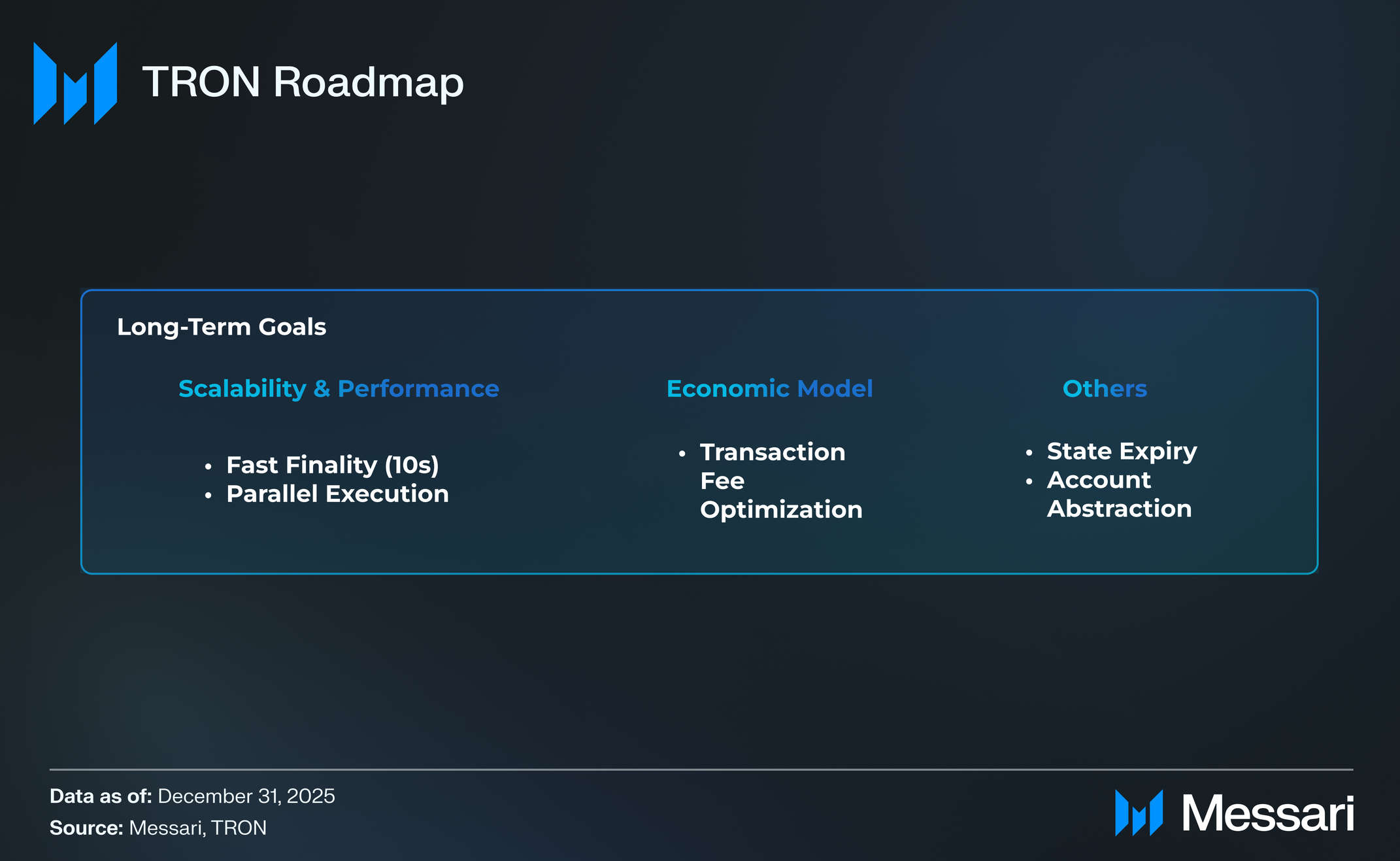
As we move into 2026, TRON will continue to focus on enhancing network stability by increasing the P2P topology robustness. Economic model improvements, such as dynamic transaction fee adjustments, aim to strengthen the ecosystem’s sustainability. In the long term, TRON plans to explore other areas like account abstraction and state data expiration to ensure robust infrastructure and future adaptability.
Closing Summary
TRON concluded 2025 with strong network activity and significant institutional milestones despite a slight cooling in market cap and DeFi TVL. The network achieved a major milestone in usage, with average daily transactions surpassing 10 million and active addresses reaching 2.8 million, signaling deep user engagement. Financial performance remained a core strength as TRON delivered its second consecutive billion-dollar revenue quarter. The stablecoin sector experienced renewed growth, reaching a $81.8 billion market cap, driven by the continued dominance of USDT and the successful first full quarter of the USD1 stablecoin. Furthermore, the launch of SunPerp and strategic integrations with platforms like Revolut, Ledger, and Base via LayerZero have significantly expanded TRON’s cross-chain footprint and retail accessibility.
Looking ahead to 2026, TRON is well-positioned for sustained growth through its technical roadmap, which focuses on robust P2P topology and economic sustainability. With a clear path toward long-term goals, such as account abstraction and state data expiration, TRON continues to evolve its infrastructure to support the next generation of decentralized commerce and global payments.
To stay up-to-date with all things TRON, visit the TRON Portal.
This report was commissioned by Tron Network Limited. All content was produced independently by the author(s) and does not necessarily reflect the opinions of Messari, Inc. or the organization that requested the report. The commissioning organization may have input on the content of the report, but Messari maintains editorial control over the final report to retain data accuracy and objectivity. Author(s) may hold cryptocurrencies named in this report. This report is meant for informational purposes only. It is not meant to serve as investment advice. You should conduct your own research and consult an independent financial, tax, or legal advisor before making any investment decisions. Past performance of any asset is not indicative of future results. Please see our Terms of Service for more information.
No part of this report may be (a) copied, photocopied, duplicated in any form by any means or (b) redistributed without the prior written consent of Messari®.
Jeremy is a research analyst at Messari with interests in Infra, DeFi, and Enterprise adoption. Prior to joining Messari, Jeremy worked as an analyst at Fidelity Digital Assets.
Jeremy is a research analyst at Messari with interests in Infra, DeFi, and Enterprise adoption. Prior to joining Messari, Jeremy worked as an analyst at Fidelity Digital Assets.