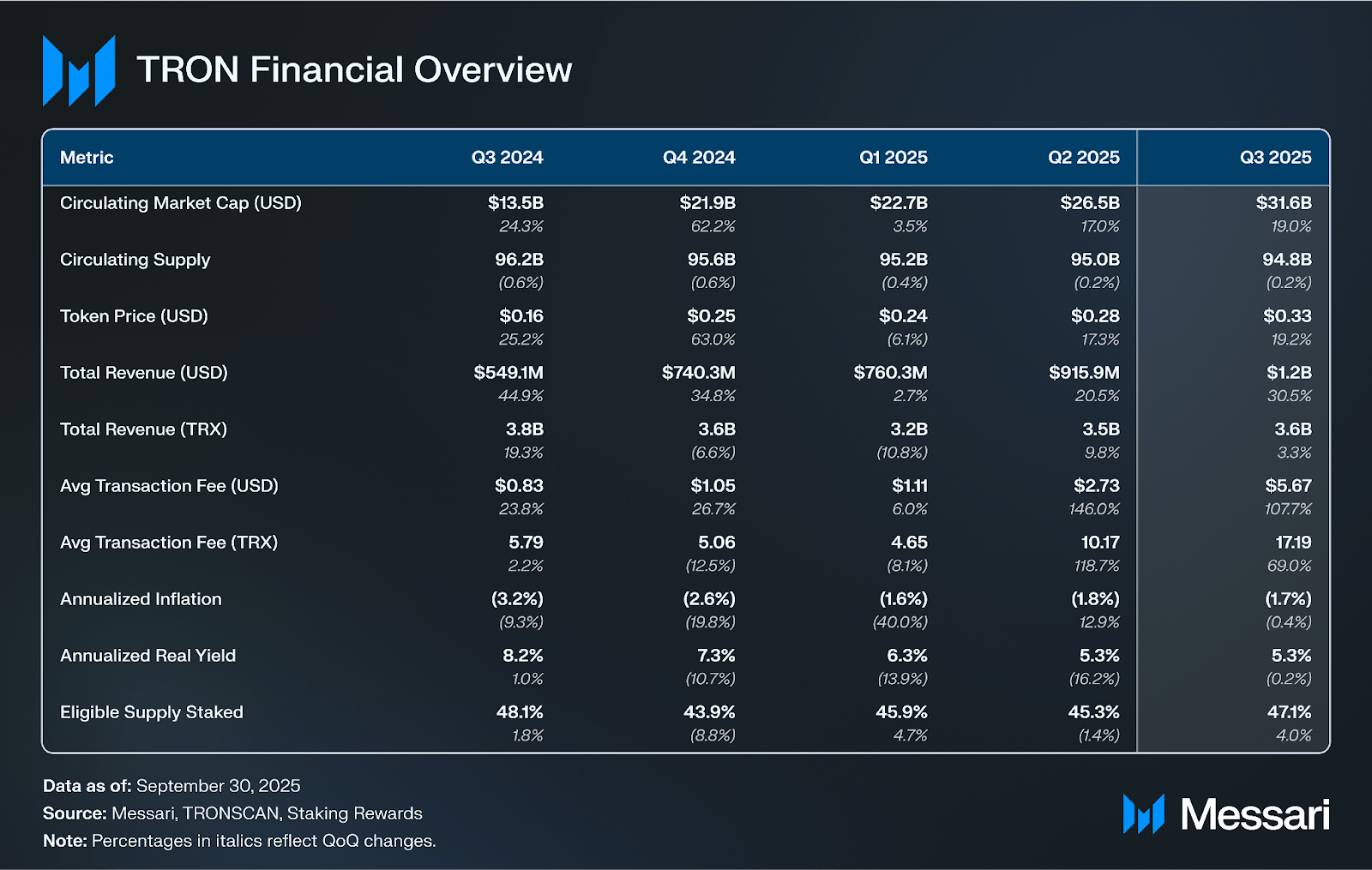
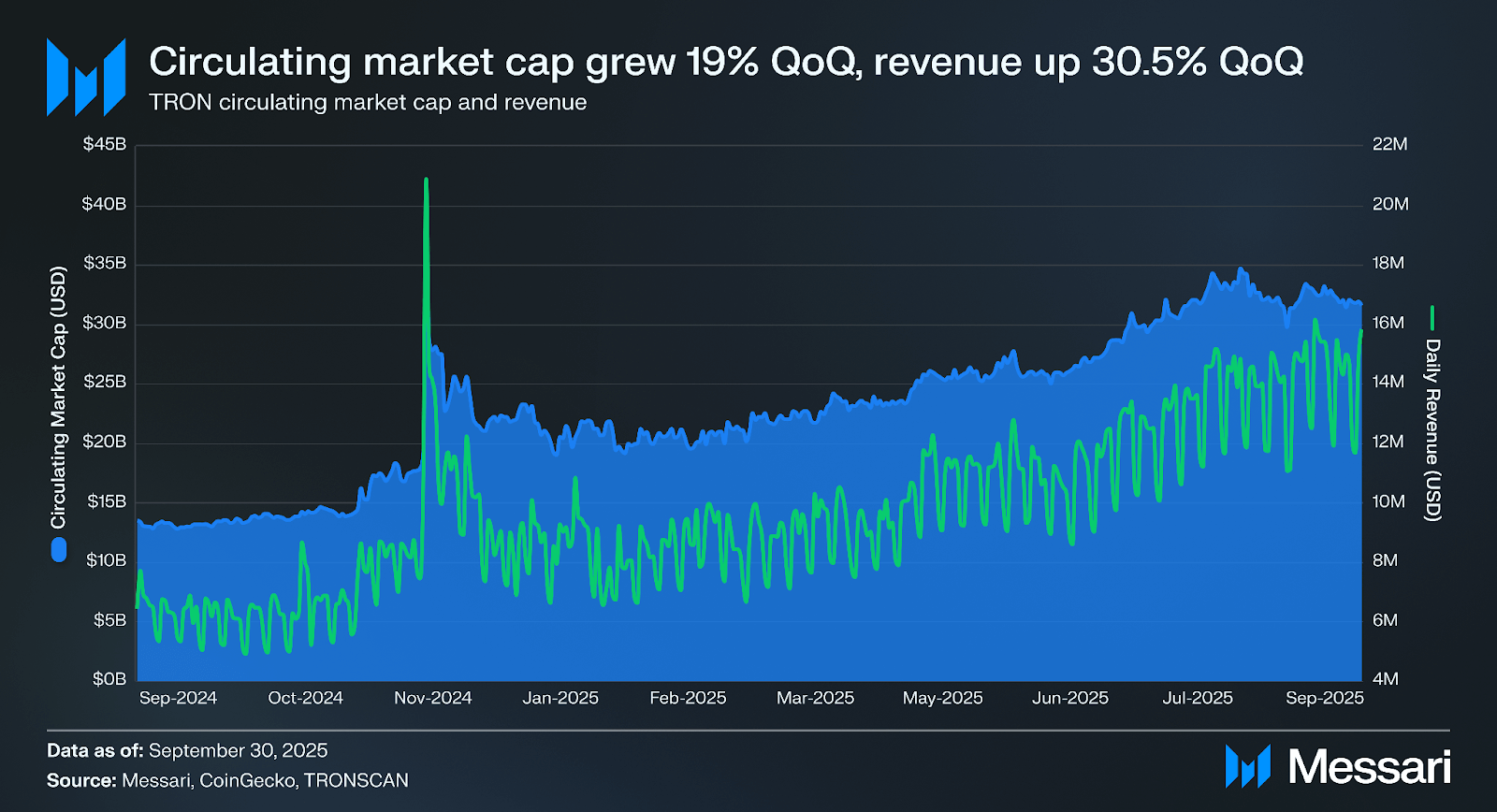
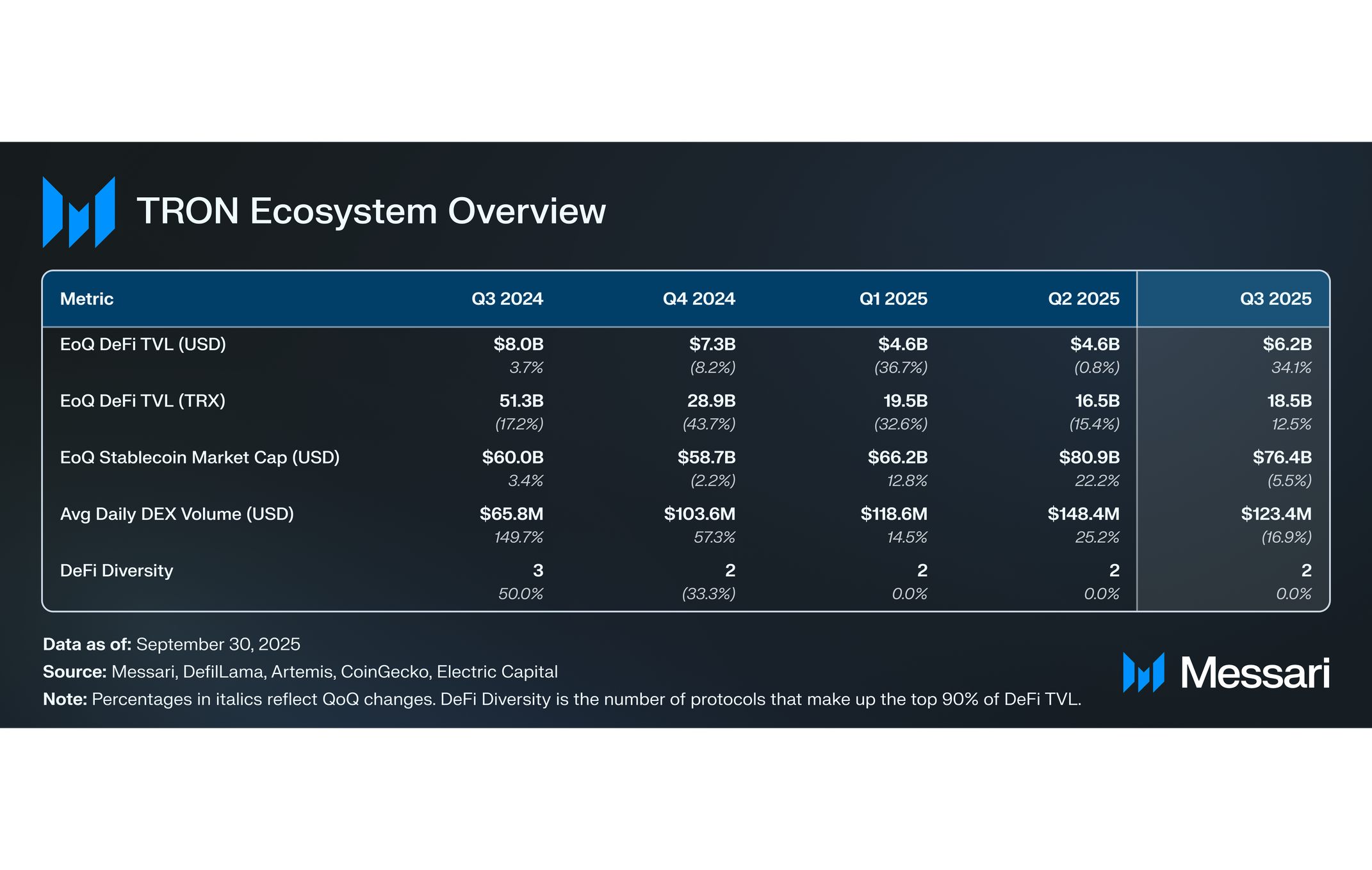
TRON experienced continued growth across key metrics in Q3, including a 19% QoQ increase in market cap to $31.6 billion and a 30.5% QoQ increase in revenue to $1.2 billion, both marking new all-time highs for the network.
Ecosystem momentum in Q3 was driven by strategic integrations and partnerships with major players, including MetaMask, Chainlink, Graph Protocol, deBridge, Polymer Labs, and Plume Network. This was in addition to the launch of SunPerp and the introduction of the new USD1 (World Liberty Financial USD) stablecoin on TRON.
DeFi performance was strong, with TRON’s TVL rising 34.1% QoQ in USD terms to $6.2 billion, maintaining its position as the fifth-largest network by TVL globally.
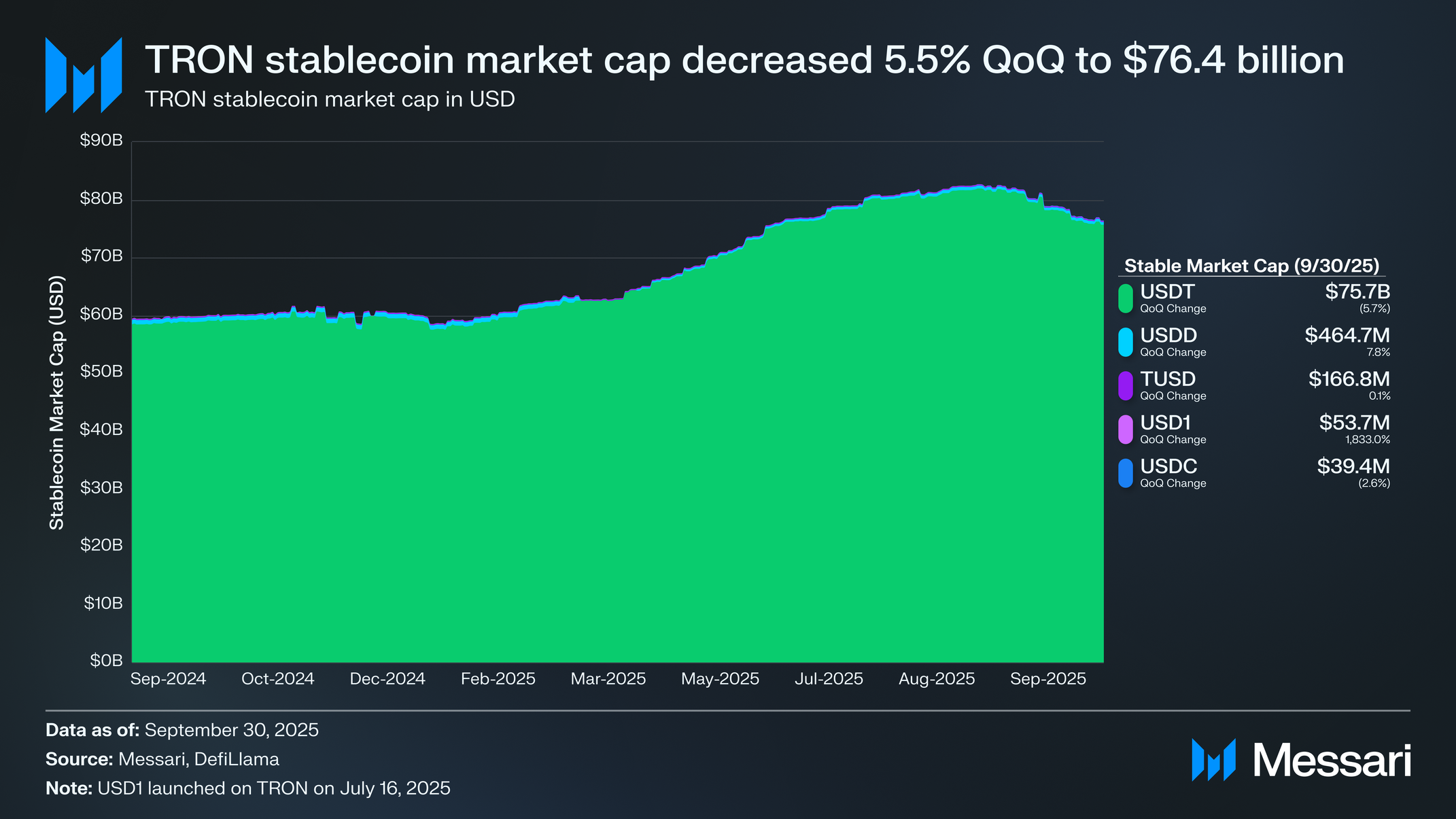
Stablecoin market activity cooled, with the total stablecoin market cap declining by 5.5% QoQ to $76.4 billion, though USDT remained dominant with a 99.1% share and 42.7% of global supply.
TRON’s global influence strengthened, highlighted by the U.S. Department of Commerce’s selection to record GDP data on its network, and its sponsorship of major global events, including TOKEN2049, WebX, and Korea Blockchain Week.
Primer
TRON (TRX) is a public, open-source blockchain network that relies on a Delegated Proof-of-Stake (DPoS) consensus mechanism. An election process is used to determine which validators participate in consensus. All TRX stakers vote onchain for the candidates they want to become Super Representatives (SRs). In each epoch, the top 27 most voted-for candidates become SRs within the active set and take turns producing blocks. A new election occurs every six hours.
The TRON Virtual Machine (TVM) powers applications on the network and uses “Energy” and “Bandwidth” instead of gas, like its Ethereum Virtual Machine (EVM) counterpart. Bandwidth is gas spent on transactions, whereas Energy is gas spent on smart contract calls. Energy and Bandwidth can be acquired by staking TRX or burning TRX to pay for the Energy/Bandwidth required to execute a smart contract call or transaction. The TVM is EVM-compatible and offers developers affordable and fast smart contract execution.
TRX’s circulating market cap increased for the eleventh consecutive quarter in Q3, up 19% QoQ from $26.5 billion to $31.6 billion. Furthermore, TRX performed similarly to other large-cap cryptocurrencies as its market cap ranking amongst all tokens (excluding stablecoins) dropped one spot from 8 to 9. Notably, TRX has maintained a deflationary trend for many quarters, and Q3 was no different, with a 0.2% decrease in circulating supply.
TRON utilizes a resource model to execute transactions onchain. To summarize, the resource model is based on distributing Bandwidth and Energy to stakers. As long as stakers have acquired enough resources, they can use those resources to transfer tokens and execute smart contracts for free. Users must cover transaction fees with TRX if they utilize more computing power than their resources allow, all of which is burned. Accordingly, network revenue on TRON is attributed to TRX burns that occur when users consume resources beyond their allocated Bandwidth or Energy. To track these numbers in real time, see the TRON Portal.
TRON had another all-time high quarter for revenue. Total revenue in USD was up 30.5% QoQ from $915.9 million to $1.2 billion. Driven by a 19.2% increase in token price during Q3, total revenue in TRX rose by 3.3%, climbing from $3.5 billion to $3.6 billion, marking the second quarterly increase in the past four quarters.
Supply Dynamics
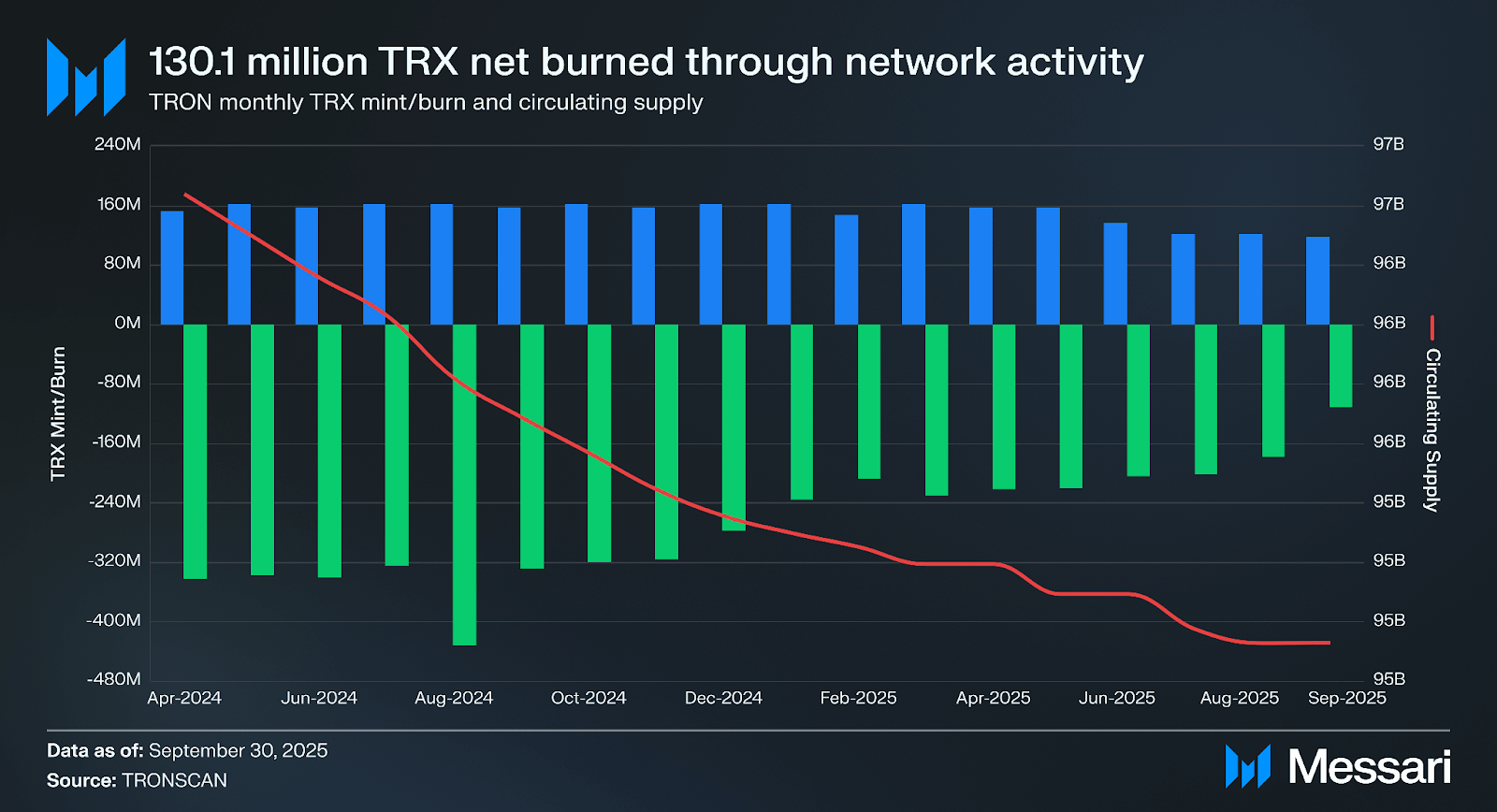
The circulating supply of TRX is primarily affected by two parameters: (i) tokens minted to reward stakers and block producers, and (ii) tokens burned due to network transaction fees. Approximately 5.1 million TRX are minted daily as block and vote rewards distributed to Super Representatives and stakers. As such, the circulating token supply will decrease over time if more than 5.1 million TRX are burned daily, on average.
In Q3, the circulating supply of TRX decreased from 95 billion to 94.8 billion. Annualized, this equates to an inflation rate of approximately -1.7%.
TRON incentivizes participation in its staking mechanism through a combination of the following:
Block Reward - Super Representatives earn 8 TRX for each block produced (subject to change through onchain governance). After producing a block, the Super Representative’s chosen commission ratio is kept, while the remaining TRX is distributed amongst the representative’s associated voters.
Vote Reward - The 28th to 127th most voted-for Super Representatives become Super Representative Partners for the next epoch. Although partners are not involved in block production, both they and the TRX stakers who voted for them receive voting rewards. For every block produced, 128 TRX are cumulatively rewarded to Super Representatives and Super Representative Partners in proportion to their respective TRX stakers’ votes.
The estimated annualized real staking yield decreased slightly in Q3 from 5.27% to 5.26%, down 0.2% QoQ, as a result of lower TRX burn volumes.
Network Analysis
Usage
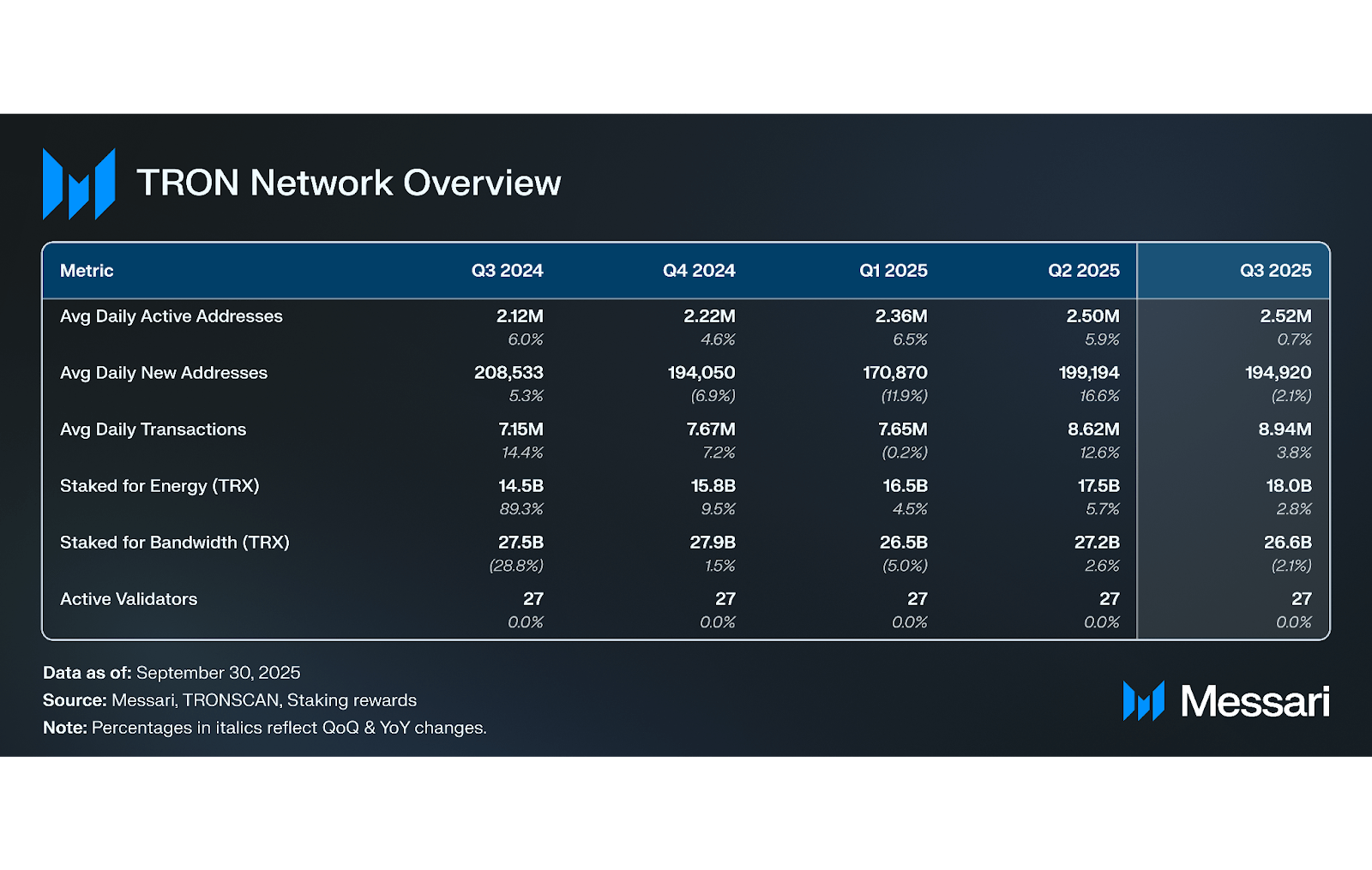
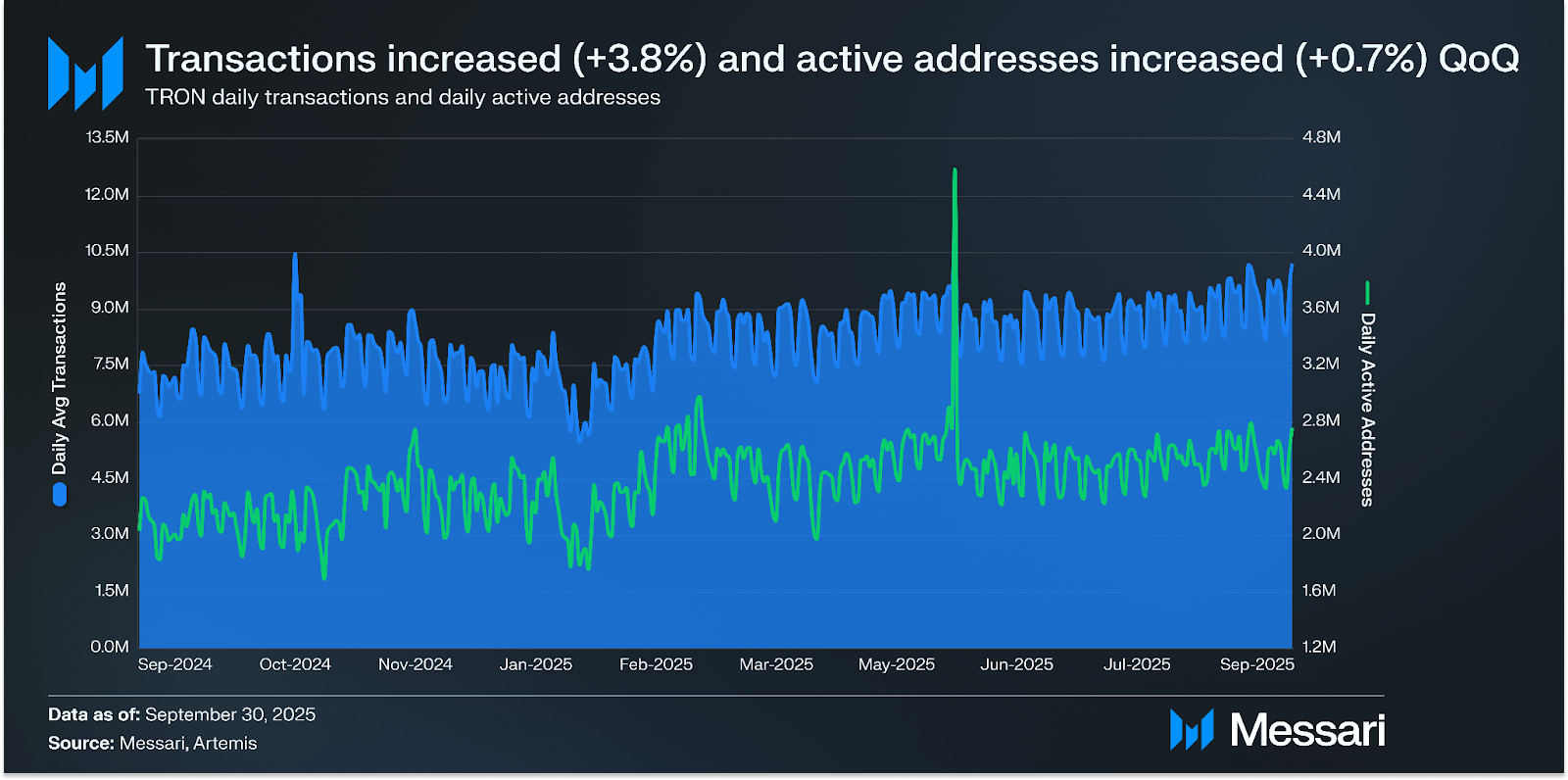
Q3 usage was positive for TRON, with increases in onchain activity metrics like average daily transactions and average daily active addresses. Average daily transactions increased 3.8% QoQ from 8.62 million to 8.94 million, and active daily active addresses grew 0.7% QoQ from 2.50 million to 2.52 million.
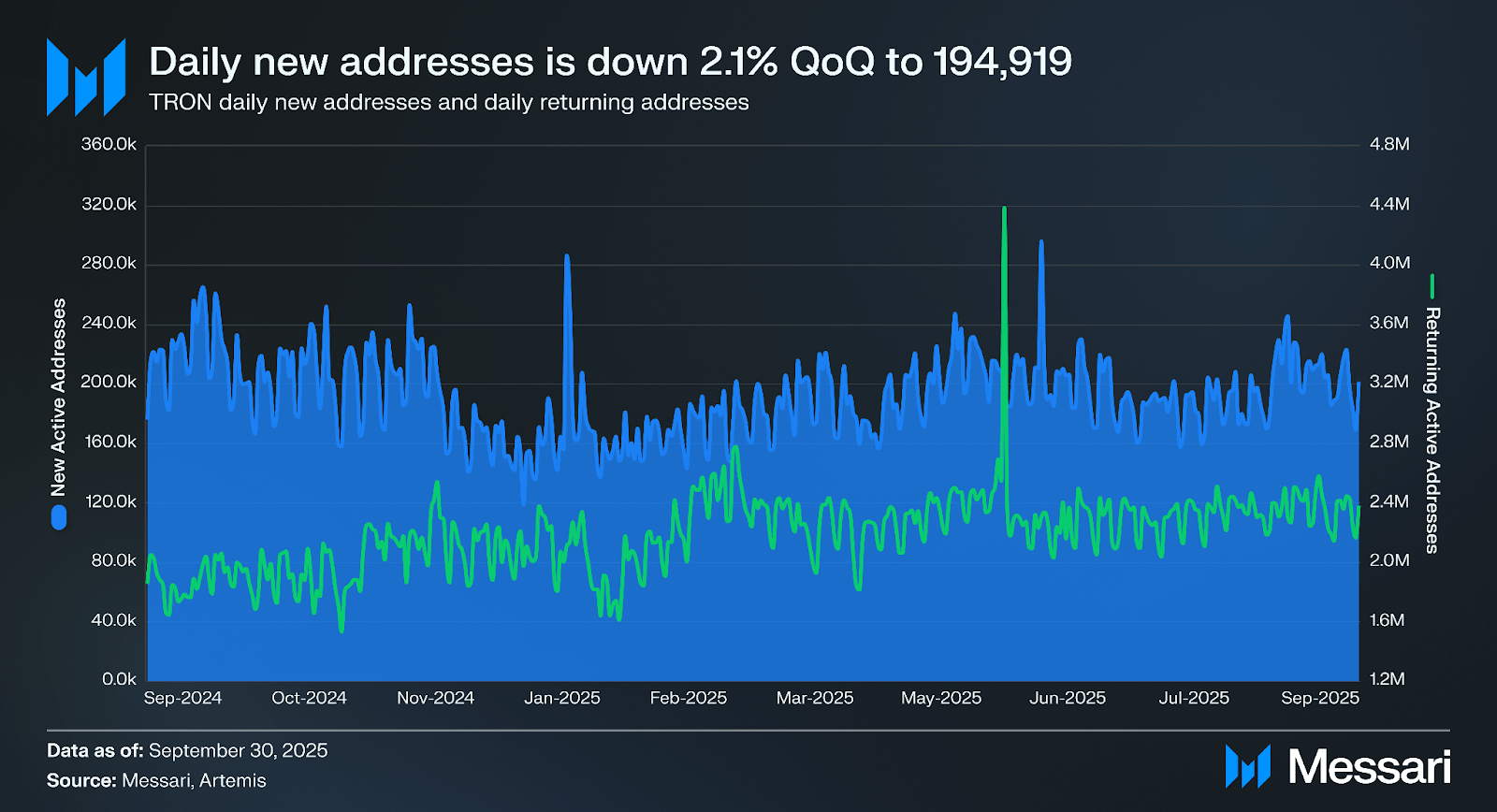
Average daily new addresses decreased in Q3, down 2.1% QoQ from 199,194 to 194,919. Of Q3’s average daily active addresses, 7.73% were new addresses.
Security and Decentralization
TRON uses a Delegated Proof-of-Stake (DPoS) consensus mechanism and the Practical Byzantine Fault Tolerance (PBFT) consensus algorithm to secure the network. A DPoS election occurs every six hours, in which 27 Super Representatives (SRs) take turns producing blocks. Those wishing to run a TRON node can pay 9,999 TRX to become an SR candidate.
While there may be centralization concerns regarding only 27 SRs participating in securing the network, at the end of Q3, over 397 SR candidates (up from 393 in Q2) received votes. This diversity of candidates helps mitigate centralization concerns and promotes a more distributed governance model, enhancing the network's resilience and security. The number of SR candidates should challenge the voting population to distribute votes. Additionally, no singular entity received over 10% of all votes. The entity with the most votes was Poloniex, which received 2.9 billion (7.07%) of the 42.2 billion votes in the most recent election.
Although there may be some benefits to a democratic voting system for block production and a set of SR candidates, neither feature fully does away with centralization risks. Metrics such as the geographic diversity of nodes may also factor into a network’s level of centralization. At the end of Q3, there were 7,511 TRON nodes (up from 7,405 in Q2) distributed across 88 different geographic locations around the globe, with the highest concentration in the United States (19.8%). Geographic node concentration, while currently diverse, remains a factor to monitor given potential geopolitical risks, regulations, and acts of nature, among other reasons.
Since the introduction of the new staking mechanism, Stake 2.0 (TIP-467), in April 2023, it has become the default for all new staking activity. Any TRX staked after April 2023 is automatically assigned to Stake 2.0, while TRX previously staked under Stake 1.0 remains valid and unaffected. Stake 2.0 implemented a new layer to separate low-frequency staking operations and high-frequency resource delegating operations. It also introduced resource delegating without unstaking and improved resource utilization.
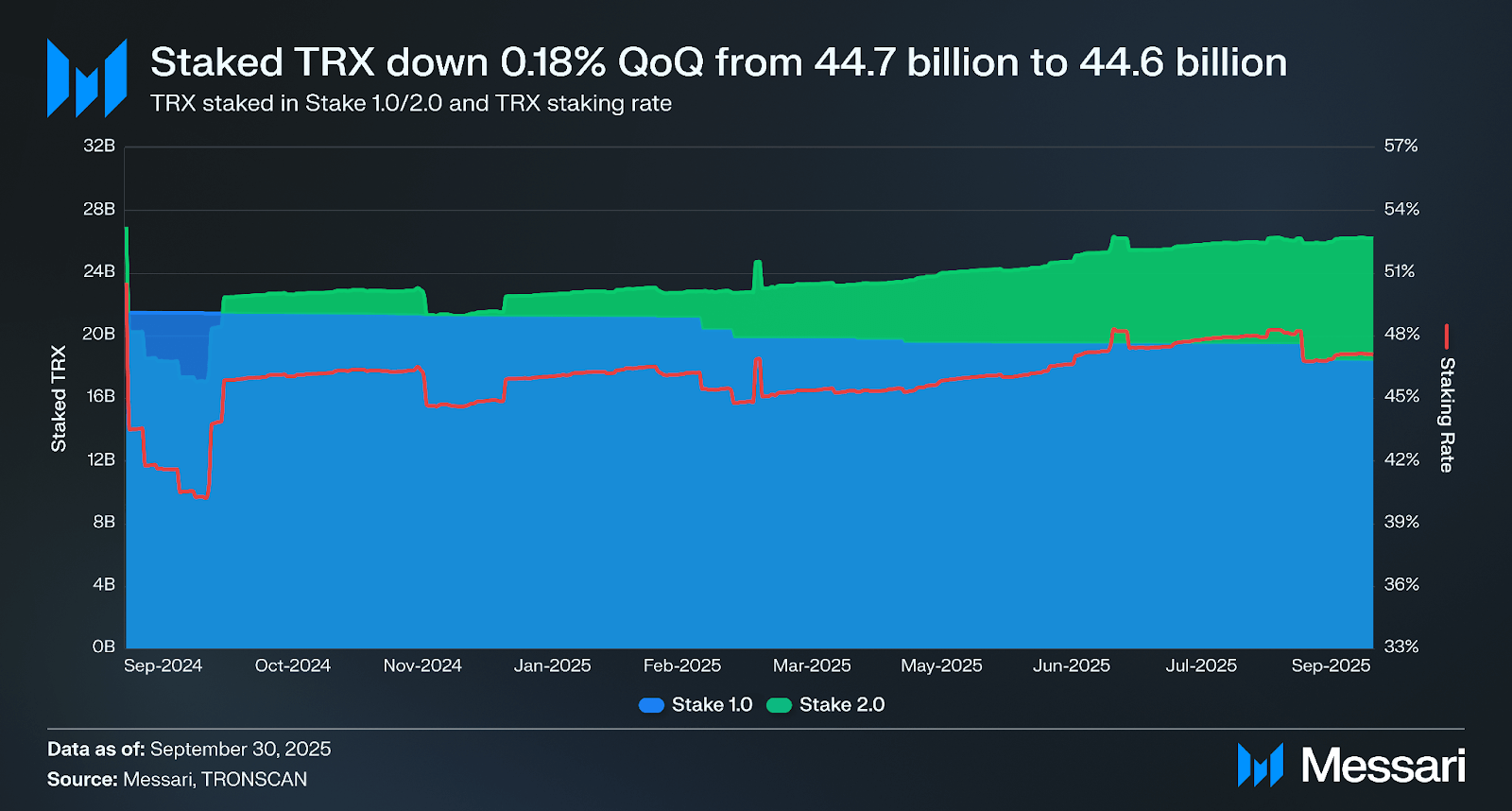
The staking ratio (the proportion of TRX’s total supply actively staked) stayed the same at 47.1% in Q3. Additionally, more users continued to switch to Stake 2.0 over 1.0 in Q3. Stake 2.0 ended the quarter with 26.2 billion TRX staked (+4.08% QoQ), whereas Stake 1.0 finished with 18.4 billion TRX staked (-5.7% QoQ). In sum, 44.6 billion TRX were staked at the end of Q3, a decrease of 0.18% QoQ. Due to an increase in TRX’s price, the total stake in USD was up 17.7% QoQ from $12.5 billion to $14.7 billion. Compared to other PoS networks, TRON had the seventh-highest dollar value of funds staked by the end of Q3, maintaining its position from the prior quarter.
It is worth noting that to take over the network through a two-thirds attack, a malicious actor would need to control 18 of the 27 SRs. At the end of Q3, this threshold was 33.4 billion TRX ($11 billion).
Bandwidth is the gas spent on transactions, while energy is the gas spent on contract calls. Users can stake TRX to acquire either resource accordingly:
The amount of bandwidth obtained from an account’s stake = (the amount of TRX staked for obtaining bandwidth / the total amount of TRX staked for obtaining bandwidth in the whole network * 43.2 billion)
The amount of energy obtained from an account’s stake = (the amount of TRX staked for obtaining energy / the total amount of TRX staked for obtaining energy in the whole network * 180 billion)
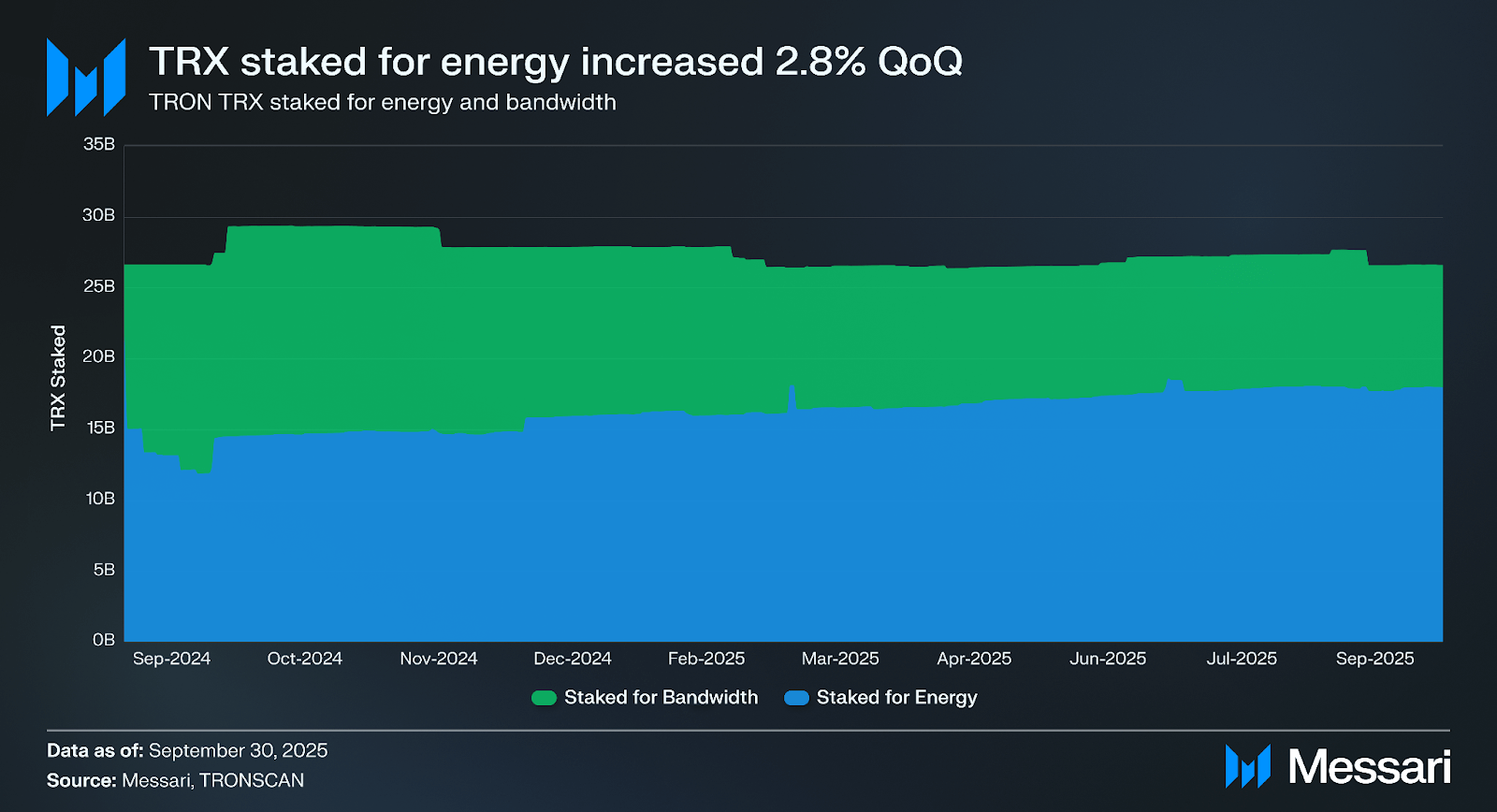
Notably, the amount staked for bandwidth declined 2.1% QoQ from 27.2 billion to 26.6 billion. As for energy, staking increased 2.8% QoQ from 17.5 billion to 18.0 billion, in part due to overall higher gas fees. The amount staked for each resource is correlated with consumption.
Technical Developments
In Q3, TRON passed one proposal to modify the energy required for a transaction.
Proposal 104 (August 29, 2025): To modify the fee of 1 unit of Energy to 0.0001 TRX. This was approved by 25 of the 27 Super Representatives.
Ecosystem Analysis
DeFi
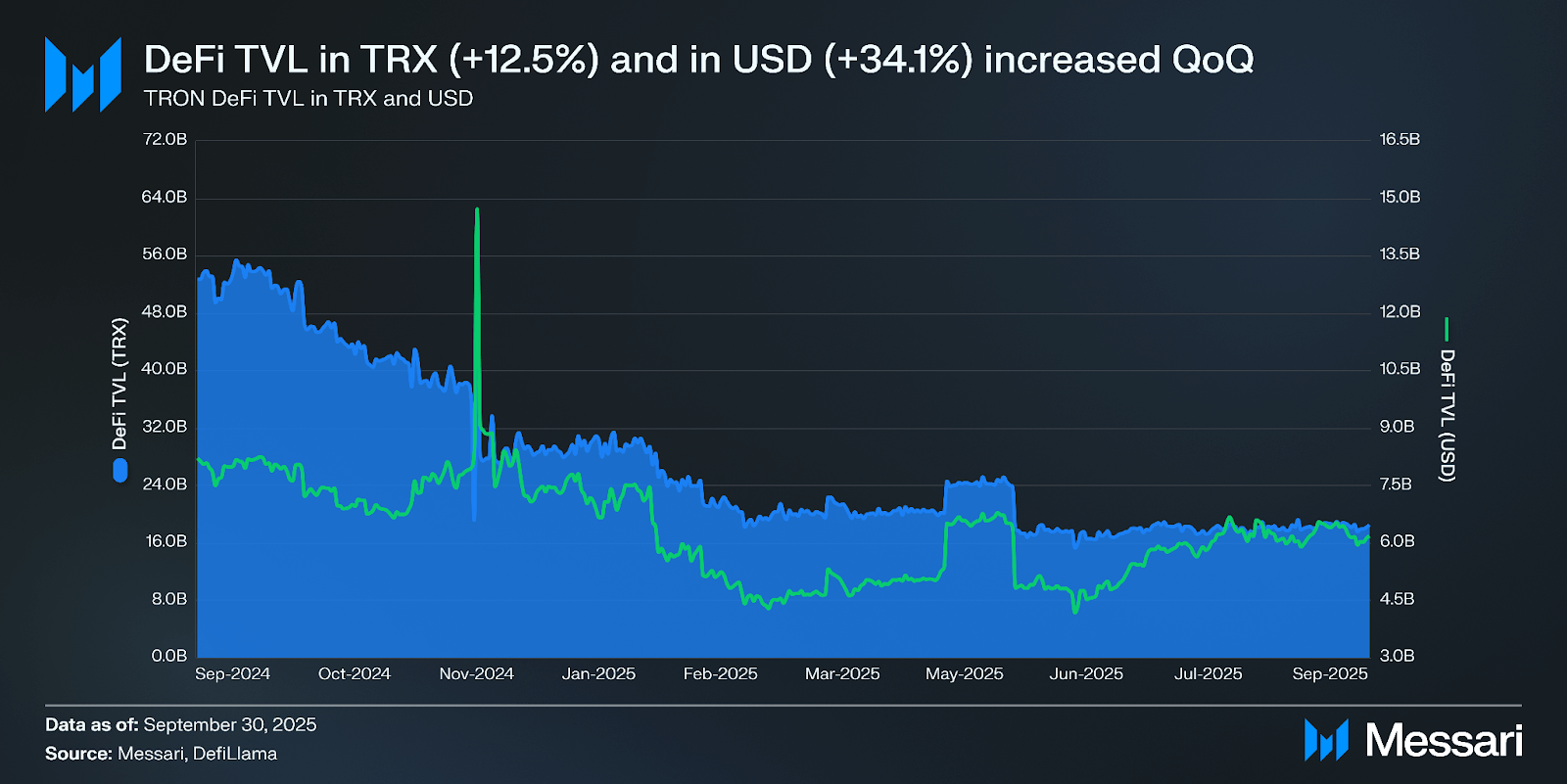
DeFi TVL on TRON denominated in TRX increased 12.5% QoQ from 16.5 billion to 18.5 billion. The TVL denominated in USD also increased, up 34.1% QoQ from $4.6 billion to $6.2 billion. Compared to other networks, TRON maintained its rank as the fifth-highest network by TVL at $6.2 billion, ranking behind fourth-place Bitcoin ($8.3 billion), third-place BNB Chain ($9 billion), second-place Solana ($10.9 billion), and first-place Ethereum ($87.5 billion). The large spike in DeFi TVL in terms of USD in Q4’24 was due to a sudden rise in TRX’s price and subsequent drop in Q1’25.
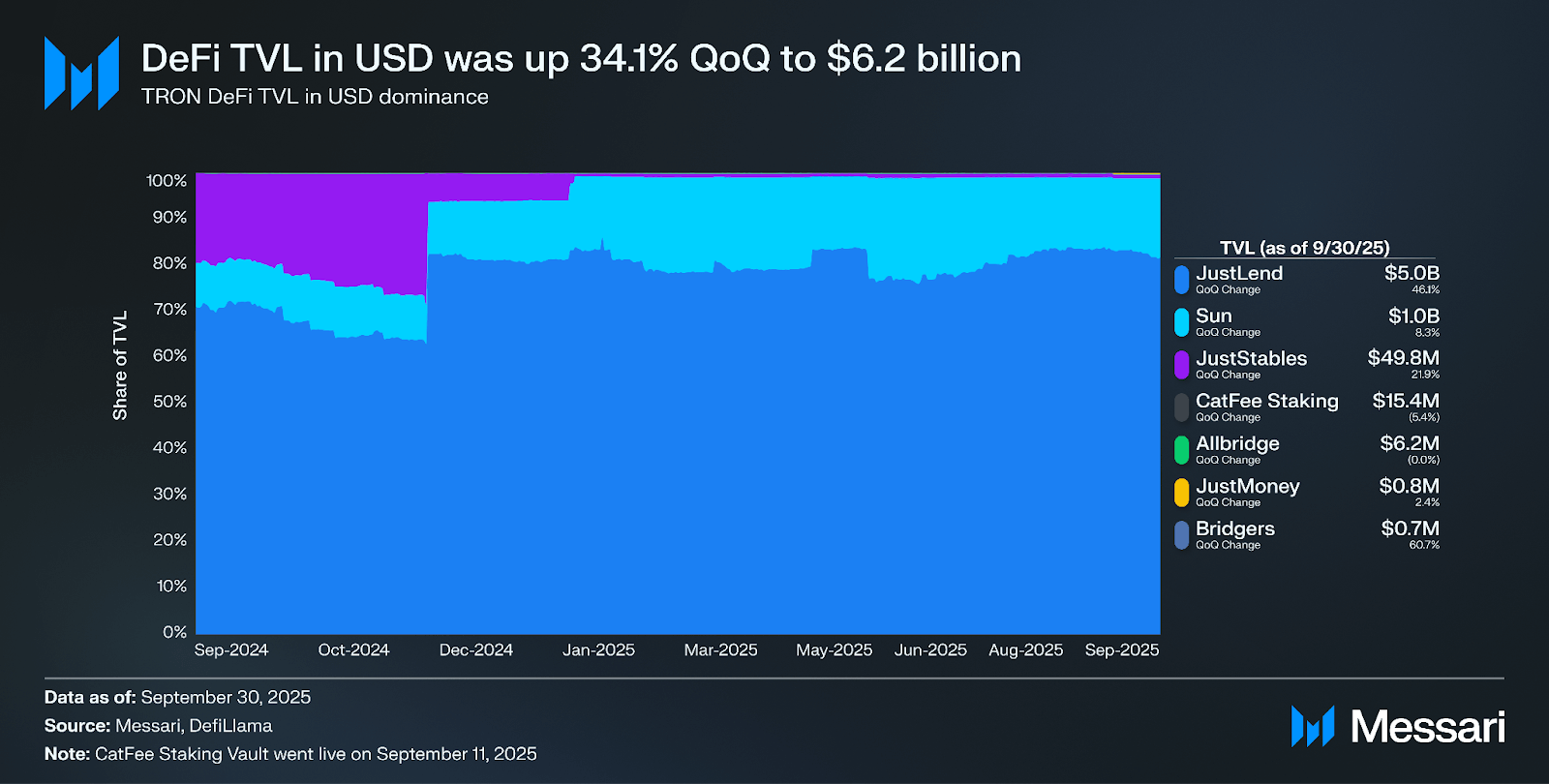
JustLend, the largest protocol by TVL, saw its TVL increase 46.1% QoQ from $3.4 billion to $5.0 billion. Total borrow volume on JustLend decreased by 3.9% QoQ from $160.5 million to $154.3 million.
SUN saw an increase in its TVL, up 8.3% QoQ from $965.0 million to $1.0 billion. The protocol comprises three different AMMs (V1, V2, and V3). By the end of Q3, V1 TVL was $429.7 million (42.2% of TVL), V2 TVL was $300.3 million (29.6% of TVL), and V3 TVL was $286.4 million (28.2% of TVL).
In sum, JustLend and SUN represent 99% of DeFi TVL on TRON.
DEX Volume
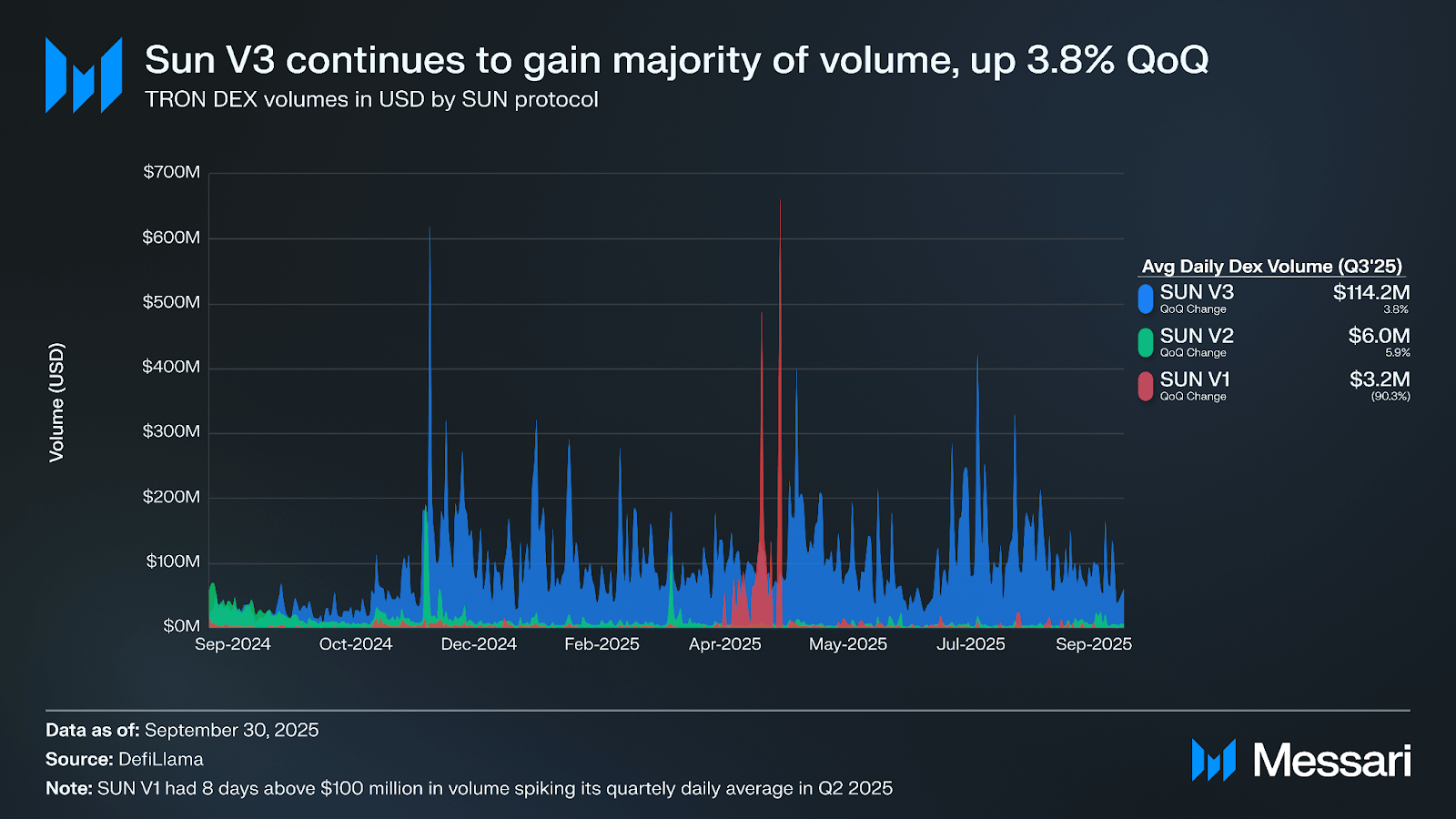
Overall DEX activity on TRON in Q3 was down, with average daily DEX volumes decreasing 16.9% QoQ. Zooming in on SunPump, activity has stabilized with volume now concentrated on SUN V3, which continues to dominate TRON DEX trading. The average daily DEX volume on SUN V3 rose 3.8% QoQ to $114.2 million, maintaining the majority share of total volume. SUN V2 volumes also edged up modestly, increasing 5.9% QoQ to $6.0 million, while SUN V1 activity decreased, down 90.3% QoQ to just $3.2 million following temporary spikes in early 2025 that had previously inflated its quarterly averages.
Essentially, all DEX volumes on TRON occur on SUN. In June 2023, SUN introduced a concentrated liquidity (CL) AMM to its product suite (SunSwap V3). Q1’24 marked the first time since SunSwap V3’s introduction that the majority of volume on SUN was routed through the V3 AMM. SUN V3 accounted for 92.6% of all volume on TRON in Q3’25.
At the end of Q3, SunPerp, a perpetual futures exchange on the TRON, was launched and has already seen over $1.6 billion in total trading volume. Instead of a traditional AMM, SunPerp employs a hybrid model combining offchain execution for speed with onchain settlement for security, enabling zero gas fee trading and millisecond-order matching. Key technical differentiators include cross-chain liquidity aggregation for near-zero slippage, multi-layered risk controls with anti-snipe mechanisms, multi-source oracle pricing, and ZK privacy features for positions.
Stablecoins
The stablecoin market cap on TRON has been steadily trending up over the past year, but in Q3 it cooled off, decreasing by 5.5% QoQ from $80.9 billion to $76.4 billion. The decrease was primarily driven by a 5.7% drop in USDT, which remains overwhelmingly dominant with a $75.7 billion market cap, representing 99.1% of TRON’s stablecoin supply. Notably, 42.7% of all USDT in circulation is on TRON.
Other stablecoins on TRON also had QoQ increases in Q3. The second-largest stablecoin, USDD, was up 7.8% QoQ from $432.8 million to $464.7 million. USDD reached a milestone of over 456,566 accounts (+47,566 holders in Q3) that hold the stablecoin. On July 16, 2025, USD1, World Liberty Financial USD, was also launched on TRON and has already amassed 76,708 holders.
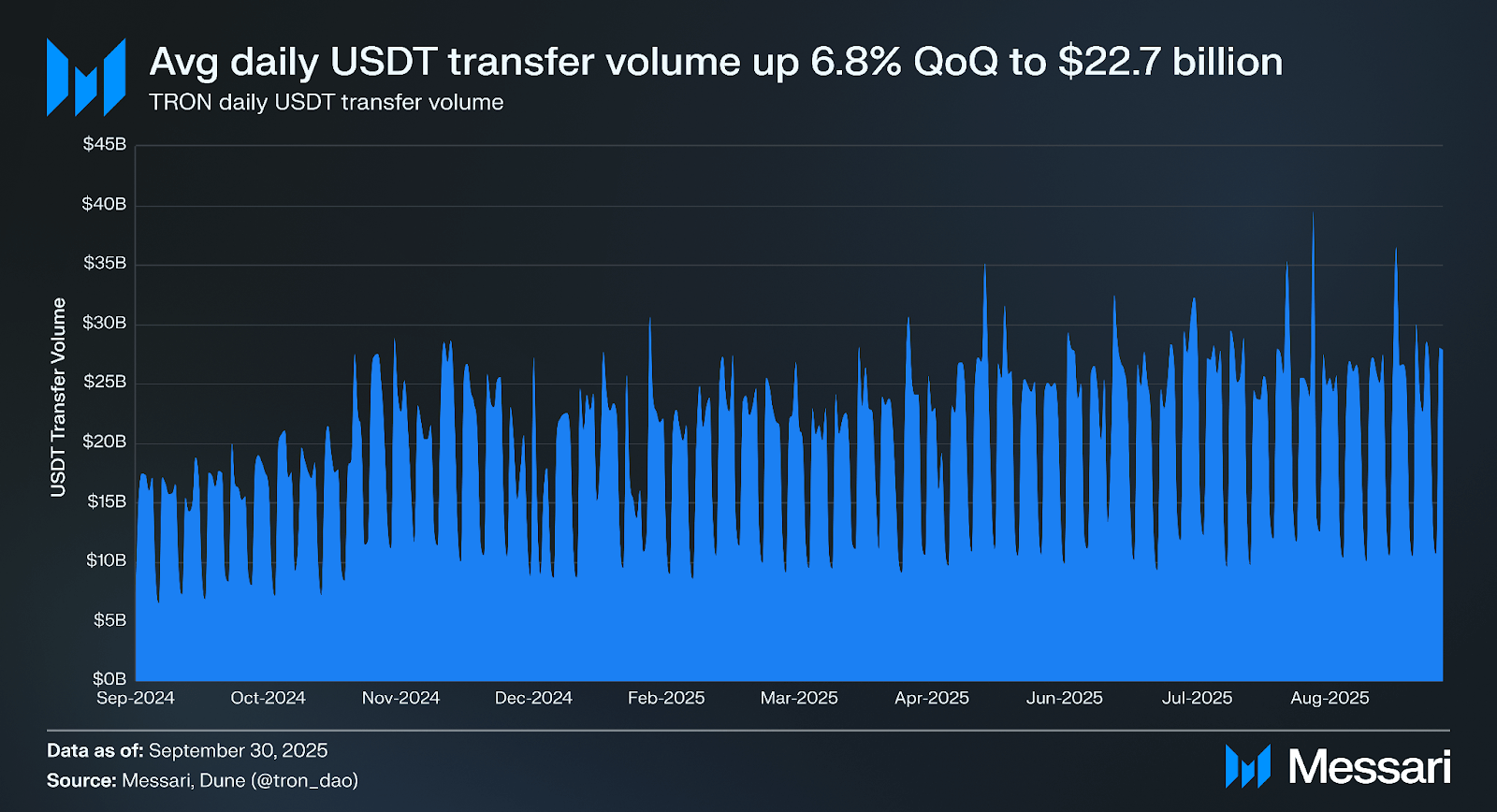
Another useful metric for evaluating stablecoins is transfer volume. This metric measures the dollar value of stablecoins moving onchain, not just when interacting with DEX-based smart contracts. The average daily USDT onchain transfer volume maintained its upward growth in Q3, increasing by 6.8% QoQ from $21.3 billion to $22.7 billion.
Ecosystem Growth
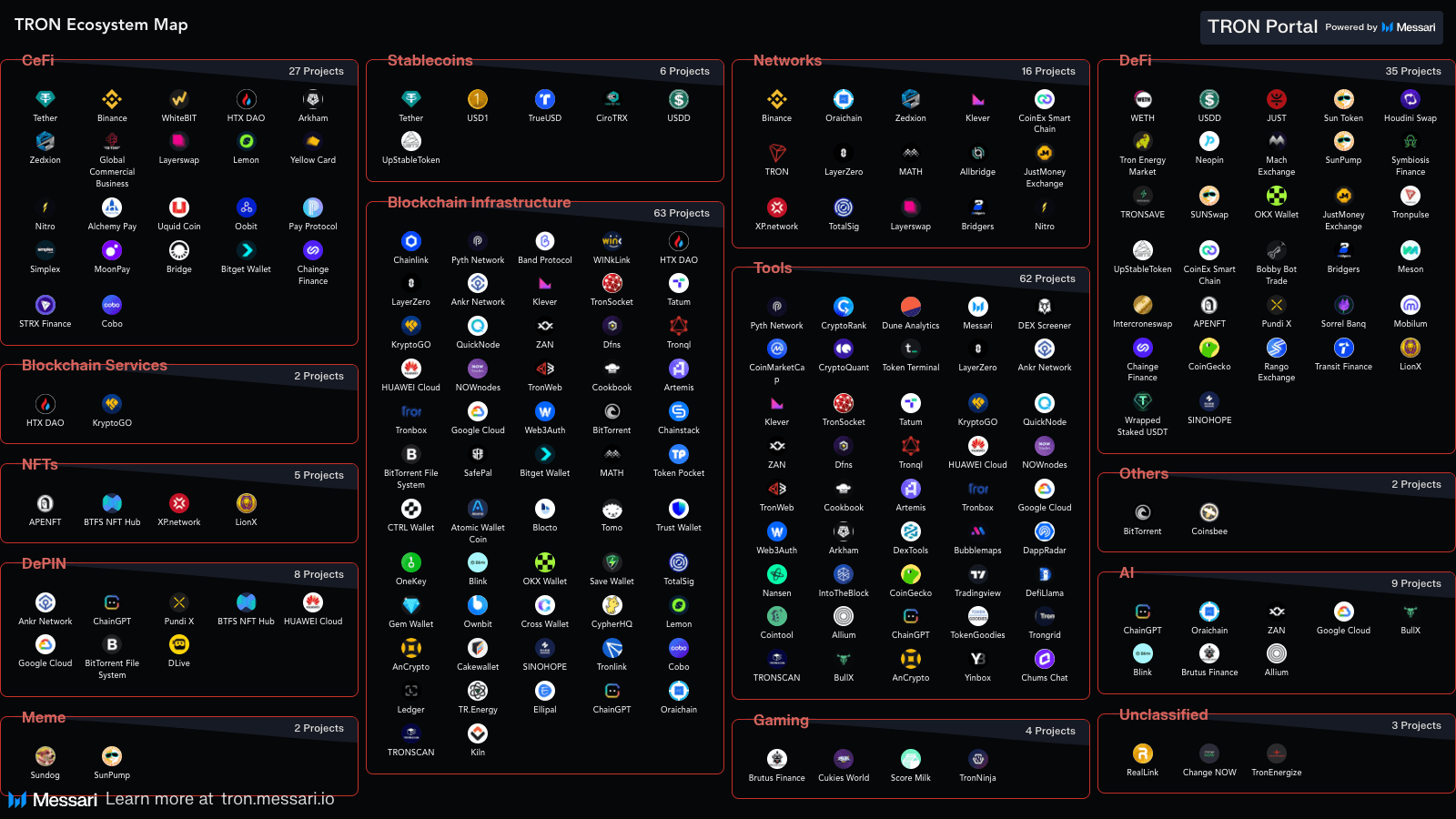
TRON continues to partner with leading companies in the blockchain space, with over 142 projects building on TRON with $20+ million market caps. A few notable partnerships and ecosystem upgrades that were announced in Q3 included:
Kraken has been elected as a Super Representative.
Announcement of TRUMP launching on TRON powered by LayerZero.
Plume Network integrates with TRON to launch SkyLink, bringing real-world yield to TRON's payment ecosystem.
Strategic integration with Graph Protocol using Substreams for enhanced blockchain data accessibility on TRON.
Moonpay launched a TRON wallet for buying, selling, sending, and storing assets on TRON.
Chainlink data standard integrated to power USD1 on TRON with reliable offchain data for DeFi apps.
Polymer_Labs, a cross-chain API platform, has integrated TRON, giving app builders a one-click gateway to integrate with TRON.
MetaMask natively integrated TRON into its wallet.
Strategic collaboration to integrate xStocks tokenized equities on TRON.
Integration with deBridge, making TRON composable with 25 other blockchains.
Integration with Everclear, settling onchain transactions without centralized exchanges.
TRON went live on NEAR Intents, allowing for swaps between various assets.
THORChain integrated TRON, enabling native TRX swaps across any other chain supported by THORChain.
TRON continues implementing strategies to grow its ecosystem beyond stablecoins, with initiatives such as the TRON Builders League, an incubator program with a $10 million fund, designed to support builders on TRON.
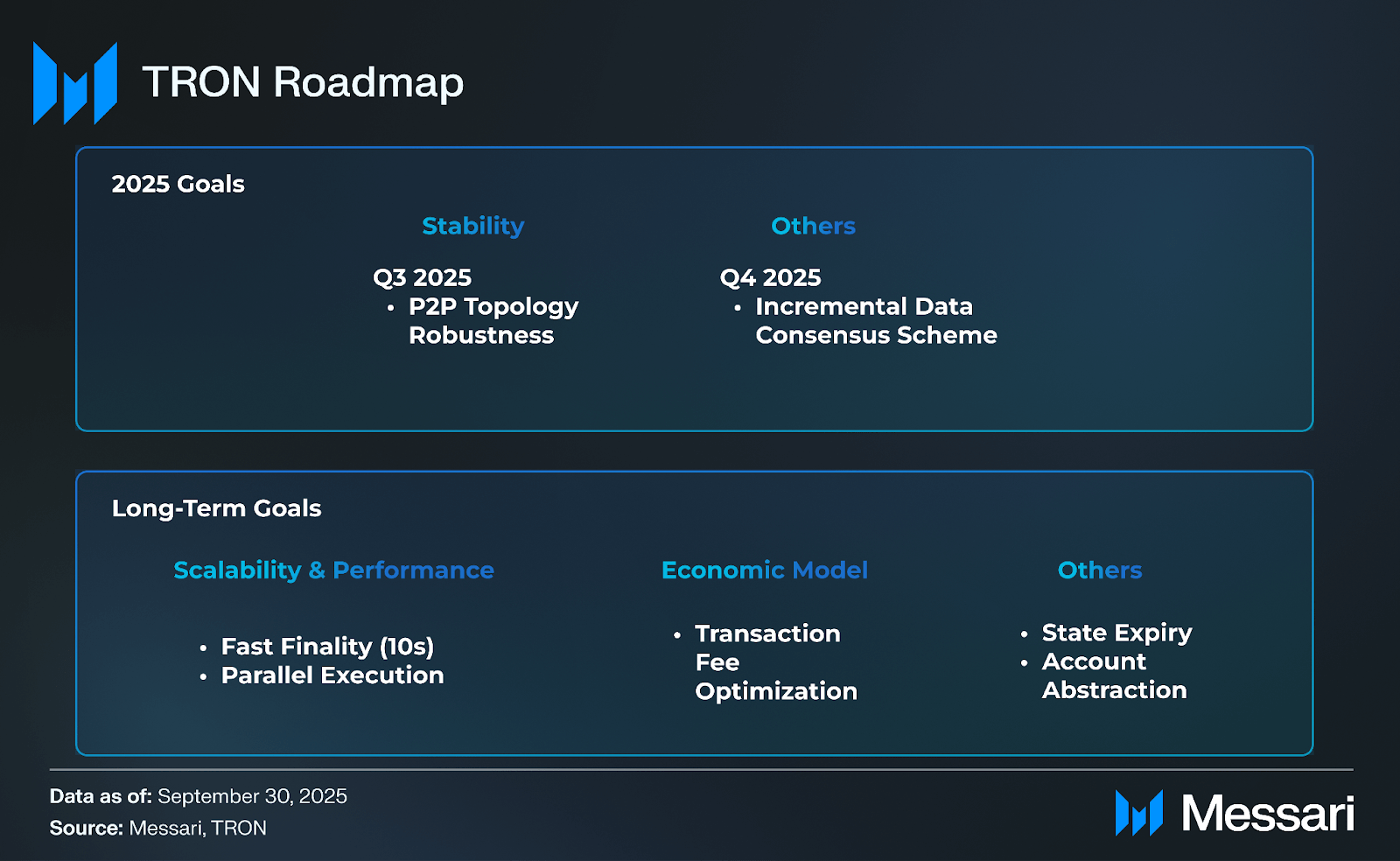
In 2025, TRON will focus on enhancing network stability by increasing the P2P topology robustness. Economic model improvements, such as dynamic transaction fee adjustments, aim to strengthen the ecosystem’s sustainability. In the long term, TRON plans to explore other areas like account abstraction and state data expiration to ensure robust infrastructure and future adaptability.
Closing Summary
TRON concluded Q3 2025 with strong fundamentals and continued ecosystem expansion despite minor headwinds in stablecoin market activity. Revenue hit an all-time high of $1.2 billion, marking a 30.5% QoQ increase, while the network sustained its deflationary trend with a -1.7% annualized inflation rate. Onchain activity remained robust, with growth in daily transactions and staked TRX value, highlighting user engagement and network confidence. Ecosystem developments, ranging from SunPerp’s launch to integrations with MetaMask, Chainlink, and Graph Protocol, reinforced TRON’s push toward cross-chain interoperability and developer adoption.
Looking ahead, TRON’s 2025 roadmap, coupled with initiatives like the $100 million AI development fund, the $10 million builder fund, and the many technical upgrades, positions the network for sustained innovation and ecosystem expansion.
To stay up-to-date with all things TRON, visit the TRON Portal.
This report was commissioned by Tron Network Limited. All content was produced independently by the author(s) and does not necessarily reflect the opinions of Messari, Inc. or the organization that requested the report. The commissioning organization may have input on the content of the report, but Messari maintains editorial control over the final report to retain data accuracy and objectivity. Author(s) may hold cryptocurrencies named in this report. This report is meant for informational purposes only. It is not meant to serve as investment advice. You should conduct your own research and consult an independent financial, tax, or legal advisor before making any investment decisions. Past performance of any asset is not indicative of future results. Please see our Terms of Service for more information.
No part of this report may be (a) copied, photocopied, duplicated in any form by any means or (b) redistributed without the prior written consent of Messari®.
Jeremy is a research analyst at Messari with interests in Infra, DeFi, and Enterprise adoption. Prior to joining Messari, Jeremy worked as an analyst at Fidelity Digital Assets.
Jeremy is a research analyst at Messari with interests in Infra, DeFi, and Enterprise adoption. Prior to joining Messari, Jeremy worked as an analyst at Fidelity Digital Assets.