The Optimism Superchain is a network of 34 OP Chains that account for over 50% of all L2 activity and more than 10% of all crypto activity. Optimism Superchain GDP totaled $396.5M YTD, while Optimism Collective revenue totaled $8.3M.
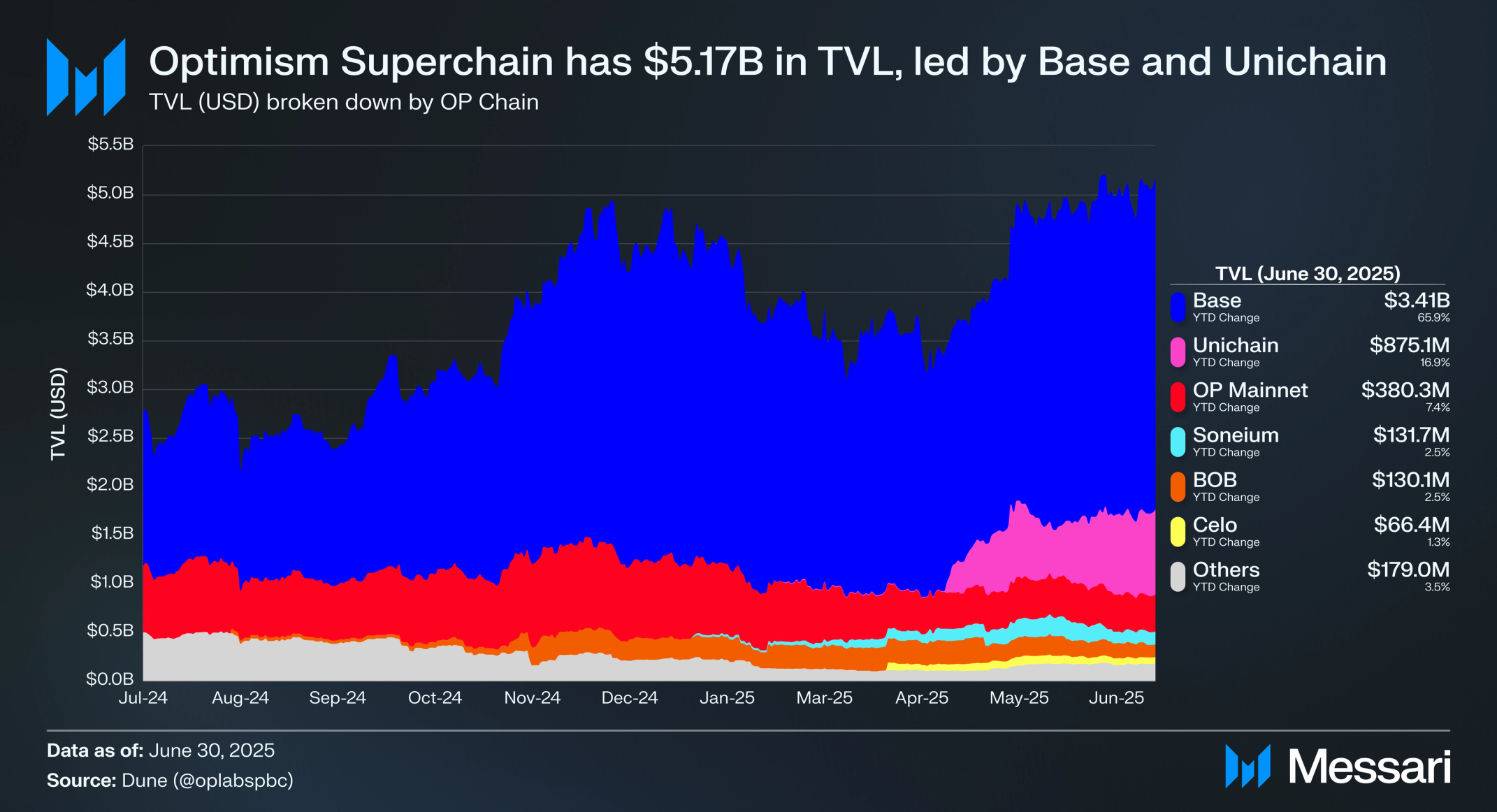
With a TVL of $3.41B, Base is the most liquid venue in the Superchain, accounting for 65.9% of all TVL across the Superchain. SuperStacks incentives spanned April 16 to June 30, causing Superchain TVL to increase 54% from $3.36B to $5.17B.
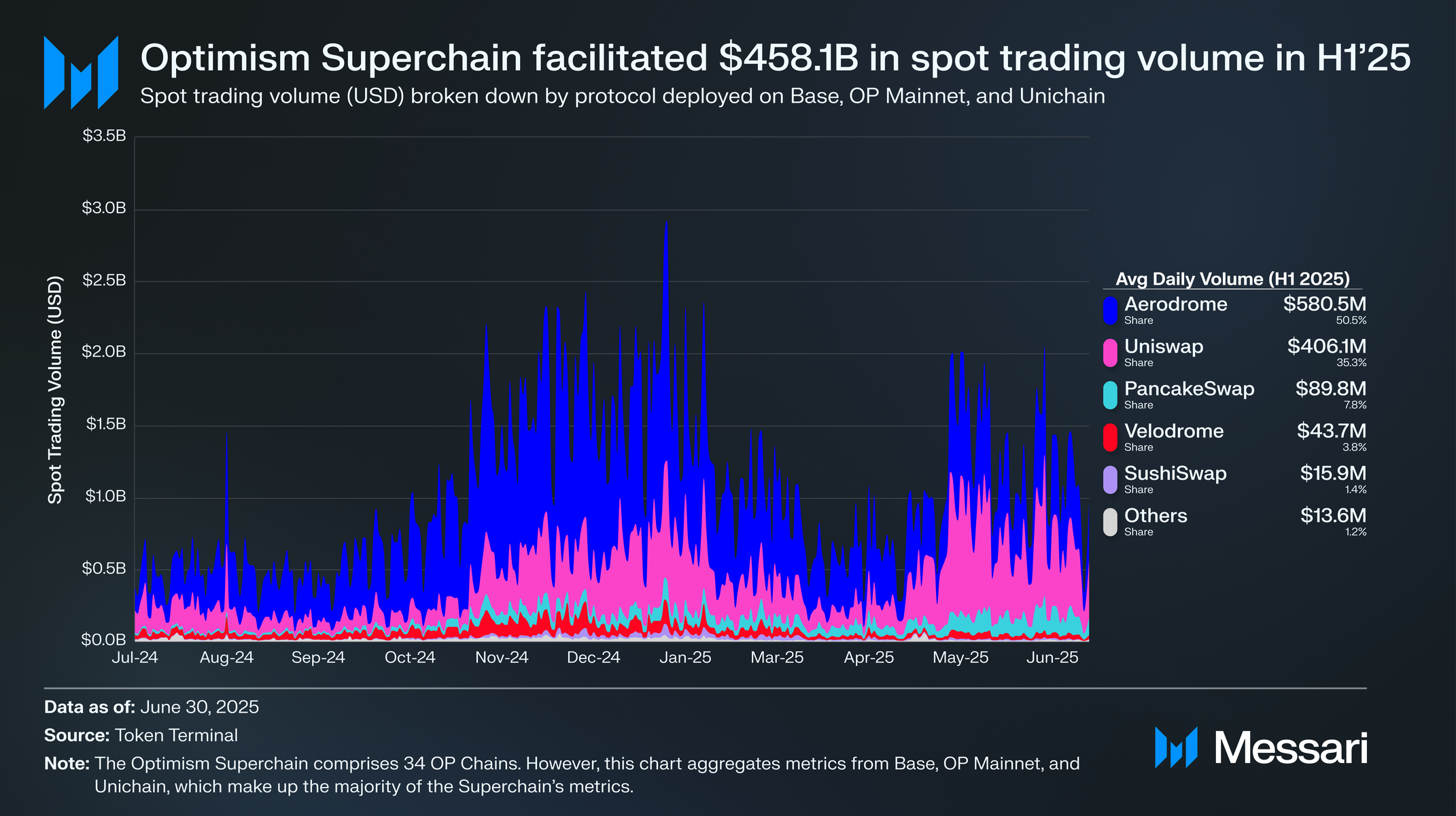
Unichain launched in February 2025. However, Base-native Aerodrome was the leading DEX by spot trading volume on the Superchain, averaging $580.5M per day compared to Uniswap’s $406.1M.
Morpho’s TVL increased 246.9% YTD to $1.74B as it grew in market share and launched on OP Mainnet and Unichain. It ended H1 2025 with $567.2M in active loans, increasing 248.2% YTD and overtaking Moonwell and Aave.
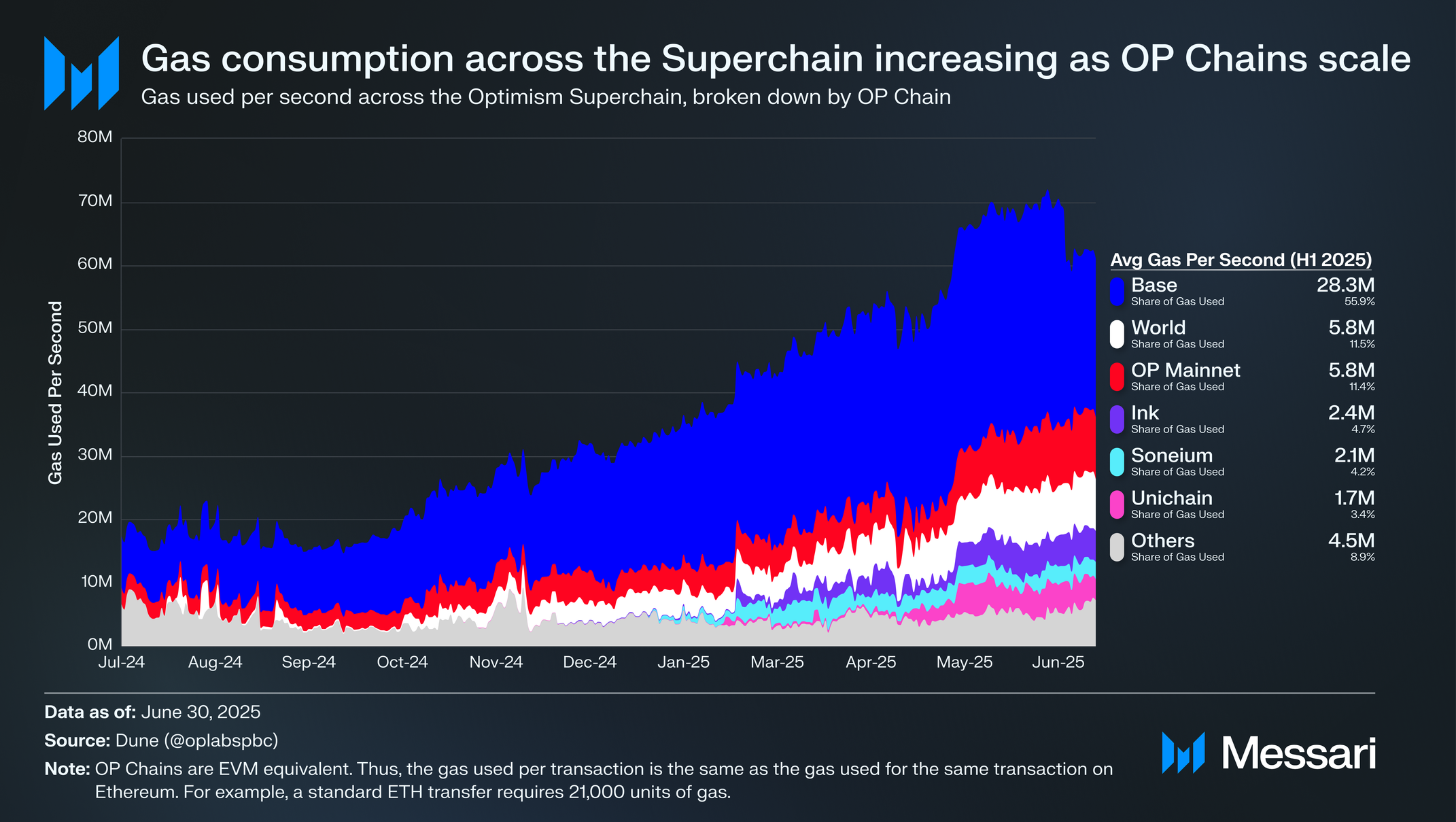
Base leads gas usage as it continues to scale its gas target while maintaining sub-cent transaction fees. It comprises 55.9% of the total computation occurring across the Optimism Superchain, with 28.3M gas units used per second in H1 2025.
Optimism’s long-term strategy is rooted in its vision for a “Superchain.” The OP Stack, a modular and open-source technology stack that allows for the creation of L2 and L3 networks (OP Chains). The goal of the Superchain is to bring seamless interoperability between OP Chains that share security, bridging, governance, and network upgrades. Today, the Superchain is a network of 34 OP Chains that make up over 50% of all L2 activity, and over 10% of all crypto activity.
Base leads activity across the Optimism Superchain and is the most active, liquid, and highest-performance rollup in crypto. Base’s success and distribution stem from its deep ties to Coinbase. It is the most liquid venue in the Superchain, with a TVL (USD) of $3.41 billion as of June 30, 2025, making up 65.9% of all TVL across the Superchain. Unichain and OP Mainnet have $875.1 million and $380.3 million in TVL, respectively.
A significant boost in Superchain TVL was caused by SuperStacks, which went live on April 16, 2025, and spanned through June 30, 2025. During this period, users could earn XP, which eventually became redeemable for OP tokens, by deploying interoperable assets like USD₮0 across DeFi protocols on the Superchain. SuperStacks was a pilot campaign designed to test Superchain-wide incentives by rewarding activity across multiple OP Chains. During the program, TVL (USD) across the Superchain increased 54%, from $3.36 billion to $5.17 billion.
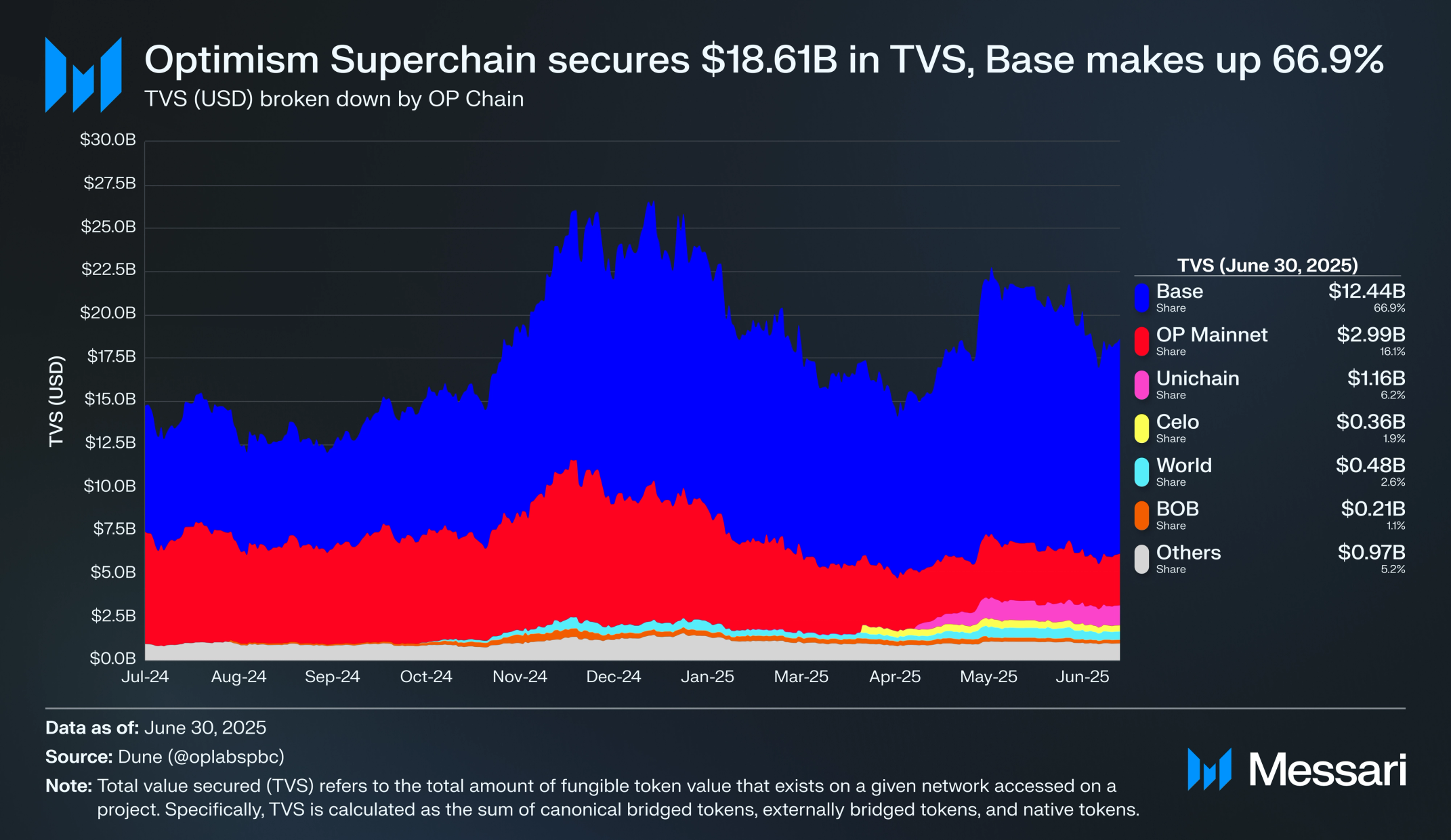
Total value secured (TVS) differs from TVL in that it is the total amount of fungible token value that exists on a given network accessed on a project, whether locked in a DeFi protocol or not. Specifically, TVS is calculated as the sum of canonical bridged tokens, externally bridged tokens, and native tokens.
OP Mainnet ranks higher than Unichain in terms of TVS due to the OP token, which is natively issued on the network. The token props up the network’s TVS to $2.99 billion, leading to OP Mainnet making up 16.1% of all value secured on the Superchain. Base leads TVS (USD) with $12.43 billion, making up 66.9% of all Superchain TVS despite not having a token issued on the network. However, Base does export a portion of assets held on Coinbase’s exchange onto Base via cbBTC and cbETH.
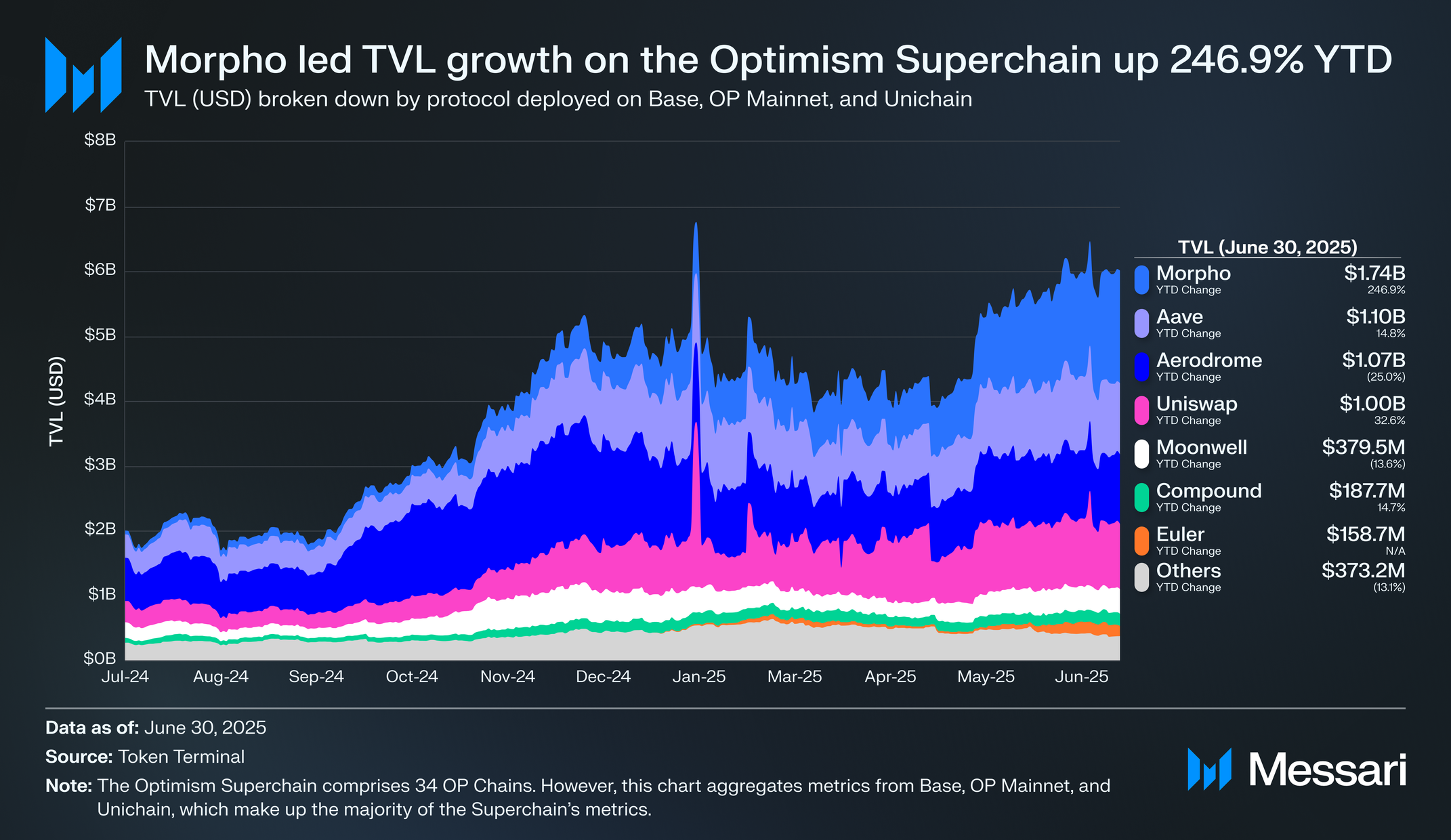
The Superchain also features many blue chip DeFi protocols deployed across multiple OP Chains, like Morpho, ($1.74 billion) Aave ($1.1 billion), Uniswap ($1 billion), and the Base-native Aerodrome ($1.07 billion).
Morpho was a clear standout across the Superchain, and in crypto broadly, in H1 2025. Morpho’s TVL (USD) increased 246.9% YTD to $1.74 billion as it grew in market share relative to competitors like Aave and Moonwell and expanded to OP Mainnet and Unichain. Morpho facilitates borrowing and lending and differentiates itself from older incumbents through its modular design and isolated lending pools that enable greater flexibility in risk management and collateral integration.
In June 2025, Morpho announced Morpho V2, an upcoming intent-based lending protocol revolving around two core features:
Markets V2: A peer-to-peer loan marketplace that enables fixed-rate, fixed-term lending with bespoke parameters, market-driven pricing, and flexible collateral types.
Vaults V2: A yield offering that allocates assets across Morpho instances and external protocols, offering higher yields and enhanced risk management through curator-led strategies.
In April 2025, Morpho announced Morpho Prime, a new product line designed to serve advanced users who “require specialized functionality beyond the Morpho App." Morpho Prime consists of two products:
Curator App: No-code solution for functions including vault creation, market listing, cap setting, rebalancing, role management, and queue management.
Rewards App: Allows distributors to create and manage custom reward programs without modifying smart contract code.
In January 2025, Coinbase announced it would begin offering bitcoin-backed USDC loans directly through the Coinbase app. These loans are facilitated onchain on Base via Morpho, with cbBTC being deposited to the protocol to borrow against.
Chain GDP
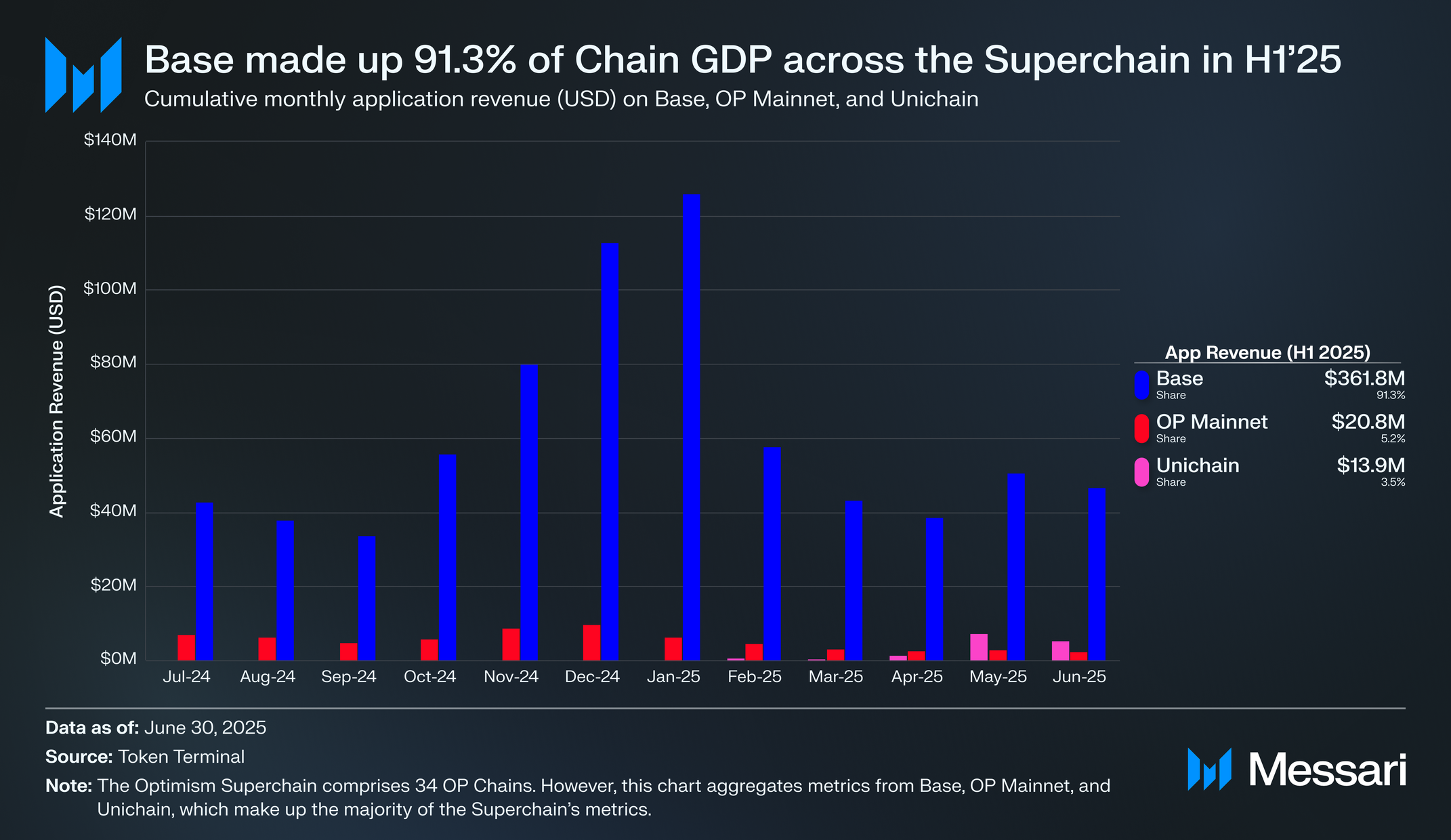
Chain GDP, which refers to the total application revenue (USD) generated on a network, totaled $396.5 million YTD across Base, OP Mainnet, and Unichain. Base made up the vast majority of Superchain GDP in H1 2025, making up 91.3% at $361.8 million in revenue generated by applications deployed on Base.
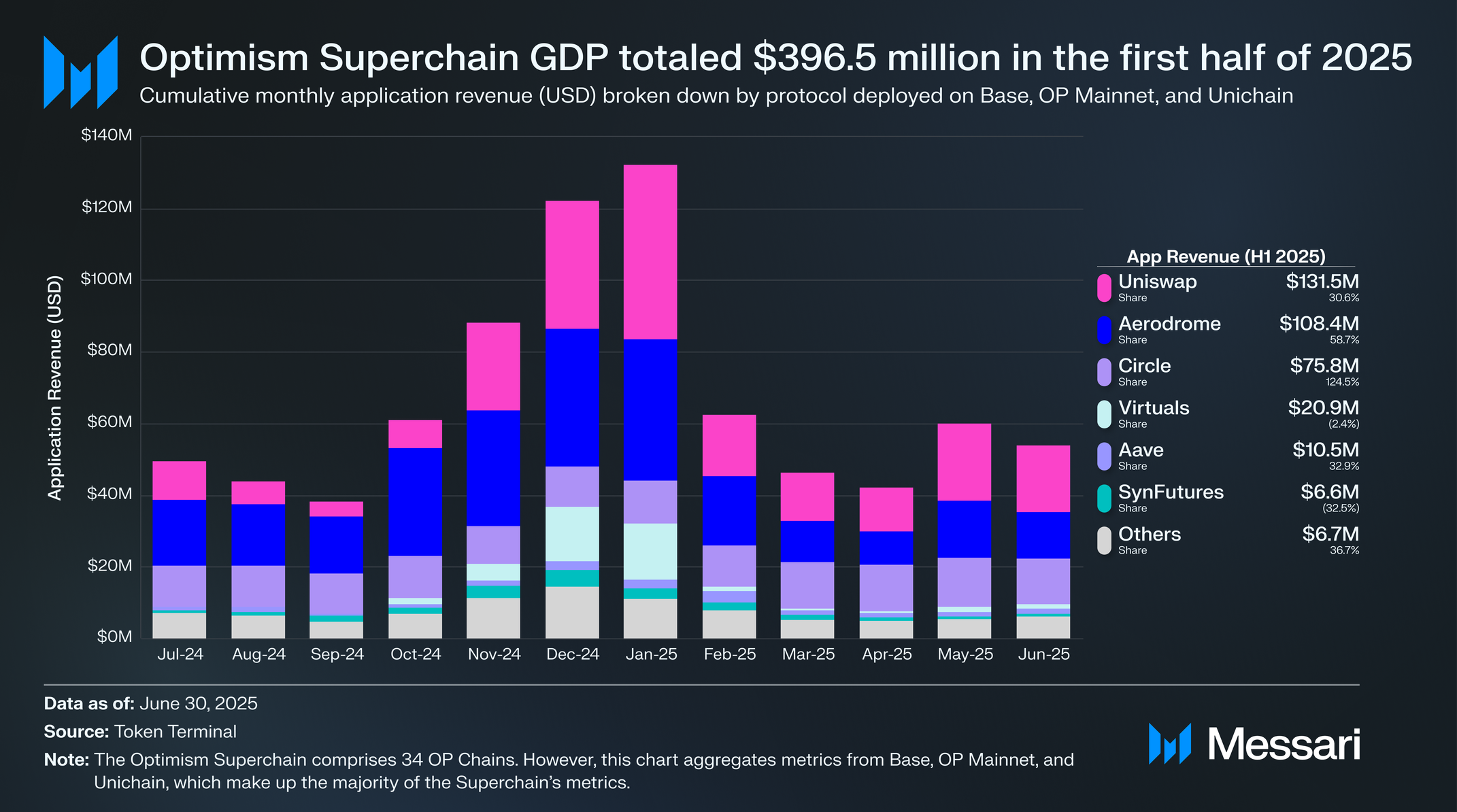
Uniswap, Aerodrome, and Circle made up 86.9% of the Optimism Superchain’s GDP in H1 2025. Uniswap generated the most application revenue in each month of 2025, totaling $131.5 million. Aerodrome and Circle were in close competition for the second spot, with totals of $108.4 million and $75.8 million, respectively.
Notably, Virtuals Protocol on Base, a protocol where autonomous AI agents can operate, trade, and coordinate onchain as tokenized economic actors, had a period of elevated interest in Q4 2024 and into January 2025. Interest fell the rest of 2025, but the trading activity in January generated 75.5% of Virtuals’ total H1 2025 revenue and was enough to make Virtuals the fourth-highest by application revenue on the Superchain in H1 2025. For a comprehensive overview of Virtuals, refer to our Initiative of Coverage Report.
A network’s App Revenue Capture Ratio (App RCR) is the ratio of revenue generated by its apps to its Real Economic Value (REV). In the case of networks on the Optimism Superchain, REV is defined as the sum of base transaction fees and priority fees paid to sequencers, also known as sequencer revenue. The Superchain’s REV (USD) totaled $48.4 million in H1 2025, with an App RCR of 8.2x year-to-date. This can be interpreted as for every $100 spent in fees and auctions on the Superchain, applications earn $819.5 in revenue.
A network’s App RCR can be greater than one if its applications are successful in monetizing activity and/or the cost to transact is low. In the case of the Superchain, it appears to be both. Revenue streams for projects can even flow downstream to project tokenholders. For example, application revenue generated on Aerodrome is shared with AERO stakers.
Borrowing & Lending
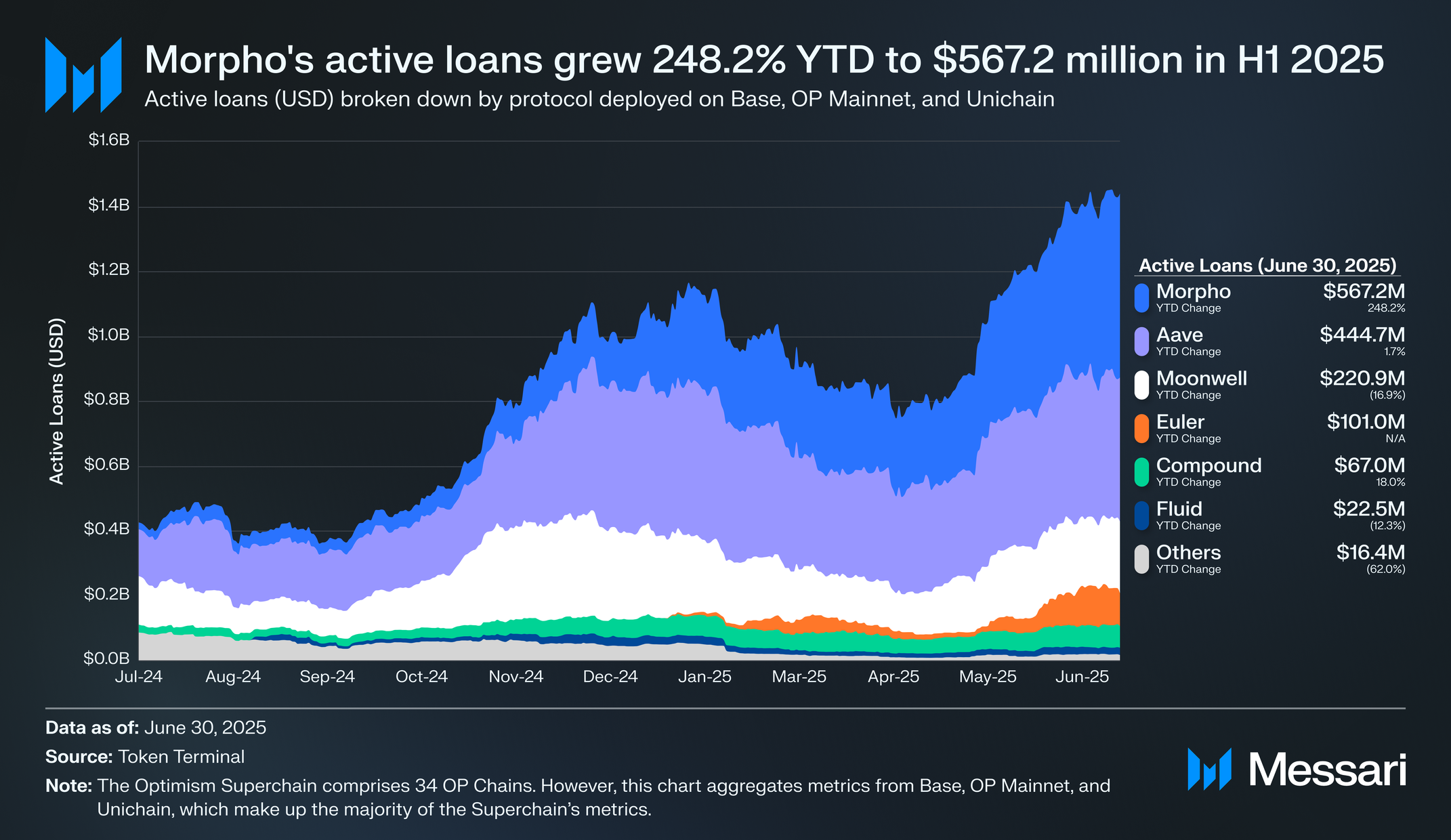
Borrowing and lending TVL is directly correlated to the amount of active loans. As supplied assets increase, borrowing rates fall, spurring more loans to be originated. Thus, Morpho was the leader in active loans across the Superchain by the end of H1 2025. It started the year with just $165.8 million in active loans (USD), then overtook Moonwell on Jan. 17 and Aave on May 23, ending H1 2025 with $567.2 million, an increase of 248.2% YTD.
Moonwell is a Base-native borrowing and lending protocol that partners with Morpho to offer Moonwell Morpho Vaults. While Moonwell’s active loans (USD) decreased 16.9% YTD, they totaled a significant $220.9 million by the end of H1 2025, good for third by active loans across the Optimism Superchain. Additionally, Moonwell had the following significant developments in the first half of 2025.
In February 2025, Moonwell launched Moonwell Virtual Accounts in partnership with Bridge and Optimism Foundation. Moonwell Virtual Accounts are virtual U.S. checking accounts that automatically convert fiat deposits into USDC.
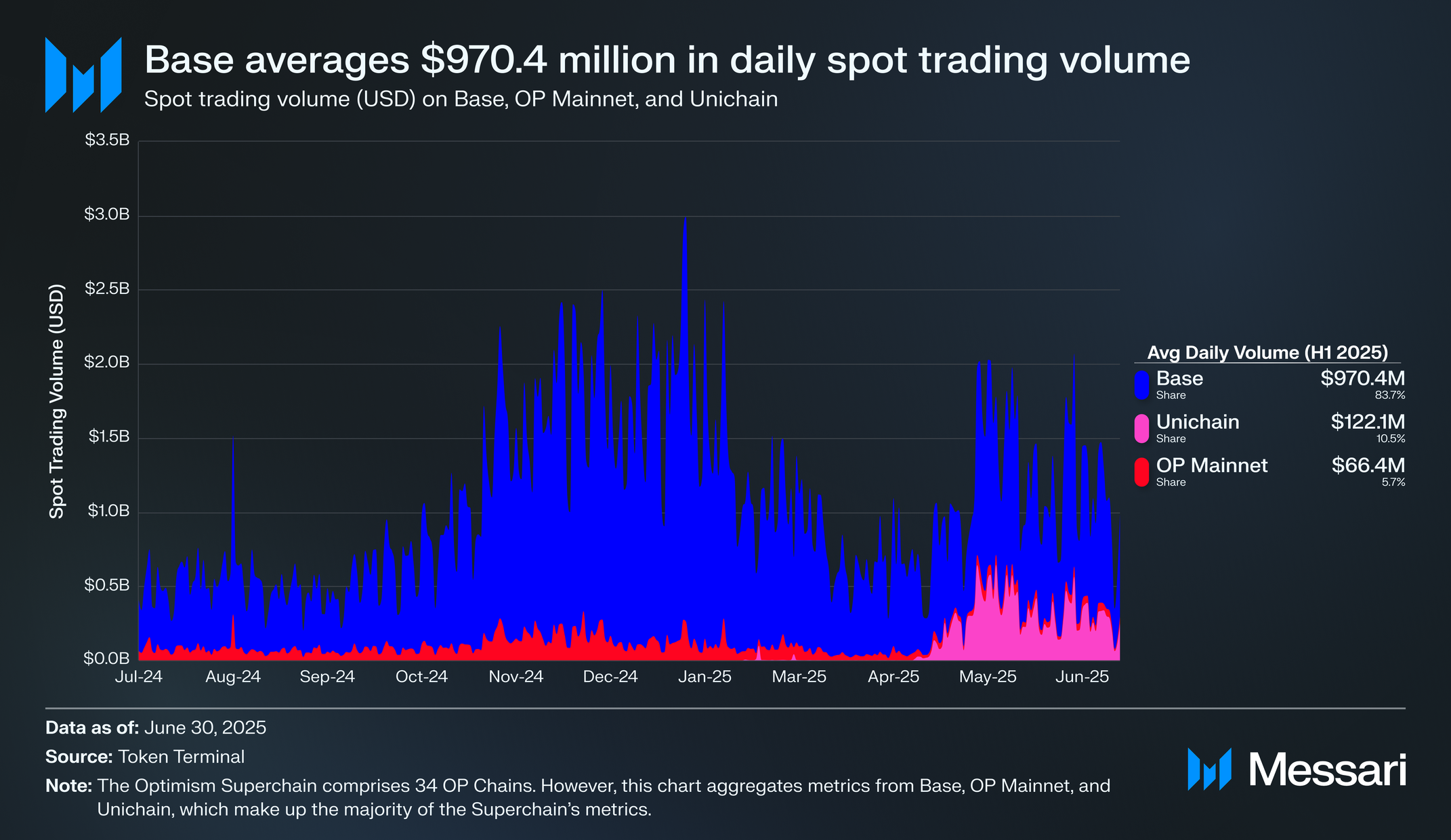
Base is the leader in spot trading volume on DEXs across the Optimism Superchain. Average daily spot trading volume (USD) on Base was $970.4 million in H1 2025, with Unichain and OP Mainnet facilitating $122.2 million and $66.4 million, respectively. Unichain is a new OP Chain that was developed by Uniswap Labs and launched in February 2025. The chain featured 1-second block times at launch, but partnered with Flashbots to build Flashblocks, a block builder that reduces block times to 200ms and allows maximum extractable value (MEV) to be returned to users.
Aerodrome was the leading DEX by spot trading volume (USD) in H1 2025 on the Superchain, averaging $580.5 million per day compared to Uniswap’s $406.1 million. Considering Aerodrome is only deployed on Base, that market share highlights the magnitude of the Coinbase effect and underlying incentives. In June 2025, Coinbase announced it would be integrating Aerodrome directly into the Coinbase application, enabling trading of all tokens with liquidity on Aerodrome to over 100 million users. Additionally, Aerodrome announced the upcoming Pool Launcher, which will make it easier for builders to bootstrap and scale liquidity for their tokens.
OP Chain Activity
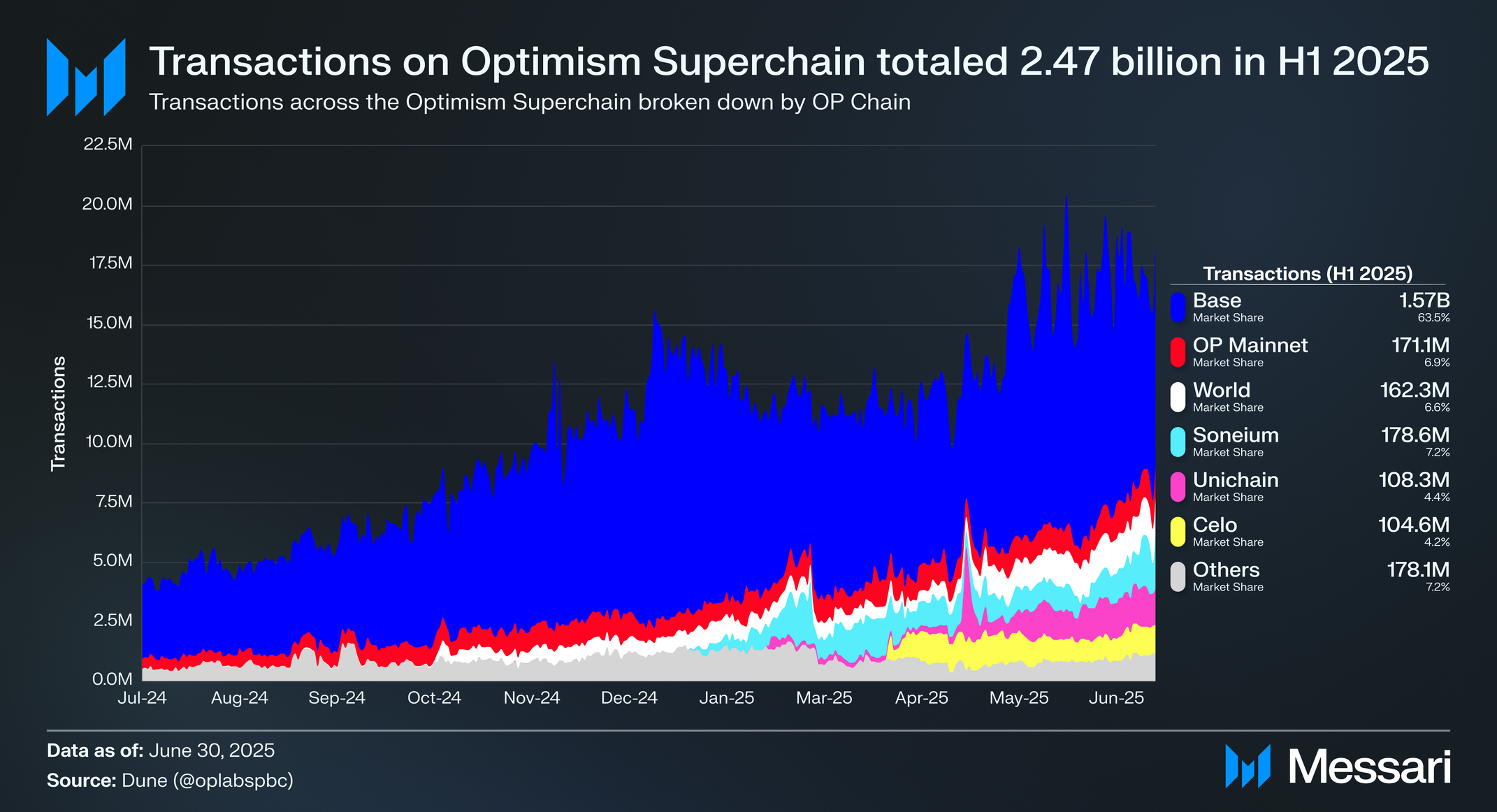
Transactions across the Optimism Superchain totaled 2.47 billion in H1 2025. Base was the leader with 1.57 billion, a 63.5% share. Celo was a standout in the latter half of H1 2025, achieving 104.6 million transactions after launching its L2 on the Superchain in March 2025. This completed its transition from functioning as an L1, and brings its user base, DeFi activity, a stablecoin supply (USD) of $155.5 million, and TVL (USD) of $172.3 million to the Optimism ecosystem. The transition was originally proposed in July 2023 and was approved in May 2024. What followed was ten months of technical development and planning, before culminating in the migration to the Superchain, a move that has been a long time coming.
Gas used per second (gas/s) is a metric that matters for the Optimism Superchain. Gas refers to the unit that measures the amount of computational effort required to execute operations on Ethereum Virtual Machine (EVM). Gas, which can also be referred to as blockspace, is a limited resource provided by blockchains. Gas usage metrics show how much of that resource is actually being consumed.
Base led gas usage by a wide margin in H1 2025, comprising 55.9% of the total computation occurring across the Optimism Superchain, with 28.3 million gas units used per second. Already the highest-performance rollup in crypto, this data is indicative of the team’s ongoing efforts to scale the network’s gas target while maintaining sub-cent transaction fees.
World came in second with an 11.5% share of gas used, with OP Mainnet just behind at 11.4%. World focuses on prioritizing transactions made by verified humans using World ID. Notably, World raised $135 million in May 2025, led by Andreessen Horowitz and Bain Capital Crypto. Ink, Soneium, and Unichain rounded out the final tier at 4.7%, 4.2%, and 3.4%, respectively. Soneium launched on mainnet in January 2025 before starting Soneium Conquest, a four-week campaign on Galxe. Later, in June 2025, Kraken announced the Ink Foundation, which revealed plans to launch the INK token to power an upcoming liquidity protocol powered by Aave.
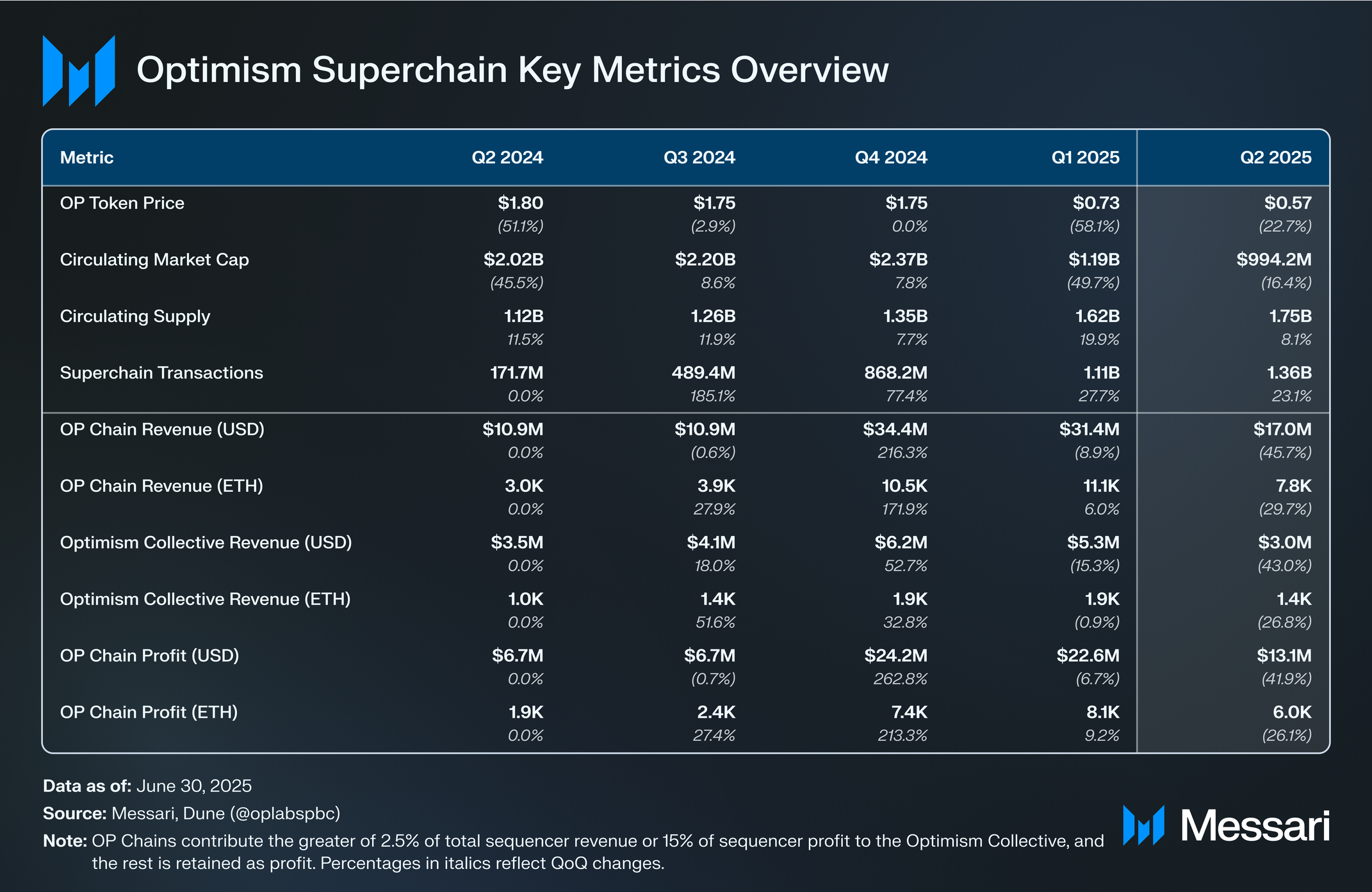
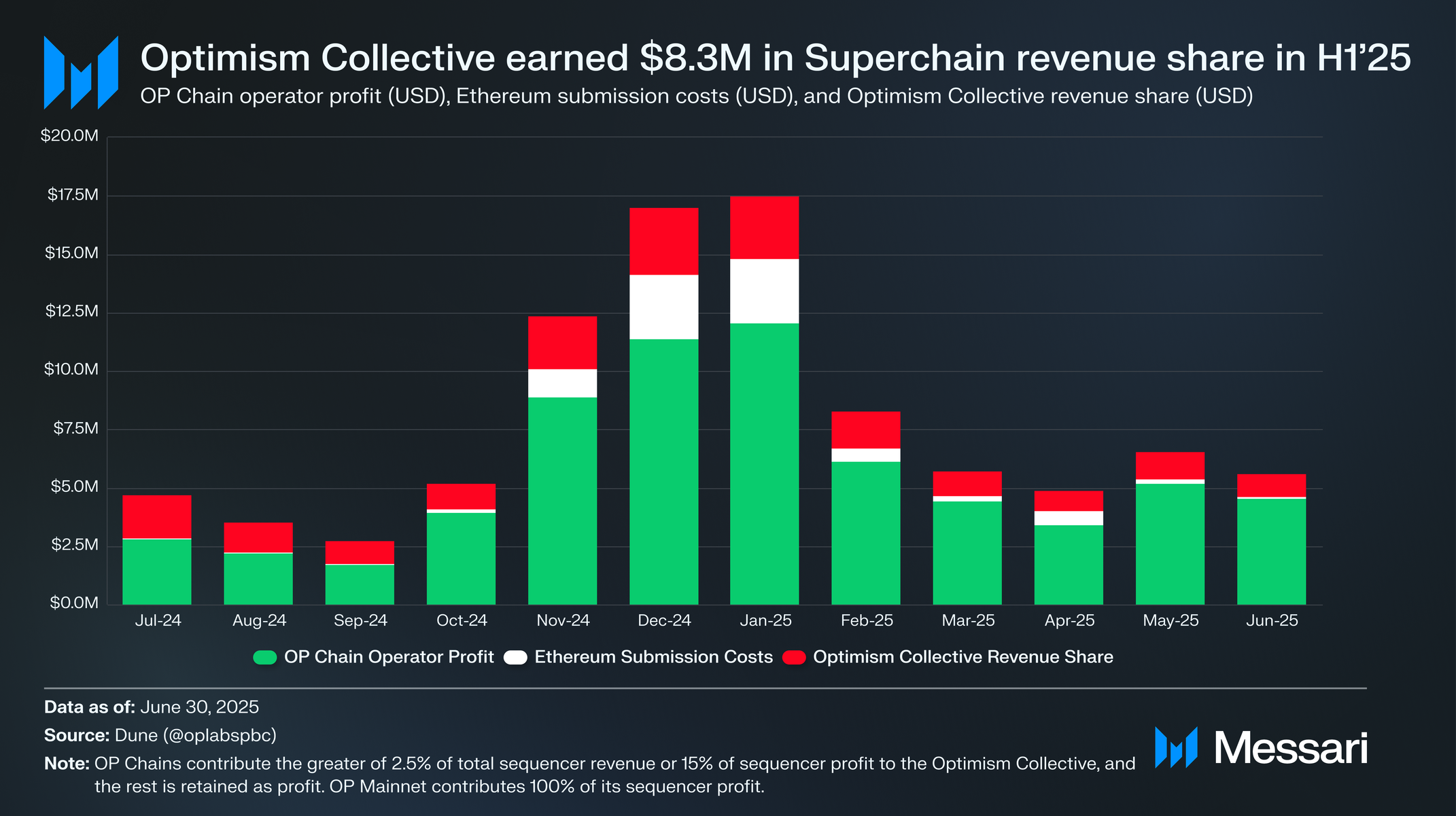
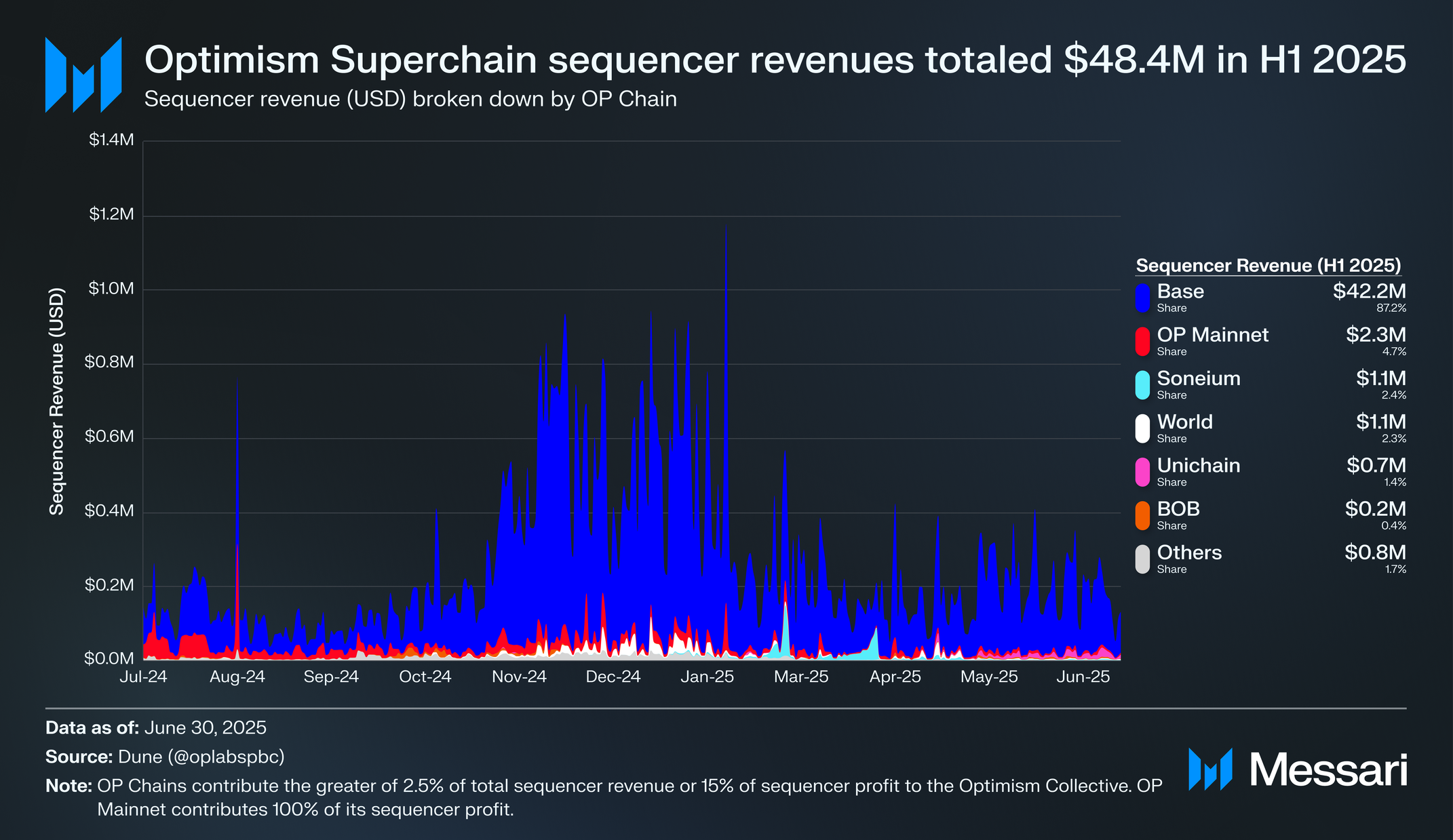
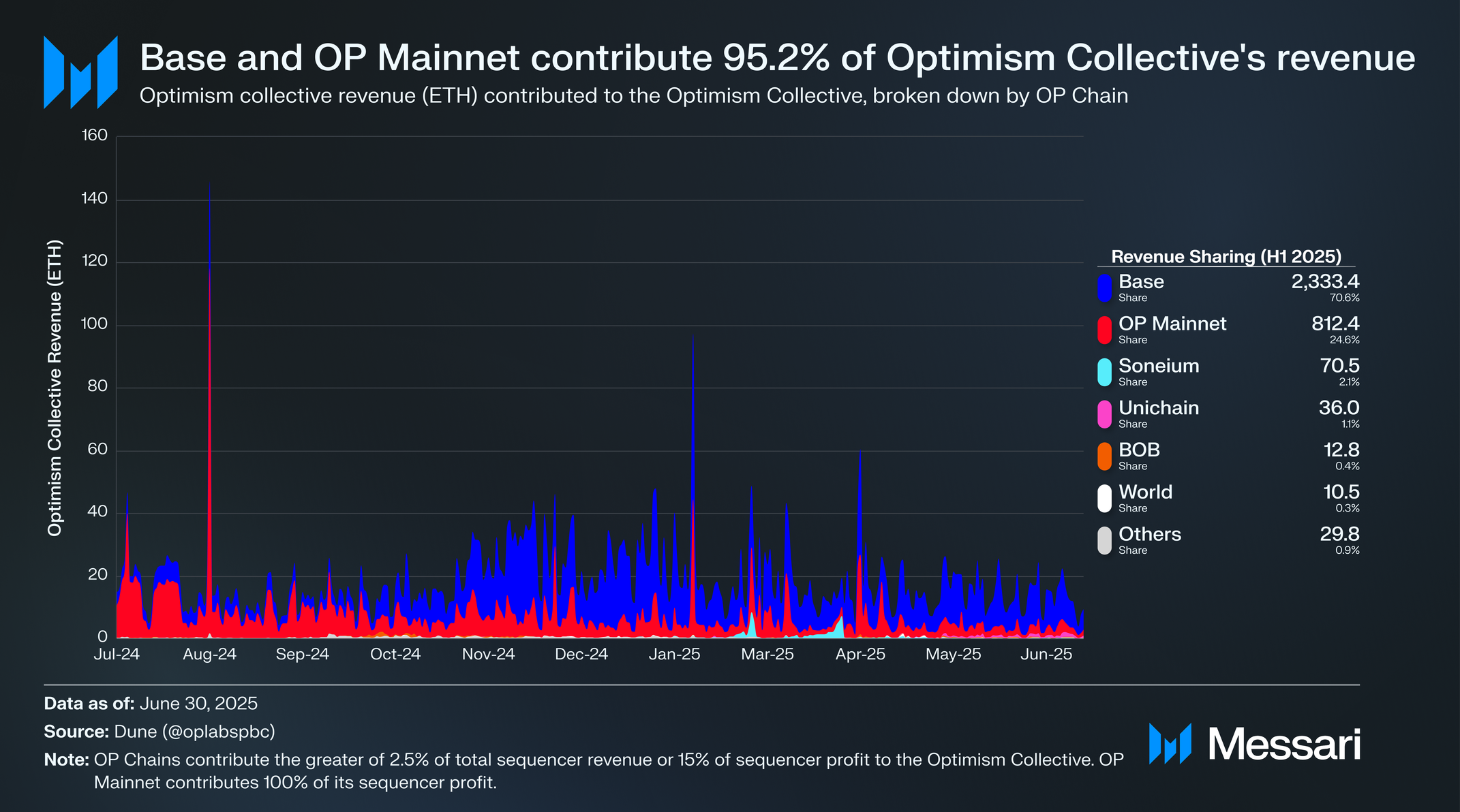
While the Optimism Collective does not have a publicly viewable, singular treasury, it does generate consistent revenue via a revenue-sharing model. As per the Standard Rollup Charter, all OP Chains within the Optimism Superchain must contribute the greater of either 2.5% of sequencer revenue or 15% of sequencer profit (sequencer revenue - Ethereum submission costs). The lone exception is OP Mainnet, which contributes 100% of its sequencer profit. Optimism Collective revenue (USD) totaled $8.3 million in H1 2025, while the total sequencer revenue (USD) across OP Chains reached $48.4 million.
The largest OP Chain by sequencer revenue (USD) is Base, which generated $42.4 million in the first half of 2025, accounting for 87.2% of all OP Chain sequencer revenue in H1 2025.
While Base was far and away the leader by sequencer revenue, OP Mainnet accounted for a large portion of sequencer revenue shared with the Optimism Collective, due to its 100% profit share. OP Mainnet contributed 24.6% of all ETH shared with the Optimism Collective in H1 2025, while Base made up 70.6%. In total, Base and OP Mainnet contribute over 95% of all sequencer revenue shared with Optimism Collective.
OP Token
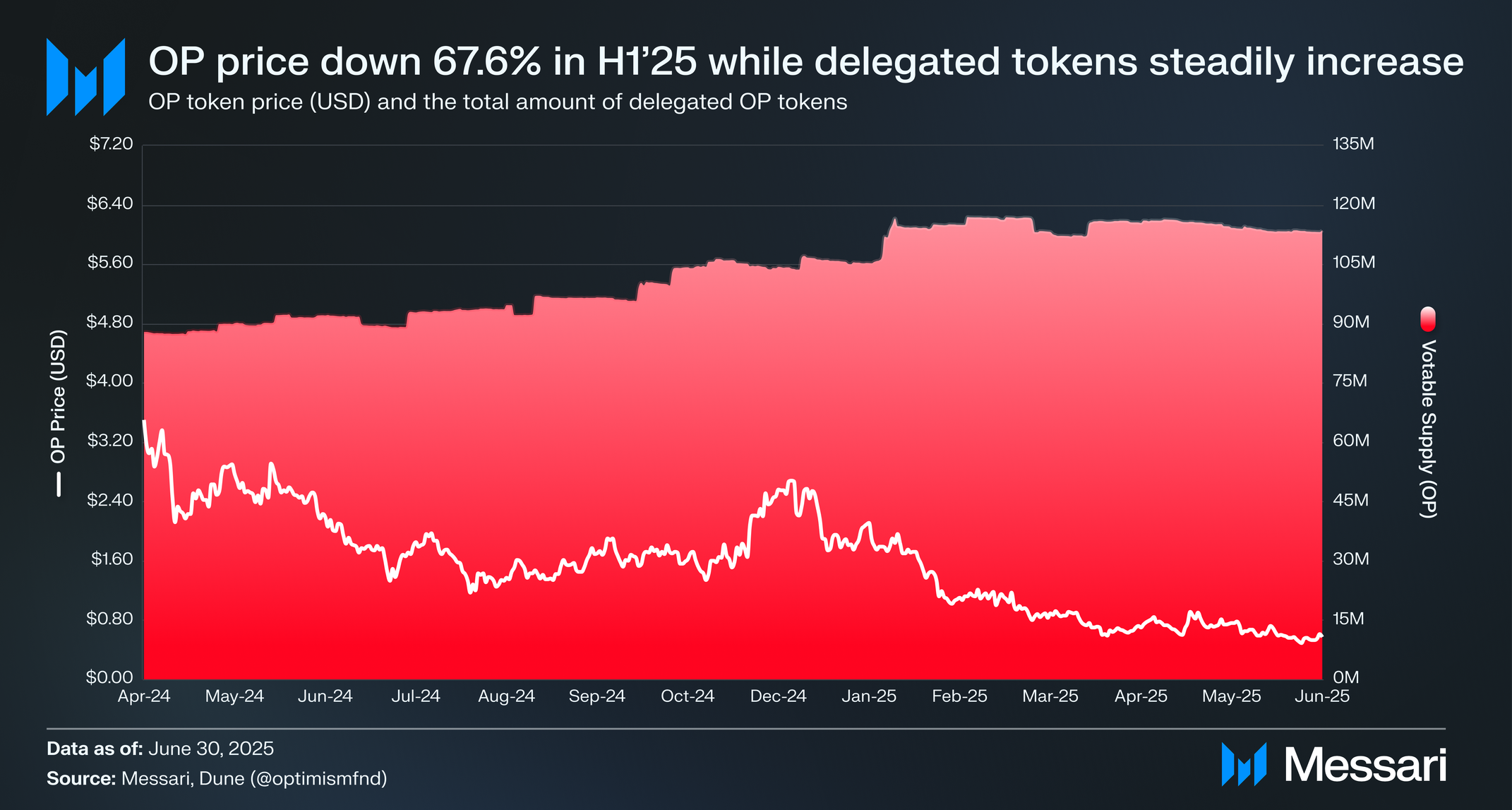
OP is an ERC-20 equivalent token on OP Mainnet that began circulating on May 31, 2022, with a token supply of 4.29 billion. OP’s price (USD) fell 67.6% YTD in H1 2025 to $0.57. After accounting for a 29.6% increase in circulating supply, OP’s circulating market cap (USD) fell 58% YTD to $994.2 million. The token underperformed the broader market and its peers as its circulating market cap rank fell from 50th to 67th during this period. This made it the fourth-largest L2 token by market cap, behind Mantle (MNT), Polygon (POL), Arbitrum (ARB), and ahead of Immutable X (IMX).
OP continues to serve functions related to governance and incentives:
Governance: OP grants the ability for a tokenholder to delegate OP to themselves or to another delegate to participate in Optimism Collective governance via Agora. There were 113.6 million OP tokens (2.6% of the total supply) delegated as of June 30, 2026.
Incentives: Optimism stakeholders are incentivized to grow the Optimism ecosystem through the following programs:
Retroactive Public Goods Funding: 859 million OP (20% of the total supply) was allocated to Retro Funding, where funds are distributed to community members who have previously impacted Optimism, based on each round’s scope. As of Jan. 16, 2025, 801 million OP (18.6% of the total supply) remained for future Retro Funding distributions.
Airdrops: 816 million OP (19% of the total supply) were allocated for user airdrops. Eligibility criteria for each round of airdrops vary and are determined by Optimism Foundation. As of Jan. 16, 2025, after five rounds of airdrops, 559.8 million OP (13% of the total supply) remained to be distributed.
Governance
Token House
The Token House consists of all OP tokenholders and governs network changes through onchain voting via Agora. OP grants the ability for a tokenholder to delegate OP to themselves or to another delegate. Delegates can vote on proposals related to network upgrades, token allocations from the Governance Fund, treasury appropriations, inflation adjustments, representative elections, representative removals, etc.
Token House proposals operate on a seasonal schedule, each of which consists of several voting cycles. After beginning in June 2024, Season 6 concluded in December 2024, having distributed 5 million OP (0.12% of the token supply) to 30 projects through grants and rewarded active participation. Season 6’s Reflection Period spanned from December 2024 to January 2025, and introduced the following notable governance outcomes for Season 7:
The Intent for Season 7 of Interoperability was ratified with an approved budget of 10 million OP (0.24% of the token supply). The main goal of this Intent is for the Superchain to become a “set of interoperable Stage 1 chains doing $250m per month in cross-chain asset transfers.”
Notably, onchain decision markets were approved for Season 7. These markets would experiment with a futarchy model, whereby market predictions of a project’s ability to achieve key success metrics will determine allocations for select grants.
Onchain Treasury Execution was approved and tested, allowing for Optimism Collective treasury distributions to be enacted onchain via governance.
The Standard Rollup Charter was approved and ratified. The Standard Rollup Charter is the first Blockspace Charter, aiming to categorize OP Chains into various types with specific implementation details across the Superchain’s blockspace.
Several updates to Token House Councils were made:
Season 7 began on Jan. 22, 2025, and ran until June 11, 2025. The season operated under the theme of “Shared Success,” and pursued its intent of advancing Superchain interoperability. 14 OP Chains were eligible for grant incentives during the season, and active participants were rewarded upon its conclusion. Season 7 introduced the following notable governance outcomes:
The Budget Board was established, and its members were approved. Its charter describes its mandate to “bootstrap critical infrastructure and frameworks to enable the Collective to make sound financial and economic decisions.”
This was a progressive step towards decentralization as it shifted decisions previously made by Optimism Foundation to be made by the community.
Several updates to Token House Councils were made:
The Citizens’ House will now have three clear sections comprising community members, protocols, and OP Chains. Criteria for citizenship will be public and verifiable based on preset criteria that anyone can meet.
Most proposals will now follow an optimistic approval process, whereby they auto-pass unless they are vetoed. Veto thresholds will be dynamic, adjusting lower as consensus increases among stakeholders in either the Token House or Citizens' House.
Resource budgets will be proposed by the Budget Board and passed unless vetoed.
Network upgrades will be vetted by a Developer Advisory Board and passed unless vetoed.
Citizens’ House
The Citizens’ House consists of “Citizens,” core Optimism community members who are not required to hold OP tokens and are appointed largely to govern Retro Funding distributions in a one-entity, one-vote system. Retro Funding previously occurred in rounds, where Citizens voted on which projects with previous impact on Optimism should receive funding. The initial rounds of Retro Funding had scope and funding amounts determined by Optimism Foundation, though the foundation planned to hand off this aspect to the Citizen House in the future. While scopes and funding amounts are still determined by Optimism Foundation, since November 2024, Retro Funding no longer operates with rounds. Instead, the program focuses on continuous rewards to provide greater consistency and predictability for builders.
Retro Funding in H1 2025 focused on Developer Tooling (libraries, debuggers, etc.) and Onchain Builders (projects driving Superchain activity), while Retro Funding in H2 2025 will add a focus on OP Stack Contributions (Ethereum Core Development).
Technical Developments
Optimism underwent several significant technical developments and network upgrades in H1 2025:
ImmuneFi Bug Bounty Extension: In June 2025, Optimism announced it would be extending its $2 million bug bounty program via ImmuneFi.
Isthmus Network Upgrade: Approved and went live in May 2025, introducing several changes related to Ethereum’s Pectra Upgrade, namely expanded blob capacity and support for EIP-7702.
Notably, Optimism was the first network to activate Pectra functionality on an L2 stack, achieving the updated within 48 hours of Ethereum’s upgrade.
Alphanets/Betanets: In January 2025, OP Labs introduced Alphanets and Betanets to allow for core developers to "iterate faster and deliver more reliable upgrades."
What began as a single rollup in OP Mainnet has evolved into a federation of 34 OP Chains, collectively operating as a unified economic network dubbed the “Optimism Superchain.” Application revenue ($396.5M) outpaces sequencer revenue ($48.4M) nearly ninefold, and incentive programs like SuperStacks demonstrate how coordinated liquidity campaigns can cause TVL across the Superchain to increase by 54% from $3.36B to $5.17B in a matter of months.
Base’s dominance underscores the outsized role distribution can play. The network represents 55.9% of computation (28.3M gas/s), 63.5% of transactions (1.57B), and 65.9% of TVL ($3.41B). Morpho emerged as a major protocol in 2025, with its TVL climbing 246.9% YTD to $1.74B while active loans rose 248.2% to $567.2M, surpassing Aave and Moonwell. Aerodrome averaged $580.5M in daily spot trading volume, exceeding Uniswap’s $406.1M even after Unichain’s launch in February. However, the growth of Unichain, Soneium, World, and Celo illustrates that the Superchain’s trajectory is one of diversification.
The performance of OP diverged from these fundamentals as the token price fell 67.6% YTD to $0.57, while circulating market cap decreased 58% to $994.2M. Against this backdrop, governance matured in Season 7, with the Optimism Collective channeling 10M OP toward interoperability experiments and establishing new oversight bodies. Season 8 will build on that foundation under the theme of “Purpose-built Governance,” shifting focus to building durable structures that are operationally efficient. Ultimately, the Optimism Superchain’s long-term trajectory hinges on how it solidifies the foundations of its economic network and whether it can align the OP token with the network’s accelerating fundamentals.
This report was not commissioned by any sponsor. All content was produced independently by the author(s) and does not necessarily reflect the opinions of Messari, Inc. or the organization that requested the report. The commissioning organization may have input on the content of the report, but Messari maintains editorial control over the final report to retain data accuracy and objectivity. Author(s) may hold cryptocurrencies named in this report. This report is meant for informational purposes only. It is not meant to serve as investment advice. You should conduct your own research and consult an independent financial, tax, or legal advisor before making any investment decisions. Past performance of any asset is not indicative of future results. Please see our Terms of Service for more information.
No part of this report may be (a) copied, photocopied, duplicated in any form by any means or (b) redistributed without the prior written consent of Messari®.
During his 3.5-year tenure at Messari, Patryk contributed across Messari's Diligence, Protocol, and Enterprise research teams. As Research Manager, his primary focus was on Layer-1 and Layer-2 infrastructure and the DeFi ecosystems atop them.
During his 3.5-year tenure at Messari, Patryk contributed across Messari's Diligence, Protocol, and Enterprise research teams. As Research Manager, his primary focus was on Layer-1 and Layer-2 infrastructure and the DeFi ecosystems atop them.