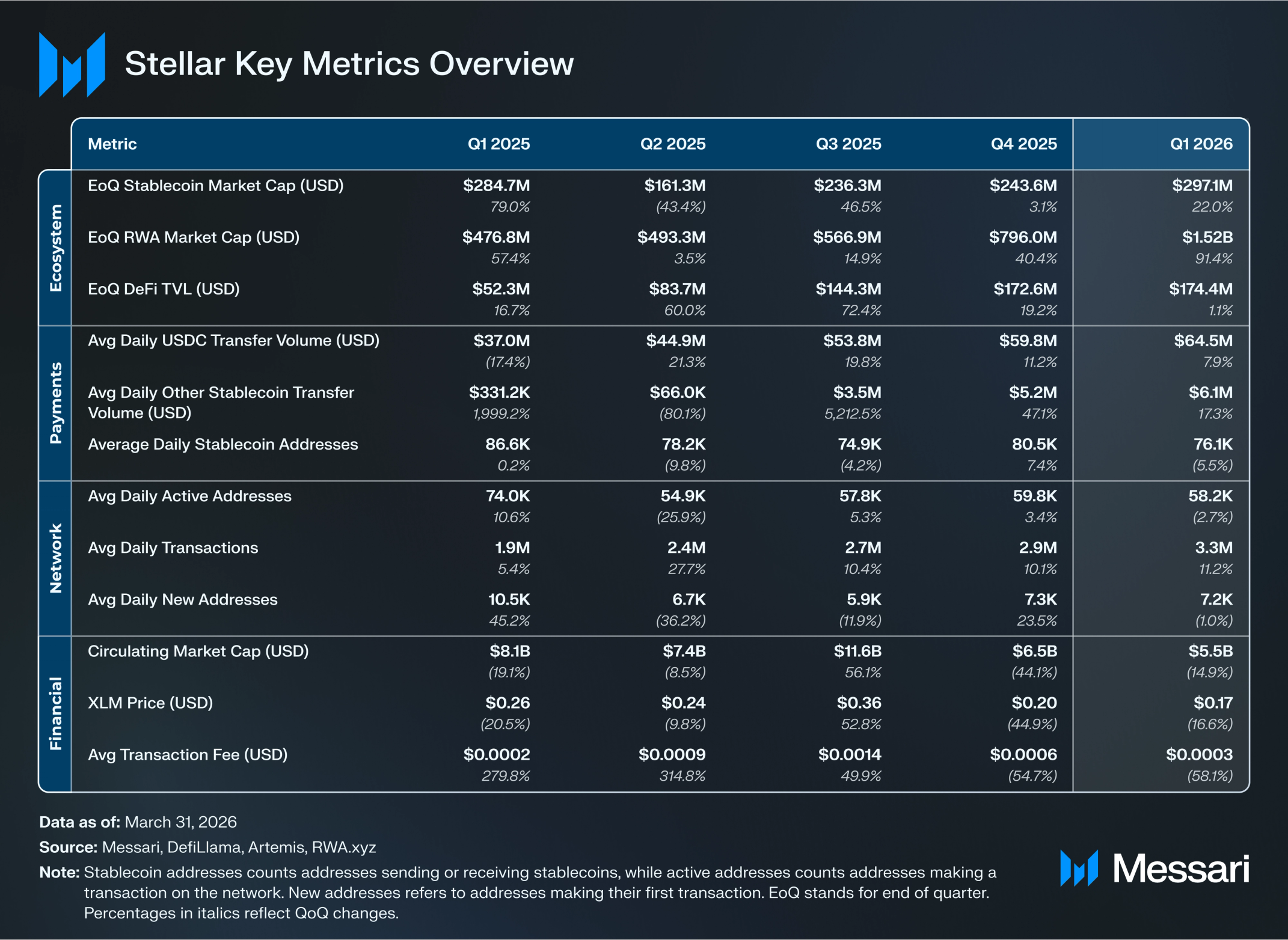
The launch of x402 on Stellar in March and the Machine Payments Protocol (MPP) in April provide a catalyst for agentic payments that could drive a significant uptick in average daily payment transactions on Stellar beyond the quarterly range of 1.7 million to 3.7 million in the past year (1.9 million in Q1’26).
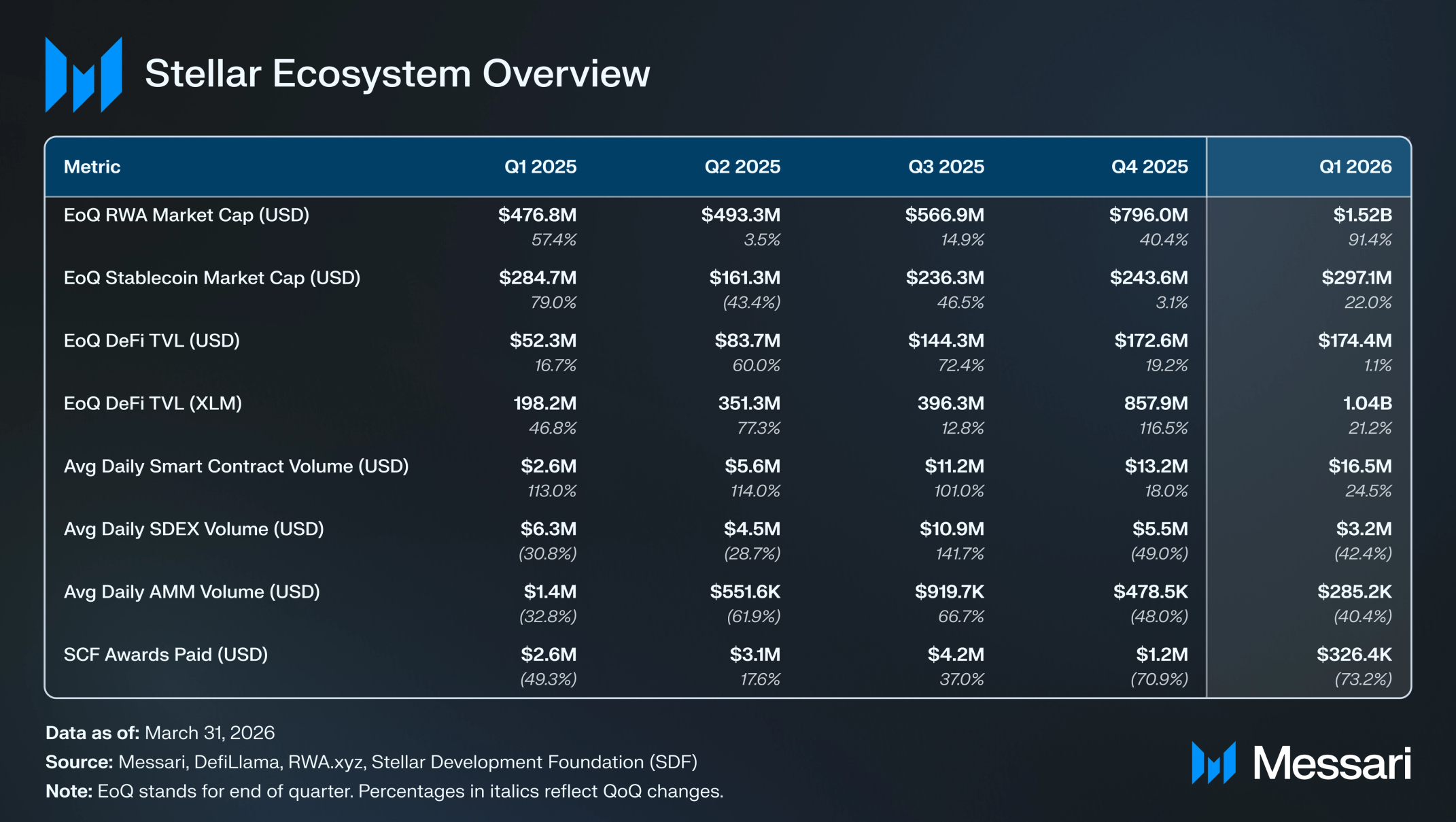
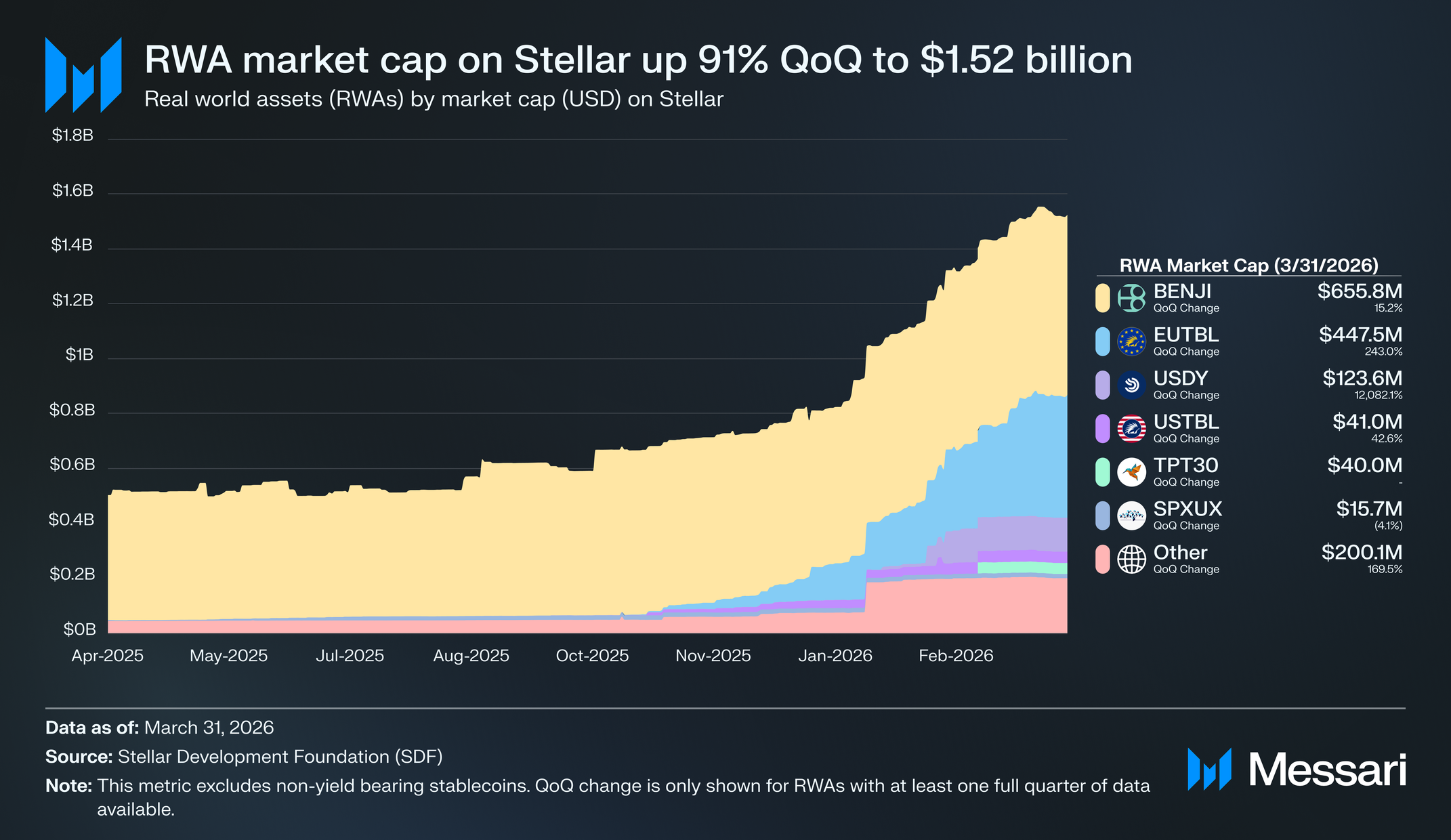
Stellar’s RWA market cap (excluding stablecoins) increased 91% QoQ from $796 million to $1.52 billion at Q1-end and surpassed $2 billion on April 11. This increase was driven by growth in government treasury assets, including Ondo’s USDY and Spiko’s EUTBL, USTBL, and UKTBL.
On Jan. 22, the X-Ray privacy protocol upgrade went live on Stellar, laying the groundwork for zero-knowledge (ZK) cryptography so developers can build privacy-preserving, regulatorily compliant applications on the network.
On April 1, Templar launched lending and borrowing for six freely transferable RWAs on Stellar, including Centrifuge’s deJAA and deJTRSY, and Etherfuse’s CETES and USTRY, marking a significant milestone for DeFi composability of RWAs on Stellar. Alongside sustained elevated yields on Blend, we project continued DeFi TVL growth on Stellar in Q2 2026 beyond the $174.4 million at Q1-end.
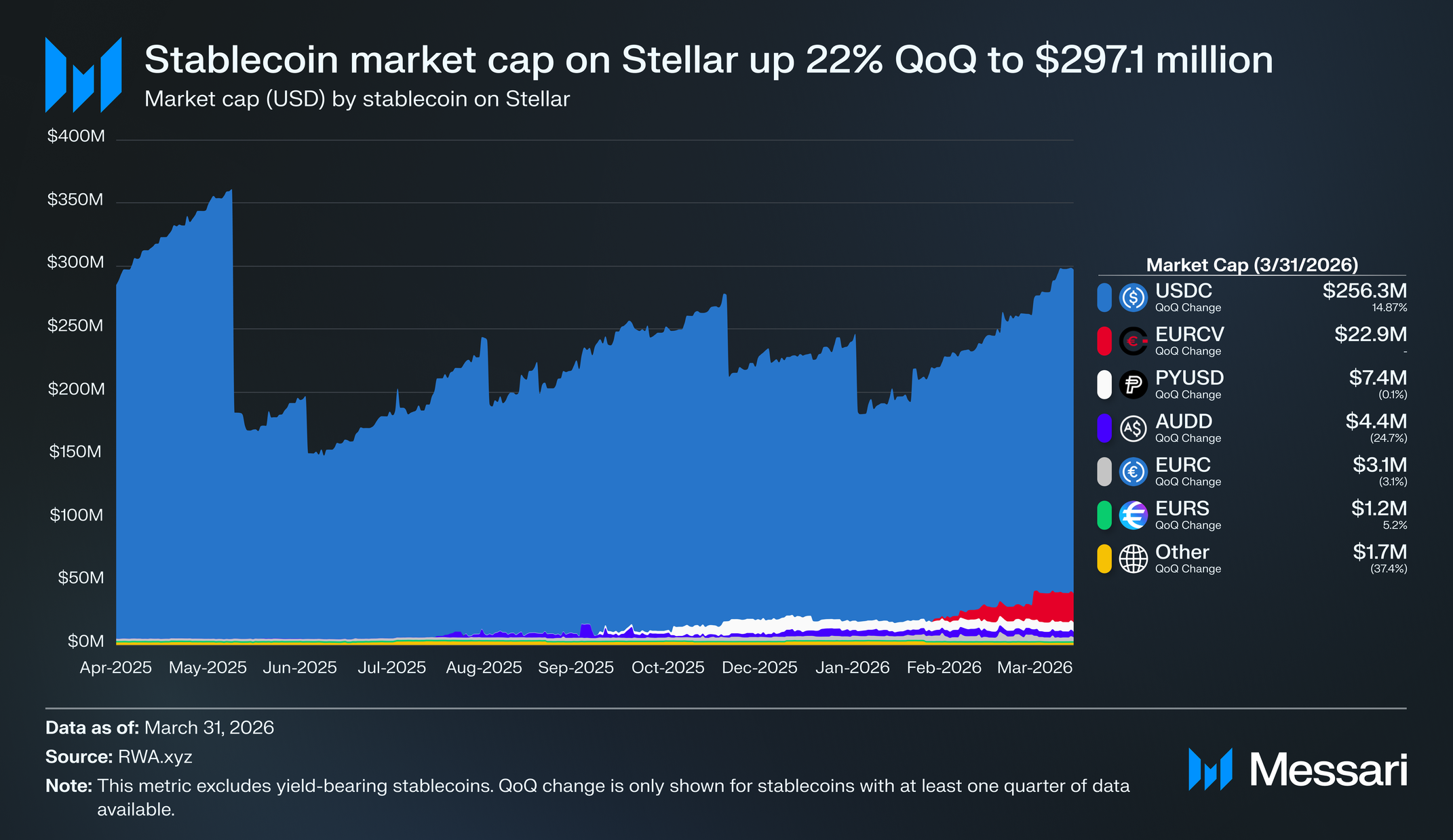
Stellar’s stablecoin market cap increased 22% QoQ from $244 million to $297 million, driven by USDC’s 14.9% QoQ increase to $256.3 million and SG-FORGE’s EURCV launch on the network on March 10, 2026.
Primer
The Stellar network (XLM) is a Layer-1 blockchain built for financial products and services. It offers builders smart contracts functionality and a protocol optimized for payments, with a design intended to keep fees low and to provide transaction speeds that can scale with increased adoption. Financial institutions and innovators worldwide issue assets and settle payments on the Stellar network, which has processed billions of operations with millions of accounts.
The network has been running for over a decade since its launch in 2014 and has operated via the Stellar Consensus Protocol (SCP) since November 2015, after briefly running on a modified version of the Ripple Protocol Consensus Algorithm.
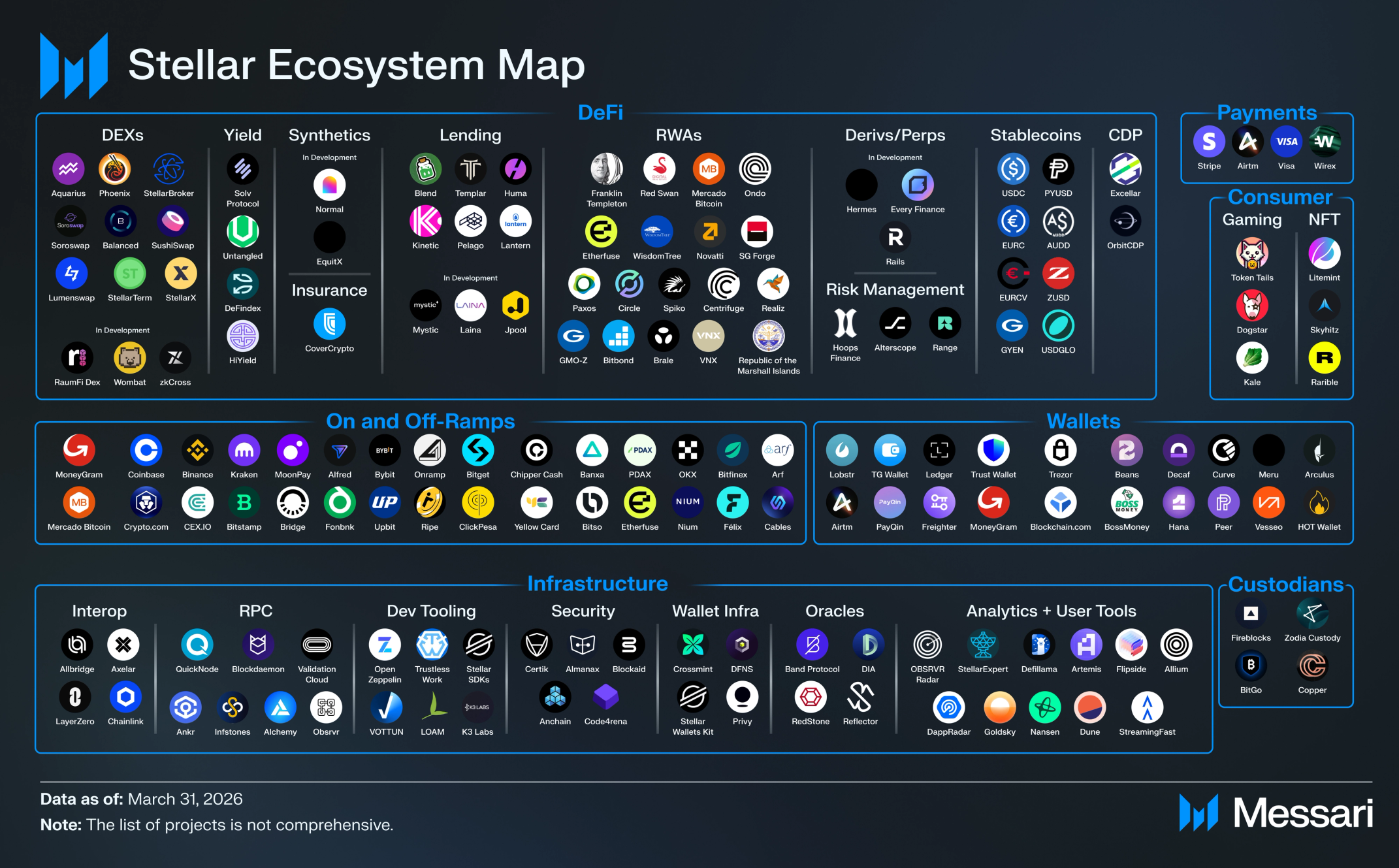
Development of the Stellar network and growth of the Stellar ecosystem are supported by the Stellar Development Foundation. A number of key features, products, and tools built on the network focus on everyday financial services use cases. A global network of Anchors, such as MoneyGram International, provides the on and off-ramps that connect Stellar to traditional financial rails, while the Stellar Disbursements Platform (SDP) is a turnkey solution for sending digital payments. Network features for assets include multi-signature accounts and authorization flags to control access, while the Stellar Asset Sandbox includes no-code tools for asset issuance and management. Additionally, Path Payments, powered by Stellar’s Decentralized Exchange (SDEX), enable a different asset to be sent than what is received by the recipient address. For a full primer on the Stellar Ecosystem, refer to Messari’s ecosystem overview report.
The Project Team Commentary section of this report was written by José Fernández da Ponte, President and Chief Growth Officer at Stellar Development Foundation (SDF), and reflects the views, opinions, and forward-looking statements of SDF only. This section is included to provide additional context on the project’s strategy, priorities, and outlook and does not necessarily reflect the views or opinions of Messari, Inc.
Digital assets are already deployed as infrastructure. What matters now is how effectively they integrate into real financial systems.
On Stellar, that progress is visible in both asset growth and real usage. Real-world assets expanded, surpassing $2 billion shortly after quarter-end, led by tokenized treasuries and yield-bearing instruments. Stablecoins continued to grow, with new regulated issuers reinforcing their role in payments, settlement, and treasury operations.
Activity across the network continues to mature. Smart contracts are increasingly used for lending, borrowing, and asset utilization. Payment flows remain strong, supported by a global network of on- and off-ramps. Assets, liquidity, and programmable infrastructure are now operating together as a coherent financial system.
Two developments this quarter stand out.
The launch of x402 and the Machine Payments Protocol establishes a foundation for agent-driven payments. Software, APIs, and services can transact directly, expanding the scope of digital payments beyond traditional users.
Privacy has also advanced. With the X-Ray upgrade and zero-knowledge primitives now live, developers can build applications that meet institutional requirements for confidentiality, designed with compliance in mind.
Institutional adoption continues to build alongside these capabilities. Financial institutions are integrating blockchain into payment flows, treasury operations, and settlement systems, with a focus on reliable execution within existing environments.
The next phase is usability and access.
Assets must be discoverable, transferable, and usable within real economies. That requires deeper integration with payment systems, broader distribution through wallets and applications, and infrastructure that reduces complexity while meeting regulatory expectations.
Stellar is built for this environment. A global network of anchors, predictable low-cost settlement, and increasing composability across assets and protocols provide the foundation.
The priority now is expanding access, deepening liquidity, and continuing to embed the network into the financial systems people and institutions rely on.
Ecosystem Analysis
Real World Assets
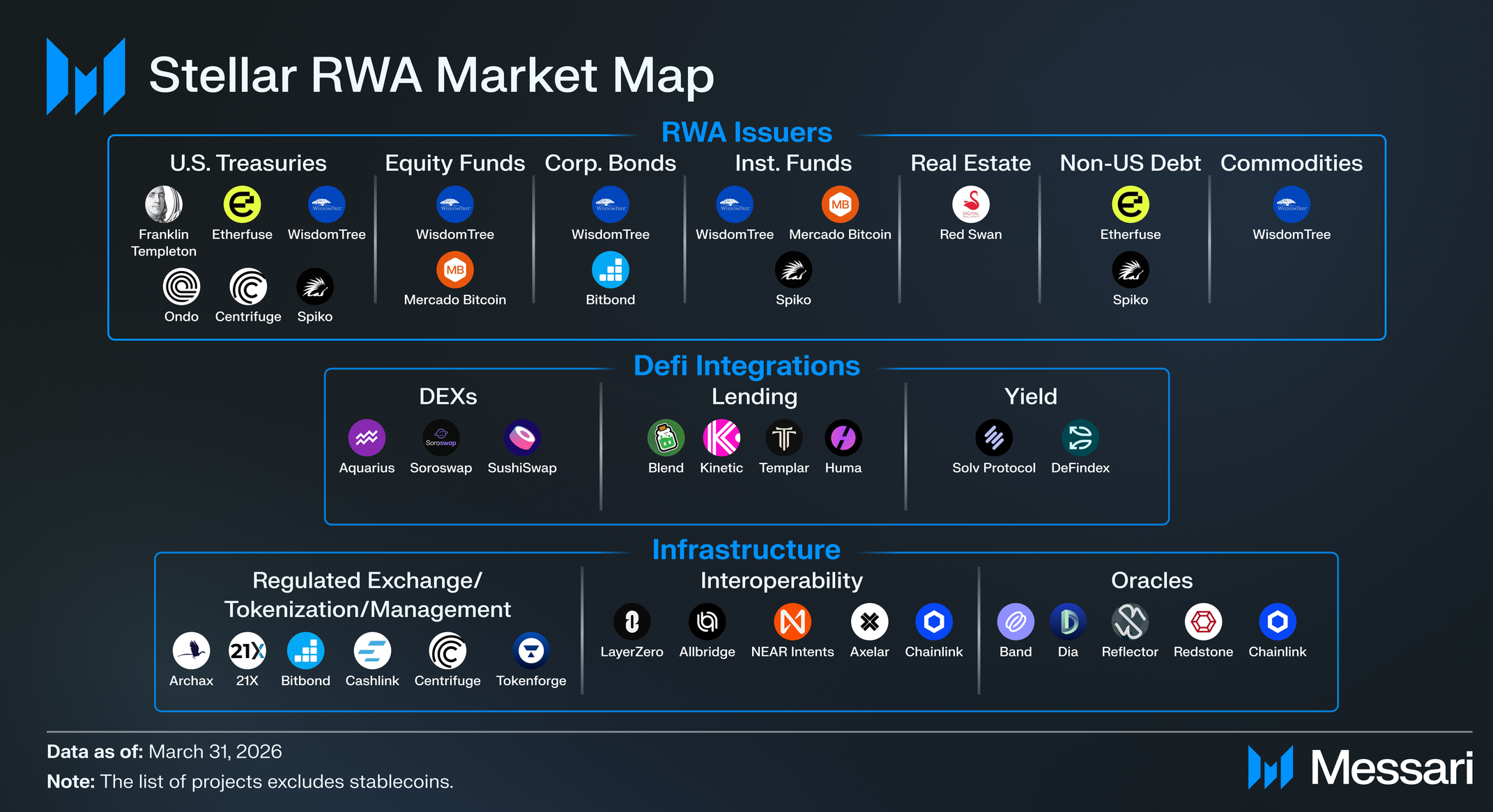
The RWA market cap on Stellar (excluding stablecoins) increased 91.4% QoQ from $796 million to $1.52 billion at Q1-end and surpassed $2 billion on April 11. The vast majority of this gain came from growth in government treasury assets, including Ondo’s USDY (+12,080% QoQ to $123.6 million) and Spiko’sEUTBL (+243% QoQ to $447.5 million), USTBL (+43% QoQ to $41 million), and UKTBL (+790% QoQ to $10 million). Spiko is targeting two distinct types of clientele. First, Web3 participants, including market makers, start-ups, and foundations that are looking for efficient treasury management solutions. The second segment is small and mid-sized corporate enterprises in Europe that struggle to access money market funds because they would otherwise need to open a bank or brokerage account.
Ondo USDY: USDY is a tokenized note secured by short-term U.S. Treasuries (~99%) and bank demand deposits (~1%). The token is non-rebasing, as the per-token price increases as yield accrues each day. At Q1-end, the APY was 3.55%
Spiko EUTBL, USTBL, UKTBL: Like USDY, each of these tokens is non-rebasing, with yield accruing via an appreciating token price. EUTBL (Eurozone Member States), USTBL (United States), and UKTBL (United Kingdom) are regulated tokenized money market funds each backed by treasury bills from the respective government, repurchase agreements secured by such securities, and cash.
Additionally, on March 19, Spiko launched its Spiko Amundi Overnight Swap Fund (CHF) on Stellar, targeting a yield above the Swiss overnight rate for Swiss francs. Spiko also launched its Cash and Carry Dollar (SPKCC) and Cash and Carry Euro (eurSPKCC) on the network at the end of December.
Other major RWA issuers on Stellar include:
Franklin Templeton: Franklin Templeton is the issuer of BENJI, the first regulated money market fund on a blockchain, first issued on Stellar in April 2021. BENJI has been the largest RWA by market capitalization on Stellar since its launch. Each BENJI token represents one share of Franklin Templeton’s onchain U.S. Government Money Fund (FOBXX).
Etherfuse: Etherfuse issues “stablebonds,” where each stablebond is a tokenized fund of short-term government-issued treasury bonds from a given country or jurisdiction. These include Mexico (CETES), the European Union (EUROB), Brazil (TESOURO), the Republic of Korea (KTB), and the United States (USTRY). Additionally, Etherfuse offers MXNe, a peso-dominated stable value issued with Brale and backed by CETES. While the stablecoin market is currently dominated almost exclusively by U.S. dollar stablecoins, like USDC and USDT, Etherfuse aims to bring 100 sovereign currencies onchain as yield-bearing assets, acting as the “AWS of sovereign debt.” Existing use cases for these stablebonds include acting as yield-bearing stablecoins composable in DeFi and being tradable with one another for approximately 4 basis points (bps), an institutional-grade foreign exchange (FX) fee not accessible to retail users elsewhere.
RedSwan: In September, RedSwan Digital Real Estate announced that it had tokenized $100 million in commercial real estate on Stellar, comprising multifamily and hospitality properties. These include ownership interest in R&B Oak Park (RSRB), a 104-unit multifamily property in suburban Chicago, and Sedona Ranch (RSR), a 268-unit multifamily property in Odessa, Texas.
WisdomTree: At Q1-end, WisdomTree offered seven tokenized U.S. Treasury funds, six tokenized public equity funds, one tokenized corporate bond, one tokenized alternative institutional fund, and one tokenized gold token on Stellar. Retail investors can access each token via the WisdomTree Prime application with a minimum investment of $1-$25, while institutional access is available via the WisdomTree Connect Platform.
Additionally, in December, State Street announced its upcoming tokenized private liquidity fund (SWEEP) will launch on Stellar later in 2026. For further details on Stellar’s RWA ecosystem, see Messari’s State of Stellar: Real-world Assets report.
DeFi Composability for RWAs
Composability in DeFi refers to the permissionless ability of assets, protocols, and their underlying smart contracts to seamlessly interact and integrate with each other. In doing so, collective capital efficiency and TVL of the DeFi ecosystem increase as assets are productive in nested strategies. For example, depositing tokens into a Stellar AMM generates LP tokens, which could then be used as collateral on an overcollateralized lending and borrowing protocol like Blend. Liquidity, capital efficiency, and TVL increase further as new protocols and assets are launched.
Stellar network is meant for real assets, used by real people, with real activity. DeFi composability for RWAs is essential for that. However, regulations currently prevent the vast majority of RWAs from being freely transferable and thus fully composable. Still, notable issuers of freely transferable RWAs on Stellar include Etherfuse (discussed above) and Centrifuge, which wraps existing tokenized securities like JTRSY (tokenized U.S. treasuries) into freely transferable tokens via its deRWA token standard. DeFi composability for existing and new RWAs is a priority for SDF in 2026, which has set a goal to sign 15 new enterprises in 2026, with at least five deployed on the network by year-end. Target organizations include Forbes Global 2000 companies, leading international NGOs, and government agencies that can use the Stellar network to power payments, treasury management, settlement, and other financial workflows.
At the protocol level, a prime example of DeFi composability for RWAs is Templar, an interoperable, permissionless overcollateralized lending and borrowing protocol that launched on Stellar in November 2025. On April 1, 2026, Templar announced support for six RWAs on Stellar, including Centrifuge’s deJAA and deJTRSY, Etherfuse’s CETES and USTRY, and SolvBTC. Combined, these four tokens had a market cap $34.8 million on March 31, 2025, which is now unlocked as collateral.
The protocol is interoperable via NEAR’s multi-party computation (MPC) network, allowing users to supply an asset on one network to borrow an asset on another, for example, depositing native BTC to borrow U.S. dollar stablecoins on Ethereum.
Token For Regulated Exchanges (T-REX)
In November 2025, a proposal (SEP-57) was made to introduce Token for Regulated Exchanges (T-REX) (based on ERC-3643), to enable a permissioned exchange for regulatorily compliant tokens. Requirements for these tokens include, but are not limited to, KYC and AML, identity verification, investor accreditation, freezing for regulatory enforcement, recovery mechanisms for lost or compromised wallets, and compliance hooks for regulatory reporting. Once released, T-REX will enable DeFi composability within a permissioned environment for regulatorily compliant tokens separate from the Stellar network’s permissionless DeFi ecosystem. According to SDF, multiple partners and asset tokenization platforms are building support for T-REX.
Stablecoins
The stablecoin market cap on Stellar increased 22% QoQ from $243.6 million to $297.1 million, driven by USDC’s 14.9% QoQ increase to $256.3 million and SG-FORGE’s EURCV launch on the network on March 10, 2026. EURCV is backed 1:1 by euro cash deposits and equivalents and had the second largest stablecoin market cap on Stellar at Q1-end at $22.9 million. SG-FORGE has obtained electronic money institution status in France, and EURCV is compliant with the EU’s MiCA stablecoin rules, positioning the stablecoin for institutional and regulated use via payments, settlement of tokenized assets, DeFi, corporate treasury, etc.
The EURCV launch builds on PayPal’s PYUSD launch on Stellar in September 2025. The network now has two of the top U.S. dollar stablecoins by total market cap (Circle’s USDC and PayPal’s PYUSD) alongside the top three euro stablecoins by total market cap (Circle’s EURC, Stasis’s EURS, and SG’s EURCV). The Australian digital dollar (AUDD) is also notable on Stellar as it was the fourth largest stablecoin by market cap at Q1-end at $4.4 million.
Features like Stellar’s built-in clawback, which allows the issuer of an asset to reclaim it, are particularly attractive to stablecoin issuers. In November 2025, U.S. Bank announced that it is testing the custom issuance of its own stablecoin on Stellar and cited the clawback feature as key, given the bank’s legal requirements for customer protections. In addition to this, the network’s other built-in asset controls, 99.99% uptime over a decade, billions in annual payment volume, and 3-5 second settlement at the cost of a U.S. cent provide the reliability and configurability required by regulated institutions.
DeFi
DeFi TVL
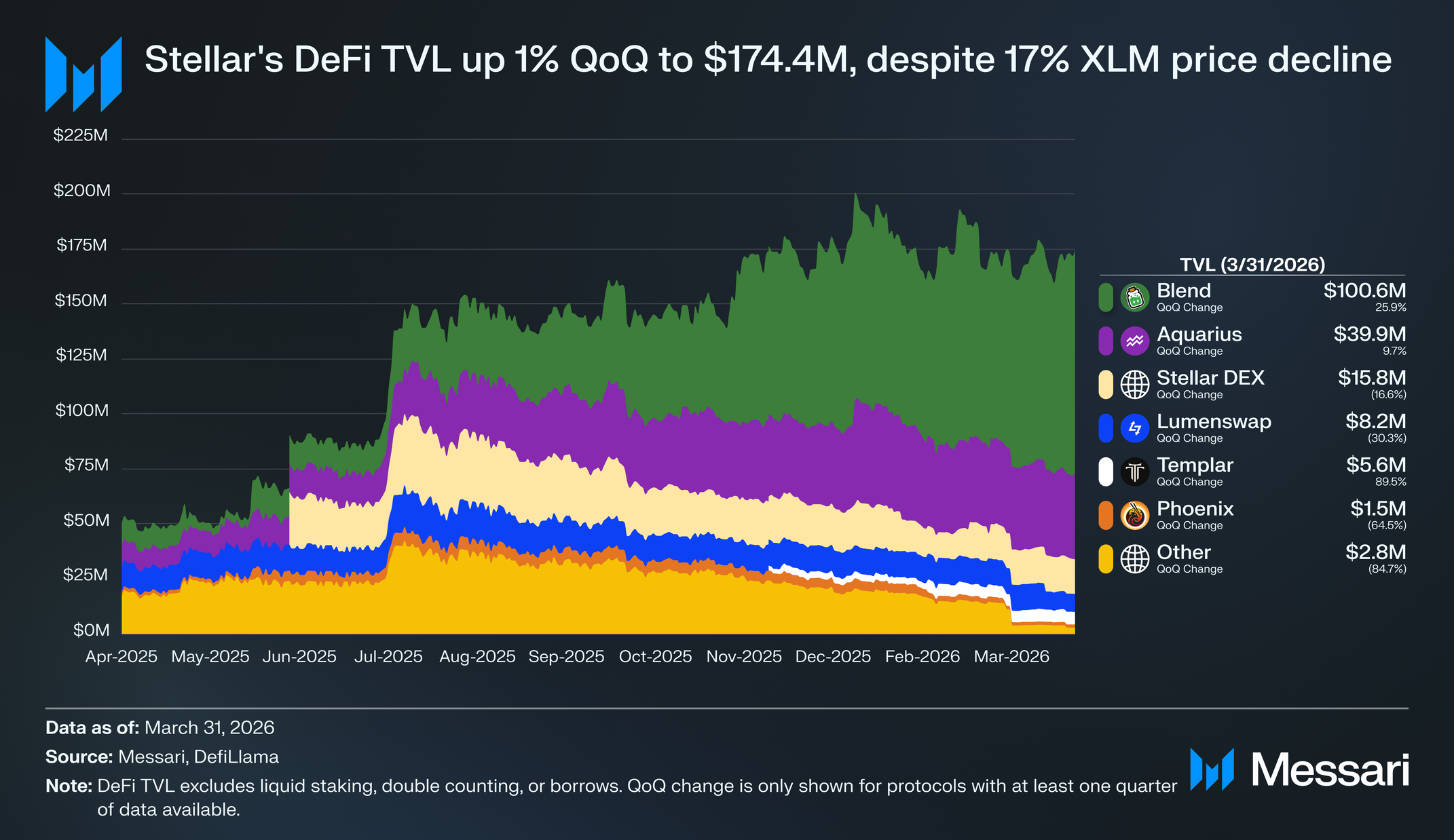
DeFi total-value locked (TVL) on Stellar increased 1.1% QoQ to $174.4 million, even as the price of XLM (which makes up roughly 70% of TVL) decreased 16.6% QoQ from $0.201 to $0.167. This follows explosive 284% YoY growth from $44.9 million at the end of 2024 to $172.6 million at the end of 2025.
While TVL was effectively flat QoQ, TVL share by protocol type was not. DEXs' share of TVL declined, and TVL of lending and borrowing protocols like Blend and Templar grew. The top DEX by TVL, Aquarius, had $39.9 million in TVL at Q1-end (+9.7% QoQ), followed by Stellar DEX with $15.8 million (-16.6% QoQ), Lumenswap with $8.2 million (-30.3% QoQ), and Phoenix with $1.5 million (-64.5% QoQ). Combined, the TVL of these protocols declined 8.3% QoQ to $65.4 million. In contrast, Blend’s TVL grew 25.9% QoQ to $100.6 million, and Templar’s grew 89.5% QoQ to $5.6 million. The larger TVL growth of Blend and Templar compared to the decline in TVL of the top DEXs was offset by the 84.7% QoQ decline in the Other category (which includes other DEXs like Soroswap) to $2.8 million in TVL at the end of Q1.
Templar’s TVL growth in Q1 came from continued adoption of its deposit XLM to borrow USDC vault, which was its only available vault in Q1 following its launch in November 2025. TVL growth should continue in Q2 as on April 1, 2026, Templar launched lend/borrow vaults for RWAs, including Centrifuge’s deJAA and deJTRSY, Etherfuse’s CETES and USTRY, and SolvBTC.
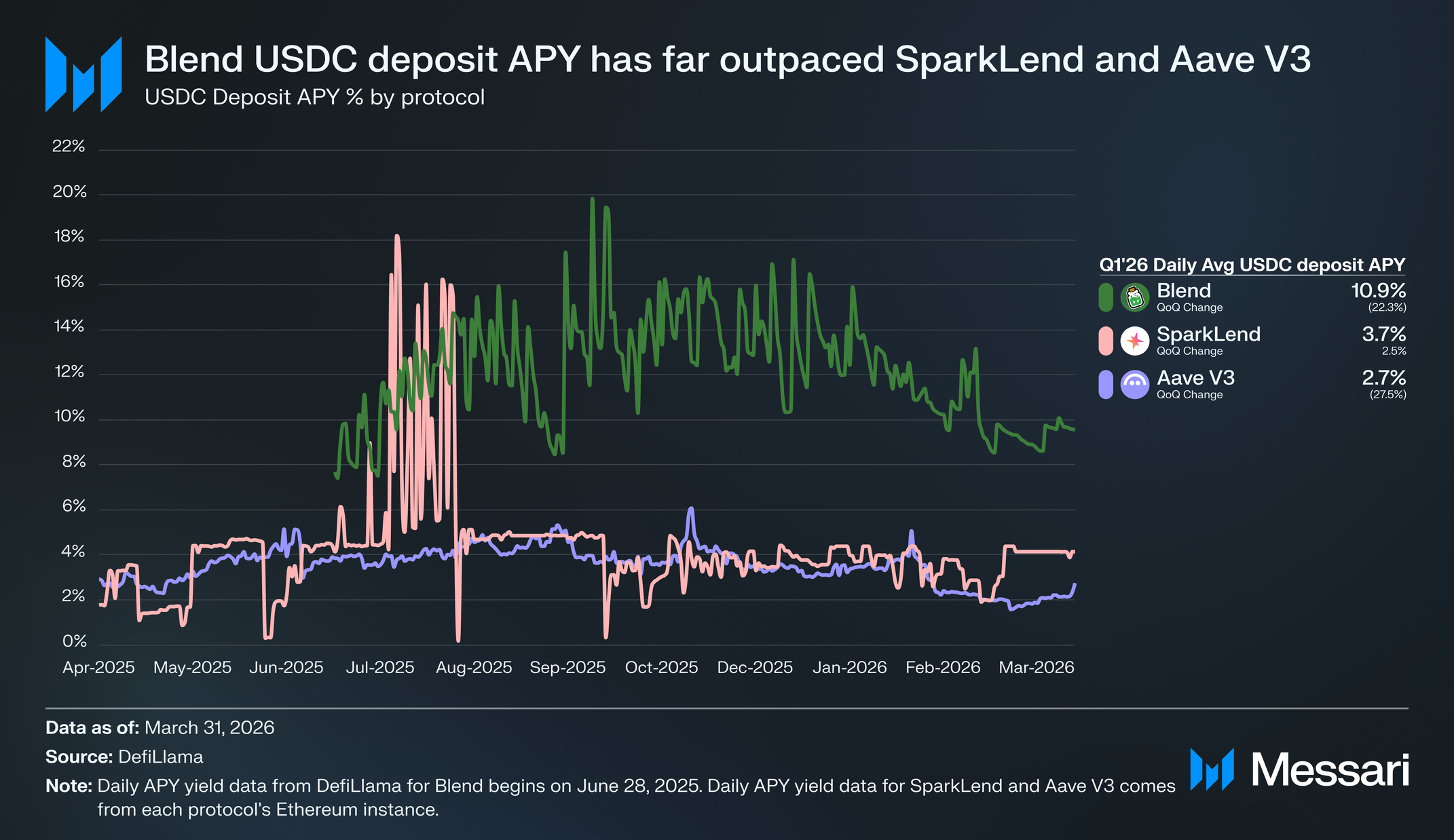
Blend’s TVL growth can be attributed to its attractive APY on USDC deposits, which has consistently held above 8% in recent months, a very attractive rate compared to established overcollateralized lending and borrowing protocols like Aave V3 and SparkLend, which have ranged between 2-5% APY. This has likely led to attracting outsized deposits from crypto native users.
Blend has two main lending and borrowing pools: Fixed Pool V2, where lending and borrowing parameters are immutable after deployment, and Yieldblox V2, which is managed by YBX DAO and allows parameters to be adjusted dynamically and can receive additional yield from BLND rewards, the project’s token. Tokens with notable liquidity on Blend include XLM, AQUA, stablecoins USDC, EURC, USDGLO, PYUSD, and Etherfuse stablebonds USTRY, CETES, and TESOURO.
Other DeFi Updates
Untangled Finance: Curated yield protocol Untangled Finance launched on Stellar in January 2026 and, as of Q1-end, features four vaults users can deposit to earn yield. Funds from each vault are routed into specific strategies that include deposits to money markets, private credit, AMMs, and RWAs.
Noether Perp DEX Testnet: Noether launched testnet in February for its upcoming Perp DEX on Stellar.
Redstone Oracle Launch: On March 4, 2026, oracle provider Redstone went live on Stellar mainnet with 17 price feeds, including BTC, ETH, USDC, PYUSD, and BENJI, expanding the network’s capacity to support crypto assets and RWAs alike in DeFi. This builds on Stellar joining the Chainlink Scale Program in October to integrate Chainlink’s Data Feeds, Data Streams, and the Cross-Chain Interoperability Protocol (CCIP).
Rails Vault Storage on Stellar: On Feb. 3, Hybrid perpetual futures platform Railslaunched institutional-grade vaults that hold client collateral such as USDC on Stellar.
Etherfuse Korean Bond Launch: On Jan. 26, Etherfuse launched Korean government bonds (KTB) on Stellar.
Normal Launch: Normal, an onchain crypto-index investment platform launched on Stellar on Jan. 25, enabling users to swap XLM or stablecoins for tradable synthetic index tokens tracking diversified baskets like Top 100 Crypto.
Smart Contract-based Volume
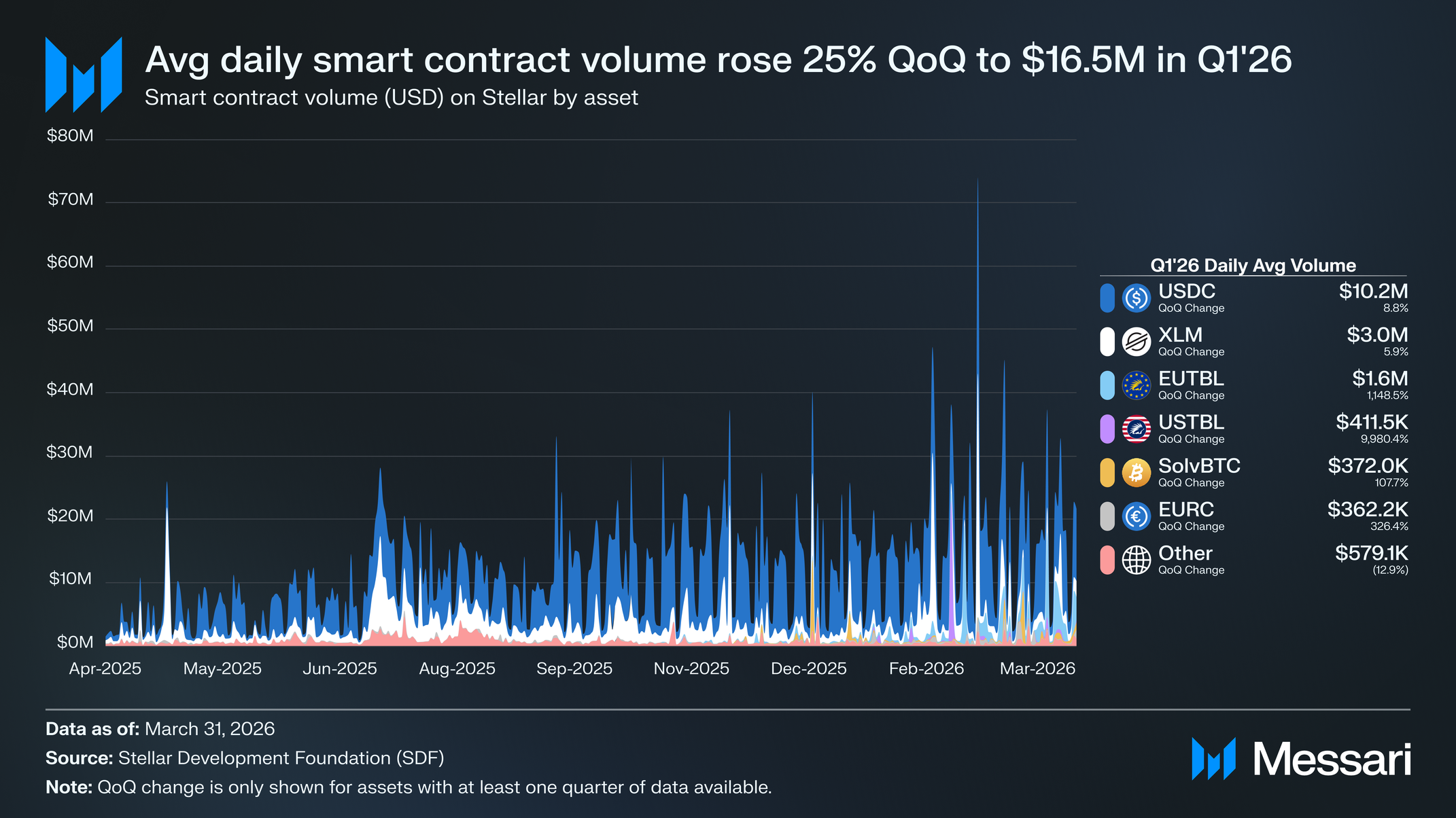
SDF defines smart contract volume as any smart contract invocation that causes a token movement (payment, transfer, deposit, lend, etc.). Notably, this includes transfer of RWA contract tokens like EUTBL and USTBL even if they are not freely transferable (i.e., composable with DeFi). Average daily smart contract volume rose 24.5% QoQ from $13.2 million in Q4 2025 to $16.5 million in Q1 2026, driven by an increase in lending activity that outpaced a decline in DEX trading volume. Soroswap and Aquarius are the top DEXs by volume, followed by Phoenix, while Blend is the leading overcollateralized lending and borrowing protocol. Smart contracts on Stellar averaged $10.2 million (+9% QoQ) in daily USDC volume in Q1 2026, followed by $3 million in XLM (+6% QoQ), $1.6 million in EUTBL (+1,150% QoQ), $411,460 in USTBL, $372,000 in SolvBTC, and $362,240 in EURC.
Stellar Decentralized Exchange (SDEX) and Native AMMs
From its inception, Stellar has had a built-in decentralized exchange called the Stellar DEX or SDEX that uses order books for matching buy and sell orders. In November 2021, network validators upgraded Stellar to Protocol 18, which introduced Automated Market Makers (AMMs) built in at the protocol level. The SDEX’s order books and native AMMs power Path Payments, which enable sending a different asset than that received by the recipient. In tandem, Path Payments and Anchors (the network of fiat on/off ramps on Stellar) enable blockchain-based remittances, allowing a user in one country to send a given fiat currency, which is ultimately received as a different fiat currency.
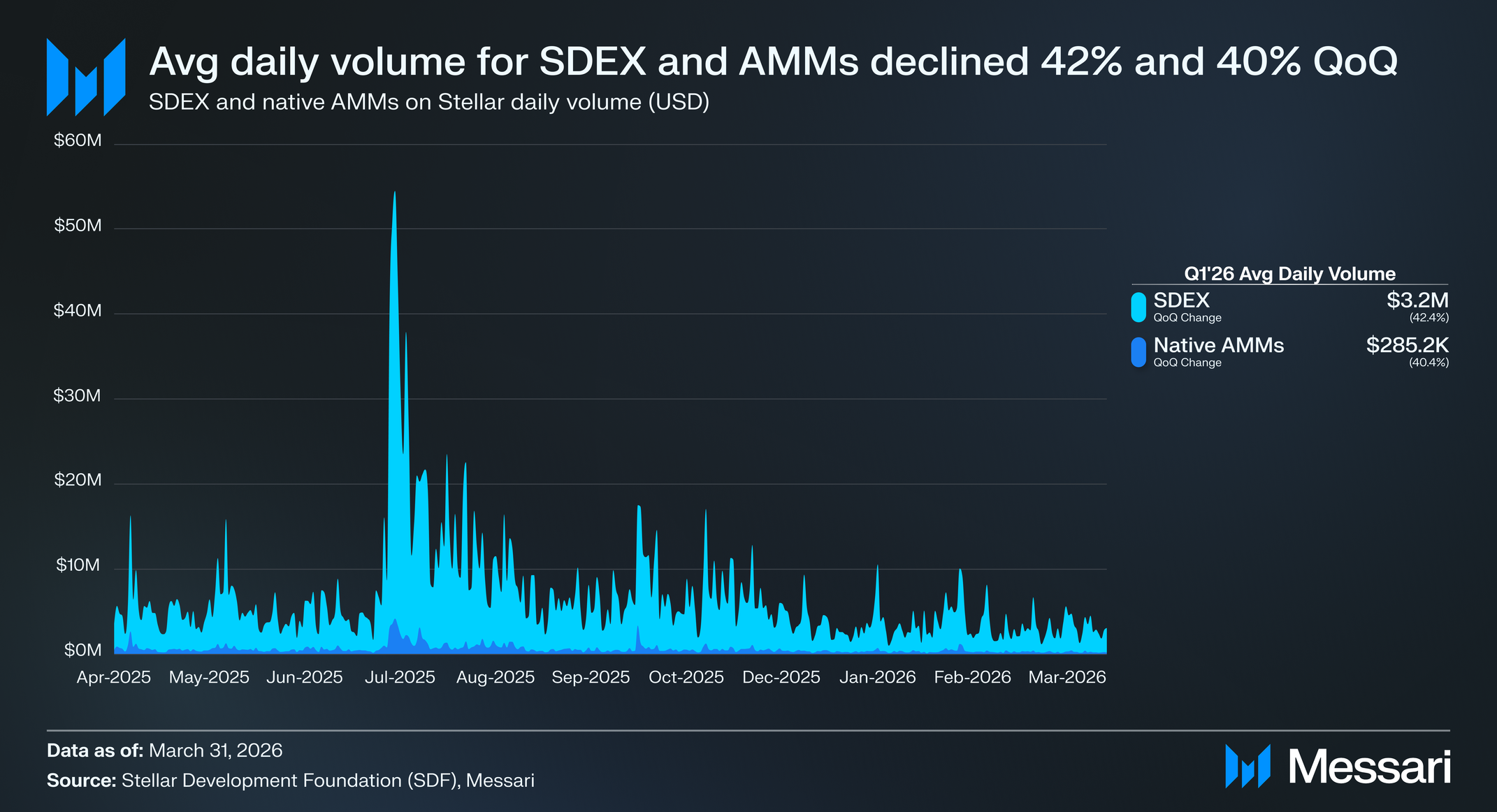
Average daily volume (USD) for SDEX declined 42.4% QoQ from $5.5 million to $3.2 million, while average daily volume for native AMMs declined 40.8% QoQ from $478,480 to $285,210 as baseline network volume has continued to shift to smart contracts. The majority of this decline is due to decreased volume, particularly in stablecoins. A smaller portion of this decline in volume (USD) can be attributed to the 14.9% QoQ decline in the price of XLM, as roughly half of volume on both the SDEX and native AMMs is XLM. Notably, volume spikes for SDEX and native AMMs when the price of XLM rapidly appreciates, as in July 2025.
Other Ecosystem Usage Metrics
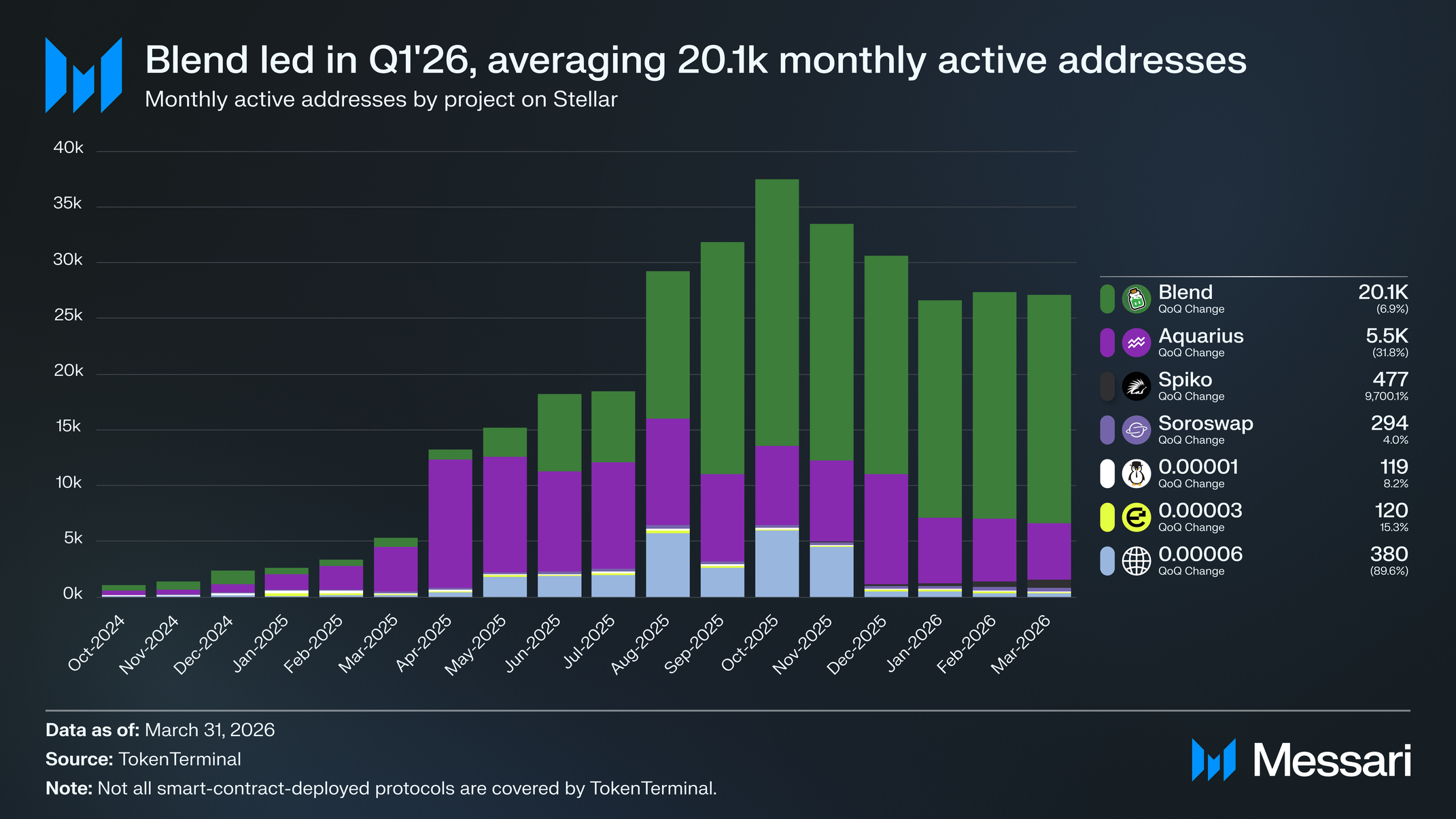
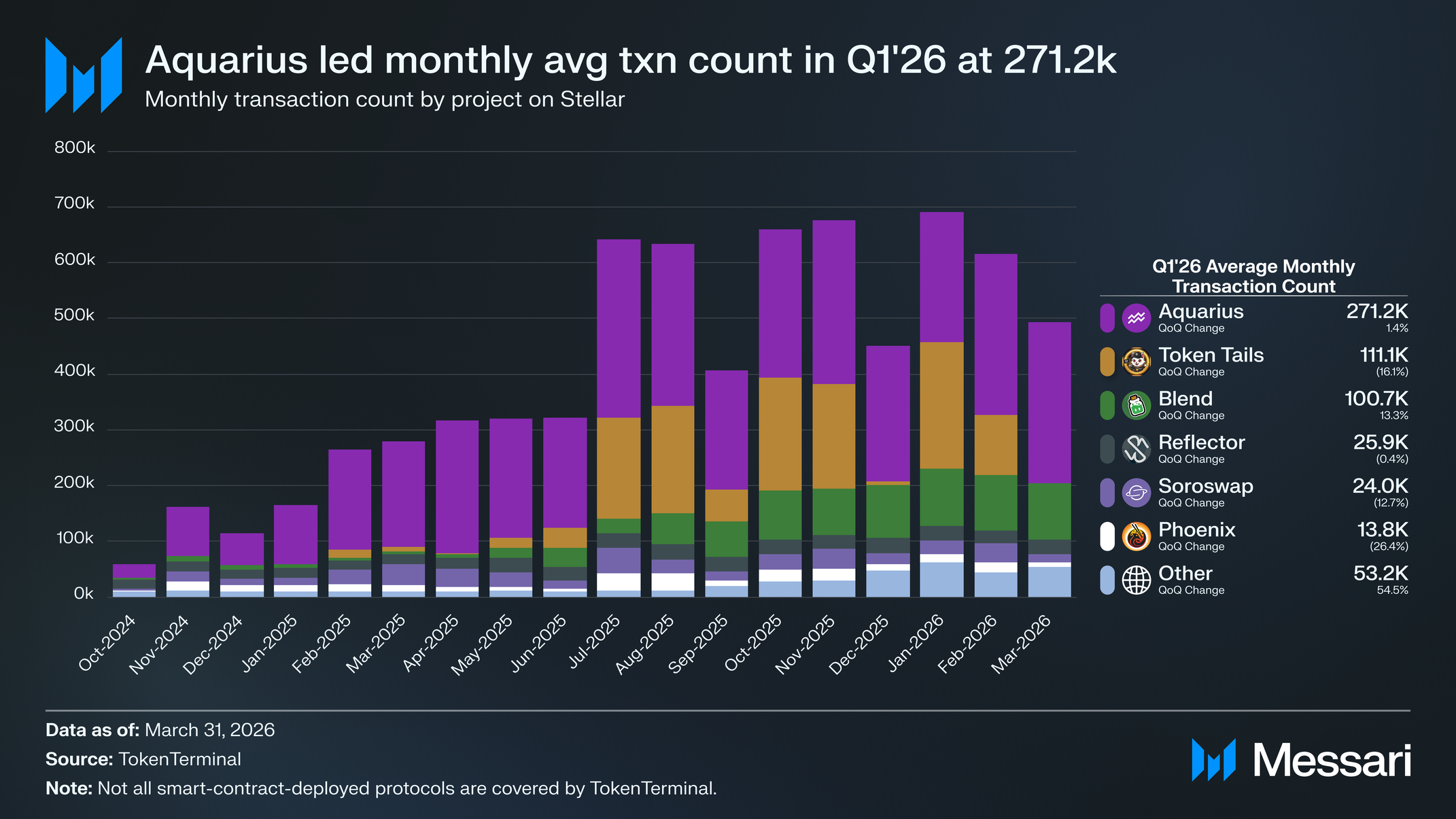
Beyond TVL and volume, monthly active addresses, monthly transaction count, and monthly gas used are viable metrics for further evaluating the usage of smart contract-deployed applications on Stellar.
Blend led all protocols in Q1 2026, averaging 20,100 monthly active addresses (-6.9% QoQ), followed by Aquarius with 5,512 (-31.8% QoQ), Spiko with 477 (+9,700% QoQ), and Soroswap with 294 (+4% QoQ).
Aquarius led all protocols in Q1 2026, averaging 271,222 monthly transactions (+1.4% QoQ), followed by play-to-save virtual cat adoption game Token Tails with 111,062 (-16.1% QoQ), Blend with 100,674 (+13.3% QoQ), and oracle provider Reflector with 25,854 (-0.4% QoQ).
In January, SDF introduced SCF version 7.0, with three application tracks for ecosystem development grants. The Integration Track is for teams integrating existing Stellar ecosystem products, while the Open Track is for teams building financial protocols, and the RFP Track is for developer tooling infrastructure or ecosystem capabilities explicitly requested by a panel of SCF Pilot delegates. Since Q2 2019, there have been 43 rounds, with applications for SCF #43 due April 26, 2026. “Instawards” (instant awards) up to $15,000 per project are also available to support early experimentation.
Separately, in January, SCF Growth Hack Cohort 1 went live to support Stellar Mainnet-launched companies on go-to-market and product-market fit through user acquisition campaigns. The program will continue quarterly, with an additional cohort.
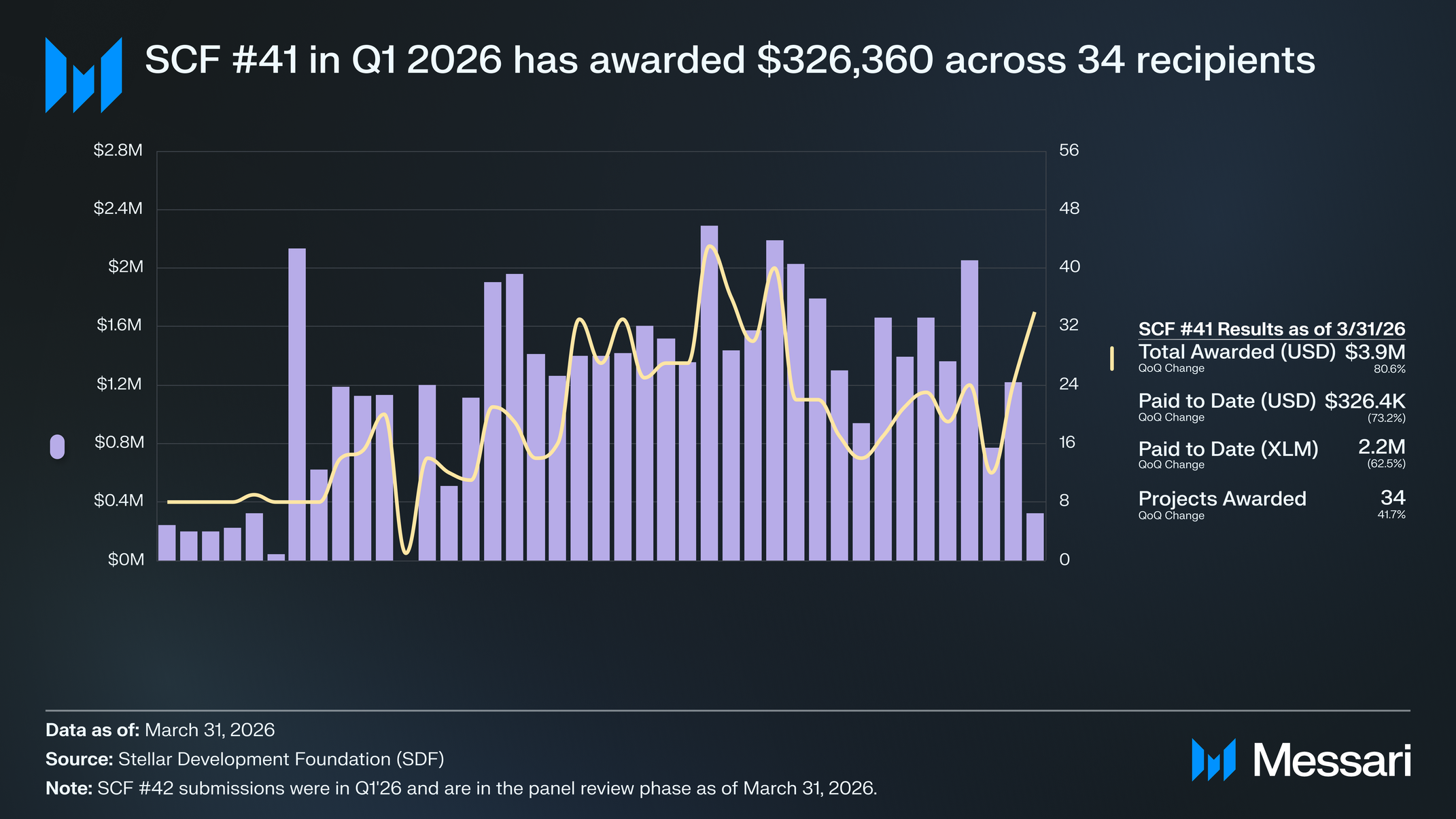
SCF #41 completed in January 2026 and has paid $326,400 in awards as of Q1-end across 34 recipients, with a total of $3.9 million awarded. Notable projects awarded in SCF #41 include Payala, which is integrating its payment solution for aid disbursement on Stellar network, WarpDrive, which is integrating its offchain verification tooling for Blend and Phoenix, and CashAbroad Smart Treasury, which uses Stellar network to settle stablecoin payments between international trade partners.
The SCF 2025 impact report, published in March, provides insight into all rounds in 2025. Other SDF grants and funding programs include a bug bounty program, a matching fund whereby SDF matches investments up to $500,000 for Pre-seed to Series B companies interested in building on the Stellar network, academic research grants, and marketing grants for projects built on Stellar.
Stellar House CDMX: April 21-22. Stellar House is hosted by SDF and brings together builders, innovators, developers, entrepreneurs, and thought leaders in blockchain, fintech, DeFi, payments, and digital assets to collaborate and share ideas.
A full list of community events can be found here.
Payments Analysis
As a more than decade-old network built for payments, Stellar has realized a robust payments ecosystem across its supported wallets, applications, and custom payment solutions, like the Stellar Disbursement Platform (SDP). This includes PayFi, short for Payment Financing, which makes essential financial use cases, such as credit, trade finance, and remittances, more accessible, secure, and efficient by leveraging blockchain technology and stablecoins. For a full primer on the payments ecosystem on Stellar, refer to the payments section of Messari’s Stellar Ecosystem Overview.
Transfer Volume Overview
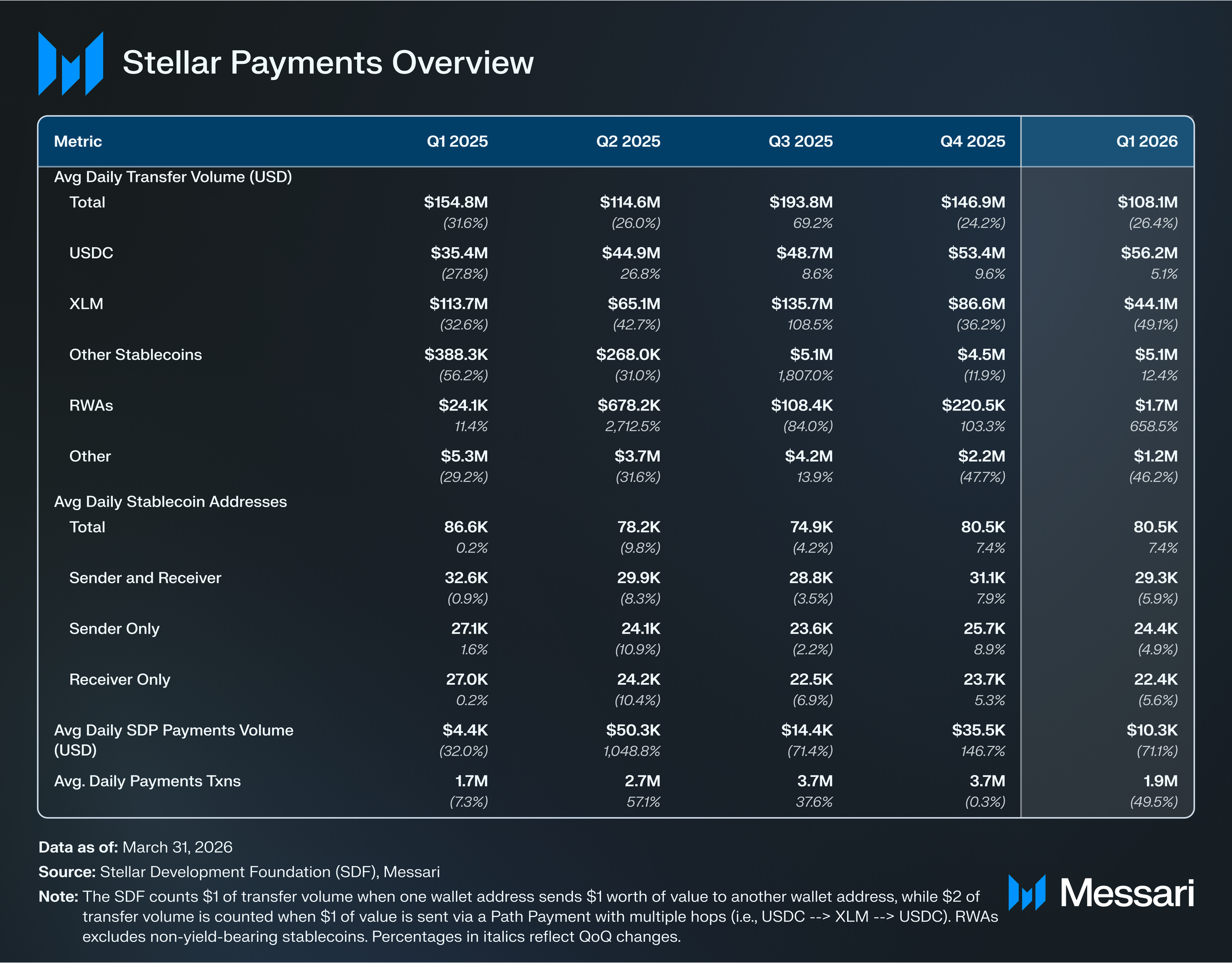
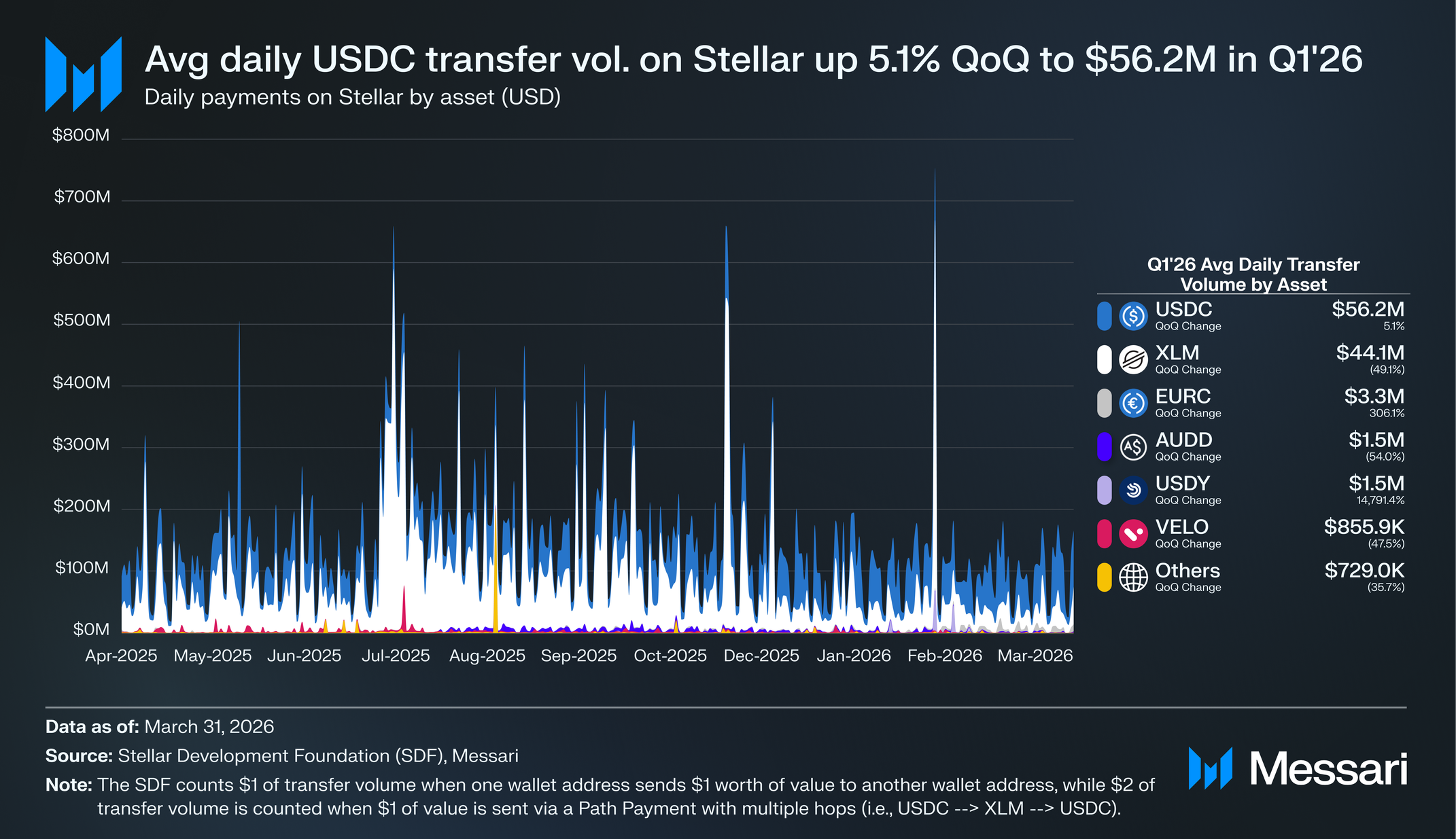
In the last year, average daily transfer volume has ranged between $108 million and $194 million, with USDC transfer volume consistently up (+58.8% YoY to $56.2 million), while XLM transfer volume has steadily fallen (-61.2% YoY to $44.1 million). In Q1, average daily transfer volume (USD) on Stellar declined 26.4% QoQ from $146.9 million to $108.1 million, as the 49.1% QoQ decline in average daily XLM payments to $44.1 million outweighed the increase in stablecoin and RWA transfer volume. Average daily transfer volume of other stablecoins increased 12.4% QoQ to $5.1 million, and average daily RWA transfer volume (excluding non-yield-bearing stablecoins) rose 658.5% QoQ to $1.7 million, up dramatically as RWAs have continued to proliferate on Stellar.
In Q1 2026, Stellar network had an average transaction fee of $0.00026, underscoring the network’s affordability for payments. Notably, SDF counts $1 of payment volume when one wallet address sends $1 of value to another wallet address, while $2 of payment volume is counted when $1 of value is sent via a Path Payment with multiple hops (i.e., USDC --> XLM --> USDC). Messari counts this activity as transfer volume. SDF attributes the decline in XLM transfer volume to lower XLM price. Beyond USDC, stablecoins and RWAs with notable transfer volume on Stellar include Circle’s tokenized version of the EURO (EURC), Australian Digital Dollar (AUDD), and BENJI, each token of which represents one share of Franklin Templeton’s onchain U.S. Government Money Fund (FOBXX). Airtm, Bridge and Stellar network’s most widely used wallet LOBSTR are amongst the most widely used applications for value transfer on Stellar.
x402 and MPP
Amidst rising stablecoin and RWA transfer volume, the launch of x402 on Stellar in March and the Machine Payments Protocol (MPP) in April provides a catalyst for agentic payments that could drive a significant uptick in average daily payment transactions on Stellar beyond the quarterly range of 1.7 million to 3.7 million in the past year (1.9 million in Q1’26).
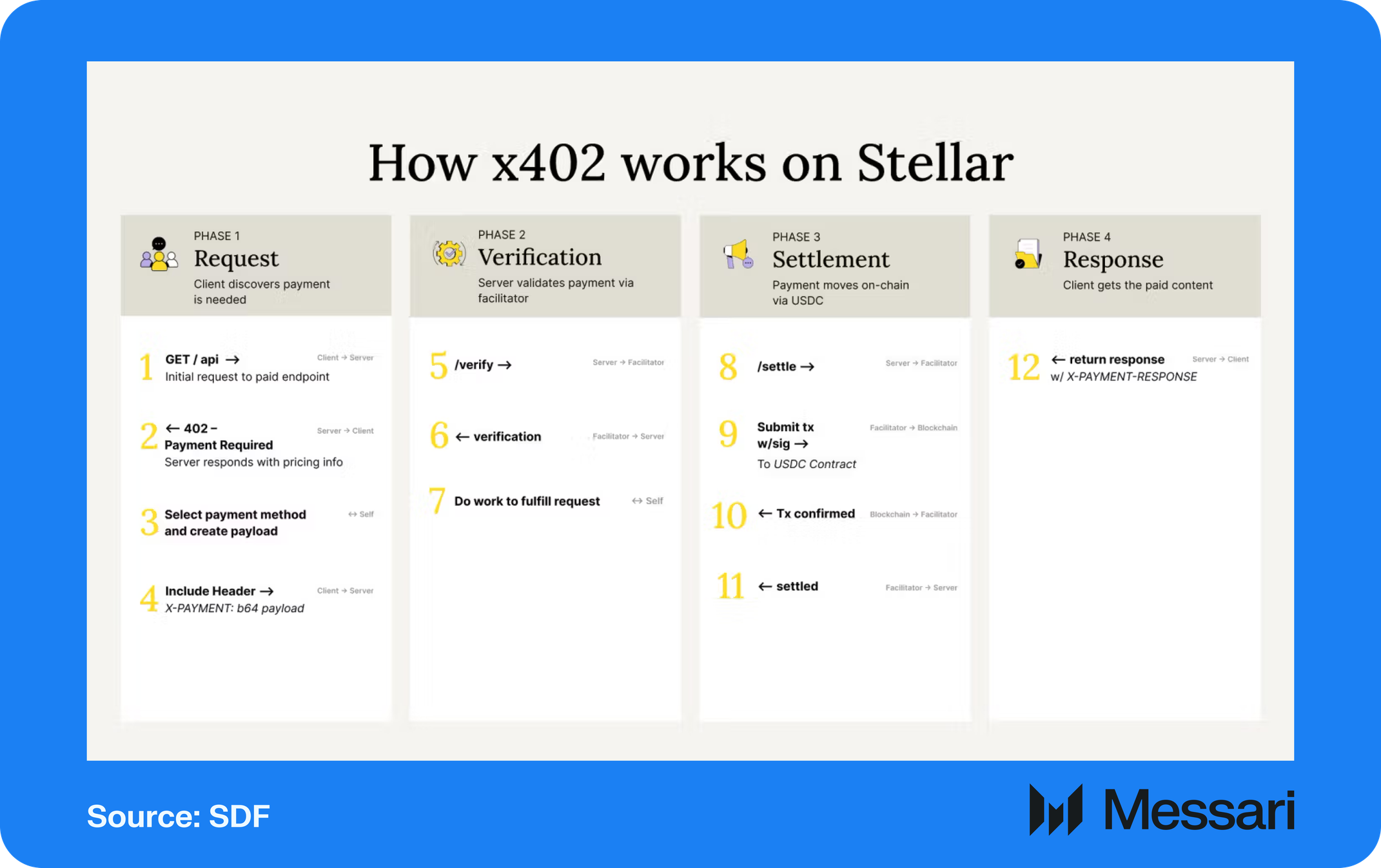
x402 is an open, internet-native protocol developed by Coinbase that enables payments in stablecoins and other crypto assets. A crypto wallet is all that is needed by a user, making the protocol ideal for agent-to-agent payments.
x402 on Stellar went live in March 2026 and works via smart contract authorization, so clients can pay for API requests via signed auth entries, an ideal workflow for micropayments and payment-enabled applications. This is enabled by a facilitator, a non‑custodial service that verifies and submits payments to Stellar on behalf of an application, eliminating the need to run any blockchain infrastructure.
Looking ahead, SDF is focused on developing tooling for agents using x402 on Stellar, including:
MCP integration: Stellar’s x402-MCP server will let AI agents discover paid resources, authorize payments via wallets, and connect multiple paid API calls within user-defined spending policies.
Embedded smart wallets: Smart wallets can use OpenZeppelin’s smart account contracts on Stellar to enable agents to operate within defined budgets and rules.
On April 3, 2026, the Machine Payments Protocol (MPP) went live on Stellar. Developed by Stripe and Tempo, MPP extends the x402 HTTP status code into a machine-readable payment negotiation layer for both humans and autonomous agents. Moreover, Stellar’s MPP SDK sponsors XLM gas fees, eliminating the need for agents to hold XLM to pay network transaction fees.
Stablecoin Addresses
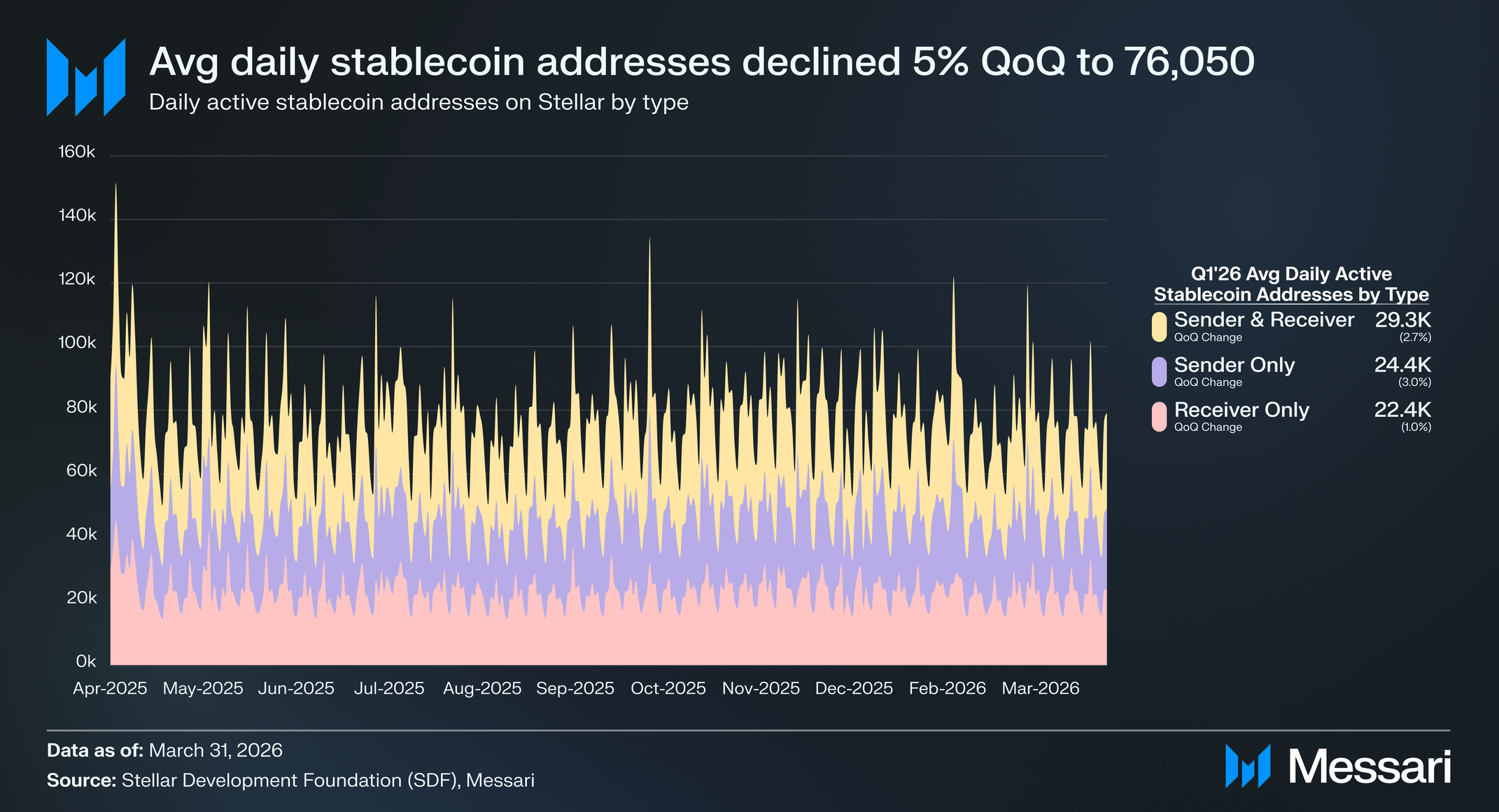
Average daily stablecoin addresses on Stellar decreased 5.5% QoQ from 80,470 to 76,050. Addresses that sent and received stablecoins on the same day decreased 2.7% QoQ from 31,090 to 29,260, while addresses that only sent decreased 3% from 25,710 to 24,440, and addresses that only received decreased 1% from 23,680 to 22,360. This metric counts G-addresses, which are standard Stellar account addresses, while C-addresses are used for smart contracts. These are the two primary address types on the network.
Stablecoin Transfers by Size
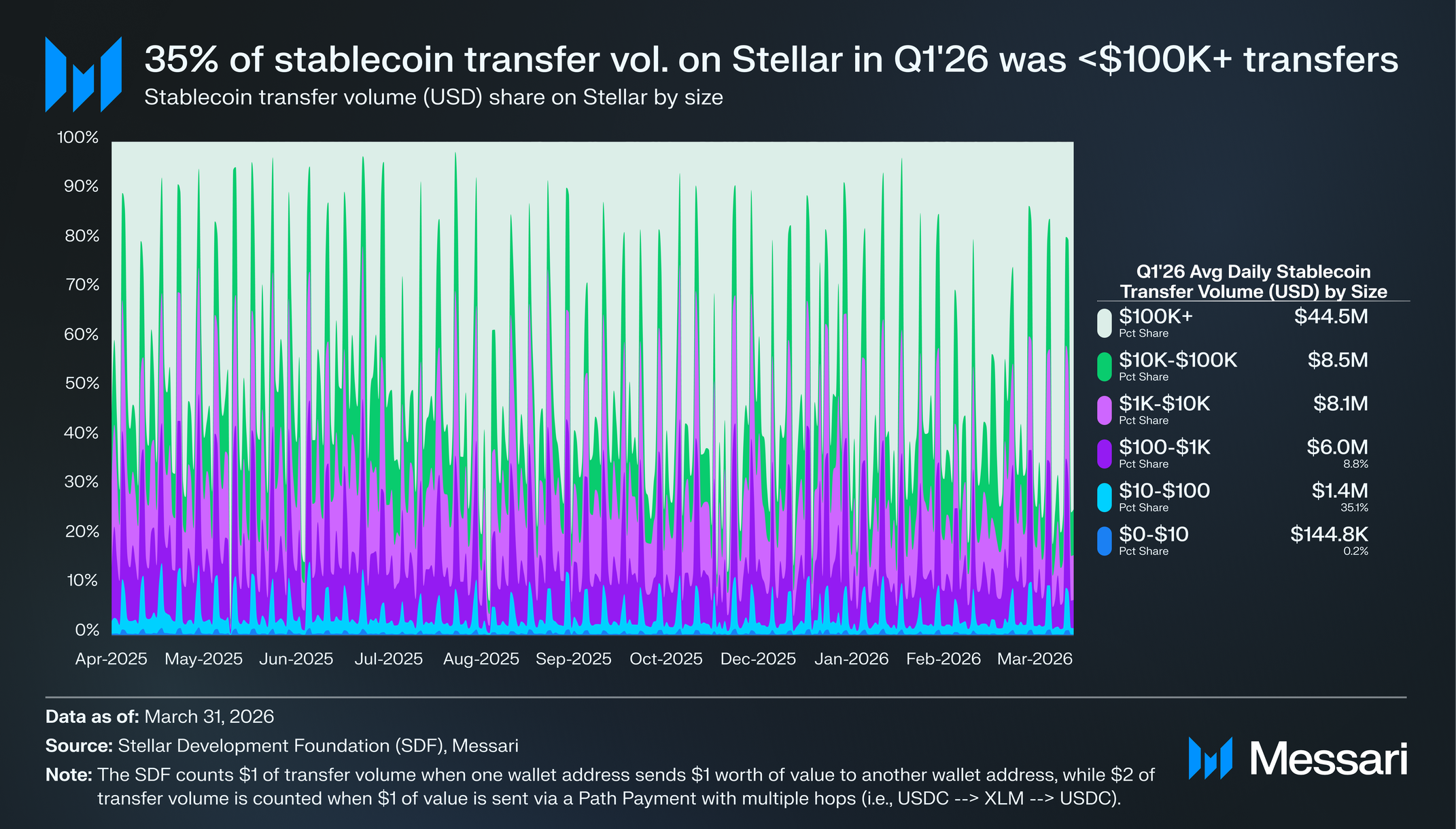
In Q1 2026, 35.1% of stablecoin transfer volume on Stellar was transfers of below $100,000, specifically, 12.4% between $10,000 and $100,000, 11.7% between $1,000 and $10,000, 8.8% between $100 and $1,000, 2% between $10 and $100, and 0.2% between $0 and $10. This implies that the majority of stablecoin transfer volume comes from institutions and whales.
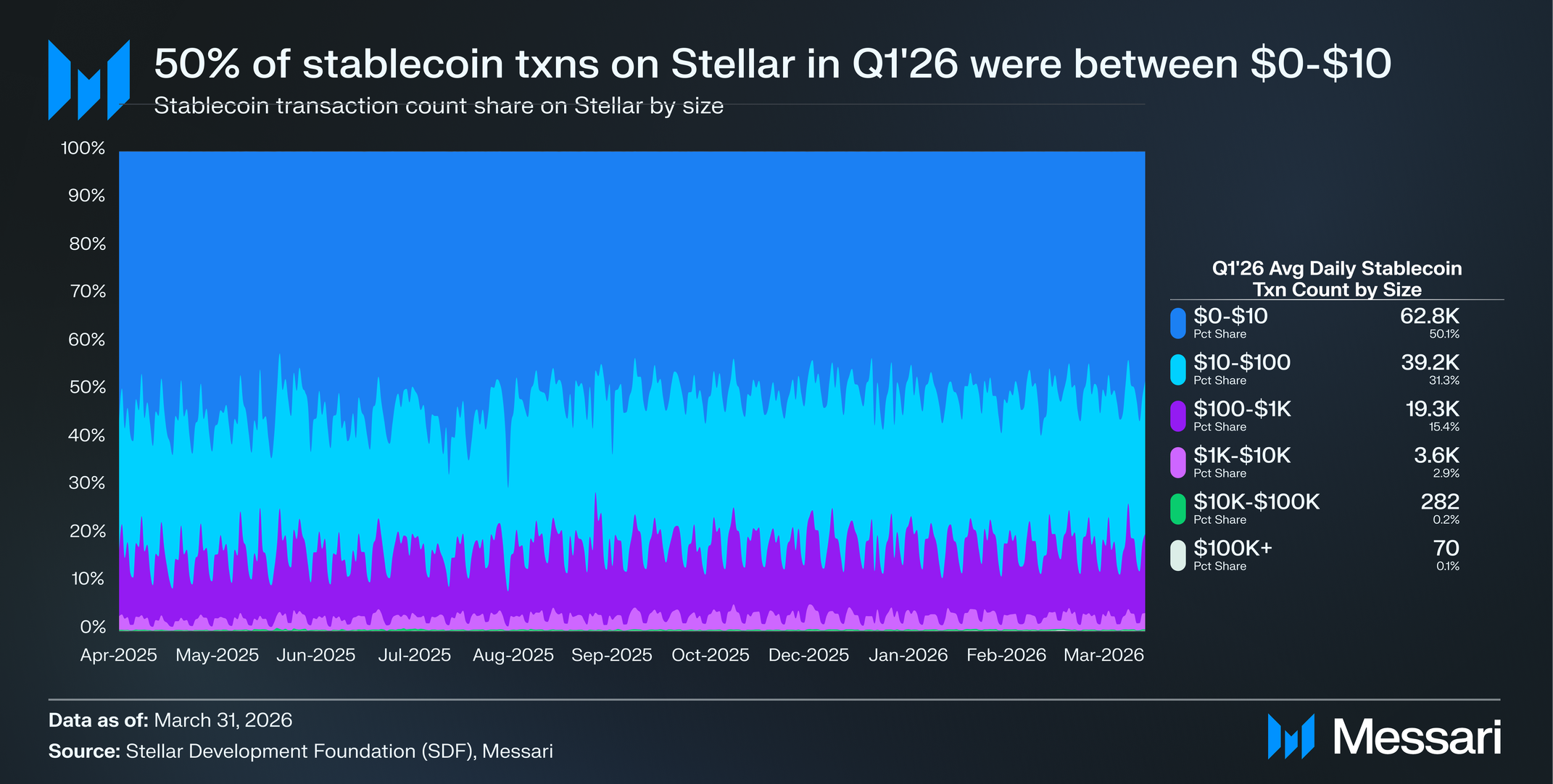
50.1% of stablecoin transactions in Q1 2026 were between $0 and $10, followed by 31.3% between $10 and $100, 15.4% between $100 and $1,000, 2.9% between $1,000 and $10,000, 0.2% between $10,000 and $100,000, and 0.1% above $100,000. Notably, average daily stablecoin transactions above $100,000 increased 32.4% QoQ, while all other categories were flat or declined by up to 10%.
Other Payments Milestones
Building on its November announcement of support for direct onchain stablecoin settlement using USDC and EURC on Stellar, Wirex, a principal member of Visa, launched payment infrastructure on Stellar with Ultra Stellar, the company behind Stellar’s largest wallet LOBSTR, and the DEX StellarX. The infrastructure includes virtual bank accounts, 1:1 fiat-stablecoin conversion, global co-branded card issuing, transfer support via major global payment rails, including ACH, SEPA, PIX, FPS, SWIFT, and Push-to-Card, and up to 6% APY native stablecoin yield. The infrastructure is designed to support the next generation of financial applications used by humans and AI agents, powered by stablecoins.
Other notable recent payment catalysts on Stellar include:
TopNod x Stellar:TopNod, a wallet focused on RWA access, announced in February that it will be launching on Stellar.
Akuna Wallet:Akuna Wallet is focused on building financial infrastructure for Africans who face fees in the mid-to-high single-digit percentages to receive global payments. In March, Akuna Wallet was admitted to the Bank of Ghana’s Virtual Assets Regulatory Sandbox in March, a crucial milestone for providing a regulatorily compliant offering.
Stellar Disbursement Platform
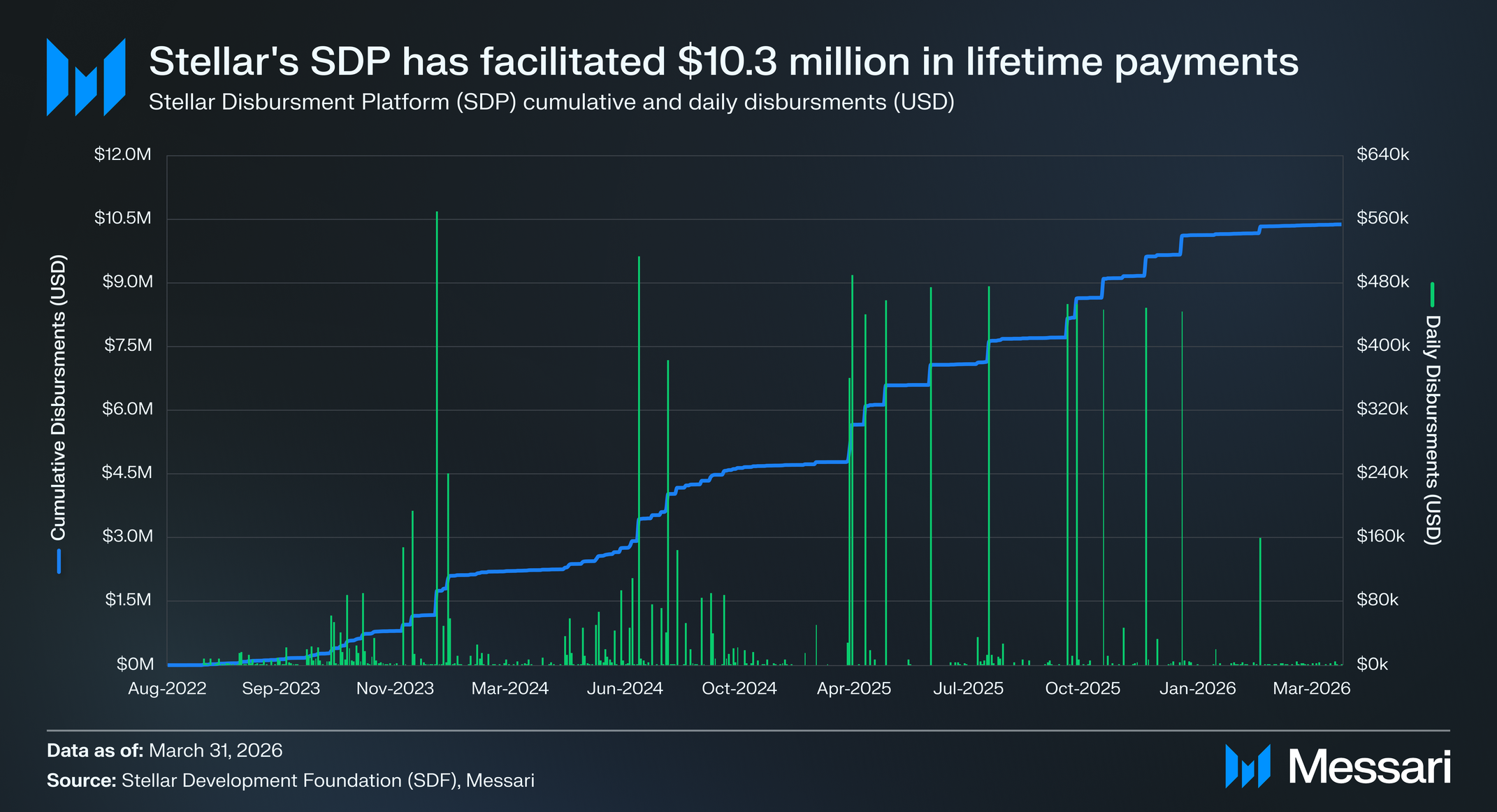
The Stellar Disbursements Platform (SDP) is a turnkey solution for sending digital payments to many individuals for purposes such as humanitarian aid, global payroll, government transfers, and enterprise remittances. SDP implementations have reduced costs by double-digit percentages for disbursers, many of whom previously relied on significantly more expensive legacy systems. For further information on SDP technical specifications, case studies, and integrations, see Messari’s Stellar Ecosystem Overview report. Additionally, the Blockchain for Good report published in February 2026, highlights the SDP as a top tool for disbursement.
Average daily SDP payment volume increased 42% QoQ from $57,100 to $81,090. Moreover, on Jan. 9, 2026, the SDP surpassed $10 million in lifetime disbursements, with $10.3 million distributed lifetime at the end of Q1 2026.
Hope for Haiti: In December, VIA Scienceannounced a collaboration with SDF to support the disbursement of aid through the nonprofit Hope for Haiti. The six-month program will distribute more than $200,000 to 325 mothers connected with Hope for Haiti’s nutritional programs. Each participant will receive a monthly stipend of $100 in USDC.
Anchors
Since Stellar’s inception, traditional financial institutions have been essential as they provide the on and off-ramps that connect Stellar to traditional financial rails. These entities, called Anchors, include banks, crypto exchanges, and money transfer operators that have the capacity to help users send, deposit, or withdraw fiat for digital assets.
As of April 2026, the Stellar Anchor Directory lists 82 Anchor financial intermediaries that collectively offer services to more than 225 jurisdictions (countries, territories, etc). Together they support more than 170 fiat currencies (e.g., USD, ARS, EUR, MXN, BRL, NGN, PHP, RWF, KES, JPY, AUD, SGD, GBP, CLP, KRW, CFA, TWD, etc.) and 15 stablecoins backed 1:1 by the underlying fiat asset and yield-bearing equivalents, such as short-term treasuries, held in reserve (i.e., USDC, EURC, GYEN, ZUSD, UAH, AUDD, EURS, VCHF, VEUR, MXNe, SBC, USDGLO, PYUSD, USDM1, and USD [WisdomTree]) in more than 170 countries. Additionally, MoneyGram Rampssupports cash deposits (on-ramp) from the local currency to USDC on Stellar to 40 countries and cash withdrawals (off-ramp) from USDC on Stellar to the local currency in more than 170 countries across nearly 500,000 locations.
Many Anchor organizations also support XLM, the native token of the Stellar network, while WisdomTree and Franklin Templeton support the RWAs they have issued on Stellar. SDF offers the Anchor Platform, a set of tools and APIs for anyone with the supporting traditional financial system infrastructure to build their own on and off-ramp services for the Stellar network.
Network Upgrades
Yardstick
On April 1, SDF introduced Protocol 26 (Yardstick), with a mainnet upgrade vote scheduled for May 6, 2026. The upgrade mainly makes technical improvements to the network.
Privacy (X-Ray)
On Jan. 22, the X-Ray privacy protocol (Protocol 25) upgrade went live on the Stellar network, laying the groundwork for zero-knowledge (ZK) cryptography so developers can build privacy-preserving, regulatorily compliant applications on the network. Previously, in September at Meridian 2025 in Rio de Janeiro, SDF’s Chief Product Officer, Tomer Weller, unveiled the organization’s roadmap for privacy on Stellar, with the ultimate goal of 100% private settlement for institutions, which are often legally required to keep client positions, trading strategies, counterparties, etc. confidential. X-Ray introduced two important primitives:
BN254: A pairing-friendly elliptic curve for efficient zk-SNARK verification. Smart contracts can now verify zk-SNRK proofs onchain with BN254, making Stellar interoperable with leading networks using ZK technology, including Zcash, Ethereum, Sprout, and Starknet.
Poseidon: Poseidon2 hash permutations are much cheaper to represent inside ZK circuits than traditional hashes like SHA-256.
Following this release, on Feb. 9, SDF launched a ZK Gaming Hackathon with a $10,000 prize pool for developers to build games that prevent cheating and are trustless.
Then, on Feb. 13, Stellar Private Payments (SPP) were open-sourced, introducing a proof-of-concept (not yet audited) for a privacy-preserving payment system on Stellar using zero-knowledge proofs (ZKPs). The SPP operates under the standard model of providing fully private balance transfers within the privacy pool, which do not reveal transaction amounts, balances, the sender, or the receiver. ZKPs are used to enable privacy in the pool so that external observers cannot link deposits and withdrawals to specific in‑pool balances or counterparties. Deposit and withdrawal transactions to the privacy pool still reveal the interacting public account, and the amount either deposited or withdrawn, but no further information about internal balances or counterparties.
Built by Nethermind, the implementation enables ZKPs using Groth16 proofs via Circom circuits. Association Set Providers (ASPs) are used as a control mechanism to safeguard against illicit activity. ASPs maintain membership and non-membership Merkle trees that allow proving whether specific deposits are part of approved or blocked sets, enabling pool operators to enforce administrative controls without compromising user privacy. Importantly, the Common Reference String (CRS), which is used to generate and verify zero‑knowledge proofs for the pool’s transactions, was not generated doing a decentralized ceremony. This means all users must fully trust that the creators of the CRS did not keep the secret used to generate it. If they did, then they could mint unlimited value within the pool or bypass rules, with all ZKPs still verifying.
Network Analysis
Active Addresses
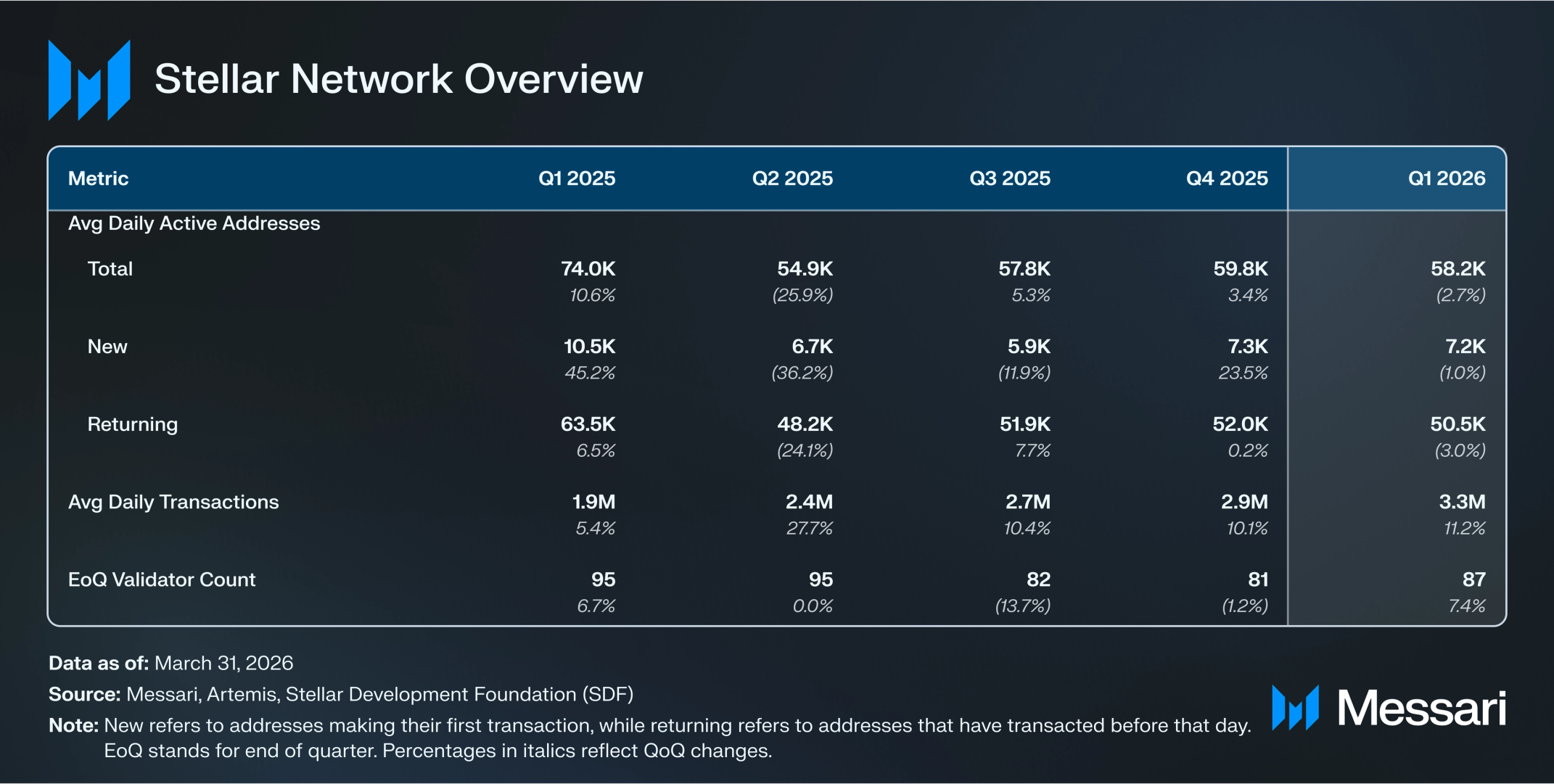
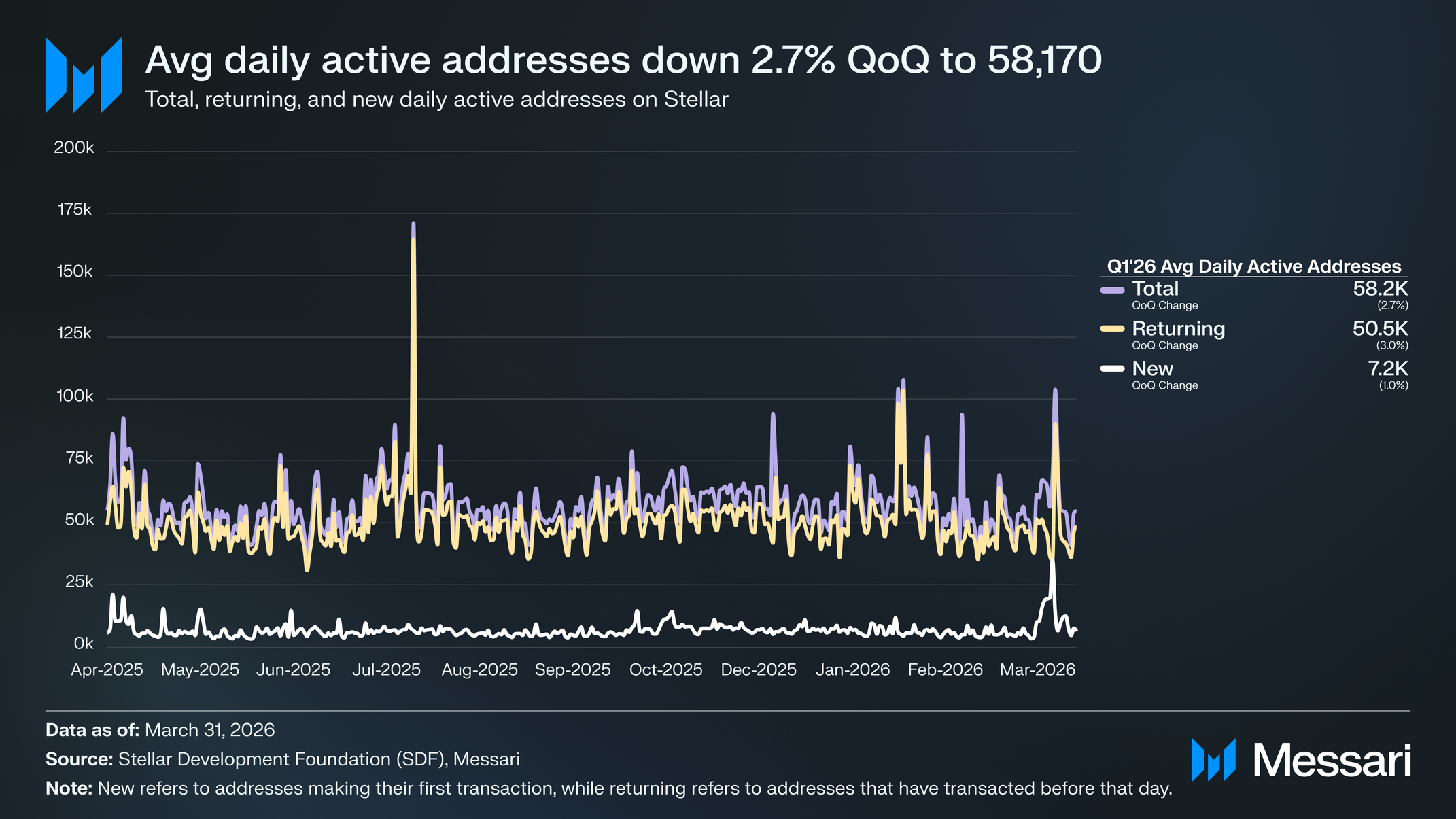
Average daily active addresses declined 2.7% QoQ from 59,780 to 58,170. The daily average of new addresses making their first transaction decreased 1% QoQ from 7,260 to 7,190, while the daily average of returning addresses having made a transaction before that day decreased 3% QoQ from 52,010 to 50,460.
Stellar Consensus Protocol (SCP) and Validators
Unlike many other blockchain networks, Stellar does not distribute inflationary token rewards or transaction fees to its validators. As such, there is no XLM staking mechanism. A decided advantage of this design choice is that, with no public mempool, and no economic rewards to block proposers, there is no incentive for Maximal Extractable Value (MEV), a term used to describe the profit a validator extracts by reordering, inserting, or censoring transactions within a block, typically to the detriment of users. Proponents of network designs like Proof-of-Stake (PoS) that allow MEV to take place argue the MEV allowance is worth it to realize decentralization compared to Proof-of-Agreement mechanisms like the Stellar Consensus Protocol (SCP), which rely on validator trust.
Under SCP, a construction of the Federated Byzantine Agreement (FBA) consensus mechanism, each validator maintains a quorum set, a list of the nodes it trusts. Core nodes must then set a threshold (minimum number of nodes that must agree to reach consensus), with the combination of agreeing nodes within the quorum set called quorum slices. The validity and order of transactions are then determined through a system of federated voting, where candidate transactions are first nominated to be included in the ledger, followed by a ballot protocol to ensure the unanimous confirmation of nominated transaction sets.
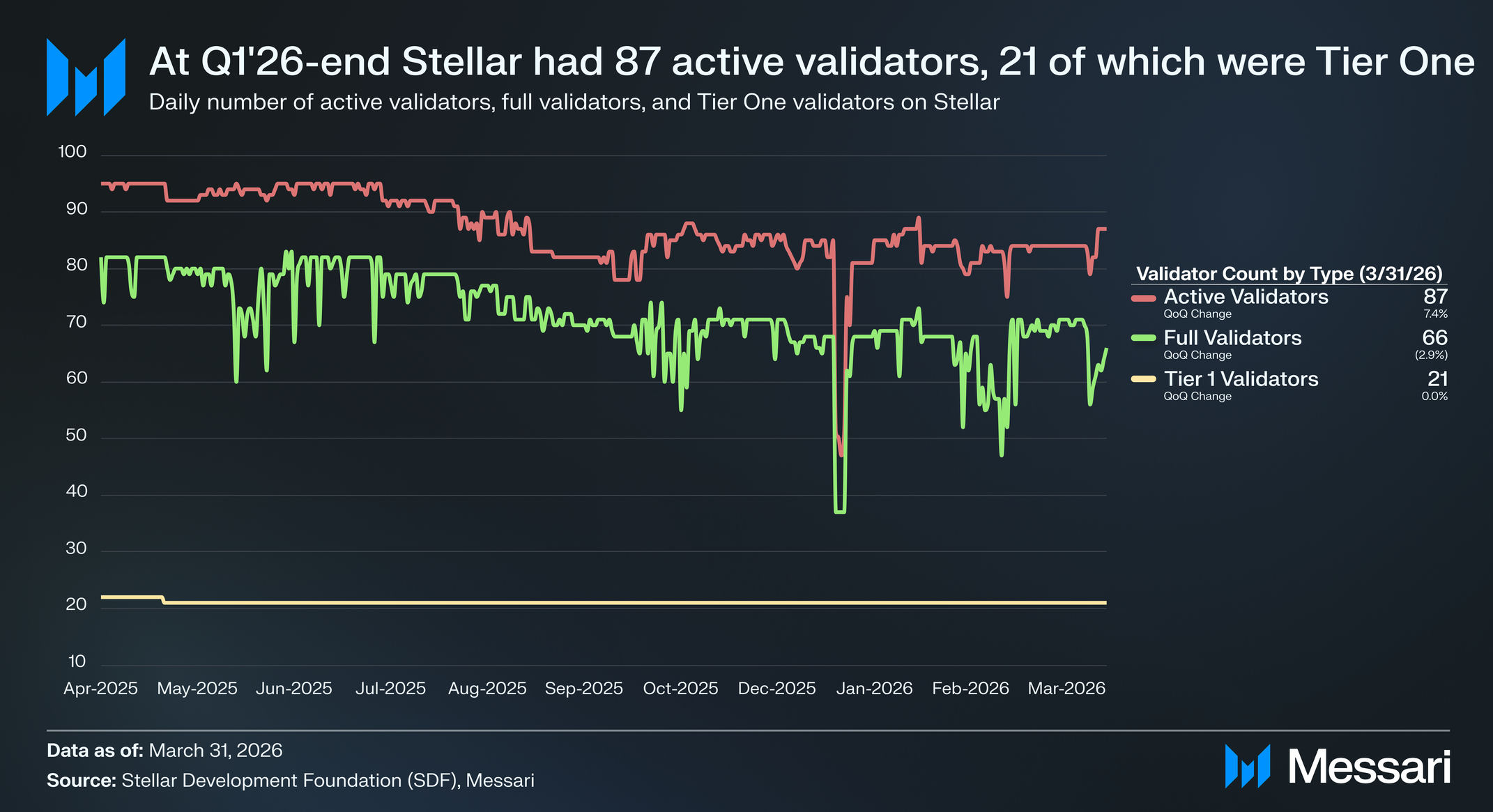
The network is effectively run by Tier 1 Organizations, a group of organizations that generally run three validators and coordinate their quorum sets with one another. Together, Tier 1 Organizations bear the safety and liveness of the network, given that most other validators require their agreement under the SCP. SDF acts as a coordinator among Tier 1 Organizations to ensure network health, while each Tier 1 Organization maintains control over its quorum set. Since April 2025, there have been seven Tier 1 organizations, each operating three full validators, for a total of 21 Tier 1 validators. These areBlockdaemon, Creit Technologies, Franklin Templeton, LOBSTR, Public Node, SatoshiPay, and SDF.
Additionally, at the end of Q1 2026, Stellar had 87 active validators participating in SCP, up 7.4% QoQ from 81 active validators at the end of Q4 2025. Collectively, these validators maintained a 99.99% uptime for Stellar throughout Q1 2026. The network also ended Q1 2026 with 66 full validators (active validators also publishing a public history archive), down from 68 at the end of Q4 2025.
PoS advocates reject this design as insufficiently decentralized, given its inherent trust in a small validator set, while SDF and other PoA advocates argue that PoS also ultimately lacks decentralization without the benefit of eliminating MEV. For example, SDF argues that given voting power is proportional to stake in PoS, PoS chains end up with a small set of operators whose stake provides decisive voting power and block share effectively no different from the SCP. For more information on SDF’s view on SCP’s superiority over PoS, see SDF publications Decentralization Myths Debunked and The Hidden Risks of Proof-of-Stake.
Financial Analysis
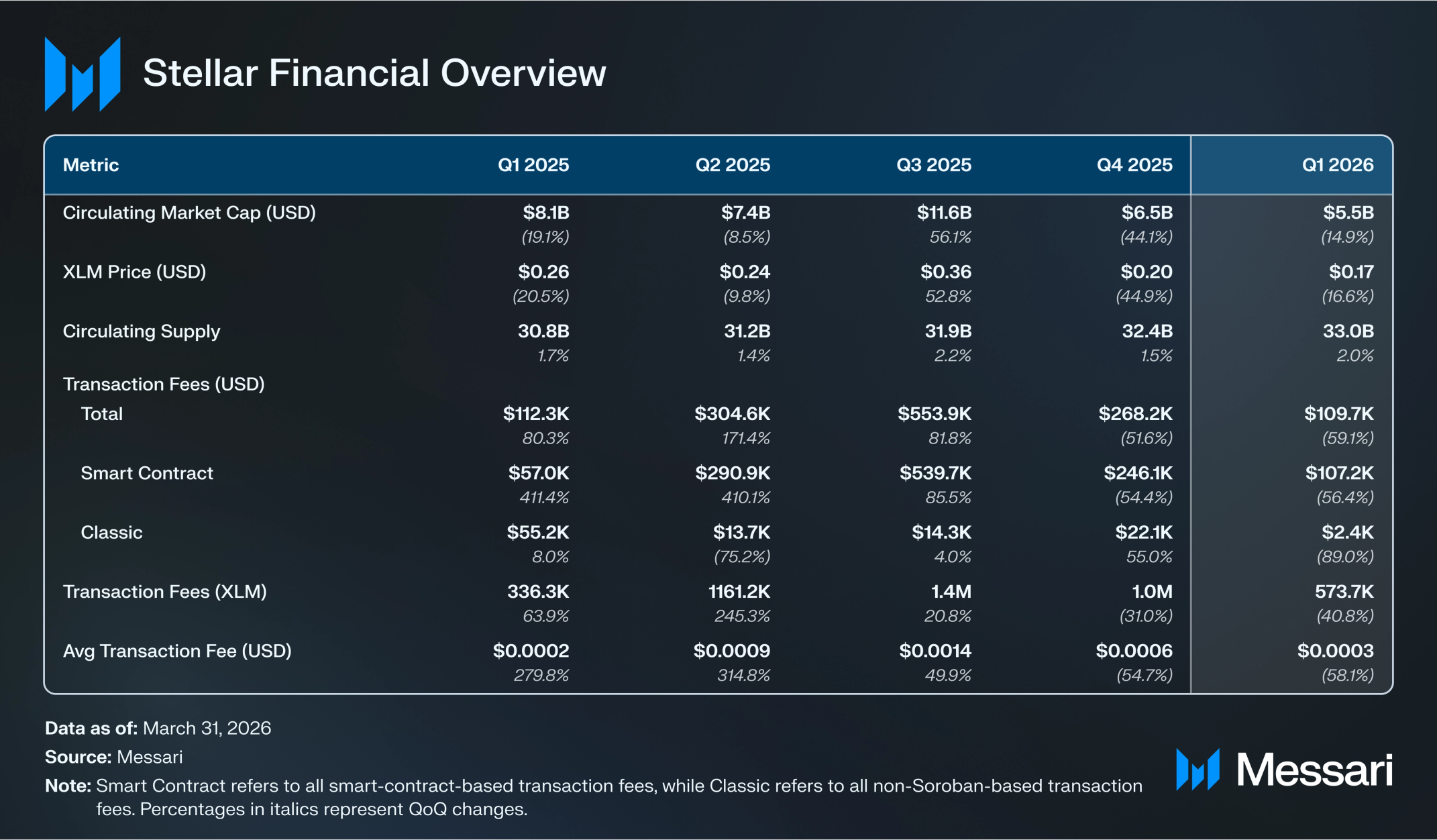
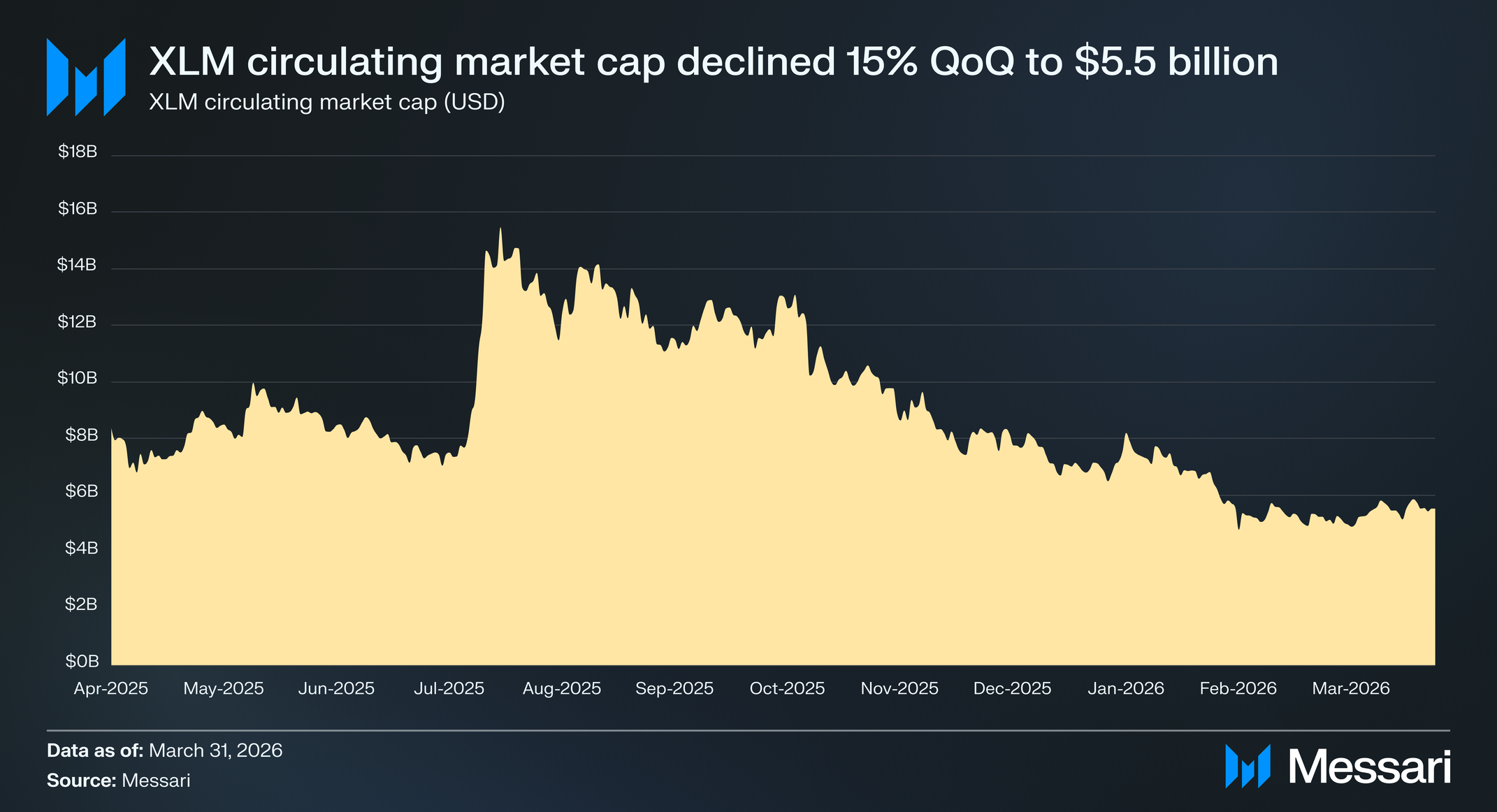
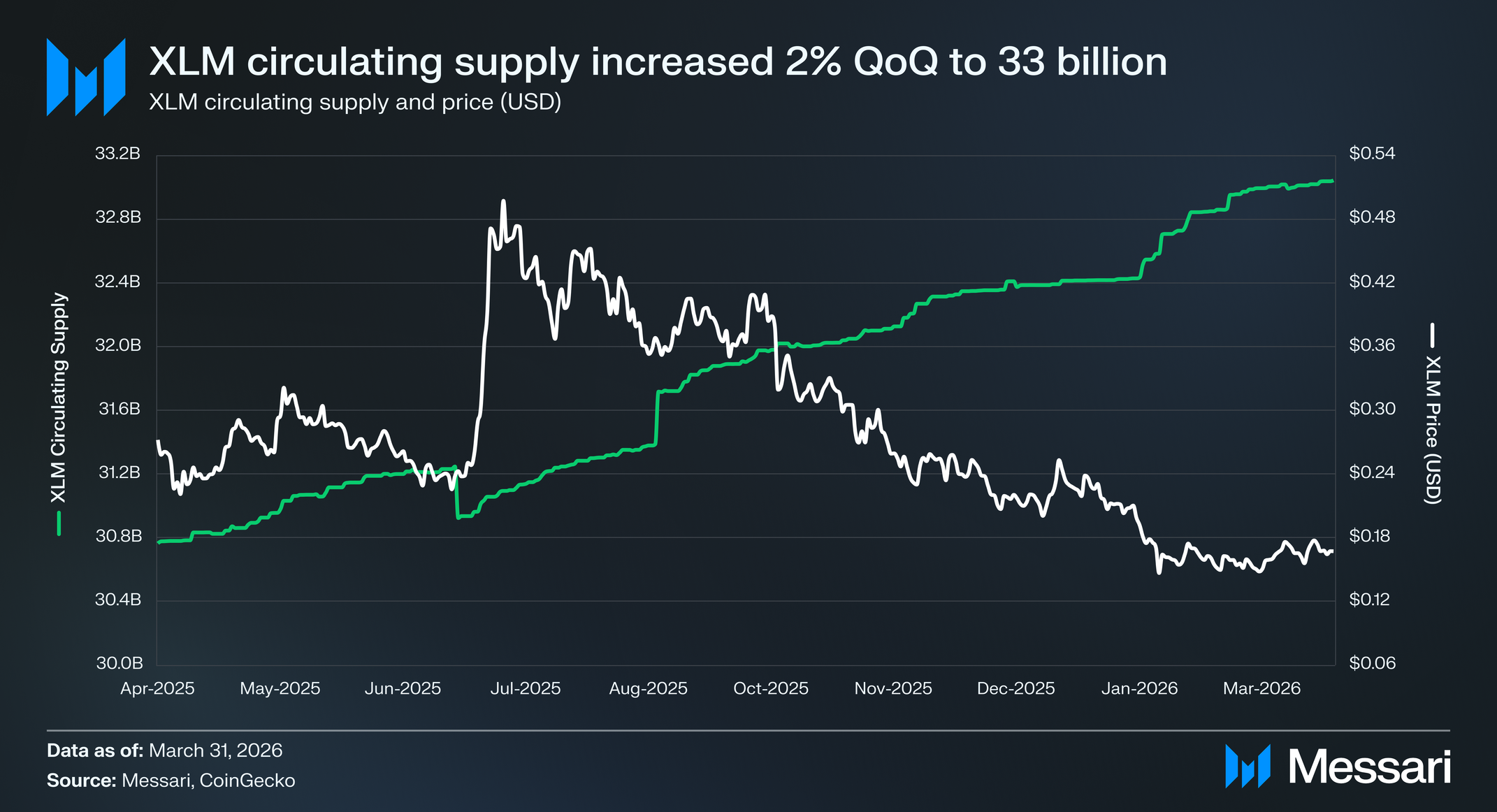
XLM ended Q1 2026 as the 18th-largest crypto asset by market capitalization (down one spot QoQ) at $5.53 billion (-14.9% QoQ), outperforming the combined market capitalization of BTC, ETH, and SOL, which decreased by 25.8% QoQ. XLM’s price decreased 16.6% QoQ from $0.20 to $0.17, with the 1.7% discrepancy between market cap and price due to a 2% QoQ increase in circulating supply to 33 billion XLM. Year-over-year (YoY), XLM’s circulating market cap declined 32% from $8.13 billion at the close of Q1 2025.
Prior to this, the Grayscale Stellar Lumens Trust (GXLM) was the only standalone U.S.-domiciled XLM tradfi product, though in December 2025, Franklin Templeton expanded its Franklin Crypto Index to include spot XLM, while in September 2025, Hashdexexpanded its crypto index U.S. ETF (NCIQ) to include spot XLM. ProShares also filed with the SEC in January for a futures-based XLM ETF.
Outside of the U.S., in October 2025, WisdomTree launched the WisdomTree Physical Stellar Lumens ETP (XLMW) with exchange listing in Europe. The ETP joins 21Shares Stellar ETP, and Virtune Stellar ETP, as XLM products offered in Europe.
Circulating Supply + SDF Held XLM
The circulating supply of XLM is the 50 billion total supply, less XLM held by SDF, the Upgrade Reserve, and the Fee Pool.
XLM held by SDF (16.66 billion XLM at Q1-end, 33.3% of the total supply): SDF’s mandate is to use the XLM it holds to build, promote, and strengthen the Stellar network and ecosystem. SDF sells XLM it holds on public exchanges like Kraken, Coinbase, and Bitstamp, and through direct sales, to pay for SDF's operational expenses and to support the broader work of its mandate. The XLM is held across four account types:
SDF Development: 2.56 billion XLM (5.1% of the total token supply). This account covers SDF's operational expenses, including rent, server costs, network-level marketing, advocacy, and policy work.
Stellar Growth: 6.25 billion XLM (12.5% of the total token supply). Uses include funding developer programs, hackathons, and Enterprise Fund Investments that deepen infrastructure across wallets, exchanges, DeFi protocols, and payment companies.
Product and Innovation: 4.38 billion XLM (8.8% of the total token supply). Used to identify, fund, and build Stellar ecosystem tools.
Assets and Liquidity: 3.47 billion XLM (6.9% of the total token supply). Used to support collaborations for asset issuance with institutions and fintechs, market-making programs, on and off-ramp infrastructure, and integrations with bridges and compliance providers.
Upgrade Reserve (258.89 million XLM at Q1-end, 0.52% of the total supply): XLM set aside, to be claimed, one-for-one, by holders of old Stellar network tokens, following Stellar network’s relaunch in November 2015 using the Stellar Consensus Protocol (SCP).
Fee Pool (8.97 million XLM at Q1-end, 0.018% of the total supply): On Stellar, all transaction fees are paid in XLM and sent to the fee pool, making them permanently inaccessible.
Transaction Fees
On Stellar, the resource fee exists so the network is not treated as a free database, and is the reason Stellar smart contract fees are higher than Classic fees. Beyond this consideration, for both Stellar smart contracts and Classic, SDF aims to keep fees as low as possible to ensure equitable access to financial products, with fees viewed as a security mechanism to prevent ledger bloat and spam. For a full primer on fee types on Stellar, see Stellar’s documentation.
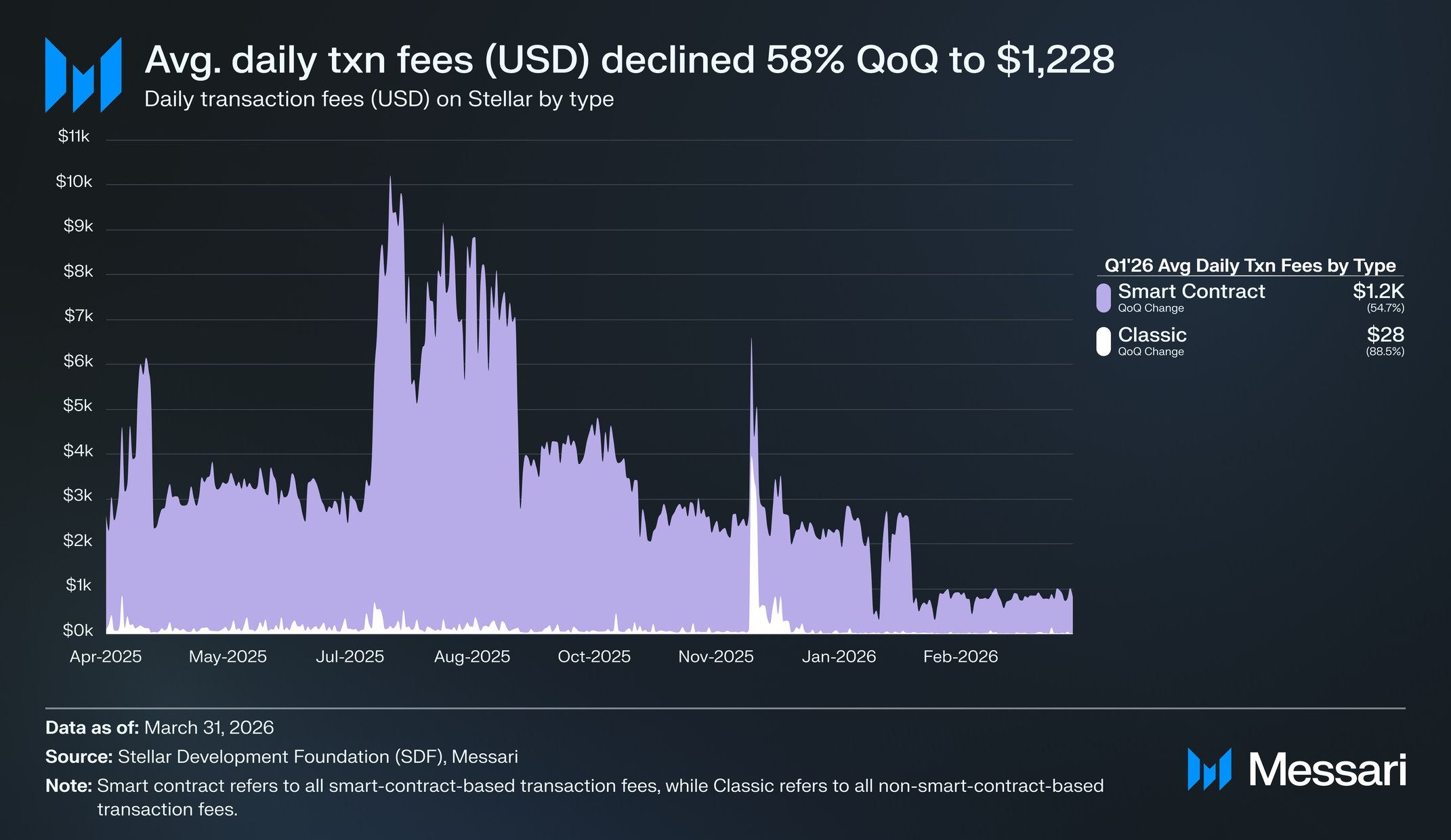
The average transaction fee on Stellar fell 58.1% QoQ from $0.00061 to $0.00026. Likewise, average daily transaction fees (USD) declined 52% QoQ from $2,915 in Q4 2025 to $1,228 in Q1 2026. This decrease was driven by the Stellar Limits Proposals (SLPs) deployed in January which reduced the fee cost for non-refundable resources. SLPs allow the network to tune performance and reduce fees. Increasing network capacity keeps the network out of surge pricing, reducing fees.
Still, Stellar smart contract transaction fees increased 88% YoY from $57,030 in Q1 2025 to $107,230 in Q1 2026. This increase is due to Stellar smart contracts’ resource fee, which is required for each transaction based on the resource consumption (CPU, storage, bandwidth) declared in the transaction. As a result, transaction fees (USD) were flat YoY in USD, and in XLM terms increased 70.6% YoY from 336,300 XLM to 573,690 XLM, despite the 95.6% YoY decline in Classic fees from $55,230 in Q1 2025 to $2,440 in Q1 2026.
Closing Summary
Stellar’s Q1 2026 built on a momentous Q4 2025, with growth across the network’s most important metrics. Stellar’s RWA market cap (excluding stablecoins) increased 91% QoQ from $796 million to $1.52 billion at Q1-end and surpassed $2 billion on April 11. This increase was driven by growth in government treasury assets, including Ondo’s USDY and Spiko’s EUTBL, USTBL, and UKTBL. Likewise, Stellar’s stablecoin market cap increased 22% QoQ from $244 million to $297 million, driven by USDC’s 14.9% QoQ increase to $256.3 million and SG-FORGE’s EURCV launch on the network on March 10, 2026.
Looking ahead, the launch of x402 on Stellar in March and the Machine Payments Protocol (MPP) in April provides a catalyst for agentic payments that could drive a significant uptick in average daily payment transactions on Stellar beyond the quarterly range of 1.7 million to 3.7 million in the past year (1.9 million in Q1’26). Coupled with the X-Ray privacy protocol launched in January and Stellar Private Payments (SPP) now being open-sourced, the Stellar network has a complete foundation in payments and DeFi for institutions and individual users alike.
Finally, Templar’s April 1 launch of lending and borrowing for six freely transferable RWAs on Stellar, including Centrifuge’s deJAA and deJTRSY, and Etherfuse’s CETES and USTRY, marks a significant milestone for DeFi composability of RWAs on Stellar. Alongside sustained elevated yields on Blend, Messari projects continued DeFi TVL growth on Stellar in Q2 2026 beyond the $174.4 million at Q1-end.
This report was commissioned by Stellar Development Foundation (SDF). All content was produced independently by the author(s) and does not necessarily reflect the opinions of Messari, Inc. or the organization that requested the report. The commissioning organization may have input on the content of the report, but Messari maintains editorial control over the final report to retain data accuracy and objectivity. Author(s) may hold cryptocurrencies named in this report. This report is meant for informational purposes only. It is not meant to serve as investment advice. You should conduct your own research and consult an independent financial, tax, or legal advisor before making any investment decisions. Past performance of any asset is not indicative of future results. Please see our Terms of Service for more information.
No part of this report may be (a) copied, photocopied, duplicated in any form by any means or (b) redistributed without the prior written consent of Messari®.
Matt is a Research Manager at Messari for the Protocol Reporting team. A generalist at heart, who's curious about anything and everything, and ultimately, on an adventure to find out what's true. He was an investigative reporter and multifamily/senior housing development associate before joining Messari in 2022.
Matt is a Research Manager at Messari for the Protocol Reporting team. A generalist at heart, who's curious about anything and everything, and ultimately, on an adventure to find out what's true. He was an investigative reporter and multifamily/senior housing development associate before joining Messari in 2022.